


Bibliothèque de l'Antiquité Tardive
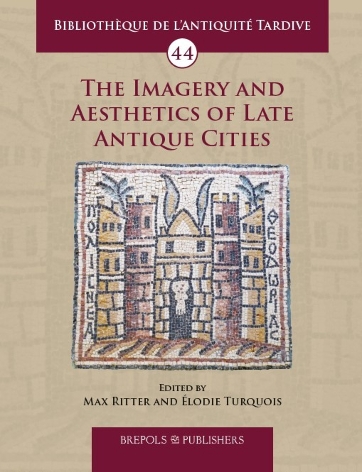
The Imagery and Aesthetics of Late Antique Cities
While the role of the city in Late Antiquity has often been discussed by archaeologists and historians alike it is only in recent years that scholarship has begun to offer a more nuanced approach in our understanding to how such cities functioned stepping away from the traditional paradigm of their decline and fall with the collapse of the Roman Empire. In line with this approach this deliberately interdisciplinary volume seeks to provide a more multifaceted understanding of urban history by drawing together scholars of literary and material culture to discuss the concepts of imagery and aesthetics of late antique cities.
Gathering together contributions by historians philologists archaeologists literature specialists and art historians the volume aims to explore the imagery and aesthetics of cities in Late Antiquity within a strong theoretical framework. The different chapters explore the aesthetics of cityscape representations in literature and art asking in particular whether literary representations of late antique urban landscapes mirror the urban reality of eclectic ensembles of pre-existing architecture and new buildings as well as questioning both how the ideal of the city evolved in the imagination of the period and if imperial ideology was reflected in literary depictions of cities.
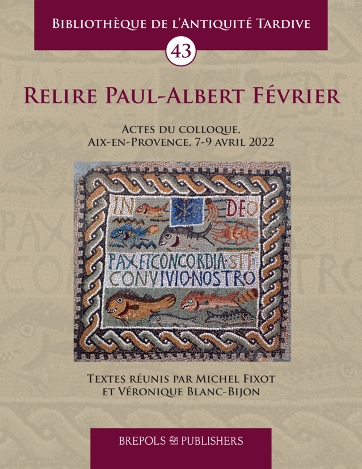
Relire Paul-Albert Février
Actes du colloque, Aix-en-Provence, 7-9 avril 2022
Par ses publications Paul-Albert Février a été un auteur majeur de la seconde moitié du xx e siècle. Ses apports et ses questionnements ont provoqué des prises de conscience décisives dans le domaine de l’archéologie et de l’histoire des deux rives de la Méditerranée entre Sud de la France et Maghreb à la fin de l’Antiquité sans compter le détour italien et un intérêt marqué pour le Patrimoine. Il a été à l’origine d’un processus d’entraînement intellectuel dont il a fait bénéficier étudiants et collègues. Trente ans après sa disparition prématurée en 1991 à l’âge de soixante ans le besoin a été ressenti de faire le point sur les directions de recherche qu’il avait abordées et sur les diverses perspectives qu’il avait ouvertes. La personnalité de l’enseignant et du chercheur était telle que la démarche scientifique était inséparable du rayonnement humain. Le présent ouvrage a été conçu comme un état de la recherche en écho à celui dans lequel dès après sa mort ont été rassemblés ses principaux articles (La Méditerranée de Paul-Albert Février 2 vol. CEFR 225). Les deux livres pourront être ouverts en regard l’un de l’autre.
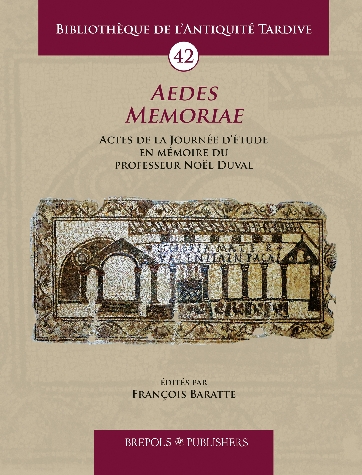
« Aedes Memoriae »
Actes de la Journée d’Études en mémoire du professeur Noël Duval
Le professeur Noël Duval à la forte personnalité a marqué le renouveau des études sur l’antiquité tardive. Se consacrant plus particulièrement à l’Afrique romaine et byzantine il en a étudié l’histoire tardive et l’archéologie en particulier celle des églises paléochrétiennes. Mais ses intérêts se sont portés aussi sur la Gaule à la fin de l’antiquité et plus largement à l’ensemble du bassin méditerranéen. Sa disparition en 2018 a été incontestablement une grande perte. Ses amis et ses élèves ont tenu à honorer sa mémoire en rassemblant un recueil de contributions scientifiques sur des sujets sur lesquels il avait travaillé mais aussi en évoquant sa mémoire et sa personnalité.
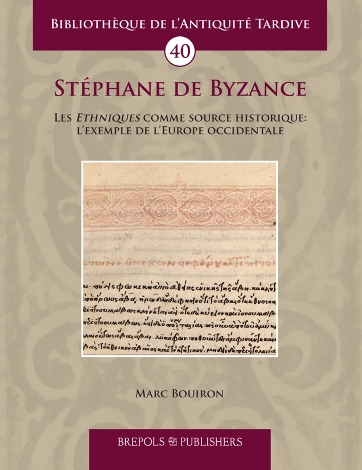
Stéphane de Byzance
Les Ethniques comme source historique: l’exemple de l’Europe occidentale
Le lexique géographique du grammairien byzantin Stéphane de Byzance les Ethniques est une œuvre à l’origine monumentale. Ce lexique contenait de nombreuses mentions d’auteurs disparus se rapportant à des toponymes du monde antique connu des Grecs et des Romains. À l’intérieur de ce lexique nous avons choisi d’étudier plus spécialement ceux situés en Europe occidentale (péninsule ibérique Gaule Germanie et Bretagne antiques) en lien avec les sites archéologiques connus s’y rapportant. L’ouvrage ayant été abrégé à plusieurs reprises au cours du Moyen Âge la confrontation de l’ensemble des notices a permis de proposer de nouvelles attributions d’auteurs antiques leur nom et leur citation ayant très souvent disparu des manuscrits conservés. Par ailleurs l’analyse précise de la transmission de l’œuvre apporte un éclairage nouveau sur les moments où ce grammairien a été lu et utilisé du VIe s. jusqu’à sa redécouverte à la fin du XVe s. La structure même du lexique permet de revenir sur la lexicographie antique et médiévale et d’envisager les apports à la fois des grammairiens et des auteurs antiques (pour la plupart géographes et historiens) qui étaient cités. Enfin le cadre géographique choisi permet d’explorer les autres textes antiques ainsi que les données archéologiques depuis l’époque grecque archaïque jusqu’à la fin de l’Empire romain. Nous avons inclus dans ce travail une analyse et une traduction de l’Ora maritima d’Aviénus afin de compléter l’étude de la péninsule ibérique et du Midi de la Gaule.
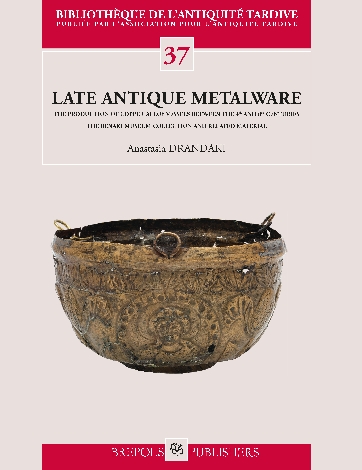
Late Antique Metalware. The Production of Copper-Alloy Vessels between the 4th and 8th Centuries
The Benaki Museum Collection and Related Material
The book examines the fourth- to eighth-century copper alloy wares in the Benaki Museum using them as the basis on which a wider debate about the production circulation and use of copper vessels in Late Antiquity can be built. It is an attempt at a holistic approach to this rich but as yet little studied material. Apart from the necessary typology and dating the study also includes systematic discussion of questions regarding the alloys used in the manufacture of the copperwares and the techniques employed in their production and decoration. The study of primary sources provided evidence about the late Roman and Medieval Greek terminology associated with each group of objects as well as interesting information about the distribution of various types of vessels the context in which they were used and the value their owners placed on them while also containing useful references to the coppersmiths themselves.
Most of the Benaki copperwares were acquired on the Egyptian market and can be connected with the rich local production in the Late Roman and Early Islamic period. Yet the study of these artefacts showed that they have striking similarities with a wide range of archaeological material discovered over an extremely large geographical area from the Eastern Mediterranean to Italy Germany Spain and the UK. The geographical spread of copper alloy wares that follow a parallel development in different parts of the empire and also appear almost contemporaneously in Western European burials reignites the debate on the production centres and subsequent modes of distribution of these artefacts. In turn these issues touch on the long-standing debate on the so-called ‘Coptic bronzes’ and the actual role of Egypt in the overall production of and trade in these articles in Late Antiquity.
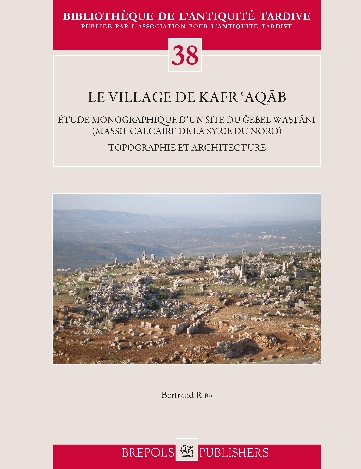
Le village de Kafr ʿAqāb
Étude monographique d’un site du ğebel Waṣṭāni (Massif calcaire de la Syrie du Nord). Topographie et architecture
The new monographic study of the village of Kafr ʿAqāb is a contribution to broadening the field of research into the western part of the Limestone Massif in Northern Syria which until now had been the subject of only limited interest. The ruins of the site are mainly spread out over a vast rocky headland which is strategically situated at the northern extremity of the ğebel Waṣṭāni near the Orontes valley in the inland region of Antioch. These ruins reveal the existence of an ancient village with over 80 homes various communal constructions a monastery two ecclesiastic complexes and a fortified building.
The study is based on a detailed analysis of surface ruins and has enabled the evolution of the village to be precisely determined from its first phase of occupation between the IInd and IIIrd century until it was abandoned during the medieval period. Most of the constructions date from the Roman and Proto-Byzantine periods. Each architectural group (houses tombs churches agricultural buildings etc.) is studied separately then resituated in the context of the village and the region thus enabling the author to determine this peasant community’s economic demographic social and religious history.
Mechanisms linked to the growth of the locality are examined in the light of strategies implemented in the appropriation and enhancement of the surrounding land such as controlling water and the diversification of crops which reveals the inhabitants’ extraordinary capacity to adapt to their natural environment. Discussion also covers the question of the interactions between the villagers and their relationships with other towns. Kafr ʿAqāb also owed its prosperity to the road network which was ingeniously woven between towns as well as to its proximity to major urban areas in Antioche and Apamea. The ruins reveal this highly favourable location for trade and the circulation of various cultural and artistic movements. Finally numerous archaeological signs allow the study of the occupation of the village after it was invaded by VIIth century Arab conquerors. The author thus aims to reconstruct the history of this ancient site following a long and fascinating field study.
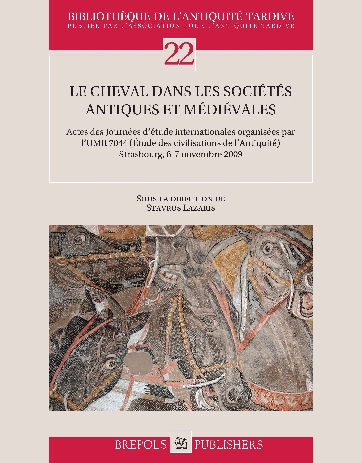
Le cheval dans les sociétés antiques et médiévales
Actes des Journées d'étude internationales organisées par l’UMR 7044 (Étude des civilisations de l’Antiquité), Strasbourg, 6-7 novembre 2009
These Actes des Journées d’étude internationales (Strasbourg 6-7 November 2009) are the end result of a 2007-2009 research programme held at the UMR 7044 (Étude des civilisations de l’Antiquité: de la Préhistoire à Byzance) on the role of the horse in the Byzantine Empire. These fourteen contributions focus on the role of the horse in both war and leisure from Antiquity to the Middle Ages.
The book is divided into three sections. In the first the contributors analyze the origins and use of cavalry in the Roman army. Additionally this section explores the regional differences in the breeding of horses throughout the Mediterranean their monetary value as well as the hippological knowledge of Antiquity. The chapters constituting the second part discuss the medieval Byzantine and western horse. They approach this subject via texts archaeological sources illustrations and an examination of the customs and traditions of these civilizations. The final part focuses on hippological instruments weapons and the care of horses. Here the contributors examine the innovations adoptions and adaptations during late Antiquity of pieces of equestrian equipment essential for war such as stirrups and bits. Horsemen’s weapons are re-evaluated as well as the changes in their tactics brought about by the widespread adoption of stirrups. Also present is an analysis of the vocabulary used for the anatomy of the horse in Greek hippological literature which saw an unprecedented increase at this time thanks to the development of the Roman and Proto-Byzantine cavalry.
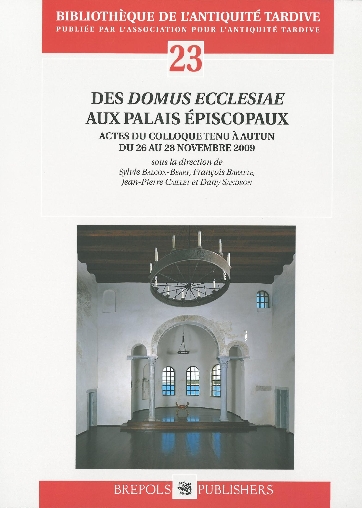
Des 'domus ecclesiae' aux palais épiscopaux
Actes du colloque tenu à Autun du 26 au 28 novembre 2009
The discovery on the archeological site of the former cathedral group of Autun of the probable remains of the domus ecclesiae mentioned in the VIIth century led to an examination of the question of these structures with multiple functions and a study of their development as they are very often at the origin of episcopal palaces as it is clearly the case in Autun.
It is moreover at Autun itself in the bishop’s palace that this conference was held from November 26 to 28 2009. The fourteen presentations joined together here which concern European cases as well as those from the whole of the Mediterranean world tend to define more fully the character of early episcopal residences in respect to buildings for worship to comprehend their design and to follow their evolution. They also underline the difficulty of the interpretation of the textual and archaeological data when they exist.
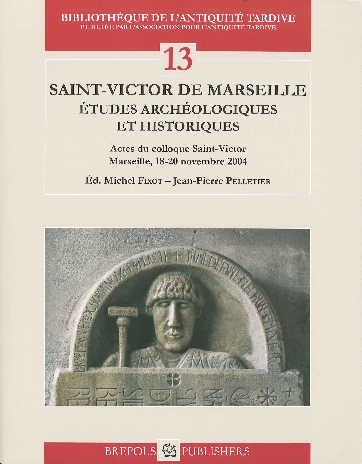
Saint-Victor de Marseille. Études archéologiques et historiques
Actes du colloque Saint-Victor, Marseille, 18-20 novembre 2004
At the origin of the study of a monument which remains very emblematic of Marseille there was a programme of restoration and excavations. The outcome of the work was made public in a first volume. The recent conjunction with a trend in historiography surprisingly aware of religious history in particular the history of monachism enabled us to bring together scholars dealing with various sources in order to achieve the often called on conjunction between archaeology and history. That was the point of the conference held in November 2004 in Marseille. The venue was the old Alcazar music hall theatre transformed into the municipal library. It is gratifying to think that this was the first scientific seminar to be held in the new library which had just been opened.
Paraphrasing a famous expression among medievalists: are there two Saint-Victor one for archaeologists one for historians. It is up to the reader to make up his own mind. There is undoubtedly a discrepancy which even before adressing the interpretative conclusions of the research underlines the shortcomings of the respective documentation avalaible. Given this realization the scholars present intimately felt they were writing the same history.
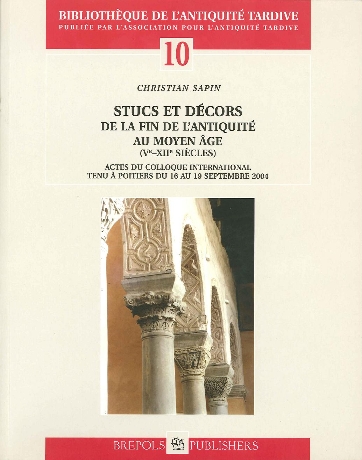
Stucs et décors de la fin de l’Antiquité au Moyen Âge (Ve-XIIe siècle)
Actes du colloque international tenu à Poitiers du 16 au 19 septembre 2004
Le stuc un art à part entière
L’importance du stuc comme matériau et processus de décor a longtemps été ignorée. Les diverses contributions à ce colloque permettent pour la première fois d’en saisir la portée sur une longue durée. Avec ses origines antiques ou moyen-orientales ses croisements avec la peinture ou la sculpture sa diversité dans une grande partie de l’Europe sa présence est désormais perçue comme permanente entre le iv e et le xii e siècle. Une meilleure connaissance de sa fabrication grâce à de nombreuses analyses en laboratoire une relecture d’ensembles jusque-là peu étudiés comme Disentis ou découverts par l’archéologie comme Vouneuil-sous-Biard Bordeaux ou Arles-sur-Tech illustrent mieux aujourd’hui cette conception particulière de l’art du relief transmise et sans cesse renouvelée depuis l’Antiquité tardive.