


Textes vernaculaires du moyen âge

The Poor Caitif
A Modern English Translation with Introductory Essays and Notes
The Pore Caitif is a popular late-fourteenth-century carefully crafted compilation of biblical catechetical devotional and mystical material drawing on patristic and medieval sources in Middle English consisting of a Prologue and a variable number of sections of differing lengths according to each manuscript assembled probably by a clerical writer for an increasing literate lay readership/audience.The Prologue sets out the reason for writing and its overall structure as an integrated ladder leading the reader to heaven. The text begins with basic catechetical instruction modelled on John Peckham’s Lambeth Constitutions of 1281 before continuing with more affective material meditating for example on the Passion and concludes with a treatise on virginity leading the reader from an active to a contemplative way of life.
The Pore Caitif was written about the time the Lollards were starting to propagate their programme of universal vernacular education. The writer believes in the need to educate his readers in the truths necessary for salvation without necessarily subscribing to Lollard positions.
Although referred to in a number of secondary articles and books and serving as the focus of three doctoral dissertations an edition of the work was not published until 2019. Penkett's publication is the first Modern English translation based on the 2019 publication and is in a readily accessible format for the modern reader accompanied by a series of ground-breaking essays.
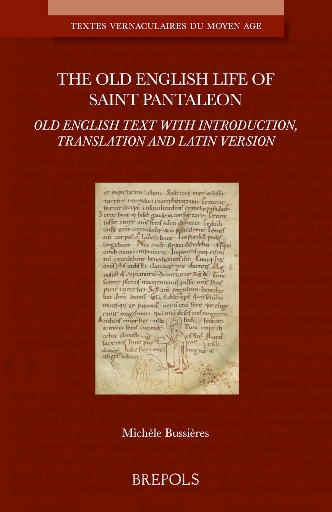
The Old English Life of Saint Pantaleon
British Library MS Cotton Vitellius D. xvii
The Old English Life of Saint Pantaleon survives in one eleventh century manuscript: it appears here for the first time in an easily available edition. This edition is based both on independent research and on the work of previous scholars. It is a challenging text from a much-damaged manuscript but well worth reading: it is interesting both from a linguistic point of view as a testimony of late Anglo-Saxon language and also as a sign of continental influence on Anglo-Saxon culture and of a change in literary taste in England on the eve of the Norman Conquest. It is preceded by a full introduction dealing with the history of the text from Greece to Western Europe and the context of its translation into Old English. The text is accompanied by copious notes dealing with difficult passages and it is made more accessible by a Modern English translation. The edition is completed by a 12th century Latin version which seems to be the closer to its Old English counterpart. The edition is completed by an Anglo-Saxon glossary.
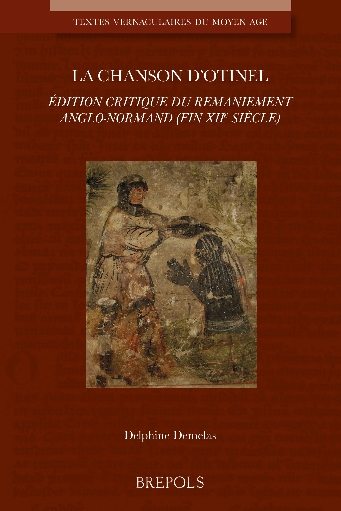
La Chanson d’Otinel
Édition critique du remaniement anglo-normand (fin XIIe siècle)
La Chanson d'Otinel est une chanson de geste qui narre les aventures d'Otinel guerrier musulman venu défier Roland à la cour de Charlemagne ; sur le point de gagner son duel contre le neveu de Charlemagne un miracle le conduit à se convertir au christianisme ; il est alors promis en mariage à Belissent la fille de l'empereur. La suite du texte raconte comment Otinel accompagne l'armée des Francs dans le Nord de l'Italie afin de bouter les troupes de l'empereur Garsie hors du territoire après la prise de Rome par les païens. La version anglo-normande placée sous l'égide de la Fête des Innocents met en scène un certain bestournement des codes épiques le tout teinté d'un humour grinçant.
Vraisemblablement composée sur le continent dans la deuxième moitié du xii e siècle le remaniement anglo-normand du texte semble dater de la fin du xii e siècle. La chanson version anglo-normande du texte est préservée dans deux manuscrits le codex de Cologny (Cologny Fondation Martin Bodmer 168) et le fragment de Mende (Paris BnF nouvelles acquisitions françaises 5094). La présente édition permet au lecteur d'apprécier la version anglo-normande du texte en offrant une introduction critique proposant une réflexion sur les aspects littéraires (versification adaptation) et linguistiques du remaniement.
Ce livre propose d'étudier l'expression locale d'un texte maillon essentiel pour comprendre l'essor de la légende d'Otinel au Nord de l'Europe puisque la version anglo-normande servira de modèle pour différentes traductions médiévales du texte en Anglais Gallois et Norrois à partir du xiv e siècle.
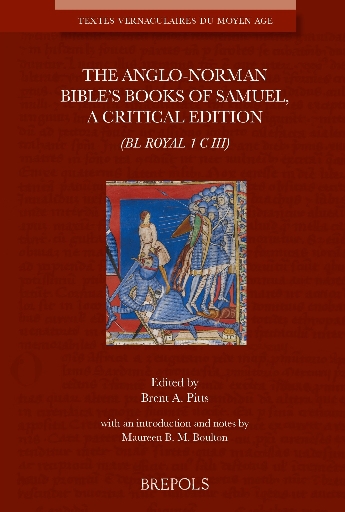
The Anglo-Norman Bible’s Books of Samuel, a Critical Edition
(BL Royal 1 C III)
Tales of treachery and friendship adultery and murder rape and revenge as well as prophecy repentance forgiveness and thanksgiving — such is the stuff of the Anglo-Norman Bible’s Books of Samuel. They recount the life of the last of Israel’s judges but include some of the world’s best-known characters — Saul David and Jonathan Goliath Bathsheba and Absalom.
The first book traces the life of Samuel and the initial success of King Saul chosen to satisfy the Israelites’ demand for a king. After Saul loses God’s favour David enters his court to console him but Saul envies David’s success. When Saul dies in battle David succeeds him. In book two David consolidates control over his kingdom but his adultery with Bathsheba precipitates the reverses of the final chapters. Historically the Books of Samuel trace the creation of Israel’s monarchy and explain its ultimate failure. Religiously they relate Israel’s continuing relationship with God and the establishment of Jerusalem as the religious and political capital of the new kingdom.
Two mid-fourteenth-century manuscripts preserve the text of the Anglo-Norman Bible’s Samuel. The base manuscript (L) British Library Royal 1 C III notable for its inclusion of multi-lingual glosses was acquired by Henry VIII from the Benedictine Abbey of Reading in 1530. The lavishly illustrated Paris Bibliothèque nationale de France MS français 1 (P) produced in England for the baronial de Welles family later belonged to King Louis XII of France. Brent A. Pitts has prepared the critical edition and Maureen Boulton’s introduction and notes elucidate the text and its interpretation by medieval commentators.
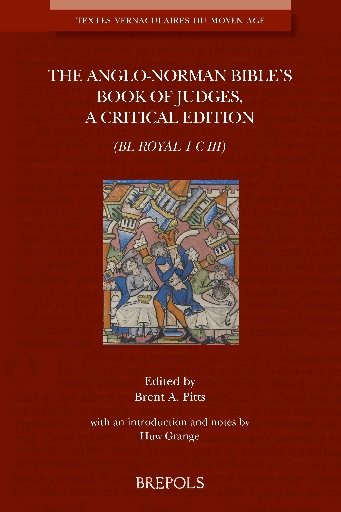
The Anglo-Norman Bible’s Book of Judges
(BL Royal 1 C III)
A silver-tongued assassin a motherly prophetess a consecrated strongman unable to resist the charms of foreign women: the Anglo-Norman Bible’s Book of Judges features a roll-call of unlikely heroes. At the book’s core is a cycle of saviour stories. Twelve times the Israelites embrace foreign gods succumb to neighbouring enemies repent and are delivered by a ‘judge’. As Israel itself descends into ever-greater religious moral and political decay the narrative pattern also unravels. The book ends bleakly with stories of rape murder and civil war. The stage is set for a king.
Gideon-a doubting Thomas who repeatedly ‘tests’ God-and Samson-lion-killer and lover of Delilah-were firm medieval favourites. Their tales and those of other flawed judges inspired heroic deeds on the battlefield and provided lessons on how to behave (and indeed how not to behave). With its remarkable heroines moreover-from cut-throat Jael who wields a tent-peg to devastating effect to Jephthah’s dignified daughter sacrificed because of her father’s rash vow-this is a book that prompted much reflection in the Middle Ages on the place of women in society.
The Anglo-Norman Bible’s Book of Judges survives in two fourteenth-century manuscripts: British Library Royal MS 1 C III (L) noted for its multilingual glosses and the richly illustrated Paris Bibliothèque nationale de France fonds français 1 (P). The critical text based on L has been prepared by Pitts. An introduction and notes by Grange aim to elucidate and interpret the Anglo-Norman Bible’s Book of Judges for the modern reader.
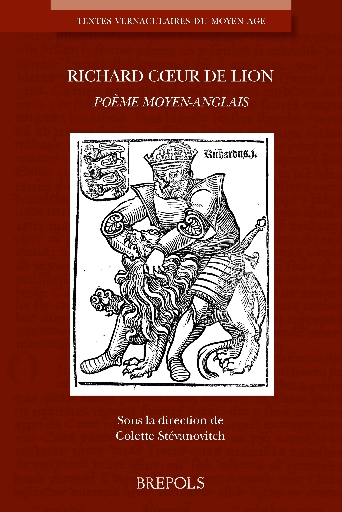
Richard Cœur de Lion
Poème moyen-anglais
Ce poème moyen-anglais relate les exploits du roi Richard Coeur de Lion lors de la troisième croisade. Il occupe une place à part dans le corpus des romans moyen-anglais du fait que son héros est un roi anglais et que les événements racontés sont historiques. Cependant au fil des réécritures la vérité historique est progressivement déformée et le roi Richard devient un héros de roman. Sous sa forme définitive ce texte se singularise par la présence d’éléments macabres et en particulier de scènes de cannibalisme. Très célèbre de son temps encore édité au xvi e siècle le poème est redécouvert au xix e siècle et notamment exploité par Walter Scott.
Ce volume présente à côté du texte moyen-anglais dans l’édition de Larkin (2015) la première traduction française du poème. Les notes et l’introduction attachent une importance toute particulière à l’étude des sources et à l’élaboration du texte version après version.
Adgar, Le Gracial
Miracles de la Vierge
Le Gracial d’Adgar est le premier recueil de miracles de Notre-Dame en langue vernaculaire en l’occurrence en anglo-normand. Il a été rédigé par un moine de Londres vers 1165. Il comporte 49 miracles internationaux ou locaux dont le plus important est le célèbre miracle de Théophile prototype du récit du pacte avec le Diable appelé à un grand succès ultérieur. Pour la première fois le texte est intégralement traduit en français moderne et en anglais pour le miracle de Théophile. Une courte introduction présente ces récits qui se veulent historiques et qui cherchent à rivaliser avec la littérature profane courtoise en plein essor. Un fort contenu didactique se marie avec un merveilleux chrétien édifiant. Ce chef d’œuvre littéraire est à rapprocher des chefs d’œuvre de l’art gothique consacrés souvent à exalter l’amour de Notre-Dame.
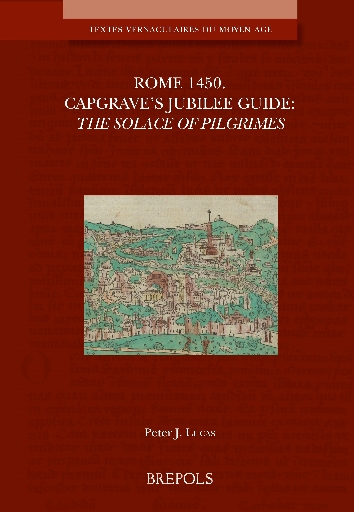
Rome 1450. Capgrave's Jubilee Guide
The Solace of Pilgrimes
The scene is Rome in the fi fteenth century Golden Rome a magnet drawing pilgrims by its architectural attractions and the magnitude of its religious importance as the mother of faith. The Austin friar John Capgrave attended Rome for the Jubilee in 1450 including the Lenten stations and his Solace of Pilgrimes intended as a guide for subsequent pilgrims was written up following the author’s own pilgrimage. In three parts it covers the ancient monuments the seven principal churches and the Lenten stations and other churches of note especially those dedicated to the Blessed Virgin Mary. The work has been described as the most ambitious description of Rome in Middle English. The present edition offers a new Text based on a transcription of the author’s holograph manuscript. Parallel with the Text there is a modern English Translation. The illustrations mostly from a period slightly later than the 1450 Jubilee aim to give some visual clue as to what Capgrave saw. There is a full account of the multiple sources that he used most of which is the product of new research. Following the Text there is a Commentary that aims to provide some background information about the buildings and monuments that Capgrave focuses on and to explain and illuminate any diffi culties or points of interest in the Text. Capgrave is an omni-present guide leading us towards what he considered an appropriate interpretation of the classical past as a foundation for the Christian present which built on it and surpassed it.
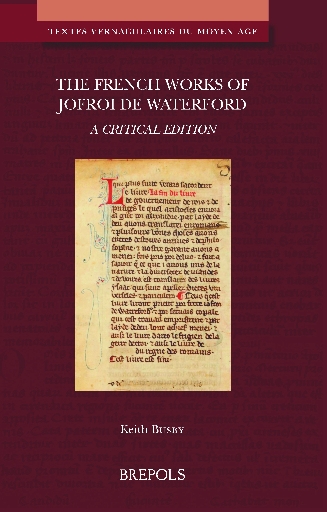
The French Works of Jofroi de Waterford
At the beginning of the fourteenth century Jofroi a brother of the Dominican house of St Saviour’s in Waterford Ireland translated into French and adapted from the Latin three texts: the De excidio Troiae of the so-called ‘Dares Phrygius’ the Breviarium historiae romanae of Eutropius and Pseudo-Aristotelian Secretum secretorum. While the first two La gerre de Troi and Le regne des Romains are generally close translations Le secré de secrés is much modified by omissions and interpolations of exempla and scientific material. In his enterprise Jofroi was aided and abetted by his scribe the Walloon merchant and custos Servais Copale. This book is the first critical edition of Jofroi’s œuvre. The texts are accompanied by a general introduction individual introductions to each of the three texts extensive notes a substantial glossary and an index of proper names. Jofroi and Servais collaborated in Waterford not Paris as has long been assumed and these texts are therefore witness to the importance of French as a literary language in southeastern Ireland.
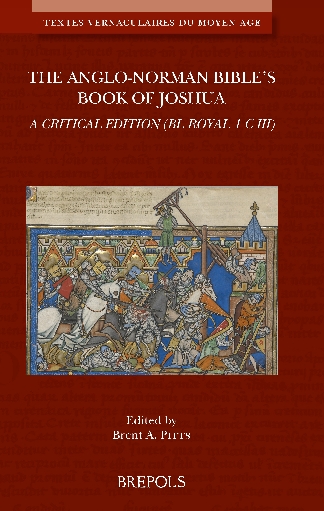
The Anglo-Norman Bible’s Book of Joshua, a Critical Edition
(BL Royal 1 C III)
The Anglo-Norman Bible’s Joshua includes tales of spies giants the prostitute Rahab the punishment of Achan oracles and Joshua’s brilliant military victories. Joshua stops the sun. The first half of the book relates Joshua’s stunning conquests in Canaan. The second half the apportionment of the land among the tribes detailed geographical surveys of territorial boundaries and the death of Joshua.
Skilful well-paced story telling is a feature of the ANB’s Joshua. To the accounts of Rahab and Achan we may add the chronicle of Joshua’s successful crushing campaign in the wake of the destruction of Makkedah. In rapid succession and in an annalistic style involving staccato repetition of key phrases the narrator relates the destruction of Libnah Lachish Eglon Hebron and Debir.
The text of the ANB’s Joshua is extant in British Library Royal 1 C III (base manuscript L) and Paris Bibliothèque nationale de France MS français 1 (P) both c. 1350 and both the Bibles of kings. L belonged at some point in the fifteenth century to Reading’s Benedictine abbey entering the royal library in 1530. Characteristic of L is its occasional insertion of short glosses in English or Latin to clarify or correct the Anglo-Norman text. An illustrated text P was prepared by an English workshop for the fourth baron de Welles John and his wife Maud daughter of William Lord Ros. This is clearly the Bible of a wealthy and well-connected English family. After the Welles family the manuscript belonged to Louis de Bruges († 1492) then to King Louis XII of France.
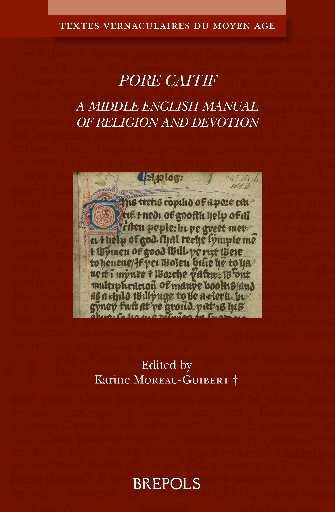
Pore Caitif
A Middle English Manual of Religion and Devotion
The Pore Caitif is an anonymous late fourteenth-century manual of devotion and religious instruction destined for a lay readership. The text in its various forms circulated widely and was evidently very popular as the fifty of so extant manuscripts and fragments readily attest. Of them no fewer that twenty-eight transmit a full text showing remarkable fidelity to the now presumably lost archetype. As such the Pore Caitif invites comparison with the considerable production and diffusion of religious texts in English which figure prominently in the fourteenth and fifteenth centuries. In this respect it is to note that some critics have argued for the presence of Lollard interpolators or commentators in a number of the extant manuscripts including the influence of the Wycliffite Bible translation.
This edition will be published in two volumes. This the first provides a full Introduction to the manuscripts and their transmission classifying them in groups while examining some of the trends observable in some of the more notable variants they inevitably preserve. A commentary on the text is followed by a full glossary. The second volume will discuss manuscript relationships and the problems arising therefrom.
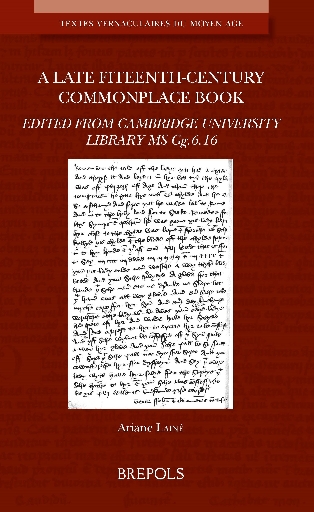
A Late Fiteenth-Century Commonplace Book
Edited from Cambridge University Library Ms Gg. 6.16
This edition presents the full text of a personal collection of temporale Middle-English sermons compiled by a parish priest for his own use (preserved in Cambridge University Library MS Cg.6.16). It also includes the notes and fragments of sermons or exempla found at the beginning of the manuscript with a purpose of giving insight into the way a parish priest would compile materials. This manuscript has attracted attention because it perserves versions of these sermons' early stages. The current edition is therefore complementary to editions of later versions of the same sermons. The introduction provides a discussion of these sermons' textual history and the circumstances in which they were possibly preached. Explanatory notes a glossary and indexes complete the edition.
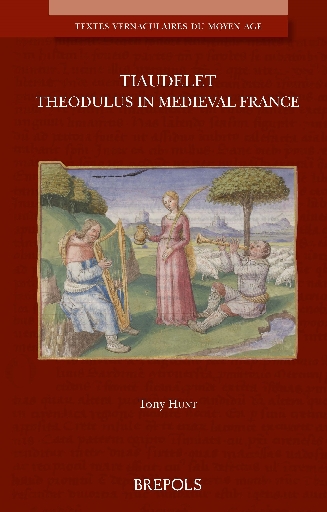
Tiaudelet
Theodulus in Medieval France
The Medieval French text (9400 lines) known as Tiaudelet is here edited for the first time. It is a lively debate poem which translates Theodulus’s Ecloga and adds a lengthy commentary to each stanza. It was last investigated in 1915 when A. Parducci published five modest extracts. It is found in a manuscript which represents a sort of vernacular ‘Liber Catonianus’ offering classical texts which formed the basis of the educational curriculum in the arts in French translation. It debates the value of two traditions: the classical and biblical with the educational aim of increasing knowledge of classical and Scriptural narratives. As an appendix to the edition is provided the text of the only other French translation of Theodulus by Jean Le Fèvre as represented by the unique copy in the National Library of Scotland of the early print by Jan Brulelou of Bruges.
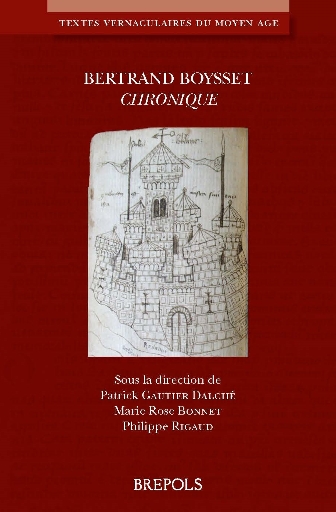
Bertrand Boysset. Chronique
La chronique de Bertran Boysset de la moyenne bourgeoisie d’Arles (v. 1350-1415)est un texte difficile à classer. Elle comporte certains aspects du livre de raison mais l’intérêt de l’auteur dépasse largement le cercle restreint de l’environnement familial. Proche d’Avignon à l’époque du Grand Schisme dans une région troublée par les rivalités politiques et les exactions des gens de guerre l’auteur note non seulement ses activités (l’exploitation de ses vignes et de ses pêcheries) les phénomènes météorologiques les faits qui sortent de l’ordinaire mais encore ce qui se passe à la cour papale à Avignon et à Rome ainsi que les séjours des souverains. C’est un témoignage exceptionnel sur la vie quotidienne et sur la perception du monde d’un laïc de culture moyenne qui veut par ses écrits se situer dans le cadre plus large d’une cité autrefois prestigieuse.
Rédigée en provençal avec quelques passages en latin elle est transmise en trois versions dont deux autographes. On édite ici la deuxième version (Paris BnF fr. 5728) accompagnée d’une traduction française et d'une introduction.
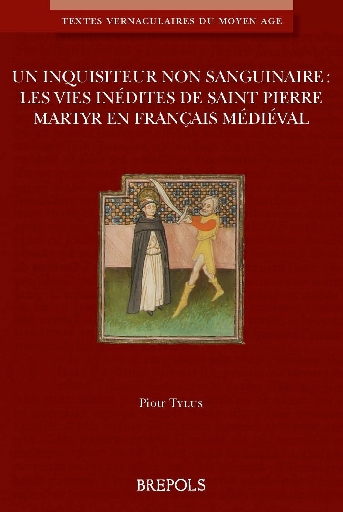
Un inquisiteur non sanguinaire : les vies inédites de saint Pierre Martyr en français médiéval
Pierre naît à Vérone au tournant du XIIe et du XIIIe siècle d’une famille cathare. Il est dit « de Vérone » ou « Martyr ». Il étudie à Bologne où il rencontre les frères prêcheurs et entre dans l’ordre en recevant l’habit probablement des mains de saint Dominique lui-même vers 1220 ou 1221. Son activité essentielle est celle de prédicateur itinérant. Il prêche à Rome à Florence dans la Romagne et la Marche d’Ancône à Venise et en Toscane et peut-être même à Paris. En juin 1251 Innocent IV le charge d’une mission contre les hérétiques de Crémone. Quelques mois plus tard en septembre 1251 il devient inquisiteur pontifical à Milan à Côme et dans leurs districts. Il assume cette tâche pendant les derniers mois de sa vie. Le 6 avril 1252 il est tué sur le chemin de Côme à Milan par un tueur à gages loué par les hérétiques. Pierre est canonisé le 9 mars 1253.
Le présent livre contient neuf versions de sa légende rédigées en français ancien (XIIIe-XVe siècles) par des auteurs anonymes. Les textes qui procèdent du chapitre 61 de la Légenda aurea de Jacques de Voragine n’ont jusqu’à présent jamais été édités. Dans la majorité des cas on a affaire à des adaptations libres parfois très libres de la vita contenue dans la Legenda aurea pour lesquelles celle-ci n’est qu’un point de départ. Il s’agit de textes autonomes : chacun des auteurs a exploité sa source à sa propre façon ; ce sont des jeux de la variante tellement caractéristiques de la littérature médiévale.
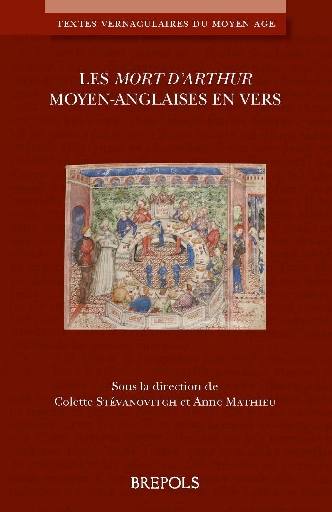
Les 'Mort d’Arthur' moyen-anglaises en vers
Les deux poèmes moyen-anglais réunis ici relatent chacun à sa manière la mort tragique du roi Arthur. Le Stanzaic Morte Arthur donne une place prépondérante aux amours de Lancelot et Guenièvre aux effets catastrophiques. Dans l’Alliterative Morte Arthure par contraste Arthur est un chef de guerre d’abord favorisé puis abandonné par la fortune. Les divergences entre les deux poèmes s’expliquent en grande partie par la nature de leurs sources : roman français en prose pour Le Stanzaic Morte Arthur corpus de chroniques pour l’Alliterative Morte Arthure.
Ces deux poèmes constituent des jalons importants dans l’histoire de la geste arthurienne en raison notamment de l’infl uence qu’ils ont exercée sur Malory auteur de la vaste compilation connue sous le nom de Morte DArthur (1485). Or celle-ci nourrit l’imaginaire arthurien depuis plus de cinq cents ans : voir Idylls of the King de Tennyson (1859) ou le fi lm Excalibur de John Boorman (1981).
Ces deux Mort d’Arthur ont été éditées en un seul volume en 1972 (Larry Benson). Il était de fait utile de rassembler deux poèmes portant sur le même sujet mais issus de traditions différentes. Cette traduction française s’inscrit dans la lignée du travail de Benson. Elle est assortie d’un ensemble de notes.
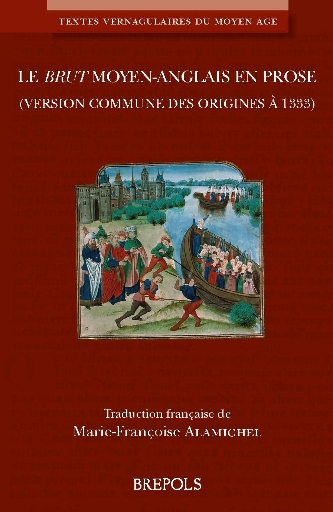
Le Brut moyen-anglais en prose (version commune des origines à 1333)
Traduction française
Près de 200 manuscrits du Brut en prose moyen anglais nous sont parvenus soulignant ainsi l'extraordinaire popularité de cette œuvre. Le présent ouvrage est la traduction française de sa première partie qui s’achève en 1333 avec la bataille de Halidon Hill. Elle est accompagnée de la reprise de l’édition du texte d’origine par F. Brie pour l’Early English Text Society. Une longue introduction une cinquantaine de pages de notes et un double index viennent compléter le volume.
L’ouvrage sera utile aux historiens qui trouveront ce que les Anglais des XIV e et XV e siècles avaient choisi de retenir de leur passé national. Les littéraires pourront s’attarder sur les moyens rhétoriques et de propagande de ce récit engagé. Le plus grand public enfin découvrira un récit aux multiples facettes qui montre que la construction de l’identité nationale anglaise reposait à la fois sur l’Histoire et l’imaginaire - mythes troyens et arthuriens prophéties de Merlin miracles chrétiens. Ce mélange fait tout l’intérêt de ce texte fondamental de l’Angleterre médiévale.
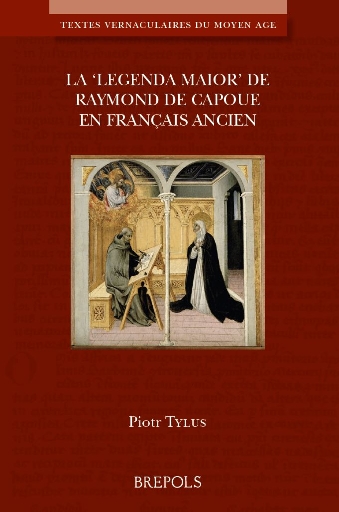
La 'Legenda Maior' de Raymond de Capoue en français ancien
Catherine Benincasa a marqué son époque. Elle naît à Sienne en l’année 1347. Tertiaire dominicaine et théologienne ne sachant pas écrire et ignorant le latin elle est proclamée Docteur de l’Église. Catherine mystique portant les stigmates a influencé la vie religieuse de plusieurs générations et est engagée en même temps dans les plus grands événements politiques. Elle est patronne et inspiratrice de la réforme dominicaine et du renouveau de l’Église. Catherine meurt à Rome le 29 avril 1380. Le pape Pie II prononce sa canonisation en 1461.
Il nous reste aujourd’hui deux rédactions indépendantes l’une de l’autre de la légende de sainte Catherine de Sienne en français médiéval. Toutes les deux descendent de la Legenda Maior de Raymond de Capoue confesseur de la Sainte. L’une composée en 1430 et conservée en deux manuscrits est une traduction plutôt fidèle de la source latine. L'autre est une adaptation (au sens large) de l’original latin et un abrégé en même temps. Composée en 1458 elle est conservée en six manuscrits. Alors en somme huit éditions médiévales ce qui est relativement beaucoup et ce qui est peu.
Les auteurs des versions françaises dominicains du Nord et du Nord-Est de la francophonie ont préféré garder l’anonymat.
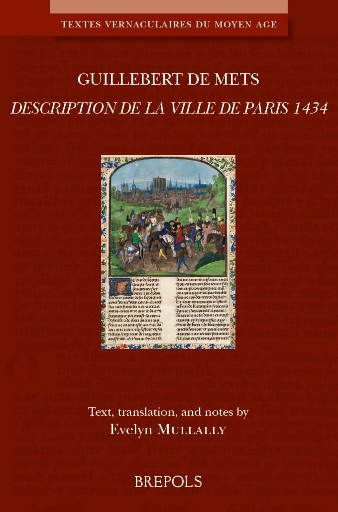
Description de la ville de Paris 1434
Medieval French text with English translation
In 1434 Guillebert from Geraardsbergen completed his description of Paris. It is a remarkable record of what was considered noteworthy at the time both historically and topographically. There are picturesque details which are often cited in annotations to the poetry of Francois Villon notably concerning the Cemetery of the Innocents the depiction of the Virgin and of heaven and hell in the Celestines and the reference to the famous beauties of the city. The author was an innkeeper and town councillor in his native Geraardsbergen but also a profssional scribe involved in the book trade who was a 'libraire' for Philip the Good Duke of Burgundy. The unique manuscript that contains this text also features an important illlustration by an otherwise unknown artist. A whole group of fifteenth-century Flemish manuscript illuminators is now associated with this master who was given in 1915 the title 'Master of Guillebert De Mets'.
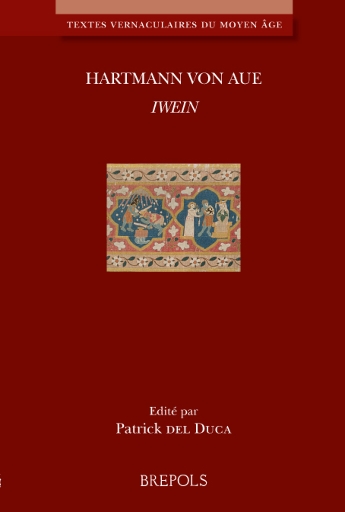
Iwein
Texte établi, traduit et annoté
A la fin du XIIe siècle Hartmann von Aue un clerc allemand originaire de Souabe adapte Yvain ou le Chevalier au Lion de Chrétien de Troyes. Iwein constitue sans nul doute l’œuvre la plus aboutie et la plus fascinante de Hartmann. L’adaptateur y reprend les aventures autour desquelles s’organise le roman français : la fontaine merveilleuse la conquête d’une reine et d’un pays la folie d’Iwein l’aide apportée aux chevaliers prisonniers du géant Harpin ou aux trois cents captives d’un château le combat contre Gawein. Toutefois Hartmann ne se contente pas d’adapter le roman de Chrétien à la langue allemande il réinterprète sa source et transforme en profondeur les motivations des personnages et le sens des aventures. Ce qui prime chez Hartmann n’est plus le rapport entre fin’ amor et prouesse mais le rôle de la chevalerie et l’idéal du miles christianus. Pour la première fois ce roman allemand est traduit en français moderne.
Patrick del Duca est Maître de Conférences et enseigne la langue et la littérature allemandes du Moyen Âge à l’Université Blaise Pascal de Clermont-Ferrand.