


Brepols
Brepols is an international academic publisher of works in the humanities, with a particular focus in history, archaeology, history of the arts, language and literature, and critical editions of source works.1051 - 1100 of 3194 results
-
-
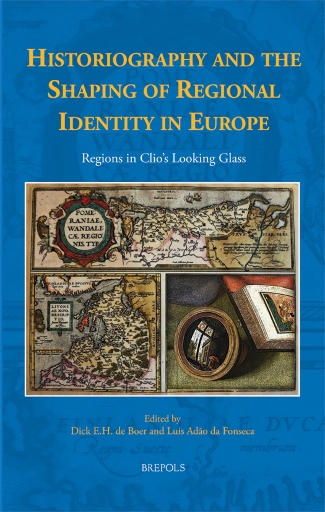
Historiography and the Shaping of Regional Identity in Europe
Regions in Clio’s Looking Glass
show More to view fulltext, buy and share links for:Historiography and the Shaping of Regional Identity in Europe show Less to hide fulltext, buy and share links for: Historiography and the Shaping of Regional Identity in EuropeOver the centuries, historiography - in many different forms - became an important vehicle by which to create, articulate, and express the existence, awareness, and characteristics of Europe’s regions. Be it the histories of noble families that were important stakeholders in a region, urban histories describing the developing urban networks through which regions could function, dynastic histories emphasizing the relationship between ruler and region, or hagiographies describing holy men and women and their veneration as focal points within regions - all of them represented and reflected identities within an understood spatial and or mental sphere. Historiography can therefore help us to understand the way in which regions were seen from within and from without, and to understand the patterns and dynamics of regional cohesion. Moreover, it sheds light on the dialectic between nation and region, and on the relationship between the regional sphere and the wider (inter)national sphere.
The authors of this volume look at individual European regions from different points of view, using historiography as a lens. They analyse the ways in which history as a construct has played a role in establishing regional identity, providing examples of the ways in which recording, interpreting, and recounting the history of regions through the ages has been instrumental in shaping these regions. The first section of the volume explores regional identity in medieval and early modern historiography; the second shows how, in the age of the invention and triumph of the European nation-state (the long nineteenth century), historiography of a new kind was applied for a deliberate creation of regional identity, or at least reflected the need for a historical confirmation of identities.
-
-
-
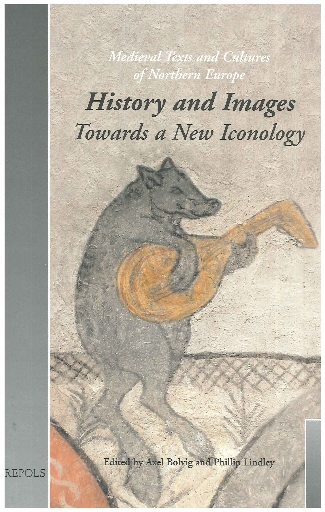
History and Images
Towards a New Iconology
show More to view fulltext, buy and share links for:History and Images show Less to hide fulltext, buy and share links for: History and ImagesThis versatile collection of essays sets out to underline the new visual agenda in today’s research into history and the history of art. The impact of alternative imagery, of image databases and of computer-generated material has effectively revealed a separate resource-category, offering further definitions of meaning and information and requiring new methodologies of interpretation. The volume’s subtitle, ‘Towards a New Iconology’, makes the point that our conventional approaches towards the image may no longer be adequate. Its nineteen contributions all represent a moving-away from the tradition passed down ever since Gregory the Great famously pronounced images to be the Bible of the illiterate. On the contrary, the authors of this volume demonstrate that images constitute another world altogether, with its own ideology and store of information, and with its own emotional charge and seductive qualities. History and Images contains articles by eminent scholars from Austria, Denmark, Finland, France, Germany, the Netherlands, Norway, Sweden, Switzerland, the UK and USA.
-
-
-
History of Modern Physics
Proceedings of the XXth International Congress of History of Science (Liège, 20-26 July 1997) Vol. XIV
show More to view fulltext, buy and share links for:History of Modern Physics show Less to hide fulltext, buy and share links for: History of Modern PhysicsAddressing modern physics in its largest perspective, the present volume, which includes 34 contributions, begins with a reappraisal of classical science. However, the stress is placed on the contemporary period with sections devoted to thermodynamics and mechanics, the centenary of the electron, Einstein, the quantum theory and particle physics.
-
-
-
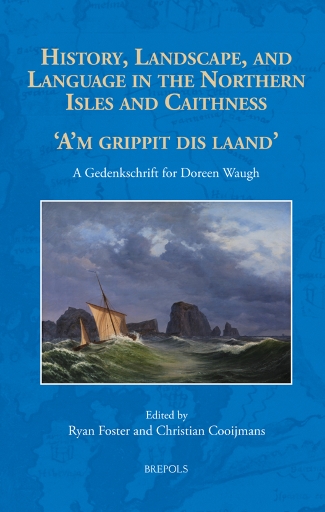
History, Landscape, and Language in the Northern Isles and Caithness
‘A’m grippit dis laand’. A Gedenkschrift for Doreen Waugh
show More to view fulltext, buy and share links for:History, Landscape, and Language in the Northern Isles and Caithness show Less to hide fulltext, buy and share links for: History, Landscape, and Language in the Northern Isles and CaithnessDoreen Waugh was a native Shetlander and a well-renowned scholar of Old Norse and Gaelic place-names in Northern Scotland and the Northern Isles. Not only did Waugh’s research significantly advance scholarly understanding of the ‘Viking’ settlement of the North Atlantic, her generosity with both her time and knowledge inspired and motivated a wide range of scholars from a variety of disciplines, from archaeology and history to historical geography, linguistics, and place-name studies.
Based on - and written in tribute to - Waugh’s work, this interdisciplinary volume draws together essays covering Northern Scotland, the Northern Isles, and beyond, both during and after the early medieval period. The contributions gathered here draw on Waugh’s wider-ranging research interests to offer a range of novel insights into the many communities, cultures, and customs that have characterized and connected the Northern Isles and their North Atlantic neighbours.
-
-
-
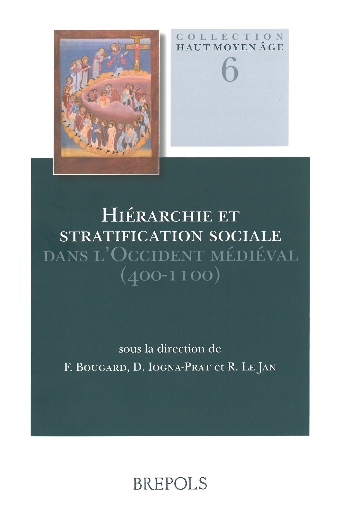
Hiérarchie et stratification sociale dans l’Occident médiéval (400-1100)
show More to view fulltext, buy and share links for:Hiérarchie et stratification sociale dans l’Occident médiéval (400-1100) show Less to hide fulltext, buy and share links for: Hiérarchie et stratification sociale dans l’Occident médiéval (400-1100)Si la notion d’«ordre(s)» est familière aux historiens du Moyen Âge, il est loin d’en être de même pour celle de «hiérarchie». Au reste, le terme n’a pas bonne presse chez les chercheurs en sciences humaines et sociales, qui s’en méfient pour ses relents d’Ancien Régime et préfèrent souvent parler de «stratifications sociales», comme si choisir, distinguer, hiérarchiser les valeurs n’étaient pas dans les mondes du passé comme dans celui d’aujourd’hui à la base même de l’action sociale.
D’origine grecque — hieros (sacré) et archos (fondement, commencement, commandement) — le terme «hiérarchie» est d’un emploi longtemps rare dans la latinité. Les concordances automatisées du latin permettent de savoir avec précision que le succès lexical de hierarchia n’est pas antérieur au tournant des années 800 et qu’il dépend directement de la traduction depuis le grec des écrits du Pseudo-Denys l’Aréopagite, spécialement la Hiérarchie céleste et la Hiérarchie ecclésiastique. Concomitance intéressante, l’adoption généralisée du terme hiérarchie dans l’Occident médiéval, entre le ix e et le xi e siècle, est contemporaine d’une conception de la société rapportée à l’harmonie du cosmos qui fait du monde des hommes un reflet de l’ordonnancement voulu par Dieu — un ordonnancement propre à confondre ecclésial et social ou, dit autrement, à faire d’Église et société deux termes coextensifs. Dans cette logique, puisqu’il ne saurait y avoir de critère laïque d’appartenance aux groupes sociaux, le concept de hiérarchie permet au médiéviste de rendre compte de l’ensemble des processus d’organisation d’une société stratifiée parce qu’aspirée vers le divin. Il permet autant de décrire un jeu de places que de saisir la dynamique de processus à l’œuvre dans la grande fabrique du social.
-
-
-
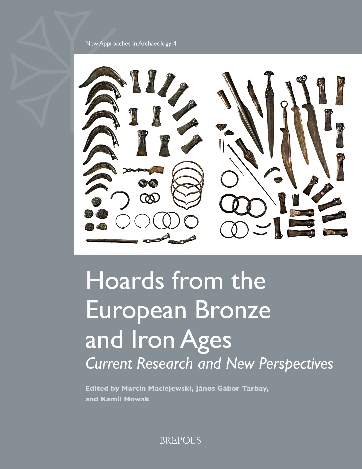
Hoards from the European Bronze and Iron Ages
Current Research and New Perspectives
show More to view fulltext, buy and share links for:Hoards from the European Bronze and Iron Ages show Less to hide fulltext, buy and share links for: Hoards from the European Bronze and Iron AgesHoards are among the most enigmatic of archaeological finds. The term ‘hoard’ itself has been applied to different assemblages across space and time, from the Stone Age into the modern era, with an inventory that typically includes artefacts made of valuable raw materials, to which significant symbolic meanings can also be assigned. Archaeologists have been trying to understand this phenomenon for much of the last century, sometimes emphasizing the universal nature of hoards, but more typically focusing on specific regions, chronologies, and finds. They have, for the most part, used results derived from typolo-chronological methods. Contemporary archaeology has, however, developed a broad spectrum of paradigms and methods, and hoardresearch in the twenty-first century draws on an increasingly wide range of approaches.This volume presents examples of research that make use of these multi-faceted approaches through a focus on European hoards of metal objects dating to the Bronze and Iron Ages. The contributors to this volume make use of diverse methods, among them archaeometallurgical analyses, studies of use- and production-wear, destruction patterns, and landscape archaeology, but together, their common denominator is the search for a methodological toolkit that will allow researchers to better understand the phenomenon of hoard-deposition more broadly.
-
-
-
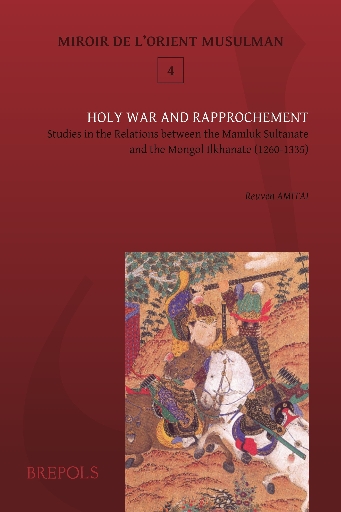
Holy War and Rapprochement
Studies in the Relations between the Mamluk Sultanate and the Mongol Ilkhanate (1260-1335)
show More to view fulltext, buy and share links for:Holy War and Rapprochement show Less to hide fulltext, buy and share links for: Holy War and RapprochementThe sixty year struggle (1260-1320) between the Mamluk Sultanate of Syria and Egypt and the Ilkhanate, the Mongol realm in Iran and the surrounding countries, had a profound impact on the region’s ruling elites and the general population, as well as on neighboring countries and beyond. It is possible to speak of a thirteenth century “world war”: on one side were arrayed the Mamluks and the Mongol Golden Horde of southern Russia, at times Genoa and the Byzantine empire, while on the other side we find the Ilkhanate, the Venetians (albeit still trading with the Mamluks), the states of western Europe, the Papacy, the Armenians of both the Caucasus and Cilicia, and Georgia. To these we could add minor, but still important actors: the Bedouin of Syria, the Seljuqs of Rum (Anatolia), the Turcoman of that country, and even more. Far away, the Mongols of Central Asia and the Great Khan in China also had an impact on affairs along the Mediterranean coast and southwest Asia.
The present volume is based on four lectures given at the Ecole Pratique des Hautes Etudes in Paris in February 2007, and first provides an overview of the military struggle between these two regional powers, continues with a detailed discussion of the ideological posturing and sparring between them - both before and after the conversion of the Mongols to Islam in the 1290s, and finally reviews and compares how the Mamluks and Mongols presented themselves to the local, mainly Muslim, populations that they ruled. The book provides an analysis of an important chapter in Middle Eastern, Asian and world history.
Reuven Amitai holds the Eliyahu Elath Chair for Muslim History at the Hebrew University of Jerusalem, where he is now the dean of the Faculty of Humanities. His publications include Mongols and Mamluks: The Mamluk-Ilkhanid War, 1260-1281 (Cambridge, 1995) and The Mongols in the Islamic Lands: Studies in the History of the Ilkhanate (Aldershot, 2007).
-
-
-
Hommes de Dieu et Révolution en Provence
show More to view fulltext, buy and share links for:Hommes de Dieu et Révolution en Provence show Less to hide fulltext, buy and share links for: Hommes de Dieu et Révolution en ProvenceCette étude, qui englobe l'ancienne Provence, privilégie deux options. Tout d'abord faire une place, à côté des prêtres catholiques qui constituent le noyau de notre enquête, d'une part aux religieuses, qui ont payé un lourd tribut à la Révolution avec les sentences de la Commission populaire d'Orange, d'autre part aux pasteurs et rabbins, représentants de religions certes très minoritaires mais présentes dans l'espace géographique de notre étude. Ensuite construire un récit qui s'articule sur la chronologie avec ses temps forts (Les États généraux, la Constitution civile du clergé et le serment, l'émigration, la déchristianisation), tout en faisant place, à côté de l'analyse des attitudes collectives, à quelques portraits d'hommes de Dieu en Révolution. Il est question, en fin de volume, de la reconquête religieuse avant et après le Concordat de 1802, et de la construction d'une "mémoire" du vécu religieux durant la Révolution, qui s'élabore au fil du XIXe siècle.
-
-
-
Hommes de Dieu et révolution en Alsace
show More to view fulltext, buy and share links for:Hommes de Dieu et révolution en Alsace show Less to hide fulltext, buy and share links for: Hommes de Dieu et révolution en AlsaceDie unter dem lapidaren Titel "Alsace" erschienene umfangreiche Monographie von Dominique Varry und Claude Muller, beide hervorragende Kenner dieser Gebiete des religiösen Ostens, entspricht voll und ganz den aufgestellten Kriterien. Ihr ßs, breit ausladend zwischen Vogesen und Deutschem Reich, spiegelt ein konfessionelles und sprachliches Mosaik wider, dass Hoch- und Niederrhein sowie Belfort bis zu den germanischen und helvetischen Grenzen einschließt. Es ist ihnen gelungen, die Geschichte einer "Nähe" zu schreiben, die bis auf die kantonale Ebene -eine administrative und religiöse Einheit, die alle Umwälzungen des elysäischen Schicksals überdauert hat- hinabreicht. Sie versuchen nicht, uns etwas vorzumachen.
Schritt für Schritt arbeiten sie sich mit der Vorsicht eines Chartsten an eine Wirklichkeit heran, deren komplexe Reichhaltigkeit mehr denn einen ihrer Vorgänger entmutigt hat. Tafeln, Karten und Graphiken untermauern eine zuverlässige Analyse, die einem eiligen Leser wohl als zu genau erscheinen mag. Nichtsdestoweniger maßen sie sich nicht an, die Geschichte des Elsass wahrend der Revolution neu zu schreiben, vielmehr wollen sie, im Hinblick auf zwingende weil gemäßigte Neubewertungen, bis heute vernachlässigte oder unbekannte Materialen aufspüren. Nach Dominique Varry und Claude Muller und wegen ihrer mehrjährigen Nachforschungen, erhalten die ständig wiederholten Kontroversen um ein Elsass der Eidverweigerer, denen eine Handvoll vorzugsweise ausländischer Konstitutioneller gegenübersteht, eine neue Dimension. Diese wird noch erweitert durch den vor kurzem erschienenen ersten Band dieser Reihe, den Alfred Minke dem Gebiet zwischen Maas, Rhein und Mosel gewidmet hat. Von einem Band zum andern sind die dank einer konvergierenden Betrachtungsweise des pastoralen Rahmens erzielten Ergebnisse sicherlich nicht zufällig
-
-
-
Homo Interior and Vita Socialis
Patristic Patterns and Twelfth-Century Reflections
show More to view fulltext, buy and share links for:Homo Interior and Vita Socialis show Less to hide fulltext, buy and share links for: Homo Interior and Vita SocialisJust as apparently universal ideas of inwardness are different over time, so the idea of the self in relation to others is subject to historical change and dependent on different contexts. Against a shared background of late antique and early medieval Christianity the thinkers who are the subject of this book develop their thoughts of a relational self within their wider concerns. Augustine is the thinker of interiority, but also of the social life. For Augustine, the opacity of others, even of oneself, and how to overcome it, is a main concern. Cassian writes about the ideal of solitude, yet neither the abbas who are the subject of his Conversations, nor his readers can avoid the company of others. For Cassian, human fellowship is instrumental in reaching the desired virtues of detachment, which then enables love for others. Gregory the Great searches for the right balance of the contemplative and the active life, but even the contemplative is not a separate individual. Gregory’s instruction of the leaders of the Church emphasises the need to widen in compassion, against the constant danger for the preachers of hypocrisy and the swollenness of pride and arrogance. These three authors were among the most influential sources in later ages. Their echoes resonated in the twelfth century, when a renewed interest in interiority raises the question how the twelfth-century ‘inner man’ relates to others. Hugh of Saint-Victor, Abelard, and Heloise, are among the writers in whose thoughts we see patristic thought reflected and changed in various ways.
-
-
-
Homo Legens
Styles et pratiques de lecture: Analyses comparées des traditions orales et écrites au Moyen Âge / Styles and Practices of Reading: Comparative Analyses of Oral and Written Traditions in the Middle Ages
show More to view fulltext, buy and share links for:Homo Legens show Less to hide fulltext, buy and share links for: Homo LegensHow can we uncover the traces of oral culture in medieval sources when the oral matter we possess survives only in written form? Is it the case that only the written persists while the oral is lost? What was the status of orality in medieval society? The studies in this volume (five chapters in French and two in English) examine the links between the oral and the written traditions in medieval literature. They do this by means of the analysis of literary sources from very diverse backgrounds, both geographically and linguistically speaking: the investigation ranges from medieval Spain, through the Byzantine Empire and the Crusader states, to late medieval and early modern Turkey. This interdisciplinary enquiry by an international group of scholars enables us to define the modes of transmission of medieval texts and how they were memorized as well as to decipher how they were read and appropriated. In addition, the book suggests a methodological basis for research into indices of orality and for analysis of the intertextual links between literary works. This enquiry, undertaken within the framework of the international Homo Legens project, provides an efficacious tool for the study of the practices of reading and writing.
-
-
-
Homo, Natura, Mundus: Human Beings and Their Relationships
Proceedings of the XIV International Congress of the S.I.E.P.M., July 24-28, 2017, Porto Alegre, Brazil
show More to view fulltext, buy and share links for:Homo, Natura, Mundus: Human Beings and Their Relationships show Less to hide fulltext, buy and share links for: Homo, Natura, Mundus: Human Beings and Their RelationshipsThe present volumes contain a number of studies first presented at the XIV International Congress of the Société Internationale pour l’Étude de la Philosophie Médiévale, July 24-28, 2017, Porto Alegre, Brazil - which happened to be the first SIEPM Congress in Latin America and the first in the Southern Hemisphere. In 65 essays on current research questions in Latin, Jewish, and Arabic Philosophy, and Early Modern Scholasticism, the contributors explore the general theme of "Homo - Natura - Mundus: Human Beings and their Relationships," and lead us to new perspectives. These essays relate to the following areas of interest: the human being’s self-understanding as a rational creature in multiple relationships (with God, the other, the community, the fellow and the different); the human being’s place in the natural world and the possibility of relating to nature through knowledge; medieval philosophical traditions and the challenges introduced by the "discovery" of the "New World" (dominium, war, hierarchies, and new areas of concern with respect to justice, the human good, and the law). Thus, these volumes offer a unique sample of scholarly studies that work with the idea of "relationships" in two distinct, but not opposing, directions. Firstly, they explore the ways in which human beings, according to the reach of their soul’s powers, construct their self-understanding and existence in relation to God, themselves, others and the natural world. Secondly, they explore the ways in which the philosophical bases for the understanding of these relationships were challenged by the transportation of medieval ideas to the "New World" and by the reception of these ideas in early modern times.
-
-
-
Homère rhétorique
Études de réception antique
show More to view fulltext, buy and share links for:Homère rhétorique show Less to hide fulltext, buy and share links for: Homère rhétoriqueHomer’s poems stand at the beginning of Greek literature and such a place has given the Poet, since Antiquity, the status of a « master of all sciences ». Since Homer is also present at every level of education, his authority rises above poetry and the Poet becomes paradoxically a model in the art of eloquence. Teachersand scholars, in Greece as in Rome, read and commented on Homeric epics using rhetorical categories. This book aims to study rhetorical reception of Homer in Antiquity, shifting from creative mimesis of the Homeric text to critical interpretation. The readings of Homer provided by scholia, rhetorical treatises and critical monographies on the Poet and his epics are at the core of the studies gathered in this volume. This rhetorical exegesis of Homer, which lasted during all Antiquity and was revived in the Renaissance, contributes to the birth and the development of an Ancient literary criticism.
-
-
-

Hope Allen’s Writings Ascribed to Richard Rolle: A Corrected List of Copies
show More to view fulltext, buy and share links for:Hope Allen’s Writings Ascribed to Richard Rolle: A Corrected List of Copies show Less to hide fulltext, buy and share links for: Hope Allen’s Writings Ascribed to Richard Rolle: A Corrected List of CopiesRichard Rolle was perhaps the most influential English spiritual writer of the late Middle Ages. This volume provides references to the more than 600 surviving medieval books that offer the primary evidence for his works and their transmission.
Hope Allen's Writings Ascribed to Richard Rolle, now nearly a century old, is a foundational work of English palaeography. This volume extends Allen's most basic contribution, her catalogue of manuscripts conveying Rolle's works.
-
-
-
Hortus Artium Medievalium
show More to view fulltext, buy and share links for:Hortus Artium Medievalium show Less to hide fulltext, buy and share links for: Hortus Artium MedievaliumHortus Artium Medievalium is the annual journal of the International Research Center for Late Antiquity and Middle Ages (Motovun, Croatia), established in 1993. The journal has a particular interest in studying artefacts for the history of art, and to study the period from Late Antiquity to the end of the Gothic period in an interdisciplinary, international and diachronic fashion. The papers are drawn from an annual colloquium of appropriate specialists.
More information about this journal on Brepols.net
-
-
-
Household, Women, and Christianities
in Late Antiquity and the Middle Ages
show More to view fulltext, buy and share links for:Household, Women, and Christianities show Less to hide fulltext, buy and share links for: Household, Women, and ChristianitiesFrom its earliest beginnings in the homes of its members, the church has been the ‘house’ of God, and the episcopal and monastic institutions in which many of God’s professed servants and officials dwell have been seen as religious ‘houses’. The church’s history is accordingly the history of an institution largely conceived of as a household. In recent years, secular life and lifestyles in late antiquity and the Middle Ages have been illuminated through renewed attention to the economic and social history of households, while scholarship on women has produced studies of the lives and the devotional reading of laywomen and women religious. This volume is a pioneering collection that unites study of the household with women’s religious practices as a focus of enquiry. It moves beyond consideration of the church’s roles in women’s history to the impact of women’s householding on the history of the church.
-
-
-
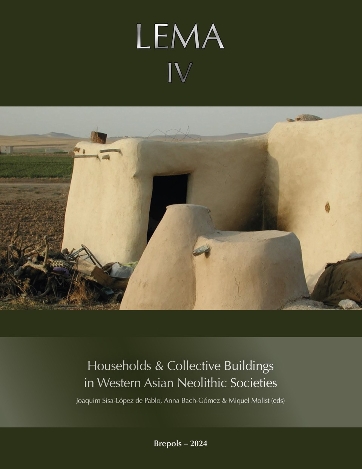
Households & Collective Buildings in Western Asian Neolithic Societies
show More to view fulltext, buy and share links for:Households & Collective Buildings in Western Asian Neolithic Societies show Less to hide fulltext, buy and share links for: Households & Collective Buildings in Western Asian Neolithic SocietiesArchitecture, and the layout of settlements, are key elements of archaeological research that enable an understanding of past societies. In studying the built environment and the articulation of social spaces, it is possible to shed light on the social relations of communities, and on the ideology, economy, and cultural and social practices that underpinned how people lived. Taking a study of the built environment as its starting point, this volume draws together contributions focusing on the Neolithic transition in south-western Asia. Covering a period that extends from the Early Pre-Pottery Neolithic through to the Late Neolithic (c. 10,000–5500 BCE), the chapters gathered here explore the built environment from different regions, perspectives, and methodologies, and draw on new theoretical and analytical approaches in order to expand our knowledge of the emergence of the Neolithic through the lens of architectural and settlement analysis.
-
-
-

How the Secularization of Religious Houses Transformed the Libraries of Europe, 16th-19th Centuries
show More to view fulltext, buy and share links for:How the Secularization of Religious Houses Transformed the Libraries of Europe, 16th-19th Centuries show Less to hide fulltext, buy and share links for: How the Secularization of Religious Houses Transformed the Libraries of Europe, 16th-19th CenturiesThe closure of religious houses, in varying circumstances, affected all of Europe at some point between the sixteenth and nineteenth century. At different times and in different countries the consequences were widely varied, in some cases preserving medieval and early modern collections intact, in others abandoning books to their fate, or transferring them piecemeal into new ownership to serve different cultural purposes. Integral preservation or dispersal may each be viewed in positive or negative terms. For religious and political history there are many, and bigger, factors involved, and the effects of secularization worked on many things beside libraries and books. None the less, by focusing on books and libraries through these changes a particular narrative emerges of great cultural importance. It is the most important book-historical story for the survival and accessibility of Europe's heritage of the written word, one that interacts with major historical themes and still connects with future issues for the continuing role of books and libraries in the European heritage.
A conference held in Oxford in 2012 brought together thirty experts in different aspects of this process or with knowledge of its impact in different countries and at different periods. The result was to bring together and share for the first time the similar and different experiences of different European countries, from Portugal and Spain in the west to Poland and Ukraine in the east, from Finland and Sweden in the north to Naples in the south, with ramifications stretching to North and South America. While reading this volume of collected essays, the reader may notice a disparity in the evidence that each author has been able to bring to bear upon their subject. Provenance research is well advanced in some territories, less so in others. In the decade since the conference and this publication, there have been some attempts to bridge certain gaps. But in general, there has been little new work in the years since the conference took place. The editors anticipate that this publication will stimulate further research, bridging some of the gaps visible in the evidence presented in this volume. Multiple avenues for further investigation open up, indeed, in historical and cultural studies, such as the impact of the secularization on nonreligious libraries, and the change in attitude with respect to certain disciplines and even to erudition itself.
-
-
-

Hrabani Mauri Opera exegetica. Repertorium fontium.
show More to view fulltext, buy and share links for:Hrabani Mauri Opera exegetica. Repertorium fontium. show Less to hide fulltext, buy and share links for: Hrabani Mauri Opera exegetica. Repertorium fontium.Riconosciuto ed acclamato, sulla scia di una tradizione erudita affermatasi all'inizio del secolo scorso, quale 'praeceptor Germaniae', Rabano fu mandato dall'abate Baugulfo - già destinatario dell' Epistola de litteris colendis - a studiare a Tours presso Alcuino. Tornato a Fulda, prima come maestro e poi, a partire dall' 822, nella veste di abate, egli fece dell'abbazia la sede di una delle più importanti scuole del regno. Ma Rabano non lavorò solo per i suoi monaci. Vero erede dalla tradizione culturale alcuiniana - e interpretato dai suoi stessi contemporanei come tale - egli portò avanti il piano di politica culturale promosso da Carlo. A tal fine realizzò una glossa sistematica alla sacra Scrittura che, concepita come raccolta ordinata delle spiegazioni dei Padri, conobbe uno straordinario successo. Dopo Rabano, per generazioni, studiare il testo sacro significò, sopratutto, leggere, interpretare, rielaborare le raccolte di expositores da lui messe a punto.
L'opera esegetica di Rabano Mauro costituisce pertanto un passaggio obbligato non solo per comprendere quello che fu lo studio della Bibbia durante l'alto medioevo, ma anche per farsi un'idea delle letture patristiche alla base della formazione di molti dei maestri che operarono in questi secoli. Tuttavia, sopratutto a ragione del suo carattere compilativo, essa è stata completamente trascurata dalla critica.
Il presente lavoro si propone di colmare tale lacuna. Basato su un’indagine sistematica delle fonti, esso tenta una prima lettura complessiva dell’impegno interpretativo dell’abate di Fulda, assegnandogli un preciso posto nella storia dell’esegesi latina.
-
-
-
Hugues Falcand. Le livre du royaume de Sicile
Intrigues et complots à la cour normande de Palerme (1154-1170)
show More to view fulltext, buy and share links for:Hugues Falcand. Le livre du royaume de Sicile show Less to hide fulltext, buy and share links for: Hugues Falcand. Le livre du royaume de SicileSi l’on ne sait toujours pas qui se cache sous le pseudonyme de l’auteur du Livre du royaume de Sicile, son texte nous trace un tableau saisissant des soubresauts qu’a connus le royaume après la mort de Roger II (1154).
La personnalité éminente du premier roi de Sicile disparue, on voit les forces centrifuges affronter les forces centripètes dans une lutte acharnée, entre rébellions, complots, assassinats et répression. Représentées d’abord par l’aristocratie des différentes provinces, les forces centrifuges subissent finalement un cuisant échec dans leur combat contre Guillaume Ier (1154-1166), ce qui consolide le pouvoir central et permet au roi d’exclure de la gestion des affaires les membres de la noblesse.
Par des décisions malhabiles, la régente, Marguerite de Navarre, ranime cependant l’opposition et les rancœurs des grands écartés par le roi défunt et se tourne alors vers les Transalpins, Français ou Normands, membres de sa famille. C’est l’expulsion systématique de ces étrangers, au moyen d’intrigues, de complots et de révoltes, que l’auteur, souvent témoin oculaire, nous fait vivre dans la deuxième partie de son ouvrage, avec la victoire finale des forces centripètes : le règne de Guillaume II (1166-1189) pourra se dérouler sous le signe de la stabilité politique dans un royaume dirigé, à partir de Palerme, par un cercle étroit de natifs du royaume fidèles au monarque. Quinze années de troubles politiques ont favorisé l’émergence d’une prise de conscience identitaire susceptible de transformer les régions hétéroclites de l’Italie du sud, conquises ou héritées par Roger II, en un tout au destin commun.
-
-
-
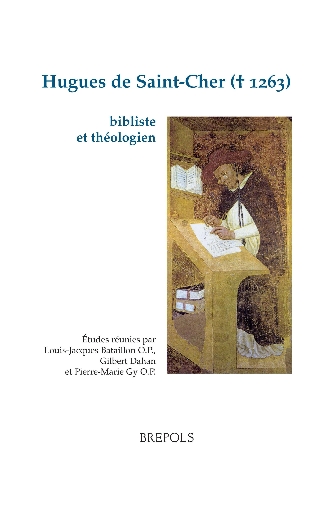
Hugues de Saint-Cher († 1263), bibliste et théologien
Etudes réunies
show More to view fulltext, buy and share links for:Hugues de Saint-Cher († 1263), bibliste et théologien show Less to hide fulltext, buy and share links for: Hugues de Saint-Cher († 1263), bibliste et théologienSi l’action du cardinal Hugues de Saint-Cher († 1263) a parfois suscité l’intérêt des historiens, il s’agit ici du premier ouvrage concernant l’œuvre de cet auteur, dont la place est pourtant capitale dans l’évolution de la pensée en Occident chrétien au xiii e siècle. Ce maître dominicain de la deuxième génération assimile le brillant héritage du xii e siècle et prépare l’essor qui va suivre dans le domaine des études bibliques et de la théologie, avec le développement de l’enseignement universitaire. Les différents aspects de son œuvre sont examinés dans ce volume, qui réunit les spécialistes de l’histoire intellectuelle du xiii e siècle. Le commentaire biblique de Hugues, ou Postille, imprimé jusqu’au xviii e siècle, a connu une fortune étonnante; il est, tout comme les concordances et le correctoire biblique diffusés sous son nom, le résultat d’un travail collectif, dirigé par le maître lors de son séjour parisien au couvent de Saint-Jacques. L’œuvre théologique, comportant le premier véritable commentaire des Sentences et de nombreuses quaestiones, aborde les problèmes de fond de la pensée chrétienne comme des aspects plus pratiques. Le point est fait également sur ses sermons, moins connus mais dont le rôle a été important. Ainsi, cet ouvrage, issu d’un colloque international tenu à Paris en mars 2000, apporte-t-il une contribution majeure à l’histoire de la pensée dans la première moitié du xiii e siècle.
-
-
-
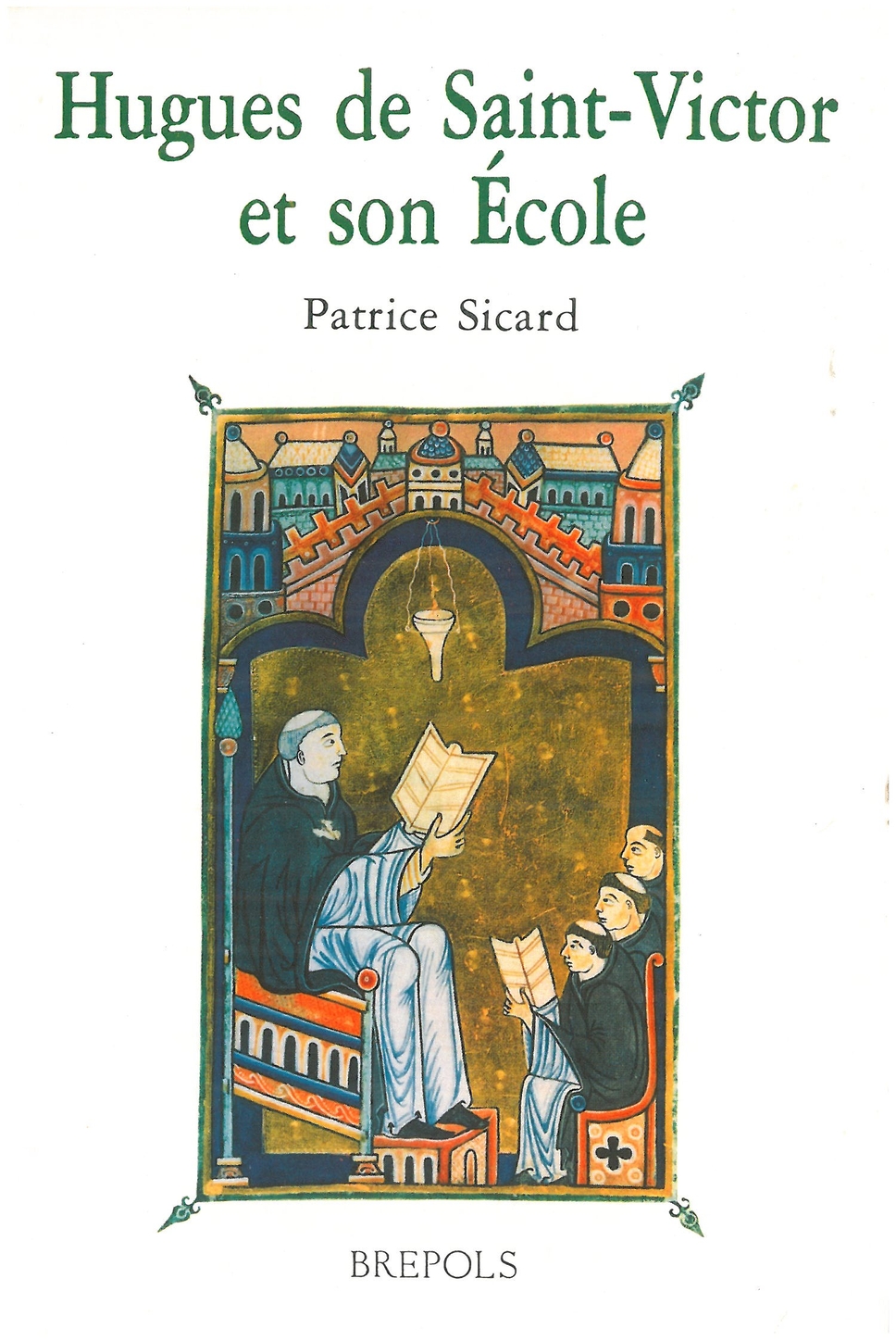
Hugues de Saint-Victor et son Ecole
Introduction, choix de texte, traduction et commentaire
show More to view fulltext, buy and share links for:Hugues de Saint-Victor et son Ecole show Less to hide fulltext, buy and share links for: Hugues de Saint-Victor et son Ecole« En ce temps-là maìtre Guillaume de Champeaux, qui était archidiacre de Paris, homme instruit et religieux, prit l'habit des chanoines réguliers avec certains de ses disciples hors des limites de la ville de Paris, en un lieu où il y avait une chapelle dédiée à saint Victor martyr et il commença à batir un monastère de clercs. Après que Guillaume ait été nommé à l'éveché de Chalons, le vénérable Gilduin, son disciple, devint le premier abbé. Sous son gouvernement, beaucoup de clercs nobles, instruits tant dans les lettres profanes que divines, se dirigèrent vers ce lieu pour y vivre, parmi lesquels maìtre Hugues fleurit tout particulièrement, tant dans la science des lettres que dans une humble vie religieuse. Il écrivit de nombreux livres qu'il n'y a pas lieu d'énumérer, tant ils sont répandus ». Rien n'est à retoucher dans ces lignes par lesquelles le chroniqueur précis qu'est Robert de Torigny décrivait les origines de Saint-Victor et présentait l'artisan majeur de la renommée de cette abbaye qui fut aussi une école: centre d'enseignement, et parmi les plus fameux du XIIe siècle; école de pensée que distingue une ambiance intellectuelle et spirituelle spécifique; école de vie intérieure, où les exercices spirituels donnent à l'expérience religieuse de s'épanouir. Hugues de Saint-Victor a doté cette École de Saint-Victor de sa physionomie propre. C'est à la personnalité du Maìtre età l'atmosphère qu'il a su créer qu'on a voulu ici introduire.
-
-
-
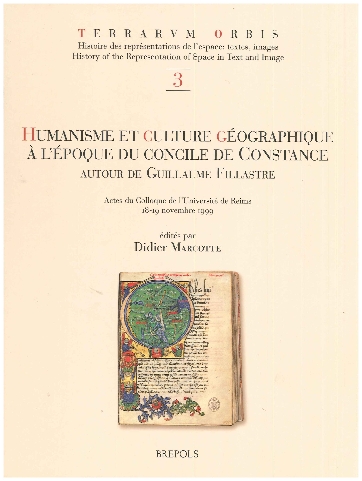
Humanisme et culture géographique à l’époque du concile de Constance. Autour de Guillaume Fillastre
Actes du Colloque de l’Université de Reims, 18-19 novembre 1999
show More to view fulltext, buy and share links for:Humanisme et culture géographique à l’époque du concile de Constance. Autour de Guillaume Fillastre show Less to hide fulltext, buy and share links for: Humanisme et culture géographique à l’époque du concile de Constance. Autour de Guillaume FillastreDoyen de Reims avant d’être cardinal, un des artisans, avec Pierre d’Ailly, de la résolution du Grand schisme d’Occident, Guillaume Fillastre a constitué, jusqu’à sa mort en 1428, une riche bibliothèque qui témoigne de sa formation d’humaniste et de son intérêt plus particulier pour la géographie de la tradition gréco-romaine. Son époque, qui est aussi celle du Pogge, voit le renouveau des études classiques s’imposer à toute l’Europe. À côté de la personnalité de l’érudit et de l’homme d’Église, on aborde ici les relations entre les premiers humanistes français et l’Italie, l’activité des philologues, les travaux des géographes et des cartographes dans les premières décennies du XVe siècle. Une place toute spéciale a été réservée à la Géographie de Ptolémée, dont la fortune, à la fin du moyen âge, a trouvé en Fillastre un de ses principaux vecteurs.
-
-
-
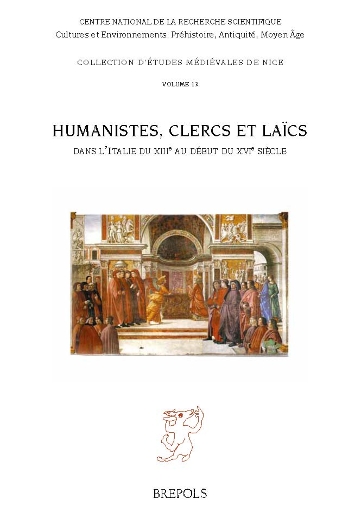
Humanistes, clercs et laïcs dans l’Italie du XIIIe au début du XVIe siècle
show More to view fulltext, buy and share links for:Humanistes, clercs et laïcs dans l’Italie du XIIIe au début du XVIe siècle show Less to hide fulltext, buy and share links for: Humanistes, clercs et laïcs dans l’Italie du XIIIe au début du XVIe sièclePourquoi associer, dans le titre de cet ouvrage, les catégories, usuelles au Moyen Âge, de clercs et de laïcs aux « humanistes », un mot qui n’apparaît dans les documents qu’à l’extrême fin du XVe siècle ? La juxtaposition des trois termes nous rappelle que ces admirateurs et imitateurs des auteurs antiques que nous nommons humanistes appartenaient tant à l’un qu’à l’autre des deux « genres de chrétiens » définis depuis la réforme grégorienne. Ce sont bien des laïcs, en effet, qui ont lancé le mouvement humaniste à Padoue au XIIIe siècle, mais par la suite, des clercs, des frères et des moines y participèrent également.
À la différence d’une historiographie qui a bien souvent privilégié les ruptures et les oppositions entre clercs et laïcs, entre scolastiques et humanistes, les auteurs de ce livre s’intéressent aux continuités, tout en s’affranchissant d’une approche exclusivement littéraire ou philosophique qui est dominante en particulier pour les “grands” humanistes. En prenant en compte les personnages “mineurs” ou les oeuvres “mineures” de grands auteurs, il s’agit également de “démonumentaliser” les oeuvres littéraires et de les examiner du point de vue des échanges féconds entre clercs et laïcs qui ne cessèrent, entre le XIIIe et le début du XVIe siècle, de nourrir la culture urbaine italienne. Les prises de position des humanistes sont ici systématiquement replacées dans le cadre de dynamiques sociales et de réseaux construits.
Les quinze contributions de ce volume ont été regroupées en quatre sections : les deux premières privilégient une analyse des modèles discursifs - c’est le cas pour l’art de la parole, ainsi que pour les champs de l’hagiographie et de la philologie biblique et patristique -, tandis que les deux autres sections privilégient plutôt une approche en termes de réseaux d’appartenance et de posture vis-à-vis des pouvoirs institutionnalisés.
-
-
-
Humbertus de Prulliaco, Sententia Super Librum Metaphisice Aristotelis Liber I-V
show More to view fulltext, buy and share links for:Humbertus de Prulliaco, Sententia Super Librum Metaphisice Aristotelis Liber I-V show Less to hide fulltext, buy and share links for: Humbertus de Prulliaco, Sententia Super Librum Metaphisice Aristotelis Liber I-VHumbert de Preuilly, mort en 1296, a fait ses études au Collège de Saint Bernard à Paris. Il est l’auteur d’un commentaire sur les Sentences de Pierre Lombard, transmis par 46 manuscrits. Il est également l’auteur d’un commentaire intégral de la Métaphysique d’Aristote. Ce commentaire, jusqu’ici négligé, est particulièrement intéressant car Humbert commente Aristote sur la base d’une synthèse des interprétations d’Averroès, d’Albert le Grand et de Thomas d’Aquin.
Dans ce volume est édité le commentaire des livres I-V. L’introduction au volume donne une brève présentation du texte, retrace la tradition manuscrite et présente la pensée métaphysique d’Humbert de Preuilly.
-
-
-
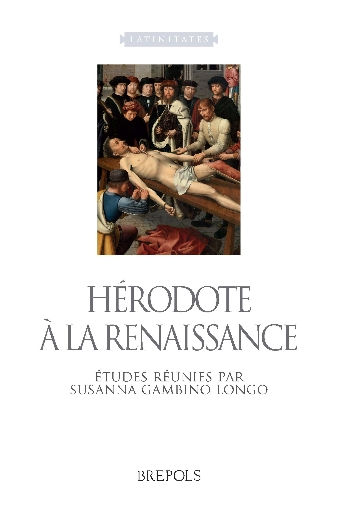
Hérodote à la Renaissance
Etudes réunies
show More to view fulltext, buy and share links for:Hérodote à la Renaissance show Less to hide fulltext, buy and share links for: Hérodote à la RenaissanceLe volume aborde sous différents angles la fortune et l’influence de l’œuvre d’Hérodote à la Renaissance, dès sa première réception humaniste et ses traductions, puis l’impact sur l’historiographie renaissante. La représentation des fastes perses et des rites guerriers des Scythes offrent matière première à la narration des historiens, mais c’est surtout dans la confrontation avec Thucydide et sur la fonction émotionnelle du récit historique que se joue la modélisation de l’histoire, à une époque où l’écriture historique implique un choix idéologique précis. De même, la géographie et la cartographie, qui s’élaborent alors au contact de la découverte de nouveaux mondes, restent redevables à l’héritage hérodotéen, ces disciplines ouvrant le vaste champ de l’observation ethnographique qui allait nourrir moralistes et philosophes. Les frontières d’un champ du savoir à un autre sont ténues et cette porosité des discours permet la diffusion des idées et des arguments à des fins que l’ouvrage se propose d’analyser.
Les auteurs / Jean Boulègue, Susanna Gambino Longo, Brigitte Gauvin, Violaine Giacomotto Charra, Jean Eudes Girot, Antonio Guzman Guerra, Alice Lamy, Frank Lestringant, Dennis Looney, Stefano Pagliaroli, Pascal Payen, Luigi Alberto Sanchi, Carlo Varotti
-
-
-
I Longobardi a Venezia
Scritti per Stefano Gasparri
show More to view fulltext, buy and share links for:I Longobardi a Venezia show Less to hide fulltext, buy and share links for: I Longobardi a VeneziaGli scritti di Stefano Gasparri hanno contribuito in modo fondamentale allo sviluppo della medievistica in Italia ed Europa. La sua capacità di leggere le fonti con uno sguardo sempre nuovo e attento, ci ha offerto originali interpretazioni degli intricati secoli medievali. Argomenti di rilevanza internazionale, come la storia sociale, culturale e politica italiana ed europea, le origini di Venezia o le molteplici identità etniche delle gentes altomedievali, sono sempre stati affrontati con fresca criticità e avvalendosi di discipline, quali la paleografia, l’epigrafia o l’archeologia.
-
-
-
I Porretani
Una scuola di pensiero tra alto e basso Medioevo
show More to view fulltext, buy and share links for:I Porretani show Less to hide fulltext, buy and share links for: I PorretaniIl volume intende offrire uno sguardo d’insieme sui Porretani, protagonisti di una fase importante e ancora poco conosciuta della storia del pensiero medievale, attraverso un approfondimento progressivo che va dalla storia alle opere al pensiero. La ricostruzione di questo quadro storico prende le mosse nel primo capitolo dall’analisi della percezione, da parte degli storici della filosofia e della teologia, dell’esistenza, dei componenti e del valore della cosiddetta “scuola porretana”, categoria storiografica piuttosto problematica, cui è preferibile la dizione “Porretani”, capace di mettere in luce insieme la pluralità e il comune richiamo all’insegnamento di Gilberto di Poitiers (o Gilberto Porreta). Il secondo capitolo contiene l’esposizione delle tappe più importanti della storia stratificata di questo movimento filosofico e teologico, attraverso la ricognizione di testimonianze dirette e indirette della tradizione porretana nelle fonti coeve al caposcuola. Sono tratteggiate le figure degli allievi di Gilberto, dei divulgatori della sua opera, dei suoi sostenitori, dei suoi ammiratori. Il terzo capitolo del libro offre le informazioni essenziali relative alle opere riconducibili, in gradi e toni diversi, all’insegnamento di Gilberto, distinguendo la prima produzione logico-teologica ‘di scuola’ in senso stretto, l’insieme degli scritti di coloro che raccolgono e rielaborano l’eredità speculativa di Gilberto, i tenaci difensori dell’ortodossia gilbertina, attivi alla fine del secolo in ambienti spesso molto distanti da quelli del maestro. Sulla base di questi tre livelli di ricerca (la critica, la storia, le fonti) si sviluppa la seconda parte della ricerca, in cui si verifica la consistenza dottrinale della scuola, individuando alcuni percorsi speculativi e metodologici particolarmente significativi, funzionali all'elaborazione scolastica della scienza divina: il fondamento ontologico, il corpus delle teorie logico-grammaticali, la dottrina epistemologica, la definizione dei parametri del discorso teologico, la pianificazione della materia teologica. Chiude il lavoro un’ampia bibliografia delle fonti e della letteratura secondaria.
-
-
-
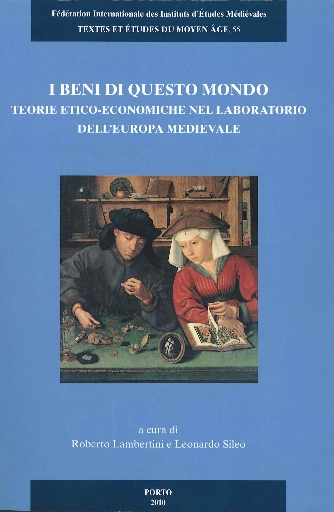
I beni di questo mondo. Teorie etico-economiche nel laboratorio dell’Europa medievale
Atti del Convegno della Società Italiana per lo Studio del Pensiero Medievale (S.I.S.P.M.), Roma, 19-21 settembre 2005
show More to view fulltext, buy and share links for:I beni di questo mondo. Teorie etico-economiche nel laboratorio dell’Europa medievale show Less to hide fulltext, buy and share links for: I beni di questo mondo. Teorie etico-economiche nel laboratorio dell’Europa medievaleSfatato il mito storiografico di un Medioevo incapace di pensare i fenomeni economici e le dinamiche della ricchezza se non in termini pesantemente dogmatici ed alieni dalla realtà effettuale, da alcuni decenni si fa sempre più vivace l’attenzione degli studiosi per la riflessione etico-economica medievale. Ormai si riconosce che, seppure secondo modelli non riducibili alle categorie del “pensiero economico classico”, il periodo medievale ha elaborato una serie di letture della sfera economica di notevole interesse. Molto partecipato è ora il dibattito tra gli specialisti su quale rapporto esista tra la riflessione medievale - in particolar modo quella tardo-medievale - e la modernità. La raccolta di saggi si presenta come un luogo di incontro e di confronto tra diverse metodologie che affrontano i discorsi etico-economici medioevali. Il lettore vi può infatti apprezzare non solo il prevalente approccio storico-filosofico, ma anche quello di storia dei lessici e dei linguaggi economici. Non mancano tuttavia interventi che si collocano nella tradizione della storia del pensiero economico, mentre in altri prevale l’interesse per la storia delle idee. La pluralità tuttavia non si riscontra solo nelle metodologie di indagine adottate, ma anche nelle fonti esaminate, presentando così un quadro in cui la filosofia, la teologia, il diritto medievali si incrociano e si confrontano nel tentativo di normare ed insieme interpretare i fenomeni economici. La ricchezza di questo volume ne fa uno strumento indispensabile per apprezzare i risultati raggiunti dalla ricerca più recente e per coglierne le tendenze future.
Contributi di: A. Arezzo (Bari), P. Blažek (Praha), M. Bukała ( Warszawa), S. Campanini ( Paris), M. Conetti (Università dell’Insubria), R. de Filippis (Salerno), R. Lambertini (Macerata), L. Lanza (Fribourg), M. Leone (Leuven), P. Palmeri (Palermo), S. Piron (Paris), P. Prodi (Bologna), G. Rossi (Verona), R. Schüssler (Bayreuth), S. Simonetta (Milano), G. Todeschini (Trieste).
-
-
-
I generi letterari in Properzio: modelli e fortuna
Proceedings of the Twenty-Second International Conference on Propertius. Assisi-Spello, 24-27 May 2018
show More to view fulltext, buy and share links for:I generi letterari in Properzio: modelli e fortuna show Less to hide fulltext, buy and share links for: I generi letterari in Properzio: modelli e fortunaTra Omero e Virgilio, passando attraverso la tragedia, l'epos enniano, l'epigramma e il registro epigrafico, la tradizione etiologica e didascalica e la formularità giuridica, la silloge properziana guadagna grazie a questo XXII Convegno una nuova primazia nel macrotesto augusteo. La sua poetica appare meno rettilinea, ma più dialogante, alla ricerca di una via per uscire dalla gabbia dello stereotipo erotico: e se non così 'difficile' come in passato risulta la sua adesione alle direttive augustee, più ricca appare la strumentazione posta in atto da Properzio per nutrire la propria vocazione, per cercare una strada autonoma: far risuonare nella propria la voce virgiliana ma con un mutato orientamento, una nuova discorsività. Del resto, dobbiamo prepararci a pensare in termini rinnovati o perlomeno più definiti lo stesso personaggio Properzio: un Sesto Properzio finanzia in età augustea o giulio-claudia la costruzione in Assisi di un teatro probabilmente legato alla Domus Musae. Così, la prosopografia properziana si profila strettamente intrecciata alla storia della letteratura di età imperiale, e può gettare luce anche sui possibili consumatori di poesia elegiaca.
-
-
-
I libri di Bessarione
Studi sui manoscritti del Cardinale a Venezia e in Europa
show More to view fulltext, buy and share links for:I libri di Bessarione show Less to hide fulltext, buy and share links for: I libri di BessarioneThirty years after the conclusion of the cataloguing of the manuscripts kept in the Marciana Library (Venice), due to the the progresses of palaeographic, codicological and intellectual studies on Byzantium and Italy in the fifteenth century, it is possible to reconsider Bessarion’s library, its formation, its history, its organization and also the activity of the Cardinal (and his collaborators) as a copyist and annotator of manuscripts.
-
-
-

IKON
show More to view fulltext, buy and share links for:IKON show Less to hide fulltext, buy and share links for: IKONIKON explores a wide range of contents and themes of iconographic studies, focusing on the role and function of the ‘image’ both within the period and place of its origin and its contemporary reception and discernment. The journal seeks to present different perspectives on understanding and interpreting images by incorporating cross-disciplinary studies and findings in other complementary disciplines. IKON is no longer published as a journal and was turned into a book series: IKON Studies. Iconography and Cultural Iconology, available from Brepols.
More information about this journal on Brepols.net
-
-
-

Ibn Gabirol (Avicebron)
Latin and Hebrew Philosophical Traditions
show More to view fulltext, buy and share links for:Ibn Gabirol (Avicebron) show Less to hide fulltext, buy and share links for: Ibn Gabirol (Avicebron)One of the most important thinkers of the Middle Ages, the Jewish philosopher Solomon Ibn Gabirol (known in the Latin Middle Ages as ‘Avicebron’) greatly contributed to the history of metaphysics. His most famous work, the Fons vitae, was the source of sophisticated, radical doctrines (like universal hylomorphism and the plurality of substantial forms) that were rigorously debated in the Latin world for centuries.
Breaking a long period of scholarly neglect of his thought, this volume scrutinises Ibn Gabirol’s philosophical contributions by disentangling his original theories from the misconceptions originated by his medieval readers and critics, like Thomas Aquinas and Albert the Great. The first part of the volume expands on the Latin translation of Ibn Gabirol’s philosophical work, the Fons vitae, from which many of these misconceptions seems to have originated. The second part focuses on the sources used by Ibn Gabirol and reconstructs the philosophical framework of his reflections. The final two parts of the volume are dedicated to the influence on Ibn Gabirol’s thought on the Latin and Hebrew traditions, respectively.
Authored by some of the most renowned worldwide experts on Hebrew and Latin philosophy, the cutting-edge contributions included in the volume give a lively picture of a complex yet fascinating medieval philosopher and his unique interpretation of the universe.
-
-
-
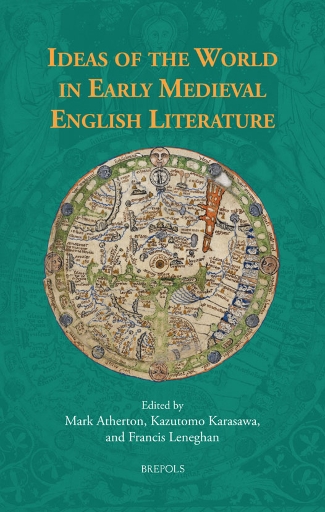
Ideas of the World in Early Medieval English Literature
show More to view fulltext, buy and share links for:Ideas of the World in Early Medieval English Literature show Less to hide fulltext, buy and share links for: Ideas of the World in Early Medieval English LiteratureAcross three thematically-linked sections, this volume charts the development of competing geographical, national, and imperial identities and communities in early medieval England. Literary works in Old English and Latin are considered alongside theological and historical texts from a range of disciplinary perspectives. Accounts of travel, foreign contacts, conversion, migration, landscape, nation, empire, and conquest are set within the continual flow of people and ideas from East to West, from continent to island and back, across the period. The fifteen contributors investigate how the early medieval English positioned themselves spatially and temporally in relation to their insular neighbours and other peoples and cultures. Several chapters explore the impact of Greek and Latin learning on Old English literature, while others extend the discussion beyond the parameters of Europe to consider connections with Asia and the Far East. Together these essays reflect ideas of inclusivity and exclusivity, connectivity and apartness, multiculturalism and insularity that shaped pre-Conquest England.
-
-
-
Identities in Early Modern English Writing
Religion, Gender, Nation
show More to view fulltext, buy and share links for:Identities in Early Modern English Writing show Less to hide fulltext, buy and share links for: Identities in Early Modern English WritingThis collection of essays explores the representation of human identity in early modern English writing. The book engages with questions of identity conceived in literary, religious, social, and historical contexts. It addresses a number of important topics in early modern studies today: women’s writing, motherhood, religion, travel writing, and nationalism. Anne-Marie Strohman examines mother figures in the Old Arcadia and the New. Allyna E. Ward considers discourses of Tudor historiography in Anne Dowriche’s The French Historie. Marion Wynne-Davies discusses the representation of Ireland in the writings of Edmund Spenser and Elizabeth Cary. Ryan Hackenbracht turns to Hobbes’ Hebraism and the Last Judgment in Leviathan. Jayne Elisabeth Archer considers the manuscript remains of Lady Ann Fanshawe. Lisa Hopkins looks at theatrical representations of England’s empire in Europe. Anna Suranyi examines national identity in travel literature. From the intimacy of the mother-daughter relationship to the politics of national conflicts and international relations, the book broadens knowledge of the complexities of identity as represented in a selection of significant writings in English from the early modern period. Introduction by Lori Anne Ferrell; afterword by Mary Polito.
-
-
-
Identité, filiation et parenté dans les romans du Graal en prose
show More to view fulltext, buy and share links for:Identité, filiation et parenté dans les romans du Graal en prose show Less to hide fulltext, buy and share links for: Identité, filiation et parenté dans les romans du Graal en proseLe cycle Lancelot-Graal et le Perlesvaus, écrits dans la première moitié du XIIIe siècle, sont construits autour d’un temps horizontal, organisé autour de la figure du roi Arthur, ce qui rend toute idée de succession problématique. Mais dans le même temps, la société a subi de profonds bouleversements : qu’il s’agisse de l’institution du mariage, des règles de transmission de l’héritage ou encore de l’ancrage du lignage dans des lieux géographiques très précis, les relations entre les individus se sont lentement modifiées. Les auteurs doivent donc faire coexister des éléments disparates, voire même contradictoires. La généalogie entre dans le roman arthurien par le biais du cycle de la Vulgate et ce temps vertical influe sur le roman, les relations de parenté devenant ainsi déterminantes dans la construction narrative des personnages.
-
-
-
Ideology and Patronage in Byzantium
Dedicatory Inscriptions and Patron Images from Middle Byzantine Macedonia and Thrace
show More to view fulltext, buy and share links for:Ideology and Patronage in Byzantium show Less to hide fulltext, buy and share links for: Ideology and Patronage in ByzantiumBased on the evidence of epigraphic material in combination with monumental painting, this book explores important dedicatory inscriptions (9th-beginning of the 13th c.) from Macedonia and Thrace, which have so far been investigated mainly from a philological-historical standpoint, thus neglecting the major issue of Middle Byzantine patronage. Through patron inscriptions and textual sources, the role and the motives of military officials in the patronage of defensive and fortification works, and the manner of publicizing them, are examined systematically. Patronage is looked at through the ideological messages that the donors endeavor to promote in a local society or monastic community, and which echo their relationship with the state and their views on education and faith. Interesting methodologically is the co-examination of the various categories of inscriptions in combination with historical texts and donor portraits, which opens up new avenues of research for the study of the interdisciplinary material in question.
-
-
-
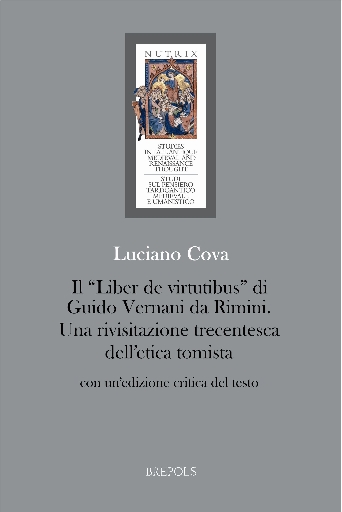
Il Liber de virtutibus di Guido Vernani da Rimini
Una rivisitazione trecentesca dell'etica tomista (con un'edizione critica del testo)
show More to view fulltext, buy and share links for:Il Liber de virtutibus di Guido Vernani da Rimini show Less to hide fulltext, buy and share links for: Il Liber de virtutibus di Guido Vernani da RiminiLa figura di Guido Vernani da Rimini († ca. 1345) è nota sinora agli specialisti soprattutto per alcune opere teologico-politiche, tra cui il De reprobatione Monarchiae compositae a Dante e il De potestate Summi Pontificis. Domenicano italiano, lettore nello Studio dei Frati Predicatori di Bologna tra i 1310 e il 1324 e passato poi al convento di Rimini, Guido ha lasciato vari commentari aristotelici sotto forma di Sententia (alla Fisica - perduto -, alla Politica, alla Retorica e all'Etica). Oltre la più nota Sententia libri ethicorum (o Summa de virtutibus, un compendio dell'Etica aristotelica scritto sulla falsariga del commento di Tommaso), Guido ha composto una seconda opera di carattere morale, concepita come un trattato sulle virtù: il Liber de virtutibus quae ad vitam verae militiae requiruntur. Anche in questo caso è stata segnalata una forte dipendenza di Guido da Tommaso d'Aquino: la sua fonte principale, in questo caso, non è però la Sententia libri ethicorum, bensì la Summa theologiae (Ia-IIae e IIa-IIae). Il presente studio comprende una presentazione ed una edizione del Liber de virtutibus dall’unico manoscritto esistente (Venezia, Biblioteca Marciana VI, 13 del XV secolo), nell’intento di gettare luce sul modo in cui, attraverso Tommaso, l'etica aristotelica veniva riproposta, semplificata e adeguata agli intendimenti di una morale ‘teologica’, in Italia durante la prima metà del XIV secolo, cercando di identificare condizionamenti dottrinali, intenti culturali e utenti potenziali sulla base dei filtri adoperati nella lettura semplificatrice che ne viene fatta. Il volume è completato da un quadro storico-dottrinale di ampio respiro, in cui sono presentati da una parte l'autore del trattato e dall’altra i grandi temi dell'etica tomista che vengono discussi nella scuola domenicana successiva a Tommaso, anche in polemica con altri indirizzi dottrinali attivi nelle scuole teologiche fra XIII e XIV secolo.
Luciano Cova (Trieste, 1944), è professore associato di Storia della filosofia medievale presso l’Università di Trieste. Si occupa in particolare di temi teologici, etici e biologici fra XIII e XIV secolo. Ha pubblicato studi su Walter Catton, Riccardo di Mediavilla, Giovanni Vath e sull’etica di Tommaso d’Aquino.
-
-
-
Il Mediterraneo del '300: Raimondo Lullo e Federico III d'Aragona, re di Sicilia. Omaggio a Fernando Dominguez Reboiras
Atti del Seminario internazionale di Palermo, Castelvetrano - Selinunte (TP), 17-19 novembre 2005
show More to view fulltext, buy and share links for:Il Mediterraneo del '300: Raimondo Lullo e Federico III d'Aragona, re di Sicilia. Omaggio a Fernando Dominguez Reboiras show Less to hide fulltext, buy and share links for: Il Mediterraneo del '300: Raimondo Lullo e Federico III d'Aragona, re di Sicilia. Omaggio a Fernando Dominguez ReboirasThis volume brings together the contributions delivered at the International Seminar held in Palermo and Castelvetrano-Selinunte in Sicily on 17-19 November 2005. The Seminar was organized by the Officina di Studi Medievali in collaboration with the Dipartimento di Civiltà Euro-Mediterranee, the Dipartimento di Studi Storici e Artistici and the Dipartimento di Beni Culturali at the Facoltà di Lettere e Filosofia at the University of Palermo, under the patronage of the Region of Sicily and the Italian Ministero per i Beni e le Attività Culturali.
The contributions address four different themes: 1. Ramon Lull in Sicily at the time of Frederick III; 2. the Opera tuniciana et messanensia of Ramon Lull; 3. Sicily, the Mediterranean and Frederick III; 4. the Ars amativa boni by Ramon Lull. All the contributions - written in English, French, Italian and Spanish - are provided with an abstract in English.
The Seminar was organized in honour of Fernando Domínguez Reboiras who for many years has been the scientific co-ordinator and unceasing promoter of the critical edition of the Latin works of Ramon Lull (ROL) in the Corpus Christianorum, Continuatio Mediaevalis series. Alessandro Musco organized the Seminar and was responsible for the scholarly co-ordination of the present volume. Marta Romano supervised the editorial process and was responsible for the indexes.
-
-
-
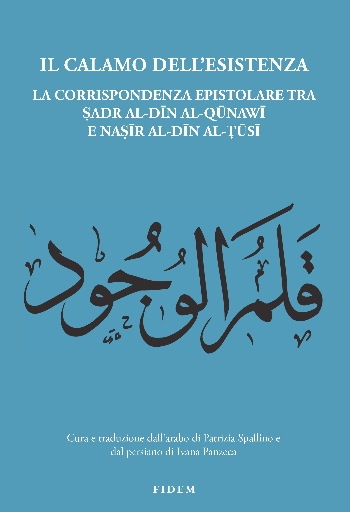
Il calamo dell'esistenza
La corrispondenza epistolare tra Ṣadr al-Dīn al-Qūnawī e Naṣīr al‐Dīn al‐Ṭūsī
show More to view fulltext, buy and share links for:Il calamo dell'esistenza show Less to hide fulltext, buy and share links for: Il calamo dell'esistenzaUno degli esempi più significativi dei frutti prodotti dal confronto aperto tra un sufi ed un filosofo è la corrispondenza tenutasi nel XIII secolo tra Ṣadr al-Dīn al-Qūnawī (m. 1274) e Nasīr al-Dīn al-Ṭūsī (m. 1274), il primo discepolo diretto e figlio adottivo dello šayḫ al-akbar Ibn al-‘Arabī, il secondo seguace e commentatore di Avicenna. Soggetto centrale del dibattito è l’analisi dell’essere in tutte le sue molteplici determinazioni e manifestazioni: la realtà di Dio, l’essere generale e comune, la sostanza e la materia, l’unità e la molteplicità, la natura dell’anima, del corpo, delle forze celesti, il dolore e la gioia spirituale, l’emanazione, il finito e l’infinito. Tutti i quesiti si sviluppano su uno scenario in cui si prendono in considerazione gli estremi limiti del pensiero teoretico che guarda e si interroga sulla sfera contemplativa della luce rivelativa; una dialettica serrata nel tentativo di armonizzare due dimensioni all’apparenza inconciliabili ma in realtà complementari.
-
-
-
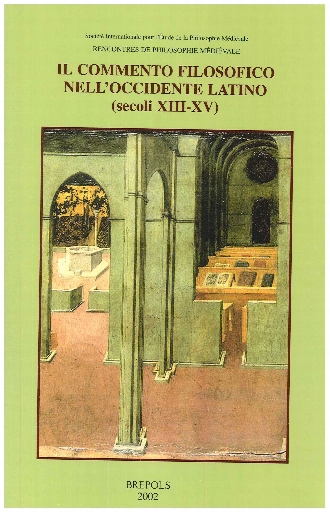
Il commento filosofico nell’occidente latino (secoli XIII-XV)
Actes du colloque international de Florence-Pise, octobre 2000
show More to view fulltext, buy and share links for:Il commento filosofico nell’occidente latino (secoli XIII-XV) show Less to hide fulltext, buy and share links for: Il commento filosofico nell’occidente latino (secoli XIII-XV)The practice of commentary upon authoritative texts is a prominent and fundamental feature of all teaching and learning during the Middle Ages. The roots of medieval commentaries made upon important philosophical texts lay in antiquity, but commentaries upon such texts — both ancient and more recent — flourished as never before during the late Middle Ages. Subsequently, beyond the end of the Middle Ages, the appeal and the habit of commentary declined, and to the point that today a considerable effort is required to understand medieval commentaries — their genres, their techniques, their evolution, their extraordinary persistence in use over many centuries — and perhaps too to understand the much diminished importance of the practice of commentary on select texts in current academic scholarship. The Philosophical Commentary in the Latin West (XIII-XV Centuries) proved to be a rich, varied and seemingly inexhaustible theme for the Colloquium of the International Society for the Study of Medieval Philosophy. The contributors who were invited discussed commentaries on texts of medicine, alchemy, biology, psychology, physics, ethics and politics as well as theology. The medieval commentators themselves were Arabs and Jews as well as Christians.
-
-
-
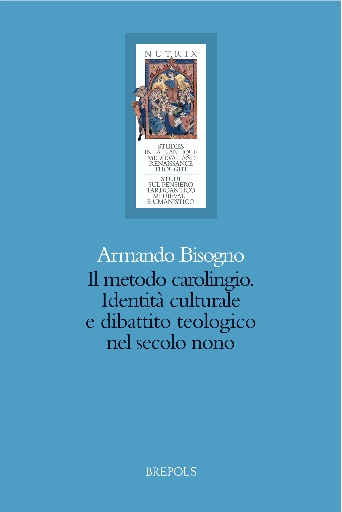
Il metodo carolingio
Identità culturale e dibattito teologico nel secolo nono
show More to view fulltext, buy and share links for:Il metodo carolingio show Less to hide fulltext, buy and share links for: Il metodo carolingioLo stretto nodo che congiunge il progressivo formarsi dell’identità culturale all’evoluzione dinamica del sapere in età carolingia viene evidenzato in questo studio mediante una serrata analisi critica e storiografica delle diverse opere di argomento teologico scritte dai pensatori che furono più coinvolti nei dibattiti sull’ortodossia cristiana tra i primi anni di regno di Carlo Magno (dal 780 in poi) e la seconda metà del secolo IX. La lettura, il commento e l’esegesi dei testi che documentano tali discussioni consentono l’accesso più efficace e sostanziale all’evoluzione della teologia carolingia, che trovò proprio nel confronto con tesi ritenute eterodosse la spinta a chiarire i temi più delicati della dottrina cristiana. Da Beato di Libana, Alcuino e Rabano Mauro, fino a Ratramno di Corbie e Giovanni Scoto Eriugena, gli intellettuali carolingi si impegnarono nel comporre opere tendenzialmente ispirate dalla volontà di confutare argomentazioni estranee all’ortodossia e di specificare dottrine non ancora stabilmente definite. Il patrimonio patristico, la lettura assidua e consapevole delle Scritture e lo studio delle artes profane, tutti elementi che si ponevano alla base della loro formazione sapienziale, vennero così rielaborati in una comune identità teologica: in essa prese forma e concretezza la stessa ossatura culturale della nuova entità civile che con gli strumenti della politica, dell’azione militare e del controllo economico si andava creando e consolidando nell’Occidente latino in quegli stessi anni. Le fasi più intense del complesso quadro di dibattiti ricostruito nel presente volume evidenziano il duplice ruolo rivestito in età carolingia dalla discussione su temi teologici: funzionale a contenere e delimitare deviazioni dalla ortodossia di autori contemporanei, e, al contempo, utile ad una progressiva definizione della dottrina e dell’identità culturale del nuovo impero barbaro-cristiano.
-
-
-
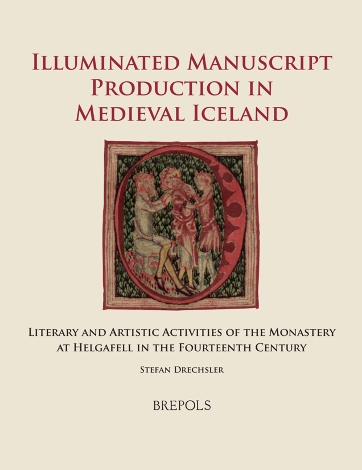
Illuminated Manuscript Production in Medieval Iceland
Literary and Artistic Activities of the Monastery at Helgafell in the Fourteenth Century
show More to view fulltext, buy and share links for:Illuminated Manuscript Production in Medieval Iceland show Less to hide fulltext, buy and share links for: Illuminated Manuscript Production in Medieval IcelandThis book examines a cultural revolution that took place in the Scandinavian artistic landscape during the medieval period. Within just one generation (c. 1340-1400), the Augustinian monastery of Helgafell became the most important centre of illuminated manuscript production in western Iceland. By conducting interdisciplinary research that combines methodologies and sources from the fields of Art History, Old Norse-Icelandic manuscript studies, codicology, and Scandinavian history, this book explores both the illuminated manuscripts produced at Helgafell and the cultural and historical setting of the manuscript production.
Equally, the book explores the broader European contexts of manuscript production at Helgafell, comparing the similar domestic artistic monuments and relevant historical evidence of Norwich and surrounding East Anglia in England, northern France, and the region between Bergen and Trondheim in western Norway. The book proposes that most of these workshops are related to ecclesiastical networks, as well as secular trade in the North Sea, which became an important economic factor to western Icelandic society in the fourteenth century. The book thereby contributes to a new and multidisciplinary area of research that studies not only one but several European cultures in relation to similar domestic artistic monuments and relevant historical evidence. It offers a detailed account of this cultural site in relation to its scribal and artistic connections with other ecclesiastical and secular scriptoria in the broader North Atlantic region.
-
-
-
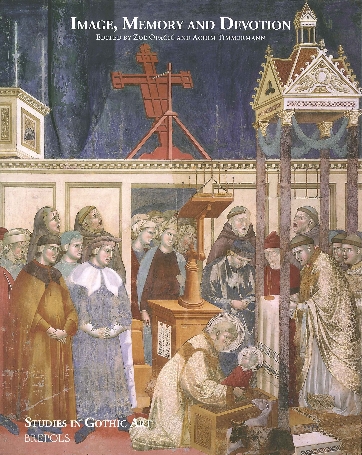
Image, Memory and Devotion
Liber Amicorum Paul Crossley
show More to view fulltext, buy and share links for:Image, Memory and Devotion show Less to hide fulltext, buy and share links for: Image, Memory and DevotionThis collection of essays, written in honour of the eminent architectural historian Paul Crossley, brings together some of the most distinguished scholars of medieval art and architecture from the United States and many parts of Europe. Covering a broad spectrum of topics and approaches including recent discoveries, new interpretations and critical debates, this book and its counterpart Architecture, Liturgy and Identity (also published in the Studies in Gothic Art series) offer a fitting tribute to the exceptional range of Professor Crossley’s intellectual interests, while providing invaluable insights into the present study of the Middle Ages.
-
-
-
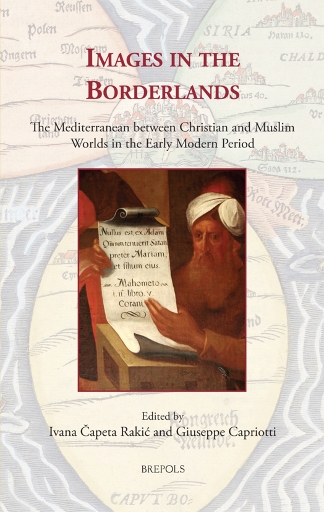
Images in the Borderlands
The Mediterranean between Christian and Muslim Worlds in the Early Modern Period
show More to view fulltext, buy and share links for:Images in the Borderlands show Less to hide fulltext, buy and share links for: Images in the BorderlandsThis volume offers a unique exploration into the cultural history of the Mediterranean in the Early Modern Period by examining the region through the prism of Christian-Muslim encounters and conflicts and the way in which such relationships were represented in art works from the time. Taking images from the period as its starting point, this interdisciplinary work draws together contributors from fields as varied as cultural history, art history, archaeology, and the political sciences in order to reconstruct the history of a region that was often construed in the Early Modern period as a ‘borderland’ between religions. From discussions of borders as both physical construction and mental construct in the Mediterranean to case studies exploring the Battle of Lepanto, and from analyses of art work produced from the fifteenth to eighteenth centuries to a consideration of the influence of the Ottoman Empire in the Mediterranean Basin, the chapters gathered together in this insightful volume provide a new approach to our understanding of Early Modern Mediterranean history.
-
