


Brepols
Brepols is an international academic publisher of works in the humanities, with a particular focus in history, archaeology, history of the arts, language and literature, and critical editions of source works.441 - 460 of 3194 results
-
-
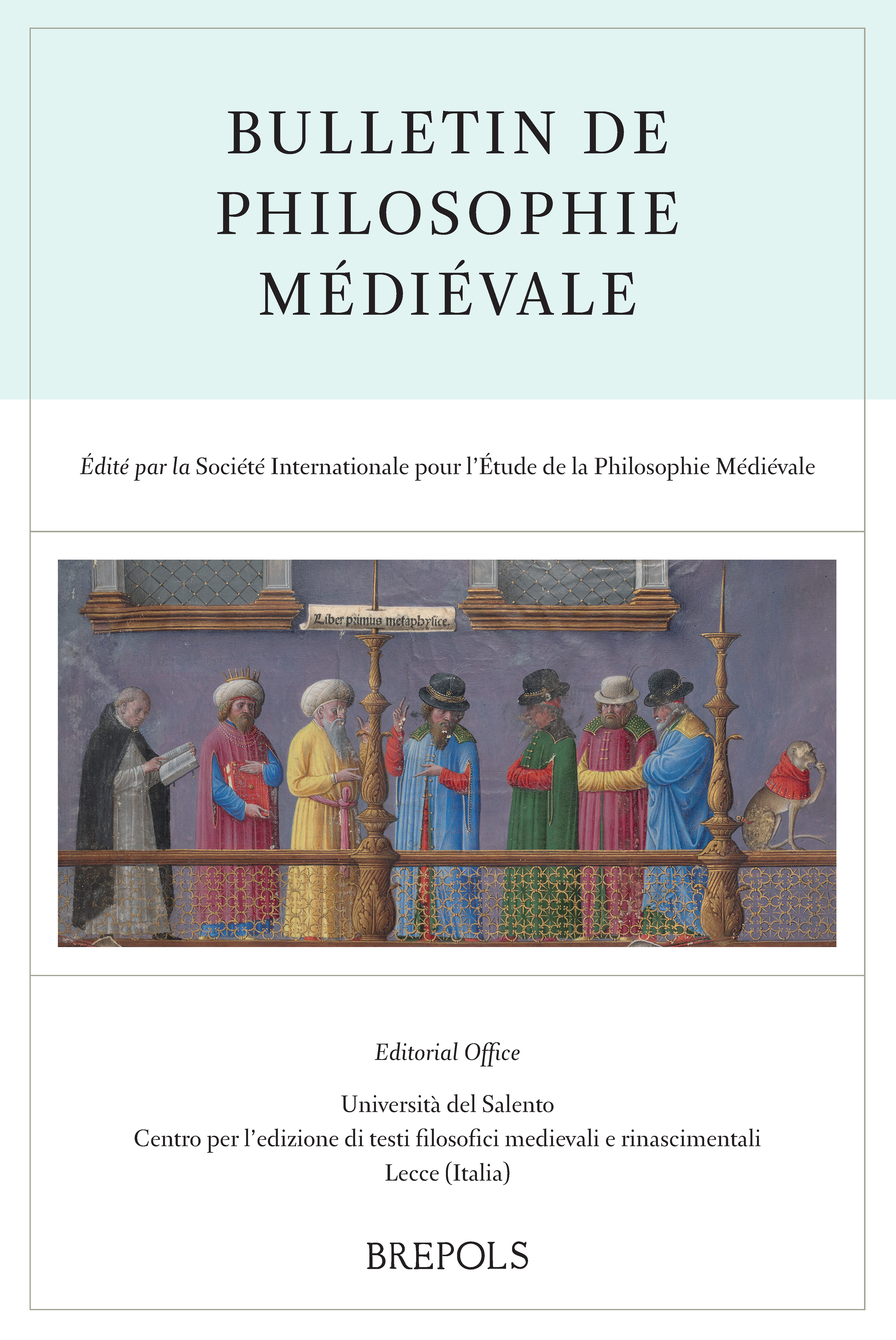
Bulletin de Philosophie Médiévale
show More to view fulltext, buy and share links for:Bulletin de Philosophie Médiévale show Less to hide fulltext, buy and share links for: Bulletin de Philosophie MédiévaleThe Bulletin de Philosophie Médiévale is the annual journal of the Société Internationale pour l’Étude de la Philosophie Médiévale (SIEPM). This journal acts as an irreplaceable reference work for all those who wish to keep themselves informed about research, projects, and conferences in the field of medieval philosophy. The Bulletin mainly focuses on studies and critical editions of unpublished medieval philosophical texts.
More information about this journal on Brepols.net
-
-
-
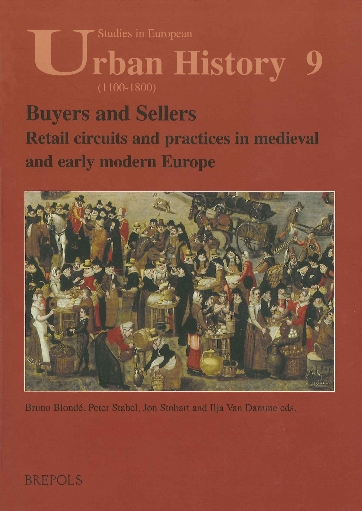
Buyers and Sellers
Retail circuits and practices in medieval and early modern Europe
show More to view fulltext, buy and share links for:Buyers and Sellers show Less to hide fulltext, buy and share links for: Buyers and SellersConsumption is now a critical issue in late medieval and early modern historical and cultural studies. While we know increasingly about regulatory systems, we know much less about the daily practice of buying and selling. This book brings together contributions from urban historians, social historians and art historians to explore the issues of exchange, shopping behavior, social interactions, gender and physical space. Contributions deal with Italy, the Low Countries and England.In the articles in this volume lines of continuity between the medieval and early modern period have been stressed. In addition, some critical questions have been raised. Were markets necessarily less "modern" compared to "fixed shops"? How did changing consumers and consumer patterns interact with the retailer? The essays published here also emphasize the need to study different commercial circuits in their context. These circuits often overlapped and could not artificially be isolated from one another.
-
-
-
Byzantine Hagiography: Texts, Themes & Projects
show More to view fulltext, buy and share links for:Byzantine Hagiography: Texts, Themes & Projects show Less to hide fulltext, buy and share links for: Byzantine Hagiography: Texts, Themes & ProjectsIn recent years Byzantine hagiography has attracted renewed interest of the international community of Byzantine scholars and not only thanks to studies dedicated to this subject and critical editions of individual texts, but also because hagiography has been the main focus of numerous major research projects: databases, new repertories, a new version of the Bibliotheca Hagiographica Graeca and some very useful handbooks dedicated to this literary genre during the Byzantine Empire. These researches have analysed Byzantine hagiography in relation to the hagiographic writings composed in neighbouring areas, the West, the Syriac and Arabic Middle East, the Southern Slavs, etc. but also the relations between the hagiographical texts and other literary genres.
This volume introduces the current developments of hagiographical studies and on-going projects on the subject, and investigates a variety of texts and authors from the Patristic period to the end of Byzantium.
-
-
-
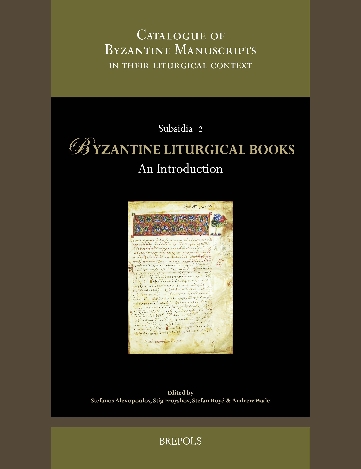
Byzantine Liturgical Books
An Introduction
show More to view fulltext, buy and share links for:Byzantine Liturgical Books show Less to hide fulltext, buy and share links for: Byzantine Liturgical BooksThe world of Byzantine liturgical book types is fascinating but also confusing. While they are central to the study and celebration of Byzantine Liturgy, no one work offers an overview of their history, contents, and structure. This volume offers for the first time an introduction to the major types of Byzantine liturgical books, their taxonomy, origins, development, and contents.
-
-
-
Byzantine Theology and its Philosophical Background
show More to view fulltext, buy and share links for:Byzantine Theology and its Philosophical Background show Less to hide fulltext, buy and share links for: Byzantine Theology and its Philosophical BackgroundSince Byzantium never saw a consistent and definitive attempt at determining the status of philosophy and theology the way Western scholasticism did, the relationship between them in the Greek-speaking medieval world has always been regarded as a problematic issue. The essays contained in this volume work from the assumption that philosophy in Byzantium was not a monolithic doctrinal tradition, but related to a manifold set of intellectual phenomena, institutional frameworks, doctrines, and text traditions that influenced the theological literature in different ways according to the different manifestations and facets of philosophy itself.
Antonio Rigo is Professor of Byzantine Philology and Christianity at the University of Venice Ca' Foscari. His research focuses on religious life in Byzantium, with special emphasis on ascetical and mystical literature, heresiology, and theology during the Paleologan period.
-
-
-
Byzanz in Europa. Europas östliches Erbe
Akten des Kolloquiums 'Byzanz in Europa' vom 11. bis 15. Dezember 2007 in Greifswald
show More to view fulltext, buy and share links for:Byzanz in Europa. Europas östliches Erbe show Less to hide fulltext, buy and share links for: Byzanz in Europa. Europas östliches ErbeThe role of Byzantium in the Middle Ages is comparable to that of a modern political superpower such as the United States. The latter has a pervasive cultural impact on Europe and Asia, and similar cross-cultural relationships between East and West were also evident in medieval Europe, when Byzantine literature, music, art, and ritual were not only known but also studied and appropriated throughout the West. Scholarship on Byzantium and its relationship with Western Europe has yet to explore the full dynamics of this relationship or the extent to which the West was influenced by Byzantine culture. The papers presented in this volume offer a wide interdisciplinary perspective on the crucial importance of Byzantium for Western Europe, featuring articles on art and architectural history, social and religious history, musicology, literature, historiography, gender studies. The essays originate from an interdisciplinary conference, held in the Wissenschaftskolleg Greifswald in December 2007, which brought together an international group of scholars. The proceedings of this gathering give a new and compelling testimony to the exceptionally high status of Byzantine culture in Western Europe and invite further studies on the exceptional and unique role of the Byzantine Empire, positioned at the crux between Europe and Asia.
Michael Altripp received his PhD in Early Christian Archaeology and Byzantine Art from the University of Mainz, and currently holds an Associate Professorship at the University of Greifswald. His main fi elds of interests are at the crossroads of art and architecture with theology, and address in particular issues of exegesis, iconography and liturgy, as well as the dynamics of cross-cultural exchange between East and West.
-
-
-
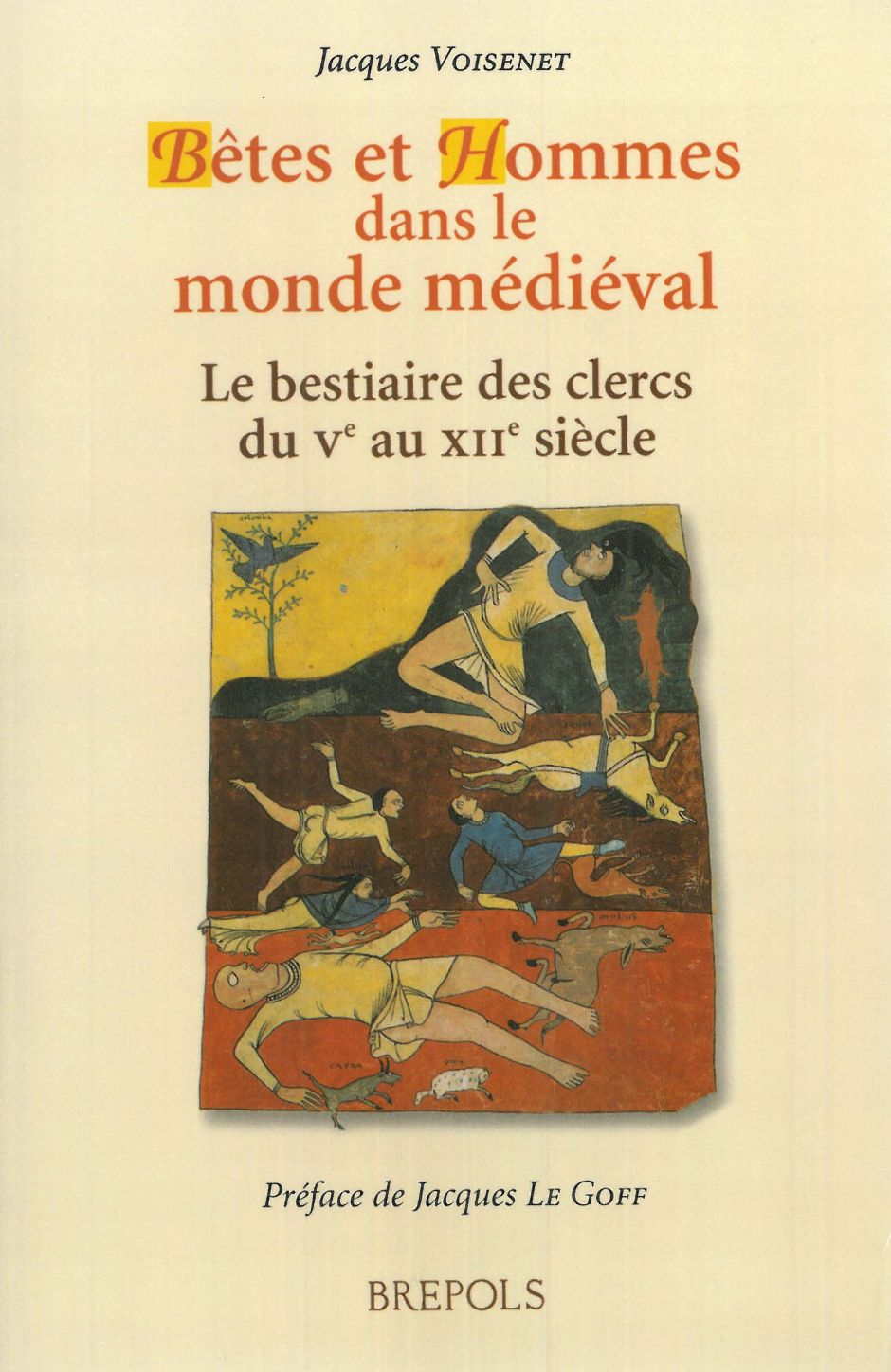
Bêtes et hommes dans le monde médiéval
Le bestiaire des clercs du Ve au XIIe siècle
show More to view fulltext, buy and share links for:Bêtes et hommes dans le monde médiéval show Less to hide fulltext, buy and share links for: Bêtes et hommes dans le monde médiévalBêtes et hommes dans le monde médiéval cherche «à définir la nature des relations entre l'homme et l'animal, la (ou les) fonction(s) que l'homme du Moyen Âge assigne à l'animal. C'est un repoussoir, un miroir, un ennemi et un allié. C'est un instrument capital dans la quête de soi-même de l'homme, une pièce essentielle de l'humanisme médiéval. En s'efforçant (avec succès) de répondre à ces questions, Jacques Voisenet va au fond et aux limites de la vision du monde, de la société, de la conception de la religion et de la morale. Dieu, la Création, le bien et le mal, la damnation et le salut, la peur et l'espoir, l'horreur et le plaisir (souvent proches l'un de l'autre) sont au bout de cette enquête totale. Selon les méthodes de l'histoire-problème, Jacques Voisenet a défini et traité un de ces objets globalisants qui répondent au désir des historiens novateurs du XXe siècle de tenter une histoire totale et globale, qui reste rigoureuse et critique. De plus le livre considère absolument tous les animaux dans tout l'Occident médiéval pendant un Haut Moyen Âge de longue durée, du Ve au XIIe siècle. (…) Cette étude ne s'intéresse qu'aux idées et à la symbolique animalière, non aux réalités de l'existence des animaux dans l'Occident. (…) Le livre de Jacques Voisenet va être un guide indispensable à la compréhension de l'humanité, de la société et de la civilisation médiévales. Et quand on l'aura lu on ne pourra plus concevoir le Moyen Âge (ce serait se refuser de le comprendre en extension et en profondeur) sans les animaux et sans qu'à côté d'Adam et Eve un autre couple essentiel apparaisse: l'homme et l'animal».
-
-
-
Calling the Soul of the Dead
show More to view fulltext, buy and share links for:Calling the Soul of the Dead show Less to hide fulltext, buy and share links for: Calling the Soul of the DeadResearch of Mongolion folk-religion has been the subject of special attention in recent years. Editions and translations of extant texts have appeared, providing detailed descriptions of the rituals. This book examines a very special ritual of folk-religion, the ceremony of calling back the soul of the dead. Among the Mongols it was commonly believed that illness and death were caused by the absence of the soul, so a special ritual was required to call back the wandering soul. The research for this volume has been based on texts preserved in the Institute of Oriental Studies of the Russian Academy of Sciences in St. Petersburg. A background is given by observations of researchers who have visited the relevant areas and personal communications of Mongols. These rituals are still living and carried out by Mongolians and their neighbouring peoples. The very old ceremony, must have belonged to an early layer of folk-religion. It has now become a ritual of the Lamaist church. Influence of Tibetan Buddhism is found. A special chapter is devoted to evil spirits. The volume is richly illustrated.
-
-
-
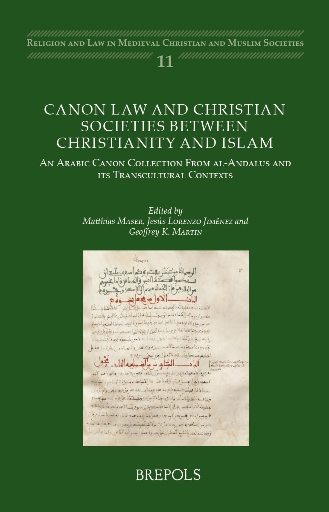
Canon Law and Christian Societies between Christianity and Islam
An Arabic Canon Collection from al-Andalus and its Transcultural Contexts
show More to view fulltext, buy and share links for:Canon Law and Christian Societies between Christianity and Islam show Less to hide fulltext, buy and share links for: Canon Law and Christian Societies between Christianity and IslamThe unique Arabic version of the Iberian canon law code 'Collectio Hispana', preserved in a mid-eleventh-century manuscript of the Royal Library of El Escorial, has been deemed “the most distinguished and characteristic” work of medieval Andalusi Christian writing. It represents an exceptional source witness to the internal legal organisation of Christian communities in Muslim-dominated al-Andalus as well as to their acculturation to Islamicate environments. Yet, the Arabic collection has received only little scholarly attention so far. This volume presents the results of a recent interdisciplinary research project on the Arabic canon law manuscript, flanked by contributions from neigbouring fields of research that allow for a comparative assessment of the substantial new findings. The individual chapters in this volume address issues such as the origins of the Arabic law code and its sole transmitting manuscript, its language and translation strategies, its source value for both the persistence and transformation of ecclesiastical institutions after the Muslim conquest, or the law code's position in the judicial practice of al-Andalus. The volume brings together the scholarly expertise of distinguished specialists in a broad range of disciplines, e.g. history, Arabic and Latin philology, medieval palaeography and codicology, archaeology, coptology, theology and history of law.
-
-
-
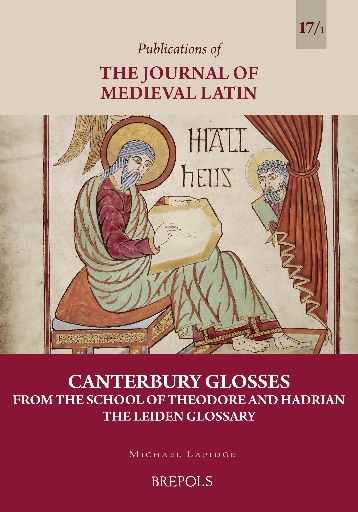
Canterbury Glosses from the School of Theodore and Hadrian: The Leiden Glossary
show More to view fulltext, buy and share links for:Canterbury Glosses from the School of Theodore and Hadrian: The Leiden Glossary show Less to hide fulltext, buy and share links for: Canterbury Glosses from the School of Theodore and Hadrian: The Leiden GlossaryThe ‘Leiden Glossary’ provides a record of the understanding and interpretation of the patristic and grammatical texts studied at the Canterbury School of Theodore and Hadrian, regarded by Bede as the high point of Christian culture in early Anglo-Saxon England. Each entry in the ‘Leiden Glossary’ is provided with detailed commentary on the sources consulted by the two Canterbury masters (earlier glossaries; Isidore; Eucherius) and the later uses of the glossary by compilers of the Epinal-Erfurt and Corpus glossaries. The ‘Leiden Glossary’ is thus a key witness to one of the greatest schools of learning in the early Middle Ages.
-
-
-
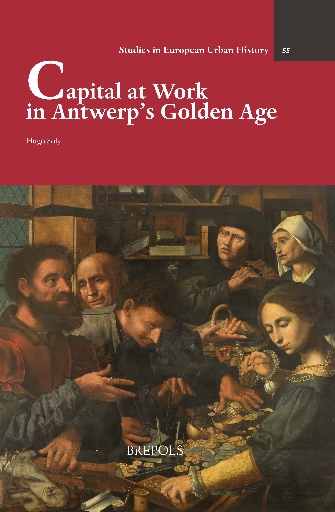
Capital at Work in Antwerp’s Golden Age
show More to view fulltext, buy and share links for:Capital at Work in Antwerp’s Golden Age show Less to hide fulltext, buy and share links for: Capital at Work in Antwerp’s Golden AgeErasmus Schetz, Gaspar Ducci, and Gilbert van Schoonbeke. Contemporaries made it indisputably clear that these three moneymakers were exceptional, from different perspectives and for different reasons, but all commentators implicitly or explicitly referred to their unique economic achievements, and they were right to do so. The exceptional careers of the three protagonists shed light on the potential of the most dynamic economic centre of Europe - and the world - during early globalization. Precisely because their economic initiatives were far more ambitious than what other businessmen in Antwerp could or would consider or achieve, their careers are ideal vantage points for observing and analysing ‘capital at work’. They also provide an opportunity to examine how commercial capitalism changed and/or was transformed, and in what measure the three protagonists extended the frontiers of capitalism.
-
-
-
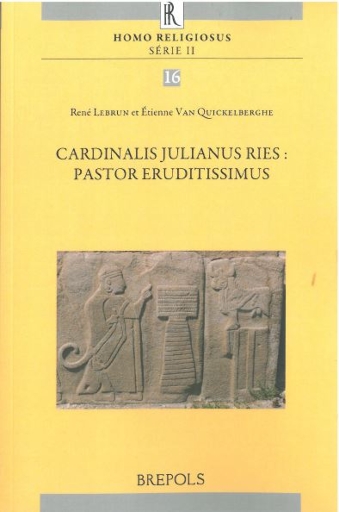
Cardinalis Julianus Ries, Pastor eruditissimus
show More to view fulltext, buy and share links for:Cardinalis Julianus Ries, Pastor eruditissimus show Less to hide fulltext, buy and share links for: Cardinalis Julianus Ries, Pastor eruditissimusLe présent volume dédié à la mémoire du Cardinal Julien Ries comporte deux parties : la première concerne la vie et l'oeuvre du prélat. Elle contient les contributions de plusieurs spécialistes de l'histoire des religions qui ont bien connu le Cardinal et ont eu le bonheur de travailler avec ce grand savant qu'il convient de ranger aux côtés de Franz Cumont, de Georges Dumézil ou encore de Mircéa Eliade. Sa réflexion sur l'Home Religiosus à la lumière des découvertes le plus récentes est essentielle. La bibliographie du Cardinal est impressionante et témoigne d'une activité débordante sur le plan universitaire; son enseignement tout comme ses recherches dans le cadre de l'Université catholique de Louvain, du Centre d'Histoire des religions qu'il y fonda, ou encore de l'Université du Sacré Coeur à Milan ont fait forte impression. Mais la personnalité universitaire du Cardinal J.Ries ne doit pas l'emporter sur l'homme d'Eglise. le « Pastor bonus » qu'il fut, le curé de campagne aimé et respecté.
La deuxième partie de l'ouvrage comporte la traduction actualisée et commentée de textes provenant de l'ancien Orient (monde anatolien, égyptien, iranien) et mettant en lumière la fonction sacerdotale dans l'Antiquité, à savoir le rôle et les devoirs du prêtre, la hiérarchie sacerdotale, son influence sur la société ainsi que son rôle politique et culturel.
-
-
-
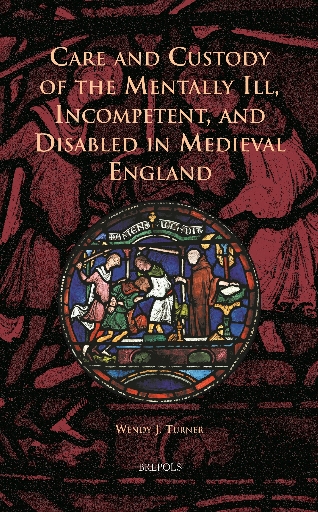
Care and Custody of the Mentally Ill, Incompetent, and Disabled in Medieval England
show More to view fulltext, buy and share links for:Care and Custody of the Mentally Ill, Incompetent, and Disabled in Medieval England show Less to hide fulltext, buy and share links for: Care and Custody of the Mentally Ill, Incompetent, and Disabled in Medieval EnglandThis book is about the social understanding and treatment of the mentally ill, incompetent, and disabled in late medieval England. Drawing on archival, literary, medical, legal, and ecclesiastic sources and studies, the volume seeks to present a coherent picture of society’s treatment, protection, abuse, care, and custody of the incapacitated. Although many medieval stories stereotyped the mad (most often as sinners or innocents), for example, there is clear evidence that English society treated and cared for the impaired on a person-by-person basis. The mentally incapacitated were not lumped into one category and not ignored or sent away; on the contrary, both the English administration and the public had many categories and terms for mental conditions, cognitive abilities, and levels of physicality (violence) associated with impairment. English society also had safeguards and assistants (keepers, custodians, guardians) in place to help mentally impaired persons in life.
This study therefore eschews totalizing assumptions about a societal ‘core’ and its ‘margins’; instead, it instigates a new consideration of communities as holistic entities with an ebb and flow among the contributing and non-contributing elements as people live, grow, age, get sick, become well, have children, break bones, or live with mental or physical impairments.
-
-
-
Care for the Here and the Hereafter
Memoria, Art and Ritual in the Middle Ages
-
-
-
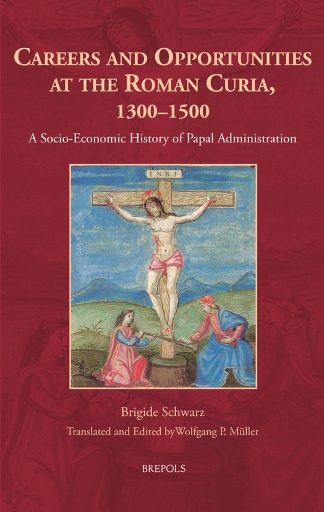
Careers and Opportunities at the Roman Curia, 1300–1500
A Socio-Economic History of Papal Administration
show More to view fulltext, buy and share links for:Careers and Opportunities at the Roman Curia, 1300–1500 show Less to hide fulltext, buy and share links for: Careers and Opportunities at the Roman Curia, 1300–1500Brigide Schwarz (1940–2019), a leading German historian of the Renaissance papacy, is presented here for the first time in a dossier of ten previously untranslated scholarly studies.
The volume brings the mechanisms of late medieval career building back to life. Success among churchmen was measured in access to ever more lucrative ecclesiastical endowments (or benefices). As the fifteenth century progressed, their treatment assumed highly monetized and abstract dimensions. Guided by Dr Schwarz, economic historians can discern many transactions that foreshadow the asset management of present-day Wall Street.
From the 1400s, administrative positions at the papal court (or Curia) were increasingly auctioned off. This created a marketplace for bidders expecting returns by way of ‘creative’ fee regulations or through the cornering of services in monopolies.
Only recently, scholarship has begun to question older depictions of the late medieval Church as one of decay and moral corruption. Dr Schwarz points to the ‘modernity’ of the fiscal arrangements which nation states like France soon copied as an efficient model of public financing.
-
-
-
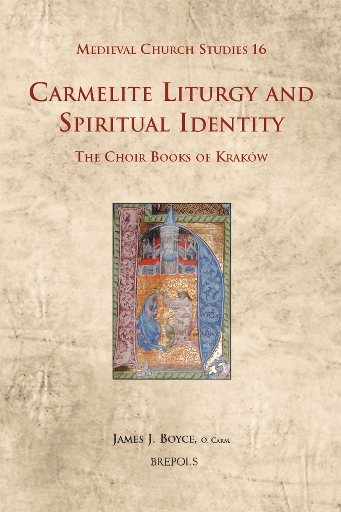
Carmelite Liturgy and Spiritual Identity
The Choir Books of Kraków
show More to view fulltext, buy and share links for:Carmelite Liturgy and Spiritual Identity show Less to hide fulltext, buy and share links for: Carmelite Liturgy and Spiritual IdentityThis book discusses the significance of the Carmelite liturgy as practised in the Kraków convent over a period of some four hundred years. Specifically, it examines the liturgical contents of five medieval Carmelite choir books from the Kraków convent and another choir book from this collection which is now in Wroclaw, and discusses their contents (especially their significant feasts), in terms of the Carmelite order's historical self-understanding and established liturgical tradition. Carmelite Liturgy and Spiritual Identity outlines the role of liturgy in the life of the Kraków convent and in relationship to the apostolic activity of these mendicant friars. It argues that the order's unique liturgical tradition, one which remained distinctive even after the Council of Trent, was crucial to their self-understanding. It also articulates how the liturgical practices of the Kraków Carmelites made a significant contribution to the spiritual life of the city and its people.
-
