


Brepols
Brepols is an international academic publisher of works in the humanities, with a particular focus in history, archaeology, history of the arts, language and literature, and critical editions of source works.461 - 480 of 3194 results
-
-
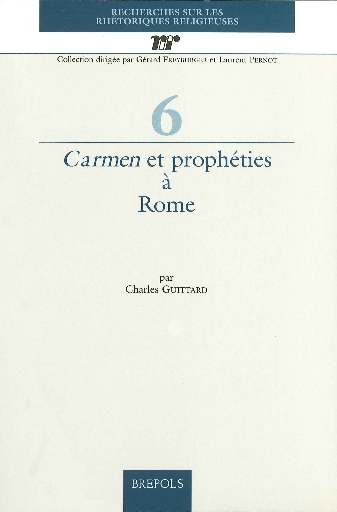
Carmen et prophéties à Rome
show More to view fulltext, buy and share links for:Carmen et prophéties à Rome show Less to hide fulltext, buy and share links for: Carmen et prophéties à RomeThe privileged form of expression of Roman prayer, before Christianism, was the carmen, a « religious formula » carefully scanned, with an aura often archaic and mysterious, if not magical. This book offers a systematic inquiry into the carmen. The author examines its technical aspects within the realm of archaic latin meter, then, based upon the latest research, pursues in-depth studies of the oldest manifestations of this type of prayer : the carmina of the ancient sodalities of Rome, the Salians and the Arval Brothers and the carmina of the corpus of Cato the Elder (the « Censor »), who provides us with precepts and prayers stemming from the earliest beliefs of the farmers of Latium. He adds a study of the carmen taken in another sense, although under foreign influence, that of « oracular formula », « prophetic discourse », a discourse which was assumed to come from the divinity itself. The most famous were the oracles of the Sibyl, entrusted to the strange Sibylline Books, which allowed divination, notably in times of crisis. The Romans also had recourse to the oracles of Etruscan divination, to the renowned « responses » of the haruspices. Charles Guittard thus analyses fundamental aspects and concepts of the Roman religion of the Pagan age, matters upon which Pagans and Christians will greatly debate in later periods.
Charles Guittard is professor of Latin language and literature at the University of Paris at Nanterre (Paris X). A recognized specialist in Roman religion, author of numerous books and articles, he has in particular edited Livy and translated Lucretius.
-
-
-
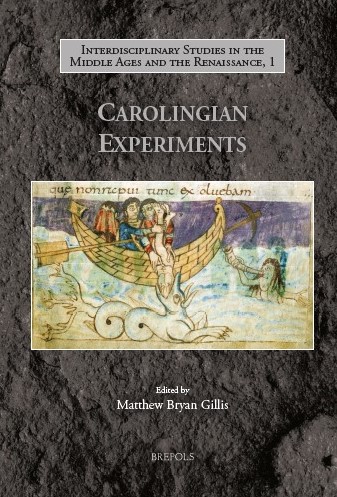
Carolingian Experiments
show More to view fulltext, buy and share links for:Carolingian Experiments show Less to hide fulltext, buy and share links for: Carolingian ExperimentsThis volume presents essays exploring how the Carolingians (ca. 700-ca. 900 CE) - a regime known especially for concerns over imperial power, order, and moral correction - fostered a remarkable era of experimentation in medieval Europe. The scholars featured here ask new questions and conduct their own methodological experiments to uncover some of the many ways that people innovated within the Carolingian world. To that end, numerous themes are covered in this volume: culture and society, family and politics, religion and spirituality, literature and historiography, law and hierarchy, epistemology and science. This array of scholarly experiments reveals some of the range and depth of Carolingian invention. Furthermore, the essays consider how Carolingian innovation can be found in places both more and less known today, employing novel approaches to unearth some unexpected, even uncanny phenomena. This volume consequently offers a defamiliarizing view of the Franks, unveiling them as a people whose seemingly straightforward imperialism and reform were effective precisely because they stimulated and nurtured potent, creative impulses. In fact, one might argue that the Carolingian world’s conservative, moralizing authorities - despite, or perhaps at times because of, their determination to instil correct thought and behaviour in their subjects - fostered many varieties of experimentation. Collectively, the authors of this volume seek to inspire new thinking about the Carolingians, while modelling alternative approaches and potential avenues for future research. Carolingian Experiments overall encourages readers to see that much remains unexplored, unknown and even unexpected about the Carolingians and their world.
-
-
-
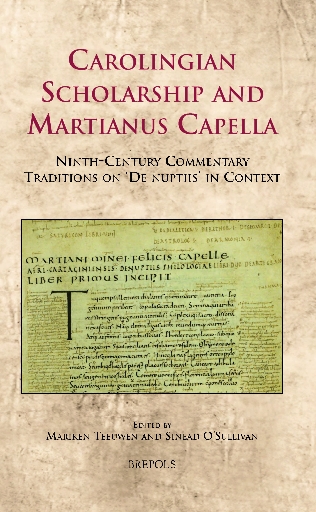
Carolingian Scholarship and Martianus Capella
Ninth-Century Commentary Traditions on 'De nuptiis' in Context
show More to view fulltext, buy and share links for:Carolingian Scholarship and Martianus Capella show Less to hide fulltext, buy and share links for: Carolingian Scholarship and Martianus CapellaIt is well known that the Carolingian royal family inspired and promoted a cultural revival of great consequence. The courts of Charlemagne and his successors welcomed lively gatherings of scholars who avidly pursued knowledge and learning, while education became a booming business in the great monastic centres, which were under the protection of the royal family. Scholarly emphasis was placed upon Latin language, religion, and liturgy, but the works of classical and late antique authors were collected, studied, and commented upon with similar zeal. A text that was read by ninth-century scholars with an almost unrivalled enthusiasm is Martianus Capella’s De nuptiis Philologiae et Mercurii, a late antique encyclopedia of the seven liberal arts embedded within a mythological framework of the marriage between Philology (learning) and Mercury (eloquence). Several ninth-century commentary traditions testify to the work’s popularity in the ninth century. Martianus’s text treats a wide range of secular subjects, including mythology, the movement of the heavens, numerical speculation, and the ancient tradition on each of the seven liberal arts. De nuptiis and its exceptionally rich commentary traditions provide the focus of this volume, which addresses both the textual material found in the margins of De nuptiis manuscripts, and the broader intellectual context of commentary traditions on ancient secular texts in the early medieval world.
-
-
-
Cartesius edoctus
Hommage à Giulia Belgioioso
show More to view fulltext, buy and share links for:Cartesius edoctus show Less to hide fulltext, buy and share links for: Cartesius edoctusLes études qui composent ce recueil ont été prononcées le 6 octobre 2017 au Monastero degli Olivetani de Lecce, en hommage à Giulia Belgioioso, au moment où la fondatrice du Centro Dipartimentale di studi su Descartes ‘Ettore Lojacono’ quittait à la fois son enseignement et la direction du centre qu’elle avait créé.
Le titre qui les réunit - Cartesius edoctus - suffit à dire l’essentiel pour un savant professeur qui a toujours su laisser la première place à celui qui a fait l’objet principal de ses recherches et de ses leçons : mais si elle a inlassablement enseigné Descartes et le cartésianisme, Giulia Belgioioso a aussi fait du Salente un « nouveau royaume » cartésien en y développant ses propres études, en y organisant des rencontres internationales et en établissant, pour parler comme Fénelon, « toutes les plus utiles maximes de gouvernement » pour les recherches des nombreux jeunes chercheurs qu’elle a formés et des équipes qui ont travaillé à l’oeuvre commun, en particulier à l’édition magistrale de Tutte le lettere et des Opere et Opere postume. La fondation du Centro, en 1998, très vite devenu l’alter ego du Centre d’études cartésiennes de la Sorbonne, a fourni le complément institutionnel des avancées méthodologiques évoquées plus haut.
Ce recueil d’articles est un hommage : loin cependant d’être purement formel, il entend se concentrer strictement sur les axes principaux de l’activité de recherche de Giulia Belgioioso. Ce faisant, il révèle en réalité un monde entier : on s’aperçoit en effet immédiatement, ne fût-ce qu’en feuilletant le volume, que les études qui y figurent envisagent les aspects les plus importants à la fois de la philosophie de Descartes et de l’histoire du cartésianisme, comprenant également des documents inédits. La démarche conduit donc de la deuxième Méditation (Igor Agostini) à Paolo Mattia Doria (Jean-Robert Armogathe) ; de la mathesis universalis (Frédéric de Buzon) à Christine de Suède (Carlo Borghero) ; des questions de méthode et de la visée apologétique (Vincent Carraud) à L’Homme (Dan Garber) ; du mythe du solipsisme (Denis Kambouchner) à saint Augustin et Montaigne (Jean-Luc Marion) ; d’un échantillon sur philosophie et médecine dans le XVIIe siècle français (Fabio Sulpizio) aux débats sur l’eucharistie à Port-Royal (Martine Pécharman) et à la condamnation d’un lockien italien (Marta Fattori). Une série de témoignages de collègues, élèves et amis complète l’ouvrage.
-
-
-
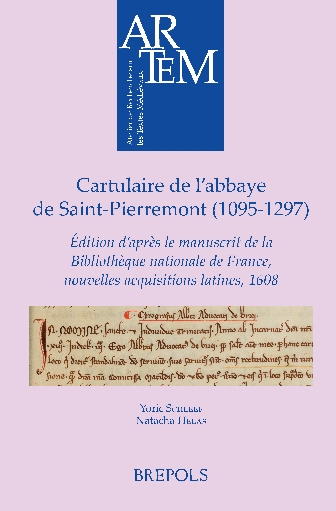
Cartulaire de l’abbaye de Saint-Pierremont (1095-1297)
Édition d’après le manuscrit de la Bibliothèque nationale de France, nouvelles acquisitions latines, 1608
show More to view fulltext, buy and share links for:Cartulaire de l’abbaye de Saint-Pierremont (1095-1297) show Less to hide fulltext, buy and share links for: Cartulaire de l’abbaye de Saint-Pierremont (1095-1297)L’abbaye de chanoines réguliers de Saint-Pierremont a été fondée en 1095 dans le nord de la Lorraine. Grâce aux nombreuses donations de l’aristocratie locale, elle étend rapidement son temporel à travers le Pays-Haut lorrain, jusqu’en Belgique, tout au long des XII e et XIII e siècles. Elle a laissé de nombreuses archives qui éclairent l’histoire de cette région au Moyen Âge. Le cartulaire édité ici est donc une source privilégiée pour la connaissance des possessions de cette abbaye et des structures foncières de cette région. Il complète utilement un livre foncier (auquel il est associé dans le manuscrit) qui a été édité en 2013 par Yoric Schleef.
-
-
-
Cartulaire du chapitre cathédral de Langres
show More to view fulltext, buy and share links for:Cartulaire du chapitre cathédral de Langres show Less to hide fulltext, buy and share links for: Cartulaire du chapitre cathédral de LangresEn 1231 et 1232 cinq scribes copient presque toutes les chartes reçues depuis la fin du XI e siècle par le chapitre cathédral de Langres. Ce cartulaire constitue une remarquable collection d'actes, qui éclaire l'histoire d'une grande seigneurie ecclésiastique, située aux confins de la Champagne, de la Bourgogne et de la Lorraine, du royaume de France et de l'Empire. Document sur la seigneurie et la féodalité, il éclaire aussi la gestion d'un patrimoine considérable, et en particulier l'usage de l'écrit en cette matière.
-
-
-
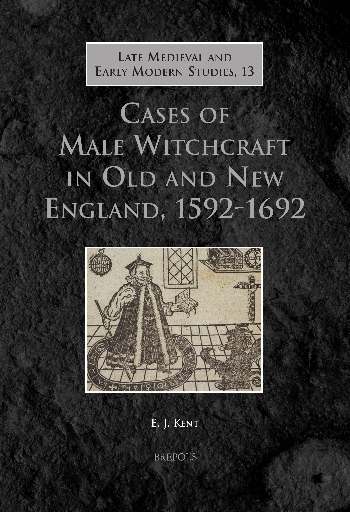
Cases of Male Witchcraft in Old and New England, 1592-1692
show More to view fulltext, buy and share links for:Cases of Male Witchcraft in Old and New England, 1592-1692 show Less to hide fulltext, buy and share links for: Cases of Male Witchcraft in Old and New England, 1592-1692This study explores cases in which men were accused of witchcraft in England and the British colonies of New England between 1592 and 1692. Using a series of case studies that begin in Elizabethan Norfolk and end with the Salem trials in Massachusetts, this book examines six individual male witches and argues they are best understood as masculine witches, not feminized men. Each case considers the social circumstances of the male witch as a gendered context for the accusations of witchcraft against him.
Instead of seeking to identify a single causal condition or overarching gendered circumstance whereby men were accused of witchcraft, this study examines the way that masculinity shaped the accusations of witchcraft made against each man. In each case, a range of masculine social and cultural roles became implicated in accusations of witchcraft, making it possible to explore how beliefs in witches interacted with early modern English gender cultures to support the religious, legal, and cultural logic of the male witch. The result is an approach to early modern English witchcraft prosecution that includes, rather than problematizes, the male witch.
-
-
-
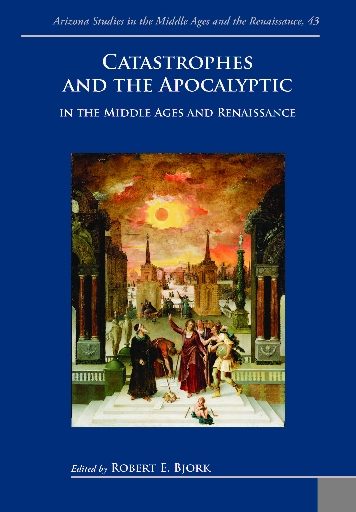
Catastrophes and the Apocalyptic in the Middle Ages and the Renaissance
show More to view fulltext, buy and share links for:Catastrophes and the Apocalyptic in the Middle Ages and the Renaissance show Less to hide fulltext, buy and share links for: Catastrophes and the Apocalyptic in the Middle Ages and the RenaissanceIn the twenty-first century, insurance companies still refer to 'acts of God' for any accident or event not influenced by human beings: hurricanes, floods, hail, tsunamis, wildfires, earthquakes, tornados, lightning strikes, even falling trees. The remote origin of this concept can be traced to the Hebrew Bible. During the Second Temple period of Judaism a new literary form developed called 'apocalyptic' as a mediated revelation of heavenly secrets to a human sage concerning messages that could be cosmological, speculative, historical, teleological, or moral. The best-known development of this type of literature, however, came to fruition in the New Testament and is, of course, the Book of Revelation, attributed to the apostle John, and which figures prominently in the Middle Ages and Renaissance.
This collection of essays, the result of the 2014 ACMRS Conference, treats the topic of catastrophes and their connection to apocalyptic mentalities and rhetoric in the Middle Ages and the Renaissance (with particular reference to reception of the Book of Revelation), both in Europe and in the Muslim world. The twelve authors contributing to this volume use terms that are simultaneously helpful and ambiguous for a whole range of phenomena and appraisal.
-
-
-
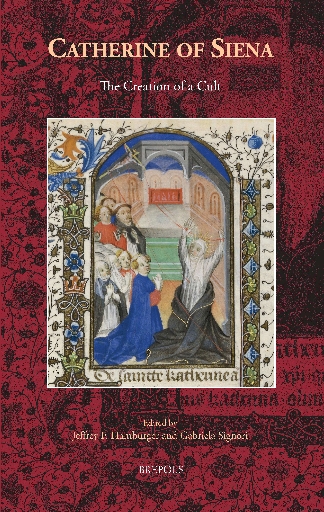
Catherine of Siena
The Creation of a Cult
show More to view fulltext, buy and share links for:Catherine of Siena show Less to hide fulltext, buy and share links for: Catherine of SienaHow does one construct a saint and promote a cult beyond the immediate community in which he or she lived? Italian mendicants had accumulated a good deal of experience in dealing with this politically explosive question. The posthumous description of the life of Francis of Assisi (d. 1226) written by the Master General of the order, Bonaventure (d. 1274), could be regarded as paradigmatic in this regard. A similarly massive intervention in the production and diffusion of a cult can be observed in the case of the Dominican tertiary, Catherine of Siena (d. 1380), who in many respects (e.g. the imitation of Christ and her stigmatization) ‘competed’ with Francis of Assisi. Raymund of Capua (d. 1399), the Master General of the order, established the foundation for the dissemination of the cult by writing the authoritative life, but it was only the following generation that succeeded in establishing and disseminating the cult on a broad basis by means of copies, adaptations, and translations. The question of how to make a cult, which stands at the centre of this volume, thus presents itself in terms of the challenge of rewriting a legend for different audiences. The various contributions consider the role, not only of texts in many dfferent vernaculars (Czech, English, French, German, and Italian), but also of images, whether separately or in connection with one another.
-
-
-
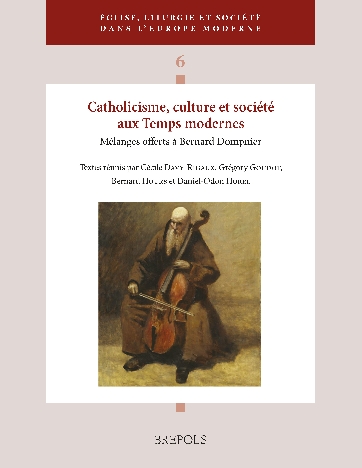
Catholicisme, culture et société aux Temps modernes
Mélanges offerts à Bernard Dompnier
show More to view fulltext, buy and share links for:Catholicisme, culture et société aux Temps modernes show Less to hide fulltext, buy and share links for: Catholicisme, culture et société aux Temps modernesDepuis plus de quarante ans, Bernard Dompnier scrute la complexité du catholicisme moderne, ouvrant de nombreux chantiers transversaux autour des réguliers, des missions, des dévotions mais aussi de la liturgie et de la musique d’église. La vingtaine de textes qui constitue ce livre, dont les auteurs sont des collègues et amis, historiens et musicologues, rend ainsi hommage à cette diversité d’approches pour un objet principal : le catholicisme pensé et vécu au coeur de la société d’Ancien Régime.
-
-
-

Celts, Gaels, and Britons
Studies in Language and Literature from Antiquity to the Middle Ages in Honour of Patrick Sims-Williams
show More to view fulltext, buy and share links for:Celts, Gaels, and Britons show Less to hide fulltext, buy and share links for: Celts, Gaels, and BritonsCelts, Gaels, and Britons offers a miscellany of essays exploring three closely connected areas within the fields of Celtic Studies in order to shed new light on the ancient and medieval Celtic languages and their literatures. Taking as its inspiration the scholarship of Professor Patrick Sims-Williams, to whom this volume is dedicated, the papers gathered together here explore the Continental Celtic languages, texts from the Irish Sea world, and the literature and linguistics of the British languages, among them Welsh and Cornish. With essays from eighteen leading scholars in the field, this in-depth volume serves not only as a monument to the rich and varied career of Sims-Williams, but also offers a wealth of commentary and information to present significant primary research and reconsiderations of existing scholarship.
-
-
-
Centaurus
Journal of the European Society for the History of Science
show More to view fulltext, buy and share links for:Centaurus show Less to hide fulltext, buy and share links for: CentaurusCentaurus. Journal of the European Society for the History of Science, is an international English language journal and the official journal of the European Society for the History of Science (ESHS). Centaurus publishes high quality academic content on the history of science in the broadest sense, including the history of mathematics, medicine, biomedical sciences, earth sciences, social sciences, humanities and technology, studied from different perspectives, including epistemic, social, cultural, material and technical aspects. We also invite contributions that build a bridge between history of science and other disciplines. There are several types of manuscripts, including original research articles and historiographical articles. The editorial board commissions experts to write book notices, book reviews and essay reviews of publications within the journal's scope. The Editor encourages suggestions for special issues, spotlight sections with short papers on topics of current interest, and articles suited to open peer commentary.
More information about this journal on Brepols.net
-
-
-
Centres and Peripheries in the History of Philosophical Thought / Centri e periferie nella storia del pensiero filosofico
Essays in Honour of Loris Sturlese
show More to view fulltext, buy and share links for:Centres and Peripheries in the History of Philosophical Thought / Centri e periferie nella storia del pensiero filosofico show Less to hide fulltext, buy and share links for: Centres and Peripheries in the History of Philosophical Thought / Centri e periferie nella storia del pensiero filosoficoThis volume is an homage to the great intellectual contribution made by Loris Sturlese to the field of history of medieval philosophy. Its point of departure lies in a methodological line, which Sturlese has maintained throughout his whole academic career: the importance in the historical and conceptual reconstruction of medieval philosophical thought of focusing not only on the classical, most famous centers of knowledge production and transmission, but also on the often-neglected peripheries, which during the Middle Ages were increasingly more relevant in propelling the circulation of texts and ideas. In this volume, the notions of ‘center’ and ‘periphery’ are not understood in a merely geographical sense, but also in conceptual, linguistic, historical and literary terms. The richness of this approach is demonstrated by the broad spectrum of the contributions, which range from Islamic philosophy to Italian Renaissance, including the reception of ancient philosophy and of Arabic scientific works in the Latin world, and up to eighteenth-century French geography. Special attention is devoted to the philosophical thought developed in the German area. The volume does not lack in giving space to important medieval figures, such as Dante, as well as to more general philosophical notions, such as the concept of rationality.
The volume explores connections, ruptures, relations and affinities through the analysis of paradigmatic figures, places and topics within the micro- and macro-histories of philosophy.
-
-
-
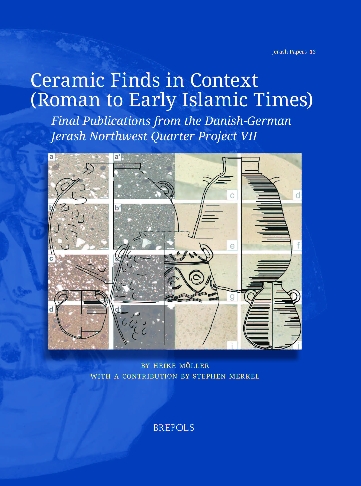
Ceramic Finds in Context (Roman to Early Islamic Times)
Final Publications from the Danish-German Jerash Northwest Quarter Project VII
show More to view fulltext, buy and share links for:Ceramic Finds in Context (Roman to Early Islamic Times) show Less to hide fulltext, buy and share links for: Ceramic Finds in Context (Roman to Early Islamic Times)The Decapolis city of Jerash has long attracted attention from travellers and scholars, due both to the longevity of the site and the remarkable finds uncovered during successive phases of excavation that have taken place from 1902 onwards. Between 2011 and 2016, a Danish-German team, led by the universities of Aarhus and Münster, focused their attention on the Northwest Quarter of Jerash — the highest point within the walled city — and this volume is the seventh in a series of books presenting the team’s final results.This volume provides an in-depth analysis into the ceramic materials found in Jerash’s Northwest Quarter, much of which comes from largely undisturbed contexts. The ceramic finds presented in this volume are typo-chronologically evaluated and contextually analysed. The authors then use this dataset as a starting point to explore the micro- and macro-networks that existed in ancient Gerasa from Roman to Early Islamic times more broadly, examining how finely meshed exchange could take place on a micro-regional level, and assessing what conditions were required in order for trade to occur.
-
-
-
Certitude et incertitude à la Renaissance
show More to view fulltext, buy and share links for:Certitude et incertitude à la Renaissance show Less to hide fulltext, buy and share links for: Certitude et incertitude à la RenaissanceLa Renaissance est marquée par un grand mouvement de rationalisation du savoir. La science sert de référence à l'art, qui par sa mathématisation, tente de s'approcher le plus possible de la certitude absolue dont elle fournit le modèle. Les sciences intermédiaires, disciplines d'application de la mathématique, telles que la mécanique, l'optique, l'abaque, se développent, permettant de nombrer le réel, parallèlement aux instruments de précision qui accroissent l'efficacité de la technique. D'autres disciplines, telles que le droit ou l'histoire, cherchent de même à élaborer les principes et la méthode de leur certitude propre. Il est toutefois des domaines, tels que la foi ou l'acte moral, où la certitude ne s'étalonne pas sur la vérité de la science, mais trouve en son coeur l'incertitude fondatrice de l'expérience humaine. En tentant, dans la recherche du bien et du mal, du beau et du laid, de conjurer la relativité et la précarité de la vie, l'intelligence humaine ne saurait fait l'économie du doute qui la distingue de la machine et fonde sa grandeur. C'est à cette tension jamais résolue, mise en évidence par l'humanisme de la Renaissance, que cet ensemble de contributions se propose de réfléchir.
-
-
-
Challenging the Boundaries of Medieval History
The Legacy of Timothy Reuter
show More to view fulltext, buy and share links for:Challenging the Boundaries of Medieval History show Less to hide fulltext, buy and share links for: Challenging the Boundaries of Medieval HistoryHow is the history of medieval Europe written? What national discourses shape the editing of medieval texts and their interpretation in historiography? And how can medieval historians confront these questions by reintegrating their fragmented field through the use of comparison and critiques across national boundaries? In his work, Timothy Reuter regularly posed these challenges to his colleagues, acting as a bridge between the historians of England and Germany, working on an edition of the letters of Wibald of Stavelot (whose own career took him to many of the power centres of medieval Europe), and positioning medieval Europe in the wider discourses of world history. The essays collected here provide a response to this challenge. Dedicated to Prof. Reuter’s memory and in some cases directly continuing his work, all are explicitly comparative in their approach. All of the authors take as their starting point the need to be conscious of the situation from which they themselves are writing and to be sensitive to the training traditions which have shaped their own interpretations. This book shows medieval historians at work, questioning and reflecting on their practice. As well as being of value to specialists in the field, the essays are written in an approachable style and will therefore be of value as a teaching tool to undergraduate and graduate students.
-
-
-
Chanter en polyphonie à Notre-Dame de Paris aux 12e et 13e siècles
show More to view fulltext, buy and share links for:Chanter en polyphonie à Notre-Dame de Paris aux 12e et 13e siècles show Less to hide fulltext, buy and share links for: Chanter en polyphonie à Notre-Dame de Paris aux 12e et 13e sièclesLa polyphonie chantée au chœur de la cathédrale Notre-Dame de Paris à la fin du XIIe siècle a profondément marqué son temps et la virtuosité dont ont fait preuve les chanteurs dans le maniement de leur art, l’audace des scribes qui ont consigné l’organum dans une notation mesurée alors totalement inédite et l’intérêt que les intellectuels y ont porté, accordent à la polyphonie parisienne une place remarquable dans l’histoire de la musique occidentale.
Cet ouvrage explique comment les chantres de la nouvelle église de Paris ont réussi à exécuter ces majestueuses fresques qui enflammèrent l’imagination des médiévaux par leur étonnante splendeur et qui suscitent toujours autant d’enthousiasme de nos jours.
La musique médiévale entretient d’étroites relations avec les sciences du langage, puisant en elles les éléments de son développement technique et reposant sur une mémoire sans cesse exercée. Cette étude concerne l’ars musica dans ses relations avec les arts du trivium et la mémoire et veut ancrer les compositions dans le contexte intellectuel et éducatif qui a permis leur éclosion et leur développement. Elle montre ainsi comment les clercs de Notre-Dame ont utilisé des procédés rhétoriques d’ornementation afin d’élaborer un discours musical complexe et vise à comprendre dans quelles circonstances, comment et à quelles fins, les chantres ont composé une très haute manifestation de la Parole chantée.
-
