Brepols
Brepols is an international academic publisher of works in the humanities, with a particular focus in history, archaeology, history of the arts, language and literature, and critical editions of source works.581 - 600 of 3194 results
-
-
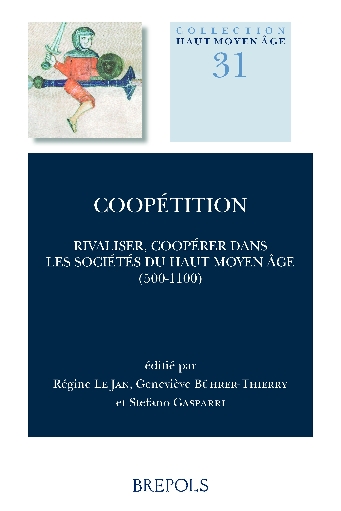
Coopétition
Rivaliser, coopérer dans les sociétés du haut Moyen Âge (500-1100)
show More to view fulltext, buy and share links for:Coopétition show Less to hide fulltext, buy and share links for: CoopétitionCe livre est centré sur la « coopétition », un concept qui désigne la capacité des acteurs à rivaliser et à coopérer simultanément. Certes, les sociétés du premier Moyen Âge sont des sociétés conflictuelles, qui développent souvent des formes de compétition agressive, mais le désir de paix est universel et la compétition ne détermine pas seulement un gagnant et un perdant. Les acteurs ont aussi eu intérêt à collaborer avec leurs rivaux, dans la perspective d’un gain réciproque (gagnant-gagnant) ou d’un profit futur, y compris dans l’au-delà. Pour comprendre les stratégies, le jeu qui se joue derrière les interactions compétitives et les bénéfices attendus, ce livre prend donc en compte les jeux d’échelle, les relations entre le centre et la périphérie, entre l’ici-bas et l’au-delà, mais aussi la capacité des autorités à développer le consensus et à susciter la confiance sans laquelle on ne peut prendre le risque de coopérer avec un rival. Il embrasse les différents espaces et le temps long, en se focalisant sur des périodes caractérisées par une alternance d’instabilité et de stabilité sur le plan politique. Il éclaire ainsi d’un jour nouveau le jeu de la compétition dans les sociétés du premier Moyen Âge.
-
-
-
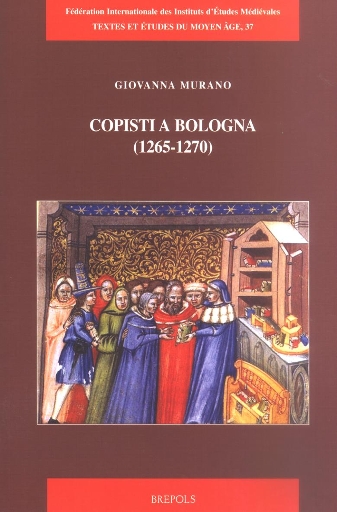
Copisti a Bologna (1265-1270)
show More to view fulltext, buy and share links for:Copisti a Bologna (1265-1270) show Less to hide fulltext, buy and share links for: Copisti a Bologna (1265-1270)The mystery of writing is that there is nothing mysterious about it. If Saramago is right, then it is obvious that palaeography has not yet found all the keys we need if we are to enter amongst the people who gave form to the thoughts and memories of the medieval world. In order to reveal their identity – the greatest mystery of all – it is sometimes necessary to pass over what has already been written, affirmed and maintained, and to return to the sources instead. The “Memoriali” conserved in the Archivio di Stato in Bologna reveal stories of men and women who created, with pen and quill veritable cathedrals of ink, indelible and sometimes of ineffable beauty. In this volume the names are collected, the commissions listed, where possible the careers and tribulations described of more than 270 copyists documented at Bologna between 1265 and 1270. In short, it is the documentary sources, not the works produced or such as have survived, on which the present book has been based.
-
-
-
Corona gratiarum
Miscellanea patristica, historica et liturgica Eligio Dekkers O.S.B. XII lustra complenti oblata
-
-
-

Corpo e anima, sensi interni e intelletto dai secoli XIII-XIV ai post-cartesiani e spinoziani
Atti del Convegno Internazionale, Firenze, Dipartimento di Scienze dell’Educazione e dei Processi Culturali e Formativi, 18-20 settembre 2003)
show More to view fulltext, buy and share links for:Corpo e anima, sensi interni e intelletto dai secoli XIII-XIV ai post-cartesiani e spinoziani show Less to hide fulltext, buy and share links for: Corpo e anima, sensi interni e intelletto dai secoli XIII-XIV ai post-cartesiani e spinozianiI contributi raccolti nel volume permettono di ricostruire alcuni nuclei storico- dottrinali sulla natura dei sensi interni e sulle complesse relazioni anima-corpo; tale problema attraversa l’intera storia della filosofia, dalla tarda antichità fino al radicale mutamento di prospettiva operato da Cartesio, Spinoza, Malebranche e dai grandi maestri del Seicento. Da queste ricerche emergono le differenze semantico-concettuali e le diverse valutazioni della phantasia, della imaginatio, intesa come cogitatio, o ragionamento estimativo e valutativo, e degli altri sensi interni — mutamenti e novità introdotti soprattutto grazie alla mediazione dei filosofi e degli scienziati arabi. Questi nuovi orizzonti del filosofare costituiscono, secondo modalità gnoseologiche e ontologiche variabili da un filosofo all’altro, il sostrato delle noetiche e delle metafisiche della tradizione aristotelica medievale e rinascimentale. Per quanto concerne la filosofia moderna, gli studi qui condotti mostrano come il nesso anima-corpo non si costituisca attraverso la zione della sensibilità interna o esterna intesa nei modi tradizionali delle correnti filosofiche tardo-antiche e medievali, ma si configuri piuttosto come problema dell’identità della persona psico-fisica e della sua stessa individualità. Tali ricerche evidenziano, quindi, da una parte quanto sia complesso l’orizzonte delle teorie delle funzioni mediane della psiche, tra intelletto e senso; dall’altra, come esse non siano riducibili agli stereotipi modelli interpretativi monisti o dualisti — fisicisti o spiritualisti — tanto della tradizione antica e medievale quanto di quella moderna.
-
-
-
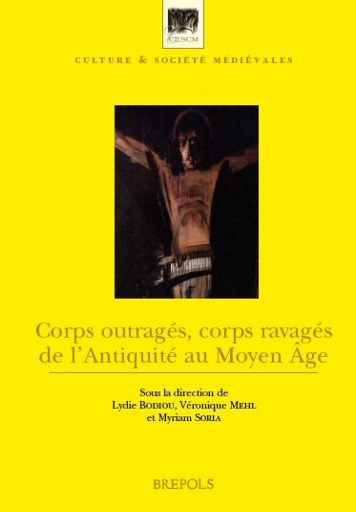
Corps outragés, corps ravagés de l’Antiquité au Moyen Âge
show More to view fulltext, buy and share links for:Corps outragés, corps ravagés de l’Antiquité au Moyen Âge show Less to hide fulltext, buy and share links for: Corps outragés, corps ravagés de l’Antiquité au Moyen ÂgeLes ravages corporels et leurs représentations, signes d’outrage aux corps, forment un trait d’union trop souvent négligé entre l’Antiquité et le Moyen Âge. À avoir opposé des civilisations anciennes marquées par un certain « culte de corps » à des sociétés médiévales méprisant la chair, on en aurait presque oublié que le corps y voyage à travers les savoirs, de l'histoire à la littérature, de la science au droit, de la biologie à la théologie et la philosophie. Aussi les sources nous invitent-elles à regarder au-delà des frontières historiques et culturelles qui séparent l'Antiquité et le Moyen Âge. De la plus haute Antiquité au Moyen Âge tardif, chaque outrage au corps physique est lourd de sens: faisant écho dans le corps social, il renvoie aux normes et aux assises de l’ordre politique, affirmant une morale, des valeurs et des croyances qui cimentent les corps constitués dont l’individu n’est qu’une partie. La signification des outrages aux corps diverge suivant la personnalité ou la fonction de celui qui brutalise, comme de celui qui est maltraité. Elle est aussi tributaire du système de représentation du temps et du lieu, du contexte et de l'univers culturel dans lesquels ils s'inscrivent. L’objet de cet ouvrage collectif est de comprendre comment les sociétés antiques et médiévales représentent le modelage du corps humain, à la fois au plan social, mental, politique et religieux, dans l'intention de façonner des individus adaptés à des environnements propres. Il s'agit de saisir comment les outrages et les ravages infligés aux corps physiques et symboliques offrent des clés de compréhension générale de la société qui voit le corps vivre et mourir.
-
-
-
Corpus Christianorum 1953-2003: Xenium natalicium
show More to view fulltext, buy and share links for:Corpus Christianorum 1953-2003: Xenium natalicium show Less to hide fulltext, buy and share links for: Corpus Christianorum 1953-2003: Xenium nataliciumIn 1953 the first fascicle of the first volume of the Corpus Christianorum was published. Now, fifty years later, this series has established itself as one of the great scientific enterprises in the field of patristic and medieval studies. We offer this birthday-present to ourselves, our old and new collaborators and our friends as a celebration of what has been achieved, as a survey of where we currently stand and as an insight into our future.
The book opens with an essay on fifty years of the Corpus Christianorum. It tells the story of how the enterprise started as an ambitious yet limited project and how it developed into what it is today: a conglomerate of many different research projects located in different places all over the world.
The second part presents a florilegium of patristic and medieval texts, all of which have been edited in the series, some only recently, others long ago. The selection has been made by a group of scholars representing the variety of interests reflected in the subseries of the Corpus Christianorum.
At the end of the volume an Onomasticon has been added. It gives a complete survey of all the text-editions published to date. This “mini-clavis” will make it easier to find one’s way in the library of the Corpus Christianorum.
-
-
-
Corpus de prières grecques et romaines
show More to view fulltext, buy and share links for:Corpus de prières grecques et romaines show Less to hide fulltext, buy and share links for: Corpus de prières grecques et romainesIn the civilisations of the Ancient World, where the holy was omnipresent, any undertaking of importance was placed under the aegis of the gods, for no other course of action was conceivable. Humankind addressed the divinity in particular through prayer, a means of communication of which Greek and Latin texts furnish numerous examples. The goal of the present work is to reflect the diversity of these speech acts to the gods in presenting a corpus of Greek and Roman pagan prayer. The authors have selected some two hundred texts covering all of the ancient period and representing different sources and genres : formulaic prayers of rituel, literary prayers in verse and prose, private writings, mystical and magical texts, and so on. They have presented the documents in the original tongue with a new translation and a commentary.
This is the companion volume to the Analytic Bibliography of Greek and Roman Prayer (Bibliographie analytique de la prière grecque et romaine) which began the collection.
Frédéric Chapot and Bernard Laurot, specialists of ancient language and literature, are associate professors at Marc Bloch University of Strasbourg.
-
-
-
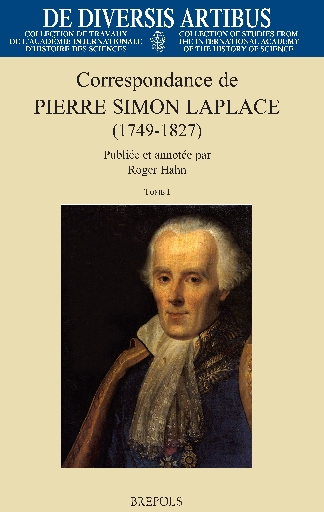
Correspondance de Pierre Simon Laplace (1749-1827)
Tome I : Années 1769-1802 - Tome II : Années 1803-1827 et lettres non datées
show More to view fulltext, buy and share links for:Correspondance de Pierre Simon Laplace (1749-1827) show Less to hide fulltext, buy and share links for: Correspondance de Pierre Simon Laplace (1749-1827)Ce nouveau volume de la Collection de travaux est à bien des égards exceptionnel. C’est l’œuvre d’une vie, car pendant cinquante ans, jusqu’à sa mort en 2011, Roger Hahn a patiemment rassemblé les lettres de Laplace éparses dans les collections publiques et privées. C’est aussi un document capital pour l’histoire du XVIIIe et du XIXe siècle, depuis l’Ancien Régime jusqu’à la Restauration, dans tous ses aspects. En effet, Laplace ne fut pas seulement un scientifique de premier ordre en mécanique céleste, en astronomie, en mathématique, il exerça d’importantes fonctions politiques et administratives sous les régimes successifs. Enfin, la correspondance apporte un témoignage de première main, souvent émouvant, sur la vie personnelle et sur l’évolution philosophique du « doyen des athées ».
-
-
-
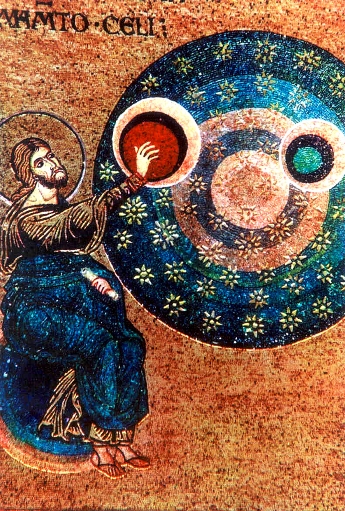
Cosmogonie e cosmologie nel medioevo
Atti del convegno della Società Italiana per lo Studio del Pensiero Medievale (S.I.S.P.M.), Catania, 22-24 settembre 2006
show More to view fulltext, buy and share links for:Cosmogonie e cosmologie nel medioevo show Less to hide fulltext, buy and share links for: Cosmogonie e cosmologie nel medioevoIl volume raccoglie 25 studi sulla cosmologia medievale, affrontata nelle sue diverse componenti in un arco di tempo che va da Calcidio al XIV secolo. Dieci contributi investigano questioni di cosmologia ebraica e islamica, in particolare le opere di Gersonide (R. Gatti), Maimonide (L. Pepi), Avicenna (C. Di Martino), Avicenna (O. Lizzini), Sohravardî (I. Panzeca), Qûnawî (P. Spallino), i Fratelli della Purità (C. Baffioni) e le interferenze fra medioevo islamico e latino: la grande questione delle cosmologie alchemiche (M. Pereira), testi tradotti come il De secretis naturae (P. Travaglia), la dottrina del grande anno in Thebit e Pietro d’Abano (F. Seller). All’influenza della Patristica greca sul pensiero occidentale dedicano ampio spazio i lavori di E. S. Mainoldi e R. Gambino. Ulteriori studi presentano lo sviluppo del pensiero cosmologico e scientifico latino a partire da Calcidio (C. Militello), attraverso Adelardo di Bath (P. Palmeri), Guglielmo di Conches (G. Pellegrino) e documenti diversi (A. Tarabochia Canavero) sino alla ripresa dell’aristotelismo fisico, in particolare nei commenti universitari ai Meteorologica (G. Fioravanti), De caelo (C. A. Musatti, A. Vella) e in Dante (M. Gallarino, P. Falzone). La letteratura scientifica in volgare è rappresentata da Restoro d’Arezzo (U. Villani-Lubelli) e Ramon Llull (J. Gayà). A questioni di metodo storiografico è dedicato il saggio di G. Alliney, mentre un magistrale contributo di Tullio Gregory su «Cosmogonia biblica e cosmologie cristiane» traccia idealmente le coordinate generali del complesso problematico affrontato nelle sue diverse sfaccettature dagli autori del volume.
-
-
-

Cosmogonies et religion
Aspects particuliers des astres dans les religions de l’Antiquité méditerranéenne
show More to view fulltext, buy and share links for:Cosmogonies et religion show Less to hide fulltext, buy and share links for: Cosmogonies et religionDans cet ouvrage sont rassemblées les contributions de spécialistes belges et français, présentées lors du colloque organisé à l’Université catholique de Louvain le 3 juin 2016 par le Centre d’Histoire des Religions Cardinal Julien Ries. La thématique de cette journée abordait des aspects particuliers des astres dans les religions de l’antiquité méditerranéenne et orientale (Iran). De tous temps, la lune, les astres et les phénomènes célestes ont fasciné l’être humain. Les religions de l’Antiquité ont interprété ces éléments de diverses manières. Les régions concernées par les articles de ce volume sont l’Iran, l’Anatolie (Hitittes), la Grêce, ainsi que la Chine (tokharien).
-
-
-
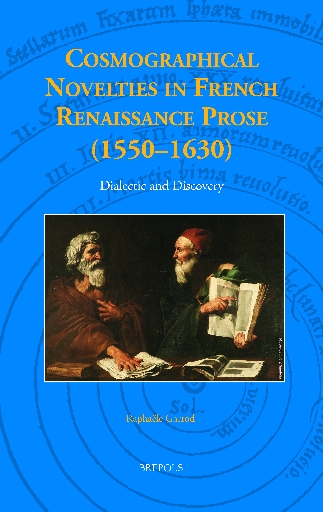
Cosmographical Novelties in French Renaissance Prose (1550–1630)
Dialectic and Discovery
show More to view fulltext, buy and share links for:Cosmographical Novelties in French Renaissance Prose (1550–1630) show Less to hide fulltext, buy and share links for: Cosmographical Novelties in French Renaissance Prose (1550–1630)Contemporary historiography holds that it was the practices and technologies underpinning both the Great Voyages and the ‘New Science’, as opposed to traditional book learning, which led to the major epistemic breakthroughs of early modernity. This study, however, returns to the importance of book-learning by exploring how cosmological and cosmographical ‘novelties’ were explained and presented in Renaissance texts, and discloses the ways in which the reports presented by sailors, astronomers, and scientists became not only credible but also deeply disturbing for scholars, preachers, and educated laymen in sixteenth- and seventeenth-century France.
It is argued here that dialectic - the art of argumentation and reasoning - played a crucial role in articulating and popularizing new learning about the cosmos by providing the argumentative toolkit needed to define, discard, and authorize novelties. The debates that shaped them were not confined to learned circles; rather, they reached a wider audience via early modern vernacular genres such as the essay.
Focusing both on major figures such as Montaigne or Descartes, as well as on now-forgotten popularizers such as Belleforest and Binet, this book describes the deployment of dialectic as a means of articulating and disseminating, but also of containing, the disturbance generated by cosmological and cosmographical novelties in Renaissance France, whether for the lay reader in Court or Parliament, for the parishioner at Church, or for the student in the classroom.
-
-
-
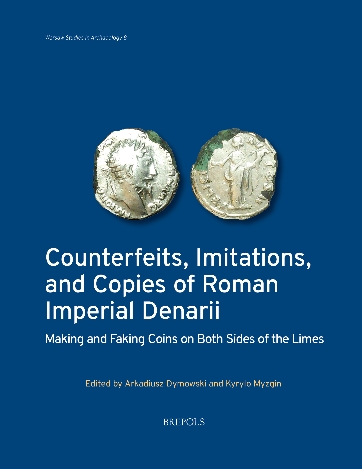
Counterfeits, Imitations, and Copies of Roman Imperial Denarii
Making and Faking Coins on Both Sides of the Limes
show More to view fulltext, buy and share links for:Counterfeits, Imitations, and Copies of Roman Imperial Denarii show Less to hide fulltext, buy and share links for: Counterfeits, Imitations, and Copies of Roman Imperial DenariiRoman Imperial denarii from the first–third centuries ad are, almost without exception, the most common ancient coinage to be found in Central, Northern, and Eastern Europe beyond the Roman limes. Perhaps surprisingly, however, a significant percentage of these coins are in fact counterfeit, comprised largely of denarii subaerati (plated denarii, fourrées) and denarii flati (base-metal cast copies). Moreover, these fake coins were not only manufactured by Romans themselves, but also by barbarian peoples in Eastern Europe, far from the Roman limes, in what should be considered a mass-scale phenomena.
This volume draws together archaeological, numismatic, and historical research in order to offer a new assessment of the production and use of counterfeit Roman Imperial denarii both within the European provinces of the Roman Empire and in European Barbaricum. Drawing on the results of the research project Barbarian Fakers. Manufacturing and Use of Counterfeit Roman Imperial Denarii in East-Central Europe in Antiquity, from the University of Warsaw, the papers gathered here explore the transfer of ideas, technology, and finished products that led to the transfer of counterfeit coinage across the Empire, and shed light on how, why, and when such coins were created and used.
-
-
-
Couples et conjugalité au haut Moyen Âge (vi e-xii e siècles)
show More to view fulltext, buy and share links for:Couples et conjugalité au haut Moyen Âge (vi e-xii e siècles) show Less to hide fulltext, buy and share links for: Couples et conjugalité au haut Moyen Âge (vi e-xii e siècles)Qu'est-ce qu'un couple dans le royaume des Francs du haut Moyen Âge ? Quelles en sont les différentes formes ? À quelle réalité sociale correspond-il ? Sur quelles bases s'organisent les relations entre les conjoints ? Comment le discours et les pratiques évoluent-elles entre le VIe et le XIIe siècle ? Pour y répondre, il a fallu croiser des sources de nature diversifiée (narratives, diplomatiques, législatives, morales, administratives, poétiques, épistolaires, iconographiques et archéologiques), analysées à la lumière des questionnements sociologiques, psychologiques, anthropologiques et philosophiques actuels. Il en ressort, même si la conjugalité constitue la norme dans tous les milieux sociaux, une grande diversité de situations et de parcours. Tous les couples n'étaient pas mariés, monogames, formant une communauté de résidence, d'affection et de solidarité hiérarchisée, comme pourrait le laisser supposer la documentation écrite, monopole d'une élite, le plus souvent ecclésiastique, qui tend à présenter comme des normes ce qui n'est qu'un idéal souhaité. Quatre chapitres le montrent en analysant successivement, la diversité des formes de conjugalité, les paramètres qui influent sur le couple et lui permettent ou non de se construire et de durer, sans jamais nier son identité, les éléments qui participent à la construction de la communauté conjugale et l’identifie comme telle, ainsi que la nature et les formes de relations entre les conjoints.
-
-
-

Court Culture in the Early Middle Ages
The Proceedings of the First Alcuin Conference
show More to view fulltext, buy and share links for:Court Culture in the Early Middle Ages show Less to hide fulltext, buy and share links for: Court Culture in the Early Middle AgesThe role of the court in early medieval polities has long been recognised as an essential force in the running of the kingdom. The court was not only an organ of central government but a sociological community with its own ideology and culture, and a place where royal power was both displayed and negotiated. The studies within this volume reflect the diversity of modern court studies, considering the court as a social body and considering its educative and ideological activities. The contributors to this volume bring together historical, archaeological, art historical and literary approaches to the topic as they consider aspects of court life in England, Francia, Rome and Byzantium from the eighth to the tenth centuries. The volume therefore looks at court life in the round, emphasizes and invites connections between early medieval courts, and opens new perspectives for the understanding of early medieval courts.
-
-
-

Court Festivals of the Holy Roman Empire, 1555–1619
Performing German Identity
show More to view fulltext, buy and share links for:Court Festivals of the Holy Roman Empire, 1555–1619 show Less to hide fulltext, buy and share links for: Court Festivals of the Holy Roman Empire, 1555–1619This study represents a new approach to the analysis of early modern court festivals, setting the question of identity at its heart. It explores identity as it was portrayed, constructed, and upheld through court festivals within the Holy Roman Empire of the German Nation in the period between the Peace of Augsburg in 1555 and the coronation of Friedrich V, Elector Palatine, as King of Bohemia in 1619. Structured thematically, this detailed analysis touches on core themes of early modern European history including state formation, princely courts, gender, religion, science and the natural world, and cultural encounters. In doing so, it draws on, and speaks to, scholarly literature not only from different historical sub-disciplines but also from sociology and anthropology. Ultimately, Morris argues that these court festivals provided a flexible, albeit contested, rhetoric of identity, grounded in the performance of humanist virtue. Through the performed, material, and literary rhetoric of court festivals, the concept of nobility through virtue was reworked, refined, and given a new vocabulary within the German context. This was inextricably linked with politics in light of the reforms made to the Holy Roman Empire at the end of the fifteenth century, the confessional divisions of the sixteenth century, and the mounting tensions of the early seventeenth century which were to culminate in the Thirty Years War.
-
-
-
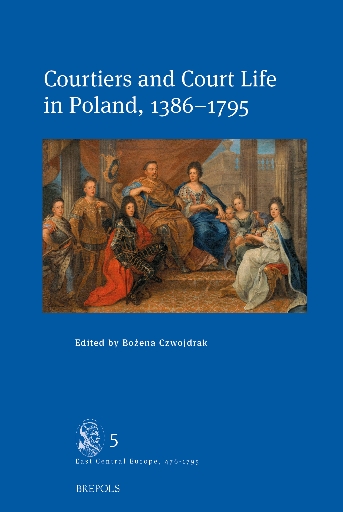
Courtiers and Court Life in Poland, 1386–1795
show More to view fulltext, buy and share links for:Courtiers and Court Life in Poland, 1386–1795 show Less to hide fulltext, buy and share links for: Courtiers and Court Life in Poland, 1386–1795This collection of studies explores the complexities of the royal courts of Poland from the late medieval period to the cusp of modernity. Drawing on pioneering research and primary sources, the volume authors dissect the multifaceted roles and dynamics of courtiers, positioning them within the broader socio-political and cultural paradigms of their time. From the distinct cultural imprints of the Jagiellon dynasty to the challenges faced by monarchs elected during the eighteenth century, each study within this collection provides a rigorous examination of courtly structures, influences, and transformations.
The volume examines the symbiotic relationships between courtiers and monarchs, the changing ideals of courtly service, and the impact of both domestic traditions and foreign influences on the Polish courts. It offers invaluable insights for scholars of court culture, bringing to the world stage evidence from the archives of Poland and seeking to understand the evolution of court life and its implications for the broader historical narratives of Poland throughout the entire existence of this composite monarchy.
-