


Brepols
Brepols is an international academic publisher of works in the humanities, with a particular focus in history, archaeology, history of the arts, language and literature, and critical editions of source works.541 - 560 of 3194 results
-
-
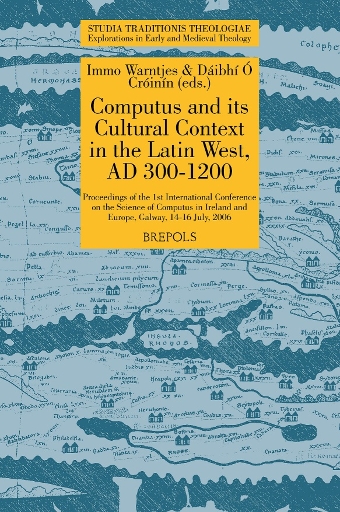
Computus and its Cultural Context in the Latin West, AD 300-1200
Proceedings of the 1st International Conference on the Science of Computus in Ireland and Europe, Galway, 14-16 July, 2006
show More to view fulltext, buy and share links for:Computus and its Cultural Context in the Latin West, AD 300-1200 show Less to hide fulltext, buy and share links for: Computus and its Cultural Context in the Latin West, AD 300-1200The scientific knowledge that Irish, English, and continental European scholars nurtured and developed during the years c. AD 500 to c. AD 1200 was assimilated, in the first place, from the wider Roman world of Late Antiquity. Time-reckoning, calendars, and the minute reckonings required to compute the date of Easter, all involved the minutiae of mathematics (incl. the original concept of ‘digital calculation’) and astronomical observation in a truly scientific fashion. In fact, the ‘Dark Ages’ were anything but dark in the fields of mathematics and astronomy.
The first Science of Computus conference in Galway in 2006 highlighted the transmission of Late Antique Mathematical Knowledge in Ireland & Europe, the development of astronomy in Early Medieval Ireland & Europe and the role of the Irish in the development of computistical mathematics. The proceedings of that conference should, therefore, appeal equally to those interested in the history of science in Ireland and Europe, and in the origins of present-day mathematical and astronomical ideas.
-
-
-
Compétition et sacré au haut Moyen Âge : entre médiation et exclusion
show More to view fulltext, buy and share links for:Compétition et sacré au haut Moyen Âge : entre médiation et exclusion show Less to hide fulltext, buy and share links for: Compétition et sacré au haut Moyen Âge : entre médiation et exclusionLes actes du colloque « Compétition et sacré au haut Moyen Âge : entre médiation et exclusion » constituent le deuxième volume de la série de publications du groupe international de recherches sur la compétition dans les sociétés médiévales (400-1100). Ce programme de recherche considère les objets de la compétition, les moyens et les formes de la compétition qui dépendent des capacités de régulation de cette même compétition : règles du jeu édictées par les autorités, mécanismes de médiation plus ou moins forts, équilibre de la terreur, la performativité des moyens : résultats en termes d’objets et d’enjeux, les possibilités de mobilité sociale, de changement de statut ou de position qui sont plus ou moins grandes selon les périodes et les espaces. La rencontre de Limoges place le sacré au centre de la réfl exion sur la compétition, mais il est nécessaire de ne pas restreindre le sacré à ce qui est consacré par l’autorité ecclésiastique. Si le sacré est bien ce qui est doté d’une force surnaturelle et qui isole, la distinction sacré-profane ne passe pas complètement par l’opposition clercs-laïcs. Avec le sacré on touche au pouvoir, puisqu’il ne peut y avoir de pouvoir légitime au Moyen Âge sans lien avec le sacré, quelle que soit la forme prise par la relation. Même si les clercs tendent à monopoliser de plus en plus le sacré par le biais du « consacré », la spécifi cité de la période prégrégorienne tient précisément à ce que le sacré n’est pas encore entièrement contrôlé par les clercs et qu’il est donc objet de compétition. En même temps, le sacré est un instrument de la compétition et il est facteur d’exclusion.
-
-
-
Concepts of Ideal Rulership from Antiquity to the Renaissance
show More to view fulltext, buy and share links for:Concepts of Ideal Rulership from Antiquity to the Renaissance show Less to hide fulltext, buy and share links for: Concepts of Ideal Rulership from Antiquity to the RenaissanceAncient works On Kingship have received a lot of attention in recent scholarship, where the main focus is usually on classic works such as Seneca’s On Clemency, Isocrates’ Cyprian Orations or Dio of Prusa’s Kingship Orations. In this volume, we deliberately turn to the periphery, to the grey zone where matters usually prove more complicated. This volume focuses on authors who deal with analogous problems and raise similar questions in other contexts, authors who also address powerful rulers or develop ideals of right rulership but who choose very different literary genres to do so, or works on kingship that have almost been forgotten. Departing from well-trodden paths, we hope to contribute to the scholarly debate by bringing in new relevant material and confront it with well-known and oft-discussed classics. This confrontation even throws a new light upon the very notion of ‘mirrors for princes’. Moreover, the selection of peripheral texts from Antiquity to the Renaissance reveals several patterns in the evolution of the tradition over a longer period of time.
-
-
-
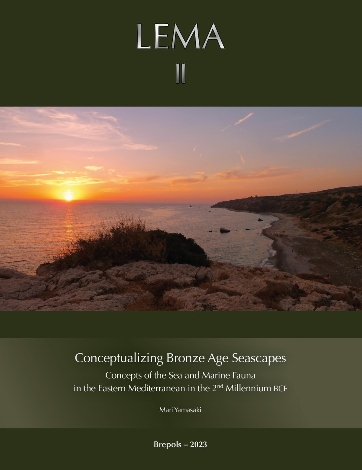
Conceptualizing Bronze Age Seascapes
Concepts of the Sea and Marine Fauna in the Eastern Mediterranean in the Second Millennium bce
show More to view fulltext, buy and share links for:Conceptualizing Bronze Age Seascapes show Less to hide fulltext, buy and share links for: Conceptualizing Bronze Age SeascapesThe Mediterranean has, for millennia, formed the heart of an intensive trading network of ideas, goods, and people. For the ancient populations of the Levant, Cyprus, and Southern Anatolia, interactions with the sea — from fishing to seafaring, and from trade to dye production — were a constant presence in their life. But how did the coastal peoples of the Bronze Age understand the sea? How did living on the shore influence their lives, from daily practices to mythological beliefs? And what was the impact on their conceptual world? This volume seeks to engage with these questions by addressing the relationship between environment, diet, material production, perception, and thought formation through a combination of archaeological analysis and engagement with primary sources, and in doing so, it offers unique insights into the conceptual world of the ancient Mediterranean maritime cultures of the 2nd millennium BCE.
-
-
-
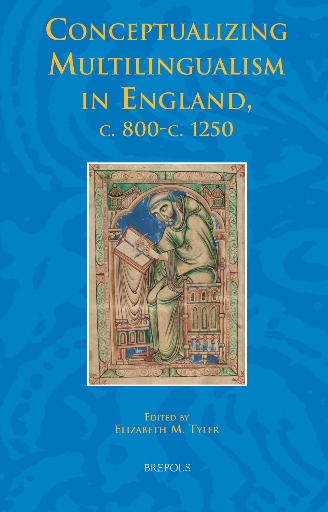
Conceptualizing Multilingualism in England, c.800-c.1250
show More to view fulltext, buy and share links for:Conceptualizing Multilingualism in England, c.800-c.1250 show Less to hide fulltext, buy and share links for: Conceptualizing Multilingualism in England, c.800-c.1250Throughout the period 800–1250, English culture was marked by linguistic contestation and pluralism: the consequence of migrations and conquests and of the establishment and flourishing of the Christian religion centred on Rome. In 855 the Danes ‘over-wintered’ for the first time, re-initiating centuries of linguistic pluralism; by 1250 English had, overwhelmingly, become the first language of England. Norse and French, the Celtic languages of the borderlands, and Latin competed with dialects of English for cultural precedence. Moreover, the diverse relations of each of these languages to the written word complicated textual practices of government, poetics, the recording of history, and liturgy. Geographical or societal micro-languages interacted daily with the ‘official’ languages of the Church, the State, and the Court. English and English speakers also played key roles in the linguistic history of medieval Europe. At the start of the period of inquiry, Alcuin led the reform of Latin in the Carolingian Empire, while in the period after the Conquest, the long-established use of English as a written language encouraged the flourishing of French as a written language. This interdisciplinary volume brings the complex and dynamic multilingualism of medieval England into focus and opens up new areas for collaborative research.
-
-
-
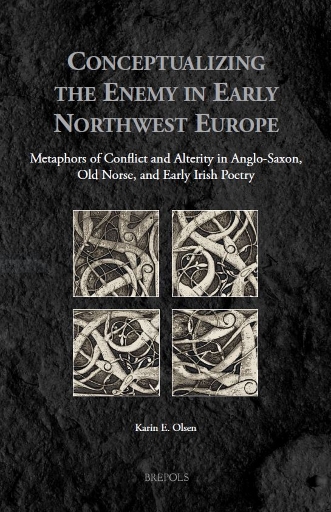
Conceptualizing the Enemy in Early Northwest Europe
Metaphors of Conflict and Alterity in Anglo-Saxon, Old Norse, and Early Irish Poetry
show More to view fulltext, buy and share links for:Conceptualizing the Enemy in Early Northwest Europe show Less to hide fulltext, buy and share links for: Conceptualizing the Enemy in Early Northwest EuropeDespite the prominence of conflicts in all mythological and heroic literature, perceptions of these conflicts and their participants are shaped by different cultural influences. Socio-economic, political, and religious factors all influence how conflict is perceived and depicted in literary form. This volume provides the first comparative analysis to explore conceptions of conflict and otherness in the literary and cultural contexts of the early North Sea world by investigating the use of metaphor in Old English, Old Norse, and Early Irish poetry. Applying Conceptual Metaphor Theory together with literary and anthropological analysis, the study examines metaphors of conflict and alterity in a range of (pseudo-)mythological, heroic, and occasional poetry, including Beowulf, Old Norse skaldic and eddic verse, and poems from the celebrated ‘Ulster Cycle’. This unique approach not only sheds new light on a wide spectrum of metaphorical techniques, but also draws important conclusions concerning the common cultural heritage behind these three poetic corpora.
-
-
-
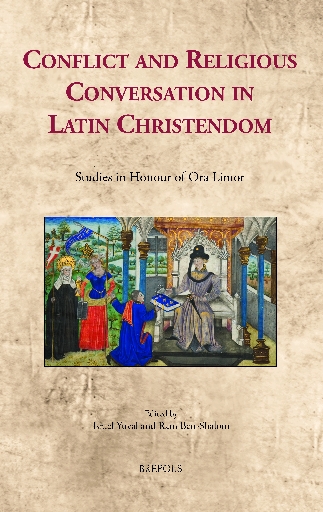
Conflict and Religious Conversation in Latin Christendom
Studies in Honour of Ora Limor
show More to view fulltext, buy and share links for:Conflict and Religious Conversation in Latin Christendom show Less to hide fulltext, buy and share links for: Conflict and Religious Conversation in Latin ChristendomThe literature against the Jews (contra Iudeos) was crucially influential in the shaping of Christianity during the centuries following the crucifixion, particularly during the period when Christianity remained outside official Roman toleration. And yet, this phenomenon did not decline in the Middle Ages when Christianity emerged as the supreme power in the western world and Judaism could no longer threaten it in any way. The Jewish response to this literary practice did not arise for some time, yet from the twelfth century onwards the effort to counter Christian ideological attacks became a central intellectual activity and a pressing concern on the part of Jewish scholars in the West. Although both Latin and Hebrew polemics were often intended, first and foremost, for local audiences in order to satisfy local needs and intellectual demands, they also engaged each other, and raised urgent theological and cultural questions in doing so. This cultural discourse did not just find expression in polemical literature (Nizahon and Adversus Iudaeos) but also in a variety of other representations and daily practices. This collection of studies is devoted to an examination of the significance of this phenomenon as a longue durée process, and pursues its concerns from a variety of innovative perspectives that join together authoritative scholars from the field of Jewish-Christian relations.
-
-
-
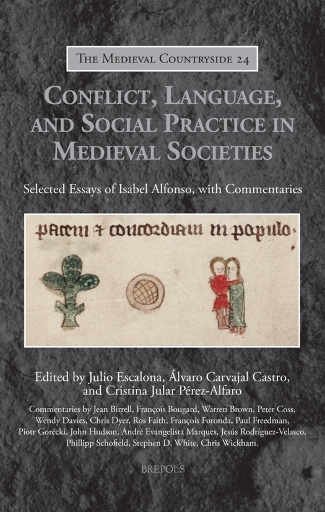
Conflict, Language, and Social Practice in Medieval Societies
Selected Essays of Isabel Alfonso, with Commentaries
show More to view fulltext, buy and share links for:Conflict, Language, and Social Practice in Medieval Societies show Less to hide fulltext, buy and share links for: Conflict, Language, and Social Practice in Medieval SocietiesIsabel Alfonso is one of the finest scholars on the rural and political history of the European Middle Ages. She is widely known for her contributions to the study of the peasantry, social conflict, and political discourses. Her research has transcended the boundaries of medieval studies, incorporating insights from disciplines beyond including legal anthropology, philology, and discourse analysis, among others. Over her academic career Isabel Alfonso has made a continued effort to make the work of international scholars known in Spain and to communicate advancements in Spanish historiography to international audiences; and yet most of her own research has only been published in Spanish. As a means to acknowledge her long-standing commitment to bridge different historiographies and overcome national boundaries, this unusual Festschrift offers a selection of her most relevant publications, many of which appear in English for the very first time. Each paper is preceded by commentaries by leading scholars that discuss the enduring relevance of Isabel Alfonso’s work, its richness and complexity, and its potential to inspire further research along a vast array of lines.
Commentaries by Jean Birrell, François Bougard, Warren Brown, Peter Coss, Wendy Davies, Chris Dyer, Ros Faith, François Foronda, Paul Freedman, Piotr Gorécki, John Hudson, André Evangelista Marques, Jesús Rodríguez-Velasco, Phillipp Schofield, Stephen D. White, Chris Wickham.
-
-
-
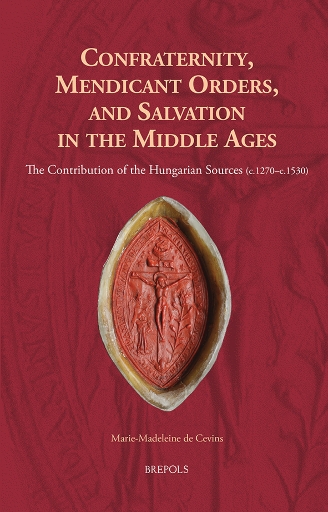
Confraternity, Mendicant Orders, and Salvation in the Middle Ages
The Contribution of the Hungarian Sources (c. 1270-c. 1530)
show More to view fulltext, buy and share links for:Confraternity, Mendicant Orders, and Salvation in the Middle Ages show Less to hide fulltext, buy and share links for: Confraternity, Mendicant Orders, and Salvation in the Middle AgesBy the late Middle Ages, mendicant spiritual confraternities had developed a poor reputation. Their spiritual status was ill-identified: somewhere between requests for intercession, necrological commemoration, and pious associations. In the hands of the mendicants, they seemed to resemble what indulgences had supposedly become in the hands of the papacy: bait that was handed out to extort funds from the faithful while offering an apparently immediate access to Paradise. Thus, like indulgences, they seem to have been gradually emptied of their substance and denounced (even before Luther) as glaring evidence of the corruption of the Roman Church. Much recent scholarship has followed this negative portrait of spiritual confraternities — unless it has conflated them with other non-spiritual confraternities, or indeed ignored them altogether.
This volume draws on the abundant number of letters of confraternity available from Hungarian sources in order to provide a more nuanced picture of mendicant spiritual confraternities. It sheds new light on the links between the mendicants and their supports among the laity, and emphasises the broader significance of the confraternity movement in late medieval piety in Central Europe and beyond.
-
-
-
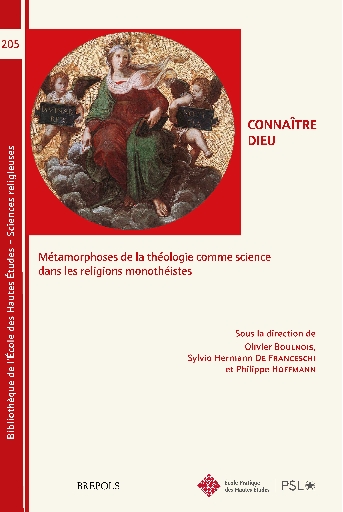
Connaître Dieu
Métamorphoses de la théologie comme science dans les religions monothéistes
show More to view fulltext, buy and share links for:Connaître Dieu show Less to hide fulltext, buy and share links for: Connaître DieuLa théologie est née comme science métaphysique. Dès Aristote, la science la plus haute se présente comme une discipline philosophique qu’il appelle épistémè théologikè, « science théologique ». Ce que nous appelons aujourd’hui « métaphysique », c’est ce que les traductions latines d’Aristote appellent scientia divina, « science divine ». Or cette « science divine » aristotélicienne ne porte pas sur les dieux de la religion. Aristote emploie d’ailleurs un terme tout à fait différent pour désigner le discours mythique et religieux sur les dieux : il parle alors de theologia ; la theologia est une autre sorte de discours, celui des mythologies sur les dieux, tandis que la « science divine » du philosophe porte sur une substance première, séparée du monde sensible et principe de son mouvement, soit le premier moteur. Ce principe n’opère aucun salut. Il ne faut donc pas confondre le discours scientifique (la « science théologique » ou « science divine », sur le premier moteur) et le discours religieux. La difficulté est alors de comprendre quand, comment et pourquoi cette discipline philosophique suprême, la science théologique, s’est orientée vers les religions vécues par les hommes. Quand le mur séparant la theologia de la « science théologique » a-t-il été abattu ? Le présent volume s’est donné pour visée de se confronter à la nécessité d’une prise en compte, non seulement du fait religieux, mais aussi de la rationalité religieuse. Le terme « théologie » est ambigu. Il désigne tantôt la compréhension d’une religion par elle-même, tantôt la compréhension du divin par un discours rationnel. C’est pourquoi une étude comparée de la théologie comme science dans les monothéismes a un double objet : il s’agit d’abord d’étudier comment la spéculation métaphysique sur les dieux, le divin et Dieu s’est transformée en « science théologique » ; il convient ensuite de montrer comment les religions monothéistes se sont construites en théologies sur les canons de la rationalité grecque.
-
-
-
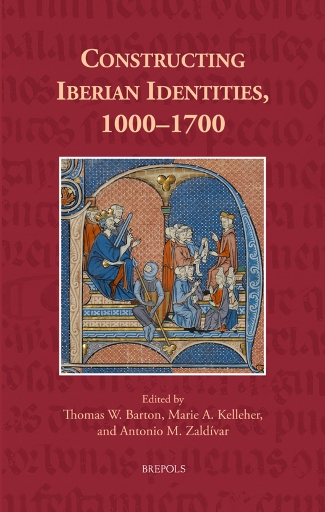
Constructing Iberian Identities, 1000–1700
show More to view fulltext, buy and share links for:Constructing Iberian Identities, 1000–1700 show Less to hide fulltext, buy and share links for: Constructing Iberian Identities, 1000–1700Over the past several decades, scholars of medieval and early modern Iberia have transformed the study of the region into one of the most vibrant areas of research today. This volume brings together twelve essays from a diverse group of international historians who explore the formation of the multiple and overlapping identities, both individual and collective, that made up the Iberian peninsula during the eleventh through seventeenth centuries. Individually, the contributions in this volume engage with the notion of identity in varied ways, including the formation of collective identities at the level of the late medieval city, the use of writing and political discourse to construct or promote common political or socio-cultural identities, the role of encounters with states and cultures beyond the peninsula in identity formation, and the ongoing debates surrounding the peninsula’s characteristic ethno-religious pluralism.Collectively, these essays challenge the traditional dividing line between the medieval and early modern periods, providing a broader framework for approaching Iberia’s fragmented yet interconnected internal dynamics while simultaneously reflecting on the implications of Iberia’s positioning within the broader Mediterranean and Atlantic worlds.
-
-
-
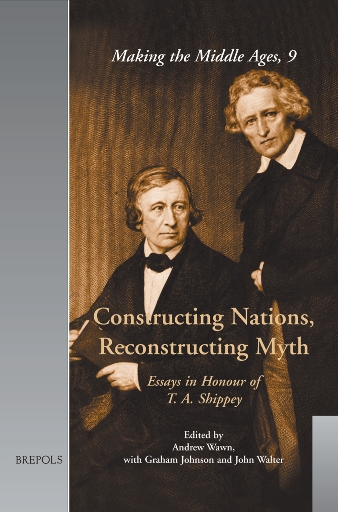
Constructing Nations, Reconstructing Myth
Essays in Honour of T. A. Shippey
show More to view fulltext, buy and share links for:Constructing Nations, Reconstructing Myth show Less to hide fulltext, buy and share links for: Constructing Nations, Reconstructing MythThis collection of essays examines the ‘Grimmian Revolution’, the paradigm shift in the humanities that came with the publication of Jacob Grimm’s Deutsche Grammatik. In doing so, it honours T. A. Shippey, who has been a leading figure in reconsidering the contributions of the Old Philology and its impact on the humanities, particularly the rediscovery of the ancient languages and literatures of Northern Europe; the role this has played in the creation of national and regional identities; the attempts to extend the methods of comparative philology to comparative mythology; and the collection of folktales, folk-ballads, and the development of folkloristics. The sixteen essays in this collection focus on the impact made by nineteenth- and early-twentieth-century philology in the fields of medieval studies and language studies, and in the construction of Northern European national identities, mythologies, and folklore.
-
-
-
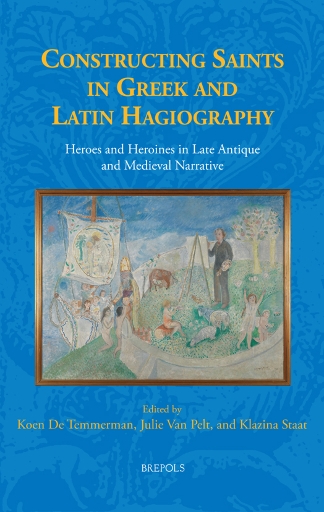
Constructing Saints in Greek and Latin Hagiography
Heroes and Heroines in Late Antique and Medieval Narrative
show More to view fulltext, buy and share links for:Constructing Saints in Greek and Latin Hagiography show Less to hide fulltext, buy and share links for: Constructing Saints in Greek and Latin HagiographyThis book explores representations of saints in a variety of Latin and Greek late antique hagiographical narratives, such as saints’ Lives, martyr acts, miracle collections, and edifying tales. The book examines techniques through which the saints featured in such texts are depicted as heroes and heroines, i.e., as extraordinary characters exhibiting both exemplary behaviour and a set of specific qualities that distinguish them from others. The book inscribes itself in a growing body of relatively recent scholarship that approaches hagiographical accounts not just as historical sources but also as narrative constructions. As such, it contributes to the development of a scholarly rationale which increasingly values imaginative and fictional aspects of hagiography in their own right, with the aim of answering broader questions about narrative creativity and ideology. For instance, individual chapters examine how hagiographical accounts mobilize and capitalize on earlier literary and rhetorical traditions or narrative models. These questions are specifically addressed to explore the narrative construction of characters. The chapters thereby encourage us to acknowledge that many hagiographers were more skilful than is often accepted.
-
-
-
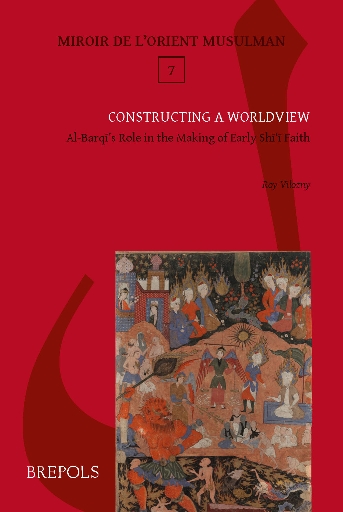
Constructing a Worldview
Al-Barqī's Role in the Making of Early Shīʽī Faith
show More to view fulltext, buy and share links for:Constructing a Worldview show Less to hide fulltext, buy and share links for: Constructing a WorldviewAbout a century before the four canonical books of the Shī‘a were composed, Aḥmad b. Muḥammad al-Barqī (d. 888 or 894 CE), a scholar from the city of Qum, compiled a large collection of Imāmī traditions embracing all aspects of religious life, from cosmogony and cosmology to the minutest details of daily life. This compilation, of which only ten percent has come down to us, forms one of the earliest Shī‘ī texts extant, and is the basis for Vilozny’s delineation of the Shī‘ī worldview in this formative, pre-Twelver era. Shī‘ī ideology, the author argues, did not grow in a vacuum but resulted from the fusion of Islamic Arab elements with pre-Islamic, mythic and gnostic traditions. The book discusses at length three fundamental notions which permeate every part of al-Barqī’s work: the Shī‘a are God’s elect; an eternal fierce battle is waged between good and evil on both the universal and individual levels; and the history of humankind, from before creation to the end of time, was predetermined by God. As shown by the author, the Shī‘ī attempt to accommodate all three ideas within its world perception often resulted in glaring contradictions to which only partial solutions could be provided at the time.
-
-
-
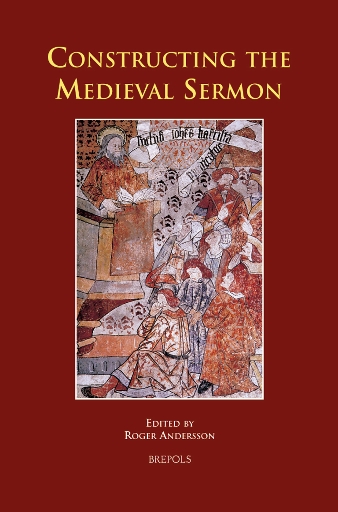
Constructing the Medieval Sermon
show More to view fulltext, buy and share links for:Constructing the Medieval Sermon show Less to hide fulltext, buy and share links for: Constructing the Medieval SermonIn considering the construction of medieval sermons, the term ‘construction’ has many meanings. Those studied here range from questions about sermon composition with the help of artes praedicandi or model collections to a more abstract investigation of the mental construction of the concepts of sermon and preacher. Sermons from a range of European countries, written both in Latin and vernaculars, are subjected to a broad variety of analyses. The approach demonstrates the vitality of this sub-discipline. Most of the essays are more occupied with literary and philological problems than with the religious content of the sermons. While many focus on vernacular sermons, the Latin cultural and literary background is always considered and shows how vernacular preaching was in part based on a more learned Latin culture. The collection testifies both to the increasing esteem of the study of vernacular sermons, and to a revival in the study of all those things contained in a preacher’s ‘workshop’, ranging from rhetorical invention, medieval library holdings and study-aids, through to factors that are crucial for the successful delivery of the sermon, such as the choice of language, mnemonic devices and addressing the audience. The interdisciplinary approach remains ever-present, not only in the diversity of the academic disciplines represented, but also within individual essays. The volume is based on a conference held in Stockholm, 7-9 October 2004.
-
-
-
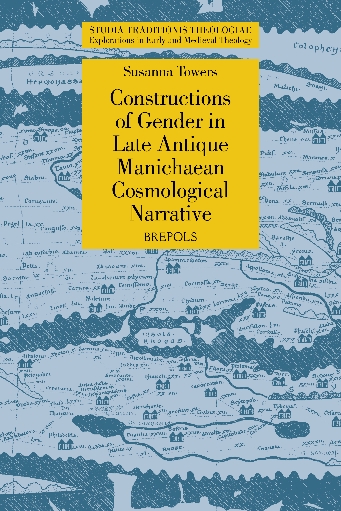
Constructions of Gender in Late Antique Manichaean Cosmological Narrative
show More to view fulltext, buy and share links for:Constructions of Gender in Late Antique Manichaean Cosmological Narrative show Less to hide fulltext, buy and share links for: Constructions of Gender in Late Antique Manichaean Cosmological NarrativeManichaeism emerged from Sasanian Persia in the third century CE and flourished in Persia, the Roman Empire, Central Asia and beyond until succumbing to persecution from rival faiths in the eighth to ninth century. Its founder, Mani, claimed to be the final embodiment of a series of prophets sent over time to expound divine wisdom.
This monograph explores the constructions of gender embedded in Mani’s colourful dualist cosmological narrative, in which a series of gendered divinities are in conflict with the demonic beings of the Kingdom of Darkness. The Jewish and Gnostic roots of Mani’s literary constructions of gender are examined in parallel with Sasanian societal expectations. Reconstructions of gender in subsequent Manichaean literature reflect the changing circumstances of the Manichaean community.
As the first major study of gender in Manichaean literature, this monograph draws upon established approaches to the study of gender in late antique religious literature, to present a portrait of a historically maligned and persecuted religious community.
-
-
-
Construire une société seigneuriale
Itinéraire et ecclésiologie de l'abbé Odon de Cluny (fin du IXe-milieu du Xe siècle)
show More to view fulltext, buy and share links for:Construire une société seigneuriale show Less to hide fulltext, buy and share links for: Construire une société seigneurialeEntre la fin du IXe et le milieu du Xe siècle, de nouvelles formes de pouvoir émergent en Occident, au sein d’un monde encore carolingien : un bouleversement majeur qui marque la genèse de la société seigneuriale. C’est cette période charnière que permet d’appréhender la figure d’Odon, deuxième abbé de Cluny, grand aristocrate, réformateur acharné et intellectuel de haut niveau.
L’itinéraire d’Odon (né vers 879, mort en 942), acteur de premier plan et témoin privilégié de son temps, reflète en effet la profonde transformation des structures aristocratiques alors à l’œuvre, tandis que l’ecclésiologie originale élaborée par l’abbé réformateur, avec un bagage qui demeure celui du lettré carolingien, définit les conditions et les contours d’une société d’un type nouveau. L’objet de cet ouvrage est bien de cerner au plus près la recomposition des rapports de force et les ressorts idéologiques d’un monde où le champ des possibles est largement ouvert. À quelles stratégies, à la fois sociales et discursives, un puissant aristocrate entré au service de Dieu a-t-il recours pour fonder et asseoir son pouvoir ? À un moment où évoluent les cadres de la société et où se bâtissent de nouvelles légitimités, de quelle manière un réformateur justifie-t-il la domination des moines sur l’ensemble du corps social ? Il s’agit en d’autres termes d’analyser comment un abbé du Xe siècle construit, tant sur le plan des pratiques sociales que des représentations, une certaine société seigneuriale.
Isabelle Rosé, agrégée et docteur en histoire, a réalisé ce travail dans le cadre du Centre d’études Préhistoire, Antiquité, Moyen Âge, unité mixte de recherche de l’université de Nice-Sophia Antipolis et du CNRS. Elle est à présent maître de conférences à l’université de Haute-Bretagne - Rennes 2.
-
-
-
Consuetudines et Regulae
Sources for Monastic Life in the Middle Ages and the Early Modern Period
show More to view fulltext, buy and share links for:Consuetudines et Regulae show Less to hide fulltext, buy and share links for: Consuetudines et RegulaeThis volume addresses the nature and quality of the lives of monks and canons in Western Europe during the middle ages and the early modern period. Building on the collaborative spirit of recent work on medieval religion, it includes studies by historians of the religious orders, liturgy and ritual as well as archaeologists and architectural historians. Several studies combine the interpretation of texts, most particularly customaries and rules, with the analysis of architecture. The volume sheds new and exciting light on monastic daily life in all its dimensions from the liturgical and the quotidian to the spatial and architectural.
Carolyn Marino Malone is Professor of Art History at the University of Southern California in Los Angeles (USA). She specializes in French Romanesque and English Gothic architecture and sculpture. Her most recent book, is Saint-Bénigne de Dijon en l’an mil, “totius Galliae basilicis mirabiliorem”: Interprétation politique, liturgique et théologique, Disciplina monastica, 5 (Turnhout, 2009).
Clark Maines is Professor of Art History and Archaeology and Kenan Professor of the Humanities at Wesleyan University, in Middletown, Connecticut (USA). He specializes in the study of monasticism from architecture in its structural and ritual dimensions to technology and monastic domains. His most recent book, co-written with Sheila Bonde, is Saint-Jean-des-Vignes in Soissons, Approaches to its Architecture, Archaeology and History, Bibliotheca Victorina, XV (Turnhout, 2003).
-
-
-

Consumption, Ritual, Art, and Society
Interpretive Approaches and Recent Discoveries of Food and Drink in Etruria
show More to view fulltext, buy and share links for:Consumption, Ritual, Art, and Society show Less to hide fulltext, buy and share links for: Consumption, Ritual, Art, and SocietyFood determines who we are. We are what we eat, but also how we eat, with whom we eat, where we eat and, in some cases, even why we eat. Food production and consumption in the ancient world can express multiple dimensions of identity and negotiate belonging to, or exclusion from, cultural groups. It can bind through religious praxis, express wealth, manifest cultural identity, reveal differentiation in age or gender, and define status. As a prism through which to investigate the past, its utility is manifold. The chapters gathered together in this ground-breaking book explore the intersections between food, consumption, and ritual within Etruscan society through a purposeful cross-disciplinary approach. It offers a unique and innovative selection of up-to-date analysis from a variety of Etruscan food-related topics. From banqueting, feasting, fish rites, and symbolic consumption to bio-archaeological data, this volume explores a new and exciting field in ancient Italian archaeology.
-
