


Brepols
Brepols is an international academic publisher of works in the humanities, with a particular focus in history, archaeology, history of the arts, language and literature, and critical editions of source works.521 - 540 of 3194 results
-
-
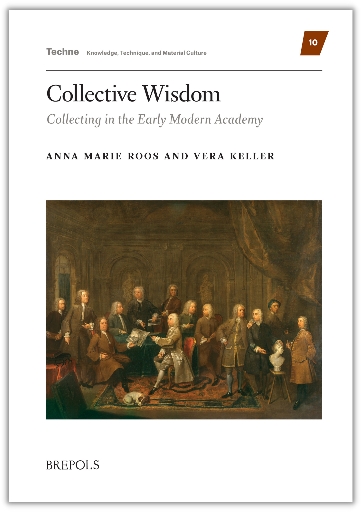
Collective Wisdom
Collecting in the Early Modern Academy
show More to view fulltext, buy and share links for:Collective Wisdom show Less to hide fulltext, buy and share links for: Collective WisdomThis volume analyses how and why members of scholarly societies such as the Royal Society, the Society of Antiquaries of London, and the Leopoldina collected specimens of the natural world, art, and archaeology in the seventeenth and eighteenth centuries. These scholarly societies, founded before knowledge became subspecialised, had many common members. We focus upon how their exploration of natural philosophy, antiquarianism, and medicine were reflected in collecting practice, the organisation of specimens and how knowledge was classified and disseminated. The overall shift from curiosity cabinets with objects playfully crossing the domains of art and nature, to their well-ordered Enlightenment museums is well known. Collective Wisdom analyses the process through which this transformation occurred, and the role of members of these academies in developing new techniques of classifying and organising objects and new uses of these objects for experimental and pedagogical purposes.
-
-
-
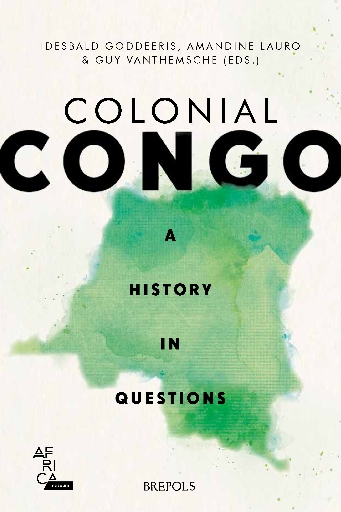
Colonial Congo
A History in Questions
show More to view fulltext, buy and share links for:Colonial Congo show Less to hide fulltext, buy and share links for: Colonial CongoColonialism tends to arouse emotional debate, often based on incomplete knowledge of the facts and context. Colonial Congo fills this gap by introducing the general reader to the latest academic thinking and research. Answering concrete questions, pre-eminent historians offer a unique insight into the history of the Congo Free State and the Belgian Congo.
How did Leopold II’s autocratic government function and what do we know about the victims of his rule? How much profit was made in the Congo and who benefitted the most? What was life like for Congolese men and women during colonial rule and how did they feel about it? Did the Congolese offer resistance, and in what ways? What was colonialism’s impact on the Congo’s natural world? How did colonial policy affect infrastructure, education, healthcare and science? Did missionaries give colonialism a more human face? Colonial Congo’s explorations of these issues and more are revealed in this eye-opening, indispensable guide.
-
-
-
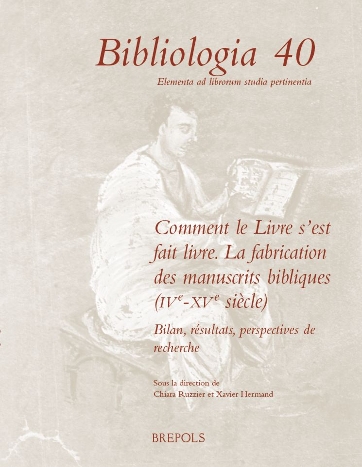
Comment le Livre s'est fait livre. La fabrication des manuscrits bibliques (IVe-XVe siècle)
Bilan, résultats, perspectives de recherche
show More to view fulltext, buy and share links for:Comment le Livre s'est fait livre. La fabrication des manuscrits bibliques (IVe-XVe siècle) show Less to hide fulltext, buy and share links for: Comment le Livre s'est fait livre. La fabrication des manuscrits bibliques (IVe-XVe siècle)Dès l’Antiquité et tout au long du Moyen Âge, la Bible a été l’un des textes les plus reproduits dans le monde chrétien. Texte sacré par excellence, elle a été très largement commentée, remaniée, utilisée dans des contextes variés et avec des finalités diverses. C’est pourquoi, en tout lieu et à toute époque, elle constitua l’une des expressions les plus achevées, et parfois novatrices, du professionnalisme artisanal dans le domaine du livre médiéval. Si le texte de la Bible et sa tradition manuscrite ont depuis longtemps été l’objet d’une attention soutenue de la part des philologues, des exégètes et des historiens, il en va tout autrement pour ce qui est de son « incarnation » dans un objet matériel.
C’est aux diverses modalités de cette « incarnation » qu’était consacré le colloque international organisé à l’Université de Namur en mai 2012, dont les contributions sont ici réunies. Cette rencontre fut à la fois l’occasion de faire le point sur les connaissances déjà acquises sur la fabrication de la Bible de l’Antiquité tardive au xv e siècle, et d’ouvrir de nouvelles pistes de recherche. La perspective adoptée se veut globale et comparative, et met en lumière la diversité des solutions retenues pour répondre aux problèmes posés par la réalisation matérielle du texte sacré selon les époques et les contrées, des premières bibles pandectes à la diffusion des bibles incunables.
-
-
-

Commentaire de l'Apocalypse
show More to view fulltext, buy and share links for:Commentaire de l'Apocalypse show Less to hide fulltext, buy and share links for: Commentaire de l'ApocalypseL’Apocalypse johannique a longtemps posé problème dans l’Église ancienne, en raison de son caractère hermétique et de l’abus qu’en ont fait les sectes millénaristes. L’Orient ne l’a reçue que tardivement, non sans restriction, dans le canon des Écritures. En Occident, elle n’a pas suscité les mêmes réticences. Elle le doit à un exégète génial, qui a su en proposer une lecture à la fois politiquement correcte, théologiquement acceptable et spirituellement utile, dans un contexte historique très différent de celui où elle avait été rédigée. Tyconius, qui a vécu en Afrique du Nord dans la seconde moitié du IVe siècle, appartenait à l’Église donatiste, mais il était loin de partager sans réserve sa doctrine. Il en prenait même le contre-pied sur des points fondamentaux. Cela n’a pas empêché que son commentaire de l'Apocalypse ait subi le sort commun à la plupart des ouvrages réputés, à tort ou à raison, hérétiques: il n’a plus été recopié et s’est perdu. Cependant, les commentateurs de l’antiquité chrétienne et du haut moyen âge s’en sont inspirés de façon à ce point étroite, qu’il est possible de reconstituer, par comparaison, leur source commune. Ce texte fondateur, dont on trouvera ici la traduction, a été édité dans la série latine du Corpus Christianorum sous le numéro 107A. Des renvois aux pages correspondantes de l’édition sont fournis dans les marges de cette publication.
Monseigneur Roger Gryson, professeur émérite à l'Université catholique de Louvain, est connu notamment par ses travaux sur l'histoire des institutions ecclésiastiques dans l'antiquité, l'arianisme latin et la critique textuelle de la Bible latine.
-
-
-

Commentaries on The Angelic Hierarchy
show More to view fulltext, buy and share links for:Commentaries on The Angelic Hierarchy show Less to hide fulltext, buy and share links for: Commentaries on The Angelic HierarchyThomas Gallus (d. 1246) was the Abbot of Vercelli in the north of Italy. Initially a canon regular in the abbey of St Victor in Paris, he helped found a new monastery and church in the home town of his patron, Cardinal Guala Bicchieri. As well as commenting on the Canticle of Canticles three times, Thomas was renowned for his expositions of the works of Dionysius the Areopagite, commentaries which earned him the title magister in hierarchia (master of the hierarchies). This volume contains the first translation in any language of his Glosses on the Angelic (or Celestial) Hierarchy (completed in 1224), as well as his more detailed Explanation of the Angelic Hierarchy (finished in 1243). The commentaries are fascinating for their insights into Thomas’s teaching that love has a higher access to an experience of God than the intellect, the role of the angelic hierarchies in the mystical return of the soul, the psychological interpretation of the angels as representing faculties of the soul, and the use of symbols representing analogical features of the divine.
The source text of this volume appeared in Corpus Christianorum. Continuatio Mediaeualis as Thomas Gallus, Super angelica ierarchia (CCCM, 223) and Glose super angelica ierarchia (CCCM, 223A). References to the corresponding pages of the Corpus Christianorum edition are provided in the margins of this translation.
-
-
-
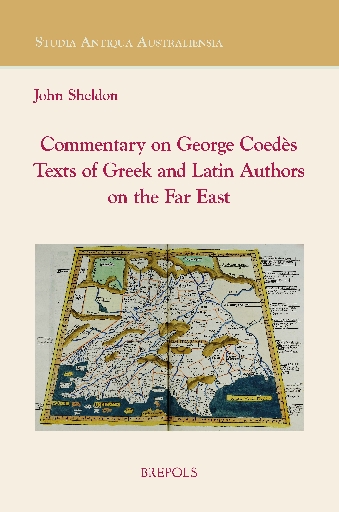
Commentary on George Coedès' Texts of Greek and Latin Authors on the Far East
show More to view fulltext, buy and share links for:Commentary on George Coedès' Texts of Greek and Latin Authors on the Far East show Less to hide fulltext, buy and share links for: Commentary on George Coedès' Texts of Greek and Latin Authors on the Far EastThis is a companion volume to Texts of Greek and Latin Authors on the Far East (Brepols 2010) originally compiled by George Coedès and recently translated by John Sheldon. There are nearly one hundred different authors whose writings have been quoted in the text volume. All these authors are introduced and all quotations are placed in context and given detailed literary, linguistic and historical commentary by Dr Sheldon. The Greek and Latin texts have been re-examined and a number of suggestions for improved readings are made in the Commentary. In a number of places traditional interpretations of the ancient geography of the Far East have been superseded mainly owing to an improved understanding of the text. This volume, which should be used in conjunction with the text volume, will be a useful, at times an essential, tool for future researchers in this field.
-
-
-
Commentary on Isaiah
show More to view fulltext, buy and share links for:Commentary on Isaiah show Less to hide fulltext, buy and share links for: Commentary on IsaiahAndrew of Saint Victor was one of the most prominent biblical scholars of the twelfth century. He was a regular canon of the Parisian abbey of St Victor, founded in 1108, which in the twelfth century had developed into a prestigious center of spiritual learning, closely connected to the nascent university in Paris. Because of his frequent use of Jewish exegetical materials, Andrew's commentaries are a rich source for the history both of biblical hermeneutics and of inter-religious dialogue during the Middle Ages. His Isaiah commentary caused outrage among medieval Christian scholars because it eschewed traditional christological interpretations, and instead offered a reading “according to the Hebrew.” This translation makes this work accessible in English for the first time.
The source text of this volume was published in 2021 by Frans van Liere (Corpus Christianorum, Continuatio Mediaeualis, 53C). References to the corresponding pages of the Corpus Christianorum edition are provided in the margins of this translation.
-
-
-
Commentary on Samuel and Kings
show More to view fulltext, buy and share links for:Commentary on Samuel and Kings show Less to hide fulltext, buy and share links for: Commentary on Samuel and KingsAndrew of St Victor († 1175) was an exegete of a rare quality who set out to expound Scripture according to its literal sense, guided by the examples of Jerome and Hugh of Saint Victor.
The books of Samuel and Kings had a great influence on the spirituality and theology of the Middle Ages. To the medieval mind, they were more than just historical accounts; they attested to an important period in God’s dealings with this world. When interpreted typologically, they could also relate to other periods in the history of salvation. Yet before such higher spiritual wisdom could be attained, students at the school of Saint Victor first had to study the scriptural texts at the most basic level of allegorical interpretation: their historical, or literal, sense. The Commentary on Samuel and Kings offers such a literal explanation and gives an opportunity to study Andrew at work: as a critical researcher, who used concepts of grammar, literary theory, and science to elucidate the text and who made Jewish exegesis available to Christian scholarship, and as a compiler. His meticulous scholarship on the literal sense of Scripture formed an important component of the curriculum of the school at Saint Victor, where thorough learning was seen as a preparation for mystical knowledge and spiritual understanding.
The source text of this volume appeared in the series Corpus Christianorum Continuatio Mediaeualis as Andreas de Sancto Victore - Expositio hystorica in librum Regum (CCCM 53A). References to the corresponding pages of the edition are provided in the margins of this translation.
Frans van Liere holds a Ph.D. in medieval studies from Groningen University and is Professor of History at Calvin College (USA). His critical edition of the latin text appeared in 1996.
-
-
-

Commento al profeta Abacuc
show More to view fulltext, buy and share links for:Commento al profeta Abacuc show Less to hide fulltext, buy and share links for: Commento al profeta AbacucGirolamo completa il Commentario al profeta Abacuc nel 393 e lo dedica all'amico Cromazio, vescovo di Aquileia. Nel percorso esegetico che lo vede impegnato a spiegare l'intero corpus profetico, l'interpretazione di Abacuc dipende fortemente da Origene, sulla cui eredità sorgerà proprio in quell'anno la famosa controversia. Girolamo offre un doppio commento, al testo ebraico e a quello greco dei Settanta. Al primo dedica una spiegazione per lo più letterale, mentre al secondo è riservata l'esegesi di stampo allegorico. Un punto qualificante del commento di Girolamo è la coerenza interpretativa, che riesce a stabilire anche fra l’esegesi dei primi due capitoli e il terzo, il cosiddetto cantico di Abacuc, che ha la forma di un salmo. I suoi predecessori, notando una certa estraneità fra la vicenda storica dell’oppressione di Nabucodonosor (cap. 1-2) e il cantico, avevano dato di quest’ultimo testo una lettura cristologica indipendente dall’interpretazione della prima parte. Girolamo, invece, riesce a congiungere nella sua esegesi anche quest’ultima parte (che verosimilmente risulta aggiunta da un redattore al testo profetico), anticipando e applicando il senso cristologico anche ai primi due capitoli grazie a inserti in cui annuncia proletticamente la venuta di Cristo.
La versione latina originale del testo proposto in traduzione in questo volume è pubblicata nella collana Corpus Christianorum. Series Latina con il titolo Hieronymus - Commentarius in Abacuc (CCSL 76-76A bis 1). I rimandi alle pagine corrispondenti dell’edizione sono forniti a margine di questa traduzione.
-
-
-
Commento alla Epistola ai Galati
show More to view fulltext, buy and share links for:Commento alla Epistola ai Galati show Less to hide fulltext, buy and share links for: Commento alla Epistola ai GalatiIl commento di Girolamo di Stridone all’Epistola ai Galati, composto nel 386 a Betlemme all’indomani della definitiva (e burrascosa) partenza da Roma, è un’impresa senza precedenti, come lo Stridonense dichiara nel prologo: applicando con coerenza tecniche note a Roma, ma guardate fino a quel momento con sospetto, lo Stridonense si propone di spiegare un’epistola paolina non più mediante la semplice parafrasi con qualche rara digressione filosofica che orienti il lettore (com’ era il caso dei predecessori latini Mario Vittorino e Ambrosiaster), bensì, alla maniera di Origene, come dibattitto aperto tra una pluralità di interpretazioni fra le quali il lettore può liberamente orientarsi. L’intuizione geronimiana ha, tra l’altro, il merito di dare nuova linfa ad un fenomeno culturale di grande portata per la letteratura latina in età tardoantica, che vede, nell’arco di pochi decenni, la fioritura a Roma, e più in generale in Occidente, di numerosi commentari paolini. Impossibile per noi moderni individuare gli autori greci delle molteplici spiegazioni menzionate da Girolamo; ma è certo che Origene è la fonte principale e che per questo l’opera geronimiana rappresenta uno dei frutti più belli della fortuna dell’Alessandrino nel IV secolo. L’interesse per il commento a Galati è infine accresciuto dalla diatriba a distanza che s’innesca tra Girolamo e Agostino a proposito della spiegazione dello Stridonense di Gal 2, 11-14: forse riprendendo da Origene una spiegazione assai peculiare dell’incidente di Antiochia, lo Stridonense finisce col provocare un’articolata e più volte reiterata protesta epistolare da parte di Agostino, il quale non ammette la novità geronimiana.
La versione latina originale del testo proposto in traduzione in questo volume è pubblicata nella collana Corpus Christianorum. Series Latina con il titolo Hieronymus - Commentarii in epistulam Pauli apostoli ad Galatas (CCSL 77A). I rimandi alle pagine corrispondenti dell’edizione sono forniti a margine di questa traduzione.
Giacomo Raspanti è Professore a contratto di Letteratura Cristiana Antica presso l'Università di Palermo (Italia). Si occupa di esegesi biblica patristica e di oratoria pagana e cristiana in età tardoantica.
-
-
-
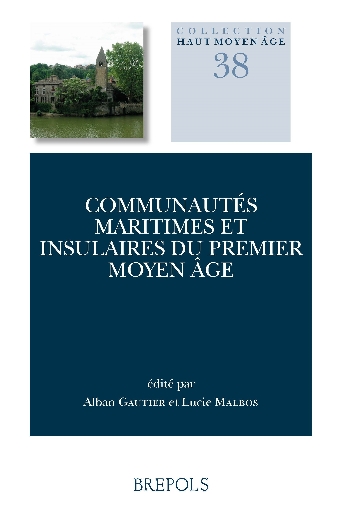
Communautés maritimes et insulaires du premier Moyen Âge
show More to view fulltext, buy and share links for:Communautés maritimes et insulaires du premier Moyen Âge show Less to hide fulltext, buy and share links for: Communautés maritimes et insulaires du premier Moyen ÂgeComment les hommes et les femmes du premier Moyen Âge formaient-ils des communautés lorsqu’ils se trouvaient vivre près de l’eau - sur les littoraux, dans les zones humides ou le long des fleuves, mais aussi dans les îles ? La familiarité entretenue avec le milieu aquatique, objet de crainte ou source d’opportunités, signifie que les groupes humains « faisaient communauté » autrement, mais aussi que l’historien appréhende ces phénomènes d’une manière différente. Cela est vrai de toutes les communautés qui, dans la pratique des interactions quotidiennes, se formaient près de l’eau, grâce à elle ou face à elle : communautés d’habitants, communautés cléricales ou monastiques, communautés fondées sur une activité commune comme le commerce ou la pêche. Les douze contributions que compte ce livre constituent les actes d’un colloque tenu à Boulogne-sur-Mer en mars 2017. Leurs auteurs s’attachent à croiser les sources écrites et archéologiques pour offrir un regard équilibré sur des espaces et une période qui semblent à première vue moins bien documentés que d’autres. La question de la construction et de l’existence des communautés « du bord de l’eau » y est traitée à travers toute l’Europe latine, du vii e au xi e siècle, sur ses versants adriatique (à travers les lagunes de Venise et de Comacchio), atlantique (du littoral ibérique à l’Angleterre en passant par l’île de Noirmoutier) et septentrional (des Fens d’Est-Anglie à la mer Baltique et dans les emporia des mers du Nord), ainsi que dans la vallée de la Saône (de Lyon à Tournus).
-
-
-
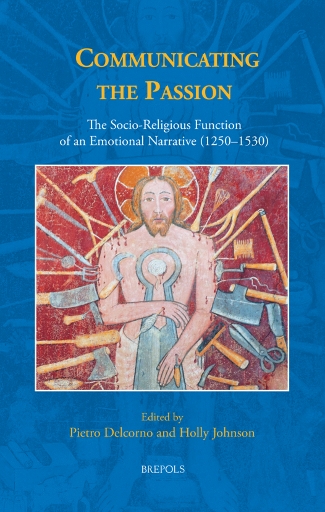
Communicating the Passion
The Socio-Religious Function of an Emotional Narrative (1250–1530)
show More to view fulltext, buy and share links for:Communicating the Passion show Less to hide fulltext, buy and share links for: Communicating the PassionThis volume investigates the vivid and emotionally intense commemoration of the Passion of Christ as a key element in late medieval religious culture. Its goal is to shed light on how the Passion was communicated and on its socio-religious function in late medieval Europe. By adopting a multidisciplinary approach, the volume analyses the different media involved in this cultural process (sermons, devotional texts, lively performances, statues, images), the multiple forms and languages in which the Passion was presented to the faithful, and how they were expected to respond to it. Key questions concern the strategies used to present the Passion; the interaction between texts, images, and sounds in different media; the dissemination of theological ideas in the public space; the fashioning of an affective response in the audience; and the presence or absence of anti-Jewish commonplaces.
By exploring the interplay among a wide range of sources, this volume highlights the pervasive role of the Passion in late medieval society and in the life of the people of the time.
-
-
-
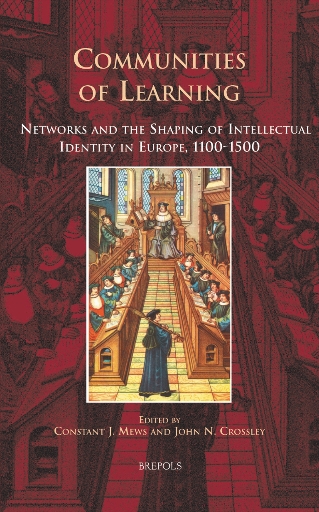
Communities of Learning
Networks and the Shaping of Intellectual Identity in Europe, 1100-1500
show More to view fulltext, buy and share links for:Communities of Learning show Less to hide fulltext, buy and share links for: Communities of LearningCommunities of Learning: Networks and the Shaping of Intellectual Identity in Europe, 1100-1500 explores the fundamental insight that all new ideas are developed in the context of a community, whether academic, religious, or simply as a network of friends. The essays in this volume consider this notion in a variety of contexts and locations within Europe, from the pioneering age of translation activity in twelfth-century Toledo, when Jewish, Christian, and Muslim scholars came together to discuss Aristotle, to the origins of the University of Paris in the thirteenth century, and up to the period of great cultural renewal in France, Germany, and Italy in the fourteenth and fifteenth centuries. The collected essays bring together disciplinary approaches that are often discussed quite separately, namely that of the history of ideas, and the sociologies of both intellectual and religious life, with a view to exploring the multiplicity of communities in which ideas are pursued. Underpinning these various essays is an awareness of the delicate relationship between education and the diversity of religious practice and expression within Europe from 1100 to 1500. The collection emphasizes the fundamental continuity of intellectual concerns, which were shaped by both classical thought and monotheist religious tradition, but interpreted in a variety of ways.
-
-
-
Communities, Environment and Regulation in the Premodern World
Essays in Honour of Peter Hoppenbrouwers
show More to view fulltext, buy and share links for:Communities, Environment and Regulation in the Premodern World show Less to hide fulltext, buy and share links for: Communities, Environment and Regulation in the Premodern WorldWho had a say in making decisions about the natural world, when, how and to what end? How were rights to natural resources established? How did communities handle environmental crises? And how did dealing with the environment have an impact on the power relations in communities? This volume explores communities’ relationship with the natural environment in customs and laws, ideas, practices and memories. Taking a transregional perspective, it considers how the availability of natural resources in diverse societies within and outside Europe impacted mobility and gender structures, the consolidation of territorial power and property rights. Communities, Environment and Regulation in the Premodern World marks Peter Hoppenbrouwers’s career, spanning over three decades, as a professor of medieval history at Leiden University.
-
-
-
Comparing Two Italies. Civic Tradition, Trade Networks, Family Relationships between the Italy of Communes and the Kingdom of Sicily
show More to view fulltext, buy and share links for:Comparing Two Italies. Civic Tradition, Trade Networks, Family Relationships between the Italy of Communes and the Kingdom of Sicily show Less to hide fulltext, buy and share links for: Comparing Two Italies. Civic Tradition, Trade Networks, Family Relationships between the Italy of Communes and the Kingdom of SicilyThe title of this volume recalls the famous 1977 book by David Abulafia, The Two Italies, about the origins of the so-called ‘unequal exchange’ and ‘dual economy’ between Northern and Southern Italy. These are supposed to have provided the ground for the so-called ‘Southern question’ (‘questione meridionale’), one of the foremost topics in the whole of Italian history. However, trade is not the only relevant theme in a comparison between the Italy of Communes and the Kingdom of Sicily. This collection of essays points to different interpretative paths, which concern not only trade networks, but also less well-known aspects of the interrelation, such as the rise of civic tradition, the spread of Mendicant Orders, and the circulation of wealth through family relationships, women, marriage and patrimonial assets.
-
