Brepols
Brepols is an international academic publisher of works in the humanities, with a particular focus in history, archaeology, history of the arts, language and literature, and critical editions of source works.251 - 300 of 3194 results
-
-
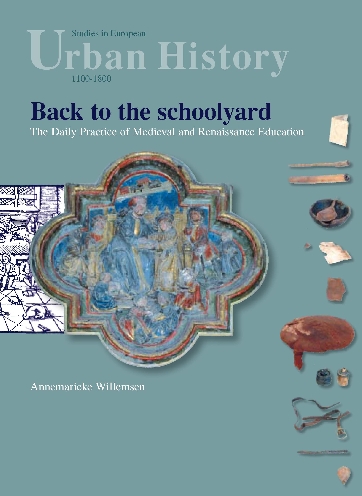
Back to the Schoolyard
The Daily Practice of Medieval and Renaissance Education
show More to view fulltext, buy and share links for:Back to the Schoolyard show Less to hide fulltext, buy and share links for: Back to the SchoolyardAfter about 1300, most schools in the Netherlands came under secular rule. It managed to create good and accessible schools, causing a hey-day for education in the fourteenth, fifteenth and sixteenth century. As a result, more than half of the children participated in basic instruction and literacy rate went relatively high. A contemporary Italian visitor noted with awe that ‘in the Low Countries everybody could read and write, even the peasants’. In the sixteenth century, the curriculum changed because of the Reformation and the availability of printed texts. In this book, the favourable situation in the Netherlands is compared with the rest of Western Europe.
Medieval and Renaissance schools have been studied before, but never from the perspective of those who experienced it on a daily basis. Recent excavations on the sites of late-medieval schools and boarding houses revealed the objects used by pupils and teachers for reading, writing, mathematics, and school life in general. Combining those finds with texts and hundreds of depictions of school scenes in manuscripts, frescoes, sculpture, stained glass and early prints, the practice of education could be reconstructed. The book gives a detailed overview of the material school culture, allowing a rare glimpse into a late-medieval classroom.
Dr. Annemarieke Willemsen (1969) is art historian and archaeologist and works as curator of the medieval department of the National Museum of Antiquities at Leiden. Earlier she published books on Roman and medieval children’s toys and on the Vikings in the Netherlands.
-
-
-
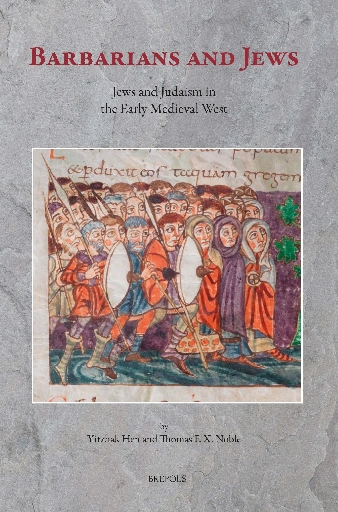
Barbarian and Jews
Jews and Judaism in the Early Medieval West
show More to view fulltext, buy and share links for:Barbarian and Jews show Less to hide fulltext, buy and share links for: Barbarian and JewsThe essays in this volume attempt to re-evaluate, understand and explain various aspects of Jewish history within the broader historical context of the post-Roman Barbarian world. They address a wide variety of topics, sources, and geographies, and together they provide a nuanced and more balanced history of the Jews in the early medieval West. Although written independently of one another by some of the most prominent historians of Late Antiquity and the early Middle Ages, the various essays collected here reveal a remarkable tension between the ‘imaginary’ (or ‘hermeneutical’) Jew and the ‘real’ one. As this volume demonstrates, Augustine’s positive theological understanding of Jews and Judaism was often overshadowed by anti-Jewish sentiments, and consequently anti-Jewish invective remained the drive wheel of Christian theology, especially in the context of debates and polemics among the Christians themselves.
-
-
-
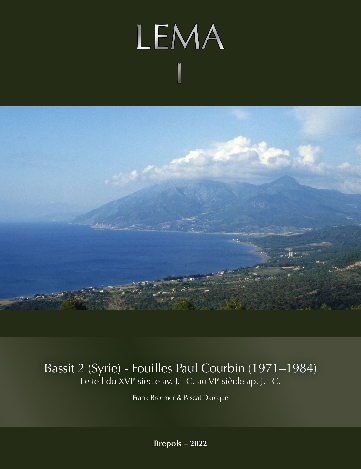
Bassit 2 (Syrie) - Fouilles Paul Courbin (1971-1984)
Le tell du xvi e siècle av. J.- C. au vi e siècle ap. J.- C.
show More to view fulltext, buy and share links for:Bassit 2 (Syrie) - Fouilles Paul Courbin (1971-1984) show Less to hide fulltext, buy and share links for: Bassit 2 (Syrie) - Fouilles Paul Courbin (1971-1984)À 50 km au Nord de Lattaquié, le site côtier de Bassit a été étudié sous la direction de Paul Courbin : après l’acropole (1971-1972) (périodes hellénistique et romaine), et la nécropole du Fer (1973-1974), le « tell » a été fouillé de 1972 à 1984. Sont présentés ici une description détaillée de la stratigraphie et de l’architecture du « tell », des ensembles céramiques associés, ainsi que le corpus du mobilier datant du Bronze Récent I et II. Bassit est installé aux marges Nord du royaume d’Ougarit à partir du milieu du xvi e s. av. J.-C.. Les importations chypriotes sont nombreuses durant tout le Bronze Récent, mais la céramique égéenne apparaît très rare. Le site est détruit bien avant le passage des « peuples de la mer » (vers 1200). À l’âge du Fer, la fonction constante de Bassit est de contrôler l’accès maritime depuis Chypre et le cabotage littoral. Le commerce de la céramique chypriote domine le Fer I et II, celui des céramiques égéennes et étrusques, puis attiques, le Fer III. À l’époque hellénistique, la production d’amphores et de monnaies confirme l’identification de Posideion avec Bassit. L’époque romaine est également marquée par une importante production de céramique.
-
-
-
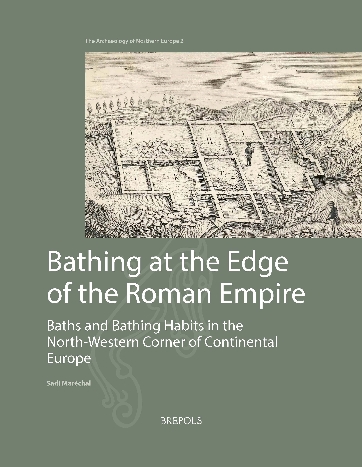
Bathing at the Edge of the Empire
Roman Baths and Bathing Habits in the North-Western Corner of Continental Europe
show More to view fulltext, buy and share links for:Bathing at the Edge of the Empire show Less to hide fulltext, buy and share links for: Bathing at the Edge of the EmpireRoman bathhouses are considered to be prime markers when studying romanization in the provinces of the Empire, as these very specific - and archaeologically recognizable - buildings, together with their associated ideas about the body and personal health, introduced a decidedly Roman habit into regions that had hitherto been unfamiliar with (communal) bathhouses and heating technology. While traditionally, studies into Roman baths and bathing have focused on large public baths in the cities of the empire, however, those from the area that now roughly corresponds to modern-day Belgium have often been neglected in recent research as this was an area with few important urban centres.
This book for the first time investigates the introduction, spread, and eventual disappearance of Roman-style baths and of bathing habits in this north-western corner of the Roman Empire. A detailed analysis of the architecture, technology, and decoration of both public and private baths is combined with a discussion on the role of bathing in the area’s romanization, and supplemented by a fully illustrated catalogue of all bathhouses in the area of study. In doing so, the volume sheds new light not only on the evolution of baths and bathing in this region, but also on their broader role in larger historic processes such as cultural change across the Empire.
-
-
-
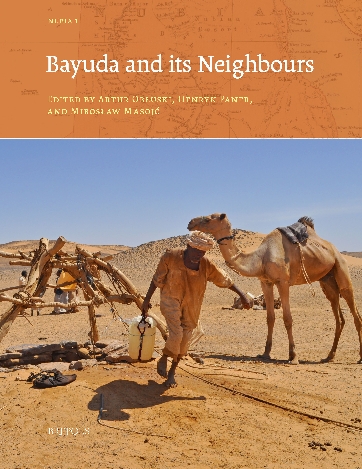
Bayuda and its Neighbours
show More to view fulltext, buy and share links for:Bayuda and its Neighbours show Less to hide fulltext, buy and share links for: Bayuda and its NeighboursThe Bayuda, although an arid desert located in modern-day Sudan, has nonetheless been inhabited, farmed, worshipped in, and fought over by humans from the Palaeolithic onwards. Yet despite the longevity of its human occupation, the region has only in recent years become the focus of more intensive scholarly research. This volume, the first in a series dedicated to exploring the archaeology and history of Northeast Africa, aims to build on this trend by drawing together the very latest archaeological research and data, and shedding light on how the Bayuda Desert and its environs were transformed into a cultural landscape. The contributions gathered here introduce, examine, and (re)assess a number of important issues, many of which are new in the archaeology of Nubia, as well as considering them against a broader comparative background. From climate change over the past millennia - and its far-reaching consequences in the present - through to an examination of the cultural influences of the Kingdom of Kerma, and from analysis of funeral rites through to interpretations of rock art, forgotten trade routes, and the commerce in cattle and slaves, this insightful volume offers a wealth of new information into the history of ancient Nubia.
-
-
-
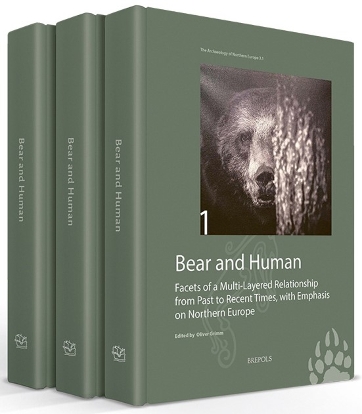
Bear and Human
Facets of a Multi-Layered Relationship from Past to Recent Times, with Emphasis on Northern Europe
show More to view fulltext, buy and share links for:Bear and Human show Less to hide fulltext, buy and share links for: Bear and HumanBears have, throughout human history, been admired and feared by humans in equal measure, with an interrelationship between the two species identifiable from pre-modern times through a wealth of material items, as well as from cult sites, sacral remains, images, and written sources. This unique interdisciplinary volume draws together sixty-four contributions by experts from across a range of fields in order to shed light on the complex connections between bears and humans in a period extending from the pre-modern into modern times, and across an area stretching from England into Russia. From bear biology (represented by work from the Scandinavian Brown Bear Research Project) and archaeo(zoo)logy to art history, and from history of religion to philology, the research gathered across this three-volume set explores a wide-range of subjects. Among them are the bear in biology, bears and animal agency, bear remains in graves and churches, the role of bears in religious beliefs (including berserker and bear ceremonialism), bears in literature, the philology underpinning why bear is a taboo word, and the image of the bear in rock art, as well as political iconography up to the present day. Together, these wide-ranging but closely thematic texts combine to produce a ground-breaking new work that will prove fundamental in understanding the human connection with this remarkable animal.
-
-
-
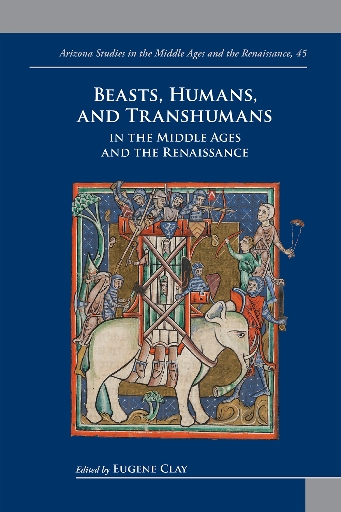
Beasts, Humans, and Transhumans in the Middle Ages and the Renaissance
show More to view fulltext, buy and share links for:Beasts, Humans, and Transhumans in the Middle Ages and the Renaissance show Less to hide fulltext, buy and share links for: Beasts, Humans, and Transhumans in the Middle Ages and the RenaissanceFrom shape-shifting Merlin to the homunculi of Paracelsus, the nine fascinating essays of this collection explore the contested boundaries between human and non-human animals, between the body and the spirit, and between the demonic and the divine. Drawing on recent work in animal studies, posthumanism, and transhumanism, these innovative articles show how contemporary debates about the nature and future of humanity have deep roots in the myths, literature, philosophy, and art of the Middle Ages and the Renaissance. The authors of these essays demonstrate how classical stories of monsters and metamorphoses offered philosophers, artists, and poets a rich source for reflection on marriage, resurrection, and the passions of love. The ambiguous and shifting distinctions between human, animal, demon, and angel have long been contentious. Beasts can elevate humanity: for Renaissance courtiers, horsemanship defined nobility. But animals are also associated with the demonic, and medieval illuminators portrayed Satan with bestial features. Divided into three sections that examine metamorphoses, human-animal relations, and the demonic and monstrous, this volume raises intriguing questions about the ways humans have understood their kinship with animals, nature, and the supernatural.
-
-
-
Beatus Rhenanus (1485-1547) et une réforme de l’Eglise : engagement et changement
Actes du colloque international tenu à Strasbourg et à Sélestat les 5 et 6 juin 2015
show More to view fulltext, buy and share links for:Beatus Rhenanus (1485-1547) et une réforme de l’Eglise : engagement et changement show Less to hide fulltext, buy and share links for: Beatus Rhenanus (1485-1547) et une réforme de l’Eglise : engagement et changementEn 2014 un texte de Martin Luther (le De libertate christiana, 1520) portant des corrections manuscrites de Luther lui-même a été découvert à Sélestat. Il fait partie de la bibliothèque de Beatus Rhenanus (1485-1547). Ce livre contient aussi des corrections et des annotations manuscrites de Rhenanus. D’autres entrées font savoir que le texte a servi de modèle à une nouvelle édition à Bâle, chez l’imprimeur Adam Petri. Ces faits prouvent que Rhenanus fut en fait l’éditeur scientifique de ce traité fondamental de Luther.
Cette découverte - qui est étudiée ici pour les annotations de Rhenanus - et l’exploitation d’autres données fournies par les auteurs de ce volume permettent de présenter un nouveau visage de Rhenanus partisan d’une réforme de l’Eglise.
Grâce à ses connaissances, à ses publications et à son entourage, Rhenanus jouissait d’une autorité scientifique et morale très importante. Directeur de publications, conseiller scientifique ou représentant d’Erasme auprès de plusieurs grands imprimeurs du Rhin Supérieur, il avait accès aux moyens de communication les plus puissants.
C’était un homme complexe. Son esprit à la fois ouvert et critique lui permettait d’innover en littérature et en histoire. Il pouvait s’enthousiasmer pour les idées des autres ou en imaginer de nouvelles lui-même. Pourtant, en homme discret et habituellement prudent, il agissait souvent sous le couvert de l’anonymat. Il se passionna pour une réforme de l’Eglise, mais choisit de taire une partie importante de ses interventions.
Le contenu de ce livre lève le voile sur ses engagements qui pouvaient évoluer dans le temps.
-
-
-
Beatus Rhenanus (1485-1547), lecteur et éditeur des textes anciens
Actes du Colloque International tenu à Strasbourg et à Sélestat du 13 au 15 novembre 1998
show More to view fulltext, buy and share links for:Beatus Rhenanus (1485-1547), lecteur et éditeur des textes anciens show Less to hide fulltext, buy and share links for: Beatus Rhenanus (1485-1547), lecteur et éditeur des textes anciensLe but du colloque était de décrire, d'analyser et d'évaluer la contribution éditoriale et exégétique de Rhenanus. Les 23 études ont été disposées de manière chronologique pour faciliter l'analyse de son évolution philologique, question qui a été au centre des débats. Les conférenciers ont bénéficié d'une documentation de choix, car ils ont le plus souvent travaillé sur les textes personnels de Rhenanus provenant de sa bibliothèque conservée à Sélestat.
Les Actes intéresseront quatre domaines de recherches : l'étude de la transmission des textes des auteurs grecs et latins, leur critique textuelle et exégétique, les techniques éditoriales au XVI siècle et la nature de l'humanisme.
-
-
-
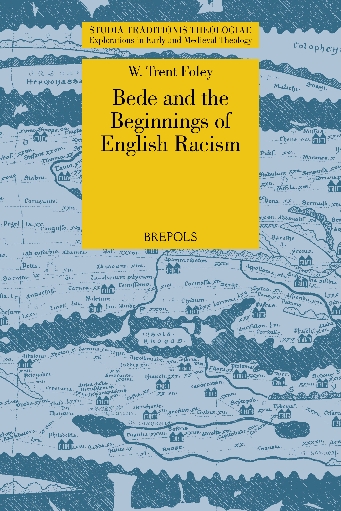
Bede and the Beginnings of English Racism
show More to view fulltext, buy and share links for:Bede and the Beginnings of English Racism show Less to hide fulltext, buy and share links for: Bede and the Beginnings of English RacismThis book examines how the Venerable Bede constructs a racial order in his most famous historical writing, Ecclesiastical History of the English People, a remarkable eighth-century work known for how it combines myth and history into a compelling, charming narrative of the English conversion to Christianity. Yet Bede’s History also disturbingly deploys Scripture’s tropes and types, many of them anti-Jewish, to render unflattering sketches of some of Britain’s “races” (gentes)-especially the Britons.
To uncover the History’s characterizations of what it identifies as the British, Irish, English, and Latin races, Foley examines three of its episodes that narrate attempted conversions of the first three races- respectively-either to Christianity or to a better, more orthodox, catholic, Latin version of it. This close analysis exposes the theological dimensions of each episode’s racial constructions. Foley argues that, unlike modern conceptions of race, which are grounded in imagined biological difference, Bede’s is rooted in his perception of a particular race’s affective disposition, its habits of the heart. More than that, Bede closely ties a race’s disposition to its relative proximity to theological orthodoxy and catholicity. This book’s close reading also highlights surprising similarities between Bede’s medieval Christian discourse and modern, secular and white discourses on race.
-
-
-
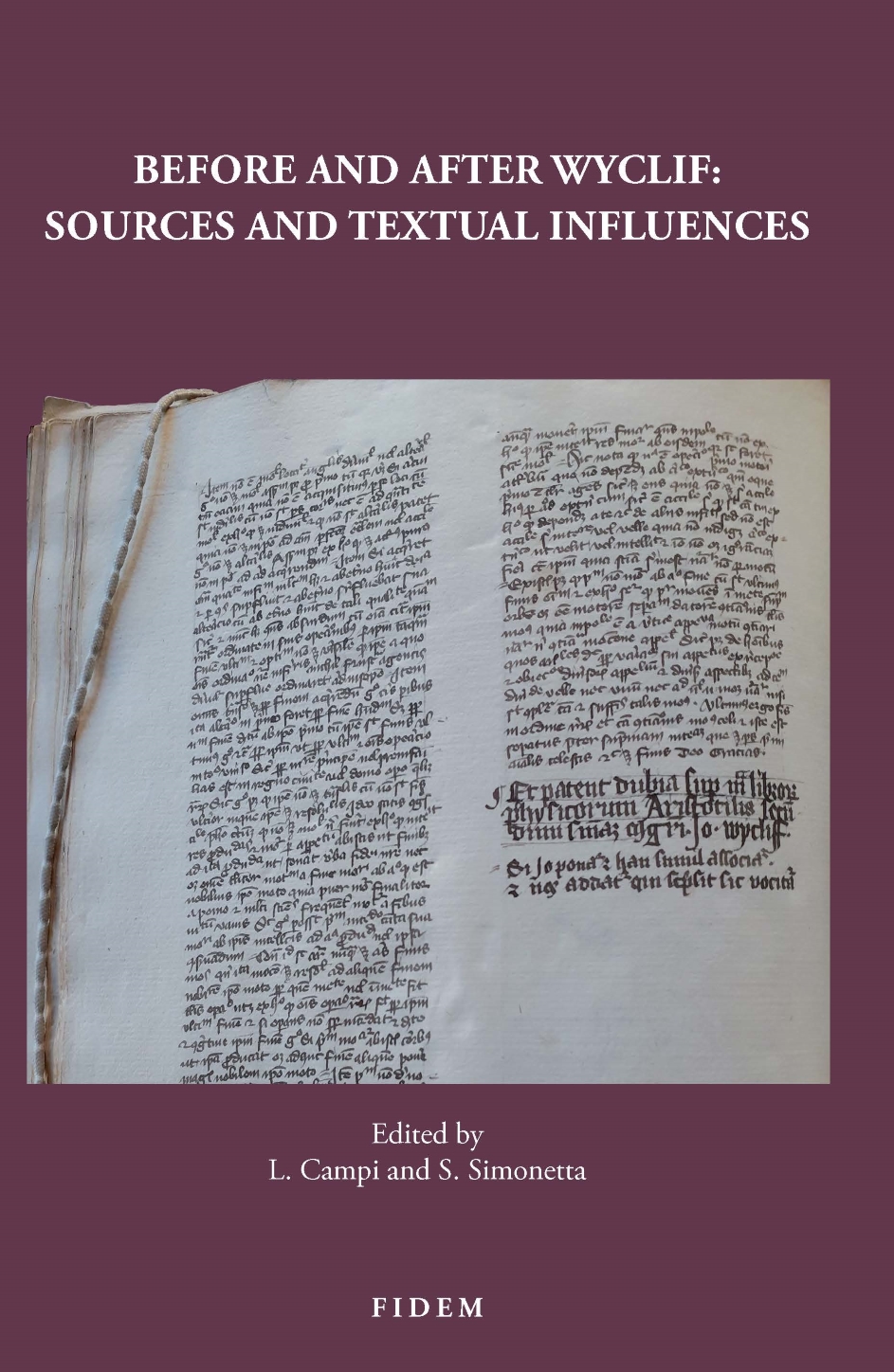
Before and After Wyclif: Sources and Textual Influences
show More to view fulltext, buy and share links for:Before and After Wyclif: Sources and Textual Influences show Less to hide fulltext, buy and share links for: Before and After Wyclif: Sources and Textual InfluencesIn the almost twenty years between the two international conferences on John Wyclif organised by the University of Milan, the most recent of which (September 2016) lies to some extent at the origin of the present volume, an increasing number of studies have been devoted to this great English thinker, theologian and reformer. These have enhanced our knowledge of his philosophical, theological and pastoral work, which had long remained in the shadows. The essays collected in the present book take further steps along this path, through the contribution of a range of specialists who have been called to further reconstruct Wyclif’s place in his intellectual milieu from the standpoint of his textual and doctrinal dependence and influence: the collected essays deal with the antecedents of Wyclif’s thought, his sources, and his role as a source for countless followers and opponents.The following authors have contributed to the volume: Mark Thakkar, Alessandro Conti, Aurélien Robert, Stephen E. Lahey, Ian Christopher Levy, Sean Otto, Kantik Ghosh, Jindřich Marek and Graziana Ciola.
-
-
-
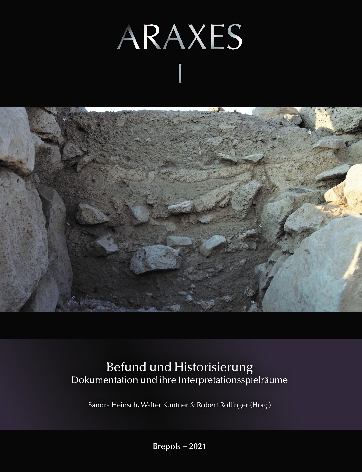
Befund und Historisierung
Dokumentation und ihre Interpretationsspielräume
show More to view fulltext, buy and share links for:Befund und Historisierung show Less to hide fulltext, buy and share links for: Befund und HistorisierungArchaeological periodization schemes of material culture development in Northern Mesopotamia from 7th to 5th centuries bce traditionally refer to the sequence of dynasties. In particular, they highlight historical events related to distinguished members of the royal houses of the Sargonids, Urartians, Medes, Teispids, and Achaemenids. However, whereas the repercussions these Iron Age empires had on the history of the Near East are undeniable, the impact they had on the material culture and its development is not always equally tangible in the archaeological findings. The latter are not infrequently characterized by continuity rather than by incisive changes, as recent studies and re-evaluations of key sites in Syria, Iraq, Iran and Armenia show. This publication uses case studies to address problems that arises when the archaeological (relative concept) and historical (absolute concept) methodology use different intrinsic values of time to reconstruct history and to understand cultural material development.
-
-
-
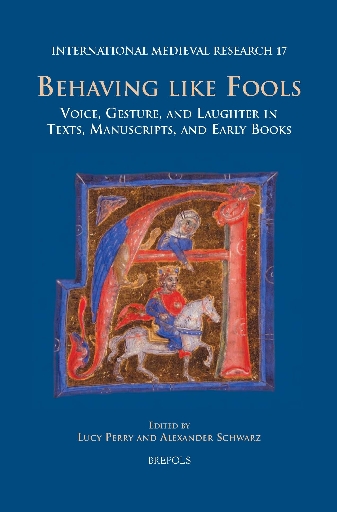
Behaving like Fools
Voice, Gesture, and Laughter in Texts, Manuscripts, and Early Books
show More to view fulltext, buy and share links for:Behaving like Fools show Less to hide fulltext, buy and share links for: Behaving like FoolsThe period from 1200 to 1600 was the golden age of fools. From representations of irreverent acts to full-blown insanity, fools appeared on the misericords of gothic churches and in the plots of Arthurian narratives, before achieving a wider prominence in literature and iconography in the decades around 1500. But how are we to read these figures appropriately? Is it possible to reconstruct the fascination that fools exerted on the medieval and early modern mind? While modern theories give us the analytical tools to explore this subject, we are faced with the paradox that by striving to understand fools and foolishness we no longer accept their ways but impose rational categories on them. Together these essays propose one way out of this dilemma. Instead of attempting to define the fool or trying to find the common denominator behind his many masks, this volume focuses on the qualities, acts, and gestures that signify foolishness. By investigating different manifestations of foolery rather than the figure of the fool himself, we can begin to understand the proliferation of fools and foolish behaviour in the texts and illustrations of manuscripts and early books.
-
-
-

Belgique, Congo, Rwanda et Burundi : Guide des sources de l’histoire de la colonisation (19e-20e siècle)
Vers un patrimoine mieux partagé !
show More to view fulltext, buy and share links for:Belgique, Congo, Rwanda et Burundi : Guide des sources de l’histoire de la colonisation (19e-20e siècle) show Less to hide fulltext, buy and share links for: Belgique, Congo, Rwanda et Burundi : Guide des sources de l’histoire de la colonisation (19e-20e siècle)Vaste question que celle des sources relatives à la colonisation belge en Afrique ! Alors que chercheurs et société civile réclament un (meilleur) accès aux « archives coloniales », il n’existait jusqu’ici aucun outil permettant d’identifier et de localiser toutes les sources disponibles en Belgique. Pourtant, ce sont près de 20 kilomètres linéaires d’archives relatives à la colonisation qui reposent dans plus de 80 institutions de conservation en Belgique. La rédaction du « Guide des sources de l’histoire de la colonisation (belge) » constitue donc une avancée cruciale dans l’identification et la description des archives relatives à l’État indépendant du Congo (1885-1908), au Congo belge (1908-1960) et au Ruanda-Urundi ([1916] 1923-1962) : archives produites par les souverains et les différents gouvernements, par les hommes et femmes politiques, par l’administration coloniale, par les entreprises, les missions religieuses, les universités, les fondations, le monde associatif et culturel et tous les autres acteurs de cette histoire dont les Africains bien évidemment.
Sorte de GPS des archives coloniales, ce guide permet pour la première fois au citoyen et au chercheur, peu importe le continent sur lequel il vit, de savoir précisément qui conserve quoi sur le territoire belge. Il répond à une triple nécessité : scientifique, sociétale et mémorielle.
Riche de plus de 1500 notices pour près de 2300 pages, cette publication propose une description sommaire et une remise en contexte de tous les fonds et collections d’archives coloniales conservés en Belgique, leur intérêt pour la recherche, leurs liens avec d’autres fonds et collections, etc. Une large et indispensable introduction replace les archives relatives à la colonisation belge dans le débat international et pose les questions très sensibles du partage de patrimoine, du retour des archives en Afrique et de la construction de la mémoire. Le guide est également accompagné d’un bilan historiographique fouillé, de pistes permettant de repérer les sources relatives à la colonisation belge conservées à l’étranger ou encore d’un cahier de plusieurs centaines d’illustrations qui souligne l’intérêt et la nécessité d’élargir les champs de la recherche aux sources iconographiques.
-
-
-
Belief and Cult in Fourth-Century Papyri
show More to view fulltext, buy and share links for:Belief and Cult in Fourth-Century Papyri show Less to hide fulltext, buy and share links for: Belief and Cult in Fourth-Century PapyriThis study examines the terms and features in the Greek and Coptic documentary papyri from fourth-century CE Egypt which bear on the religious beliefs of their scribes, composers, senders, and recipients. These include onomastics, formulaic expressions, invocations of particular deities, the way the name of God is written, titles of officials, and linguistic choice. Where previous studies have often found predicative criteria and clear-cut boundaries, here a new narrative of the development of late-antique religious vocabulary and scribal practice is found in the ambiguity and the confluence of religious traditions which the papyri reveal.
Malcolm Choat lectures and researches in the Ancient History Documentary Research Centre and the Department of Ancient History, at Macquarie University, Sydney.
-
-
-

Benedict XV: A Pope in the World of the 'Useless Slaughter' (1914-1918)
show More to view fulltext, buy and share links for:Benedict XV: A Pope in the World of the 'Useless Slaughter' (1914-1918) show Less to hide fulltext, buy and share links for: Benedict XV: A Pope in the World of the 'Useless Slaughter' (1914-1918)On August 1, 1917 - three years after the outbreak of World War 1 - pope Benedict XV signed his famous peace note, urging the governments of the belligerent Powers to seek a diplomatic solution to their disputes and stop the "useless slaughter". In order to commemorate the event and to define the place of this "forgotten pope" in twentieth-century history, on November 3-5, 2016, the Fondazione per le Scienze Religiose Giovanni XXIII (Fscire) hosted an international conference, entitled "Benedict XV in the world of the useless slaughter", in which more than a hundred historians from all over the world participated. The aim of the initiative, supported by the Historical and Scientific Committee for Italy’s National Anniversaries, is to shed light on the key issues of this pontificate, from Giacomo Della Chiesa’s education in the theological seminary in Genua to his heritage and memory all along the twentieth century. The volume resulting from this conference provides a comprehensive and systematic reference work about a key figure in Church history that has all too often been neglected.
-
-
-
Berechiah ben Natronai ha-Naqdan’s Works and Their Reception
L’oeuvre de Berechiah Ben Natronai ha-Naqdan et sa récéption
show More to view fulltext, buy and share links for:Berechiah ben Natronai ha-Naqdan’s Works and Their Reception show Less to hide fulltext, buy and share links for: Berechiah ben Natronai ha-Naqdan’s Works and Their ReceptionBerechiah ben Natronai ha-Naqdan, the illustrious Jewish scholar from Rouen, was probably the most prolific writer among the twelfth century Jewish authors in France. While all his creations are truly remarkable, two are the focus of this book: Mishlei Shu'alim, the largest compilation of Aesopic fables ever written in Hebrew, and Dodi ve-Nekhdi, a translation of Adelard of Bath's Questiones Naturales. The ten studies gathered here, written by internationally renowned scholars from Europe, Israel and the United States, explore the richness and uniqueness of these two major books, as well as their sources and their reception. A number of these studies accentuate specific themes and motives, some of which are discussed here for the first time. Other studies relate to the linguistic particularities, examined here in a novel and original manner. We also present innovative studies on the Hebrew version of Questiones Naturales, and use vibrant examples to demonstrate the translations, adaptations and uses of Berechiah's works from the Middle Ages until the modern era. This volume is the result of an international workshop that was held in the Center for Jewish Studies in Palacky University in May 2015.
-
-
-
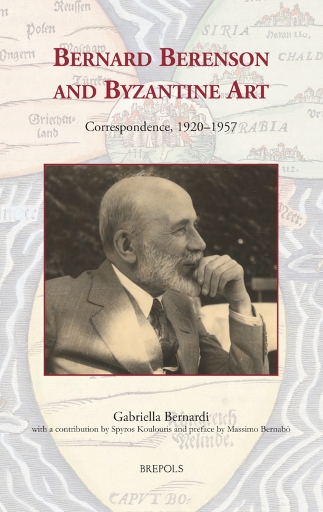
Bernard Berenson and Byzantine Art
Correspondence, 1920–1957
show More to view fulltext, buy and share links for:Bernard Berenson and Byzantine Art show Less to hide fulltext, buy and share links for: Bernard Berenson and Byzantine ArtThe American art historian Bernard Berenson, born in 1865, is famous for his pioneering studies of the Italian Renaissance, but his work on Byzantine art remains less well-known and less studied. Yet his passion for studies of Byzantium - dubbed the ‘Byzantine infection’ - played a major role throughout Berenson’s life, and in the 1920s, he began work on a magnum opus on this topic that was sadly never completed. This volume aims to illuminate and revisit Berenson’s approach to Byzantium and the art of the Christian East through an exploration and analysis of the correspondence, travel notes, and photo archive that Berenson built up over his lifetime, and that taken together, clearly points to an explicit recognition by Berenson of the importance of Byzantine art in the Latin Middle Ages. Drawing together Berenson’s correspondence with art historians, collectors, and scholars from across Europe, the US, and the Near East, together with an overview of his numerous photography campaigns, the book is able to open a new window into Byzantine art historiography from the 1920s to the 1950s. In doing so, it sheds light onto a period in which important discoveries and extensive restoration campaigns were carried out, such as those of the mosaics of Hagia Sophia and Kariye Camii in Istanbul, as well as of the Basilica of San Marco in Venice and its decoration.
-
-
-
Bernard de Clairvaux et la philosophie des Cisterciens du xii e siecle
show More to view fulltext, buy and share links for:Bernard de Clairvaux et la philosophie des Cisterciens du xii e siecle show Less to hide fulltext, buy and share links for: Bernard de Clairvaux et la philosophie des Cisterciens du xii e siecleBernard de Clairvaux, philosophe? Une école cistercienne au XIIe siècle? Telles sont les deux questions affrontées dans chacune des parties de ce livre.
Une historiographie contemporaine oppose souvent à un Abélard renouvelant la philosophie par l’accueil de la logica nova et de la dialectique un Bernard dogmatique, dernier des Pères de l’Église. Prenant le contrepied de cette caricature, la première partie affronte la première question et présente un Bernard de Clairvaux philosophe, fleuron du socratisme chrétien. Reconnu comme tel depuis Pierre Courcelle, Bernard donne toutefois à cette philosophie socratique une inflexion marquant le primat de l’humilité (Ch. I), le détour nécessaire par la charité (Ch. II) en vue de parvenir à la contemplation (Ch. IV). Entre ces deux points d’inflexion, un chapitre développe le rôle central pour lui du libre arbitre et celui de la conscience (Ch. III).
Il est de coutume d’opposer le cloître et l’école au XIIe siècle. Toutefois, si nous entendons par là, non un lieu d’enseignement où l’on noterait les présents et les absents, mais un réseau d’influence intellectuelle, voire spirituelle, il devient possible de parler d’une école cistercienne. La deuxième partie recherche la présence ou non des caractéristiques humanistes mises en évidence dans la première chez divers auteurs cisterciens de ce temps. Ils sont pris d’abord parmi les plus proches de Bernard: Aelred de Rievaulx, Guerric d’Igny, Geoffroy d’Auxerre (Ch. I). Puis (Ch. II) sont examinés trois auteurs cisterciens parmi les plus philosophes du XIIe siècle: Isaac de l’Étoile, Garnier de Rochefort et Hélinand de Froidmont. Enfin (Ch. III), on en vient à trois auteurs qualifiés de «satellites» dont le rapport à l’Ordre Cistercien est plus complexe: Guillaume de Saint-Thierry, Alain de Lille et Joachim de Flore.
-
-
-
Bernard le Clunisien
Une vision du monde vers 1144
show More to view fulltext, buy and share links for:Bernard le Clunisien show Less to hide fulltext, buy and share links for: Bernard le ClunisienLa tendance dominante du christianisme durant des siècles n'a pas été l'affirmation d'une puissance travaillant à la transformation du monde et de l'histoire, mais plutôt la disposition à s'en écarter et à prendre ses distances, selon la doctrine du "mépris du monde" (contemptus mundi). C'était en tout cas l'orientation de la pensée monastique qui a traversé tout le Moyen Âge.
Vers la fin de la première moitié du XIIe siècle, un moine bénédictin de Cluny, que l'on a appelé Bernard de Morlaix ou de Morlas ou Bernard le Clunisien, et qui résidait au prieuré Saint-Denis de Nogent-le-Rotrou, a écrit lui aussi un De contemptu mundi. Cet immense poème en vers métriques, est, malgré son titre, beaucoup plus que l'expression habituelle du thème monastique de la vanité du monde. Il contient une représentation lumineuse du Ciel, Jérusalem céleste, Cité resplendissante où Dieu est tout en tous, et une vision des enfers, où les références à Virgile semblent annoncer la grande épopée dramatique et mystique de la Divine Comédie de Dante ; et c'est aussi une longue complainte et une impitoyable satire contre les désordres et les injustices de l'époque, satire n'épargnant ni les prêtres, ni les évêques, ni le pouvoir de Rome.
-
-
-
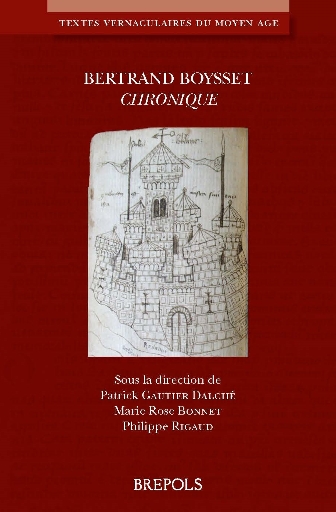
Bertrand Boysset. Chronique
show More to view fulltext, buy and share links for:Bertrand Boysset. Chronique show Less to hide fulltext, buy and share links for: Bertrand Boysset. ChroniqueLa chronique de Bertran Boysset, de la moyenne bourgeoisie d’Arles (v. 1350-1415),est un texte difficile à classer. Elle comporte certains aspects du livre de raison, mais l’intérêt de l’auteur dépasse largement le cercle restreint de l’environnement familial. Proche d’Avignon à l’époque du Grand Schisme, dans une région troublée par les rivalités politiques et les exactions des gens de guerre, l’auteur note non seulement ses activités (l’exploitation de ses vignes et de ses pêcheries), les phénomènes météorologiques, les faits qui sortent de l’ordinaire, mais encore ce qui se passe à la cour papale à Avignon et à Rome, ainsi que les séjours des souverains. C’est un témoignage exceptionnel sur la vie quotidienne et sur la perception du monde d’un laïc de culture moyenne, qui veut par ses écrits se situer dans le cadre plus large d’une cité autrefois prestigieuse.
Rédigée en provençal avec quelques passages en latin, elle est transmise en trois versions, dont deux autographes. On édite ici la deuxième version (Paris, BnF, fr. 5728), accompagnée d’une traduction française et d'une introduction.
-
-
-
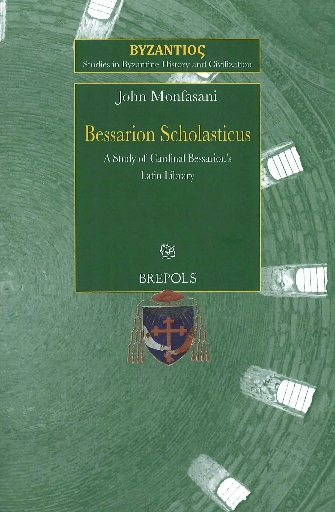
Bessarion Scholasticus: A Study of Cardinal Bessarion’s Latin Library
show More to view fulltext, buy and share links for:Bessarion Scholasticus: A Study of Cardinal Bessarion’s Latin Library show Less to hide fulltext, buy and share links for: Bessarion Scholasticus: A Study of Cardinal Bessarion’s Latin LibraryBessarion (d. 18 November 1472) first made a name for himself as one of the Greek spokesmen at the Council of Ferrara-Florence in 1438-39. After becoming a cardinal, he several times entered conclaves as a serious candidate for the papacy. The library he bequeathed to the Republic of Venice, destined to become the historic core of the modern Biblioteca Marciana, is justly famous for its extraordinary collection of Greek manuscripts. Celebrated in his own time for his patronage of humanists, he was also Italy’s leading Platonist before the emergence of Marsilio Ficino. He always held in reverence his teacher in Greece, the Neoplatonist philosopher George Gemistus Pletho, and his In Calumniatorem Platonis, printed in Rome in 1469, was a pivotal text in the Plato-Aristotle controversy of the Renaissance. Nonetheless, Bessarion was a great admirer of medieval scholasticism and especially of Thomas Aquinas.
'Bessarion Scholasticus' examines Bessarion’s relationship with Latin culture as evidenced by his library, personal relations, and writings. It examines his humanist collection, his scholastic collection, his Thomism, and the circle of scholars associated with his household, called Bessarionea Academia by contemporaries. Half of Bessarion Scholasticus is a catalogue raisonné of scholastic texts and manuscripts in Bessarion’s library. The volume offers the first edition of Bessarion’s autograph listing of the differences between Scotists and Thomists as well as first editions of prefaces by various authors addressed to Bessarion. In addition, the appendices include statistical tables of Bessarion’s holdings of Latin classical authors and of texts in civil and canonical law and a register of the members of his cardinalitial famiglia before he became cardinal legate in Bologna in 1450.
John Monfasani is Professor at the Department of History, University at Albany - State University of New York. His field of interest is European intellectual history, with a special interest in Renaissance intellectual and religious history. He has published mainly on Greek and Latin humanists in fifteenth-century Italy.
-
-
-
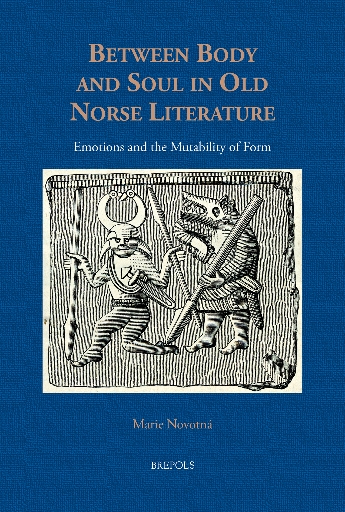
Between Body and Soul in Old Norse Literature
Emotions and the Mutability of Form
show More to view fulltext, buy and share links for:Between Body and Soul in Old Norse Literature show Less to hide fulltext, buy and share links for: Between Body and Soul in Old Norse LiteratureWhat did the body mean for inhabitants of the medieval Norse-speaking world? How was the physical body viewed? Where did the boundary lie between corporality and the psychological or spiritual aspects of humanity? And how did such an understanding tie in with popular literary motifs such as shape-shifting? This monograph seeks to engage with these questions by offering the first focused work to delineate a space for ideas about the body within the Old Norse world. The connections between emotions and bodily changes are examined through discussion of the physical manifestations of emotion (tiredness, changes in facial colour, swelling), while the author offers a detailed analysis of the Old Norse term hamr, a word that could variously mean shape, form, and appearance, but also character. Attention is also paid to changes of physical form linked to flight and battle ecstasy, as well as to magical shapeshifting. Through this approach, diametrically different ways of thinking about the connection between body and soul can be found, and the argument made that within the Old Norse world, concepts of change within the body rested along a spectrum that ranged from the purely physical through to the psychological. In doing so, this volume offers a broader understanding of what physicality and spirituality might have meant in the Middle Ages.
-
-
-
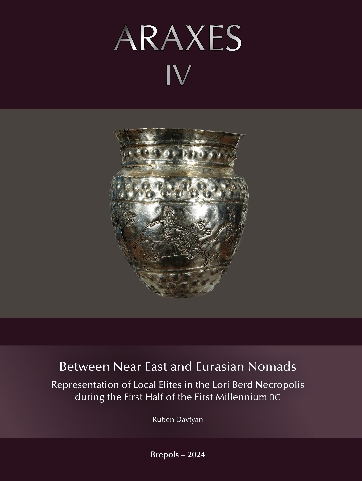
Between Near East and Eurasian Nomads
Representation of Local Elites in the Lori Berd Necropolis during the First Half of the First Millennium bc
show More to view fulltext, buy and share links for:Between Near East and Eurasian Nomads show Less to hide fulltext, buy and share links for: Between Near East and Eurasian NomadsThe site of Lori Berd, located in northern Armenia, is home to an extraordinary necropolis that once housed the dead of the local elite during a period that spanned from 2200 to 400 BC. Influenced both by Urartian conquests from the south and by invasions from the Eurasian nomadic tribes from the north, the people of this region buried their dead with prestigious artefacts, complex customs, and a particular reverence shown during the later stages of the Early and Middle Iron Ages (1000–550 BC). This volume offers a detailed account of the archaeological significance of the site, providing detailed accounts of thirty-one tombs, the majority of which have never before been comprehensively published, and seeking to set Lori Berd in its broader historical and material context. Through this approach, the book offers a comprehensive exploration of the Iron Age in the South Caucasus, unravelling the interconnected themes of wealth, power, and cultural expressions.
-
-
-
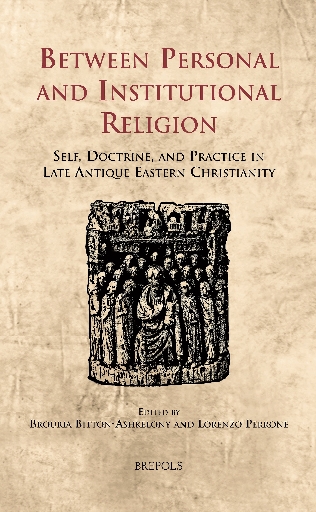
Between Personal and Institutional Religion
Self, Doctrine, and Practice in Late Antique Eastern Christianity
show More to view fulltext, buy and share links for:Between Personal and Institutional Religion show Less to hide fulltext, buy and share links for: Between Personal and Institutional ReligionThis book addresses change and continuity in late antique Eastern Christianity, as perceived through the lens of the categories of institutional religion and personal religion. The interaction between personal devotion and public identity reveals the creative aspects of a vibrant religious culture that altered the experience of Christians on both a spiritual and an institutional level. A close look at the interrelations between the personal and the institutional expressions of religion in this period attests to an ongoing revision of both the patristic literature and the monastic tradition. By approaching the period in terms of ‘revision’, the contributors discuss the mechanism of transformation in Eastern Christianity from a new perspective, discerning social and religious changes while navigating between the dynamics of personal and institutional religion.
Recognizing the creative aspects inherent to the process of ‘revision’, this volume re-examines several aspects of personal and institutional religion, revealing dogmatic, ascetic, liturgical, and historiographical transformations. Attention is paid to the expression of the self, the role of history and memory in the construction of identity, and the modification of the theological discourse in late antique culture. The book also explores several avenues of Jewish-Christian interaction in the institutional and public sphere.
-
-
-
Between the Natural and the Artificial. Dyestuffs and Medicines
Proceedings of the XXth International Congress of History of Science (Liège, 20-26 July 1997) Vol.II
show More to view fulltext, buy and share links for:Between the Natural and the Artificial. Dyestuffs and Medicines show Less to hide fulltext, buy and share links for: Between the Natural and the Artificial. Dyestuffs and MedicinesThis thematic volume consists of a selection of papers from the XXth International Congress of History of Science, which was held in Liège in 1997. Two separated symposia were concerned with the study of historical connections between such different scientific fields as chemistry, botany, pharmacy, medicine and their technical aspects. Natural products from plants and animals, and their artificial equivalents, which were especially studied and used for dyeing and for medicinal purposes, were discussed in both meetings. The various contributions of the present volume deal with many of these products in several countries (in Europe, Asia, Africa and America) from the medieval period to the XIXth century. The first part treats of some historical aspects of chemical and pharmaceutical questions related to selected dyestuffs. The second part deals with pharmaceutical products for medicinal and biological purposes. These studies should contribute to foster new interdisciplinary research in this field, which is bound to develop at the international level.
-
-
-
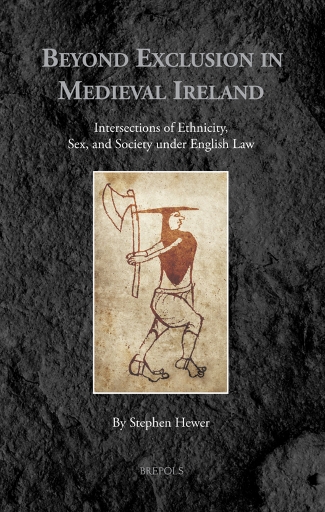
Beyond Exclusion in Medieval Ireland
Intersections of Ethnicity, Sex, and Society under English Law
show More to view fulltext, buy and share links for:Beyond Exclusion in Medieval Ireland show Less to hide fulltext, buy and share links for: Beyond Exclusion in Medieval IrelandThe notion that, upon the advent of the English in 1167, all Gaelic peoples in Ireland were immediately and ipso facto denied access to the English royal courts has become so widely accepted in popular culture that it is often treated as fact. In this ground-breaking monograph, however, the narrative of absolute ethnic discrimination in thirteenth- and early fourteenth-century English Ireland is for the first time tackled head-on through a thorough re-examination of the Irish plea rolls. Through a forensic study of these records, the author demonstrates not only that there was a great deal of variation in how members of various ethnic groups and women who came before the English royal courts in Ireland were treated, but also that there was a large - and hitherto scarcely noticed - population of Gaels with regular and unimpeded access to English law, and that the intersections between gender/sex and ethnicity have too often been deeply misunderstood or disregarded. A close comparison between the treatment of Gaelic women and men and that of the English of Ireland, together with an in-depth examination of other ethnicities from around the Irish Sea, provide a new understanding of English Ireland in which it is clear that there was not a simple dichotomy between the English and the unfree, but rather that people lived an altogether more complex and nuanced existence.
-
-
-
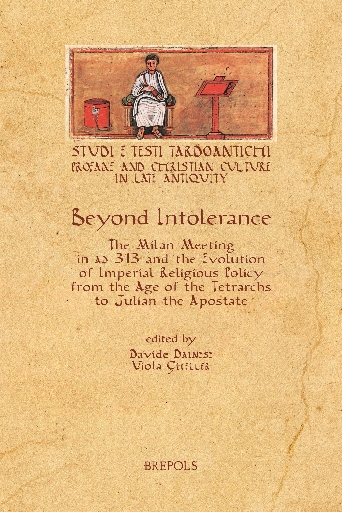
Beyond Intolerance
The Milan Meeting in ad 313 and the Evolution of Imperial Religious Policy from the Age of the Tetrarchs to Julian the Apostate
show More to view fulltext, buy and share links for:Beyond Intolerance show Less to hide fulltext, buy and share links for: Beyond Intolerance313 ad is generally considered a “turning point” in religious and political Western history. The meeting of Constantine and Licinius in Milan and the subsequent “edict” not only gave Christians the right to assemble and practice their faith, but opened the way to the Christianisation of Roman imperial structures and, finally, to the declaration of Christianity as the only religion allowed in the Roman Empire.
The papers collected in this volume tackle this complex historical phase from a number of perspectives (from Church history and theology to political and juridical history), following a strongly multidisciplinary approach. The chronological schope, stretching from the decades preceding the meeting of 313 to the reign of Julian the Apostate, sheds light on the cultural, political and juridical premises of Constantine and Licinius’s decisions as well as the way those premises affected a number of aspects of everyday life within the Empire up to Julian's pagan “restoration” and afterward.
-
-
-
Bibelstellenkonkordanz zu den wichtigsten älteren Mönchsregeln
show More to view fulltext, buy and share links for:Bibelstellenkonkordanz zu den wichtigsten älteren Mönchsregeln show Less to hide fulltext, buy and share links for: Bibelstellenkonkordanz zu den wichtigsten älteren MönchsregelnL'inspiration biblique des anciennes règles monastiques est bien connue, encore qu'on n'en ait que des idées fort peu précises à ce sujet. Pour se rendre compte de l'omniprésence de textes et de thèmes bibliques, il fallait dresser une liste complète de tous les versets bibliques cités, parfois assez librement, dans les règles monastiques que nous a léguées le Moyen Age latin. Tâche toute d'acribie et de patient labeur que s'est imposée le pasteur Christoph Joest. Sa Bibelstellenkonkordanz nous révèle de façon très concrète les assises bibliques de la législation monastique ancienne, en nous montrant les textes de l'ancien et surtout du Nouveau Testament qui reviennent le plus fréquemment dans nos Règles et en forment la trame. Pour l'étude objective de ces documents, le travail du Dr.Joest sera tout aussi indispensable que le Lexique des anciennes Règles monastiques latines de dom J.M.Clément (Instrumenta Patristica, 7A et B): deux ouvrages qui se complètent mutuellement.
-
-
-
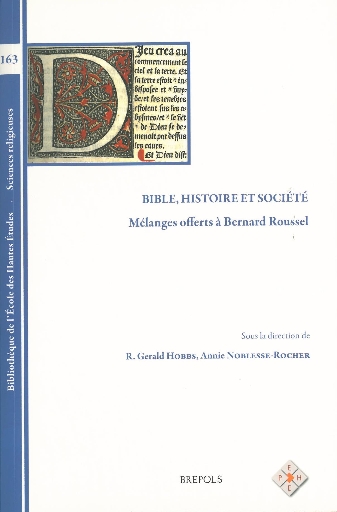
Bible, histoire et société
Mélanges offerts à Bernard Roussel
show More to view fulltext, buy and share links for:Bible, histoire et société show Less to hide fulltext, buy and share links for: Bible, histoire et sociétéDepuis plus de quarante ans, les travaux de Bernard Roussel fécondent la recherche sur le monde réformé à l’époque moderne : en saisissant la Bible, son exégèse et son herméneutique, mais aussi les confessions de foi, les textes doctrinaux et les disciplines dans leur dimension sociale et anthropologique, Bernard Roussel a renouvelé l’approche traditionnelle des études sur les XVIe et XVIIe siècles. Il a mis en évidence la spécificité de l’exégèse des commentateurs rhénans (Martin Bucer, Wolfgang Capiton, Jean Œcolampade…) en les situant par rapport aux enjeux théologico-politiques de leur temps et en examinant les méthodes propres de leur approche de la Bible, notamment l’importance qu’ils accordent au texte hébraïque et aux commentateurs juifs du Moyen Âge. Ses travaux sur les réformés font référence ; ses recherches portent actuellement sur les synodes réformés français du XVIe siècle. Son approche anthropologique des sacrements a totalement renouvelé notre regard sur le sujet. Bernard Roussel a également édité les œuvres de Calvin.
-
-
-
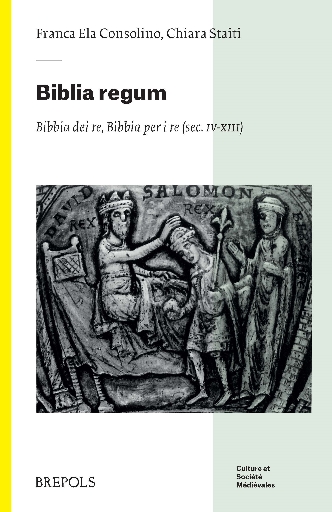
Biblia regum
Bibbia dei re, Bibbia per i re (sec. IV-XIII)
show More to view fulltext, buy and share links for:Biblia regum show Less to hide fulltext, buy and share links for: Biblia regumThis volume collects contributions from the international conference Biblia regum. Bibbia dei re, Bibbia per i re (sec. iv-xiii) held at the University of L’Aquila, 16-17 April 2018. The collection sheds a new light on the relation between the Bible and royal authority in the late antique and medieval West. By focussing both on the use of biblical quotations and on distinct features of biblical manuscripts - such as dedications, comments, translations and illustrations - contributors investigate how the Bible functioned as a behavioural model to which rulers and their subjects should conform, as well as a text that supported royal power. Collectively, the contributions address significant aspects of the layered interconnection between royal power and the Holy Writ, and lead to a fruitful dialogue between different fields of research.
-
-
-
Biblical and Manichaean Citations in Titus of Bostra’s Against the Manichaeans
An Annotated Inventory
show More to view fulltext, buy and share links for:Biblical and Manichaean Citations in Titus of Bostra’s Against the Manichaeans show Less to hide fulltext, buy and share links for: Biblical and Manichaean Citations in Titus of Bostra’s Against the ManichaeansThis volume is the third and final part of a trilogy devoted to Titus of Bostra’s Against the Manichaeans. The first part, the critical edition of the remains of the Greek text and of the complete Syriac version as well as of the excerpts from the Sacra Parallela attributed to John Damascene, appeared in 2013 as volume 82 in the Series Graeca of the Corpus Christianorum. The second part, a French synoptic translation of the Greek and the Syriac, was published in 2015 as volume 21 in the Corpus Christianorum in Translation series. The main objective of the present inventory is to make available to specialists and all those interested the rich Biblical and Manichaean documentation used by Titus of Bostra in his refutation. With the exception of the Contra Faustum of Augustine, Titus of Bostra’s Against the Manichaeans is indisputably the most extensive Christian refutation of Manichaeism. Titus’ work is also a goldmine of information on the Manichaean doctrine and a valuable source for the history of the text of the Old and New Testament in Greek and Syriac. The fact that the manuscript of the Syriac version is not only very ancient but also precisely dated (to November 411) adds to its value as a witness of the Syriac biblical text.
-
-
-
Bibliographie critique d'Origène
Supplément 1
-
-
-
Bibliographie critique d'Origène
Supplément II
show More to view fulltext, buy and share links for:Bibliographie critique d'Origène show Less to hide fulltext, buy and share links for: Bibliographie critique d'OrigèneOrigène est un des très grands noms de la patristique grecque. Son oeuvre est immense. Tour à tour, elle suscite une admiration sans borne, ou une aversion, parfois passionnée. Pareil personnage inspirera inévitablement une luxuriante bibliographie. Pour se retrouver dans ce dédale, la Bibliographie critique d'Origène par le Rév. P. Henri Crouzel S.J est indispensable. L'auteur ne se limite pas à égréner les noms d'auteurs et des titres d'ouvrages. Il en indique la valeur, souligne les acquis nouveaux, écarte des hypothèses trop hardies et sans fondement. Bref, c'est un guide sûr. Ce second supplément analyse les publications des années 1512 à 1992. Un premier supplément, couvrant les années 1489-1980, a paru en 1982. Le premier volume de la Bibliographie critique date de 1971. Trois volumes dont l'utilité n'est plus à prouver!
-
-
-
Bibliographie de la littérature occitane: trente années d’études (1977-2007)
show More to view fulltext, buy and share links for:Bibliographie de la littérature occitane: trente années d’études (1977-2007) show Less to hide fulltext, buy and share links for: Bibliographie de la littérature occitane: trente années d’études (1977-2007)Une bibliographie cumulative de ce qui a été publié sur la littérature occitane, du Moyen Âge à notre ère, comprenant les recherches et les publications sur tout auteur qui a écrit en occitan, de toutes les époques. Autant de données touchant à Max Rouquette (20e siècle) qu’à Arnaut Daniel (troubadour médiéval).
La bibliographie est organisée siècle par siècle, ensuite rubrique par rubrique. Tout au début se trouvent les données qui n’entrent pas facilement dans une organisation temporelle (les anthologies qui couvrent plus d'un siècle, par exemple). Le Moyen Âge est considéré comme un ensemble, équivalent à un siècle. Chaque bloc temporel est organisé selon ses auteurs, en ordre alphabétique. Pour le Moyen Âge, les troubadours sont identifiés par numéro de Pillet-Carstens.
Wendy Pfeffer est professeur de français à l’Université de Louisville (KY). Ses recherches touchent à la littérature occitane médiévale et aux interprétations contemporaines de celle-ci; depuis longtemps, elle est bibliographe pour Tenso, périodique nord-américain dédié aux études occitanes.
Robert A. Taylor est professeur émerite, Département de français, l’Université de Toronto. Ses recherches embrassent l’ancien français et la littérature occitane, avec un intérêt particulier pour la bibliographie de la littérature occitane médiévale.
-
-
-

Bibliographie linguistique de l’occitan médiéval et moderne (1987-2007)
show More to view fulltext, buy and share links for:Bibliographie linguistique de l’occitan médiéval et moderne (1987-2007) show Less to hide fulltext, buy and share links for: Bibliographie linguistique de l’occitan médiéval et moderne (1987-2007)Ce volume de bibliographie linguistique occitane comprend plus de 6000 titres, sans compter des centaines de comptes rendus. Le volume reprend à partir de 1987 afin de couvrir une vingtaine d’années d’études de la langue médiévale et moderne. Il recouvre les domaines traditionnelles de la linguistique, les manuels et grammaires, l’historique de la linguistique et la lexicologie occitanes, et aussi les études qui intéressent la langue dans son cadre historique, les éditions critiques et les études linguistiques de ces textes. Il témoigne de l'intérêt vivace porté aux études occitanes par tous les amis de la langue et des lettres occitanes.
Kathryn Klingebiel is Professor of French at the University of Hawai`i Mānoa. She has been active in Occitan bibliography for 30 years and also publishes on Occitan linguistics and the troubadours.
-
-
-
Bibliotheca Aelrediana
A Survey of the Manuscripts, Old Catalogues, Editions and Studies concerning St. Aelred of Rievaulx
-
-
-
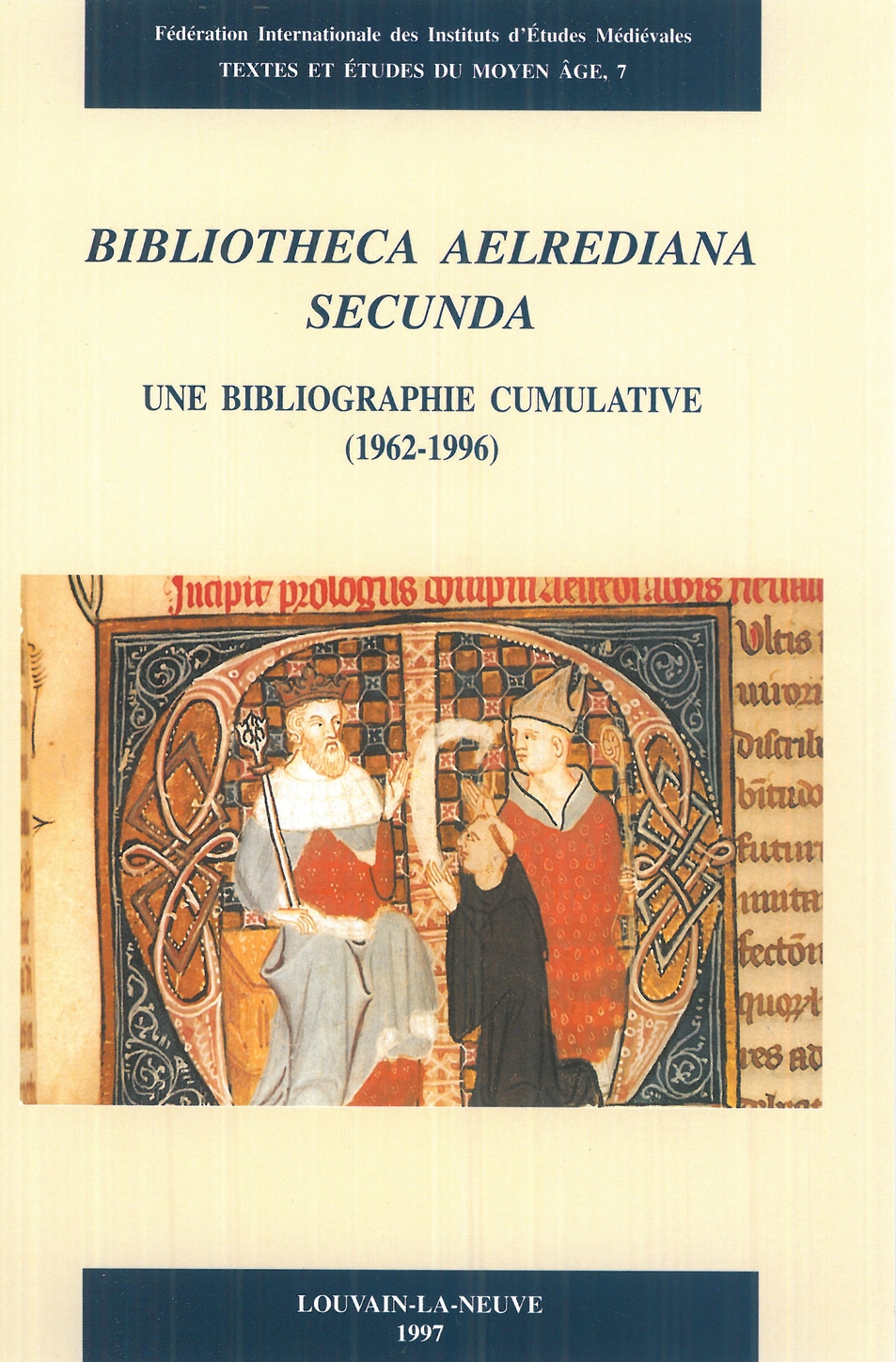
Bibliotheca Aelrediana secunda
Une bibliographie cumulative (1962-1996)
show More to view fulltext, buy and share links for:Bibliotheca Aelrediana secunda show Less to hide fulltext, buy and share links for: Bibliotheca Aelrediana secundaLa Bibliotheca aelrediana secunda se veut une bibliographie cumulative répertoriant toutes les publications relatives à Aelred (abbé de Rielvaulx et disciple de saint Bernard, mort en 1167), depuis 1962 jusqu'en 1996. Elle recense donc toutes les éditions (en latin ou bilingue) et traductions en langues modernes des oeuvres de saint Aelred. Elle recense également ouvrages, articles et notices de dictionnaire, qui sont consacrés à cet auteur. L'ensemble est précédé d'une introduction historique faisant le point de la question concernant les études aelrédiennes. Le volume se termine par un index rerum et nominum destiné à faciliter la consultation et la documentation rassemblée. L'ouvrage intègre en outre toutes les références bibliographiques contenues dans la Bibliotheca aelrediana publiée par Dom A. Hoste en 1962 et jugées encore d'actualité, tout en cherchant cependant à faire place aux publications récentes en ce qui concerne le contexte culturel dans lequel vécut Aelred et les divers thèmes concernés par ses oeuvres.
Enfin, ce répertoire ne cherche nullement à être un répertoire des manuscrits des ceuvres d' Aelred. II ne reproduit done pas la liste des codex encore existants déjà mentionnés par Dom A. Hoste, ni ne prétend fournir la liste de ceux qui auraient été découverts depuis la parution de son ouvrage. En ce sens, cette bibliographie ne remplace pas le travail effectué par ce dernier.
-
-
-
Bibliotheca Hieronymiana manuscripta
La tradition manuscrite des oeuvres de saint Jérôme
-
-
-
Bibliotheca Hieronymiana manuscripta
La tradition manuscrite des oeuvres de saint Jérôme
-
-
-
Bibliotheca Hieronymiana manuscripta
La tradition manuscrite des oeuvres de saint Jérôme
-
-
-
Bibliotheca Hieronymiana manuscripta
La tradition manuscrite des oeuvres de saint Jérôme
-
-
-
Bibliotheca Hieronymiana manuscripta
La tradition manuscrite des oeuvres de saint Jérôme
-