Brepols
Brepols is an international academic publisher of works in the humanities, with a particular focus in history, archaeology, history of the arts, language and literature, and critical editions of source works.2951 - 3000 of 3194 results
-
-
Tractatuli, excerpta et fragmenta de musica s. XI et XII
show More to view fulltext, buy and share links for:Tractatuli, excerpta et fragmenta de musica s. XI et XII show Less to hide fulltext, buy and share links for: Tractatuli, excerpta et fragmenta de musica s. XI et XIICet ouvrage est le fruit d’un travail entrepris au début de l’année 2007, soutenu par l’idée de mettre à la disposition des chercheurs un ensemble de petits traités et extraits sur la musique conservés dans les sources manuscrites des XIe et XIIe siècles susceptible de préciser l’histoire des théories de la musique au cours de ces deux siècles et leurs implications pour la pratique du chant liturgique. A ce titre, tous ces textes sont indissociables des “grands” traités de musique de l’ère carolingienne jusqu’au XIIe siècle - la Musica enchiriadis, le Dialogus de musica, les écrits de Guy d’Arezzo, la préface à l’antiphonaire de Bernon ou encore la Musica de Jean d’Afflighem - dont la diffusion fut considérable et qui ont largement contribué à façonner la théorie du chant liturgique du Moyen Age.L’établissement des textes a été réalisé en étroite collaboration entre les deux éditeurs de ce volume et les leçons retenues ont souvent fait l’objet de longues discussions. Cet ensemble composite de textes doit être lu et restitué dans la perspective des événements majeurs qui s’opèrent au tournant des XIe et XIIe siècle et qui affectent la codification et la normalisation des répertoires du chant liturgique. Pour l’histoire du chant liturgique, l’événement majeur fut incontestablement celui du mouvement de réforme qui se déploie dans l’église depuis le milieu du XIe siècle. Pour l’histoire du répertoire, cet événement est indissociable de la diffusion progressive de la technique de notation sur lignes qui soumet désormais la codification des mélodies à l’échelle des sons hérité de l’enseignement du De institutione musica de Boèce. La rencontre de ces événements explique en grande partie l’ampleur des discussions théoriques autour des questions de la modalité dont bon nombre de ces textes se font l’écho.
-
-
-
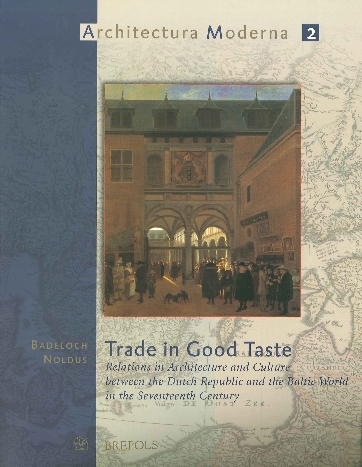
Trade in Good Taste
Relations in Architecture and Culture between the Dutch Republic and the Baltic World in the Seventeenth Century
show More to view fulltext, buy and share links for:Trade in Good Taste show Less to hide fulltext, buy and share links for: Trade in Good TasteDuring the seventeenth century Dutch influence on the Baltic region, both economic and aesthetic, was unrivaled. In the wake of the Dutch monopoly on Baltic trade, cultural contacts between the Dutch Republic and the Baltic world flourished. The Dutch Republic was even to fulfil an exemplary function in the Baltic world (particularly in the Swedish Empire, the dominating power in the region), not solely limited to the commerce of commodities but extending to the domain of architecture and art as well.
In this intensive cultural traffic, an important role was set aside for Dutch immigrants, architects, artists, and their agents. Apart from their regular activities as diplomats or news correspondents, agents mediated in cultural affairs for patrons in the North. As such, they occupied a key role in the relations between the Baltic world and the Dutch Republic. The pivotal element in these networks, they negotiated between Baltic commissioners and Dutch architects, artists, and suppliers of luxury items, including sculptures, tapestries, paintings, as well as a wide range of books and prints - all of which were available on the Amsterdam market. These extensive networks mark the Dutch Republic as a major centre of architecture, art, and information, crucial to the cultural development of northern Europe.
The history of this lively trade in good taste is told on the basis of rich archival material, including drawings, book and art collection inventories, correspondence, travel journals, and diaries.
Badeloch Noldus is a Senior Researcher at Frederiksborg Castle, the Danish Museum of National History. Her interests cover art, agency and art trade in early modern Northern Europe. Recent publications include Your Humble Servant. Agents in Early Modern Europe (2006).
-
-
-
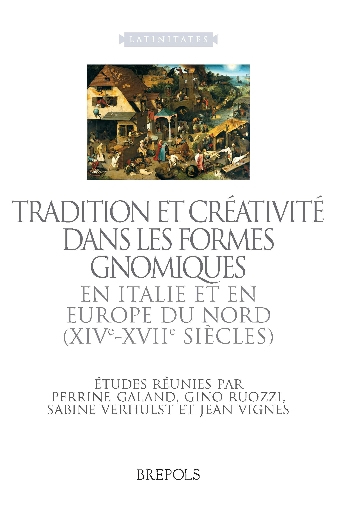
Tradition et créativité dans les formes gnomiques en Italie et en Europe du Nord (XIVe-XVIIe siècles)
Etudes réunies
show More to view fulltext, buy and share links for:Tradition et créativité dans les formes gnomiques en Italie et en Europe du Nord (XIVe-XVIIe siècles) show Less to hide fulltext, buy and share links for: Tradition et créativité dans les formes gnomiques en Italie et en Europe du Nord (XIVe-XVIIe siècles)De l’Antiquité à l’Âge classique, des textes toujours plus nombreux et variés se constituent par juxtaposition de brefs énoncés plus ou moins discontinus et supposés dignes de mémoire : adages, proverbes, sentences, aphorismes, apophtegmes, apologues…, les uns issus, dit-on, d’une tradition populaire immémoriale (« la sagesse des Nations »), les autres attribués avec plus ou moins de certitude et d’exactitude à des auteurs anciens ou modernes. Le « genre », si tant est qu’il faille parler d’un genre, est particulièrement prisé et fécond à la Renaissance. Le projet de ce volume part d’un constat simple quoique troublant : l’immensité du corpus gnomique rassemblé ou composé en Europe entre les XIVe et XVIIIe siècles contraste avec la place minime voire inexistante que lui réservent les travaux d’histoire et de théorie littéraires. Les textes majeurs du genre n’ont que rarement connu des éditions modernes satisfaisantes. Les études spécifiques consacrées à ce champ sont demeurées peu nombreuses, dispersées et fragmentaires : on n’a guère tenté de baliser cette production, d’en esquisser une typologie, d’en dégager les fonctions et l’esthétique, d’identifier les filiations dont elle procède, enfin d’en discerner les évolutions majeures entre le Moyen Âge et l’Âge classique. Notre objectif n’était sans doute pas de parachever une tâche aussi immense – Herculei labores ! – mais, sinon d’en jeter les bases, du moins d’en montrer l’utilité scientifique (et pourquoi pas l’agrément ?) : il s’agissait de susciter du moins un regain d’intérêt pour ce corpus à part et de donner un aperçu des principales problématiques littéraires, rhétoriques et anthropologiques qui permettent de l’explorer.
Les auteurs : Giovanni Baffetti, Bénédicte Boudou, Paola Cifarelli, Fabio Della Schiava, Walther Ludwig, Anna Maranini, John Nassichuk, Emilio Pasquini, Loris Petris, Sandra Provini, Paolo Rondinelli, Gino Ruozzi, Alessia Vallarsa, Sabine Verhulst, Jean Vignes
-
-
-
Traité de la division des royaumes. Introduction à une histoire universelle
show More to view fulltext, buy and share links for:Traité de la division des royaumes. Introduction à une histoire universelle show Less to hide fulltext, buy and share links for: Traité de la division des royaumes. Introduction à une histoire universelleDans les premières années du XIVe siècle, Jean de Saint-Victor entreprend la rédaction d'une chronique qu'il fait précéder d'une courte description des régions et des royaumes. Conduit à réviser ce travail et à lui donner l'envergure d'une histoire universelle depuis la Création, désormais intitulée Memoriale historiarum, il développe l'introduction initiale en un véritable traité, fruit d'une réflexion longuement mûrie au contact des sources sollicitées pour l'élaboration de son premier texte. Il y expose, à l'aide de tous les exemples historiques qu'il a pu rassembler, ce qui lui apparaît commun l'une des lois fondamentales de l'histoire, la divisio regnorum : tels des organismes naturels, les royaumes, mais aussi les empires, naissent, vivent et meurent. Ainsi fait-il place à la pensée aristotélicienne dans une lecture traditionnellement augustinienne de l'Histoire sainte.
-
-
-
Traité de la musique
show More to view fulltext, buy and share links for:Traité de la musique show Less to hide fulltext, buy and share links for: Traité de la musiqueLe De institutione musica a été rédigé vers 510 d'après des auteurs grecs, dont Nicomaque et Ptolémée. L'intention de Boèce était de fournir un texte de référence pour l'enseignement de la musique dans le cadre des études quadriviales. L'ouvrage se présente sous la forme de cinq livres dont le premier pose les fondements philosophiques de la théorie pythagoricienne de la musique. Le second et le troisième exposent les principes mathématiques de la construction de l'échelle heptatonique. La présentation du "grand système parfait", sa réalisation sur le monocorde et l'examen des tons de transposition occupent l'essentiel du quatrième livre. Le dernier est une traduction paraphrasée du premier livre des Harmoniques de Ptolémée qui développe une approche critique de la doctrine pythagoricienne exposée dans les livres précédents.
Redécouvert à l'époque carolingienne - malheureusement à l'état de fragment, puisque les derniers chapitres du cinquième livre sont perdus -, le traité de Boèce devait constituer tout au long du Moyen Age le texte de référence pour l'enseignement de la musique. Plus de 150 manuscrits copiés entre le IXe et le XVe siècle, deux éditions imprimées (1491/2 et 1546) ainsi qu'un volumineux corpus de gloses souvent recopiées en même temps que le texte lui-même, témoignent de la fortune de l'ouvrage de Boèce jusqu'à la Renaissance. L'unique édition scientifique, publiée en 1867 par Gottfried Friedlein et reproduite dans ce volume, a servi de support à la présente traduction.
-
-
-

Traité sur la prédication de la croisade
show More to view fulltext, buy and share links for:Traité sur la prédication de la croisade show Less to hide fulltext, buy and share links for: Traité sur la prédication de la croisadeLe traité De predicatione crucis, composé vers 1266-1268 par Humbert de Romans, le cinquième maître général de l’ordre dominicain, est sans doute l’instruction la plus détaillée pour les prédicateurs de la croix dont nous disposons. L’auteur donne ses commentaires sur les questions qu’il croit d’être les plus essentielles pour prêcher la croisade, sans pourtant donner des sermons prêts à être prononcés: le prédicateur est censé composer le sermon lui-même en utilisant le traité comme manuel. Il procure aussi des extraits de la Bible et des textes non-bibliques pour le même but.
Le texte latin, dont on trouvera ici la traduction, a été édité dans Humbertus de Romanis, De predicatione crucis (Corpus Christianorum. Continuatio Mediaeualis 279). Des renvois aux pages correspondantes de l'édition sont fournis dans les marges de cette publication.
-
-
-

Trans-mission. Création et hybridation dans le domaine d’oc
Nouvelles perspectives de la recherche en domaine occitan
show More to view fulltext, buy and share links for:Trans-mission. Création et hybridation dans le domaine d’oc show Less to hide fulltext, buy and share links for: Trans-mission. Création et hybridation dans le domaine d’ocCe volume est le fruit des échanges et de la collaboration entre de jeunes chercheurs de tous horizons qui consacrent leurs études à la langue, la littérature et la culture occitanes dans une optique diachronique et multidisciplinaire. Le récueil comprend 22 travaux conçus dans le cadre de projets étudiants de master, de thèses doctorales en cours ou récemment achevées, ainsi que d’études post-doctorales. Les contributions sont menées avec une approche scientifique rigoureuse et innovatrice et une méthode visant à l’interdisciplinarité. Elles portent sur des sujets nombreux et fort variés : des analyses géolinguistiques et sociolinguistiques, réalisées dans une perspective diachronique ou synchronique, sur les parlers occitans et sur des variétés intimement liés à ceux-ci, comme le catalano-valencien et les dialectes du nord-ouest de l’Italie ; les politiques et la sauvegarde de la langue occitane ; des relectures critiques de textes médiévaux ou modernes ; des études sur l’évolution de la culture occitane en France et en Europe. Afin d’organiser les travaux dans cet ouvrage collectif, ils ont été répartis en trois blocs, en fonction de la période concernée : Moyen Âge ; Réception du Moyen Âge et études savantes ; Époques moderne et contemporaine. Le but principal du recueil est d’offrir une vue d’ensemble sur les travaux les plus récents qui s’inscrivent ou touchent au domaine occitan et d’attirer l’attention sur les nouvelles tendances d’une recherce qui a enfin franchi les confins, chronologiques et thématiques, traditionnellement imposés par les sujets et les secteurs disciplinaires. En même temps, la publication veut mettre l’accent sur la vitalité, la richesse et la fertilité des études en langue d’oc, qui continuent à se développer et à se diffuser au niveau international, malgré les difficultés du monde de la recherche à l’heure actuelle.
-
-
-

Transcultural Approaches to the Bible
Exegesis and Historical Writing across Medieval Worlds
show More to view fulltext, buy and share links for:Transcultural Approaches to the Bible show Less to hide fulltext, buy and share links for: Transcultural Approaches to the BibleThis volume, the first in the new series Transcultural Medieval Studies, draws together scholars from around the world to offer new insights into the importance and role of the Bible across the varied cultures of medieval Europe. The papers gathered here take a comparative and multidisciplinary approach to the subject, focusing on the biblical background of perceptions of the religious and cultural ‘Self ’ and ‘Other’ in the Mediterranean, in Latin Europe, and in the Baltic. In doing so, the contributions identify commonalities and differences of the ‘uses of the Bible’ in these various worlds, combining and contrasting studies on Bible manuscripts, their exegesis, and their use for historical writing.
-
-
-

Transferts culturels franco-italiens au Moyen Âge – Trasferimenti culturali italo francesi
show More to view fulltext, buy and share links for:Transferts culturels franco-italiens au Moyen Âge – Trasferimenti culturali italo francesi show Less to hide fulltext, buy and share links for: Transferts culturels franco-italiens au Moyen Âge – Trasferimenti culturali italo francesiLa Società italiana di Filologia romanza, la Société de langues et littératures médiévales d’oc et d’oïl et la Société de Linguistique romane ont décidé d’organiser conjointement un colloque consacré au thème des « transferts culturels franco-italiens au Moyen Âge ». Le thème des transferts culturels, choisi par les trois sociétés, est apparu comme le meilleur moyen d’étudier ce qui à la fois rapproche et sépare ces deux espaces centraux de la Romania.
Le colloque a permis de contribuer au renouvellement des études comparatistes dans le domaine des lettres médiévales, favorisant une meilleure communication entre les spécialistes de la civilisation littéraire du Moyen Âge. La structuration des trois journées en cinq séances principales et deux tables rondes a également permis de réfléchir à ce sujet selon cinq approches complémentaires qui entendent tenir compte de l’ensemble des mouvements qui mettent en relation et en tension les lettres gallo-romanes et le volgare tout au long du Moyen Âge vernaculaire.
-
-
-
Transformed by Emigration. Welcoming Russian Intellectuals, Scientists and Artists (1917–1945)
show More to view fulltext, buy and share links for:Transformed by Emigration. Welcoming Russian Intellectuals, Scientists and Artists (1917–1945) show Less to hide fulltext, buy and share links for: Transformed by Emigration. Welcoming Russian Intellectuals, Scientists and Artists (1917–1945)The thematic framework of this special issue is an examination of the impact Russian émigrés had on the humanities and art. From art history to philosophy, artistic creation to ecumenical dialogue, the volume is dedicated to figures who, through their emigration from Russia, transformed their places of arrival and relevant fields. The articles in the volume assess these topics from an interdisciplinary point of view, extending the usual horizons of Convivium to other fields as well. The volume was published as the proceedings of the conference Transformed by Emigration. Welcoming Russian Intellectuals, Scientists, and Artists 1917-1945 held at the Hans Belting Library in February 2019.
-
-
-
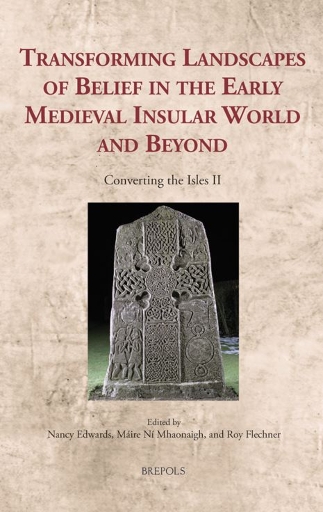
Transforming Landscapes of Belief in the Early Medieval Insular World and Beyond
Converting the Isles II
show More to view fulltext, buy and share links for:Transforming Landscapes of Belief in the Early Medieval Insular World and Beyond show Less to hide fulltext, buy and share links for: Transforming Landscapes of Belief in the Early Medieval Insular World and BeyondConversion to Christianity is arguably the most revolutionary social and cultural change that Europe experienced throughout Late Antiquity and the early Middle Ages. Christianization affected all strata of society and transformed not only religious beliefs and practices, but also the nature of government, the priorities of the economy, the character of kinship, and gender relations. It is against this backdrop that an international array of leading medievalists gathered under the auspices of the Converting the Isles Research Network (funded by the Leverhulme Trust) to investigate social, economic, and cultural aspects of conversion in the early medieval Insular world, covering different parts of Britain, Ireland, Scandinavia, and Iceland.
This volume analyses the effects of religious conversion on landscapes of cult and on religious practice in Europe, focusing in particular on Britain and Ireland. Adopting an interdisciplinary and comparative approach, the volume investigates the interaction between different forms of belief, their coexistence and competition. It discusses the coming of writing, the power of the word, landscapes of ritual, and converting communities. The contributors include leading historians, archaeologists, linguists, and literary scholars. This is the second volume to emerge from research undertaken by contributors to the Converting the Isles Research Network and forms a companion volume to The Introduction of Christianity into the Early Medieval Insular World.
See the companion volume at: http://www.brepols.net/Pages/ShowProduct.aspx?prod_id=IS-9782503554624-1
-
-
-
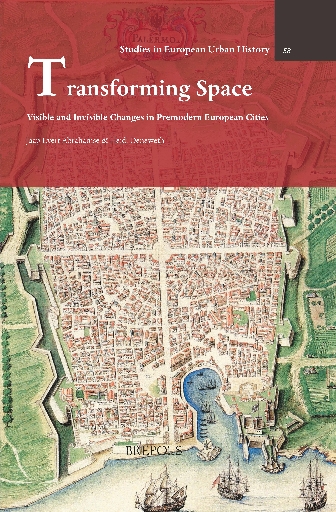
Transforming space
Visible and invisible changes in premodern European cities
show More to view fulltext, buy and share links for:Transforming space show Less to hide fulltext, buy and share links for: Transforming spaceTransforming Space deals with visible and invisible changes in premodern cities, their causes and the way in which they were perceived and received. The chapters in this book analyse the development and management of urban space, combining case studies and insights from a range of cities from all over Europe. Several contributions deal with the impact of major events on the urban tissue: geopolitics; disasters such as fires or wars; expropriation or redevelopment projects directed by urban governments; religious change such as the Dissolution in England, and the Reformation and Counter-Reformation on the continent. On closer scrutiny, however, some of these major events were only an accelerator of already ongoing processes of change. By shifting the perspective from the city as a whole, to neighbourhoods, urban blocks or even plots of land, other chapters reveal how functional change or real estate dynamics changed the urban landscape almost imperceptibly. This book is written from a comparative perspective that takes into account path-dependency. Pre-existing power relations, ideology and mentality, the resilience of property structures, the impact of building regulations, subsidies, or the effects of real estate markets are shown to have had different outcomes for different social groups and the evolution of neighbourhoods.
-
-
-
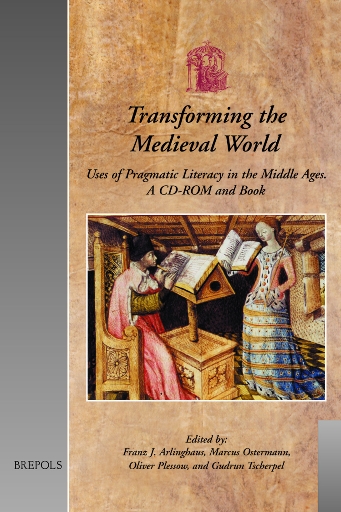
Transforming the Medieval World
Uses of Pragmatic Literacy in the Middle Ages. A CD-ROM and Book
show More to view fulltext, buy and share links for:Transforming the Medieval World show Less to hide fulltext, buy and share links for: Transforming the Medieval WorldWhen viewed retrospectively, the period between the eleventh and the fifteenth centuries was a phase of European history that was characterized by a radical and fundamental media transformation. Before this time, the vast majority of the population had never encountered the written word in their day-to-day activities. From the beginning of the second millennium, however, texts began to appear in, and influence, almost every sphere of human life. Medieval written texts were subject to revision, copying, embellishments, and deletions; they were read silently and aloud, and they were recited in a variety of contexts. The multimedia environment offered on the CD visualizes these textual transformations and illustrates the adaptability and dynamism of writing and its reception. The uses of writing in this early phase of intensive European literacy are analysed in eleven separate multimedia presentations, which are almost all based on research carried out by the Special Research Unit (SFB) between 1986 and 1999. The CD also contains an anthology of important essays, which provide the user with further reading materials, as well as a general bibliography. The book which accompanies the CD-ROM facilitates the use of the CD itself, and provides the various multimedia presentations in written format. As such, Transforming the Medieval World will be invaluable to both scholars and students interested in medieval literacy.
-
-
-
Transitions
A Historian’s Memoir
show More to view fulltext, buy and share links for:Transitions show Less to hide fulltext, buy and share links for: TransitionsThe transitions of the title are those in the life and intellectual development of one of the leading historians of late antiquity and Byzantium. Averil Cameron recounts her working-class origins in North Staffordshire and how she came to read Classics at Oxford and start her research at Glasgow University before moving to London and teaching at King’s College London. Later she was the head of Keble College Oxford at a time of change in the University and its colleges. She played a leading role in projects and organisations even as the flow of books and articles continued, in an array of publications that have been fundamental in shaping the disciplines of late antiquity and Byzantine studies in the twentieth and twenty-first centuries.
-
-
-
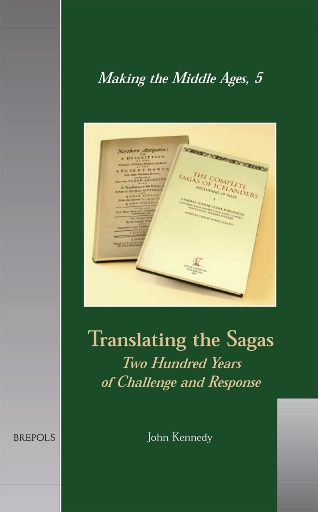
Translating the Sagas
Two Hundred Years of Challenge and Response
show More to view fulltext, buy and share links for:Translating the Sagas show Less to hide fulltext, buy and share links for: Translating the SagasFew speakers of English have ever been able to read the Icelandic sagas in the original language, and published saga translations have played a major role in shaping attitudes towards Viking Age Scandinavia and the great literary achievements of medieval Iceland in the English-speaking world. This book is the first publication to provide an extended examination of the history and development of Icelandic saga translations into English from their beginnings in the eighteenth century to today. It explores reasons for undertaking saga translation, and the challenges confronting translators. Chapters are devoted to the pioneering saga translations, the later Victorian and Edwardian eras, the often-neglected period of the two World Wars and their aftermath, and the upsurge of saga translation in the second half of the twentieth century. The contributions of individual translators and teams are reviewed, from James Johnstone in the 1780s through major Victorians such as Samuel Laing, George Webbe Dasent, and William Morris, distinguished twentieth century figures such as Lee M. Hollander, Gwyn Jones, Magnus Magnusson and Hermann Pálsson, and George Johnston, and the great co-operative project which produced The Complete Sagas of Icelanders at the century’s end. The book concludes with saga translation facing interesting new possibilities and challenges, not least those generated by information technology.
-
-
-
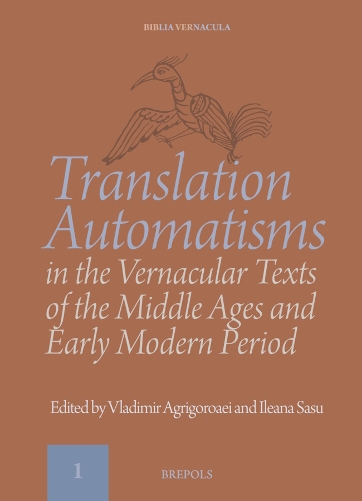
Translation Automatisms in the Vernacular Texts of the Middle Ages and Early Modern Period
show More to view fulltext, buy and share links for:Translation Automatisms in the Vernacular Texts of the Middle Ages and Early Modern Period show Less to hide fulltext, buy and share links for: Translation Automatisms in the Vernacular Texts of the Middle Ages and Early Modern PeriodThe volume deals with the issue of translation automatisms in early vernacular texts predating 1650. It introduces the novel concept of ‘translation clusters’, first defined in machine translation theory, but equally considering a wider array of situations that involve ‘translation units’, ‘language automatisms’, ‘culturemes’, and ‘formulaic borrowings’ in vernacular texts. Contrary to contemporary languages, where translation units, clusters, and automatisms appear frequently due to the influence of standard language varieties or dialects, the vernacular idioms of the Middle Ages and Early Modern period are often pluricentric. Consequently, automatisms are limited to specific cases where diachronic, diatopic, diastratic, and diaphasic variants align similarly in two otherwise different translations. This is a crucial topic for philology, as it can explain accidents that ecdotic methods tend to mistake for variant readings of a single ‘redactio’. The volume aims to determine the organic interplay between three primary situations in which common coincidences between translations or texts occur. Firstly the volume explores the shared elements resulting from the transfer of textual units between multiple translations or adaptations (quotations, corrections, formulas). Secondly chapters study the shared elements arising from the existence of a common source text (translation clusters, based on translation units); and lastly, the volume questions the fixed, inherent, and unchangeable aspects of the target language (language automatisms, often coinciding with translation units). The chapters of this volume focus on numerous vernacular languages and a multitude of case studies, with a particular emphasis on biblical translation—a cornerstone of contemporary translation studies. The chapter format encourages diverse perspectives to push the boundaries of philology, translation studies, and “vernacular theologies”.
-
-
-
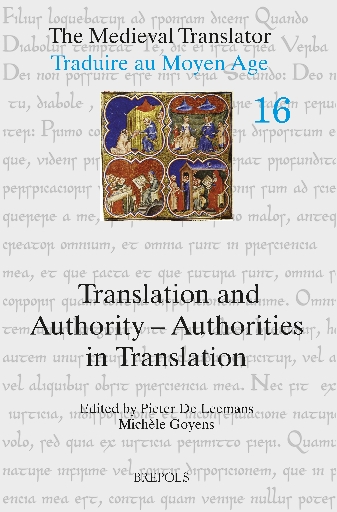
Translation and Authority - Authorities in Translation
show More to view fulltext, buy and share links for:Translation and Authority - Authorities in Translation show Less to hide fulltext, buy and share links for: Translation and Authority - Authorities in TranslationThe question about the relation between medieval translation practices and authority is a complex and multifaceted one. Depending on one’s decision to focus on the authority of the source-text or of the translated text itself, on the author of the original text, on the translator, or on the user of the translation, it falls apart in several topics to be tackled, such as, just to name a few: To what extent does the authority of the text to be translated affect translational choices? How do translators impose authority on their text? By lending their name to a translation, do they contribute to its authoritative status?
After two introductory essays that set the scene for the volume, addressing the above questions from the perspective of translations of authoritative texts into Dutch and French, the focus of the volume shifts to the translators themselves as authorities. A next section deals with the choices of texts to be translated, and the impact these choices have on the translation method. A third part is dedicated to papers that examine the role of the users of the translations.
The selection of papers in the present volume gives a good indication of the issues mentioned above, embedded in a field of tension between translations made from a learned language to a vernacular language, translations from one vernacular to another, or even from a vernacular to the Latin language.
-
-
-
Transmission of Knowledge in the Late Middle Ages and the Renaissance
show More to view fulltext, buy and share links for:Transmission of Knowledge in the Late Middle Ages and the Renaissance show Less to hide fulltext, buy and share links for: Transmission of Knowledge in the Late Middle Ages and the RenaissanceThe nineteenth century saw the rapid development of textual criticism for establishing the “best” and “most authentic” forms of both Ancient and Mediaeval texts thanks to the method perfected by Karl Lachmann, who based himself on the insights gained during the eighteenth century. Lachmann’s method has been further refined by later philologists, with, most interestingly, the use of computers in establishing the mutual relations of manuscript witnesses since the last decades of the twentieth century. However, the interest in what form the texts, both Ancient and Mediaeval, were actually circulating in the Late Middle Ages and in the Renaissance, has been slow to emerge as an area of scholarly interest. In other words: what did the readers actually get in front of their eyes, and acted upon as, say, doctors, historians, theologians between the thirteenth and sixteenth centuries?
This volume explores the Late Medieval and Renaissance transmission of texts of different genres, languages and periods from the book historical point of view, taking into consideration not only the textual but also the material aspect of the traditions.
The authors include eminent specialists as well as mid- and early career scholars.
-
-
-
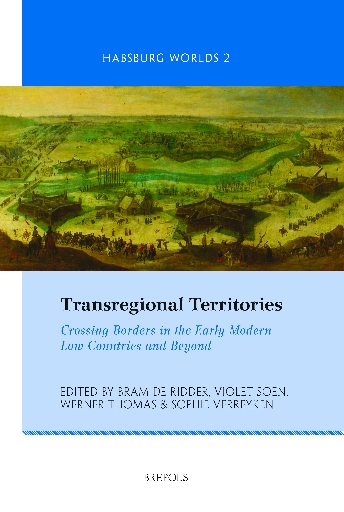
Transregional Territories
Crossing Borders in the Early Modern Low Countries and Beyond
show More to view fulltext, buy and share links for:Transregional Territories show Less to hide fulltext, buy and share links for: Transregional TerritoriesThe early modern world was one of movement, contact, and exchange. Yet, this does not mean that it was borderless. On the contrary, connection existed only when people moved along and across the separations between polities, religions, and mentalities. So in order to understand early modern connections, one also needs to analyse the boundaries that accompanied them.In Transregional Territories, the early modern Low Countries are chosen as a ‘laboratory’ for studying border formation and border management through the lens of transregional history. Eight different cases highlight the impact of boundaries on the actions and strategies of individuals and governments. Crossing borders in early modern times was not merely an act of negating a territorial division, but rather a moment of intimate interaction with the separation itself. As such, this volume illustrates how borders forced historical actors to adapt their behaviour, and how historians can use a transregional vantage point to better understand these changes.The cases are presented by leading border specialists and scholars of the early modern Low Countries: Fernando Chavarría Múgica, Victor Enthoven, Raingard Esser, Yves Junot, Marie Kervyn, Christel Annemieke Romein, and Patricia Subirade.Bram De Ridder, Violet Soen, Werner Thomas, and Sophie Verreyken are all members of the Early Modern History Research Group of the KU Leuven. Together, they have published extensively on transregional history and the history of the early modern Low Countries, grouped under the label of transregionalhistory.eu.
-
-
-

Traumas of 1066 in the Literatures of England, Normandy, and Scandinavia
show More to view fulltext, buy and share links for:Traumas of 1066 in the Literatures of England, Normandy, and Scandinavia show Less to hide fulltext, buy and share links for: Traumas of 1066 in the Literatures of England, Normandy, and Scandinavia1066 is one of the most well-known dates in English history: but how far do we understand the mental and emotional lives of those who experienced it? In just over a month, England was rocked by two separate invasions, multiple pitched battles, and the deaths of thousands. The repercussions of these traumatic events would echo through the history and literature of northern Europe for centuries to come.
Drawing on studies of trauma and cultural memory, this book examines the cultural repercussions of the year 1066 in medieval England, Normandy, and Scandinavia. It explores how writers in all three regions celebrated their common heritage and mourned the wars that brought them into conflict. Bringing together texts from an array of languages, genres, and cultural traditions, this study examines the strategies medieval authors employed to work through the traumas of 1066, narrating its events and experiences in different forms. It explores the ways in which history and memory interacted through multiple generations of writers and readers, and reveals how the field of trauma studies can help us better understand the mental and emotional lives of medieval people.
-
-
-

Travelling Matters across the Mediterranean
Rereading, Reshaping, Reusing Objects (10th–20th centuries)
show More to view fulltext, buy and share links for:Travelling Matters across the Mediterranean show Less to hide fulltext, buy and share links for: Travelling Matters across the MediterraneanIn the last two decades, objects have become increasingly relevant to historical studies as the primary focus of research discussing cross-cultural relations. Objects are produced, used, modified, preserved, and destroyed according to historically specific political and cultural settings, thus providing researchers with information and insights about their original background. However, they can also throw light on a large array of cross-cultural encounters when their mobility is put to the fore. Objects can move by being bought, gifted, bartered, and sold, borrowed or stolen, collected and dispersed, just as they can be modified, repaired, reshaped, repurposed, and destroyed in the process.
The Mediterranean, as a barrier and as a meeting place for different polities and communities, and as the setting of conflicted experiences of cultural, political, economic, and social transformation, easily lends itself to this kind of historical analysis. Featuring articles on Byzantine imperial silks and bronze doors from southern Italy, eastern luxuries in Istanbul and African bolsas from the Canary Islands, Arabic geographies and Hebrew religious texts travelling from shore to shore and from manuscript to the press, and the ‘dead’ bodies of holy women and men, this volume intends to tackle objects as sources and subjects of the history of cross-cultural encounters in innovative ways: focusing on the ‘second-handedness’ of displaced objects across the Mediterranean, the volume intersects different chronologies — from antiquity to the present-day — and varying scales, from the individual objects to the much larger one of the histories of their reinterpretation and repurposing.
-
-
-
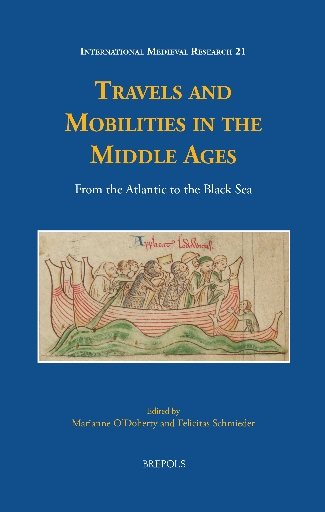
Travels and Mobilities in the Middle Ages
From the Atlantic to the Black Sea
show More to view fulltext, buy and share links for:Travels and Mobilities in the Middle Ages show Less to hide fulltext, buy and share links for: Travels and Mobilities in the Middle AgesThis collection of research, which brings together contributions from scholars around the world, reflects the range and variety of work that is currently being undertaken in the field of travel and mobility in the European Middle Ages. The essays draw on diverse methodological approaches, from the archival and literary to the art historical and archaeological. The collection focuses not just on key medieval modes of travel and mobility, but also on themes whose relevance continues to resonate in the modern world. Topics touched upon include religious and diplomatic journeys, migration, mobility and governance, gendered mobilities, material culture and mobility, mobility and disability, travel and status, and notions of home and abroad. Broad themes are approached through case studies of individuals, families, and groups, ranging from kings, queens, and nobles to friars, exiles, and students. The geographical reach of the collection is particularly broad, encompassing travellers from Southern, Western, Northern, Central and Eastern Europe and journeys to destinations as diverse as Scandinavia, the Black Sea, the Mediterranean, and the Indian Ocean. A wide-ranging and detailed introduction situates the collection in its scholarly context.
-
-
-
Tre pellegrinaggi in Terrasanta
show More to view fulltext, buy and share links for:Tre pellegrinaggi in Terrasanta show Less to hide fulltext, buy and share links for: Tre pellegrinaggi in TerrasantaLe tre descrizioni della Terrasanta crociata riunite in questo volume furono prodotte tra l’inizio del XII secolo - qualche anno dopo la presa europea della Palestina - e il 1170 circa - poco prima della riconquista musulmana di Gerusalemme. La prima, quella dell’inglese Saewulf, è un vero e proprio resoconto di pellegrinaggio dalla forte impronta personale, che con un linguaggio letterariamente spoglio ricorda le vicissitudini sperimentate dall’autore nel suo viaggio per mare e per terra, dalla Puglia a Gerusalemme e fin quasi a Constantinopoli. Quelle di Giovanni di Würzburg e di Teodorico sono invece due guide della città santa e di buona parte della Palestina, parzialmente sovrapponibili in quanto in gran parte derivate dal celebre trattatello di topografia sacra composto qualche decennio prima dal chierico nazareno Rorgo Fretello. Entrambi gli autori, e soprattutto il più raffinato Teodorico, si impegnano tuttavia in un processo di rielaborazione e amplificazione del loro modello, che viene ad arricchirsi di informazioni originali accumulate nel corso di una reale esperienza di pellegrinaggio, testimone dei rinnovati fasti architettonici e urbanistici del regno latino di Gerusalemme.
La versione latina originale dei testi qui tradotti è pubblicata nella collana Corpus Christianorum Continuatio Mediaeualis con il titolo Peregrinationes tres. Saewulf, John of Würzburg, Theodericus (CC CM, 139), a cura di R.B.C. Huygens (1994). I rimandi alle pagine corrispondenti dell’edizione sono forniti a margine di questa traduzione.
-
-
-
Treasury
show More to view fulltext, buy and share links for:Treasury show Less to hide fulltext, buy and share links for: TreasuryDiscovered by the French scholar, Marcel Richard, on one of his photographic expeditions to the monastic libraries of Mount Athos, the Thesaurus was entrusted to a young scholar, Joseph Munitiz, who prepared the editio princeps for his doctoral thesis, defended at the Sorbonne in 1976. The work was shown to have been composed by a little-known spiritual author, thought to have been active in the fourteenth century, but placed, thanks to a passing reference in his Treasury, in the middle of the thirteenth century. This semi-encyclopaedic work was intended to provide an overview of the sort of knowledge considered essential for a young prince, as one chapter is an exhortation to a future emperor. Thus it contains a summary of the Old Testament, with curious reflections (e.g. on female wickedness and the ingenuity of Solomon), and chapters on dogmatic questions: the divinity of Christ; the value of Holy Scripture; the sacraments, icons, the Theotokos, and the key role of the Ecumenical Councils. A large part is made up of moral exhortations attributed partly to Amphilochios and backed by pious stories. There are also florilegia, so popular in Byzantine spiritual writings, focused around the eucharist, the priesthood, sexual morality and confession. At the end, some questions-and-answers (another popular Byzantine genre) deal with items of general knowledge (ranging from theology, through astronomy, to alms-giving). In general, the work opens a window into the mind of the ordinary believer in mediaeval Constantinople.
The source text of this volume appeared with the title Theognosti Thesaurus as volume 5 in Corpus Christianorum Series graeca, in 1979. References to the corresponding pages of the edition are provided in the margin of this translation, along with a list of corrections of the Greek.
-
-
-
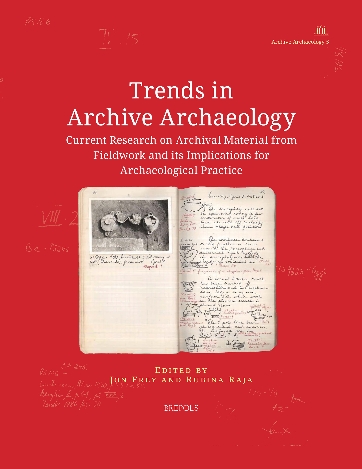
Trends in Archive Archaeology
Current Research on Archival Material from Fieldwork and its Implications for Archaeological Practice
show More to view fulltext, buy and share links for:Trends in Archive Archaeology show Less to hide fulltext, buy and share links for: Trends in Archive ArchaeologyArchive archaeology has, in recent years, become increasingly acknowledged as an important component of archaeological research. However, the vast amounts of empirical data contained in such archives — among them fieldwork diaries, working notebooks, finds sheets, and photographs — together with a sense that the field is often skewed towards ‘one’s own data’, have made it difficult to develop a clear methodological approach that fits all eventualities. The result is that archive archaeology is still not always recognized for what it can bring to the discipline of archaeology, as a field of study that focuses on the contexts within which humanity developed.
This volume draws together contributions from scholars who work with archives in a variety of capacities: as fieldwork directors of decades-long excavations; as archivists interested in the history of collections; as specialists focusing on certain object groups or regions; and as researchers broadly interested in what archival material brings to the table in terms of new knowledge about archaeological situations. In showcasing contributions of work in progress, the chapters published here bring to the fore knowledge about archives that has long been overlooked, and examine how archival archaeology should be shaped in the future so that it can become more firmly integrated within archaeological practice.
-
-
-
Trent and Beyond. The Council, Other Powers, Other Cultures
show More to view fulltext, buy and share links for:Trent and Beyond. The Council, Other Powers, Other Cultures show Less to hide fulltext, buy and share links for: Trent and Beyond. The Council, Other Powers, Other CulturesFor centuries, the Council of Trent has been studied as a fundamental episode in European history wherein doctrinal and institutional unity was lost. Although the Council decrees nowhere refer to the contexts of the peoples met by Christopher Columbus, nor to the Cathay regions rediscovered by missionaries, nor to their religions, their superstitions or their political systems, the Council was nonetheless a global event. The Roman Church, which lost doctrinal control of the considerable part of Europe captured by different forms of Protestantism, imposed itself upon its followers through the application of conciliar decrees. Freed of its exclusively European perspective it opened up to cultures of the rest of the world. The customs and traditions thus encountered, the relationships with political authorities, possibilities for the construction of a new Christianity offered by New Worlds, disclosing spaces and contexts to the Tridentine Church, with accommodations and cross-fertilizations, with a return to origins and tradition, obliged that it begin to think of itself, perhaps for the first time, as a universal Church.
The Council and Beyond suggests not only reconsideration of Europe through the prism of the Tridentine decrees and the long processes of their dissemination, but also through an intercontinental consideration, a spatial perspective that would become universal to the Church and to the normative texts that had been elaborated at Trent.
-
-
-

Tributes to Paul Binski
Medieval Gothic: Art, Architecture and Ideas
show More to view fulltext, buy and share links for:Tributes to Paul Binski show Less to hide fulltext, buy and share links for: Tributes to Paul BinskiThis volume is published in honour of Paul Binski, whose scholarship and teaching have done so much to illuminate the material and intellectual worlds of Gothic art and architecture. Remarkable for its material scope and philosophical depth, Paul’s work has had a powerful influence on the current state of the field: this is reflected here in thirty-four essays on buildings, works of art and ideas in a wide range of historical and geographical contexts, from Iberia to Scandinavia and Italy to Ireland. Consistently fresh in their scholarship, these essays combine to make an important contribution to medieval art history. In doing so they reflect the admiration and affection which Paul inspires in his students and colleagues. With contributions by: Gabriel Byng, Meredith Cohen, Emily Guerry, James Hillson, Ethan Matt Kavaler, Tom Nickson, Zoë Opačić, Claudia Bolgia, Jean-Marie Guillouët, Justin E. A. Kroesen, Julian Luxford, Robert Mills, John Munns, Matthew M. Reeve, Laura Slater, Beth Williamson, Jessica Berenbeim, Spike Bucklow, Marcia Kupfer, Jean-Pascal Pouzet, Miri Rubin, Kathryn M. Rudy, Rocío Sánchez Ameijeiras, Lucy Wrapson, Patrick Zutshi, Mary Carruthers, Jill Caskey, Lucy Donkin, Kate Heard, Robert Maniura, Alexander Marr, M. A. Michael, Conrad Rudolph, Betsy Sears.
-
-
-

Trilingual Learning
The Study of Greek and Hebrew in a Latin World (1000-1700)
show More to view fulltext, buy and share links for:Trilingual Learning show Less to hide fulltext, buy and share links for: Trilingual LearningIn 1517, the Brabant city of Louvain witnessed the foundation of the Collegium Trilingue (Three Language College). Funded by means of the legacy of the humanist and diplomat Jerome of Busleyden (d. 1517) and steered by guiding spirit Erasmus of Rotterdam, this institute offered courses in the three so-called sacred languages Hebrew, Greek, and Latin, which students could attend for free. However, this kind of initiative was not unique to Louvain in the early 16th century. In a time span of barely twenty years, Greek and Hebrew were also offered in Alcalá de Henares (near Madrid), Wittenberg, and Paris, among other places. It would not take long before these ‘sacred’ languages were also on the educational agenda at universities throughout the whole of Europe.
The present volume examines the general context in which such polyglot institutes emerged and thrived, as well as the learning and teaching practices observed in these institutes and universities. Devoting special attention to the study of the continuity, or rather the discontinuity, between the 16th-century establishment of language chairs and the late medieval interest in these languages, it brings together fifteen selected papers exploring various aspects of these multilingual undertakings, focusing on their pedagogical and scholarly dimensions. Most of the contributions were presented at the 2017 LECTIO conference The Impact of Learning Greek, Hebrew, and ‘Oriental’ Languages on Scholarship, Science, and Society in the Middle Ages and the Renaissance, which was organized at the occasion of the 500th anniversary of the foundation of the Louvain Collegium Trilingue.
-
-
-

Trinity and Creation
A Selection of Works of Hugh, Richard, and Adam of St Victor
show More to view fulltext, buy and share links for:Trinity and Creation show Less to hide fulltext, buy and share links for: Trinity and CreationThe Trinity and Creation are central themes in the theology of the Augustinian Canons of the Abbey of St Victor during its time of greatest flourishing in the twelfth century. In this volume, three of the most important Victorine theological works are introduced and completely translated into English for the first time: On the Three Days, by Hugh of St. Victor (d. 1141), a lyrical yet philosophical study of how the power, wisdom, and goodness of God can be known from the things God has made; Hugh’s Sentences on Divinity, lecture notes which show how the divine ideas (“primordial causes”) serve God in creation; and On the Trinity, by Richard of St. Victor (d. 1173), one of the enduring classics of Christian theology, which analyzes the Trinity in terms of love. Also included are two of Adam of St. Victor’s sequences in praise of the Trinity.
This volume is edited by Boyd Taylor Coolman (PhD, Notre Dame University; Theology Dept. Boston College), author of The Theology of Hugh of St. Victor: An Interpretation (2010), and Dale M. Coulter (DPhil, Oxford; School of Divinity, Regent University), author of Per Visibilia ad Invisibilia: Theological Method in Richard of St. Victor (d. 1173) (2006).
-
-
-
Triumphal Entries and Festivals in Early Modern Scotland
Performing Spaces
show More to view fulltext, buy and share links for:Triumphal Entries and Festivals in Early Modern Scotland show Less to hide fulltext, buy and share links for: Triumphal Entries and Festivals in Early Modern ScotlandThis book offers unprecedented insights into the richness of Scottish culture in the early modern period, studying triumphal entries — that is, processional civic welcomes offered to royal guests — staged in Edinburgh in the period between 1500 and the Wars of the Three Kingdoms. Based on a comprehensive and imaginative analysis of the written and archival sources available for these events, it also brings renewed attention to the country’s artistic, architectural, and literary traditions. The analysis of comparable events staged in England and continental Europe — in France, the Italian peninsula, and the Low Countries — helps frame Scotland’s distinctiveness within a network of international connections. The book explores how the urban space of early modern Edinburgh was employed with changing fortunes to address potentially explosive power dynamics, expressed by civic and royal, secular and religious (pre and post Reformation), Scottish and post-1603 pan-British worldviews. Scottish triumphal culture is presented as profoundly embedded in the urban context within which it is set, rich in politicised rituals of negotiation and mutual acknowledgement, and visually vibrant through temporary structures, decorations, pageants, and costumed performers. This book offers a well-rounded answer to the still relevant question of Scottish identity, and how identity and power — individual, communal, national, royal — can be performed through active engagement with civic space.
-
-
-
Troianalexandrina
Anuario sobre literatura medieval de materia clásica / Yearbook of Classical Material in Medieval Literature
show More to view fulltext, buy and share links for:Troianalexandrina show Less to hide fulltext, buy and share links for: TroianalexandrinaTroianalexandrina features articles on medieval European works on the matter of Antiquity (Trojan matter, Alexander the Great, Greek and Latin literatures and mythology) and, more generally, the survival of classical culture in the Middle Ages. Interdisciplinary contributions focusing on the study of images and iconographic tradition or exploring elements of medieval visual culture related to classical themes and motifs are also welcome.
More information about this journal on Brepols.net
-
-
-

True Warriors? Negotiating Dissent in the Intellectual Debate (c. 1100–1700)
show More to view fulltext, buy and share links for:True Warriors? Negotiating Dissent in the Intellectual Debate (c. 1100–1700) show Less to hide fulltext, buy and share links for: True Warriors? Negotiating Dissent in the Intellectual Debate (c. 1100–1700)Dissent, polemics and rivalry have always been at the centre of intellectual development. The scholarly Streitkultur was given a fresh impetus by the newly founded universities in the High Middle Ages and later turned into a quintessential part of early modern intellectual life, with the emergence of the Protestant Reformation creating a new momentum. It was not only mirrored in various well-known intellectual disputations and controversies, but also embodied in numerous literary genres and non-literary modes of expression, as well as discursive or political strategies. Moreover, the harsh debates notwithstanding, consensus was also actively searched for, both within particular disciplines and within society as a whole.
This volume collects thirteen contributions offering a very rich variety of topics with regard to the negotiation of disagreements from the twelfth till the eighteenth centuries. They reflect inter alia upon the rules and conventions of the intellectual debate, upon the media used to negotiate dissent, as well as upon the role of formal institutions created to judge and decide in cases of dissent. The contributions are offered by scholars from fields as diverse as history of literature, political history, history of philosophy, history of Church and theology, and legal history.
-
-
-
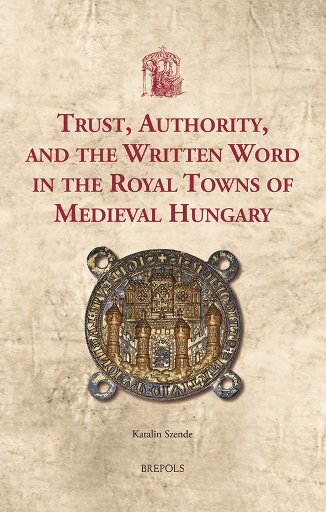
Trust, Authority, and the Written Word in the Royal Towns of Medieval Hungary
show More to view fulltext, buy and share links for:Trust, Authority, and the Written Word in the Royal Towns of Medieval Hungary show Less to hide fulltext, buy and share links for: Trust, Authority, and the Written Word in the Royal Towns of Medieval HungaryThis book is the first comprehensive overview of how written administration was established in the royal towns of medieval Hungary. Using the conceptual framework of trust and authority, the volume sheds light on the growing complexity of urban society and the impact that the various uses of writing had on managing this society, both by the king and by the local magistrates. The present survey and analysis of a broad range of surviving sources reveals that trust in administrative literacy was built up gradually, through a series of decisive and chronologically distinct steps. These included the acquisition of an authentic seal; the appointment of a clerk or notary; setting up a writing office; drawing up town books; and, finally, establishing an archive from the assemblage of collected documents.
Although the development of literacy in Hungarian towns has its own history, the questions posed by the study are not unlike those raised for other towns of medieval Europe. For instance, both the gradually increasing use of various vernaculars and the controversial role of writing in Jewish-Christian contacts can be meaningfully compared with similar processes elsewhere. The study of Central European towns can therefore be used both to broaden seemingly disparate research frameworks and to contribute to studies that take a more general approach to Europe and beyond.
-
-
-
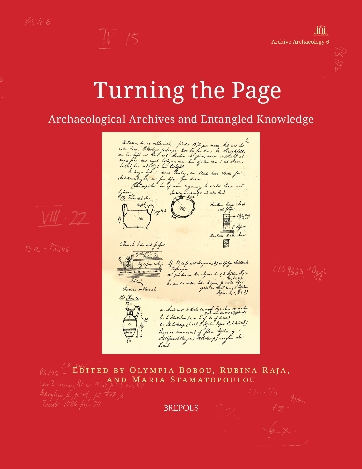
Turning the Page
Archaeological Archives and Entangled Knowledge
show More to view fulltext, buy and share links for:Turning the Page show Less to hide fulltext, buy and share links for: Turning the PageThroughout the nineteenth, and for much of the twentieth century, archives were considered to be containers of knowledge, holding material that was deemed to be objective and unbiased. In more recent years, however, as scholars have begun to engage more with archival material, this perception has changed, and archives have increasingly been recognized as sites of contention, holding curated historical documents — a re-evaluation that, in turn, has led to a new understanding of the role and significance of both archives and archiving practices, as well as to revived interest in their contents.
Taking renewed scholarly interest in archives as its starting point, this volume highlights the importance of archival material both as a source of study, and as a way of unleashing hitherto ‘lost’ knowledge. The chapters gathered here present previously unpublished material for the first time, as well as offer new insights into archival and curatorial practices. Through this approach, the authors not only reveal unknown aspects and histories of both past and ongoing excavations, but also shed light on the creation processes of an archive, an element that is typically lost by the time the material is designated as an archive by those who study it. The result is a volume that can shape best archival practices and approaches for the future.
-
-
-
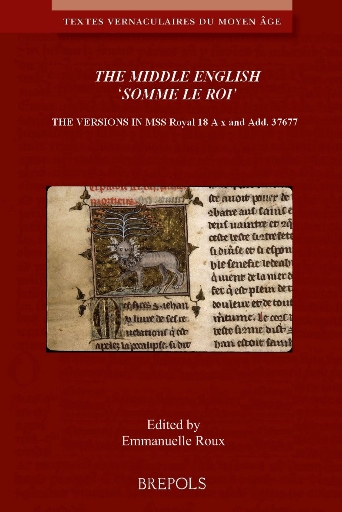
Two Middle English Translations of Friar Laurent's 'Somme le roi': critical edition
show More to view fulltext, buy and share links for:Two Middle English Translations of Friar Laurent's 'Somme le roi': critical edition show Less to hide fulltext, buy and share links for: Two Middle English Translations of Friar Laurent's 'Somme le roi': critical editionThis is the first volume of a two-volume project whose aim is to publish all the known Middle English manuscript translations of the French Somme le roi, a thirteenth-century manual of religious instruction offering teaching on the Decalogue, the seven deadly sins and their remedies, compiled by the Dominican friar Laurent of Orleans. The project extends and deepens our knowledge of the influence of this popular French text, known today only from the versions entitled The Ayenbite of Inwit and The Book of Vices and Virtues, published in 1866 and 1942, respectively.
This volume presents the versions extant in BL MSS Royal 18. A. x and Add. 37677; the second will cover the versions in Cambridge, Corpus Christi College, MS 494, Oxford, Bodleian Library, MS Ashmole 1286, and Oxford, Bodleian Library, MS e Musaeo 23. The texts of both volumes have been prepared with the help of the recently-published edition of the French text (2008), a circumstance from which the earlier English editions were unable to benefit. It is likely that the versions edited here for the first time will make a considerable contribution to our understanding of the processes of textual transmission and to that of translation itself in English literary circles of the fifteenth century.
-
-
-
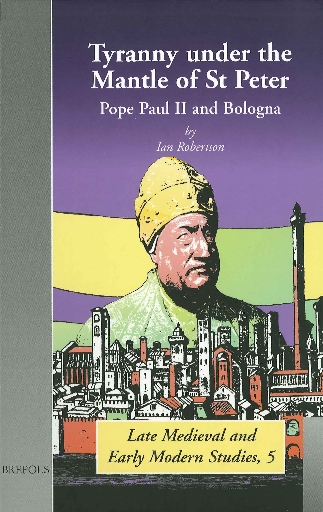
Tyranny under the Mantle of St Peter
Pope Paul II and Bologna
show More to view fulltext, buy and share links for:Tyranny under the Mantle of St Peter show Less to hide fulltext, buy and share links for: Tyranny under the Mantle of St PeterThe clash between Pope Paul II ( 1464-1471) and Bologna was one of two opposed concepts of government and 'state'. Paul II held to a high concept of princely sovereignty, and to a vision of the papal temporal dominions as a genuinely co-ordinated territorial state, an enduring public; entity. Inevitably he clashed with the Commune of Bologna, second city of the Papal State, over which he aspired to more jurisdiction. The political vision of the Bolognese regime had a. local focus which precluded the sacrifice of independence in favour of integration into a wider entity, and sprang from a view of government as rightfully the private preserve of a restricted oligarchic group, from the 1440s consolidated in the magistracy of the 'Sixteen Reformers of the Regime of Liberty'. Paul II regarded the regime of the Sixteen as a 'tyranny', and declared that no such ty rannies should flourish 'under the mantle of St Peter'. But his intervention failed and, instead, Paul modified the constitution which gave the long-developing predominance of the Bentivoglio family an institutional basis. This 'signorial' regime aggravated the tension between collegiality and despotism and paved the way for the eventual destruction of the Bentivoglio dominance and later the fuller incorporation in the sixteenth century of Bologna into the Papal State.
-
-
-

Ugo di San Vittore, Sull’inanità delle cose mondane e Dialogo sulla creazione del mondo
Introduzione, traduzione e note
show More to view fulltext, buy and share links for:Ugo di San Vittore, Sull’inanità delle cose mondane e Dialogo sulla creazione del mondo show Less to hide fulltext, buy and share links for: Ugo di San Vittore, Sull’inanità delle cose mondane e Dialogo sulla creazione del mondoIl De vanitate rerum mundanarum e il Dialogus de creatione mundi sono due opere fortemente legate l’una all’altra: in un primo momento unite e poi separate, testimoniano il gusto ugoniano per la pratica della riscrittura, segno di un pensiero in continuo movimento, che progredisce e si evolve tornando su sé stesso. Il De vanitate si presenta come un dialogo tra due personaggi, Anima e Ratio, volto a dimostrare come chi ripone tutte le proprie aspettative e speranze nel mondo, senza guardare a quello che è il vero bene e fine ultimo di ogni esistenza, Dio, sia destinato a vivere un’esistenza di frustrazione e infelicità. Il Dialogus, che invece vede come protagonisti un Discipulus e un Magister, dopo un dettagliato racconto della creazione del mondo si concentra sulla trattazione della natura dell’uomo, del peccato, della redenzione e dei sacramenti. Questa è la prima traduzione del testo criticamente curato da Cédric Giraud (CC CM, 269).
-
-
-

Uist Unearthed
5000 Years of Prehistory and History Told through the Interactive Exploration of Five Archaeological Sites
show More to view fulltext, buy and share links for:Uist Unearthed show Less to hide fulltext, buy and share links for: Uist UnearthedPeople have been living in Uist’s island landscapes for millennia; shaping and shaped by the unique environments of machair and moorland we see today. Uist Unearthed tells the story of 5000 years of the islands’ prehistory and history through five key archaeological sites.
Based on the award-winning Uist Virtual Archaeology Project, this interactive book brings Uist’s past to life. Readers are invited to dig deeper and discover Uist’s unique archaeology through colourful and creative mixed media including illustrations, infographics, and photography, enhanced with state-of-the-art augmented reality.
This book provides an excellent introduction to Uist’s archaeology for novices and professionals alike. It discusses the importance of Gaelic language and culture in our interpretation and understanding of archaeological landscapes. It is for all those interested in exploring alternative ways of reimagining, interpreting, and presenting the past through digital storytelling.
-
-
-
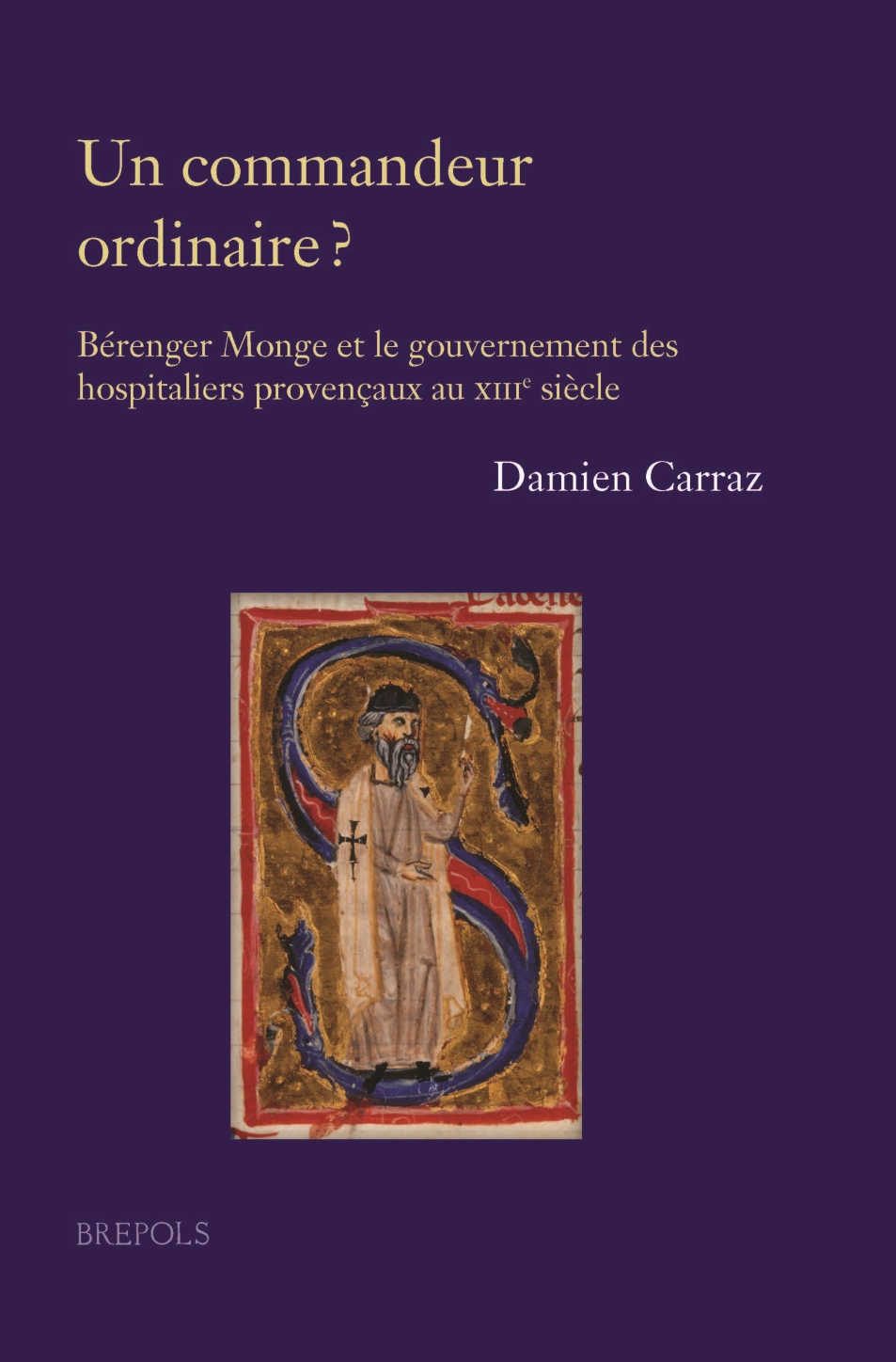
Un commandeur ordinaire ?
Bérenger Monge et le gouvernement des hospitaliers provençaux au xiiie siècle
show More to view fulltext, buy and share links for:Un commandeur ordinaire ? show Less to hide fulltext, buy and share links for: Un commandeur ordinaire ?Bérenger Monge fut commandeur des maisons de l’Hôpital d’Aix et de Manosque pendant toute la seconde moitié du XIIIe siècle. Chef respecté de ces deux importantes communautés régulières élargies à la familia, seigneur de l’une des principales villes de Haute-Provence, maître d’ouvrage de deux constructions majeures, lieutenant du prieur de Saint-Gilles, ce dignitaire bénéficia d’un rayonnement dont témoigne le corpus documentaire rassemblé autour de sa personne. Exceptionnel par sa personnalité comme par sa longévité, ce commandeur n’en fut-il pas moins ordinaire dans sa fonction statutaire ? Se pose, en effet, la question de la représentativité, non seulement de cet acteur principal mais encore de toute une galerie de personnages et de statuts auxquels celui-ci s’est trouvé lié : prieurs de Saint-Gilles, bayles de Manosque, experts en droit et en écritures, entourages princiers… De fait, loin de s’enfermer dans un récit de vie linéaire, l’approche par le singulier est susceptible de dévoiler des techniques de gouvernement, des configurations sociales, des stratégies de carrière ou encore des affinités personnelles ou spirituelles. En définitive, la mise en intrigue autour de Bérenger Monge et des différents cercles de son entourage - du lignage à l’institution en passant par les autorités politiques du temps - offre un éclairage inédit sur « une vie de commanderie », c’est-à-dire la cellule de base d’un ordre militaire envisagée comme une institution totale. L’échelle de la vie humaine permet finalement d’articuler le cycle intermédiaire de la génération à des temporalités propres aux différentes mémoires sociales - dont la mémoire des archives appréhendées dans leur dimension processuelle.
-
-
-
Un commentaire vercellien du Cantique des cantiques: "Deiformis anime gemitus"
show More to view fulltext, buy and share links for:Un commentaire vercellien du Cantique des cantiques: "Deiformis anime gemitus" show Less to hide fulltext, buy and share links for: Un commentaire vercellien du Cantique des cantiques: "Deiformis anime gemitus"Le Moyen Âge a inlassablement commenté le Cantique des cantiques comme dialogue spirituel entre l'âme et son Époux divin. Superposer à cette mystique nuptiale la mystique métaphysique du Pseudo-Denys fut une initiative du victorin Thomas Gallus, promise à une grande faveur dans le monde cartusien. Le présent commentaire du Cantique («Deiformis animae gemitus»), s'inscrit dans cette tradition, en y ajoutant l'expression d'une dévotion au Christ crucifié aux accents franciscains. Un temps attribué à Thomas Gallus lui-même, l'ouvrage doit probablement être restitué à un autre religieux de son abbaye, un «Vercellensis» dont nous ne saurons peut-être jamais le nom complet. L'édition princeps jadis procurée par Jeanne Barbet a été revue et remaniée grâce à un nouveau recours aux manuscrits et assortie d'une traduction française due au P. Francis Ruello.
-
-
-
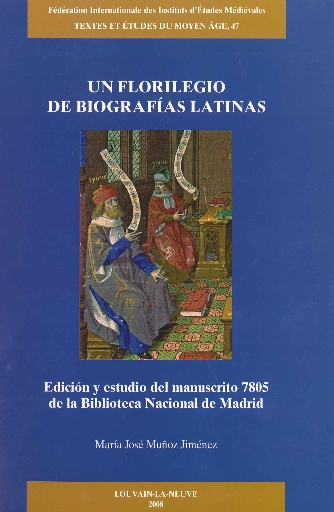
Un florilegio de biografías latinas
Edición y estudio del manuscrito 7805 de la Biblioteca Nacional de Madrid
show More to view fulltext, buy and share links for:Un florilegio de biografías latinas show Less to hide fulltext, buy and share links for: Un florilegio de biografías latinasEl manuscrito 7805 de la Biblioteca Nacional de Madrid contiene un florilegio de biografías latinas que ofrece excerpta de Quinto Curcio, del De vita Caesarum de Suetonio, de la Historia Augusta y del Ab urbe condita de Tito Livio. Esta selección de obras de la Antigüedad se acompaña con extractos del De vita et moribus philosophorum erróneamente atribuido a Walter de Burley y de la versión latina realizada por A. Travesari del De vita philosophorum de Diógenes Laercio.
Varias razones aconsejan el estudio de este manuscrito: por una parte, es un autógrafo realizado por una mano hispana en el siglo XV del que no se conocen otras copias; por otra, presenta una producción de un género típicamente medieval como es el del florilegio, y, a la vez, acoge una semblanza de biografías, género recuperado en el Renacimiento. La obra contenida en el ms. 7805 se muestra, pues, como un producto propio de esa época tan discutida de ‘transición’ del Medievo al Renacimiento en la España cuatrocentista.
María José Muñoz Jiménez es Catedrática de Filología Latina en la Universidad Complutense de Madrid. Desde su Tesis Doctoral ha trabajado sobre los manuscritos latinos conservados en España. Es autora, además, de diversos trabajos de Literatura Latina y Tradición Clásica así como de Lexicografía Latina Medieval.
En la actualidad es directora de un Grupo de Investigación de la Universidad Complutense dedicado al estudio de los florilegios latinos conservados en las bibliotecas españolas.
-
-
-
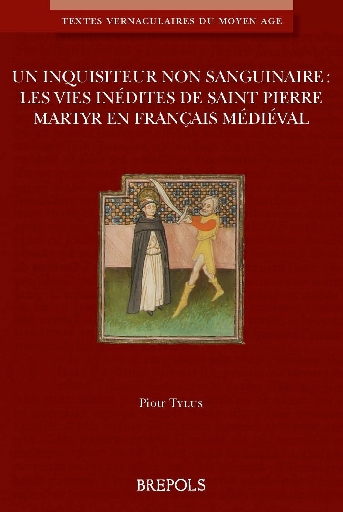
Un inquisiteur non sanguinaire : les vies inédites de saint Pierre Martyr en français médiéval
show More to view fulltext, buy and share links for:Un inquisiteur non sanguinaire : les vies inédites de saint Pierre Martyr en français médiéval show Less to hide fulltext, buy and share links for: Un inquisiteur non sanguinaire : les vies inédites de saint Pierre Martyr en français médiévalPierre naît à Vérone, au tournant du XIIe et du XIIIe siècle, d’une famille cathare. Il est dit « de Vérone » ou « Martyr ». Il étudie à Bologne, où il rencontre les frères prêcheurs et entre dans l’ordre, en recevant l’habit probablement des mains de saint Dominique lui-même, vers 1220 ou 1221. Son activité essentielle est celle de prédicateur itinérant. Il prêche à Rome, à Florence, dans la Romagne et la Marche d’Ancône, à Venise et en Toscane, et peut-être même à Paris. En juin 1251, Innocent IV le charge d’une mission contre les hérétiques de Crémone. Quelques mois plus tard, en septembre 1251, il devient inquisiteur pontifical à Milan, à Côme et dans leurs districts. Il assume cette tâche pendant les derniers mois de sa vie. Le 6 avril 1252, il est tué sur le chemin de Côme à Milan par un tueur à gages, loué par les hérétiques. Pierre est canonisé le 9 mars 1253.
Le présent livre contient neuf versions de sa légende, rédigées en français ancien (XIIIe-XVe siècles) par des auteurs anonymes. Les textes, qui procèdent du chapitre 61 de la Légenda aurea de Jacques de Voragine, n’ont jusqu’à présent jamais été édités. Dans la majorité des cas, on a affaire à des adaptations libres, parfois très libres, de la vita contenue dans la Legenda aurea, pour lesquelles celle-ci n’est qu’un point de départ. Il s’agit de textes autonomes : chacun des auteurs a exploité sa source à sa propre façon ; ce sont des jeux de la variante, tellement caractéristiques de la littérature médiévale.
-
-
-
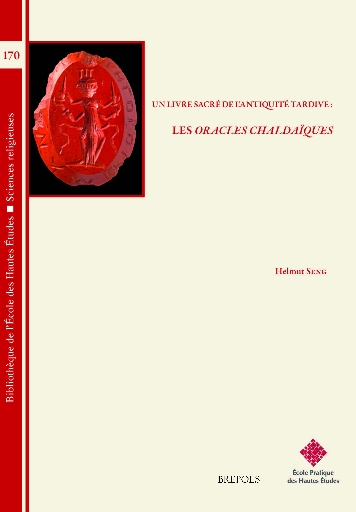
Un livre sacré de l'Antiquité tardive : les Oracles Chaldaïques
show More to view fulltext, buy and share links for:Un livre sacré de l'Antiquité tardive : les Oracles Chaldaïques show Less to hide fulltext, buy and share links for: Un livre sacré de l'Antiquité tardive : les Oracles ChaldaïquesLa définition devenue classique des Oracles Chaldaïques comme « une sorte de bible des derniers néo-platoniciens » résume la signification de ce texte médio-platonicien, qui n’a été conservé que sous forme de fragments et n’en est que plus difficile à comprendre. La tâche est compliquée par le fait que son langage poétique regorge d'images et de métaphores, et que ses exégètes antiques, ainsi que ses principaux témoins, en ont fait un usage créatif. Le présent volume offre une synthèse de la tradition, de la réception et de l’histoire de la recherche, ainsi que l’interprétation de la plupart des fragments et de nombreux témoignages dans le cadre d’une reconstruction systématique des conceptions philosophiques proposées dans les Oracles Chaldaïques. L’un des principaux thèmes abordés sera celui des idées cosmologiques liées à une hiérarchie des êtres résumée par la formule « âme-homme-salut », cela, à la lumière des informations glanées sur la pratique rituelle théurgique.
-
-
-
Un platonisme original au XIIe siècle
Métaphysique pluraliste et théologie trinitaire dans le De unitate et pluralitate creaturarum d’Achard de Saint-Victor
show More to view fulltext, buy and share links for:Un platonisme original au XIIe siècle show Less to hide fulltext, buy and share links for: Un platonisme original au XIIe siècleAchard de Saint-Victor (†1171) est un représentant moins connu de l’école de Saint-Victor, élève d’Hugues, chanoine régulier, maître, abbé de Saint-Victor à Paris (1155-1161), évêque d’Avranches (1161-1171). Son œuvre principal, le De unitate et pluralitate creaturarum, consiste en deux parties qui portent sur la doctrine trinitaire et sur la doctrine de la pluralité des raisons éternelles dans le Verbe de Dieu.
Cette recherche entend rétablir les thèses principales exposées par Achard de Saint-Victor dans son livre De unitate et pluralitate creaturarum pour montrer que les capacités métaphysiques de ce penseur ne le cèdent pas aux philosophes plus connus de son époque. Notamment, l’autrice étudie la façon dont le De unitate recourt aux doctrines médio et néoplatoniciennes pour résoudre la question d’une coexistence de l’unité et de la pluralité en Dieu et dans les créatures. L’enjeu est de mieux comprendre la place de la métaphysique platonicienne dans l’école de Saint-Victor, et ce malgré la rareté des sources au XIIe siècle, en particulier des œuvres de Platon ou de ses disciples grecs.
Le présent ouvrage contribue à résoudre deux problèmes de l’histoire de la philosophie : quels éléments et sources platoniciens ont été reçus au XIIe siècle et quelle place la pensée victorine fait à l’héritage platonicien. Les problèmes philosophiques soulevés sont la multiplication des objets intelligibles et sensibles, la définition de la chose et l’identité des êtres.
-
-
-

Un âge d’or des chapitres nobles de chanoinesses en Europe au xviii e siècle
Le cas de la Franche-Comté
show More to view fulltext, buy and share links for:Un âge d’or des chapitres nobles de chanoinesses en Europe au xviii e siècle show Less to hide fulltext, buy and share links for: Un âge d’or des chapitres nobles de chanoinesses en Europe au xviii e siècleS’il est difficile d’ignorer les chapitres nobles lorsqu’on aborde l’histoire des noblesses européennes au xviii e siècle, notamment dans les rapports qu’elles entretenaient avec l’Église, ces instituts restent toutefois peu étudiés. Plus marqué que pour les chapitres nobles masculins, le dynamisme de ceux de femmes intrigue. Le cas des chapitres nobles de chanoinesses de Franche-Comté, demeurés réguliers en un siècle qui ne passe pas pour avoir été favorable à l’Église régulière, comme le confirme la sécularisation d’un certain nombre de ces compagnies, est très éclairant sur les raisons de leur faveur. Celle-ci ne réside pas dans cette fonction d’asile et de secours matériel à destination d’une ancienne noblesse paupérisée que décrivaient leurs contemporains, mais dans leurs réponses précoces aux attentes de reconnaissance d’un groupe social convaincu de son déclin ainsi que dans leur aptitude à contenter une spiritualité en phase avec celle des Lumières et adaptable à la personnalité de chaque dame noble. L’effort accompli par les chapitres de chanoinesses, à l’apogée de la Réforme post-tridentine, pour conserver et développer leur spécificité en dépit de l’hostilité du clergé nous conduit par ailleurs à relativiser le concept de « Dorsale catholique » toujours très débattu chez les historiens, la plupart de ces établissements étant pourtant implantés dans ce front de catholicité identifié par René Taveneaux, reliant les anciens Pays-Bas à l’Italie du Nord.
-
-
-
Uncertain Knowledge
Scepticism, Relativism, and Doubt in the Middle Ages
show More to view fulltext, buy and share links for:Uncertain Knowledge show Less to hide fulltext, buy and share links for: Uncertain KnowledgeWhat are the forms in which later medieval thinkers articulate epistemological scepticism, relativism, and doubt? Is it possible to voice different forms of uncertainty in different institutional contexts and languages? Bringing together specialists in philosophy, theology, history, and literature, this book undertakes an interdisciplinary investigation of some of the ways in which the problem of knowledge was explored in the Middle Ages. This is a topic of central intellectual importance and has large cultural consequences. The Middle Ages are often still treated by non-medievalists as a time of naive epistemological self-confidence, and we hope that ultimately this revisionist project will have impact beyond medieval studies, illustrating the extent to which this was a period in which many thinkers were intrigued by, and comfortable with, uncertainty.
-
-
-
Understanding Emotions in Early Europe
show More to view fulltext, buy and share links for:Understanding Emotions in Early Europe show Less to hide fulltext, buy and share links for: Understanding Emotions in Early EuropeThis book investigates how medieval and early modern Europeans constructed, understood, and articulated emotions. The essays trace concurrent lines of influence that shaped post-Classical understandings of emotions, through overlapping philosophical, rhetorical, and theological discourses. They show the effects of developments in genre and literary, aesthetic, and cognitive theories on depictions of psychological and embodied emotion in literature. They map the deeply embedded emotive content inherent in rituals, formal documents, daily conversation, communal practice, and cultural memory. The contributors focus on the mediation and interpretation of pre-modern emotional experience in cultural structures and institutions - customs, laws, courts, religious foundations - as well as in philosophical, literary, and aesthetic traditions.
The volume thus represents a conspectus of contemporary interpretative strategies, displaying close connections between disciplinary and interdisciplinary critical practices drawn from historical studies, literature, anthropology and archaeology, philosophy and theology, cognitive science, psychology, religious studies, and gender studies. The essays stretch from classical and indigenous cultures to the contemporary West, embracing numerous national and linguistic groups. They illuminate the complex potential of medieval and early modern emotions in situ, analysing their involvement in subjects as diverse as philosophical theories, imaginative and scholarly writing, concepts of individual and communal identity, social and political practices, and the manifold business of everyday life.
-
-
-
Understanding Monastic Practices of Oral Communication
(Western Europe, tenth-thirteenth centuries)
show More to view fulltext, buy and share links for:Understanding Monastic Practices of Oral Communication show Less to hide fulltext, buy and share links for: Understanding Monastic Practices of Oral CommunicationAlthough traditionally defined as a literate environment, Western monastic culture depended on a range of communicative practices which was just as large, and in some ways more sophisticated in its diversity, than that of other groups of society. Monks and nuns exchanged considerable amounts of information for which no written media were deemed necessary or which did not make a complete or immediate transition into written sources. Grouped in five thematic chapters, the papers in this volume aim to provide inroads into a useable interpretation of the various contexts in which monks and nuns in the central Middle Ages considered the spoken word as a vital complementary medium to other forms of communication.
-
-
-
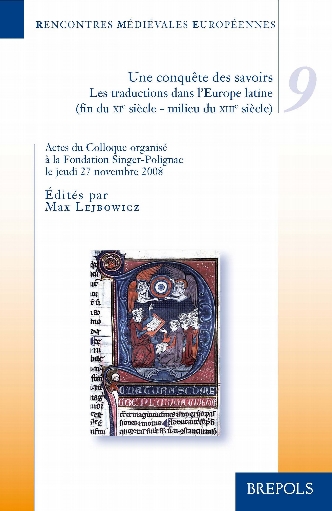
Une conquête des savoirs
Les traductions dans l’Europe latine (fin XIe siècle - milieu XIIIe siècle)
show More to view fulltext, buy and share links for:Une conquête des savoirs show Less to hide fulltext, buy and share links for: Une conquête des savoirsLes nouveautés culturelles qui se répandent en Europe latine aux xii e et xiii e siècles sont les expressions les plus hautes d’une longue période de croissance. Bien que déjà largement documentée, cette expansion pluriséculaire mérite d’être reprise et précisée.
Un cercle vertueux s’est enclenché aux alentours de l’an mil dans l’Europe latine, sans qu’il y ait simultanéité de dates et de rythmes sur tout le territoire. Pour être multiples, les composantes de cet essor se réduisent à un même thème: ce sont autant de triomphes de l’homme européen sur son environnement et sur lui-même: amélioration de l’outillage et des techniques agricoles, poussée démographique, défrichements, nouveaux sites de peuplement, renouveau urbain, renforcement de l’artisanat, essor de l’économie monétaire, développement et diffusion de l’écrit, promotion des langues vernaculaires.
Véhicule déterminant du nouveau savoir, les traductions surviennent dans un monde latin à l’essor multiforme. Elles l’accompagnent et le transfigurent. Elles en décuplent les possibilités. Elles expriment un engouement dévorant pour l’étude, dont en retour elles accroissent l’intensité et rehaussent le niveau. Les clercs sont aspirés par cette spirale, dont le terme marque la fin du Moyen Âge. Les acquis des siècles précédents servent aux hommes du xv e à renouer directement avec l’hellénisme et avec le classicisme latin, tout en franchissant les océans d’une terre maintenant centrée sur le soleil.
La polysémie du mot «monde» rend compte de la totalité des nouveautés qui, apparues au cours du xii e siècle de Europe latine, transforment en quelques cent ans le continent: le xii e siècle latin s’est transfiguré en véritable Nouveau Monde.
-