


Brepols Online Books Other Monographs Collection 2018 - bob2018moot

Collection Contents
2 results
-
-
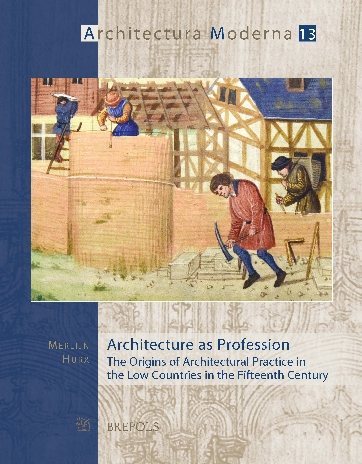
Architecture as Profession
show More to view fulltext, buy and share links for:Architecture as Profession show Less to hide fulltext, buy and share links for: Architecture as ProfessionFifteenth-century Florence is generally considered the cradle of the modern architect. There, for the first time since Antiquity, the Vitruvian concept which distinguishes between builder and designer was recognised in architectural theory, causing a fundamental rupture in architectural practice. In this well-established narrative Northern Europe only followed a century later when, along with the diffusion of Italian treatises and the introduction of the all’antic style, a new type of architect began to replace traditional gothic masters. However, historiography has largely overlooked the important transformations in building organisation that laid the foundations for our modern architectural production, such as the advent of affluent contractors, public tenders, and specialised architectural designers, all of which happened in fifteenth-century Northern Europe. Drawing on a wealth of new source material from the Low Countries, this book offers a new approach to the transition from the Middle Ages to the Early Modern Period by providing an alternative interpretation to the predominantly Italo-centric perspective of the current literature, and its concomitant focus on style and on Vitruvian theory.
-
-
-
Arnobe : le combat Contre les païens
show More to view fulltext, buy and share links for:Arnobe : le combat Contre les païens show Less to hide fulltext, buy and share links for: Arnobe : le combat Contre les païensArnobius is a man of one book. A little known author, he was a rhetor and a teacher at Sicca Veneria, a town named after Venus - it is a predestined confluence of rhetoric and religion ! - in the 3rd century AD, and his book, Against the Heathen, has never been the subject of a thoroughgoing study in French. Having converted to Christianity at the end of his life, this African rhetor proves to be, not only a brilliant and spirited writer, but also a man of culture, at home in Greek literature and in Latin. Remaining intellectually very close to the pagan ideas of his contemporaries, he adopts, in the seven books of an apology that he left unfinished at his death, a vehement and insidious tone of controversy - verging upon dishonesty - in order to turn ancestral Roman religion and Greek mythology from their purpose, with the sole aim of magnifying the glory of the Christian God.
-