


Brepols Online Books Other Monographs Collection 2018 - bob2018moot

Collection Contents
17 results
-
-
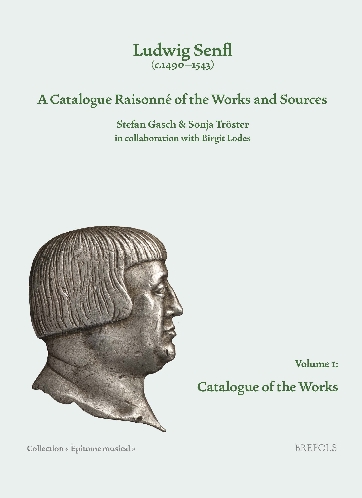
Ludwig Senfl (c.1490-1543): A Catalogue Raisonné of the Works and Sources
show More to view fulltext, buy and share links for:Ludwig Senfl (c.1490-1543): A Catalogue Raisonné of the Works and Sources show Less to hide fulltext, buy and share links for: Ludwig Senfl (c.1490-1543): A Catalogue Raisonné of the Works and SourcesUntil now, scholars have had an inadequate picture of the scope and transmission of the œuvre of Ludwig Senfl (c. 1490-1543), one of the most important Renaissance composers of the German-speaking lands. The current publication presents an extraordinary and exceptionally comprehensive catalogue raisonné for this Renaissance composer. Volume 1 of the two-volume set forms the catalogue of works (including lost and misattributed compositions). It is organized according to genre and provides a thorough description of every composition. Each entry includes a musical incipit, comments on the musical structure, and comprehensive information concerning the transmission and the authenticity of the composition in addition to many other details. In its layout, structure, and critical approach to Senfl's music, this volume enables farreaching research into the composer's style as well as a detailed characterisation of his œuvre, and thus it provides clues towards a long-desired chronology of the composer's works.The Senfl Catalogue serves as an encyclopaedic research tool for further scholarly investigation: it not only presents a lively and coherent picture of Senfl's œuvre, but also helps to explore the broader musical culture of his time. At the same time, the in-depth presentation and analysis of Senfl's music provides Early Music performers with new information on repertory that adds to the soundscape of the Renaissance.
-
-
-
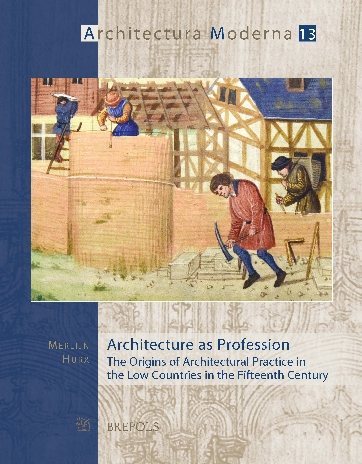
Architecture as Profession
show More to view fulltext, buy and share links for:Architecture as Profession show Less to hide fulltext, buy and share links for: Architecture as ProfessionFifteenth-century Florence is generally considered the cradle of the modern architect. There, for the first time since Antiquity, the Vitruvian concept which distinguishes between builder and designer was recognised in architectural theory, causing a fundamental rupture in architectural practice. In this well-established narrative Northern Europe only followed a century later when, along with the diffusion of Italian treatises and the introduction of the all’antic style, a new type of architect began to replace traditional gothic masters. However, historiography has largely overlooked the important transformations in building organisation that laid the foundations for our modern architectural production, such as the advent of affluent contractors, public tenders, and specialised architectural designers, all of which happened in fifteenth-century Northern Europe. Drawing on a wealth of new source material from the Low Countries, this book offers a new approach to the transition from the Middle Ages to the Early Modern Period by providing an alternative interpretation to the predominantly Italo-centric perspective of the current literature, and its concomitant focus on style and on Vitruvian theory.
-
-
-
Arnobe : le combat Contre les païens
show More to view fulltext, buy and share links for:Arnobe : le combat Contre les païens show Less to hide fulltext, buy and share links for: Arnobe : le combat Contre les païensArnobius is a man of one book. A little known author, he was a rhetor and a teacher at Sicca Veneria, a town named after Venus - it is a predestined confluence of rhetoric and religion ! - in the 3rd century AD, and his book, Against the Heathen, has never been the subject of a thoroughgoing study in French. Having converted to Christianity at the end of his life, this African rhetor proves to be, not only a brilliant and spirited writer, but also a man of culture, at home in Greek literature and in Latin. Remaining intellectually very close to the pagan ideas of his contemporaries, he adopts, in the seven books of an apology that he left unfinished at his death, a vehement and insidious tone of controversy - verging upon dishonesty - in order to turn ancestral Roman religion and Greek mythology from their purpose, with the sole aim of magnifying the glory of the Christian God.
-
-
-
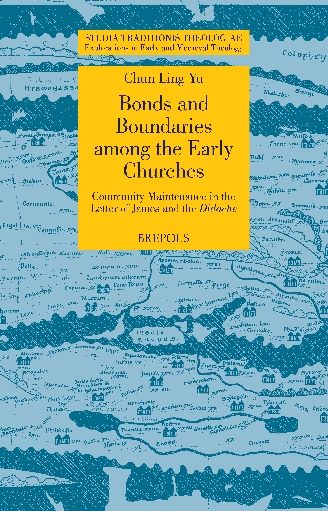
Bonds and Boundaries among the Early Churches
show More to view fulltext, buy and share links for:Bonds and Boundaries among the Early Churches show Less to hide fulltext, buy and share links for: Bonds and Boundaries among the Early ChurchesThis book is a text-based study on social dynamics of early Christian communities. By combining modern social-scientific theories with careful exegesis, it investigates the tensions, especially intra-communal tensions that confronted early communities of Jesus-followers. It contributes to both biblical studies and the understanding of the early church by showing that two early Christian compositions, the letter of James and the Didache reflect similar discords among early Christians, and they show similar concerns for community solidarity. It also offers an analysis of their community maintenance strategies with the frameworks of social identity theory and conflict theories.
Through observing both similarities and differences between James and the Didache, this book highlights the different perspectives and attitudes of the two compositions on group conflicts and their resolution, and provides new insights into the significance of these two writings for the early church as well as for the Christian communities today.
-
-
-
Contributions to the History of the Latin Elegiac Distich
show More to view fulltext, buy and share links for:Contributions to the History of the Latin Elegiac Distich show Less to hide fulltext, buy and share links for: Contributions to the History of the Latin Elegiac DistichThe elegiac distich was introduced in Rome by Quintus Ennius, in the first half of the 2nd century BC. It became the standard meter of epigram and elegy, its life extending over a very long period, from archaic Latinity to late antiquity (and beyond, to the Middle Ages and the early modern period). This volume provides scholars with a collection of (in good part previously unpublished) first-hand analyses of the elegiac distich, based on the scansion of nearly all Latin poetry in this meter, from Catullus to Venantius Fortunatus. As such, it reconstructs the evolution of the Latin elegiac distich in the first seven hundred years of its history, and it sheds new light on the metrical style of almost all Latin poets who composed verses in it during the period under consideration.
-
-
-

Histoire littéraire des bénédictins de Saint-Maur
show More to view fulltext, buy and share links for:Histoire littéraire des bénédictins de Saint-Maur show Less to hide fulltext, buy and share links for: Histoire littéraire des bénédictins de Saint-MaurPour faire suite à la Refonte de l'Histoire littéraire des Bénédictins de Saint-Maur, réunissant entre autres les travaux de Dom Tassin, d'Ulysse Robert et d'Ursmer Berlière, l'auteur des quatre volumes parus précédemment en 2004-2006, 2008, 2010 et 2014, a décidé d'acquiescer à la demande (cf. préface au tome III) de Monsieur Emmanuel Poulle, ancien directeur de l'École des chartes, aujourd'hui décédé, de produire séparément un Index Nominum des moines écrivains de la Congrégation de Saint-Maur, permettant un repérage plus aisé des notices les concernant. Ce dernier volume propose également un Catalogue complet des Monastères de la Congrégation d'ancien régime, classés par provinces ecclésiastiques et plusieurs cartes, gravures ou illustrations.
-
-
-
La Genesi
show More to view fulltext, buy and share links for:La Genesi show Less to hide fulltext, buy and share links for: La GenesiIl commento alla Genesi di Pietro Comestore è parte di un’opera ben più vasta, composta intorno al 1170 e nota in epoca successiva con il titolo, pressoché intraducibile nelle lingue moderne, di Historia Scholastica. Il termine historia ne individua l’oggetto: è la storia sacra - la «storia» per eccellenza secondo la mentalità medievale - che, a partire dal libro della Genesi fino ai Vangeli, è narrata in stretta aderenza alla traccia biblica e, al contempo, puntualmente commentata sotto il profilo esegetico, con privilegio (quasi esclusivo) accordato all’esegesi storico-letterale. L’appellativo scholastica è suggello postumo ad indicare la generale adozione «scolastica» dell’opera, quale imprescindibile manuale di riferimento, almeno per l’intera epoca tardomedievale, nelle facoltà di teologia delle università europee. Un’opera, dunque, di assoluta rilevanza, ma la cui sterminata estensione nonché vastità della tradizione manoscritta sono state, e sono tuttora, di ostacolo a qualsivoglia progetto di edizione critica integrale e di studio analitico d’insieme.
Si propone qui la traduzione italiana con commento della sezione dell’opera corrispondente al libro della Genesi: la versione latina originale del testo è pubblicata nella collana Corpus Christianorum Continuatio Mediaevalis con il titolo Petri Comestoris. Scolastica Historia. Genesis (CC CM 191), a cura di A. Sylwan. I rimandi alle pagine corrispondenti dell’edizione sono forniti a margine di questa traduzione.
-
-
-
La prière dans la tradition platonicienne, de Platon à Proclus
show More to view fulltext, buy and share links for:La prière dans la tradition platonicienne, de Platon à Proclus show Less to hide fulltext, buy and share links for: La prière dans la tradition platonicienne, de Platon à ProclusThe present book studies prayer as a category of Platonic religious thought, from Plato to Late Antiquity. Following a chronological framework (Plato, the pseudo-Platonic Second Alcibiades, Maximus of Tyre, Plotinus, Porphyry, Iamblichus, Proclus), the book examines the relationship between philosophical reflection on prayer and a series of themes and related topics: the criticism and the interpretation of traditional cults, the conceptualization of religious emotions, the philosophical explanation of how astrology and magic work, the theories of the soul, and the theological description of reality in Late Neoplatonism.
The book aims to contribute to shed new light on the relationship between religion and philosophy in Antiquity and, in particular, on the forms of “scientific” religion that appear and develop in the philosophical schools in Late Antiquity. Special attention is paid to the relationship between philosophy, religion, and rhetoric. The rhetorical dimension of prayer is explored in relation to the role of persuasion and emotion in prayer and to the idea that exegetical commentary represents a hymn in prose addressed to the gods.
-
-
-
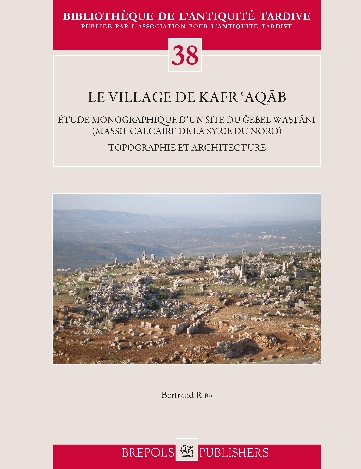
Le village de Kafr ʿAqāb
show More to view fulltext, buy and share links for:Le village de Kafr ʿAqāb show Less to hide fulltext, buy and share links for: Le village de Kafr ʿAqābThe new monographic study of the village of Kafr ʿAqāb is a contribution to broadening the field of research into the western part of the Limestone Massif in Northern Syria which, until now, had been the subject of only limited interest. The ruins of the site are mainly spread out over a vast rocky headland which is strategically situated at the northern extremity of the ğebel Waṣṭāni near the Orontes valley in the inland region of Antioch. These ruins reveal the existence of an ancient village with over 80 homes, various communal constructions, a monastery, two ecclesiastic complexes and a fortified building.
The study is based on a detailed analysis of surface ruins and has enabled the evolution of the village to be precisely determined from its first phase of occupation between the IInd and IIIrd century until it was abandoned during the medieval period. Most of the constructions date from the Roman and Proto-Byzantine periods. Each architectural group (houses, tombs, churches, agricultural buildings, etc.) is studied separately then resituated in the context of the village and the region thus enabling the author to determine this peasant community’s economic, demographic, social and religious history.
Mechanisms linked to the growth of the locality are examined in the light of strategies implemented in the appropriation and enhancement of the surrounding land such as controlling water and the diversification of crops which reveals the inhabitants’ extraordinary capacity to adapt to their natural environment. Discussion also covers the question of the interactions between the villagers and their relationships with other towns. Kafr ʿAqāb also owed its prosperity to the road network which was ingeniously woven between towns as well as to its proximity to major urban areas in Antioche and Apamea. The ruins reveal this highly favourable location for trade and the circulation of various cultural and artistic movements. Finally, numerous archaeological signs allow the study of the occupation of the village after it was invaded by VIIth century Arab conquerors. The author thus aims to reconstruct the history of this ancient site following a long and fascinating field study.
-
-
-
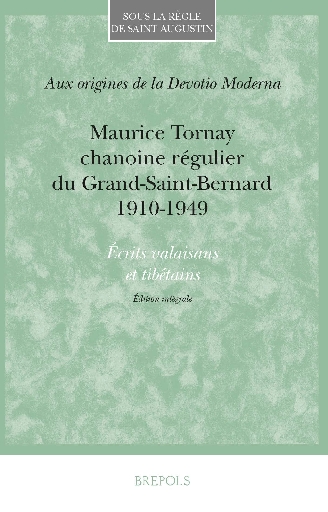
Maurice Tornay, chanoine régulier du Grand-Saint-Bernard (1910-1949). Écrits valaisans et tibétains
show More to view fulltext, buy and share links for:Maurice Tornay, chanoine régulier du Grand-Saint-Bernard (1910-1949). Écrits valaisans et tibétains show Less to hide fulltext, buy and share links for: Maurice Tornay, chanoine régulier du Grand-Saint-Bernard (1910-1949). Écrits valaisans et tibétainsChanoine régulier du Grand-Saint-Bernard, missionnaire aux marches tibétaines, Maurice Tornay y devait trouver le martyre en 1949. L’intérêt intrinsèque de son œuvre écrite, principalement constituée par une correspondance d’une constante authenticité de ton, s’impose à divers titres. Ses Lettres en effet ne sont pas sans évoquer par leur thématique spirituelle la correspondance d’une Thérèse de Lisieux ou d’une Elisabeth de la Trinité, et par leurs descriptions pittoresques et toujours captivantes de ce qui était encore de fait le Tibet interdit, elles rappellent le fameux Voyage en Tartarie et au Tibet du P. Huc. Ses lettres valaisannes, qu’une perception juste de la discrète et austère poésie montagnarde signaleraient pour une anthologie régionaliste, préludent à ses pages sur « la terre de feu et le ciel d’airain » des marches tibétaines, d’un regard lucide et sans illusions. Ses Récits et Nouvelles tibétains, ici intégralement donnés, et composés à l’intention de ses correspondants helvétiques, allient un talent littéraire certain à une lucidité aimante sur les êtres et cette portion du monde. Là, entre les traverses d’une situation politique chaotique et d’une présence européenne désemparée, s’est exercée une spiritualité de la vie quotidienne robuste, tranquillement héroïque et délicatement attentionnée à autrui. Du collégien de Saint-Maurice d’Agaune au martyr d’Orient, on saisit, menée « sous la règle de saint Augustin », la trajectoire droite d’une âme tout orientée, avec ses faiblesses mêmes, vers la perfection et la grandeur. C’est aussi une page de l’histoire de l’Extrême Orient et de l’histoire missionnaire du XXe siècle qui est écrite et décrite. Cette seconde édition donne la totalité de l’œuvre écrite de Maurice Tornay connue à ce jour.
-
-
-
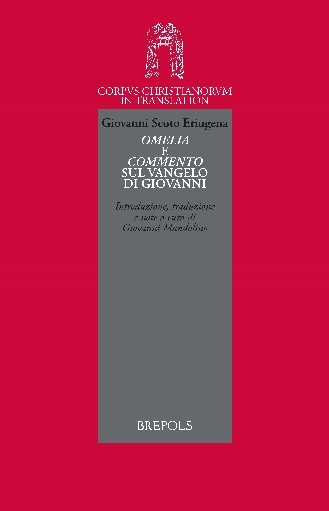
Omelia e Commento sul vangelo di Giovanni
show More to view fulltext, buy and share links for:Omelia e Commento sul vangelo di Giovanni show Less to hide fulltext, buy and share links for: Omelia e Commento sul vangelo di GiovanniComposti da Giovanni Scoto Eriugena forse verso la fine della sua vita, l’Omelia e il Commento sul vangelo di Giovanni costituiscono una testimonianza preziosa della sua attività di pensatore e di esegeta. Le due opere, di fortuna diversa (diffusissima la poetica Omelia, bozza incompiuta il Commento), a una lettura congiunta permettono di scoprire man mano, lemma dopo lemma, la fisionomia intellettuale di questo maestro irlandese del IX secolo: l’espressività del poeta, l’attenzione del filologo e traduttore dal greco, la sottigliezza speculativa del filosofo e la fantasia dell’esegeta concorrono al fascino multiforme di queste pagine. Vi si ritrovano tutti gli elementi principali della sintesi teologico-filosofica di Eriugena, operata a partire dai Padri della Chiesa sia greci che latini, con le sue tesi a volte ardite, sempre suggestive: la progressione della rivelazione divina, la natura simbolica del cosmo e del testo sacro, il problema della visione di Dio e la divinizzazione dell’uomo
La versione latina originale del testo proposto in traduzione in questo volume è pubblicata nella collana Corpus Christianorum Continuatio Mediaeualis con il titolo Iohannis Scotti seu Eriugenae Homilia super ‘In principio erat verbum’ et Commentarius in Evangelium Iohannis (CC CM 166), a cura di Édouard A. Jeauneau. I rimandi alle pagine corrispondenti dell’edizione sono forniti a margine di questa traduzione.
-
-
-
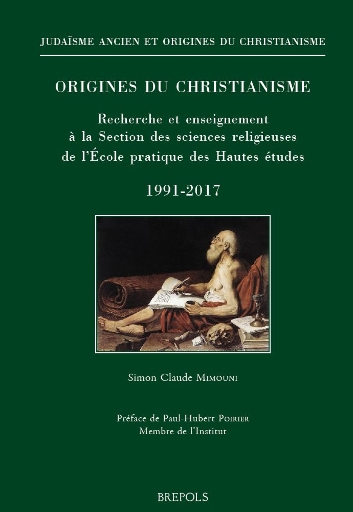
Origines du christianisme. Recherche et enseignement à la Section des sciences religieuses de l’École pratique des Hautes études, 1991-2017
show More to view fulltext, buy and share links for:Origines du christianisme. Recherche et enseignement à la Section des sciences religieuses de l’École pratique des Hautes études, 1991-2017 show Less to hide fulltext, buy and share links for: Origines du christianisme. Recherche et enseignement à la Section des sciences religieuses de l’École pratique des Hautes études, 1991-2017Sont reproduits dans ce volume en intégralité les comptes rendus des séminaires de Simon Claude Mimouni publiés régulièrement de 1992 à 2018 dans l’Annuaire de l’École pratique des Hautes études, Section des sciences religieuses. Ils ont été parfois réécrits et complétés, mais non actualisés. Ils représentent les étapes du développement de ses recherches durant vingt-cinq ans, permettant de comprendre leur déroulé au fil des ans. Ils sont évidemment lacunaires par rapport au travail effectivement mené lors des séminaires du jeudi matin, seuls ceux qui y ont assisté, auditeurs et étudiants, le savent.
Directeur d’études Émérite à la Section des sciences religieuses de l’École pratique des Hautes études où il a été titulaire de la chaire « Origines du christianisme », Simon Claude Mimouni a étudié l’histoire de la formation du mouvement des disciples de Jésus dans et hors du judaïsme aux Ier et IIe siècles. Il a traité durant de longues années la délicate et difficile question, mais ô combien fondamentale, des « origines juives » du christianisme, car le christianisme est une sorte de judaïsme - évidemment un judaïsme messianique et mystique, centré sur Jésus de Nazareth considéré tour à tour comme prophète et comme messie, puis comme personnage uniquement divin ou uniquement humain ou encore à la fois humain et divin, ce qui l’a obligé à réformer nombre de ses observances et préceptes.
-
-
-
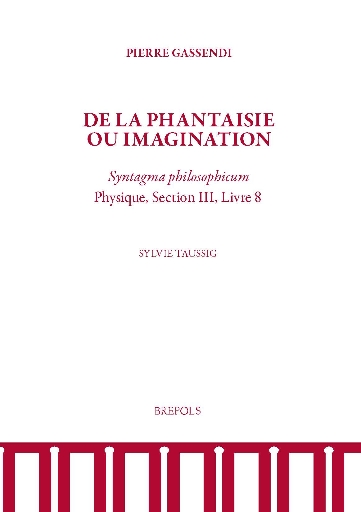
Pierre Gassendi, De la phantaisie ou imagination
show More to view fulltext, buy and share links for:Pierre Gassendi, De la phantaisie ou imagination show Less to hide fulltext, buy and share links for: Pierre Gassendi, De la phantaisie ou imaginationLe présent livre VIII De phantaisia seu imaginatione se trouve dans la Physique du Syntagma , dans la partie qui concerne les êtres vivants ou animés, dont la rédaction se situe entre la moitié de 1644 et la fin de l’année suivante. Le livre est construit en six chapitres ; la thèse en est résumée à la fin du dernier. Dans l’ensemble, Gassendi articule de façon subtile des passages de doxographie et l’énoncé de sa propre position, qu’il désire situer par rapport à la tradition, procurant une démonstration à la fois historique et théorique. Le livre trouvant sa place à juste titre dans la Physique, c’est en naturaliste que Gassendi explore son objet : le rationalisme et le biologisme y trouvent une place essentielle. L’examen des doctrines antérieures auquel il se livre, comme il le fait presque systématiquement, ne prend en compte que celles qui envisagent l’imagination sous cet angle, excluant toute réflexion littéraire ou métaphysique sur l’imagination, « folle du logis ». Il se montre très soucieux de mettre en place un vocabulaire précis, où la phantaisie est la notion majeure pour une réalité qu’il juge de la plus grande importance pour le fonctionnement cognitif et comportemental de l’homme et des animaux, soit le système psychologique.
-
-
-

Rhetoric and Reckoning in the Ninth Century
show More to view fulltext, buy and share links for:Rhetoric and Reckoning in the Ninth Century show Less to hide fulltext, buy and share links for: Rhetoric and Reckoning in the Ninth CenturyA modest man of great accomplishments, Walahfrid Strabo was a fine poet, teacher, abbot, gardener, liturgist, and diplomat. His personal notebook reveals that he loved arithmetic and astronomy. For a decade, he tutored Carolus iunior, youngest son of Judith and Ludwig der Fromme, who became emperor Charles the Bald. On two occasions, Walahfrid found and transcribed formulae and explanations of time series, often correcting them.
By identifying Walahfrid's sources and scripts, Professor Stevens is able to trace his life and scholarship, as they relate to Carolingian politics and schools in the first half of ninth-century Europe.
-
-
-
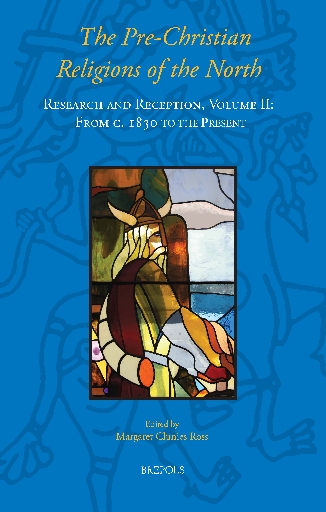
The Pre-Christian Religions of the North: Research and Reception, Volume II: From c. 1830 to the Present
show More to view fulltext, buy and share links for:The Pre-Christian Religions of the North: Research and Reception, Volume II: From c. 1830 to the Present show Less to hide fulltext, buy and share links for: The Pre-Christian Religions of the North: Research and Reception, Volume II: From c. 1830 to the PresentOver more than a thousand years since pre-Christian religions were actively practised, European – and later contemporary – society has developed a fascination with the beliefs of northern Europe before the arrival of Christianity, which have been the subject of a huge range of popular and scholarly theories, interpretations, and uses. Indeed, the pre-Christian religions of the North have exerted a phenomenal influence on modern culture, appearing in everything from the names of days of the week to Hollywood blockbusters. Scholarly treatments have been hardly less varied. Theories – from the Middle Ages until today – have depicted these pre-Christian religious systems as dangerous illusions, the works of Satan, representatives of a lost proto-Indo-European religious culture, a form of 'natural' religion, and even as a system non-indigenous in origin, derived from cultures outside Europe.
The Research and Reception strand of the Pre-Christian Religions of the North project establishes a definitive survey of the current and historical uses and interpretations of pre-Christian mythology and religious culture, tracing the many ways in which people both within and outside Scandinavia have understood and been influenced by these religions, from the Christian Middle Ages to contemporary media of all kinds. The previous volume (i) traced the reception down to the early nineteenth century, while the present volume (ii) takes up the story from c. 1830 down to the present day and the burgeoning of interest across a diversity of new as well as old media.
-
-
-
Biblical and Manichaean Citations in Titus of Bostra’s Against the Manichaeans
show More to view fulltext, buy and share links for:Biblical and Manichaean Citations in Titus of Bostra’s Against the Manichaeans show Less to hide fulltext, buy and share links for: Biblical and Manichaean Citations in Titus of Bostra’s Against the ManichaeansThis volume is the third and final part of a trilogy devoted to Titus of Bostra’s Against the Manichaeans. The first part, the critical edition of the remains of the Greek text and of the complete Syriac version as well as of the excerpts from the Sacra Parallela attributed to John Damascene, appeared in 2013 as volume 82 in the Series Graeca of the Corpus Christianorum. The second part, a French synoptic translation of the Greek and the Syriac, was published in 2015 as volume 21 in the Corpus Christianorum in Translation series. The main objective of the present inventory is to make available to specialists and all those interested the rich Biblical and Manichaean documentation used by Titus of Bostra in his refutation. With the exception of the Contra Faustum of Augustine, Titus of Bostra’s Against the Manichaeans is indisputably the most extensive Christian refutation of Manichaeism. Titus’ work is also a goldmine of information on the Manichaean doctrine and a valuable source for the history of the text of the Old and New Testament in Greek and Syriac. The fact that the manuscript of the Syriac version is not only very ancient but also precisely dated (to November 411) adds to its value as a witness of the Syriac biblical text.
-
-
-
Philosopher-monks, episcopal authority, and the care of the self
show More to view fulltext, buy and share links for:Philosopher-monks, episcopal authority, and the care of the self show Less to hide fulltext, buy and share links for: Philosopher-monks, episcopal authority, and the care of the selfThis volume explores the Apophthegmata Patrum in the context of church-monastery dynamics in fifth-century Palestine. Positing that the Apophthegmata Patrum was compiled in response to perceived external interference, Zachary B. Smith provides the first examination of the Apophthegmata Patrum in its Palestinian context, illuminating monastic strategies for resisting episcopal control. Engaging literary and historical methods, this volume weaves a narrative that places the Apophthegmata Patrum squarely in the political and philosophical worlds of the eastern Mediterranean in late antiquity. The Apophthegmata Patrum’s compiler carefully selects stories to highlight problematic interactions between monks and ecclesiastics. He then appeals to classical and late antique philosophical categories of self-care to assert monastic autonomy, making the monks the new philosophers. In the context of contentious theological debates during the fourth and fifth centuries, these selected interactions and assertions tacitly advocate a path of monastic autonomy.
-