


BOB2023MOME

Collection Contents
21 - 30 of 30 results
-
-
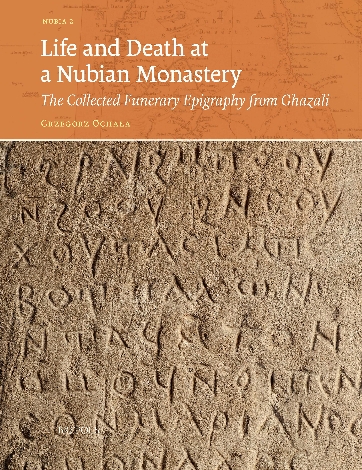
Life and Death at a Nubian Monastery
show More to view fulltext, buy and share links for:Life and Death at a Nubian Monastery show Less to hide fulltext, buy and share links for: Life and Death at a Nubian MonasteryThe Christian monastery of Ghazali, located in Wadi Abu Dom, in northern Sudan, is one of the most famous archaeological sites within the country. Built by the Makurians in the seventh century AD, it flourished until its abandonment in the thirteenth century, and its picturesque ruins became a popular tourist attraction in the nineteenth and twentieth centuries. During the period of the monastery’s activity, it was an important religious centre, a place where monks lived, worshipped, died, and left important information about their lives buried in the archaeological record.
This volume offers a catalogue and in-depth analysis of over two hundred funerary epigraphy monuments, inscribed in Greek and Coptic, onto stone stelae and terracotta plaques, that have been uncovered at Ghazali and that bear an important witness to life and death at the site. The meticulous epigraphic and philological work presented here is combined with a detailed discussion of the ensemble, including their archaeological context, material aspects, language use, and formulary. The analysis of onomastic practices and the monastic hierarchy supplements the picture and brings to the fore both individual persons and the community responsible for the production of these texts.
-
-
-
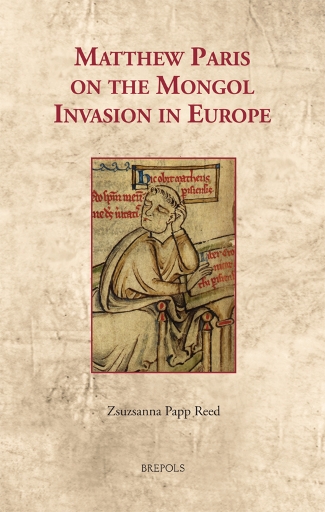
Matthew Paris on the Mongol Invasion in Europe
show More to view fulltext, buy and share links for:Matthew Paris on the Mongol Invasion in Europe show Less to hide fulltext, buy and share links for: Matthew Paris on the Mongol Invasion in EuropeThis is a novel, interdisciplinary study of the Mongol military campaign in Eastern Europe (1241–1242) — the North, as thirteenth-century Europeans saw the region — in the works of contemporary English chronicler, Matthew Paris of St Albans Monastery. Tracing the journey of his sources, the volume explores thirteenth-century information networks against the backdrop of the struggle between Emperor Frederick II and Pope Innocent IV.
Parallel to the history of information, the subject of the study is the Chronica majora and its afterlife, Matthew’s chronicle world where the sometimes fictitious (and often very real) episodes of the Mongol story unfold. Tracing major landmarks in the meta-history of the Chronica majora, the author wishes to emancipate Matthew Paris as a historian — one in the series of a multitude of others who continue to write and rewrite the history of the Mongol invasion across centuries of historiography.
The volume is a handy companion both to scholars of English historiography and those who want to read critically the oft-cited primary sources of the history of the Mongol military operations in Europe.
-
-
-
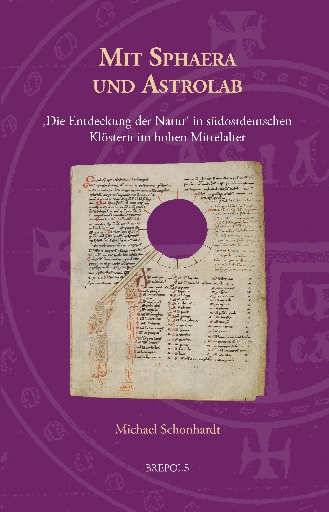
Mit Sphaera und Astrolab
show More to view fulltext, buy and share links for:Mit Sphaera und Astrolab show Less to hide fulltext, buy and share links for: Mit Sphaera und AstrolabThis book offers a study of the scientific landscape of medieval Bavaria during the higher Middle Ages. Based on manuscripts as well as medieval library catalogues, it tries to quantify the so-called ‘Discovery of Nature’ and tries to analyse it from the perspective of a monastic landscape in which the arrival of the astrolab in the 11th century marked a significant turning point. By introducing new methods and questions into the traditional body of Carolingian astronomy, monastic scholars of this area played a decisive, albeit neglected, role in the development of medieval astronomy.
The book reconstructs the studies of the monk Wilhelm von Hirsau who tackled some of the most urgent problems of astronomy of his time: correcting the dates of the solstices and finding latitude. These studies are then placed in the broader development of medieval science, particularly focusing on his sphaera, an instrument that has often been wrongly understood as a teaching device. In contrast, the present study argues that this instrument is not only William’s lost astronomical clock, but also the first example for stationary observational astronomy in medieval Europe as well as an important milestone towards the empirical astronomy of future centuries.
-
-
-
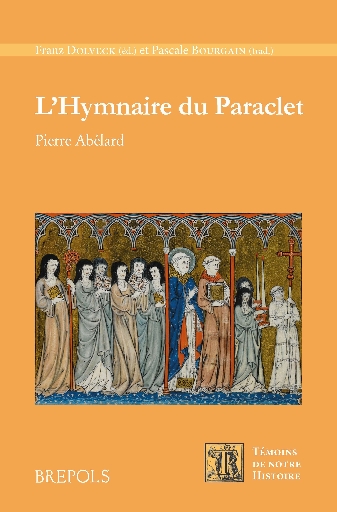
Pierre Abélard, L’Hymnaire du Paraclet
show More to view fulltext, buy and share links for:Pierre Abélard, L’Hymnaire du Paraclet show Less to hide fulltext, buy and share links for: Pierre Abélard, L’Hymnaire du ParacletLes œuvres en vers les plus célèbres d’Abélard sont ces poèmes d’amour composés pour Héloïse au temps qu’il la séduisait ; mais ils sont perdus, et c’est en vain qu’on les cherche. La célébrité de ces textes inconnus a laissé dans l’ombre d’autres poèmes qui, eux, sont bien parvenus jusqu’à nous. Eux aussi ont été composés pour Héloïse, d’une certaine manière ; eux aussi sont, d’une certaine manière, des produits de l’amour, et même des poèmes d’amour. Il s’agit des hymnes que, dans les années 1130, Abélard composa pour le monastère dont Héloïse était la supérieure, le Paraclet. Leur série, presque complète, constitue au fil de l’année liturgique un itinéraire spirituel et intellectuel d’une cohérence inégalée. Ces hymnes ne sont pas seulement des témoins d’une tentative quasiment inouïe dans l’histoire du christianisme de réformer la totalité de la liturgie : ils sont aussi la pensée d’un théologien exceptionnel coulée dans les vers d’un poète génial. L’Hymnaire du Paraclet mérite bien ainsi, à de multiples titres, d'être appelé un monument de la culture occidentale. Ce volume offre à la fois le texte latin original, entièrement établi et contrôlé sur les manuscrits, et, en regard, l'une des premières traductions complètes de l'Hymnaire, et la première en français.
-
-
-
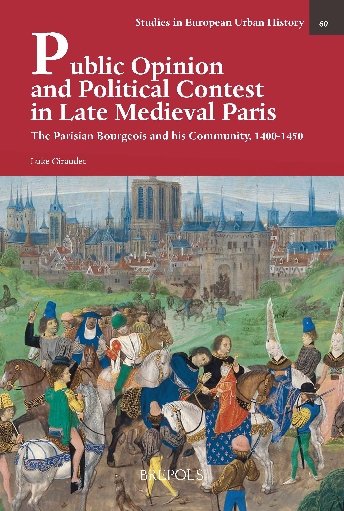
Public Opinion and Political Contest in Late Medieval Paris
show More to view fulltext, buy and share links for:Public Opinion and Political Contest in Late Medieval Paris show Less to hide fulltext, buy and share links for: Public Opinion and Political Contest in Late Medieval ParisPublic Opinion and Political Contest presents an important historiographical intervention regarding the emergence of larger political publics during the fifteenth century. The study analyses political interaction and public opinion in medieval Europe’s largest city through the lens of the only continuous narrative source compiled in Paris during the early fifteenth century, the well-known Journal d’un bourgeois de Paris. Examining one of the most turbulent periods in Paris’ history, which witnessed civil conflict and English occupation, the monograph contributes substantially to understandings of late medieval popular opinion conceptually and empirically, revealing Parisian groups bound by shared idioms and assumptions engaging with supralocal movements. Through an assessment of contemporary reactions to official communication, protest in public space, rumour and civic ceremony, the book presents a timely mirror to themes in flux today, addressing historiographical conclusions that have relegated premodern societies from considerations of the public sphere. As a result, this nuanced assessment of the Journal d’un bourgeois de Paris reveals how access to informational media and forums for discussion bound Parisians and framed a wider commentary upon political issues beyond the highest echelons of medieval society.
-
-
-
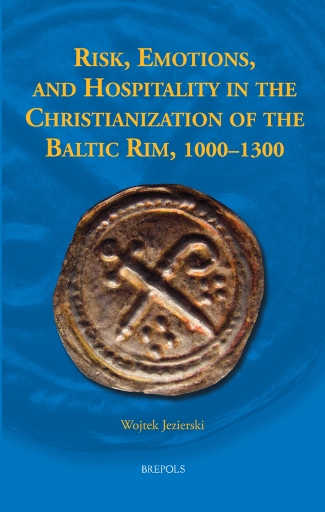
Risk, Emotions, and Hospitality in the Christianization of the Baltic Rim, 1000–1300
show More to view fulltext, buy and share links for:Risk, Emotions, and Hospitality in the Christianization of the Baltic Rim, 1000–1300 show Less to hide fulltext, buy and share links for: Risk, Emotions, and Hospitality in the Christianization of the Baltic Rim, 1000–1300What anxieties did medieval missionaries and crusaders face and what role did the sense of risk play in their community-building? To what extent did crusaders and Christian colonists empathize with the local populations they set out to conquer? Who were the hosts and who were the guests during the confrontations with the pagan societies on the Baltic Rim? And how were the uncertainties of the conversion process addressed in concrete encounters and in the accounts of Christian authors?
This book explores emotional bonding as well as practices and discourses of hospitality as uncertain means of evangelization, interaction, and socialization across cultural divides on the Baltic Rim, c. 1000-1300. It focuses on interactions between local populations and missionary communities, as well as crusader frontier societies. By applying tools of historical anthropology to the study of host-guest relations, spaces of hospitality, emotional communities, and empathy on the fronts of Christianization, this book offers fresh insights and approaches to the manner in which missionaries and crusaders reflexively engaged with the groups targeted by Christianization in terms of practice, ethics, and identity.
-
-
-

The Tables of 1322 by John of Lignères
show More to view fulltext, buy and share links for:The Tables of 1322 by John of Lignères show Less to hide fulltext, buy and share links for: The Tables of 1322 by John of LignèresMedieval astronomers used tables to solve most of the problems they faced. These tables were generally assembled in sets, which constituted genuine tool-boxes aimed at facilitating the task of practitioners of astronomy. In the early fourteenth century, the set of tables compiled by the astronomers at the service of King Alfonso X of Castile and León (d. 1284), reached Paris, where several scholars linked to the university recast them and generated new tables. John of Lignères, one of the earliest Alfonsine astronomers, assembled his own set of astronomical tables, mainly building on the work of previous Muslim and Jewish astronomers in the Iberian Peninsula, especially in Toledo. Two major sets had been compiled in this town: one in Arabic, the Toledan Tables, during the second half of the eleventh century, and the Castilian Alfonsine Tables, under the patronage of King Alfonso.
This monograph provides for the first time an edition of the Tables of 1322 by John of Lignères. It is the earliest major set of astronomical tables to be compiled in Latin astronomy. It was widely distributed and is found in about fifty manuscripts. A great number of the tables were borrowed directly from the work of the Toledan astronomers, while others were adapted to the meridian of Paris, and many were later transferred to the standard version of the Parisian Alfonsine Tables. Therefore, John of Lignères’ set can be considered as an intermediary work between the Toledan Tables and the Parisian Alfonsine Tables.
-
-
-
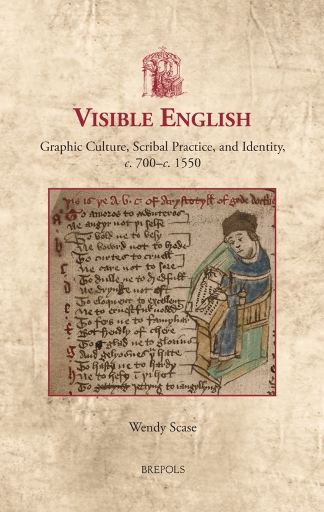
Visible English
show More to view fulltext, buy and share links for:Visible English show Less to hide fulltext, buy and share links for: Visible EnglishVisible English recovers for the first time the experience of reading and writing the English language in the medieval period through the perspectives of littera pedagogy, the basis of medieval learning and teaching of literate skills in Latin. Littera is at the heart of the set of theories and practices that constitute the ‘graphic culture’ of the book’s title. The book shows for the first time that littera pedagogy was an ‘us and them’ discourse that functioned as a vehicle for identity formation. Using littera pedagogy as a framework for understanding the medieval English-language corpus from the point of view of the readers and writers who produced it, Visible English offers new insights on experiences of writing and reading English in communities ranging from those first in contact with Latin literacy to those where print was an alternative to manuscript. Discussing a broad range of materials from so-called ‘pen-trials’ and graffiti to key literary manuscripts, Visible English provides new perspectives on the ways that the alphabet was understood, on genres such as alphabet poems, riddles, and scribal signatures, and on the different ways in which scribes copied Old and Middle English texts. It argues that the graphic culture underpinned and transmitted by littera pedagogy provided frameworks for the development and understanding of English-language literacy practices and new ways of experiencing social belonging and difference. To be literate in English, it proposes, was to inhabit identities marked by Anglophone literate practices.
-
-
-
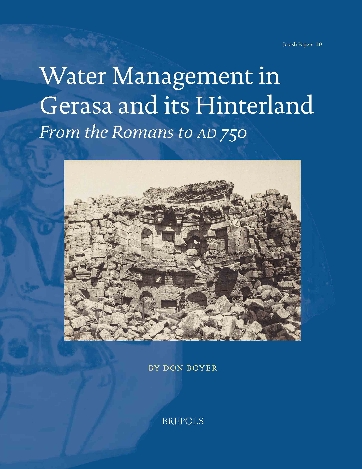
Water Management in Gerasa and its Hinterland
show More to view fulltext, buy and share links for:Water Management in Gerasa and its Hinterland show Less to hide fulltext, buy and share links for: Water Management in Gerasa and its HinterlandThe Decapolis city of Gerasa has seen occupation since the Bronze Age but reached its zenith in the Roman to early Islamic period as a population centre and trading hub. Located in a fertile valley in the limestone foothills of the Ajlun mountains, the city benefitted from a benign climate and an excellent local water supply from karstic springs and perennial streams. By the Roman-Early Byzantine period, these water sources were harnessed and managed by extensive aqueduct and distribution networks that satisfied the broad range of water needs of both urban and rural dwellers.
This volume offers an up-to-date, comprehensive, and multidisciplinary analysis of the water management system employed in both Gerasa and its hinterland from the time of Roman occupation to the devastating earthquakes that struck the city at the end of the Umayyad period. Drawing on archaeological evidence from the author’s field research, together with a critical and detailed analysis of the evidence of water installations and the results of a radiocarbon dating study, this insightful book offers the first diachronic interpretation of Gerasa’s water distribution, setting the city in its geoarchaeological, historical, and landscape contexts, and contributing to the broader understanding of its archaeological history.
-
-
-
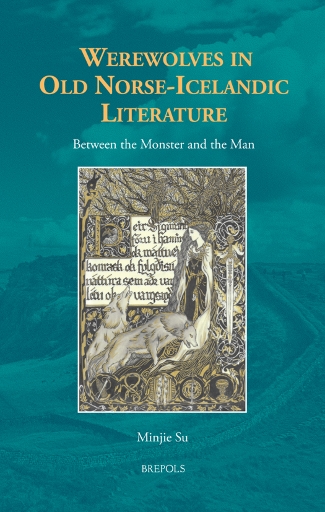
Werewolves in Old Norse-Icelandic Literature
show More to view fulltext, buy and share links for:Werewolves in Old Norse-Icelandic Literature show Less to hide fulltext, buy and share links for: Werewolves in Old Norse-Icelandic LiteratureAt the heart of any story of metamorphosis lies the issue of identity, and the tales of the werwulf (lit. ‘man-wolf’) are just as much about the wolf as about the man. What are the constituents of the human in general? What symbolic significance do they hold? How do they differ for different types of human? How would it affect the individual if one or more of these elements were to be subtracted?
Focusing on a group of Old Norse-Icelandic werewolf narratives, many of which have hitherto been little studied, this insightful book sets out to answer these questions by exploring how these texts understood and conceptualized what it means to be human. At the heart of this investigation are five factors key to the werewolf existence - skin, clothing, food, landscape, and purpose - and these are innovatively examined through a cross-disciplinary approach that carefully teases apart the interaction between two polarizations: the external and social, and the interior and psychological. Through this approach, the volume presents a comprehensive new look at the werewolf not only as a supernatural creature and a literary motif, but also as a metaphor that bears on the relationship between human and non-human, between Self and Other, and that is able to situate the Old-Norse texts into a broader intellectual discourse that extends beyond medieval Iceland and Norway.
-