


BOB2023MOOT

Collection Contents
2 results
-
-
The Anaphoral Tradition in the ‘Barcelona Papyrus’
show More to view fulltext, buy and share links for:The Anaphoral Tradition in the ‘Barcelona Papyrus’ show Less to hide fulltext, buy and share links for: The Anaphoral Tradition in the ‘Barcelona Papyrus’Since the discovery in the 1950’s of the so-called 'Barcelona Papyrus', the anaphora contained within it has remained the most understudied classical anaphora. However, a close analysis of this anaphora can reshape liturgical historians’ understanding of a number of classical anaphoras, and thus their approach to anaphoral development more broadly. This anaphora requires scholars to rethink questions concerning the construction, geographical provenance, and structural patterns of early anaphoras and their units. It is a witness to a very early form of Eucharistic praying, and points to various ways in which older less developed Eucharistic prayers developed into the anaphoral patterns common in the fourth century. As such, an analysis of this anaphora is of historical and methodological interest. This anaphora is also an early witness to Egyptian Eucharistic praying. It stems from the same anaphoral tradition as the anaphora of St. Mark, but on the whole it is an earlier witness to that tradition. The anaphora in the Barcelona Papyrus also bears a number of structural and textual similarities to the anaphora described in the Mystagogical Catecheses, which is often attributed to Cyril of Jerusalem. As such, it sheds further light on the relationship between Egypt and Jerusalem.
-
-
-
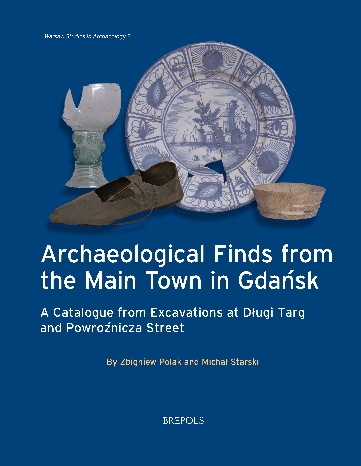
Archaeological Finds from the Main Town in Gdańsk
show More to view fulltext, buy and share links for:Archaeological Finds from the Main Town in Gdańsk show Less to hide fulltext, buy and share links for: Archaeological Finds from the Main Town in GdańskBetween 2002 and 2004, archaeological excavations took place on Powroźnicza Street, in the city of Gdańsk, Poland. Twelve burghers’ plots, located in the centre of this former medieval metropolis, were investigated, and yielded a rich collection of archaeological finds, among them ceramics, and items of wood, metal, and glass, from a period stretching from the fourteenth to the twentieth century. These finds are presented here for this first time in this richly illustrated bilingual volume, published in both English and Polish, which lays out a detailed catalogue of all the items, together with a discussion of the site, its settlement phases, and its most significant discoveries.
-