


BOB2023MOOT

Collection Contents
3 results
-
-
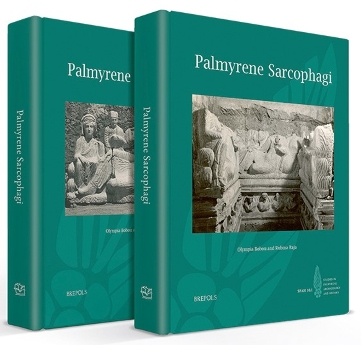
Palmyrene Sarcophagi
show More to view fulltext, buy and share links for:Palmyrene Sarcophagi show Less to hide fulltext, buy and share links for: Palmyrene SarcophagiWhile the funerary portraiture of Palmyra is rightly world-renowned, up to now, the corpus of sarcophagi from the ancient city has received relatively little attention as a cohesive group in their own right. Comprising sarcophagi, banqueting reliefs and founder reliefs, as well as sarcophagus reliefs, most of these objects share a common iconographic motif, that of the banquet, although other scenes, mostly drawn from the daily life of the city’s caravan leaders and their families, also appear. The emphasis on the banqueting scene in particular reveals the crucial importance of dining in ancient Palmyrene society: for the living, banquets were a marker of social standing and gave hosts a chance to honour the gods and offer an ephemeral benefaction to their fellow citizens, while for the dead, the banquet motif offered the opportunity for the entire family to be depicted together and showcase their wealth and sophistication, as well as their connections outside the city.
This single corpus of material gathered through the Palmyra Portrait Project, is presented in this beautifully illustrated two-volume monograph. Through careful analysis of the portraits, and the costumes and attribute choices that appear in these images, the authors explore how the sarcophagi were used by Palmyrenes to project an image of local pride, while at the same time participating in the visual cultures of the Roman and Parthian Empires between which their city was situated.
-
-
-
Pseudo-Clément et Vrai Prophète
show More to view fulltext, buy and share links for:Pseudo-Clément et Vrai Prophète show Less to hide fulltext, buy and share links for: Pseudo-Clément et Vrai ProphèteLes personnages historiques que sont Clément de Rome, Simon le Magicien, Pierre l’Apôtre et Apion le grammairien deviennent, dans les Reconnaissances de Clément, les personnages d’une fiction romanesque. Rufin d’Aquilée, à la fin du iv e iècle, nous apprend qu’il existait de son temps deux versions de ces Reconnaissances dans lesquelles discussions philosophiques et rebondissements de l’intrigue visaient le même but : démontrer la supériorité de la vérité prophétique sur celle des philosophes et des autres tenants de la culture grecque. Les études que regroupe ce volume propose une analyse du roman de Clément dans sa composition littéraire et dans son contexte culturel et religieux. On y aborde tout d’abord la question des rapports du texte clémentin avec la paideia, dans les études qui portent sur la discussion entre Clément de Rome et Apion d’Alexandrie. C’est la nature littéraire du corpus qui occupe ensuite la partie centrale du recueil. On s’intéresse aussi à la relation qu’entretient le texte avec la philosophie et ses représentations, dans les chapitres qui cherchent à comprendre l’opposition entre Pierre et Simon. C’est enfin la dimension judéenne du texte qui fait l’objet d’une série d’études qui traitent de prophétie, de mystique et d’identité religieuse.
-
-
-
The Protevangelium of James
show More to view fulltext, buy and share links for:The Protevangelium of James show Less to hide fulltext, buy and share links for: The Protevangelium of JamesAs a prehistory to the Nativity accounts of the gospels of Matthew and Luke the Protevangelium of James, dated to the second half of the second century, aimed to fill in alleged gaps in the canonical accounts of Jesus' and his mother's ancestry and births. Thus, it describes the birth of Mary, the mother of Christ, the Annunciation, the Nativity and the death of Zachariah, the high priest and father of John the Baptist.
The edition of the original Greek text has an English version on its facing pages.
The commentary pays particular attention to the early liturgical use of the Protevangelium and to artistic representations of the scenes it describes as these were the main means by which this highly influential text was transmitted throughout the known world. It also questions the usually accepted genre and purpose of the text and suggests that its author may have had a satirical intention or have intended it as an early Christian novelette, using scriptural scenes and themes as his inspiration. Maybe we have approached the Protevangelium of James with solemn faces and have been prepared to carry out serious theological investigations, whereas the many inconsistencies and glaring contradictions so obvious as to be ridiculous might suggest the author's intentions were not quite so grave or weighty.
-