


BOB2023MOOT

Collection Contents
3 results
-
-
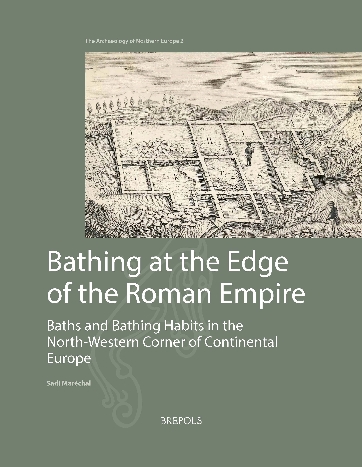
Bathing at the Edge of the Empire
show More to view fulltext, buy and share links for:Bathing at the Edge of the Empire show Less to hide fulltext, buy and share links for: Bathing at the Edge of the EmpireRoman bathhouses are considered to be prime markers when studying romanization in the provinces of the Empire, as these very specific - and archaeologically recognizable - buildings, together with their associated ideas about the body and personal health, introduced a decidedly Roman habit into regions that had hitherto been unfamiliar with (communal) bathhouses and heating technology. While traditionally, studies into Roman baths and bathing have focused on large public baths in the cities of the empire, however, those from the area that now roughly corresponds to modern-day Belgium have often been neglected in recent research as this was an area with few important urban centres.
This book for the first time investigates the introduction, spread, and eventual disappearance of Roman-style baths and of bathing habits in this north-western corner of the Roman Empire. A detailed analysis of the architecture, technology, and decoration of both public and private baths is combined with a discussion on the role of bathing in the area’s romanization, and supplemented by a fully illustrated catalogue of all bathhouses in the area of study. In doing so, the volume sheds new light not only on the evolution of baths and bathing in this region, but also on their broader role in larger historic processes such as cultural change across the Empire.
-
-
-
Bassit 2 (Syrie) - Fouilles Paul Courbin (1971-1984)
show More to view fulltext, buy and share links for:Bassit 2 (Syrie) - Fouilles Paul Courbin (1971-1984) show Less to hide fulltext, buy and share links for: Bassit 2 (Syrie) - Fouilles Paul Courbin (1971-1984)À 50 km au Nord de Lattaquié, le site côtier de Bassit a été étudié sous la direction de Paul Courbin : après l’acropole (1971-1972) (périodes hellénistique et romaine), et la nécropole du Fer (1973-1974), le « tell » a été fouillé de 1972 à 1984. Sont présentés ici une description détaillée de la stratigraphie et de l’architecture du « tell », des ensembles céramiques associés, ainsi que le corpus du mobilier datant du Bronze Récent I et II. Bassit est installé aux marges Nord du royaume d’Ougarit à partir du milieu du xvi e s. av. J.-C.. Les importations chypriotes sont nombreuses durant tout le Bronze Récent, mais la céramique égéenne apparaît très rare. Le site est détruit bien avant le passage des « peuples de la mer » (vers 1200). À l’âge du Fer, la fonction constante de Bassit est de contrôler l’accès maritime depuis Chypre et le cabotage littoral. Le commerce de la céramique chypriote domine le Fer I et II, celui des céramiques égéennes et étrusques, puis attiques, le Fer III. À l’époque hellénistique, la production d’amphores et de monnaies confirme l’identification de Posideion avec Bassit. L’époque romaine est également marquée par une importante production de céramique.
-
-
-
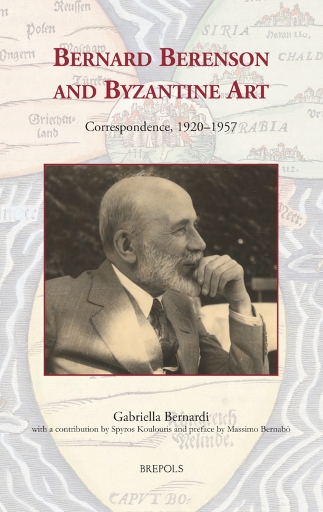
Bernard Berenson and Byzantine Art
show More to view fulltext, buy and share links for:Bernard Berenson and Byzantine Art show Less to hide fulltext, buy and share links for: Bernard Berenson and Byzantine ArtThe American art historian Bernard Berenson, born in 1865, is famous for his pioneering studies of the Italian Renaissance, but his work on Byzantine art remains less well-known and less studied. Yet his passion for studies of Byzantium - dubbed the ‘Byzantine infection’ - played a major role throughout Berenson’s life, and in the 1920s, he began work on a magnum opus on this topic that was sadly never completed. This volume aims to illuminate and revisit Berenson’s approach to Byzantium and the art of the Christian East through an exploration and analysis of the correspondence, travel notes, and photo archive that Berenson built up over his lifetime, and that taken together, clearly points to an explicit recognition by Berenson of the importance of Byzantine art in the Latin Middle Ages. Drawing together Berenson’s correspondence with art historians, collectors, and scholars from across Europe, the US, and the Near East, together with an overview of his numerous photography campaigns, the book is able to open a new window into Byzantine art historiography from the 1920s to the 1950s. In doing so, it sheds light onto a period in which important discoveries and extensive restoration campaigns were carried out, such as those of the mosaics of Hagia Sophia and Kariye Camii in Istanbul, as well as of the Basilica of San Marco in Venice and its decoration.
-