


BOB2025MIOT

Collection Contents
2 results
-
-
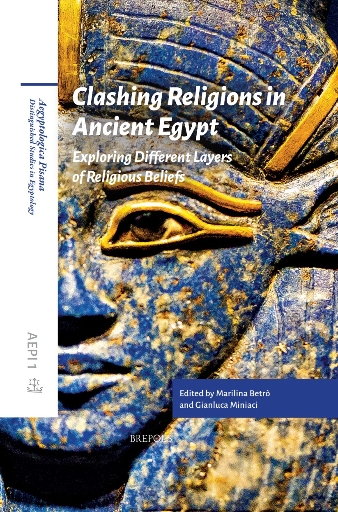
Clashing Religions in Ancient Egypt
show More to view fulltext, buy and share links for:Clashing Religions in Ancient Egypt show Less to hide fulltext, buy and share links for: Clashing Religions in Ancient EgyptWhat did ‘religion’ mean for the Ancient Egyptians? Was the state involved in acting as a unifying and founding force for Egyptian religion or can we still identify some clashes between different religious practices? To what extent did different rituals, practices, and beliefs intersect and merge across time and space? Such questions have long preoccupied scholars working in the field, but they have often only been considered through the lens of official, ‘centralized’ texts. Yet increasingly, there is an acknowledgement that such texts require calibration from archaeological data in order to offer a more nuanced understanding of how people must have lived and worshipped.
The chapters gathered in the volume aim to offer a thorough exploration of Egyptian cultural and religious beliefs, and to explore how these impacted on other areas of daily life. Contributors explore the connection between religion and central power, the paradigms around burial and access to the afterlife, the interconnections between religion, demonology, magic, and medicine, and the impact of multicultural interaction on the religious landscape. What emerges from this discussion is an understanding that the only truly identifiable clash is that between modern, Eurocentric perspectives, and the views of the ancient Egyptians themselves.
-
-
-
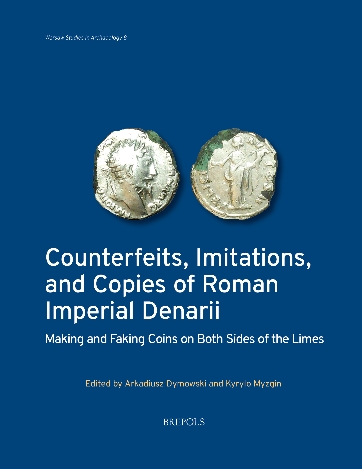
Counterfeits, Imitations, and Copies of Roman Imperial Denarii
show More to view fulltext, buy and share links for:Counterfeits, Imitations, and Copies of Roman Imperial Denarii show Less to hide fulltext, buy and share links for: Counterfeits, Imitations, and Copies of Roman Imperial DenariiRoman Imperial denarii from the first–third centuries ad are, almost without exception, the most common ancient coinage to be found in Central, Northern, and Eastern Europe beyond the Roman limes. Perhaps surprisingly, however, a significant percentage of these coins are in fact counterfeit, comprised largely of denarii subaerati (plated denarii, fourrées) and denarii flati (base-metal cast copies). Moreover, these fake coins were not only manufactured by Romans themselves, but also by barbarian peoples in Eastern Europe, far from the Roman limes, in what should be considered a mass-scale phenomena.
This volume draws together archaeological, numismatic, and historical research in order to offer a new assessment of the production and use of counterfeit Roman Imperial denarii both within the European provinces of the Roman Empire and in European Barbaricum. Drawing on the results of the research project Barbarian Fakers. Manufacturing and Use of Counterfeit Roman Imperial Denarii in East-Central Europe in Antiquity, from the University of Warsaw, the papers gathered here explore the transfer of ideas, technology, and finished products that led to the transfer of counterfeit coinage across the Empire, and shed light on how, why, and when such coins were created and used.
-