BOB2025MIOT

Collection Contents
1 - 20 of 60 results
-
-
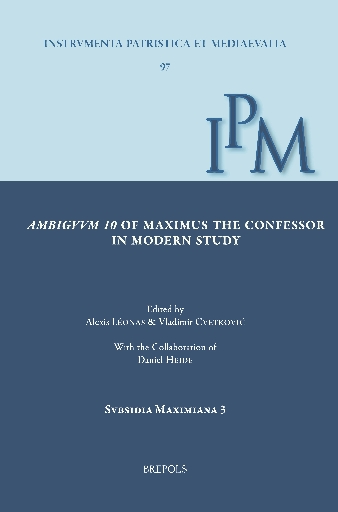
Ambiguum 10 of Maximus the Confessor in Modern Study
show More to view fulltext, buy and share links for:Ambiguum 10 of Maximus the Confessor in Modern Study show Less to hide fulltext, buy and share links for: Ambiguum 10 of Maximus the Confessor in Modern StudyAmbiguum 10 is an important sample of Maximus the Confessor’s philosophical exegesis, which has not received concentrated scholarly attention so far. This volume includes a new critical text edition by Prof. Carl Laga and a new English translation by Dr. Joshua Lollar. It also offers a unique insight into the universe of the great Christian thinker, showcasing his extensive knowledge of Aristotelian, Platonic and Neoplatonic philosophy and offering possible parallels with the Corpus Hermeticum and Ps-Dionysius the Areopagite. The present volume is the first attempt to bring together scholars from different traditions to understand the message and the reception of this seminal work.
-
-
-
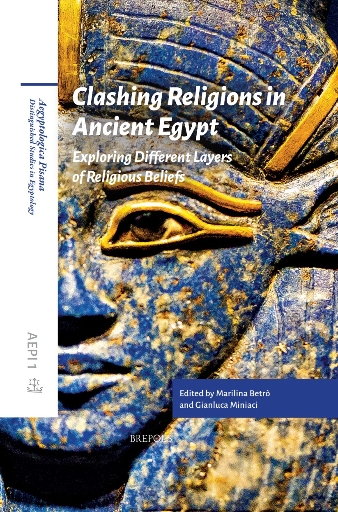
Clashing Religions in Ancient Egypt
show More to view fulltext, buy and share links for:Clashing Religions in Ancient Egypt show Less to hide fulltext, buy and share links for: Clashing Religions in Ancient EgyptWhat did ‘religion’ mean for the Ancient Egyptians? Was the state involved in acting as a unifying and founding force for Egyptian religion or can we still identify some clashes between different religious practices? To what extent did different rituals, practices, and beliefs intersect and merge across time and space? Such questions have long preoccupied scholars working in the field, but they have often only been considered through the lens of official, ‘centralized’ texts. Yet increasingly, there is an acknowledgement that such texts require calibration from archaeological data in order to offer a more nuanced understanding of how people must have lived and worshipped.
The chapters gathered in the volume aim to offer a thorough exploration of Egyptian cultural and religious beliefs, and to explore how these impacted on other areas of daily life. Contributors explore the connection between religion and central power, the paradigms around burial and access to the afterlife, the interconnections between religion, demonology, magic, and medicine, and the impact of multicultural interaction on the religious landscape. What emerges from this discussion is an understanding that the only truly identifiable clash is that between modern, Eurocentric perspectives, and the views of the ancient Egyptians themselves.
-
-
-
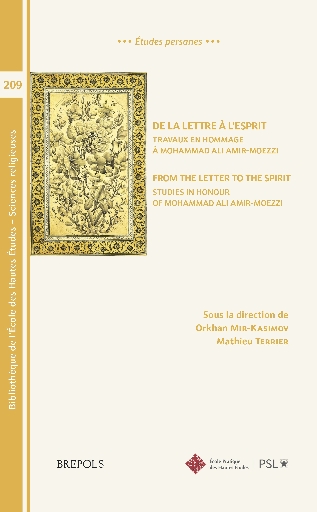
De la lettre à l’esprit / From the Letter to the Spirit
show More to view fulltext, buy and share links for:De la lettre à l’esprit / From the Letter to the Spirit show Less to hide fulltext, buy and share links for: De la lettre à l’esprit / From the Letter to the SpiritLa parution du Guide divin dans le shî’isme originel en 1992 a marqué le début de l’itinéraire scientifique de Mohammad Ali Amir-Moezzi. Suivant une ligne directrice cohérente aux ramifications nombreuses, cet islamologue a transformé en profondeur les études shi’ites d’abord, notamment en soulignant l’importance de la « tradition ésotérique originelle » dans l’histoire de ce grand courant de l’islam, et les études coraniques ensuite, par la prise en compte des sources shi’ites anciennes et la critique du récit traditionnel « orthodoxe ». Détenteur de 1996 à 2024 de la chaire « Exégèse et théologie de l’islam shi’ite » à la section des sciences religieuses de l’École Pratique des Hautes Études, Mohammad Ali Amir-Moezzi est également un professeur hors du commun dont l’enseignement a formé et inspiré de nombreux chercheurs actuels. Ces volumes d’hommage réunissent quarante-quatre contributions de ses collègues et amis, dont nombre d’anciens étudiants, de tous horizons, portant sur les domaines d’études chers au dédicataire : études shi’ites ; études coraniques ; antiquité tardive et débuts de l’islam ; traditions mystiques de l’islam ; aspects de la vie religieuse et intellectuelle contemporaine. Témoignages d’amitié et de reconnaissance pour une œuvre scientifique majeure, les contributions savantes réunies dans ces volumes en font un ouvrage de référence.
-
-
-
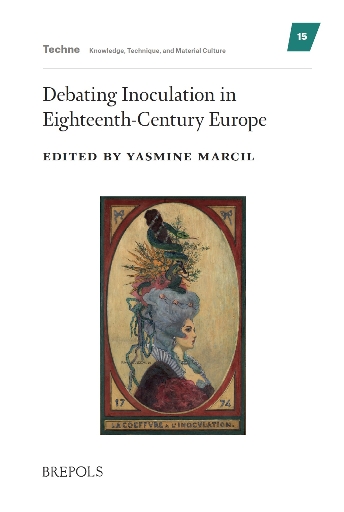
Debating Inoculation in Eighteenth-Century Europe
show More to view fulltext, buy and share links for:Debating Inoculation in Eighteenth-Century Europe show Less to hide fulltext, buy and share links for: Debating Inoculation in Eighteenth-Century EuropeSmallpox (known as "variole" or "petite vérole" in French) spread relentlessly across Europe during the eighteenth century, gaining an unprecedented and deadly momentum. While there was no cure for this highly infectious and often fatal disease, those that recovered from it were immune to future infections. This phenomenon was the origin of a practice of inoculation, whereby infectious material was introduced into the body to induce immunity. In Europe, this practice was initially experimented with in England, and it was subsequently adopted across the continent during the eighteenth century. Inoculation was, however, not without controversy—not least because the practice originated outside of Europe—and it became the subject of intense debate. This debate, this volume argues, extended beyond medical circles to include intellectuals and the broader public—a phenomenon driven by a growing periodical press. As books, scientific treatises, and plays crossed regional and national boundaries, debates on inoculation must, this volume shows, be examined within a European, transnational perspective, thereby considering how ideas were shaped by adaptation, translations, and citation. Doing so, this volume not only sheds new light on the history inoculation as a practice, but also illustrates how cultural history can enrich history of medicine
-
-
-
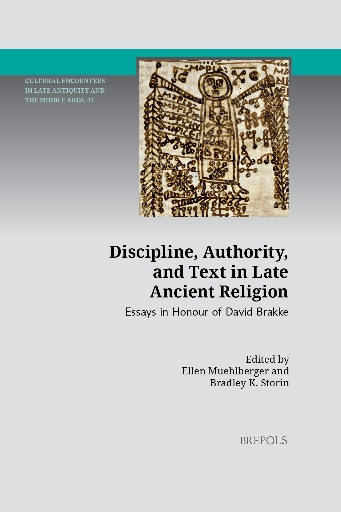
Discipline, Authority, and Text in Late Ancient Religion
show More to view fulltext, buy and share links for:Discipline, Authority, and Text in Late Ancient Religion show Less to hide fulltext, buy and share links for: Discipline, Authority, and Text in Late Ancient ReligionThis collection of essays on religious practice in the Mediterranean, Near East, and Middle East (ca. 100–800 ce) celebrates the impact that Professor David Brakke has had on the study of late antique religious history. Nineteen scholars celebrate the career of Professor Brakke with essays on a range of subjects on late ancient religion. Some chapters treat monastic texts, ascetic practice, and ritual performance; others address the roles of magic, demons, and miracle stories; still others examine Christian violence and martyrdom.
In particular, many of these essays explore the kinds of ascetic theory, practice, identity, organization, performance, and writing found throughout the diverse authors, groups, and locales of Late Antiquity. Essay topics cross disciplinary boundaries and operate in the overlapping intellectual space of Religious Studies, History, Classics, English, Anthropology, and Comparative Literature. By treating asceticism as a phenomenon within a relatively confined time period and geography across a variety of religious and literary traditions, this volume highlights the ascetic impulse within new areas.
The volume thus stands alone for its multifaceted discussions of religion and asceticism in Late Antiquity, and advances scholarly investigation of and discourse about late antique asceticism by expanding conceptual and disciplinary boundaries in new and exciting directions.
-
-
-
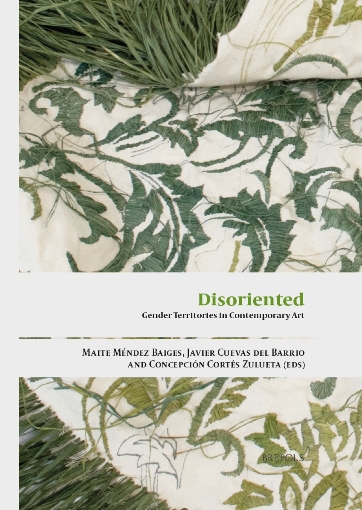
Disoriented
show More to view fulltext, buy and share links for:Disoriented show Less to hide fulltext, buy and share links for: Disoriented'Desnortar', or disoriented, means to lose the north or the sense of direction, to disorient. In Disoriented a collective book from a gender perspective, we consciously seek to lose both the geographical north and the north of the contemporary art canon. We aim to rethink and disrupt, from feminist, LGTBQ+ and postcolonial approaches, the coordinates that have articulated the discourses on the art history and art system along the 20th and 21st centuries. Coordinates that define how these artistic practices and systems of modernity and the contemporary are understood, the cardinal directions and main conceptual issues, or which artists are relevant or expendable according to the narratives of avant-garde and contemporary art history. It is crucial to reinterpret and disorientate, to disnorth and thereby shatter these references to overcome the gaps that prevent the emergence of alternative knowledges. To address questions or artists often perceived as peripheral to a grand historical narrative, we propose an intersection of modern and contemporary art history, gender, feminist, queer and postcolonial approaches, and transnational interrelations. This intersectionality allows us to actively lose the north of the canon and to direct our gaze towards subjects outside the usual centres of legitimation. Mostly, we attend to women artists, to peripheral geographical centres, to subaltern collectives, or to practices or materials regularly considered of little artistic interest. All of the above critiques how conventional discourses have excluded some collectives or certain artistic proposals, and the resistances that have emerged against them.
-
-
-
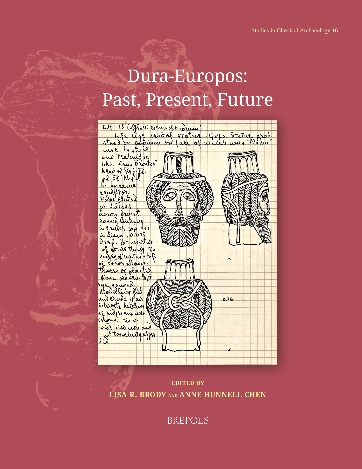
Dura-Europos: Past, Present, Future
show More to view fulltext, buy and share links for:Dura-Europos: Past, Present, Future show Less to hide fulltext, buy and share links for: Dura-Europos: Past, Present, FutureThis volume brings together an international and interdisciplinary host of scholars to reflect on the complicated legacies of exploration at the archaeological site of Dura-Europos, situated on the western bank of the Euphrates River near modern Salihiyeh (Syria). A chance discovery after World War I kicked off a series of excavations that would span the next century and whose finds are today housed in collections worldwide, including the Yale University Art Gallery, the Louvre, and the National Museum in Damascus. Dura-Europos exemplifies a multiethnic frontier town at the crossroads of major trade routes. Its textual remains and remarkably-preserved Christian, Jewish, and polytheist religious sanctuaries provide key resources for the study of antiquity and attest to the cross-cultural interconnectivity that was demonstrably central to the ancient world but which has been too often obscured by Eurocentric historiographic traditions and siloed disciplinary divisions.
Foreign-run, large-scale archaeological campaigns of the early twentieth century, like those at Dura-Europos, have created narratives of power and privilege that often exclude local communities. The significance of these imbalances is entangled with the destruction the site has experienced since the 2011 outbreak of conflict in Syria. As a step toward making knowledge descendant of early excavations more accessible, this volume includes Arabic summaries of each paper, following up on the simultaneous Arabic interpretation provided at the 2022 hybrid conference whose proceedings form the core of this publication. The papers address topics connected to essential themes in relation to Dura-Europos: long-distance trade relations and cross-border interactions in antiquity, including the exchange of technologies, people, and materials; Christianity, Judaism, and other religious practices, and their relations to one another; contemporary trafficking of looted artifacts; cultural heritage and the Islamic State; and the evolving role of museum collections, technologies, and archival materials for research.
-
-
-

Forgotten Roots of the Nordic Welfare State in Protestant Cultures
show More to view fulltext, buy and share links for:Forgotten Roots of the Nordic Welfare State in Protestant Cultures show Less to hide fulltext, buy and share links for: Forgotten Roots of the Nordic Welfare State in Protestant CulturesThe Nordic welfare state of the 20th century has been hailed around the world as a model of how to build democratic and egalitarian societies. It has often been described as a project of social democracy, often following a narrative of secularization and rationalization of society. However, some of the most important actors and ideas of the "Scandinavian Sonderweg" had their roots in Protestant, often Pietist and revivalist milieus that dreamed of creating an egalitarian community. The present volume explores these often forgotten roots in several case studies of phenomena from the seventeenth to the twenty-first century, focusing primarily on questioning the function of aesthetics in the creation of the welfare state model. We argue that aesthetics and what Friedrich Schiller called aesthetic education played an important, unifying role for Nordic societies. These aesthetics were shaped by Protestant ideas and practices. Through references to the then widespread circulation of educational texts based on Luther's catechism, the later pietistic catechism of Erik Pontoppidan, Nordic hymnbooks, and practices such as communal singing and preaching in church, church coffee, reading circles, and conventicle meetings, a common aesthetic language emerged that unified different social groups and their competing goals and claims. Civic actors and movements learned specific ways to engage in society, to develop practices of internalizing responsibility, (self)critique, and accountability, and to communicate and develop a more democratic modern civic sphere. We therefore propose to look at this history from the perspective of a historically changing aesthetic as an integrating principle for understanding the political, social, cultural, economic and many other aspects of the Nordic welfare state.
-
-
-
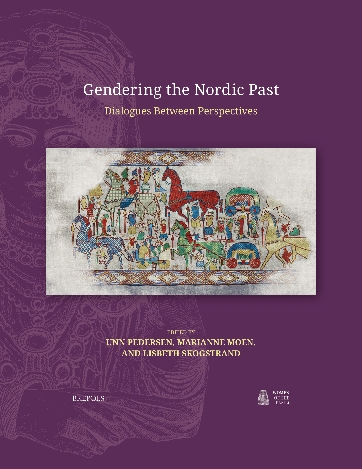
Gendering the Nordic Past
show More to view fulltext, buy and share links for:Gendering the Nordic Past show Less to hide fulltext, buy and share links for: Gendering the Nordic PastThe idea of the Nordic nations as champions of gender equality is firmly rooted in today’s perceptions of society. But how does such a modern comprehension influence our views of history? Does our understanding of gender impact on how we see the past? And do the ways in which we gender the past have an effect on our present identities?
From the Stone Age to the Early Modern period, and from warriors and queens to households and burials, this groundbreaking volume draws together research conducted as part of the project Gendering the Nordic Past, an inter-Nordic collaboration aimed at (re)evaluating and revitalizing the field of gender studies in the region. The chapters gathered in this volume, contributed by archaeologists and historians, theologians, art historians, and specialists in gender studies, aim to offer novel perspectives on the ways in which we gender the past. While many of the chapters focus explicitly on the Nordic countries, comparisons are also drawn with other regions in order to provide both internal and external views on the role of the collective past in present Nordic identities. The result, presented here, is an essential dialogue into the importance of gender in creating and maintaining past identities, as well as a new understanding of how the identities that we construct for the past can relate to heritage narratives.
-
-
-
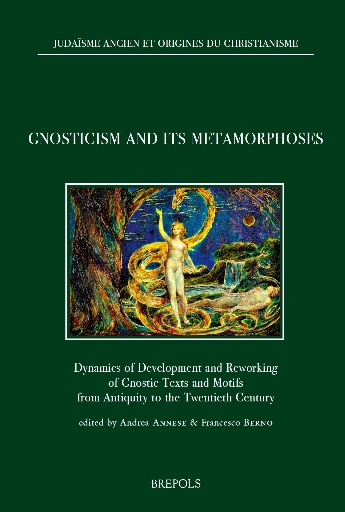
Gnosticism and Its Metamorphoses
show More to view fulltext, buy and share links for:Gnosticism and Its Metamorphoses show Less to hide fulltext, buy and share links for: Gnosticism and Its MetamorphosesThe complex and multifaceted religious phenomenon called Gnosticism continues to fascinate both specialists and the wider audience. This volume explores the “metamorphoses” of Gnosticism, through the analysis of selected examples. Late antique Gnostic groups and schools of thought developed and even changed their ideas when interacting with other religious groups and with various sources. Confrontation and polemics with the so-called “Great Church” and with other Christian groups were crucial to doctrinal elaboration of all parties involved. On a different side, one can trace the metamorphoses of Gnostic ideasthrough the centuries, as these ideas influenced, and were reinterpreted by, other religious and cultural traditions and currents, from Manichaeism to medieval dualistic movements, modern esotericism, and even contemporary literature.
The essays gathered in this volume focus on two main topics, namely how ancient Gnostic groups developed their doctrines by interpreting and reworking their wide range of sources (Jewish, early Christian, Platonic ones, etc.), and how ancient Gnostic ideas and motifs survived – with new forms – in later philosophical, religious, and literary works, up to the twentieth century.
The volume consists of three sections, the first being dedicated to early anti-Gnostic controversy in texts embedding Jewish-Christian and Petrine traditions and using Gnostic motifs for polemical purposes; the second to some treatises from the Nag Hammadi corpus and other Gnostic manuscripts (plus Epiphanius’ Panarion) so as to provide fresh insights into late antique Gnostic texts and groups; and the third to three case studies of the modern reception and reworking of Gnostic writings and ideas.
-
-
-

Les (r)évolutions dans le théâtre européen (xvii e-xviii e siècles)
show More to view fulltext, buy and share links for:Les (r)évolutions dans le théâtre européen (xvii e-xviii e siècles) show Less to hide fulltext, buy and share links for: Les (r)évolutions dans le théâtre européen (xvii e-xviii e siècles)Au fil des siècles, le théâtre a subi plusieurs transformations : formelles, esthétiques et techniques. Le jeu d’acteur, l’arrangement de la scène et l’aménagement de la salle de spectacle ont aussi évolué. Les dramaturges et les comédiens se sont investis dans la recherche de la meilleure forme d’expression, visant à influer le mieux sur le public. Dans différents pays européens, ces évolutions se manifestèrent de différentes manières et intensités, selon la spécificité culturelle, politique et sociale locale.
Les contributeurs du présent ouvrage essaient de retracer certaines de ces (r)évolutions théâtrales qui ont eu lieu en Europe à travers les siècles. Leurs textes offrent une vue panoramique sur cette thématique, invitant les lecteurs à explorer les aspects parfois un peu moins connus de l’histoire du théâtre.
-
-
-
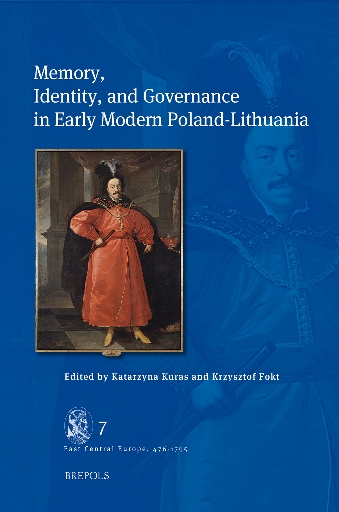
Memory, Identity, and Governance in Early Modern Poland‑Lithuania
show More to view fulltext, buy and share links for:Memory, Identity, and Governance in Early Modern Poland‑Lithuania show Less to hide fulltext, buy and share links for: Memory, Identity, and Governance in Early Modern Poland‑LithuaniaIn the early modern period, Poland–Lithuania stood as a realm where the echoes of a storied past intertwined with the ambitions of a dynamic present. This volume illuminates how its diverse populace navigated the complexities of their shared heritage, weaving tradition with innovation to craft a uniquely multi-layered identity. The essays presented here examine the dual nature of historical inheritance in this vast polity. On the one hand, the past served as a treasure trove of enduring ideas, compelling narratives, and time-tested practices that enriched cultural and political life. On the other, it posed formidable challenges, requiring creative adaptation to meet the demands of changing times. By exploring established narratives, performative traditions, and historical frameworks, the contributors uncover the intricate ways in which memory influenced decision-making and societal evolution. They reveal how the past was neither static nor simply an obstacle, but was an active force that shaped contemporary aspirations and inspired visions of the future. Through the lenses of rulers, nobles, intellectuals, and commoners, this collection offers fresh perspectives on how the people of Poland–Lithuania harnessed the power of history to craft a legacy that transcended their era. Essential reading for scholars and enthusiasts alike, this work examines the enduring dialogue between memory and identity in one of Europe’s most compelling early modern states.
-
-
-
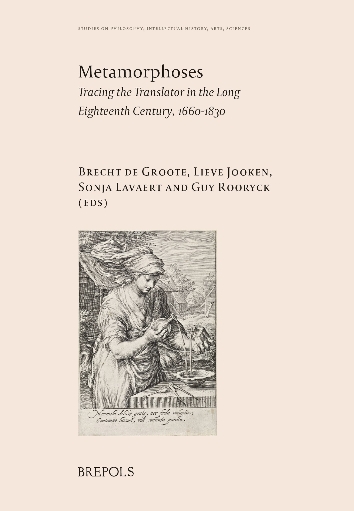
Metamorphoses
show More to view fulltext, buy and share links for:Metamorphoses show Less to hide fulltext, buy and share links for: MetamorphosesTranslators are crucial to the constitution, dissemination, and adaptation of literatures, cultures, and ideas. However, their presence in the historical record often proves difficult to recognise or retrace. This volume places front and centre this key problem for historians of translation, as well as for historians of literature, culture, and ideas. It sheds new light on the much-debated (in)visibility of historical translators by investigating in what contexts and through what strategies translators sought to render themselves either (in)visible, and how critics and scholars can now trace these efforts. When and how does the visible metamorphose into the invisible, and vice versa?
The volume focuses on the long eighteenth century, a period which witnesses a metamorphosis in literature and culture that tells powerfully on translators. From relatively visible cultural actors, they are reduced to enforced invisibility as cultural products stabilised their meanings around singular authors. Tracing this shift across a swathe of products and practices, the book conducts its investigations across a range of genres, ranging from radical politics over philosophy to opera; taking in languages and cultures across Western Europe.
Chapters employ case studies to develop methodological and theoretical models that will empower scholars of translation history to recover translators, both from the direct evidence of their work and from the networks and tools that supported them.
-
-
-
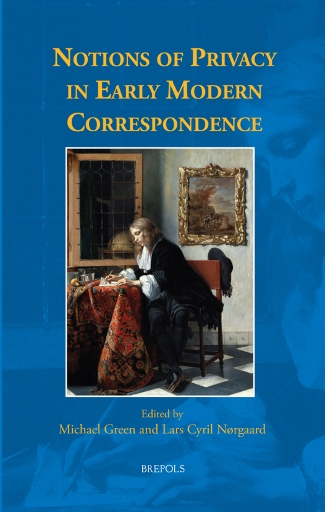
Notions of Privacy in Early Modern Correspondence
show More to view fulltext, buy and share links for:Notions of Privacy in Early Modern Correspondence show Less to hide fulltext, buy and share links for: Notions of Privacy in Early Modern CorrespondenceOur modern notions of privacy have their roots in the early modern period. When studying this historical background, one of the most important sources is correspondence. Letters sent from one person to another reflect specific situations, ideas, thoughts, emotions, and experiences. Contextualizing an epistolary exchange provides information about the world and values of past individuals.
This volume presents essays that deal with a variety of early modern correspondence. The letters analysed, written in French, Dutch, German, and English, speak to very different contexts and cultural codes. While each of the letters in question has its own unique story to tell, all contributions come together by focusing on notions of privacy. From the intimacy that unfolds in educational exchanges to specific letter-writers and their strategic use of the private, this volume offers ground-breaking insights that will be relevant to many different researchers and their respective fields: the history of science, the history of Christianity, the history of travel writing and education, gender studies, and the history of diplomacy. In addition, the contributions also tackle the issue of publishing letters in the early modern period, both as a cultural phenomenon and as a material praxis.
Together, the essays show how ‘privacy’ was an ambiguous term in the early modern period; the letter as literary genre and a means of communication demonstrates how privacy was perceived both as valuable and as a potential threat.
-
-
-
Ordres et désordres dans les chaînes exégétiques grecques
show More to view fulltext, buy and share links for:Ordres et désordres dans les chaînes exégétiques grecques show Less to hide fulltext, buy and share links for: Ordres et désordres dans les chaînes exégétiques grecquesAmoncellement de fragments ? catalogue d’extraits ? tapisserie exégétique ? Les chaînes ont pour premier principe d’organisation le texte biblique qu’elles commentent en le suivant pas à pas. Mais comment les différentes scholies sont-elles classées entre elles, si elles le sont ? Jusqu’à présent, la question de l’organisation interne des chaînes a fait l’objet de remarques rapides en marge de l’étude de telle ou telle collection, mais rarement d’un examen approfondi. C’est pourtant un aspect essentiel pour comprendre ce genre, en préciser les différentes formes et saisir l’enjeu de ces entreprises byzantines : conserver un maximum de textes, favoriser la consultation, la mémorisation ou la confrontation de différentes exégèses, composer un commentaire continu, etc. Cet ouvrage collectif rassemble des enquêtes originales portant aussi bien sur les chaînes de l’Ancien que du Nouveau Testament. Sont explorés différents phénomènes structurants relatifs à la connexion entre texte biblique et commentaire, au classement des sources, à l’enchaînement des contenus exégétiques, à la disposition des scholies sur la page. On met au jour la méthode de travail d’un caténiste ou les étapes de l’élaboration d’une compilation ; une place est accordée au désordre et à ses causes, notamment en lien avec les phénomènes de transformation et de combinaison de différentes collections. Premier tour d’horizon, permettant déjà de découvrir des situations très diverses, ce volume ouvre la voie à une approche comparative des chaînes, nécessaire pour mieux comprendre cette pratique de compilation byzantine.
-
-
-
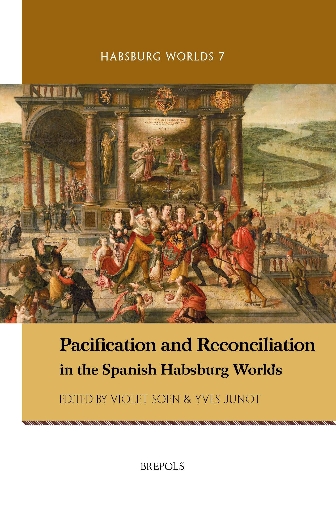
Pacification and Reconciliation in the Spanish Habsburg Worlds
show More to view fulltext, buy and share links for:Pacification and Reconciliation in the Spanish Habsburg Worlds show Less to hide fulltext, buy and share links for: Pacification and Reconciliation in the Spanish Habsburg WorldsThis is the first volume to analyze pacification strategies within the Spanish Monarchy on a global level. It deals with the development and aftermath of the many early modern revolts on the Iberian and Italian Peninsula, the Sicilian and Sardinian islands, the cities along the North Sea and the Spanish Americas. These comparative studies uncover the different ways in which the Spanish Monarchy dealt with rebellion from cities and constituencies, ranging from military responses and repression to offers for negotiation and reconciliation. They also point out common characteristics of these pacification processes, such as the promises of pardon, the granting of grace and the instruction of peace envoys. The different chapters, each accompanied by an edition of sources, show how the reconciliation and reincorporation into the Spanish Habsburg orbit proved to be a painstaking process with an unpredictable outcome.
-
-
-
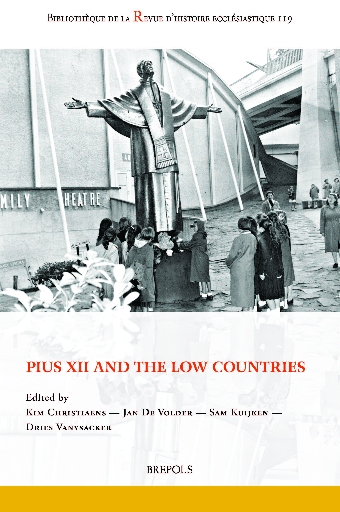
Pius XII and the Low Countries
show More to view fulltext, buy and share links for:Pius XII and the Low Countries show Less to hide fulltext, buy and share links for: Pius XII and the Low CountriesThe opening of the different Vatican Archives for the pontificate of Pius XII (1939-1958) in March 2020 sparked the interest of scholars across different disciplines worldwide. It invigorated tendencies to revisit the history of the 1940s and 1950s beyond the established narratives and sources, and nourished hopes to address both longstanding and emerging questions, and to discover innovative themes and approaches. Three years after the opening of these archives, a multidisciplinary group of scholars from Belgium and the Netherlands convened at a scientific conference in Rome, organized by the editors of this volume, to study the impact of the archival access on diverse research domains. This publication presents new research based on documentation unearthed in the Vatican archives, spanning both the Second World War and the postwar period and challenges existing scholarship not only on the history of the Catholic Church, but also on broader themes in the Low Countries.
-
-
-
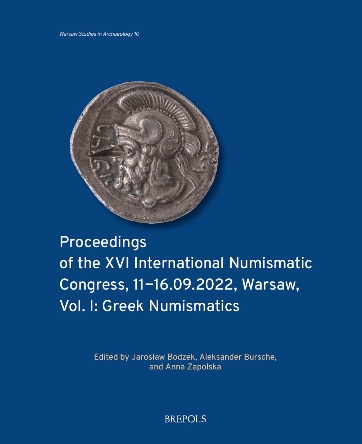
Proceedings of the XVI International Numismatic Congress, 11–16.09.2022, Warsaw, Vol. i: Greek Numismatics
show More to view fulltext, buy and share links for:Proceedings of the XVI International Numismatic Congress, 11–16.09.2022, Warsaw, Vol. i: Greek Numismatics show Less to hide fulltext, buy and share links for: Proceedings of the XVI International Numismatic Congress, 11–16.09.2022, Warsaw, Vol. i: Greek NumismaticsThe XVI International Numismatic Congress, held in Warsaw, Poland, in September 2022, was a landmark event, drawing the largest number of participants in its history. With over 550 papers presented during thematic sessions and round tables, this congress showcased the latest advancements and research in the field of numismatics from leading experts and scholars in their field.
A curated selection of papers from the conference have now been drawn together into peer-reviewed conference proceedings, representing a comprehensive spectrum of numismatic studies from antiquity to modern times. Each paper is meticulously illustrated with high-quality images, often of unique specimens, along with detailed diagrams, maps, and die/typological chains. Topics covered include coins and coin finds, medals, tokens, banknotes, the history of collections and collecting, and cutting-edge chemical analyses and technologies used in coin examination.
This volume, the first in four thematic volumes, focuses on Greek numismatics, and comprises fifty-nine chapters exploring different elements of Greek coinage, as well as touching on coins from ancient India.
-
-
-
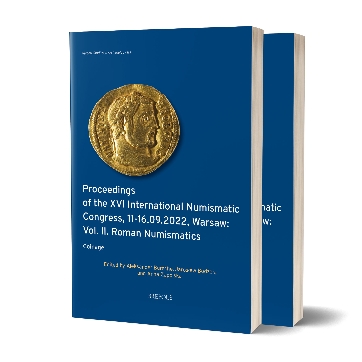
Proceedings of the XVI International Numismatic Congress, 11–16.09.2022, Warsaw, Vol. ii, Roman Numismatics
show More to view fulltext, buy and share links for:Proceedings of the XVI International Numismatic Congress, 11–16.09.2022, Warsaw, Vol. ii, Roman Numismatics show Less to hide fulltext, buy and share links for: Proceedings of the XVI International Numismatic Congress, 11–16.09.2022, Warsaw, Vol. ii, Roman NumismaticsThe XVI International Numismatic Congress, held in Warsaw, Poland, in September 2022, was a landmark event, drawing the largest number of participants in its history. With over 550 papers presented during thematic sessions and round tables, this congress showcased the latest advancements and research in the field of numismatics from leading experts and scholars in their field.
A curated selection of papers from the conference have now been drawn together into peer-reviewed conference proceedings, representing a comprehensive spectrum of numismatic studies from antiquity to modern times. Each paper is meticulously illustrated with high-quality images, often of unique specimens, along with detailed diagrams, maps, and die/typological chains. Topics covered include coins and coin finds, medals, tokens, banknotes, the history of collections and collecting, and cutting-edge chemical analyses and technologies used in coin examination.
This volume, the second in four thematic volumes, focuses on Roman coinage. Divided into two separate volumes, covering respectively forty-three chapters on coinage and forty-one on circulation, the contributions gathered here explore not only Rome and the imperial mints, but also local phenomena from Spain to Asia Minor, including graffiti, imitations, and copies of Roman coinage.
-