


BOB2025MIOT

Collection Contents
3 results
-
-
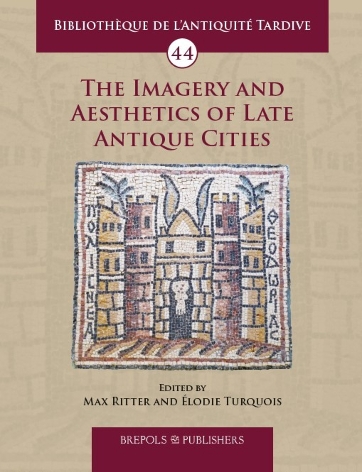
The Imagery and Aesthetics of Late Antique Cities
show More to view fulltext, buy and share links for:The Imagery and Aesthetics of Late Antique Cities show Less to hide fulltext, buy and share links for: The Imagery and Aesthetics of Late Antique CitiesWhile the role of the city in Late Antiquity has often been discussed by archaeologists and historians alike, it is only in recent years that scholarship has begun to offer a more nuanced approach in our understanding to how such cities functioned, stepping away from the traditional paradigm of their decline and fall with the collapse of the Roman Empire. In line with this approach, this deliberately interdisciplinary volume seeks to provide a more multifaceted understanding of urban history by drawing together scholars of literary and material culture to discuss the concepts of imagery and aesthetics of late antique cities.
Gathering together contributions by historians, philologists, archaeologists, literature specialists, and art historians, the volume aims to explore the imagery and aesthetics of cities in Late Antiquity within a strong theoretical framework. The different chapters explore the aesthetics of cityscape representations in literature and art, asking in particular whether literary representations of late antique urban landscapes mirror the urban reality of eclectic ensembles of pre-existing architecture and new buildings, as well as questioning both how the ideal of the city evolved in the imagination of the period and if imperial ideology was reflected in literary depictions of cities.
-
-
-
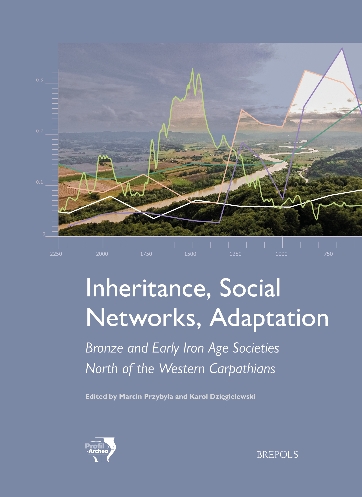
Inheritance, Social Networks, Adaptation
show More to view fulltext, buy and share links for:Inheritance, Social Networks, Adaptation show Less to hide fulltext, buy and share links for: Inheritance, Social Networks, AdaptationHow did societies change between the Early Bronze Age and the Early Iron Age? And what was the impetus that led to these changes — social contacts and innovation, intergenerational contacts, or perhaps simply adaptation? Taking these questions as its starting point, this richly detailed volume explores four different regions of southern Poland to compare and contrast the mechanisms that drove socio-cultural change in the region between the second and the first half of the first millennium BC. Drawing on standardized sets of archaeological data, the chapters gathered here examine the interplay of different factors influencing cultural change across five key parameters: environment; settlement patterns; settlement organization; economy; and material culture. The result is a beautifully illustrated volume that offers important insights into Central and Eastern European prehistory, made accessible for an English-speaking audience.
-
-
-
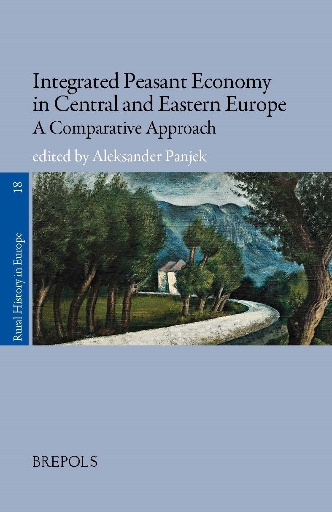
Integrated Peasant Economy in Central and Eastern Europe
show More to view fulltext, buy and share links for:Integrated Peasant Economy in Central and Eastern Europe show Less to hide fulltext, buy and share links for: Integrated Peasant Economy in Central and Eastern EuropeIncome integration based on the peasants’ engagement in non-agrarian sectors is a prominent and widespread feature in the history of the European countryside. While listing a multitude of activities outside the narrow scope of farm management aimed at self-consumption, prevailing interpretations emphasize how survival was the goal of peasant economies and societies. The “integrated peasant economy” is a new concept that considers the peasant economy as a comprehensive system of agrarian and non-agrarian activities, disclosing how peasants demonstrate agency, aspirations and the ability to proactively change and improve their economic and social condition. After having been successfully applied to the Alpine and Scandinavian areas, the book tests this innovative concept through a range of case studies on central and eastern European regions comprising Poland, the Czech Republic, Slovenia, Serbia, Bosnia and Herzegovina and Ukraine. By enhancing our knowledge on central and eastern Europe and questioning the assumption that these regions were “different”, it helps overcome interpretive simplifications and common places, as well as the underrepresentation of the “eastern half” of Europe in scholarly literature on rural history. That’s why the book represents a refreshing methodological contribution and a new insight into European rural history.
-