


BOB2025MIOT

Collection Contents
41 - 60 of 60 results
-
-
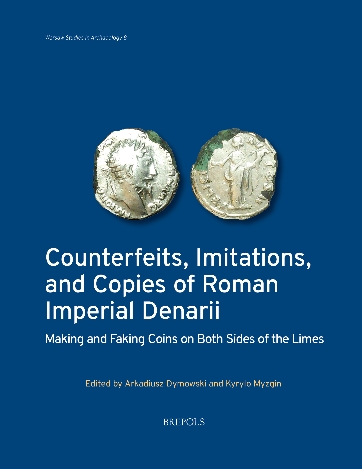
Counterfeits, Imitations, and Copies of Roman Imperial Denarii
show More to view fulltext, buy and share links for:Counterfeits, Imitations, and Copies of Roman Imperial Denarii show Less to hide fulltext, buy and share links for: Counterfeits, Imitations, and Copies of Roman Imperial DenariiRoman Imperial denarii from the first–third centuries ad are, almost without exception, the most common ancient coinage to be found in Central, Northern, and Eastern Europe beyond the Roman limes. Perhaps surprisingly, however, a significant percentage of these coins are in fact counterfeit, comprised largely of denarii subaerati (plated denarii, fourrées) and denarii flati (base-metal cast copies). Moreover, these fake coins were not only manufactured by Romans themselves, but also by barbarian peoples in Eastern Europe, far from the Roman limes, in what should be considered a mass-scale phenomena.
This volume draws together archaeological, numismatic, and historical research in order to offer a new assessment of the production and use of counterfeit Roman Imperial denarii both within the European provinces of the Roman Empire and in European Barbaricum. Drawing on the results of the research project Barbarian Fakers. Manufacturing and Use of Counterfeit Roman Imperial Denarii in East-Central Europe in Antiquity, from the University of Warsaw, the papers gathered here explore the transfer of ideas, technology, and finished products that led to the transfer of counterfeit coinage across the Empire, and shed light on how, why, and when such coins were created and used.
-
-
-
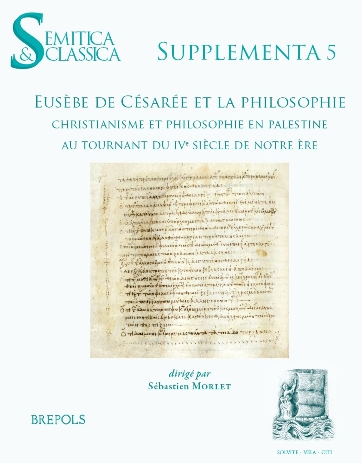
Eusèbe de Césarée et la philosophie
show More to view fulltext, buy and share links for:Eusèbe de Césarée et la philosophie show Less to hide fulltext, buy and share links for: Eusèbe de Césarée et la philosophieEusebius of Caesarea in Palestine, active between the end of the third century and the beginning of the fourth, is the Christian author who has handed down to us, in the form of quotations, the greatest number of Greek philosophical texts. Yet his precise relationship to philosophy has never been the subject of a comprehensive study.
This book, which brings together contributions by leading specialists, aims to provide an initial overview. The analyses, covering most of Eusebius’ works, starting with the Preparation for the Gospel, show the importance of philosophy in his thought. Beyond the use he makes of philosophers, sometimes to criticise them, sometimes to appropriate their ideas, Eusebius stands out for his fairly good knowledge of philosophy, especially Platonic philosophy, the issues of which he seems to understand well. Although he takes up from his Christian predecessors the idea that Christianity is, as such, a “philosophy”, this claim sometimes implies a technicality that is revealed not only in the way he quotes and comments on the philosophers, but also in the presence in his work, less visible at first sight, of concepts and methods of exposition that bear witness to a real philosophical culture. At the end of these studies, Eusebius of Caesarea, too often reduced to a “court theologian” or to the status of “Father of Ecclesiastical History,” emerges more as the scholar he was, both Greek and Christian, whose work and thought are inseparable from the philosophical context in which they were born.
-
-
-
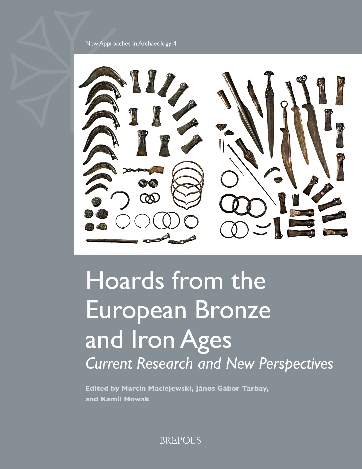
Hoards from the European Bronze and Iron Ages
show More to view fulltext, buy and share links for:Hoards from the European Bronze and Iron Ages show Less to hide fulltext, buy and share links for: Hoards from the European Bronze and Iron AgesHoards are among the most enigmatic of archaeological finds. The term ‘hoard’ itself has been applied to different assemblages across space and time, from the Stone Age into the modern era, with an inventory that typically includes artefacts made of valuable raw materials, to which significant symbolic meanings can also be assigned. Archaeologists have been trying to understand this phenomenon for much of the last century, sometimes emphasizing the universal nature of hoards, but more typically focusing on specific regions, chronologies, and finds. They have, for the most part, used results derived from typolo-chronological methods. Contemporary archaeology has, however, developed a broad spectrum of paradigms and methods, and hoardresearch in the twenty-first century draws on an increasingly wide range of approaches.This volume presents examples of research that make use of these multi-faceted approaches through a focus on European hoards of metal objects dating to the Bronze and Iron Ages. The contributors to this volume make use of diverse methods, among them archaeometallurgical analyses, studies of use- and production-wear, destruction patterns, and landscape archaeology, but together, their common denominator is the search for a methodological toolkit that will allow researchers to better understand the phenomenon of hoard-deposition more broadly.
-
-
-
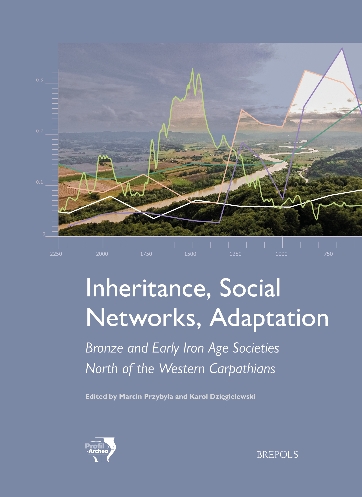
Inheritance, Social Networks, Adaptation
show More to view fulltext, buy and share links for:Inheritance, Social Networks, Adaptation show Less to hide fulltext, buy and share links for: Inheritance, Social Networks, AdaptationHow did societies change between the Early Bronze Age and the Early Iron Age? And what was the impetus that led to these changes — social contacts and innovation, intergenerational contacts, or perhaps simply adaptation? Taking these questions as its starting point, this richly detailed volume explores four different regions of southern Poland to compare and contrast the mechanisms that drove socio-cultural change in the region between the second and the first half of the first millennium BC. Drawing on standardized sets of archaeological data, the chapters gathered here examine the interplay of different factors influencing cultural change across five key parameters: environment; settlement patterns; settlement organization; economy; and material culture. The result is a beautifully illustrated volume that offers important insights into Central and Eastern European prehistory, made accessible for an English-speaking audience.
-
-
-
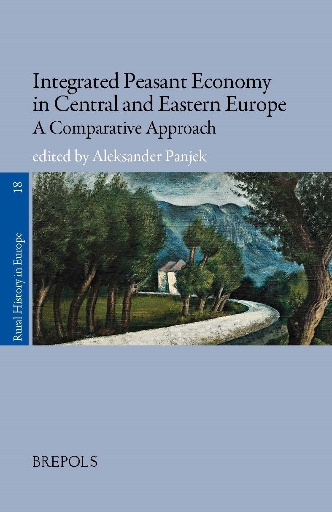
Integrated Peasant Economy in Central and Eastern Europe
show More to view fulltext, buy and share links for:Integrated Peasant Economy in Central and Eastern Europe show Less to hide fulltext, buy and share links for: Integrated Peasant Economy in Central and Eastern EuropeIncome integration based on the peasants’ engagement in non-agrarian sectors is a prominent and widespread feature in the history of the European countryside. While listing a multitude of activities outside the narrow scope of farm management aimed at self-consumption, prevailing interpretations emphasize how survival was the goal of peasant economies and societies. The “integrated peasant economy” is a new concept that considers the peasant economy as a comprehensive system of agrarian and non-agrarian activities, disclosing how peasants demonstrate agency, aspirations and the ability to proactively change and improve their economic and social condition. After having been successfully applied to the Alpine and Scandinavian areas, the book tests this innovative concept through a range of case studies on central and eastern European regions comprising Poland, the Czech Republic, Slovenia, Serbia, Bosnia and Herzegovina and Ukraine. By enhancing our knowledge on central and eastern Europe and questioning the assumption that these regions were “different”, it helps overcome interpretive simplifications and common places, as well as the underrepresentation of the “eastern half” of Europe in scholarly literature on rural history. That’s why the book represents a refreshing methodological contribution and a new insight into European rural history.
-
-
-
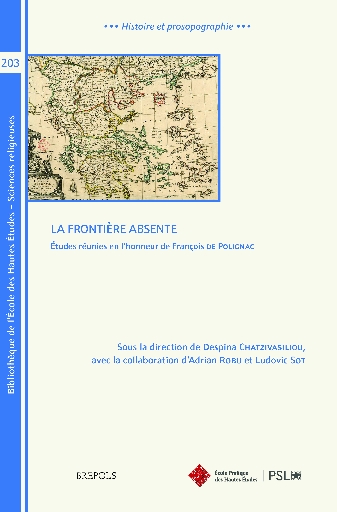
La frontière absente
show More to view fulltext, buy and share links for:La frontière absente show Less to hide fulltext, buy and share links for: La frontière absenteÀ l’occasion des soixante-dix ans de François de Polignac, nous sommes réunis autour de ce projet d’édition pour développer des sujets de recherche inspirés de ses publications et de son enseignement à l’École pratique des hautes études. Ce volume prend la forme non pas de mélanges mais d’essais sur des thématiques autour de l’Antiquité grecque, de la structuration de l’espace et des constructions identitaires, combinant des sources archéologiques et textuelles, et propose une réflexion dans le temps et l’espace. Nous voulons ainsi montrer, par des cas d’étude, comment François de Polignac a su aborder les civilisations antiques par une vision aussi précise que large, en intégrant les données sur la longue durée et en évitant d’adopter un modèle interprétatif uniforme dans le processus de la rédaction historique. L’aspect comparatiste s’est révélé important entre des régions et des époques différentes, du monde gréco-romain jusqu’à la Mésopotamie et la Chine. Une partie des textes est consacrée au commentaire de ses travaux dans le but d’expliquer comment ceux-ci nous inspirent et ouvrent des perspectives à d’autres réflexions et recherches.
-
-
-
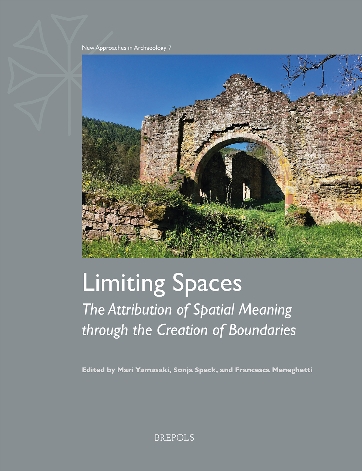
Limiting Spaces
show More to view fulltext, buy and share links for:Limiting Spaces show Less to hide fulltext, buy and share links for: Limiting SpacesThis volume explores how boundaries were created, perceived, and experienced in past societies. Bringing together diverse theoretical and methodological approaches — from cognitive and processual to sensory and phenomenological — the contributors examine how spatial meaning is attributed through the creation and negotiation of boundaries. The volume is structured into three thematic sections: the first investigates how boundaries define and characterize space; the second focuses on the act of crossing boundaries and its role in shaping spatial significance; and the third examines the experience of boundaries, of their crossing, and of the spaces contained within them. Drawing on case studies from Prehistory to the Early Modern period, and spanning regions from Europe and Africa to Central Asia, the chapters reflect a wide range of archaeological traditions and perspectives. Through innovative analyses and interdisciplinary dialogue, this collection advances our understanding of how past societies organized, perceived, and interacted with space.
-
-
-
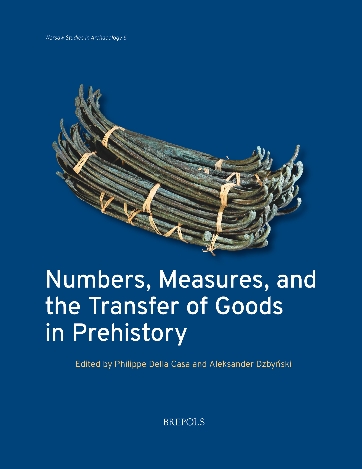
Numbers, Measures, and the Transfer of Goods in Prehistory
show More to view fulltext, buy and share links for:Numbers, Measures, and the Transfer of Goods in Prehistory show Less to hide fulltext, buy and share links for: Numbers, Measures, and the Transfer of Goods in PrehistoryNumbers, weights, and measurements, and the systems underpinning them, have always been a fundamental part of human society. Developed in different ways and at different times, such systems have provided a foundation for science, technology, economics, and new ways of engaging with and understanding the world. This volume aims to explore the background to numbers and measurements in more detail by drawing together specialists from a growing field of research. The contributions gathered here offer new and interdisciplinary insights into how the development of mathematical ideas and systems evolved, early metrological systems, the exchange of goods and their impact, the standardization of measuring tools, and the impact of such concepts. This unique volume is deliberately set broad, both geographically and chronologically, in order to compare and contrast changes over time and between peoples, and in doing so it sheds new light on the social and scientific developments among both prehistoric and early historic societies.
-
-
-
Pascal Payen
show More to view fulltext, buy and share links for:Pascal Payen show Less to hide fulltext, buy and share links for: Pascal PayenLes vingt-six articles rassemblés dans ce volume témoignent à la fois de la riche activité scientifique de Pascal Payen durant une vingtaine d’années, mais aussi de la manière dont il a contribué de façon décisive à construire et faire connaître un nouvel objet d’histoire : la réception, ou plutôt les réceptions de l’Antiquité. En partant d’Hérodote, de Thucydide et de Plutarque, il a embrassé les innombrables ramifications des processus d’appropriation ou de rejet, de traduction ou d’adaptation, voire de recréation des auteurs anciens, de l’écriture de l’histoire, de la pensée politique. Ce recueil montre ainsi que la constitution de l’Antiquité, en « tradition », en « patrimoine » s’inscrit dans la longue durée et procède d’un va-et-vient polymorphe et fécond, constitutif de toute herméneutique, entre le passé de l’œuvre et les présents de ses publics successifs.
-
-
-
Polyhistor Europaeus
show More to view fulltext, buy and share links for:Polyhistor Europaeus show Less to hide fulltext, buy and share links for: Polyhistor EuropaeusLe vieux mot grec polyhistor désignait jusqu’au XVIIe siècle à la fois un savant aux multiples compétences et un vade-mecum bibliographique embrassant tout le champ des savoirs.
C’est le cas de Chantal Grell qui, au fil de sa carrière, a exploré tout l’âge classique en Europe dans ses domaines les plus divers de l’Espagne à la Pologne, avec Versailles pour centre de gravité.
C’est aussi le cas du présent recueil où soixante-quatre chercheurs ont rassemblé en deux volumes des contributions de haut niveau scientifique sur ses thèmes de prédilection.
Le tome I traite des antiquités et de l’historiographie, d’histoire des savoirs et des idées, le tome II des cours et de la diplomatie, des arts et des collections.
-
-
-

Redefining Ancient Epirus
show More to view fulltext, buy and share links for:Redefining Ancient Epirus show Less to hide fulltext, buy and share links for: Redefining Ancient EpirusAncient Epirus, ‘the Mainland’ of the Odyssey, has meant different things at different times. Covering a region that today spans parts of south Albania and north-west Greece, Epirus was an important crossroad in antiquity, a meeting place of different peoples and cultures. Yet while the history of the region is well-known, thanks to a combination of historical studies and major Greek myths, its archaeology has remained relatively little studied. Now, derived from a larger project based at Oxford University entitled ‘Beyond the Borders’, this volume for the first time offers a reliable and up-to-date account of the archaeology of Epirus.
The contributions gathered here, written by some of the most influential international scholars currently involved in archaeological research in Epirus, aim to offer a balanced synthesis of the different cultural and historical phenomena at play in the region. Chapters span the Archaic period to Roman Imperial times, and starting from the material record, touch upon a wide range of subjects: landscape studies, urbanization, fortifications and defence, ritual, sanctuaries, burial practices, relationships between mother cities and colonies, and borders and borderlands. Through this approach, the volume effectively moves Epirus from the border to the centre of the map of current archaeo-historical research, as well as offering a starting point for further historical investigations in the field.
-
-
-
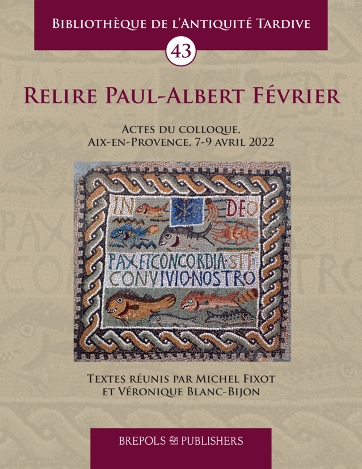
Relire Paul-Albert Février
show More to view fulltext, buy and share links for:Relire Paul-Albert Février show Less to hide fulltext, buy and share links for: Relire Paul-Albert FévrierPar ses publications, Paul-Albert Février a été un auteur majeur de la seconde moitié du xx e siècle. Ses apports et ses questionnements ont provoqué des prises de conscience décisives dans le domaine de l’archéologie et de l’histoire des deux rives de la Méditerranée, entre Sud de la France et Maghreb, à la fin de l’Antiquité, sans compter le détour italien et un intérêt marqué pour le Patrimoine. Il a été à l’origine d’un processus d’entraînement intellectuel dont il a fait bénéficier étudiants et collègues. Trente ans après sa disparition prématurée en 1991 à l’âge de soixante ans, le besoin a été ressenti de faire le point sur les directions de recherche qu’il avait abordées et sur les diverses perspectives qu’il avait ouvertes. La personnalité de l’enseignant et du chercheur était telle que la démarche scientifique était inséparable du rayonnement humain. Le présent ouvrage a été conçu comme un état de la recherche en écho à celui dans lequel, dès après sa mort, ont été rassemblés ses principaux articles (La Méditerranée de Paul-Albert Février, 2 vol., CEFR 225). Les deux livres pourront être ouverts en regard l’un de l’autre.
-
-
-
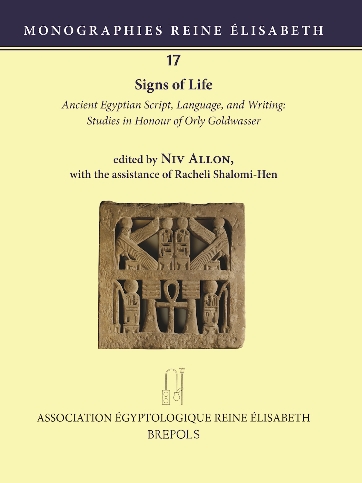
Signs of Life
show More to view fulltext, buy and share links for:Signs of Life show Less to hide fulltext, buy and share links for: Signs of LifeIn recent decades, the Ancient Egyptian realm of pictorial script and meta-textuality has been the focus of many research projects. Foremost among them is the innovative and ground-breaking sub-field that was helmed by Prof. Orly Goldwasser, exploring the study of classifiers and the ways in which Ancient Egyptian Hieroglyphs mirror the Ancient Egyptian mind. Taking Goldwasser’s pioneering work as its inspiration, this volume draws together contributions from some of the leading voices in Egyptology and neighbouring fields to illuminate different aspects of the use of Ancient Egyptian Hieroglyphs, their semiotic value, and of the language that they record, as well as looking more broadly at the use of signs, pictorial systems, script, learning processes, and classifications. Together, these chapters offer a unique and multi-layered picture of the ways in which Ancient Egyptian language and Hieroglyphs emerged within Ancient Egyptian culture, and the means by which they interacted with other script systems and languages.
-
-
-
Stoic Presocratics – Presocratic Stoics
show More to view fulltext, buy and share links for:Stoic Presocratics – Presocratic Stoics show Less to hide fulltext, buy and share links for: Stoic Presocratics – Presocratic StoicsThe volume provides for the first time in scholarship a comprehensive and in-depth analysis of the relationship between Stoicism and early Greek philosophy, from Orphism to the Monists and the Pluralists. Going beyond the common assumption that the Stoics refer exclusively to Heraclitus, it is shown that almost the entire Presocratic tradition (sometimes mediated decisively by Plato and Aristotle) has made a fundamental contribution to the construction of Stoic thought, especially in the field of physics (i.e. cosmology, ontology, and theology).
-
-
-
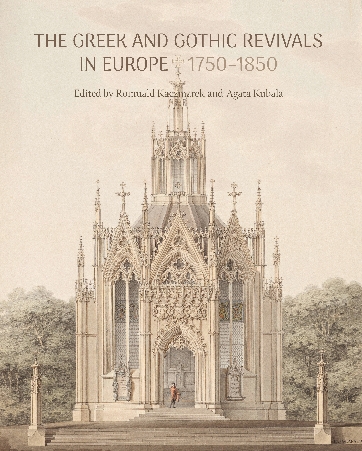
The Greek and Gothic Revivals in Europe 1750–1850
show More to view fulltext, buy and share links for:The Greek and Gothic Revivals in Europe 1750–1850 show Less to hide fulltext, buy and share links for: The Greek and Gothic Revivals in Europe 1750–1850This book combines the Greek and Gothic Revival phenomena in the period between 1750 and 1850, showing the common cultural background of these artistic trends referring to the past. It presents examples from almost all over Europe. In addition to the introductory text problematizing the idea, there are studies of more detailed issues - topographic shots presenting the aforementioned phenomena within artistic regions, presentations of projects undertaken by outstanding personalities of the era, as well as analyses of individual assumptions or works.
-
-
-
The Septuagint: Multilateral Focus on the Text
show More to view fulltext, buy and share links for:The Septuagint: Multilateral Focus on the Text show Less to hide fulltext, buy and share links for: The Septuagint: Multilateral Focus on the TextThe phenomenon of the Septuagint is a matter of interest for several areas of research – not only for Old Testament scholars, but also for researchers of Hellenistic Judaism, patristic exegesis, translation theory and practice, and others. What they all have in common is the text of the Septuagint. Unfortunately, the research is often so compartmentalized that scholars do not know about each other’s work and cannot profit from it. The aim of the conference “The Septuagint: Multilateral Focus on the Text” was to bring together scholars studying the text of the Septuagint in its various aspects: its reconstruction, peculiarities of language, and lexical semantics in their relationship with the Semitic background and within the Greek-speaking world, whether Jewish or Christian. These different approaches to the same matter are bound to lead to mutual enrichment.
-
-
-

Touring Belgium
show More to view fulltext, buy and share links for:Touring Belgium show Less to hide fulltext, buy and share links for: Touring BelgiumTouring Belgium presents a wide range of printed media – from travel guides and collected letters to albums, from picture postcards to bibliographies and war-time propaganda – to explore how the print culture developing in the wake of travel and tourism helped to establish a national architectural heritage. Covering material from the period of Belgian independence through the aftermath of World War I, eight historians of art and architecture each situate one main publication against a dazzling background of nineteenth and early twentieth-century cultural discourses, revolutions in image reproduction, and emerging heritage management.
Reproductions in the middle part of the book present the core publications as material objects. These printed artifacts bring into view a nascent heritage that ranges from gothic town halls and dead cities to modern factories and railroad infrastructure; often there is little distinction between what threatens or enshrines the national patrimony. Writers like Schnaase and Hugo, museum conservators like Schayes and Kervyn de Lettenhove, symbolist painters like Hannotiau, innovative lithographers like Simonau, and publishers like Géruzet or the Touring-club de Belgique all bring their concerns to bear on what they see as Belgian heritage. Their preoccupations with patrimony help to craft Belgium as a nation with a history at the crossroads of Europe – historic architecture becomes a reality embedded in the territory as much as an imagery fabricated in print.
-
-
-

Travelling Matters across the Mediterranean
show More to view fulltext, buy and share links for:Travelling Matters across the Mediterranean show Less to hide fulltext, buy and share links for: Travelling Matters across the MediterraneanIn the last two decades, objects have become increasingly relevant to historical studies as the primary focus of research discussing cross-cultural relations. Objects are produced, used, modified, preserved, and destroyed according to historically specific political and cultural settings, thus providing researchers with information and insights about their original background. However, they can also throw light on a large array of cross-cultural encounters when their mobility is put to the fore. Objects can move by being bought, gifted, bartered, and sold, borrowed or stolen, collected and dispersed, just as they can be modified, repaired, reshaped, repurposed, and destroyed in the process.
The Mediterranean, as a barrier and as a meeting place for different polities and communities, and as the setting of conflicted experiences of cultural, political, economic, and social transformation, easily lends itself to this kind of historical analysis. Featuring articles on Byzantine imperial silks and bronze doors from southern Italy, eastern luxuries in Istanbul and African bolsas from the Canary Islands, Arabic geographies and Hebrew religious texts travelling from shore to shore and from manuscript to the press, and the ‘dead’ bodies of holy women and men, this volume intends to tackle objects as sources and subjects of the history of cross-cultural encounters in innovative ways: focusing on the ‘second-handedness’ of displaced objects across the Mediterranean, the volume intersects different chronologies — from antiquity to the present-day — and varying scales, from the individual objects to the much larger one of the histories of their reinterpretation and repurposing.
-
-
-
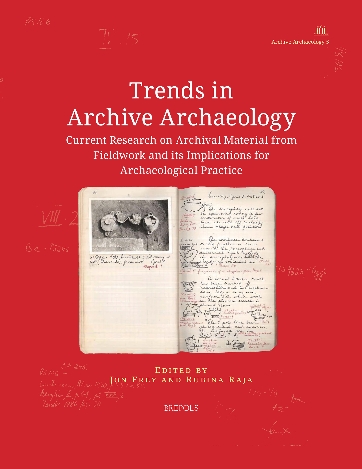
Trends in Archive Archaeology
show More to view fulltext, buy and share links for:Trends in Archive Archaeology show Less to hide fulltext, buy and share links for: Trends in Archive ArchaeologyArchive archaeology has, in recent years, become increasingly acknowledged as an important component of archaeological research. However, the vast amounts of empirical data contained in such archives — among them fieldwork diaries, working notebooks, finds sheets, and photographs — together with a sense that the field is often skewed towards ‘one’s own data’, have made it difficult to develop a clear methodological approach that fits all eventualities. The result is that archive archaeology is still not always recognized for what it can bring to the discipline of archaeology, as a field of study that focuses on the contexts within which humanity developed.
This volume draws together contributions from scholars who work with archives in a variety of capacities: as fieldwork directors of decades-long excavations; as archivists interested in the history of collections; as specialists focusing on certain object groups or regions; and as researchers broadly interested in what archival material brings to the table in terms of new knowledge about archaeological situations. In showcasing contributions of work in progress, the chapters published here bring to the fore knowledge about archives that has long been overlooked, and examine how archival archaeology should be shaped in the future so that it can become more firmly integrated within archaeological practice.
-
-
-
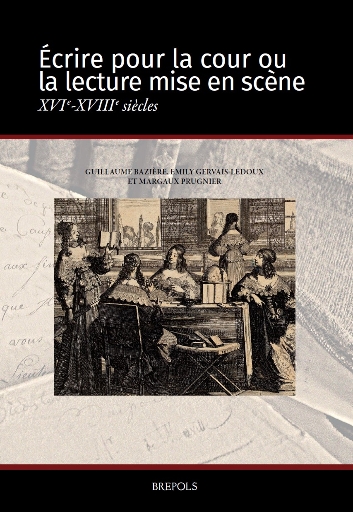
Écrire pour la cour ou la lecture mise en scène, xvi e-xviii e siècles
show More to view fulltext, buy and share links for:Écrire pour la cour ou la lecture mise en scène, xvi e-xviii e siècles show Less to hide fulltext, buy and share links for: Écrire pour la cour ou la lecture mise en scène, xvi e-xviii e sièclesCet ouvrage met en lumière une série de cas dont le contexte est ancré dans les cours de l’époque moderne et qui ont trait aux pratiques de publications et aux usages politiques et sociaux de l’écrit. Il constitue une approche originale de la question de la lecture dans les espaces curiaux en s’attachant à observer les pratiques d’acteurs et d’actrices qui désignent, représentent ou constitue la cour et les courtisans comme lectorat. Ce faisant, ceux qui écrivent et publient se forgent une réputation liée à l’univers curial autant qu’ils participent à modeler cet espace aux contours flou et qui se caractérise avant tout par son caractère de lieu de pouvoir.
Comment s’articulent et se modèlent respectivement les pratiques littéraires et la cour dans sa dimension symbolique comme dans son fonctionnement institutionnel à l’époque moderne ? C'est à cette question que se sont intéressées les contributions présentes dans cet ouvrage qui fait dialoguer littéraires, historiens et historiennes.
-