


BOB2025MIOT

Collection Contents
4 results
-
-
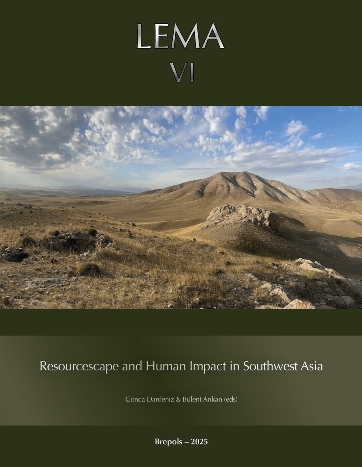
Resourcescape and Human Impact in Southwest Asia
show More to view fulltext, buy and share links for:Resourcescape and Human Impact in Southwest Asia show Less to hide fulltext, buy and share links for: Resourcescape and Human Impact in Southwest AsiaLandscape archaeology has, in recent years, expanded as a discipline to include various aspects of human-environment interactions in the past. In line with this trend, this volume offers a comprehensive perspective on three topics: theoretical and textual approaches to landscape, which provides an important framework for interdisciplinary research; the use of land and resources, which, while a popular topic in Southwest Asian archaeology, remains relatively understudied in connection to ancient technologies; and human impact on the highlands. The contributions gathered in this volume cover topics as diverse as agricultural practices, metallurgy, trade, and environmental research, and draw together evidence from both textual and material evidence to shed light on different places and periods from the Bronze Age through to the Roman era. Together, these varied case studies offer new insights into how different methods can be utilized to assess unique patterns in human-environment interactions in Southwest Asia.
-
-
-
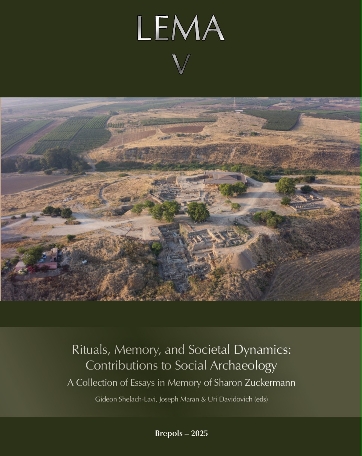
Rituals, Memory, and Societal Dynamics: Contributions to Social Archaeology
show More to view fulltext, buy and share links for:Rituals, Memory, and Societal Dynamics: Contributions to Social Archaeology show Less to hide fulltext, buy and share links for: Rituals, Memory, and Societal Dynamics: Contributions to Social ArchaeologyThanks largely to the introduction of new methods of recovery and analysis, archaeology is increasingly treated as a science. Yet, it should continue to ask questions that are founded in the humanities. This is especially true of social archaeology, which forms the core of this volume. Being based on the notion that ‘the social’ permeates all areas of life, the chapters gathered here give priority to archaeological data and contexts, which in turn form the prerequisite for analyzing how, at particular times and places, people negotiated or reaffirmed the society around them. Case studies from the Levant and the Eastern Mediterranean sit alongside selected comparative cases from other parts of the world and assess issues such as the development of cultural characteristics of societies, societal continuity and collapse, religious beliefs and rituals, and the role of social memory, as well as interactions within and between societies. The volume is dedicated to the memory of our colleague and friend, Dr. Sharon Zuckerman, who embraced the quest for ‘the social’ throughout her career.
-
-
-

Redefining Ancient Epirus
show More to view fulltext, buy and share links for:Redefining Ancient Epirus show Less to hide fulltext, buy and share links for: Redefining Ancient EpirusAncient Epirus, ‘the Mainland’ of the Odyssey, has meant different things at different times. Covering a region that today spans parts of south Albania and north-west Greece, Epirus was an important crossroad in antiquity, a meeting place of different peoples and cultures. Yet while the history of the region is well-known, thanks to a combination of historical studies and major Greek myths, its archaeology has remained relatively little studied. Now, derived from a larger project based at Oxford University entitled ‘Beyond the Borders’, this volume for the first time offers a reliable and up-to-date account of the archaeology of Epirus.
The contributions gathered here, written by some of the most influential international scholars currently involved in archaeological research in Epirus, aim to offer a balanced synthesis of the different cultural and historical phenomena at play in the region. Chapters span the Archaic period to Roman Imperial times, and starting from the material record, touch upon a wide range of subjects: landscape studies, urbanization, fortifications and defence, ritual, sanctuaries, burial practices, relationships between mother cities and colonies, and borders and borderlands. Through this approach, the volume effectively moves Epirus from the border to the centre of the map of current archaeo-historical research, as well as offering a starting point for further historical investigations in the field.
-
-
-
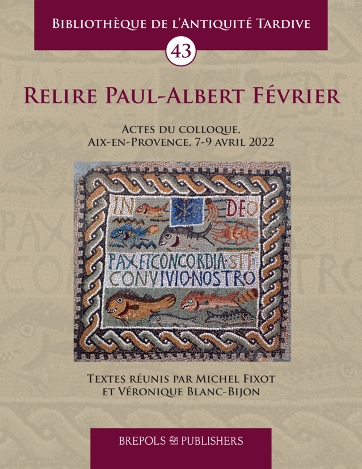
Relire Paul-Albert Février
show More to view fulltext, buy and share links for:Relire Paul-Albert Février show Less to hide fulltext, buy and share links for: Relire Paul-Albert FévrierPar ses publications, Paul-Albert Février a été un auteur majeur de la seconde moitié du xx e siècle. Ses apports et ses questionnements ont provoqué des prises de conscience décisives dans le domaine de l’archéologie et de l’histoire des deux rives de la Méditerranée, entre Sud de la France et Maghreb, à la fin de l’Antiquité, sans compter le détour italien et un intérêt marqué pour le Patrimoine. Il a été à l’origine d’un processus d’entraînement intellectuel dont il a fait bénéficier étudiants et collègues. Trente ans après sa disparition prématurée en 1991 à l’âge de soixante ans, le besoin a été ressenti de faire le point sur les directions de recherche qu’il avait abordées et sur les diverses perspectives qu’il avait ouvertes. La personnalité de l’enseignant et du chercheur était telle que la démarche scientifique était inséparable du rayonnement humain. Le présent ouvrage a été conçu comme un état de la recherche en écho à celui dans lequel, dès après sa mort, ont été rassemblés ses principaux articles (La Méditerranée de Paul-Albert Février, 2 vol., CEFR 225). Les deux livres pourront être ouverts en regard l’un de l’autre.
-