


BOB2025MIOT

Collection Contents
8 results
-
-
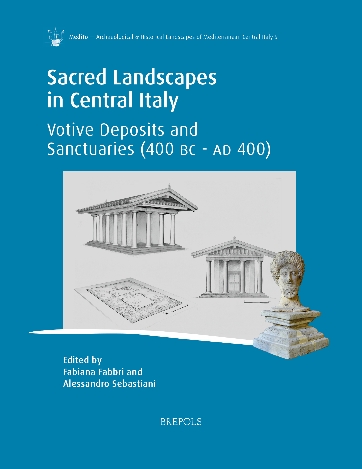
Sacred Landscapes in Central Italy
show More to view fulltext, buy and share links for:Sacred Landscapes in Central Italy show Less to hide fulltext, buy and share links for: Sacred Landscapes in Central ItalyVeneration of the supernatural was, in ancient times, interwoven into the fabric of the surrounding landscape. Caves, rivers, lakes, mountains, and water springs all formed conduits for a relationship between divinity and nature, and sanctuaries were established as dedicated sites of worship. Taking Central Italy as its main focus, this volume unravels layers of history and archaeology in order to shed light on the religious practices, sacred sites, and profound connections that have long existed between landscapes and religious places in this region. Through a synthesis of archaeological evidence and scholarly analysis, the chapters gathered here unveil the significance of temples, sanctuaries, ex-votos, religious productions, and ritual spaces, and provide a comprehensive understanding of how Etruscan and Roman societies engaged with their sacred surroundings. The result is an important reassessment of the religious dimensions that helped to shape the antique landscape of Central Italy.
-
-
-
Sacrifice and Sacred Violence
show More to view fulltext, buy and share links for:Sacrifice and Sacred Violence show Less to hide fulltext, buy and share links for: Sacrifice and Sacred ViolenceSacrifice has long been a central topic in scholarly debate. Since the publication of Marcel Mauss and Henri Hubert's groundbreaking work in 1898-99, the concept has gained prominence as a distinct theme in comparative religion, anthropology, and the history of religions. Throughout the twentieth century, many distinguished scholars and intellectuals examined the meaning and function of sacrifice to better understand various aspects of human cognition and social interactions. While some explored its connections to violence—particularly forms of self-inflicted violence, such as martyrdom—others sought to disentangle the concept from violent practices altogether.
Building on this rich tradition, this collection of articles gathers contributions from leading scholars who explore the theme of sacrifice, examining its diverse meanings and roles across various religious traditions. While the book places particular emphasis on the history of Christianity and the early modern period, it also provides valuable insights into a broad spectrum of religious traditions, including Judaism, Islam, Greek and ancient religions, as well as Japanese religions. Its geographical scope spans regions such as India, China, Africa, and Brazil, offering a truly global perspective.By mapping the varied interpretations and transformations of sacrifice in the early modern period, this book seeks to illuminate its evolving significance. It also strives to offer a comparative framework that highlights the concept's complexity and adaptability across cultural and historical contexts.
-
-
-
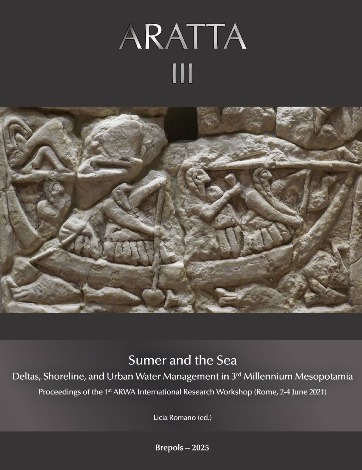
Sumer and the Sea
show More to view fulltext, buy and share links for:Sumer and the Sea show Less to hide fulltext, buy and share links for: Sumer and the SeaFrom the Chalcolithic onwards, the culture and society of Sumer flourished along the banks of the Tigris and Euphrates Rivers, with communities living close to the ancient shoreline in an environment that was closely linked to the exploitation of fluvial systems, the sea, and the unique marshlands of the area. This volume gathers together research first presented as part of a workshop, entitled Sumer and the Sea: Deltas, Shoreline, and Urban Water Management in 3rd Millennium Mesopotamia, to explore the interaction between Sumerians and their water-dominated environment. The chapters gathered here offer updates on methodologies and the most recent research from the field to provide new understanding and fresh insights into how the Sumerians adapted to the world in which they lived.
-
-
-
Supplicant Empires
show More to view fulltext, buy and share links for:Supplicant Empires show Less to hide fulltext, buy and share links for: Supplicant EmpiresThis volume is a collection of reflections from leading senior and junior historians regarding the merits of historical comparativism in the field of Iberian history. The first purpose of the book is to encourage a dialogue between scholars of the Iberian Empires and to foster a reconsider how they see the broader history of the early modern world in light of recent historiography. The second aim of the book is to prompt scholars of other regions in global history to consider the recent literature on the Iberian Empires anew, to move beyond the tropes of the Black Legend and narrative of growth, splendour, and decline, and to study those imbrications had connected disparate parts of the world and which the postcolonial turn has unearthed. In a series of articles and interviews, contributors were encouraged to consider the role of linguistic divides in the growth of historiographical strands, and to speak plainly about the possible siloes that have emerged in the field. Contributors discuss the Atlantic turn, corporate cultures, the Catholic adoption of Protestant ideals, gender and race, all while drawing on insights from scholars who work on early modern nuns, the material history of sugar and coffee, or those who are exploring the uses of the concept of barbarity in borderlands.
-
-
-
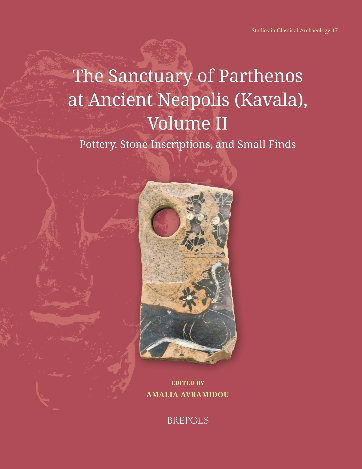
The Sanctuary of Parthenos at Ancient Neapolis (Kavala), Volume ii
show More to view fulltext, buy and share links for:The Sanctuary of Parthenos at Ancient Neapolis (Kavala), Volume ii show Less to hide fulltext, buy and share links for: The Sanctuary of Parthenos at Ancient Neapolis (Kavala), Volume iiThe ancient city of Neapolis (modern Kavala, Greece) was founded by Thasos in the seventh century BCE at a strategic location where the Thracian hinterlands meet the Aegean Sea. The patron deity of this North Aegean polis was Parthenos (the Maiden), a goddess often associated with Artemis and known to us through epigraphic and archaeological evidence. Her sanctuary came to light in the twentieth century, during rescue excavations, and yielded numerous finds, most of which date from the Archaic period.
This edited volume draws together the material evidence from the Sanctuary of Parthenos, with a particular focus on the ceramic wares, stone inscriptions, and small finds from the site. Published as a counterpart to an earlier publication in this series, Amalia Avramidou’s monograph, The Sanctuary of Parthenos at Ancient Neapolis (Kavala): Incised and Painted Ceramic Inscriptions from the Sanctuary and in Aegean Thrace, the essays gathered here nonetheless form a stand-alone volume that sheds light on both the importance of the site as a place of cult, and more broadly the role that it played within the commercial networks and cultural dynamics of the Aegean.
-
-
-
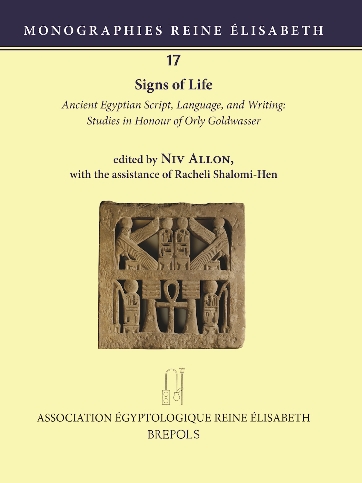
Signs of Life
show More to view fulltext, buy and share links for:Signs of Life show Less to hide fulltext, buy and share links for: Signs of LifeIn recent decades, the Ancient Egyptian realm of pictorial script and meta-textuality has been the focus of many research projects. Foremost among them is the innovative and ground-breaking sub-field that was helmed by Prof. Orly Goldwasser, exploring the study of classifiers and the ways in which Ancient Egyptian Hieroglyphs mirror the Ancient Egyptian mind. Taking Goldwasser’s pioneering work as its inspiration, this volume draws together contributions from some of the leading voices in Egyptology and neighbouring fields to illuminate different aspects of the use of Ancient Egyptian Hieroglyphs, their semiotic value, and of the language that they record, as well as looking more broadly at the use of signs, pictorial systems, script, learning processes, and classifications. Together, these chapters offer a unique and multi-layered picture of the ways in which Ancient Egyptian language and Hieroglyphs emerged within Ancient Egyptian culture, and the means by which they interacted with other script systems and languages.
-
-
-
Stoic Presocratics – Presocratic Stoics
show More to view fulltext, buy and share links for:Stoic Presocratics – Presocratic Stoics show Less to hide fulltext, buy and share links for: Stoic Presocratics – Presocratic StoicsThe volume provides for the first time in scholarship a comprehensive and in-depth analysis of the relationship between Stoicism and early Greek philosophy, from Orphism to the Monists and the Pluralists. Going beyond the common assumption that the Stoics refer exclusively to Heraclitus, it is shown that almost the entire Presocratic tradition (sometimes mediated decisively by Plato and Aristotle) has made a fundamental contribution to the construction of Stoic thought, especially in the field of physics (i.e. cosmology, ontology, and theology).
-
-
-
The Septuagint: Multilateral Focus on the Text
show More to view fulltext, buy and share links for:The Septuagint: Multilateral Focus on the Text show Less to hide fulltext, buy and share links for: The Septuagint: Multilateral Focus on the TextThe phenomenon of the Septuagint is a matter of interest for several areas of research – not only for Old Testament scholars, but also for researchers of Hellenistic Judaism, patristic exegesis, translation theory and practice, and others. What they all have in common is the text of the Septuagint. Unfortunately, the research is often so compartmentalized that scholars do not know about each other’s work and cannot profit from it. The aim of the conference “The Septuagint: Multilateral Focus on the Text” was to bring together scholars studying the text of the Septuagint in its various aspects: its reconstruction, peculiarities of language, and lexical semantics in their relationship with the Semitic background and within the Greek-speaking world, whether Jewish or Christian. These different approaches to the same matter are bound to lead to mutual enrichment.
-