


BOB2025MIOT

Collection Contents
21 - 40 of 60 results
-
-
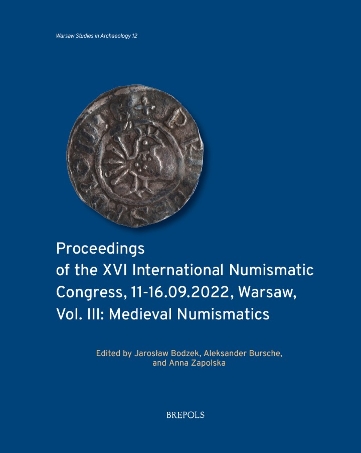
Proceedings of the XVI International Numismatic Congress, 11–16.09.2022, Warsaw, Vol. iii: Medieval Numismatics
show More to view fulltext, buy and share links for:Proceedings of the XVI International Numismatic Congress, 11–16.09.2022, Warsaw, Vol. iii: Medieval Numismatics show Less to hide fulltext, buy and share links for: Proceedings of the XVI International Numismatic Congress, 11–16.09.2022, Warsaw, Vol. iii: Medieval NumismaticsThe XVI International Numismatic Congress, held in Warsaw, Poland, in September 2022, was a landmark event, drawing the largest number of participants in its history. With over 550 papers presented during thematic sessions and round tables, this congress showcased the latest advancements and research in the field of numismatics from leading experts and scholars in their field.
A curated selection of papers from the conference have now been drawn together into peer-reviewed conference proceedings, representing a comprehensive spectrum of numismatic studies from antiquity to modern times. Each paper is meticulously illustrated with high-quality images, often of unique specimens, along with detailed diagrams, maps, and die/typological chains. Topics covered include coins and coin finds, medals, tokens, banknotes, the history of collections and collecting, and cutting-edge chemical analyses and technologies used in coin examination.
This book, the third in four thematic volumes, explores medieval coinage. Research presented in forty-two different chapters ranges from the early Byzantine period through to the late Middle Ages, including Asiatique and Islamic coinages, and medieval tokens.
-
-
-
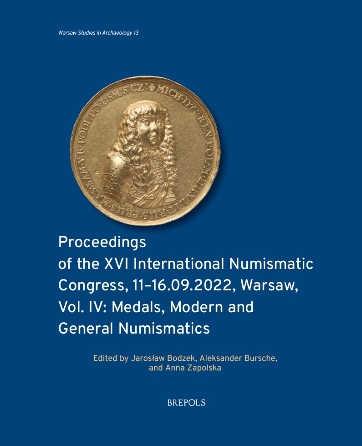
Proceedings of the XVI International Numismatic Congress, 11–16.09.2022, Warsaw, Vol. iv: Medals, Modern and General Numismatics
show More to view fulltext, buy and share links for:Proceedings of the XVI International Numismatic Congress, 11–16.09.2022, Warsaw, Vol. iv: Medals, Modern and General Numismatics show Less to hide fulltext, buy and share links for: Proceedings of the XVI International Numismatic Congress, 11–16.09.2022, Warsaw, Vol. iv: Medals, Modern and General NumismaticsThe XVI International Numismatic Congress, held in Warsaw, Poland, in September 2022, was a landmark event, drawing the largest number of participants in its history. With over 550 papers presented during thematic sessions and round tables, this congress showcased the latest advancements and research in the field of numismatics from leading experts and scholars in their field.
A curated selection of papers from the conference have now been drawn together into peer-reviewed conference proceedings, representing a comprehensive spectrum of numismatic studies from antiquity to modern times. Each paper is meticulously illustrated with high-quality images, often of unique specimens, along with detailed diagrams, maps, and die/typological chains. Topics covered include coins and coin finds, medals, tokens, banknotes, the history of collections and collecting, and cutting-edge chemical analyses and technologies used in coin examination.
This volume, the last in four thematic volumes, comprises fifty-five chapters that explore modern numismatics, as well as medal making and tokens. It also includes discussions that touch more broadly on the general field of numismatics, among them digital numismatics, counterfeit coins, coin finds, and the history of coin collecting.
-
-
-
Produire et publier de la théologie dans le monde catholique
show More to view fulltext, buy and share links for:Produire et publier de la théologie dans le monde catholique show Less to hide fulltext, buy and share links for: Produire et publier de la théologie dans le monde catholiqueIssu d’un colloque organisé en septembre 2020, ce volume part de la nécessité de faire dialoguer histoire de la théologie et histoire des savoirs. Il se concentre plus particulièrement sur les lieux académiques de la production de la théologie, sur son rapport à d’autres disciplines et son séquençage en sous-disciplines, sur sa circulation dans des espaces plus vastes, et sur le rapport aux éditeurs. Les 16 contributions ici rassemblées rompent avec l’écriture classique de l’histoire de la théologie qui est restée à grande distance des questions et des méthodes de l’histoire des savoirs, ils rompent également avec la réticence des historiens des savoirs à appréhender l’objet-théologie malgré son importance dans les universités européennes des deux derniers siècles. Ce volume s’inscrit dans un agenda renouvelé d’historicisation des conditions et de la production des savoirs théologiques dans le monde catholique, depuis les restaurations européennes du 19e siècle jusqu’à Vatican II.
-
-
-
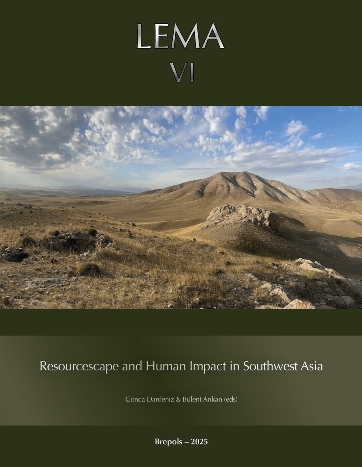
Resourcescape and Human Impact in Southwest Asia
show More to view fulltext, buy and share links for:Resourcescape and Human Impact in Southwest Asia show Less to hide fulltext, buy and share links for: Resourcescape and Human Impact in Southwest AsiaLandscape archaeology has, in recent years, expanded as a discipline to include various aspects of human-environment interactions in the past. In line with this trend, this volume offers a comprehensive perspective on three topics: theoretical and textual approaches to landscape, which provides an important framework for interdisciplinary research; the use of land and resources, which, while a popular topic in Southwest Asian archaeology, remains relatively understudied in connection to ancient technologies; and human impact on the highlands. The contributions gathered in this volume cover topics as diverse as agricultural practices, metallurgy, trade, and environmental research, and draw together evidence from both textual and material evidence to shed light on different places and periods from the Bronze Age through to the Roman era. Together, these varied case studies offer new insights into how different methods can be utilized to assess unique patterns in human-environment interactions in Southwest Asia.
-
-
-
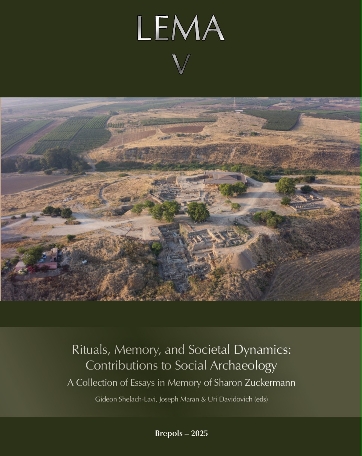
Rituals, Memory, and Societal Dynamics: Contributions to Social Archaeology
show More to view fulltext, buy and share links for:Rituals, Memory, and Societal Dynamics: Contributions to Social Archaeology show Less to hide fulltext, buy and share links for: Rituals, Memory, and Societal Dynamics: Contributions to Social ArchaeologyThanks largely to the introduction of new methods of recovery and analysis, archaeology is increasingly treated as a science. Yet, it should continue to ask questions that are founded in the humanities. This is especially true of social archaeology, which forms the core of this volume. Being based on the notion that ‘the social’ permeates all areas of life, the chapters gathered here give priority to archaeological data and contexts, which in turn form the prerequisite for analyzing how, at particular times and places, people negotiated or reaffirmed the society around them. Case studies from the Levant and the Eastern Mediterranean sit alongside selected comparative cases from other parts of the world and assess issues such as the development of cultural characteristics of societies, societal continuity and collapse, religious beliefs and rituals, and the role of social memory, as well as interactions within and between societies. The volume is dedicated to the memory of our colleague and friend, Dr. Sharon Zuckerman, who embraced the quest for ‘the social’ throughout her career.
-
-
-
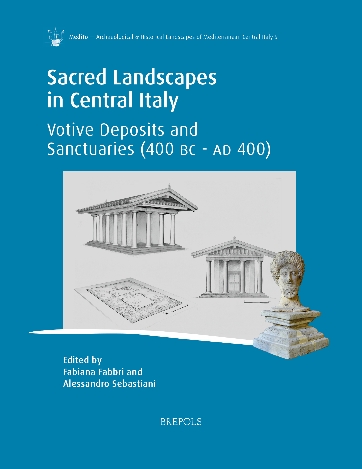
Sacred Landscapes in Central Italy
show More to view fulltext, buy and share links for:Sacred Landscapes in Central Italy show Less to hide fulltext, buy and share links for: Sacred Landscapes in Central ItalyVeneration of the supernatural was, in ancient times, interwoven into the fabric of the surrounding landscape. Caves, rivers, lakes, mountains, and water springs all formed conduits for a relationship between divinity and nature, and sanctuaries were established as dedicated sites of worship. Taking Central Italy as its main focus, this volume unravels layers of history and archaeology in order to shed light on the religious practices, sacred sites, and profound connections that have long existed between landscapes and religious places in this region. Through a synthesis of archaeological evidence and scholarly analysis, the chapters gathered here unveil the significance of temples, sanctuaries, ex-votos, religious productions, and ritual spaces, and provide a comprehensive understanding of how Etruscan and Roman societies engaged with their sacred surroundings. The result is an important reassessment of the religious dimensions that helped to shape the antique landscape of Central Italy.
-
-
-
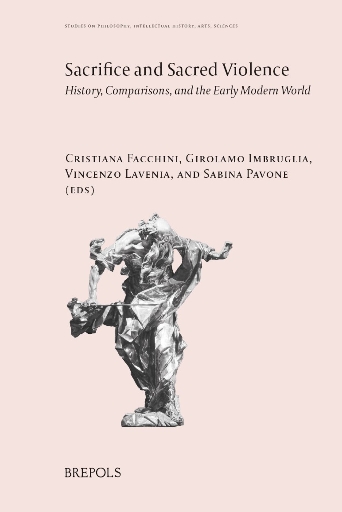
Sacrifice and Sacred Violence
show More to view fulltext, buy and share links for:Sacrifice and Sacred Violence show Less to hide fulltext, buy and share links for: Sacrifice and Sacred ViolenceSacrifice has long been a central topic in scholarly debate. Since the publication of Marcel Mauss and Henri Hubert's groundbreaking work in 1898-99, the concept has gained prominence as a distinct theme in comparative religion, anthropology, and the history of religions. Throughout the twentieth century, many distinguished scholars and intellectuals examined the meaning and function of sacrifice to better understand various aspects of human cognition and social interactions. While some explored its connections to violence—particularly forms of self-inflicted violence, such as martyrdom—others sought to disentangle the concept from violent practices altogether.
Building on this rich tradition, this collection of articles gathers contributions from leading scholars who explore the theme of sacrifice, examining its diverse meanings and roles across various religious traditions. While the book places particular emphasis on the history of Christianity and the early modern period, it also provides valuable insights into a broad spectrum of religious traditions, including Judaism, Islam, Greek and ancient religions, as well as Japanese religions. Its geographical scope spans regions such as India, China, Africa, and Brazil, offering a truly global perspective.By mapping the varied interpretations and transformations of sacrifice in the early modern period, this book seeks to illuminate its evolving significance. It also strives to offer a comparative framework that highlights the concept's complexity and adaptability across cultural and historical contexts.
-
-
-
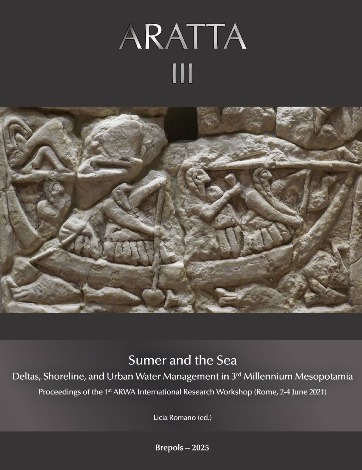
Sumer and the Sea
show More to view fulltext, buy and share links for:Sumer and the Sea show Less to hide fulltext, buy and share links for: Sumer and the SeaFrom the Chalcolithic onwards, the culture and society of Sumer flourished along the banks of the Tigris and Euphrates Rivers, with communities living close to the ancient shoreline in an environment that was closely linked to the exploitation of fluvial systems, the sea, and the unique marshlands of the area. This volume gathers together research first presented as part of a workshop, entitled Sumer and the Sea: Deltas, Shoreline, and Urban Water Management in 3rd Millennium Mesopotamia, to explore the interaction between Sumerians and their water-dominated environment. The chapters gathered here offer updates on methodologies and the most recent research from the field to provide new understanding and fresh insights into how the Sumerians adapted to the world in which they lived.
-
-
-
Supplicant Empires
show More to view fulltext, buy and share links for:Supplicant Empires show Less to hide fulltext, buy and share links for: Supplicant EmpiresThis volume is a collection of reflections from leading senior and junior historians regarding the merits of historical comparativism in the field of Iberian history. The first purpose of the book is to encourage a dialogue between scholars of the Iberian Empires and to foster a reconsider how they see the broader history of the early modern world in light of recent historiography. The second aim of the book is to prompt scholars of other regions in global history to consider the recent literature on the Iberian Empires anew, to move beyond the tropes of the Black Legend and narrative of growth, splendour, and decline, and to study those imbrications had connected disparate parts of the world and which the postcolonial turn has unearthed. In a series of articles and interviews, contributors were encouraged to consider the role of linguistic divides in the growth of historiographical strands, and to speak plainly about the possible siloes that have emerged in the field. Contributors discuss the Atlantic turn, corporate cultures, the Catholic adoption of Protestant ideals, gender and race, all while drawing on insights from scholars who work on early modern nuns, the material history of sugar and coffee, or those who are exploring the uses of the concept of barbarity in borderlands.
-
-
-
The Pal.M.A.I.S. Syro-Italian Joint Project
show More to view fulltext, buy and share links for:The Pal.M.A.I.S. Syro-Italian Joint Project show Less to hide fulltext, buy and share links for: The Pal.M.A.I.S. Syro-Italian Joint ProjectThe Pal.M.A.I.S. Syro-Italian joint project at Palmyra, established in 2007, aimed to shed light on private housing in the Roman East. Through excavations in Palmyra’s southwest quarter, the remains of a residential complex, the ‘Peristyle Building’, were uncovered; this site was built in the Roman period but was inhabited up to the eighth century ad.
This volume, dedicated to Prof. Maria Teresa Grassi (Università degli Studi di Milano), who co-directed the project together with Dr Waleed al-As‘ad (Museum of Palmyra), presents selected studies stemming from the Pal.M.A.I.S. project. It draws together contributions dedicated to the topography of the southwest quarter, the excavation of the Peristyle Building, and selected classes of material. Through detailed analysis and the presentation of fresh data, this volume sheds new light on a relatively unexplored sector of a threatened UNESCO World Heritage site.
-
-
-
The Formation of Agricultural Governance
show More to view fulltext, buy and share links for:The Formation of Agricultural Governance show Less to hide fulltext, buy and share links for: The Formation of Agricultural GovernanceThis book unravels how the agricultural sector and the rural world in Europe became more and more organised within capitalism in the years 1870-1940, and this with the aim of tackling the important challenges of the time. The focus is not so much on the myriad of individual farmers’ actions, but on the collective efforts undertaken through the interplay between the state and the agricultural civil society.
A wide variety of actors, from landowners associations, farmers’ unions, cooperatives, scientific institutions and researchers to farmers themselves (or civil society) played a critical role in the process of drafting a policy agenda, developing agricultural policies and were instrumental in implementing them in close relationship with the state. The result was a metamorphosis from mobilisation and representation of agrarian interests to a form of self-government or co-government of the agricultural sector at the national level, which would only reach its highest point after the Second World War.
These issues are explored by established rural historians, covering a period of seven decades (1870-1940). The papers provide a wide geographical perspective, from the north of Europe to the Mediterranean.
-
-
-
The Imagery and Aesthetics of Late Antique Cities
show More to view fulltext, buy and share links for:The Imagery and Aesthetics of Late Antique Cities show Less to hide fulltext, buy and share links for: The Imagery and Aesthetics of Late Antique CitiesWhile the role of the city in Late Antiquity has often been discussed by archaeologists and historians alike, it is only in recent years that scholarship has begun to offer a more nuanced approach in our understanding to how such cities functioned, stepping away from the traditional paradigm of their decline and fall with the collapse of the Roman Empire. In line with this approach, this deliberately interdisciplinary volume seeks to provide a more multifaceted understanding of urban history by drawing together scholars of literary and material culture to discuss the concepts of imagery and aesthetics of late antique cities.
Gathering together contributions by historians, philologists, archaeologists, literature specialists, and art historians, the volume aims to explore the imagery and aesthetics of cities in Late Antiquity within a strong theoretical framework. The different chapters explore the aesthetics of cityscape representations in literature and art, asking in particular whether literary representations of late antique urban landscapes mirror the urban reality of eclectic ensembles of pre-existing architecture and new buildings, as well as questioning both how the ideal of the city evolved in the imagination of the period and if imperial ideology was reflected in literary depictions of cities.
-
-
-

The Missing Interaction: Science and Diplomacy in the Early Cold War
show More to view fulltext, buy and share links for:The Missing Interaction: Science and Diplomacy in the Early Cold War show Less to hide fulltext, buy and share links for: The Missing Interaction: Science and Diplomacy in the Early Cold WarThis book enriches our understanding of the circumstances and conditions that have made the relation between science and diplomacy a primary concern of the political landscape in the twenty first century. As western liberal democracy and its effects on the environment but also on global war politics are under question, authors in this collective volume rethink the effects that an ahistorical definition of science diplomacy has had on world politics. They document the historicity of the entanglement between, on the one hand, epistemic practices and knowledge production and, on the other, foreign policy strategies and negotiation tactics. The book is the first in a series of what Rentetzi calls 'Diplomatic Studies of Science', a highly inter- and trans- disciplinary field that analyzes science and diplomacy as historically co-produced. It primarily focuses on the entanglements of science and diplomacy after the Second World War, bridging history of science, diplomatic history and international relations
-
-
-
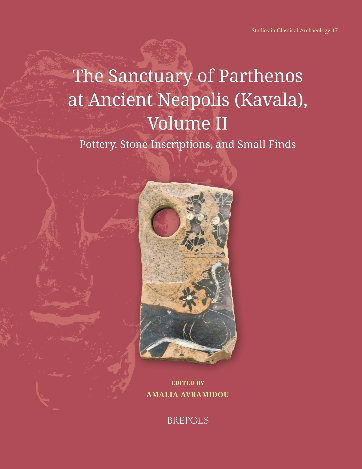
The Sanctuary of Parthenos at Ancient Neapolis (Kavala), Volume ii
show More to view fulltext, buy and share links for:The Sanctuary of Parthenos at Ancient Neapolis (Kavala), Volume ii show Less to hide fulltext, buy and share links for: The Sanctuary of Parthenos at Ancient Neapolis (Kavala), Volume iiThe ancient city of Neapolis (modern Kavala, Greece) was founded by Thasos in the seventh century BCE at a strategic location where the Thracian hinterlands meet the Aegean Sea. The patron deity of this North Aegean polis was Parthenos (the Maiden), a goddess often associated with Artemis and known to us through epigraphic and archaeological evidence. Her sanctuary came to light in the twentieth century, during rescue excavations, and yielded numerous finds, most of which date from the Archaic period.
This edited volume draws together the material evidence from the Sanctuary of Parthenos, with a particular focus on the ceramic wares, stone inscriptions, and small finds from the site. Published as a counterpart to an earlier publication in this series, Amalia Avramidou’s monograph, The Sanctuary of Parthenos at Ancient Neapolis (Kavala): Incised and Painted Ceramic Inscriptions from the Sanctuary and in Aegean Thrace, the essays gathered here nonetheless form a stand-alone volume that sheds light on both the importance of the site as a place of cult, and more broadly the role that it played within the commercial networks and cultural dynamics of the Aegean.
-
-
-
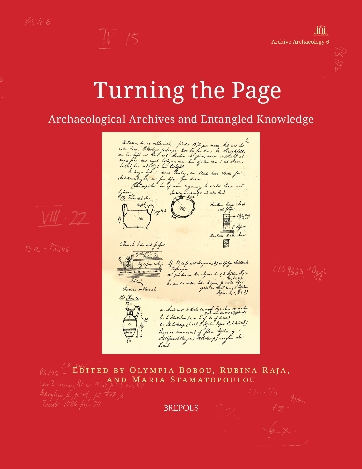
Turning the Page
show More to view fulltext, buy and share links for:Turning the Page show Less to hide fulltext, buy and share links for: Turning the PageThroughout the nineteenth, and for much of the twentieth century, archives were considered to be containers of knowledge, holding material that was deemed to be objective and unbiased. In more recent years, however, as scholars have begun to engage more with archival material, this perception has changed, and archives have increasingly been recognized as sites of contention, holding curated historical documents — a re-evaluation that, in turn, has led to a new understanding of the role and significance of both archives and archiving practices, as well as to revived interest in their contents.
Taking renewed scholarly interest in archives as its starting point, this volume highlights the importance of archival material both as a source of study, and as a way of unleashing hitherto ‘lost’ knowledge. The chapters gathered here present previously unpublished material for the first time, as well as offer new insights into archival and curatorial practices. Through this approach, the authors not only reveal unknown aspects and histories of both past and ongoing excavations, but also shed light on the creation processes of an archive, an element that is typically lost by the time the material is designated as an archive by those who study it. The result is a volume that can shape best archival practices and approaches for the future.
-
-
-
Varietate delectamur: Multifarious Approaches to Synchronic and Diachronic Variation in Latin
show More to view fulltext, buy and share links for:Varietate delectamur: Multifarious Approaches to Synchronic and Diachronic Variation in Latin show Less to hide fulltext, buy and share links for: Varietate delectamur: Multifarious Approaches to Synchronic and Diachronic Variation in LatinThe focus of the Latin Vulgaire – Latin Tardif book series lies on the complex and multifaceted problem of late and so-called vulgar Latin. Specifically, starting out from a wide range of methodological approaches involving all levels of language, the series’ main purpose is to investigate how Classical Latin (i.e. the language used in the period from ca. 100 BC to AD 100 by authors such as Cicero, Horace and Vergil) underwent the changes during the late period (i.e. mainly between the 3rd and the 7th century AD) that resulted in (the early stages of) the Romance languages. To this purpose, three main types of linguistic sources are taken into consideration. First, direct Latin sources, which include for instance texts written by people with a lesser level of literacy (e.g. inscriptions, soldiers’ letters), or by fully literate authors reproducing colloquial language deliberately (e.g. Petronius, Apuleius). Second, indirect Latin sources, which consist of metalinguistic testimonies of ancient authors (mainly, but not exclusively, grammarians) dealing with the language variation typical of their time and region. And third, the Romance idioms themselves: by comparing sources in at least two Romance varieties, one may reconstruct Latin words or forms which were used widely in spoken usage but, for different reasons, are not attested in any extant source.
-
-
-
Writing Distant Travels and Linguistic Otherness in Early Modern England (c. 1550–1660)
show More to view fulltext, buy and share links for:Writing Distant Travels and Linguistic Otherness in Early Modern England (c. 1550–1660) show Less to hide fulltext, buy and share links for: Writing Distant Travels and Linguistic Otherness in Early Modern England (c. 1550–1660)As Britain’s global interests expanded from the mid-sixteenth century, geographic mobility encouraged many forms of multilingual practices in English writings. Translations, lexical borrowings, and records of exchanges between travellers and far-off lands and peoples diversely registered, communicated, engaged and politicised encounters with alterity. Meanwhile, earlier continental European translations also influenced and complicated the reception of distant otherness, entailing questions of linguistic hybridity or pluralism.
This volume explores some of the practices and strategies underpinning polyglot encounters in travel accounts produced, translated, or read in England, as well as in artistic and educational materials inflected by those travels. Drawing on linguistic, lexicographic, literary, and historical methodologies, the twelve chapters in this volume collectively look into the contexts and significances of textual contact zones. Particular attention is paid to uses of multilingualism in processes of identity construction, defining and promoting national or imperial agendas, appropriating and assimilating foreign linguistic capital, or meeting resistance and limits from linguistic and cultural otherness refusing to lend itself to a subjected or go-between status. Treating of indigenous languages, newly anglicized words, and new artistic and instructional materials, the volume makes the case for the vibrancy and influence of early modern English engagements with polyglossia and the need for multiple scales of approach to – and interdisciplinary perspectives on – the subject.
-
-
-
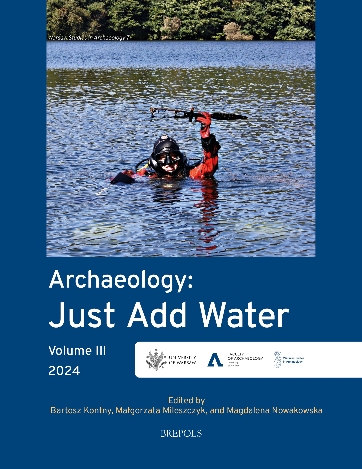
Archaeology: Just Add Water
show More to view fulltext, buy and share links for:Archaeology: Just Add Water show Less to hide fulltext, buy and share links for: Archaeology: Just Add WaterWhile archaeology is often considered to focus on the land that lies beneath our feet, significant amounts of material culture have been lost to us beneath water, whether in seas, lakes, rivers, or submerged caves. The world of underwater archaeology, however, is increasingly recognized as a field that is vital to our understanding of the past. The chapters gathered together into this volume draw on research first presented at the Fourth Warsaw Seminar on Underwater Archaeology, held at the University of Warsaw on 18–20 November 2021. From the seas of the Caribbean through to the Mediterranean and Norway, and from Antiquity through to contemporary times, the chapters presented here offer a dazzling array of different approaches to underwater archaeology and outline the potential that changing technology presents in this expanding field.
-
-
-
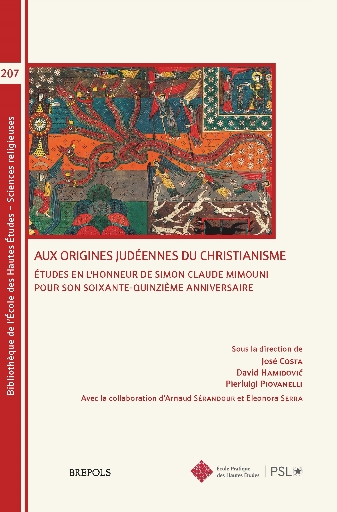
Aux origines judéennes du christianisme
show More to view fulltext, buy and share links for:Aux origines judéennes du christianisme show Less to hide fulltext, buy and share links for: Aux origines judéennes du christianismeSimon Claude Mimouni a été titulaire de la direction d’études « Origines du christianisme » à la Section des Sciences religieuses de l’École pratique des hautes études entre 1995 et 2017. Il est l’auteur d’une œuvre académique considérable, qui a renouvelé en profondeur la manière dont les historiens conçoivent habituellement le judaïsme et le christianisme anciens. Ses travaux insistent notamment sur deux composantes souvent négligées voire ignorées du judaïsme antique : le judaïsme chrétien, et le judaïsme sacerdotal et synagogal. Ce volume lui rend hommage. Il réunit quarante contributions groupées selon trois perspectives : « phénoménologies du judaïsme et du christianisme », « histoire et catégorisation sociales », « rhétorique de l’histoire et administration de la preuve ». Ces contributions, qui relèvent de domaines et de thématiques variées, témoignent de la fécondité des voies ouvertes par Simon Claude Mimouni dans la recherche sur les « religions » du monde tardo-antique.
-
-
-
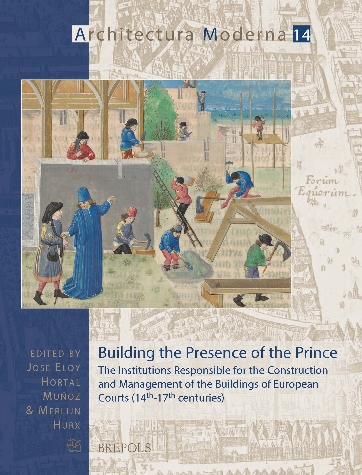
Building the Presence of the Prince
show More to view fulltext, buy and share links for:Building the Presence of the Prince show Less to hide fulltext, buy and share links for: Building the Presence of the PrinceBy the late Middle Ages, architecture became an increasingly important means of representation of princely rule and institutions. In addition to their symbolic significance, the ruler’s buildings served a host of practical purposes. Obviously, castles and fortresses defended the territory, while urban and rural residences served the itinerant court during its proceedings, but their possessions also comprised a wider network of estates that included infrastructure and agricultural, commercial, industrial, and administrative buildings. Together, these networks of sites became a significant means of consolidating the sovereigns’ power and served as key instruments for promoting their rule. To tighten the control over their possessions and to ensure their upkeep, rulers set up Offices of Works, permanent administrative bodies entrusted with their management.
These building administrations have not yet been systematically studied, and it remains unclear to what extent such centralised institutions developed autonomously, responding to local conditions and requirements, or were part of international developments facilitated by the close networks of the European courts.
This volume, with contributions from architectural historians, administrative historians, and court historians, represents a first attempt to compare these institutions on a pan-European scale from the late Middle Ages up to the end of the seventeenth century. It aims to explore the relationships between the local specificities of these organisations and their shared characteristics. From a multidisciplinary perspective, it addresses questions concerning the nature of such administrations, their purpose, organisational structure, and judicial powers, as well as their role in the formation of the state.
-