


BOB2025MOME

Collection Contents
1 result
-
-
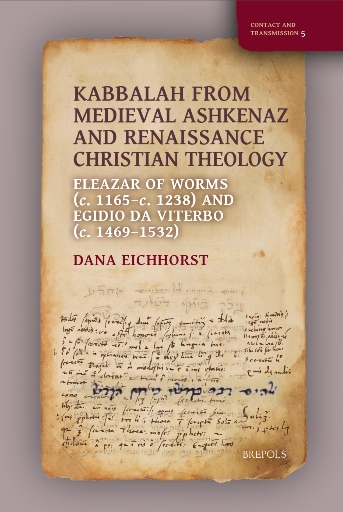
Kabbalah from Medieval Ashkenaz and Renaissance Christian Theology
show More to view fulltext, buy and share links for:Kabbalah from Medieval Ashkenaz and Renaissance Christian Theology show Less to hide fulltext, buy and share links for: Kabbalah from Medieval Ashkenaz and Renaissance Christian TheologyThe preoccupation of Christian theologians and scholars with the Hebrew language and sources at the dawn of the sixteenth century resulted in the transfer of a vast corpus of medieval Hebrew texts into Christian intellectual discourse and networks. These Hebrew sources were meticulously collected, copied, translated, and subjected to rigorous study. These collections include texts that originate from medieval Ashkenaz, the majority of which can be attributed to Eleazar ben Yehuda of Worms (c. 1165–c. 1238). Rabbi Eleazar was a prominent Jewish scholar of his time and a member of one of the most prestigious families in Jewish communities of the German Rhineland and Palatinate.
However, the history of medieval Ashkenazic writings has been neglected in scholarship, which has favoured other Jewish (primarily Sephardic) sources in tracing the infl uence of medieval Jewish mysticism on Christian theology and Kabbalah. This book takes the hitherto disregarded Ashkenazi Hebrew sources as its point of departure. It focuses on the work of Eleazar as a main representative of the Ḥaside Ashkenaz, and on his mag num opus Sode Razayya, which discusses all matter of the divine and the mundane sphere. The book explores how Eleazar’s work was a potentially interesting source for a Renaissance Christian Kabbalist like Egidio (Giles) da Viterbo. Kabbalah from Ashkenaz is distinguished by its emphasis on the Hebrew letters and language, along with the divine word and divine speech (dibur). This central motif of the Ashkenazi sources found resonance with certain Christian theologians and Kabbalists in the context of Christian logos theology, which is similarly anchored in the divine word (verbum).
-