


BOB2025MOME

Collection Contents
2 results
-
-
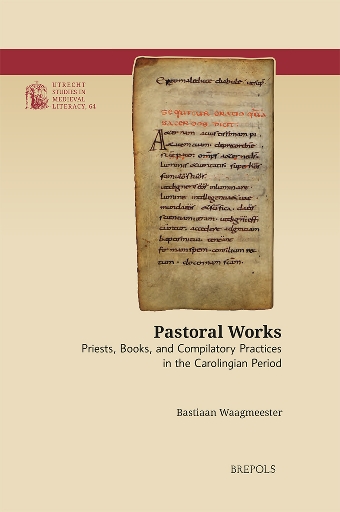
Pastoral Works
show More to view fulltext, buy and share links for:Pastoral Works show Less to hide fulltext, buy and share links for: Pastoral WorksMuch of the Christian empire established by the Carolingians in the eighth century was not only built through royal initiative, but also through the work of local priests. Living among the laity, these clerics provided pastoral care and religious instruction. Yet despite their vital contribution to the development of Christianity in Western Europe, these clergymen and the communities they served remain understudied.
This book investigates the manuscripts they used, offering a glimpse into everyday life around the local church. Far from being poor and illiterate, priests had access to texts specifically adapted to their needs. By examining how these materials were compiled, this study reveals what mattered most in the early medieval countryside. Drawing on excerpts from collections of liturgy, canon law, and patristic expositions — often preserved in the great monastic and court libraries — it uncovers the diversity of local religious practice. These texts reflect how the efforts instigated by Carolingians to foster ‘good Christianity’ were interpreted and implemented outside the centres of power. In exploring these seemingly modest manuscripts, this study opens new pathways into the world of the Carolingian local church and the people who inhabited it.
-
-
-
Peter Abelard, Know Yourself (Scito te ipsum)
show More to view fulltext, buy and share links for:Peter Abelard, Know Yourself (Scito te ipsum) show Less to hide fulltext, buy and share links for: Peter Abelard, Know Yourself (Scito te ipsum)Peter Abelard (1079-1142), famous for his unhappy love story with Heloise, which he wrote down in his autobiographical work Historia calamitatum, was among the most respected scholars of his time. Brilliant as a philosopher and theologian, he was one of the co-founders of scholasticism, seeking to elucidate theological facts through logic.Scito te ipsum is one of the most important texts of the twelfth century. Only in the later phase of his life and work did Abelard decide to separate moral themes from his overall theological schema, and to dedicate a monograph to them under the guiding concepts of "sin" (First Book) and "obedience before God" (Second Book, unfinished). As Ethica nostra it was intended to provide a Christian conception alongside a philosophical ethics, and to summarise the results of his previous studies.
Along with Abelard’s entire theology, this treatise was also condemned as heretical by Pope Innocent II, and was long considered lost. Since its rediscovery in the 18th century, it has met with lively interest both from a theological and also from a philosophical point of view. The historical aspects of the work and its integration into Abelard’s complete works receive special attention in the introduction to this volume, which presents the Latin text from the Corpus Christianorum (CC CM 190) with a new English translation.
-