


BOB2025MOME

Collection Contents
3 results
-
-
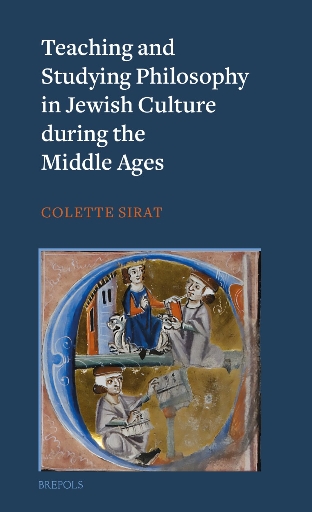
Teaching and Studying Philosophy in Jewish Culture during the Middle Ages
show More to view fulltext, buy and share links for:Teaching and Studying Philosophy in Jewish Culture during the Middle Ages show Less to hide fulltext, buy and share links for: Teaching and Studying Philosophy in Jewish Culture during the Middle AgesThis book offers the first survey of philosophical pedagogy in Jewish culture during the Middle Ages, with a focus on Northern France, the Provence, Italy and Spain. By examining not only the discourse of renowned philosophers such as Maimonides and Gersonides, but also oft-neglected manuscript evidence of educational practices and students’ notes, the book offers a nuanced understanding of the medieval Jewish intellectual landscape and shows how Jewish educators brought intricate debates on metaphysics, ethics, and epistemology into the classroom. The book also sheds light on the broader societal and cultural contexts that influenced these philosophical pursuits.
An essential read for anyone interested in the history of philosophy, Jewish studies, or medieval intellectual culture, this book celebrates the enduring legacy of Jewish philosophical thought and its pivotal role in shaping the intellectual currents of the Middle Ages.
-
-
-

The Poor Caitif
show More to view fulltext, buy and share links for:The Poor Caitif show Less to hide fulltext, buy and share links for: The Poor CaitifThe Pore Caitif is a popular, late-fourteenth-century, carefully crafted compilation of biblical, catechetical, devotional and mystical material drawing on patristic and medieval sources, in Middle English, consisting of a Prologue and a variable number of sections of differing lengths according to each manuscript, assembled probably by a clerical writer for an increasing literate lay readership/audience.The Prologue sets out the reason for writing and its overall structure as an integrated ladder leading the reader to heaven. The text begins with basic catechetical instruction modelled on John Peckham’s Lambeth Constitutions of 1281 before continuing with more affective material, meditating, for example, on the Passion, and concludes with a treatise on virginity, leading the reader from an active to a contemplative way of life.
The Pore Caitif was written about the time the Lollards were starting to propagate their programme of universal vernacular education. The writer believes in the need to educate his readers in the truths necessary for salvation without necessarily subscribing to Lollard positions.
Although referred to in a number of secondary articles and books, and serving as the focus of three doctoral dissertations, an edition of the work was not published until 2019. Penkett's publication is the first Modern English translation based on the 2019 publication and is in a readily accessible format for the modern reader, accompanied by a series of ground-breaking essays.
-
-
-

Through Words, Not Wounds
show More to view fulltext, buy and share links for:Through Words, Not Wounds show Less to hide fulltext, buy and share links for: Through Words, Not WoundsThe chronicle of Henry of Livonia has long been recognized as the single most important source on the early history of Livonia and Estonia in the late twelfth and early thirteenth centuries.
The chronicler describes in great detail how the people of the region were subjected to intense campaigns of crusading and mission from the 1180s until the 1220s, primarily at the hands of ecclesiastical and secular powers of Northern Germany (Saxony), Denmark and Sweden. The chronicler himself, a German cleric named Henry (Henricus), was not only active in recording the events that happened around him. He also took a very active role as a missionary and interpreter among the indigenous population as well as joining the armies of crusaders on campaign, making this chronicle both a first-hand account and a very intriguing narrative. Papal missionary politics and theological ideas are intermingled in the chronicle with detailed descriptions of military campaigns, raids and sieges, making the entire chronicle a fascinating read.
The aim of this book is to clarify the ways in which Henry construes the historical events that he describes, portraying them as the continuation of a form of sacred history that was initiated by God in biblical times and continued by clerics and crusaders among Henry’s own peers.
-