


BOB2025MOME

Collection Contents
3 results
-
-
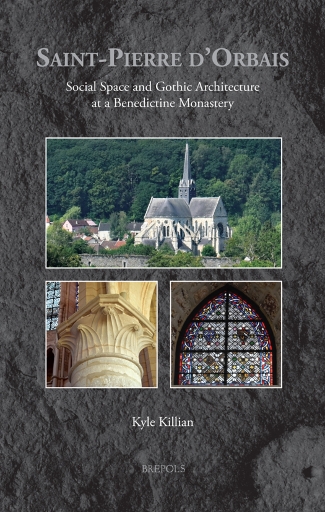
Saint-Pierre d’Orbais
show More to view fulltext, buy and share links for:Saint-Pierre d’Orbais show Less to hide fulltext, buy and share links for: Saint-Pierre d’OrbaisThe fragmentary remains of the Benedictine monastery of Saint-Pierre d'Orbais in northwest Champagne preserves a particular iteration of Gothic style and technological achievement as well as the built environment of a community deeply embedded in the world around them. Through their architecture, successive generations of monks of Orbais, whose institutional life stretched from the end of the seventh century to end of the eighteenth century, were constantly seeking to clarify their position in the changing physical and social landscapes they inhabited. Although connected by a shared site, the architectural evidence from Orbais preserves remnants from several episodes of use and reuse. The site is treated thematically, starting with the boundaries that define the site, then the resources that shaped monastic life in this particular location, followed by the monastic landscapes that shaped the community as an institution. These categories reflect both the nature of our evidence for the contexts of building construction and the types of landscapes that were most active for the monastic community at Orbais over the long life of the site. The final chapter resituates the architectural history of the monastic church in light of these interrelated landscapes, contextualizing existing scholarship that treats it as a specifically Gothic monument, and providing lines of connection to medieval built environments more broadly.
-
-
-
Spectacle benefaction and the politics of appreciation
show More to view fulltext, buy and share links for:Spectacle benefaction and the politics of appreciation show Less to hide fulltext, buy and share links for: Spectacle benefaction and the politics of appreciationIn the remotest corners of the Roman Empire, large crowds were as beguiled by spectacles as their Roman counterparts. Provincial spectacles however, did not share the technical wonders of flying machines, elephant dressage and synchronised swimming seen at imperial extravaganzas. Is it this lack of the sensational that accounts for the relative paucity of scholarly attention paid to regional spectacles and in particular, their sponsors?
When spectacles are viewed purely as entertainment, the messy realities of institutionalized social, economic and political power that regulated them are obscured. A clearer understanding of the spectacle can therefore be achieved by contextualizing it in the big picture of regional and provincial life against the backdrop of Roman power and control. The spectacle itself was highly political in its aims and intent. Access to sponsorship of a spectacle similarly relied on hierarchies of political power and privilege, and consequently required strategic negotiation of candidacy, promises, expenditure and recognition. Rivalry, competition and emulation was endemic.
This epigraphic analysis, focusing on the western Roman Empire (Italy, Gaul and North Africa) during the Imperial period, identifies the milieux of provincial sponsors, their strategies and quest for public honours.
-
-
-

The Sisterbook of Master Geert’s House, Deventer
show More to view fulltext, buy and share links for:The Sisterbook of Master Geert’s House, Deventer show Less to hide fulltext, buy and share links for: The Sisterbook of Master Geert’s House, DeventerThe Sisterbook of Master Geert’s House contains the lives of sixty-four Sisters of the Common Life who died between 1398 and 1456. Founded as an alms-house for destitute women in 1374, by the end of the fourteenth century Master Geert’s House had become a home for women desiring to live a life of humility and penitence, as well as in community of goods without vows. The Sisterbook was likely written sometime between 1460 and 1470, at a time when the religious fervour that had characterized the earlier Sisters had begun to wane. It was to incite the readers and hearers of the Sisterbook, which would have been read in the refectory during mealtimes, to imitate the earlier Sisters who are portrayed as outstanding examples of godliness and Sisters of the Common Life. The opening sentence of the Sisterbook succinctly sums up the author’s reason for writing it: ‘Here begin some edifying points about our earlier Sisters whose lives it behoves us to have before our eyes at all times, for in their ways they were truly like a candle on a candlestick’, and who, by implication, could still illumine the way for her own generation of Sisters. The first foundation of Sisters of the Common Life, Master Geert’s House became the ‘mother’ house of numerous other houses in the Low Countries and Germany directly as well as indirectly and served as an inspiration for others.
This book provides a study of the Sisterbook and its significance in the Devotio Moderna and late medieval female religiosity, while the accompanying translation introduces this important source to an English audience.
-