Brepols
Brepols is an international academic publisher of works in the humanities, with a particular focus in history, archaeology, history of the arts, language and literature, and critical editions of source works.1 - 100 of 3194 results
-
-
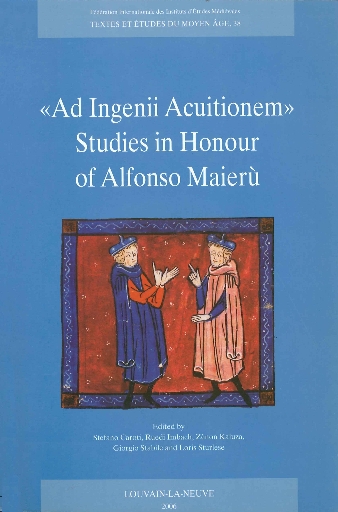
"Ad Ingenii Acuitionem". Studies in Honour of Alfonso Maierù
show More to view fulltext, buy and share links for:"Ad Ingenii Acuitionem". Studies in Honour of Alfonso Maierù show Less to hide fulltext, buy and share links for: "Ad Ingenii Acuitionem". Studies in Honour of Alfonso MaierùThe papers presented in this volume in honour of Alfonso Maierù cover some of the major topics of his research area. The institutional and intellectual life of university training in the Middle Ages, including the peculiar tradition of related works, is the focus of the papers by Louis Jacques Bataillon, William J. Courtenay, Jacqueline Hamesse, Zénon Kaluza, Loris Sturlese and Olga Weijers. Three papers, by Jacopo Costa, Pasquale Porro and Thomas Ricklin, deal with philosophical problems in Dante’s Monarchia and Convivio. The complex interrelations between logic and the other main aspects of medieval philosophy, with a particular attention to theology, metaphysics and natural philosophy, are the core of the other papers by Stefano Caroti, Sten Ebbesen, Barbara Faes de Mottoni, Simo Knuuttila, Alain de Libera, Olga Lizzini, Costantino Marmo, Claude Panaccio, Ivan Bendwell, Irène Rosier-Catach, Lambert Marie de Rijk, Leonardo Sileo, Luisa Valente, and Albert Zimmermann.
A larger number of friends and colleagues of Alfonso Maierù than those who appear as contributors and editors of this volume have warmly welcomed its publication. We could say, therefore, that it is absolutely contingent that the Editors are: Stefano Caroti (Università degli Studi di Parma), Ruedi Imbach (Université de Paris-Sorbonne), Zénon Kaluza (Centre d’Études des Religions du Livre, C.N.R.S), Loris Sturlese (Università degli Studi di Lecce) and Giorgio Stabile(Università degli Studi di Roma “La Sapienza”).
-
-
-
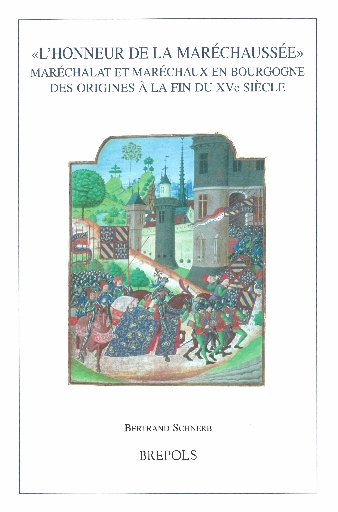
"L'Honneur de la Maréchaussée"
Maréchalat et maréchaux en Bourgogne des origines à la fin du XVe siècle
show More to view fulltext, buy and share links for:"L'Honneur de la Maréchaussée" show Less to hide fulltext, buy and share links for: "L'Honneur de la Maréchaussée"« Le duc a pour son principal officier pour la guerre le maréchal de Bourgogne. Et se conduit par sa main le fait de la guerre avant tous les autres ». C'est ainsi qu'Olivier de La Marche, vers 1474, définit le rôle d'un personnage- clé de 1 'État bourguignon. Or, malgré l 'importance de la fonction et la masse des sources conservées, la « maréchaussée » de Bourgogne n' avait guère, jusqu' à présent, retenu l 'attention des chercheurs. C 'est donc une lacune historiographique non négligeable qui est désormais comblée. L'etude de l'office de maréchal de Bourgogne à la fin du Moyen Age est d'abord celle d'une institution, de ses origines domestiques lointaines -le mariscalcus du Haut Moyen Age était un valet d'écurie- et de l'évolution qui en fit l'un des grands offices politiques et militaires de la Cour de Bourgogne. Mais cette étude ne peut être seulement d' ordre institutionnel et doit, aussi, être d'ordre social. II est impossible, en effet, d'étudier une fonction sans s'intéresser aux hommes qui l'ont incarnée. Les maréchaux de Bourgogne des XIV e et xv e siècles furent des représentants de cette noblesse d'armes qui constitua l'un des piliers de l'État bourguignon. Parmi eux, des hommes comme Guy de Pontailler, Jean III de Vergy et Thibaud IX de Neufchâtel furent des personnalités marquantes de l'entourage ducal. Leurs origines familiales, leurs alliances lignagères, leur implantation régionale, leur carrière étaient autant de critères guidant le choix du prince au moment de leur nomination ; il est donc indispensable de reconstituer ce faisceau de données si l 'on veut comprendre ce que le duc attendait du titulaire de sa maréchaussée et ce qu, était la nature de cette fonction.
Un travail sur le maréchal de Bourgogne ne se conçoit pas sans un recours à la démarche comparative. Du XII e au XV e siècle, dans nombre de principautés du royaume de France et de son voisinage immédiat, se développa une maréchaussée comparable à celle de Bourgogne. Dans certains cas l'office, devenu héréditaire, se mua en une dignité purement honorifique, mais dans d'autres cas il connut le même destin que le maréchalat bourguignon et devint une fonction politique et militaire de premier plan, revendiquée par la noblesse mais étroitement contrôlée par le pouvoir princier : ainsi en Bretagne, en Lorraine, en Savoie. La comparaison de l'évolution institutionnelle, du contenu de la fonction, du profil individuel des titulaires de l 'office s 'avère riche d 'enseignements. En mettant en lumière un type d'institution jusqu'ici mal connu, la présente étude contribue à mieux cerner la réalite des États princiers de la fin du Moyen Age.
Bertrand Schnerb est Professeur d'Histoire médievale à l'Université de Lille 3. II a publié, entre autres ouvrages, L' Etat bourguignon, 1363-1477 (Perrin, 1999).
-
-
-
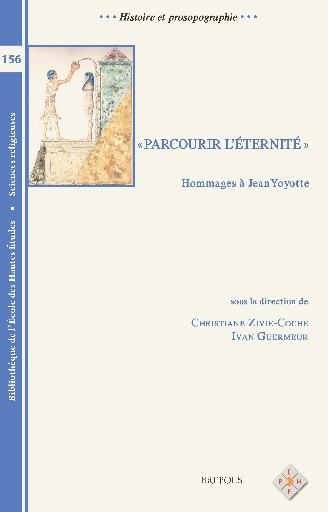
"Parcourir l'éternité". Hommages à Jean Yoyotte
Tomes I et II
show More to view fulltext, buy and share links for:"Parcourir l'éternité". Hommages à Jean Yoyotte show Less to hide fulltext, buy and share links for: "Parcourir l'éternité". Hommages à Jean YoyotteJean Yoyotte (1927-2009), directeur d’études à l’EPHE, section des sciences religieuses, professeur au Collège de France, directeur de la Mission des fouilles de Tanis pendant vingt ans, fut un immense savant dont les curiosités multiples et intarissables ont fait qu’il n’y a guère de thèmes et de périodes de l’histoire, de la géographie et de la pensée religieuse de l’Égypte ancienne qu’il n’ait abordés à un moment ou un autre de sa carrière. Il eut cependant des sujets de prédilection qu’il n’a jamais abandonnés et pour lesquels il fut un initiateur et un maître hors pair. C’est lui qui suscita l’intérêt, qui ne s’est jamais démenti depuis, pour la Troisième Période Intermédiaire, et plus généralement le premier millénaire avant notre ère, époque longtemps négligée, voire tenue en mépris, par nombre d’égyptologues. Il développa avec bonheur la « géographie religieuse » sous tous ses aspects : monographies régionales, géographie sacerdotale telle que la donnent à voir les processions des temples, particulièrement à l’époque ptolémaïque, analyse des « titres spécifiques » sacerdotaux éclairant les cultes locaux qui se développèrent dans toutes les villes d’Égypte. Il fut particulièrement attentif aux « relations extérieures » de l’Égypte, contribuant ainsi à rendre caduque l’idée d’un pays autarcique, indifférent aux cultures autres. L’acribie de sa méthode qui faisait passer au crible de l’analyse tous les documents, même ceux en apparence les plus insignifiants, lui permettait de remettre en cause des « vérités » mal établies sur des prémisses douteuses. L’étendue de son érudition l’autorisait à des rapprochements inédits et fructueux portant la lumière sur le nom d’une localité, la raison d’un culte obscur. Pour honorer sa mémoire, de très nombreux égyptologues ont souhaité apporter leur contribution dans leur champ propre, venus de pays et d’horizons différents, de toutes les générations, depuis ses amis de jeunesse jusqu’à ses derniers étudiants, en passant par la succession de ses élèves et disciples. Ainsi, leurs recherches témoignent de l’influence prégnante, directe ou indirecte, qu’a eue la pensée de Jean Yoyotte au fil du xxe siècle et jusqu’à maintenant sur toute l’égyptologie. Sans qu’aucun ne se soit concerté, on voit aussi se dessiner à travers ces articles touchant des thèmes très divers, des fils qui s’entrelacent et qui évoquent la figure de l’égyptologue disparu.
Christiane Zivie-Coche, ancien membre scientifique de l’Institut français d’archéologie orientale du Caire, directeur d’études à l’EPHE, section des sciences religieuses.
Ivan Guermeur, ancien membre scientifique de l’Institut français d’archéologie orientale du Caire, chargé de recherche au CNRS (UMR 5140 « Archéologie des sociétés méditerranéennes », CNRS, université Paul Valéry-Montpellier III), chargé de conférences à l’EPHE, section des sciences religieuses.
-
-
-
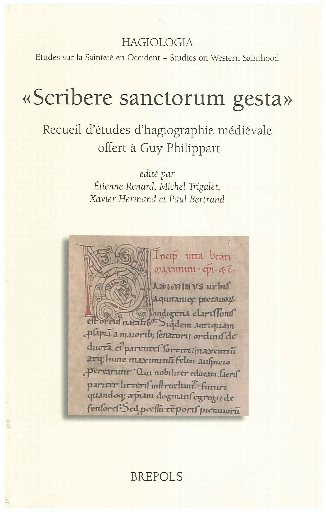
"Scribere sanctorum gesta"
Recueil d’études d’hagiographie médiévale offert à Guy Philippart
show More to view fulltext, buy and share links for:"Scribere sanctorum gesta" show Less to hide fulltext, buy and share links for: "Scribere sanctorum gesta"Dans les études hagiographiques comme dans d’autres domaines de l’histoire médiévale, il s’avère indispensable de retourner aux sources, et d’abord aux manuscrits et aux œuvres qu’ils véhiculent. Le manuscrit ancre le texte dans un contexte particulier, informe sur les milieux dans lesquels il a été produit ou reçu, documente sur les stratégies qui ont présidé à sa diffusion. À qui sait lire les apparats critiques et les descriptions codicologiques, il apporte une moisson d’informations. Lorsqu’ils sont regroupés en ensembles — ensembles des exemplaires d’une même œuvre, ensembles des exemplaires d’une même collection, ensembles de collections apparentées —, les textes hagiographiques acquièrent un intérêt plus large encore, éclairant les champs culturel, social ou économique à la lumière de l’histoire de leur édition. En la matière, les travaux de Guy Philippart sont à placer au premier plan de la recherche des trente dernières années. Songeons à sa contribution fondamentale à la typologie des légendiers médiévaux, à la base de données «Légendiers latins», qui a donné naissance à la BHLms, et à l’Histoire internationale de la littérature hagiographique en cours de publication. C’est tout naturellement autour de la littérature hagiographique, en particulier les thèmes de l’écriture — de la réécriture — et de l’édition manuscrite des textes hagiographiques médiévaux, que quatre de ses anciens étudiants ont réuni une trentaine de spécialistes de renommée internationale. Le résultat? Une collection d’études qui aborde un large éventail de problématiques actuelles. Au-delà de l’hommage au chercheur et à l’enseignant, ce livre se veut aussi témoignage d’amitié.
-
-
-

"Tout le temps du veneour est sanz oyseuseté"
Mélanges offerts à Yves Christe pour son 65ème anniversaire par ses amis, ses collègues, ses élèves
show More to view fulltext, buy and share links for:"Tout le temps du veneour est sanz oyseuseté" show Less to hide fulltext, buy and share links for: "Tout le temps du veneour est sanz oyseuseté"Pour honorer le professeur Yves Christe, des chercheurs de six pays se sont réunis et ont fait le bilan de leurs recherches sur des sujets chers au dédicataire de ce volume: l’iconographie chrétienne, l’Apocalypse, les manuscrits des Bibles moralisées, le conditionnement des œuvres par rapport à leur contexte historique et liturgique, et l’histoire de leur conservation. Cet assemblage dessine un panorama d’une grande richesse, passionnante pour toute personne s’intéressant à l’art chrétien et à la civilisation du Moyen Age. Yves Christe est l’un des meilleurs spécialistes de l’iconographie paléochrétienne et médiévale; ses travaux sur l’Apocalypse et le Jugement dernier font autorité.
-
-
-
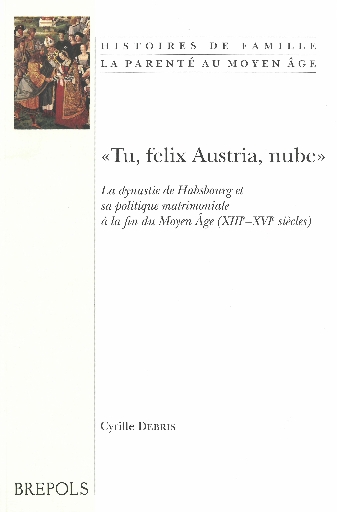
"Tu Felix Austria, nube"
La dynastie de Habsbourg et sa politique matrimoniale à la fin du Moyen Age (XIIIe-XVIe siècles)
show More to view fulltext, buy and share links for:"Tu Felix Austria, nube" show Less to hide fulltext, buy and share links for: "Tu Felix Austria, nube"[TOI, HEURESE AUTRICHE, CONCLUS DES MARIAGES. À la mort de Maximilien Ier en 1519, la dynastie de Habsbourg est parvenue à s'imposer durablement à la tête du Saint Empire Romain Germanique, monarchie électorale à laquelle elle avait accédé sous Rodolphe Ier en 1273. En deux siècles et demi, elle est aussi parvenue à rassembler patiemment un ensemble patrimonial sans pareil, passant d'un simple comté alémanique aux fondements d'un « Empire sur lequel le soleil ne se couchait jamais ». De prestigieux héritages, particulièrement bourguignon et espagnol, hongrois et bohéme, furent récupérés suite à une heureuse politique matrimoniale, sans guerre de conquête. Sur huit générations, l'étude exhaustive des 58 mariages aboutis et de plus de 110 projets échafaudés recherche les motivations (territoriales, financières, militaires, religieuses) et les circonstances (soutiens ou oppositions diplomatiques) pour faire la part entre calcul visionnaire et hasard biologique. Tout en évitant l'extinction dynastique et la parcellisation domaniale, les chefs de famille devaient jouer sur « l'échiquier matrimonil » en fonction de la démographie (nombre d'enfants et sexe), des règles eccléssiastiques et nobiliaires, des rapports territoriaux. Les étapes de l'engagement matrimonial (enquêtes, promesses de mariage, fiançailles, procurations) et ses implications financières (dots, contre-dots, dons du matin, douaires) permettent de brosser un tableau général des mariages, cet aspect essentiel de la parenté et de l'histoire d'une grande famille à la fin du Moyen Âge.
Cyrille Debris, né en 1973, est agrégé de l'université en histoire et docteurès lettres.
,Sa politique matrimoniale a permis à la dynastie de Habsbourg d'agrandir son patrimoine et d'accéder à l'Empire. Les motivations (territoriales, financières, militaires, diplomatiques) et les circonstances (soutiens ou oppositions) permettent de faire la part du hasard et du choix politique. Tout en évitant et l'extinction biologique et la parcellisation domaniale, les chefs de famille devaient jouer sur l'" échiquier matrimonial " en fonction de la démographie (nombre d'enfants, sexe), des règles ecclésiastiques et nobiliaires, du rapport des forces territoriaux. Sur huit générations, entre Rodolphe I et Maximilien I (1273 - 1519), tous les projets matrimoniaux sont étudiés, aboutis (58 mariages) ou non (110 projets), ainsi que les étapes de l'engagement matrimonial (enquêtes, promesses de mariage, fiançailles, procurations) et leurs implications financières (dots, contre-dots, Morgengabe, douaires). L'ouvrage a été récompensé par l’Académie Française avec la médaille d’argent 2006 du Prix François Millepierres (Histoire et Sociologie).
]
-
-
-
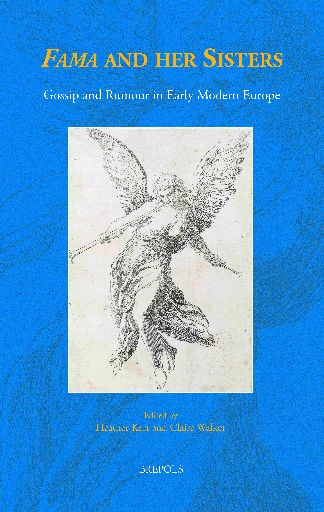
'Fama' and her Sisters
Gossip and Rumour in Early Modern Europe
show More to view fulltext, buy and share links for:'Fama' and her Sisters show Less to hide fulltext, buy and share links for: 'Fama' and her SistersThe essays in this collection demonstrate how Fama and her sisters, gossip and rumour, were central in private and public discourses about state and society in early modern Europe. In an era when oral, scribal, visual, and print cultures competed to satisfy a growing public demand for ‘news’, gossip and rumour informed people about the actions and morals of their social and political elites, and they commonly enabled people who did not usually participate in politics to engage with the public discourses about religion, governance, and society which shaped their lives and the state. So while gossip and rumour might be scurrilous and entertaining, they nonetheless performed a vital political function, regulating communal and political behaviour in the upper social echelons, as well as in neighbourhoods lower down the social scale where they might constitute a form of popular justice. This timely interdisciplinary study explores how gossip and rumour functioned dualistically at all levels of the early modern state and society either to advance or to defame reputations, and thereby shape public opinion.
-
-
-
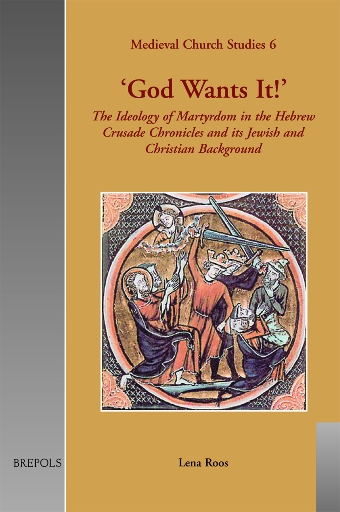
'God Wants It!'
The Ideology of Martyrdom in the Hebrew Crusade Chronicles and its Jewish and Christian Background
show More to view fulltext, buy and share links for:'God Wants It!' show Less to hide fulltext, buy and share links for: 'God Wants It!'During the first months of the First Crusade, groups of crusaders attacked the Jewish communities in the Rhineland, forcing them to choose between death and conversion. Many converted, but others chose to die as martyrs. Among these, some were killed by the crusaders, some killed themselves, each other, or even their own children in order to prevent forcible conversion. These events are described in a number of Latin accounts, but also in three Hebrew chronicles and in a number of Hebrew liturgical poems. These Hebrew chronicles introduce many new ideas connected to martyrdom which are not found in earlier Jewish martyr texts. They also differ considerably from contemporary texts on martyrdom, written by Jews living under Muslim rule.
The purpose of the present study is as follows: to outline the most salient features of this new ideology of martyrdom found in the Hebrew Crusade Chronicles and how it differs from earlier Jewish tradition; to try to trace the roots of these new ideas, both by showing how the Chroniclers develop earlier Jewish ideas and also how they borrow notions and concepts from their Christian surroundings; to show what rhetorical means the Chroniclers use in order to present these innovations as firmly anchored in tradition; to attempt to explain why this ideology develops at this particular time and place, and thereby contribute some further methodological reflections on the nature of religious change, especially in a situation of persecution and oppression; to challenge the old paradigm that the Ashkenazic Jewish communities lived in isolation from their non-Jewish surroundings, and to suggest that a serious study of any medieval Jewish text must take into consideration the culture and current notions of the non-Jewish community in which the text was composed.
-
-
-
'Homo considera'. La pastorale lyrique de Philippe le Chancelier
Une étude des conduits monodiques
show More to view fulltext, buy and share links for:'Homo considera'. La pastorale lyrique de Philippe le Chancelier show Less to hide fulltext, buy and share links for: 'Homo considera'. La pastorale lyrique de Philippe le ChancelierAu tournant du XII e et du XIIIe siècle, les thématiques moralisatrices tiennent une place importante dans les sources musicales parisiennes, particulièrement dans la pratique du conductus. L’analyse d’une sélection de conduits monodiques moraux attribués à Philippe le Chancelier révèle les qualités oratoires et rhétoriques de cette production tant par le texte que par la musique. Les deux entretiennent une relation complexe qui peut être de valoriser les sons des mots, d’en clarifier le sens ou encore de mettre en place une construction savante, à l’intention des esprits habitués aux subtilités de la poésie rythmique latine et des mélodies du plain-chant. Le désir de communication du message moral impose ses règles et ses figures, comme autant de techniques apprises au contact d’autres pratiques du discours, notamment celle du sermon. Les capacités du prédicateur à structurer son message et le fonder sur un substrat culturel scolaire et biblique se trouvent ainsi réinvesties dans l’élaboration de ces constructions lyriques. Ainsi, par la collaboration de tous ces moyens, la pastorale se loge là où le discours peut trouver une efficacité nouvelle, dans la musique des mots et la déclamation de la voix chantée.
-
-
-
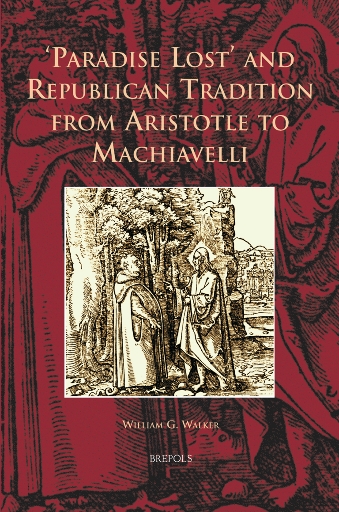
'Paradise Lost' and Republican Tradition from Aristotle to Machiavelli
show More to view fulltext, buy and share links for:'Paradise Lost' and Republican Tradition from Aristotle to Machiavelli show Less to hide fulltext, buy and share links for: 'Paradise Lost' and Republican Tradition from Aristotle to MachiavelliThis major interdisciplinary study re-examines the political thought of John Milton, one of the celebrated proponents of the ‘Commonwealth and Free State’ that was established in England in the mid-seventeenth century. Walker shows that in his epic poem, Paradise Lost (1667), Milton presents a heterodox Protestant vision of politics. This vision differs radically from the vision of politics presented by republicans from Aristotle to Machiavelli, and by Milton himself in his major political prose. The study is based on close readings of primary texts and scholarship in literary criticism, philosophy, theology, and the history of political thought. It is thus a powerful challenge to the current consensus on Milton’s republicanism, his Christian humanism, and the shape of his oeuvre. It is, in addition, an important contribution to our understanding of a tradition of political thought that continues to inform modern republics.
Dr William Walker is Senior Lecturer in the School of English, Media & Performing Arts at the University of New South Wales. He completed an Honours BA and MA in English literature at the University of Western Ontario, and a PhD in English literature at The Johns Hopkins University. His research is focused on Locke, Milton, and the history of republican political thought.
-
-
-
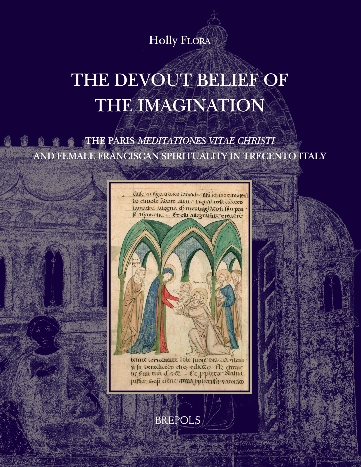
'The Devout Belief of the Imagination'
The Paris 'Meditationes Vitae Christi' and Female Franciscan Spirituality in Trecento Italy
show More to view fulltext, buy and share links for:'The Devout Belief of the Imagination' show Less to hide fulltext, buy and share links for: 'The Devout Belief of the Imagination'This volume examines the late medieval devotional text Meditationes Vitae Christi through an analysis of its most important manuscript, known by its present location and catalogue number as Paris Bibliothèque Nationale Ms. ital. 115. As Flora argues, Ms. ital. 115, the oldest and most extensively illustrated copy of the Meditationes, was originally made in or near Pisa c. 1350 and tailored very specifically for a group of Franciscan nuns. Flora suggests the manuscript’s probable uses in practices of performative devotion and affective response, and the relationship between its imagery and other works of art made for religious women, shedding new light on the history of female monasticism in medieval Italy.
Holly Flora is Assistant Professor of Art History at Tulane University, and is the author of Cimabue and Early Italian Devotional Painting (The Frick Collection, 2006) as well as studies on illustrated manuscripts and devotional art in late medieval Italy.
-
-
-
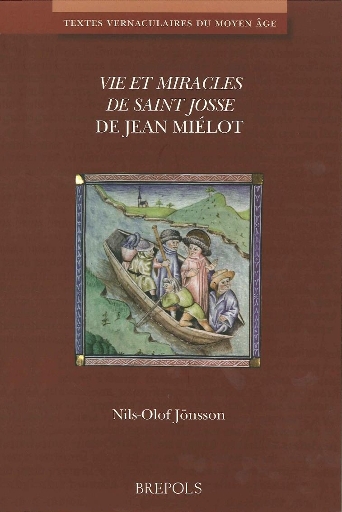
'Vie et miracles de saint Josse' de Jean Miélot
show More to view fulltext, buy and share links for:'Vie et miracles de saint Josse' de Jean Miélot show Less to hide fulltext, buy and share links for: 'Vie et miracles de saint Josse' de Jean MiélotVie et Miracles de saint Josse was written in 1449. Jean Miélot was a translator and writer in the service of the Dukes of Burgundy. The manuscript, which was written by the author himself, is preserved in the Royal Library of Brussels, no. 10958. The greater part of the text is a translation, but a few pages of the manuscript have been copied by Miélot from other sources, and some parts have been composed by Miélot himself. Another manuscript, which is a copy of the original, is preserved in the Municipal Library of Valenciennes. Only a few pages of the manuscript have been published before.
Saint Josse (Jodocus, Judocus) was born in Brittany about 600, son to a local king. He left his home for Picardy, where he met Duke Haymon. He was ordained and served Haymon for seven years. Afterwards he withdrew to the solitude along the river Canche, where he built a hermitage, which was transformed into a church by the Duke. After his death on the 13th of December c. 668, his body was buried in his church. Saint Josse has been venerated in large parts of Europe, not only in France, Belgium and Great Britain, but also in the countries along the Rhine; in the south as far as Slovenia and in the north as far as Scandinavia. Even in the fourteenth century, he was well-known in England - Chaucer's Wife of Bath swears by God and by Seint Joce.
His life was written in latin in several versions, the first from about 800. Pierre de Beauvais wrote the first Life of Saint Josse in French, in octosyllabic verses, in the beginning of the thirteenth century. In the introduction to this edition the relationship of the latin lives and Miélot's translation is discussed. There is also an investigation of the author's language and style. Miélot's vocabulary is large and contains several words which have not been attested before. The text is followed by explanatory notes, an index of proper names and a glossary. The illustrations at the end of the edition consist of thirteen of the miniatures of the Brussels manuscript and three drawings representing Miélot and his workroom, taken from another Miélot manuscript, preserved in the Royal Library of Copenhagen.
-
-
-
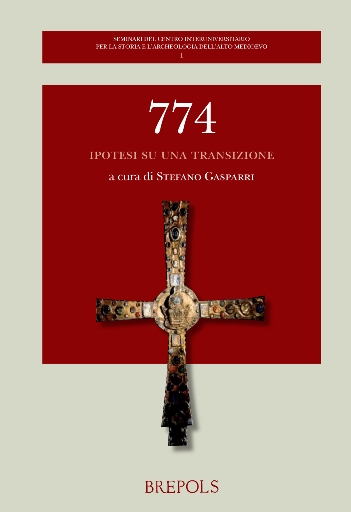
774, ipotesi su una transizione
Atti del seminario di Poggibonsi, 16-18 febbraio 2006
show More to view fulltext, buy and share links for:774, ipotesi su una transizione show Less to hide fulltext, buy and share links for: 774, ipotesi su una transizioneIn questo volume sono editi gli atti del I seminario organizzatonel 2006 dal Centro interuniversitario per la storia e l’archeologia dell’alto medioevo (SAAME). Al centro del seminario è stato un tema di grande importanza per storia italiana: la conquista franca del regno longobardo e le sue conseguenze in tutti i campi, dai mutamenti politici - indagati soprattutto dal punto di vista della loro rappresentazione - ai mutamenti nell’insediamento rurale e urbano (dalle campagne toscane a capitali come Roma e Ravenna), a quelli nelle attività artistiche (la costruzione di edifici di prestigio) e culturali (epigrafia, documenti, codici, produzione normativa), nella circolazione monetaria (le zecche, i mancosi) e nei flussi commerciali (con in primo piano l’Adriatico). Inoltre si è tentato di inserire la ‘transizione’ italiana, ossia il passaggio della penisola sotto la dominazione carolingia, nell’ambito di un quadro europeo, prendendo in considerazione, con alcuni affondi tematici, la Turingia, la Baviera, l’Austrasia e infine la Spagna, dove è avvenuta un’altra fondamentale transizione, quella tra Visigoti e Musulmani.
Il titolo del libro, che fa riferimento ad una data precisa fornita dalla storia politica, l’anno 774, può apparire paradossale per presentare i risultati di un seminario nel corso del quale sono state interrogate allo stesso modo fonti scritte e fonti archeologiche, e va inteso in senso soprattutto simbolico, come un’ovvia allusione ad un altro anno cardine, il 751, anch’esso oggetto di indagini recenti. Ma al tempo stesso tale riferimento è utile per ribadire l’assoluta necessità di coordinare insieme, ai fini della ricostruzione del passato, i tempi e i risultati della storia politica (in questo caso il passaggio dai Longobardi ai Carolingi), dell’archeologia, della numismatica, della storia della documentazione scritta, della storia dell’arte e di tutte le altre storie.
-
-
-

A Bibliography of Works on Medieval Communication
show More to view fulltext, buy and share links for:A Bibliography of Works on Medieval Communication show Less to hide fulltext, buy and share links for: A Bibliography of Works on Medieval CommunicationThis bibliography of works on medieval communication offers a survey of work in a field of study which, from the 1960s onwards, has seen an ever-increasing number of monographs, collections of miscellanies and articles in learned journals being published every year. It provides a guide to this astonishing output by offering a list of more than 6.700 publications under sixteen headings. Because of the overlap of these headings, a comprehensive Index of subjects, place names and personal names is provided, which will allow the user to quickly find publications relevant to his research. A short Introduction precedes the bibliography. Progress in the field of study over the past two decades is outlined, with attention to those recent developments which have proved the most productive. At the same time, something is said about the growing insights which have led the bibliography’s organisation to be changed substantially since its previous edition in 1999, which already numbered 1.580 items. Not only the more than fourfold increase in the number of items made a new edition necessary therefore, but also new ideas about the best ways of organising the knowledge that is to be gained from the contents of studies of medieval communication.
-
-
-
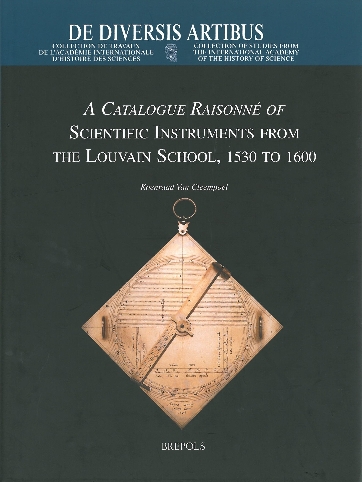
A Catalogue Raisonné of Scientific Instruments from the Louvain School, 1530-1600
show More to view fulltext, buy and share links for:A Catalogue Raisonné of Scientific Instruments from the Louvain School, 1530-1600 show Less to hide fulltext, buy and share links for: A Catalogue Raisonné of Scientific Instruments from the Louvain School, 1530-1600This object-based study concentrates on scientific instruments made in Louvain between c. 1530 and c.1600, a period in which the university fell from the peak of its importance into a state of decline. The instruments are characterised by elaborate decoration and by numerous technical innovations. The book comprises two parts: an introduction followed by a catalogue raisonné of almost ninety instruments from the Louvain masters, both signed and unsigned ones. The introduction outlines the circumstances of the foundation of this ‘Louvain school of instrument makers’, which entailed the merging of an intellectual center (based in the university) and a material culture (based in the workshops). A similar symbiosis occurred elsewhere in Europe, but never on the scale of Louvain. The presence of the Spanish Court in Brussels around 1540-1550 helped to provide the workshops with important commissions. Their role as a Maecenas is also discussed. The most important instrument makers were Gerard Mercator, Michael Piquer, Gualterus Arsenius, Adrian Descrolières and Adrian Zeelst. Little was previously known about these men - apart perhaps from Mercator - and even less about the output of their workshops. This book attempts to present for the first time a comprehensive survey of these workshops and how they may have influenced one another.
-
-
-
A Catalogue of Byzantine Manuscripts in their Liturgical Context: Challenges and Perspectives
Collected Papers resulting from the expert meeting of the Catalogue of Byzantine Manuscripts programme held at the PThU in Kampen, the Netherlands on 6th-7th November 2009.
show More to view fulltext, buy and share links for:A Catalogue of Byzantine Manuscripts in their Liturgical Context: Challenges and Perspectives show Less to hide fulltext, buy and share links for: A Catalogue of Byzantine Manuscripts in their Liturgical Context: Challenges and PerspectivesThe world of Byzantine manuscripts is fascinating but also confusing. Although they play an important part in modern studies on the history of Christian liturgy and on the textual history of the Bible, a clear overview of the vast amount of these manuscripts in their many different forms is lacking. A new approach in their cataloguing is called for. The present volume brings together a number of specialists in the field of Byzantine, liturgical and Biblical studies with the aim to develop a new methodology for codicological research of the Byzantine manuscripts, taking seriously the original environment of the integral codices in the monasteries and the churches in which they were manufactured and functioned.
Prof. dr. Klaas Spronk is Head of the Research Department Sources of the Protestant Theological University (PThU), location Amsterdam, and chairman of the CBM Academic Board.
Prof. dr. Gerard Rouwhorst is Professor of Liturgical History at the Tilburg School of Catholic Theology and member of the Department of Biblical Sciences and Church History of that institution. He is member of the CBM Academic Board.
Dr. Stefan Royé is member of the Research Department Sources of the Protestant Theological University (PThU), location Amsterdam, and CBM programme coordinator and secretary of the Academic Board.
-
-
-

A Cathedral of Constitutional Law
Essays on the Earliest Constitutions of the Order of Preachers
show More to view fulltext, buy and share links for:A Cathedral of Constitutional Law show Less to hide fulltext, buy and share links for: A Cathedral of Constitutional Law
With an English Translation of Fr Antoninus H. Thomas’s 1965 StudyThe Belgian Dominican friar Antoninus Hendrik Thomas published a critical reconstruction of the earliest Constitutions of the Dominican Order. He identified meticulously where Saint Dominic and his first brothers had borrowed material from other religious and secular juridical systems, as well as where they had been original, thus uncovering the foundational charism of the Order. Even today, researchers in the field regard Fr Thomas’s work as indispensable. Unfortunately, many of his insights are difficult to access for a wider audience, since Fr Thomas wrote his work in his native language, Dutch. To mark the eighth centenary of the death of Saint Dominic in 2021, the Belgian Dominican province therefore decided to publish Fr Thomas’s work in an English translation, as well as to complement this with a selection of essays written by contemporary experts, who – from their particular perspectives – engage with Fr Thomas’s main insights. The essays deal with the historiographical tradition to which Fr Thomas belonged, the Premonstratensian, Cistercian and secular sources of the Constitutions, the manuscript tradition and editing process of the earliest Constitutions, and their reception in the first century of the Order and by the late medieval observant movement.
-
-
-
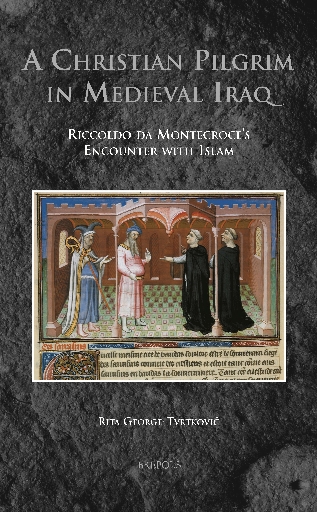
A Christian Pilgrim in Medieval Iraq
Riccoldo da Montecroce's Encounter with Islam
show More to view fulltext, buy and share links for:A Christian Pilgrim in Medieval Iraq show Less to hide fulltext, buy and share links for: A Christian Pilgrim in Medieval IraqThis book analyses the events of a decade long encounter between an Italian Dominican, Riccoldo da Montecroce (c. 1243–1320), and the Muslims of Baghdad, as recounted by the friar himself. While many of Riccoldo’s views of the Muslims are consonant with those of his medieval confrères, the author examines the much more ambivalent sections of his writings, such as his praise-filled descriptions of Muslim praxis, his obvious love of Qur’anic Arabic, his frequent references to personal encounters with Muslims, and his candid descriptions of the wonder and doubt which these confrontations often elicited. The author argues that the tensions and inconsistencies inherent in Riccoldo’s account of Islam should not be viewed as defects. Rather, she contends, their presence illustrates the complex nature of interreligious encounter itself. In addition to a critical discussion, this volume provides — for the first time — English translations of two remarkable Riccoldian texts: The Book of Pilgrimage (Liber peregrinationis) and Letters to the Church Triumphant (Epistolae ad ecclesiam triumphantem).
-
-
-
A Cosmic Liturgy: Qumran's 364-Day Calendar
show More to view fulltext, buy and share links for:A Cosmic Liturgy: Qumran's 364-Day Calendar show Less to hide fulltext, buy and share links for: A Cosmic Liturgy: Qumran's 364-Day CalendarThis work shows how the importance of Sunday, Wednesday, and Friday in the 364-day Qumran calendar is based on the Priestly creation narrative in Genesis and the myth of a cosmic covenant established between God and the angels on the first day. The myth of the apostasy of the angels guiding the seven planets was used to explain the discrepancy between the 364-day calendar and observation. The Epistle of Jude makes it possible to situate this work in relation to both Jubilees and the Book of the Watchers and confirms the use of the 364-day calendar in the earliest years of the nascent Church.
-
-
-
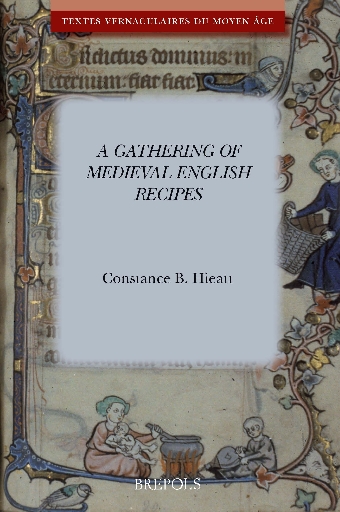
A Gathering of Medieval English Recipes
show More to view fulltext, buy and share links for:A Gathering of Medieval English Recipes show Less to hide fulltext, buy and share links for: A Gathering of Medieval English RecipesThis book is a collection of medieval English culinary recipes which have not been edited before. Some of them come from brief collections which have not been previously published, or are found in isolation or very small groups in manuscripts which do not contain such collections. Others come from collections which have been used, or viewed, primarily for collation, but which contain other recipes which had not yet been noted.
It was the author's object to gather together all the recipes which had not been edited and published, or are not currently being edited by others, to make the record of English recipes of this period as complete as possible. The volume concludes with a supplement to the recently published Concordance of English Recipes: Thirteenth Through Fifteenth Centuries, adding all the "new" recipes to that Concordance, except for a few which are so fragmentary as not to deserve listing.
-
-
-
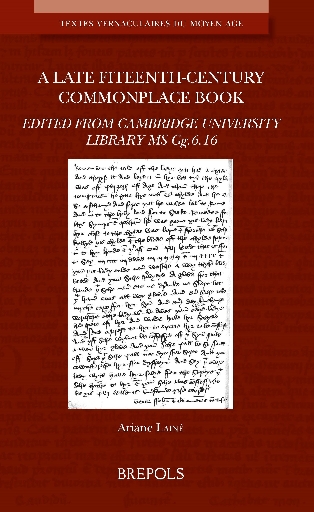
A Late Fiteenth-Century Commonplace Book
Edited from Cambridge University Library Ms Gg. 6.16
show More to view fulltext, buy and share links for:A Late Fiteenth-Century Commonplace Book show Less to hide fulltext, buy and share links for: A Late Fiteenth-Century Commonplace BookThis edition presents the full text of a personal collection of temporale Middle-English sermons, compiled by a parish priest for his own use (preserved in Cambridge University Library MS Cg.6.16). It also includes the notes and fragments of sermons or exempla found at the beginning of the manuscript with a purpose of giving insight into the way a parish priest would compile materials. This manuscript has attracted attention because it perserves versions of these sermons' early stages. The current edition is therefore complementary to editions of later versions of the same sermons. The introduction provides a discussion of these sermons' textual history and the circumstances in which they were possibly preached. Explanatory notes, a glossary, and indexes complete the edition.
-
-
-
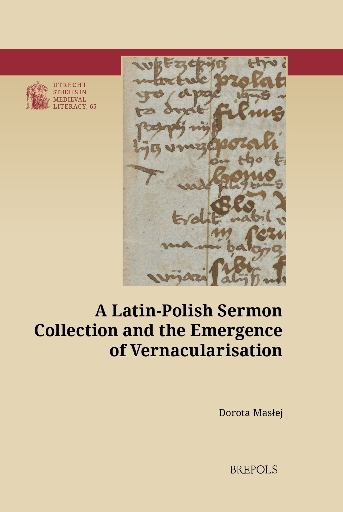
A Latin-Polish Sermon Collection and the Emergence of Vernacularisation
show More to view fulltext, buy and share links for:A Latin-Polish Sermon Collection and the Emergence of Vernacularisation show Less to hide fulltext, buy and share links for: A Latin-Polish Sermon Collection and the Emergence of VernacularisationThis monograph offers an analysis of the so-called Kazania augustiańskie (‘The Augustinian sermons’), a unique manuscript which represents a very early phase in the vernacularisation of medieval Polish textual culture, when vernacular or bilingual texts started to manifest their independent development. The relationships between Latin and the Polish vernacular in this text, surviving in a contemporary manuscript, sheds light on the ways in which Latin determined the development of written Polish in the textual genre of the sermon. The detailed and multifaceted analysis of the linguistic features of the Kazania augustiańskie contributes to the continuing discussion in medieval studies on the emergence of the earliest texts in the vernacular languages and on the preconditions and dynamics of vernacularisation.
At a first glance this book may appear to be the tale of a single manuscript, told solely from the point of view of a historian of language. However, it also explores both the birth of a particular medieval text and, more generally, the growing ability to compose vernacular texts. This capacity, which developed over the medieval period, was based on Latin models; over the centuries it contributed to vernacular texts becoming a fundamental component of European culture.
-
-
-
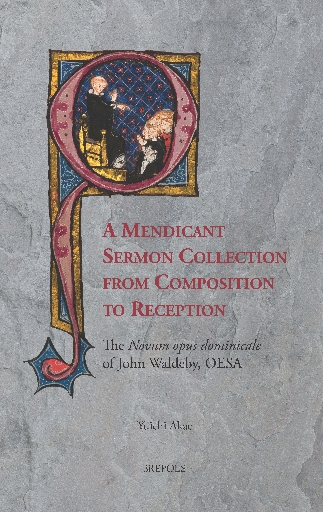
A Mendicant Sermon Collection from Composition to Reception
The 'Novum opus dominicale' of John Waldeby, OESA
show More to view fulltext, buy and share links for:A Mendicant Sermon Collection from Composition to Reception show Less to hide fulltext, buy and share links for: A Mendicant Sermon Collection from Composition to ReceptionThis study analyzes in detail the Novum opus dominicale of John Waldeby, a member of the convent of the Augustinian friars in York. This unedited collection of some sixty sermons for Sundays and major feasts is extant in two manuscripts in the Bodleian Library (Oxford), MSS Laud misc. 77 and Bodley 687. The present study places the work and the preacher within the wider context of mendicant preaching as mass communication in the Middle Ages. In doing so, it focuses on the educational environment which encompasses conventual education and preaching to the laity, and on the library in which this model sermon collection was compiled and used, identifying the role and meticulous design of the mendicant library collection. Through a detailed examination of sermon form in conjunction with Robert of Basevorn’s Forma praedicandi, it tries to disentangle the intricate considerations involved in the processes of sermon composition and reveals the strategies of interpretation and communication in the use of exempla and imagery in preaching. It investigates the careful organization of Waldeby’s work as a cycle of sermons for an entire year. In this way, it makes possible a deeper understanding of a wide range of complex issues from composition to reception through the prism of this important fourteenth-century sermon collection.
-
-
-
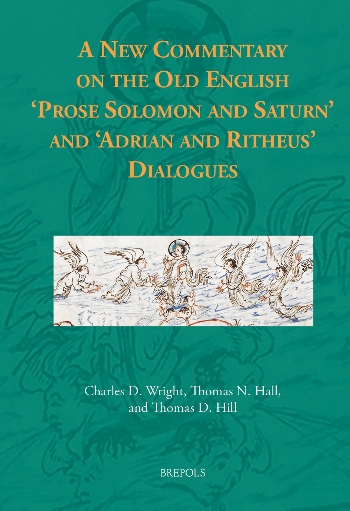
A New Commentary on the Old English ‘Prose Solomon and Saturn’ and ‘Adrian and Ritheus’ Dialogues
show More to view fulltext, buy and share links for:A New Commentary on the Old English ‘Prose Solomon and Saturn’ and ‘Adrian and Ritheus’ Dialogues show Less to hide fulltext, buy and share links for: A New Commentary on the Old English ‘Prose Solomon and Saturn’ and ‘Adrian and Ritheus’ DialoguesWho was not born, was buried in his mother’s womb, and was baptized after death? Who first spoke with a dog? Why don’t stones bear fruit? Who first said the word ‘God’? Why is the sea salty? Who built the first monastery? Who was the first doctor? How many species of fish are there? What is the heaviest thing to bear on earth? What creatures are sometimes male and sometimes female? The Old English dialogues The Prose Solomon and Saturn and Adrian and Ritheus, critically edited in 1982 by J. E. Cross and Thomas D. Hill, provide the answers to a trove of curious medieval ‘wisdom questions’ such as these, drawing on a remarkable range of biblical, apocryphal, patristic, and encyclopaedic lore.
This volume (which reprints the texts and translations of the two dialogues from Cross and Hill’s edition) both updates and massively supplements the commentary by Cross and Hill, contributing extensive new sources and analogues (many from unpublished medieval Latin question-and-answer texts) and comprehensively reviews the secondary scholarship on the ancient and medieval texts and traditions that inform these Old English sapiential dialogues. It also provides an extended survey of the late antique and early medieval genres of ‘curiosity’ and ‘wisdom’ dialogues and florilegia, including their dissemination and influence as well as their social and educational functions.
-
-
-
A Platonic Pythagoras. Platonism and Pythagoreanism in the Imperial Age
show More to view fulltext, buy and share links for:A Platonic Pythagoras. Platonism and Pythagoreanism in the Imperial Age show Less to hide fulltext, buy and share links for: A Platonic Pythagoras. Platonism and Pythagoreanism in the Imperial AgeCarlos Lévy, La question de la dyade chez Philon d’Alexandrie - Francesca Calabi, Filone di Alessandria e Ecfanto. Un confronto possible - Daniel Babut, L’unité de l’Académie selon Plutarque. Notes en marge d’un débat ancien et toujours actuel - Pierluigi Donini, Tra Academia e pitagorismo. Il platonismo nel De genio Socratis di Plutarco - Christoph Helmig, The Relationship Between Forms and Numbers in Nicomachus’ Introduction to Arithmetic - Dominic O’Meara, Hearing the Harmony of the Spheres in Late Antiquity - Elena Gritti, Insegnamento pitagorico e metodo dialettico in Proclo - Alessandro Linguiti, Prospettiva pitagorica e prospettiva platonica nella filosofia della natura di Proclo - Carlos Steel, Proclus on Divine Figures. An Essay on Pythagorean-Platonic Theology
-
-
-
A Primordio urbis
Un itinerario per gli studi liviani
show More to view fulltext, buy and share links for:A Primordio urbis show Less to hide fulltext, buy and share links for: A Primordio urbisDa duemila anni gli Ab Urbe condita libri di Tito Livio (Padova 59 a.C. - 17 d.C.) non cessano di porre a lettori e studiosi di tutto il mondo enormi e affascinanti interrogativi. L'ambizioso progetto dello storico, narrare tutta la storia di Roma dalla sua fondazione all'età contemporanea, ha dato origine a un'opera immensa per estensione e complessità. Le Storie di Livio si fondano su un potente intreccio di istanze letterarie, storiografiche e ideologiche, che ne fa una delle opere più influenti della latinità. I contributi raccolti nel volume, provenienti da svariati ambiti del sapere umanistico, si confrontano con l'opera di Livio in una prospettiva multidisciplinare, integrando competenze, suggestioni e punti di vista. A studi di carattere filologico-letterario si affiancano così approfondimenti storici, giuridici, archeologici e storico-artistici, con particolare attenzione alla fortuna dell'opera liviana in età medievale e moderna.
-
-
-
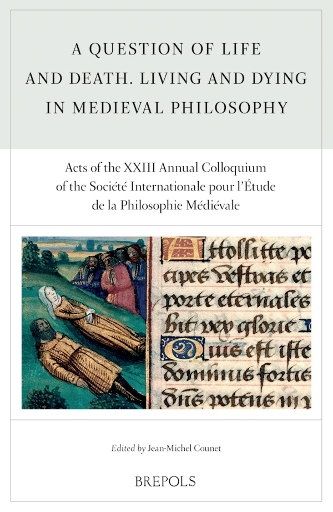
A Question of Life and Death. Living and Dying in Medieval Philosophy
Acts of the XXIII Annual Colloquium of the Société Internationale pour l’Étude de la Philosophie Médiévale, Leuven, 11–12 October 2018
show More to view fulltext, buy and share links for:A Question of Life and Death. Living and Dying in Medieval Philosophy show Less to hide fulltext, buy and share links for: A Question of Life and Death. Living and Dying in Medieval PhilosophyLiving and dying are essential concepts in Aristotelian natural philosophy and psychology. It is then no surprise that when the libri naturales were translated into Latin from the twelfth century onwards, this gave birth to an extensive interpretative tradition in the Latin West in which life and death as conceived by Aristotle were theorized and reflected upon, for example in the numerous commentaries of the De Anima but also of the Parva Naturalia. Yet the medieval inquiry into living and dying is not limited to natural philosophy nor the Aristotelian tradition but can also be found in ethics, metaphysics, theology, medicine and others domains. Many topics are addressed in the volume: radical moisture and the possibility of increasing lifespan, suicide, essence of life, contrast between life of the body and life of the soul, future life, and so on. The volume is also a hommage to Pieter De Leemans, an eminent specialist of the Latin translations of Aristotle’s books on natural philosophy, who was the intitiator of this scientific project.
-
-
-

A Radical Turn? Re-appropriation, Fragmentation, and Variety in the Post-Classical World (3rd-8th c.)
show More to view fulltext, buy and share links for:A Radical Turn? Re-appropriation, Fragmentation, and Variety in the Post-Classical World (3rd-8th c.) show Less to hide fulltext, buy and share links for: A Radical Turn? Re-appropriation, Fragmentation, and Variety in the Post-Classical World (3rd-8th c.)This thematic issue draws on the papers presented at the conference “Radical Turn? Subversions, Conversions, and Mutations in the Postclassical World (3rd-8th c.)” that took place last autumn in Brno, Czech Republic. Its aim is to contribute to the rehabilitation of the period of “Late Antiquity”, which has often been neglected in scholarly circles as a mere transitional period between the classical past and the medieval future. Individual papers reflect on the cultural production of this period from the perspectives of different disciplines (art history, classical philology, archaeology, and history), offering new insights on various aspects of late antique.
-
-
-
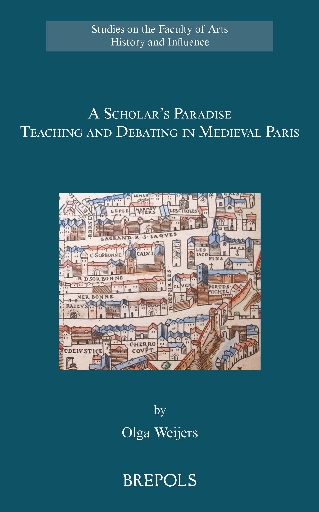
A Scholar's Paradise
Teaching and Debating in Medieval Paris
show More to view fulltext, buy and share links for:A Scholar's Paradise show Less to hide fulltext, buy and share links for: A Scholar's ParadiseThis volume offers the general reader a synthesis of academic life in Paris during the first centuries of its existence. These early years were a period of excitement, discovery and intellectual freedom. Perhaps never again would a community of scholars engage in teaching and debate in such an astonishingly new and fresh world, with people, texts and ideas multiplying rapidly and surrounded by an equally rapidly developing city. From the perspective of the twenty-first century, it seems an enviable period, a time when optimism and eager research still went hand in hand with the idea that the whole of existence might be encompassed by the human mind.
Here, Olga Weijers offers a comprehensive re-working of her 1995 publication (Le maniement du savoir. Pratiques intellectuelles à l’époque des premières universités), which has been re-organized, extended to include less technical subjects, updated and translated into English.
-
-
-
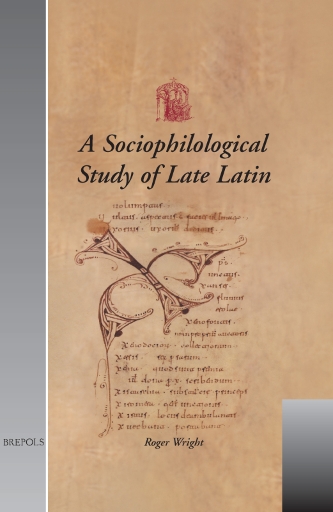
A Sociophilological Study of Late Latin
show More to view fulltext, buy and share links for:A Sociophilological Study of Late Latin show Less to hide fulltext, buy and share links for: A Sociophilological Study of Late LatinSociophilology combines traditional detailed philological expertise with the broader insights of modern sociolinguistics. Late Latin is the native language, both spoken and written, of the former Roman Empire in the Early Middle Ages, sometimes also regarded as being 'Early Romance'. By the thirteenth century Late Latin had split conceptually, from being a single complex living language, into several different living Romance languages, as well as the 'dead' language we now call 'Medieval Latin'. The complex aspects of these developments have been central to Roger Wright's research for many years; this sociophilological study of Late Latin places many texts, authors, scribes and linguistic developments in a coherent historical, intellectual and educational context. The book is presented in six sections, with four chapters in each: Late Latin, Medieval Latin and Romance; Texts and Language in Late Antiquity; The Ninth Century; Italy and Spain in the Tenth and Eleventh Centuries; Twelfth- and Thirteenth-Century Spain; Sociophilology and Historical Linguistics; followed by a Conclusion, a lengthy bibliography, and an index. The whole presents a vitally important intrinsic component of a thousand years of European cultural history, seen from unusually wide historical and linguistic perspectives.
-
-
-
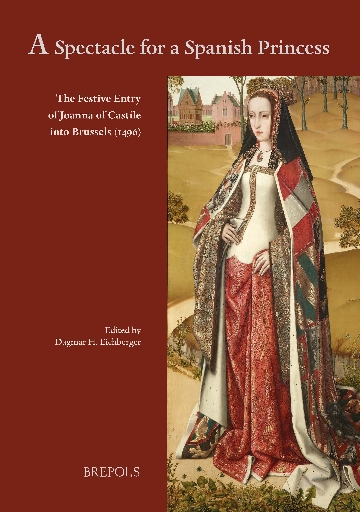
A Spectacle for a Spanish Princess
The Festive Entry of Joanna of Castile into Brussels (1496)
show More to view fulltext, buy and share links for:A Spectacle for a Spanish Princess show Less to hide fulltext, buy and share links for: A Spectacle for a Spanish PrincessOn the evening of 9 December 1496, Princess Joanna, Infanta of Castile, reaches the outskirts of Brussels where a procession of secular and ecclesiastical dignitaries welcomes her. After having been married to Philip the Fair in Lier, Joanna travelled to Brussels by herself. Equipped with torches and processional crosses, the citizens accompany her all the way to the heart of the city, the large market square with its magnificent town hall. The Berlin manuscript 78 D5 is the first illustrated report of an entry concentrating on one single lady. The manuscript is a treasure to all those interested in urban culture of the Early Modern period. The author of the festival booklet compares the well-lit city with the splendours of Troy and Carthage. Twenty-eight stage sets, or Tableaux Vivants, and an elaborate procession mirror the costly intellectual program presented to the sixteen-year-old princess. The carefully planned theatrical productions underscore themes of marriage, female virtues and the politics of war and peace. The program includes entertainments, soundscapes, and pyrotechnic amusements. The Latin texts are made available in English translation. The entire manuscript, with its sixty-three folios, is reproduced in colour. Eleven leading scholars present their new findings on this spectacular entry from an interdisciplinary approach.
-
-
-
A Supplement to Morton W. Bloomfield et al., 'Incipits of Latin Works on the Virtues and Vices, 1100-1500 A.D.'
show More to view fulltext, buy and share links for:A Supplement to Morton W. Bloomfield et al., 'Incipits of Latin Works on the Virtues and Vices, 1100-1500 A.D.' show Less to hide fulltext, buy and share links for: A Supplement to Morton W. Bloomfield et al., 'Incipits of Latin Works on the Virtues and Vices, 1100-1500 A.D.'This volume advances the utility of Morton W. Bloomfield et al., Incipits of Latin Works on the Virtues and Vices, 1100-1500 A.D. (1979) by correcting, supplementing, adding to, or deleting information in this commonly-used reference guide to medieval Latin manuscripts of an ethical or pastoral character. Careful attention is paid to updating the identification of texts and their authorship and references to critical editions of works on the vices and virtues. Many new manuscript witnesses and over 500 new texts are added to those found in the earlier catalogue and a number of short texts on vices and virtues are edited here for the first time.
Richard Newhauser, Arizona State University-Tempe, is the author of Sin: Essays on the Moral Tradition in the Western Middle Ages (2007) and editor of The Seven Deadly Sins: From Communities to Individuals (2005) and In the Garden of Evil: The Vices and Culture in the Middle Ages (2005).
István Bejczy is the author of The Cardinal Virtues in the Middle Ages: A Study in Western Moral Thought from the Fourth to the Fourteenth Centuries (forthcoming) and editor of several volumes of articles on medieval virtue ethics.
-
-
-
A catalogue of works pertaining to the explanation of the creed in Carolingian manuscripts
show More to view fulltext, buy and share links for:A catalogue of works pertaining to the explanation of the creed in Carolingian manuscripts show Less to hide fulltext, buy and share links for: A catalogue of works pertaining to the explanation of the creed in Carolingian manuscriptsThe catalogue identifies works used to explain the creed in Carolingian collection volumes compiled for the instruction of the clergy. It includes both edited and unedited works and some recently edited in a companion volume to this one, Explanationes Symboli aeui Carolini (CC CM, 254). The catalogue shows that the teaching of the creedal faith was assembled from snippets of, or whole, patristic works, homilies, personal professions of faith, and works of many other genres. In the past, we have had little concept of the range of works known to those responsible for teaching the faith at the parish and missionary level of the Carolingian world. In this catalogue crucial attention is paid to the contents of the manuscripts as a whole in which the creed explanation is found and how these collection volumes may have functioned. It is hoped that the manuscript descriptions will be of benefit to students and specialists working on other kinds of texts for the education of the clergy.
Dr Susan Keefe is Associate Professor of Church History at Duke Divinity School, Durham, NC.
-
-
-
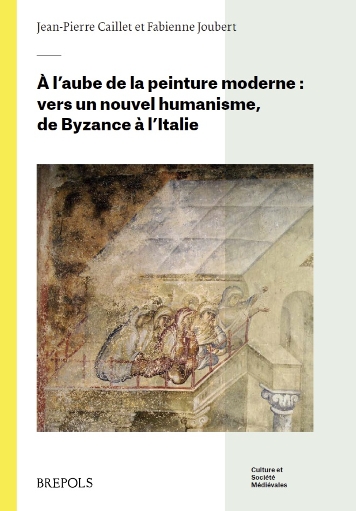
A l'aube de la peinture moderne
Vers un nouvel humanisme, de Byzance à l'Italie
show More to view fulltext, buy and share links for:A l'aube de la peinture moderne show Less to hide fulltext, buy and share links for: A l'aube de la peinture moderneIl s’agit de revisiter ici une phase cruciale de l’histoire de la peinture dans une optique bien spécifique. On se démarque en effet d’une vision ayant crédité de manière trop exclusive l’Italie des environs de 1300 d’une « révolution » ouvrant la voie à la modernité. En revenant sur ce qui a préludé à cela dans la Péninsule même, et surtout en accordant une égale attention à ce qui a simultanément – ou antérieurement, à maints égards – été produit dans le monde byzantin, on tend à un radical rééquilibrage de la perspective. C’est alors dans sa véritable dimension que se perçoit l’évolution artistique de l’époque, en lien étroit avec un contexte politico-religieux tout à fait particulier : celui d’une installation des Latins à Constantinople et dans plusieurs territoires de l’Empire d’Orient, et d’un projet de réunion des obédiences catholique et orthodoxe ; avec, dans ce cadre, une décisive action des nouveaux Ordres Mendiants vite implantés dans tout le monde méditerranéen et développant une prédication réellement accessible au plus grand nombre, étayée – chez les Franciscains au premier chef – par une imagerie traduisant la geste du Christ et des saints sur le mode le plus crédible, incorporant précisément les avancées déjà opérées à cette fin dans la zone orientale.
Après un panorama historiographique faisant le point sur les positions plus ou moins anciennes et leur impact jusqu’à nos jours, on aborde en premier lieu ce qu’il en a été des conceptions et fonctions dévolues à l’image, trop volontiers considérées comme différentes d’un milieu à l’autre. Puis on affronte le champ de l’iconographie en propre, avec les accents spécifiques qui y sont portés. Ensuite vient l’examen des divers aspects formels (et des moyens techniques mis en œuvre) ; examen non moins capital puisque ce sont le naturalisme et l’expressivité de la figure, ainsi que son insertion dans un espace tridimensionnel, qui visent à une communication plus efficace avec le fidèle ; cela par la forte sollicitation de ses sens, pour sa profonde imprégnation de ce qui s’offre à sa vue. On peut, dans cette démarche, reconnaître une authentique humanisation de la foi. Et il s’avérait donc essentiel de souligner que, dans cette mutation où l’image s’est trouvée investie d’un rôle majeur, la contribution de la chrétienté byzantine a été aussi déterminante que celle de l’Italie.
-
-
-
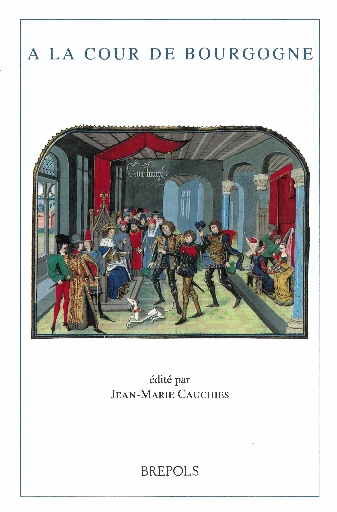
A la cour de Bourgogne. Le duc, son entourage, son train
show More to view fulltext, buy and share links for:A la cour de Bourgogne. Le duc, son entourage, son train show Less to hide fulltext, buy and share links for: A la cour de Bourgogne. Le duc, son entourage, son trainLa recherche historique manifeste de nos jours une curiosité renouvelée pour le vaste champ des pouvoirs. Au-delà d'une perspective proprement politique, on cherche aujourd'hui à cerner tout ce qui inspire, conforte, justifie ou met en question ces pouvoirs. Si l'autorité s'incarne dans un prince, celui-ci fût-il censé l'exercer pleinement et cultiver ainsi son prestige, elle n'est et ne peut toutefois jamais être l'apanage d'un solitaire.
Autour du gouvernant gravitent des familiers, conseillers, officiers, auxiliaires, serviteurs, personnel de décision ou de simple exécution, chacun selon ses tâches et ses capacités.. Les services domestiques côtoient les figures de proue de la cour et des conseils. Fêtes et deuils les rassemblent dans des célébrations où l'image du maître prend toujours sa place. Des uns, on requiert l'obéissance et le dévouement; des autres, on exige la compétence. Dans ces milieux, on lit et on produit, et cela aussi contribue à forger et à entretenir l'image. Et puis le prince et les siens ne se cloîtrent pas: il est des circonstances où les contacts directs avec les gouvernés contribuent à mieux éclairer aux yeux de la rue ce qu'est et ce que veut montrer d'elle l'autorité, parée de ses atours.
Le présent volume a pour objectif d'illustrer la manière dont, sous ces divers angles, les pouvoirs étaient pensés et vécus chez les princes de Bourgogne.
-
-
-
AL. Rivista di studi di Anthologia Latina
Journal of Philology applied to Late Latin Poetry
show More to view fulltext, buy and share links for:AL. Rivista di studi di Anthologia Latina show Less to hide fulltext, buy and share links for: AL. Rivista di studi di Anthologia LatinaAL. Rivista di studi di Anthologia Latina is a thematic journal dedicated to the philological study of late Latin texts, primarily poetic works. Since its inaugural issue in 2010, the journal has aimed to fill a significant gap in the panorama of scientific publications in this field, offering a platform for philological research on the Latin anthology and the neighbouring fields of philological and literary research. In addition to articles and notes, the journal includes sections that feature contributions on the manuscript tradition, the fortune of the Anthologia Latina and late Latin literature, as well as book reviews.
More information about this journal on Brepols.net
-
-
-
Abbatiat et abbés dans l’ordre de Prémontré
show More to view fulltext, buy and share links for:Abbatiat et abbés dans l’ordre de Prémontré show Less to hide fulltext, buy and share links for: Abbatiat et abbés dans l’ordre de PrémontréLe présent volume rassemble une vingtaine de communications données lors du 25e colloque du Centre d’Études et de Recherches Prémontrées, tenu à l’abbaye de Tongerlo (Belgique). La thématique de cette rencontre était double: d’une part examiner, au long de l’histoire d’un ordre religieux ancien (xii e-xxi e siècles) le fonctionnement du régime abbatial, avec ses évolutions spirituelles, juridiques, sociales, liées aux transformations du monde où les communautés se meuvent. D’autre part, proposer comme une galerie de portraits d’abbés, significatifs des diverses époques de l’histoire norbertine. Cette douzaine de figures permet de réfléchir encore à la nature de la fonction, à la manière dont les abbés eux-mêmes conçoivent et investissent leur rôle.
Dans cette passionnante enquête sur un matériau vivant et diversifié, la quantité et la qualité des sources varient aussi: tandis que l’époque médiévale contient beaucoup d’inconnues (les «listes abbatiales» elles-mêmes sont peu assurées, à haute époque), la période moderne et contemporaine fait apparaître des champs de recherche tout à fait inexplorés: il manque encore non seulement une prosopographie générale, mais aussi une étude approfondie des cursus honorum, des modes et pratiques d’élections, des rapports souvent conflictuels entre le pouvoir central, le pouvoir local, et la «base».
La complexité du pouvoir abbatial (spirituel, pastoral, économique, politique) se dessine à travers ces études, et cet ouvrage se veut autant un état de la question qu’une invitation à de nouvelles recherches dans un domaine peu exploré de l’histoire monastique ou canoniale.
-
-
-
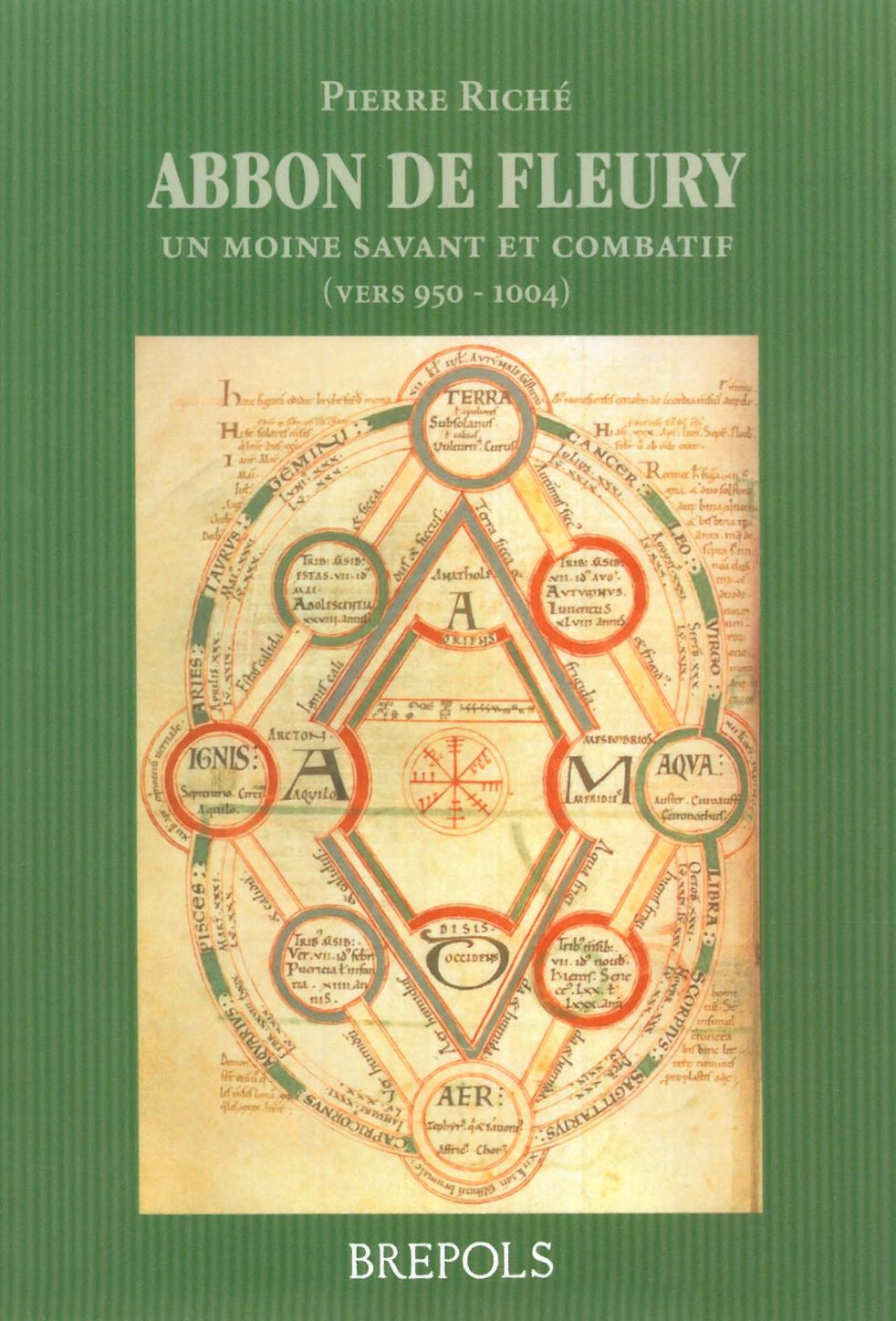
Abbon de Fleury
Un moine savant combatif (vers 950-1004)
show More to view fulltext, buy and share links for:Abbon de Fleury show Less to hide fulltext, buy and share links for: Abbon de FleuryIl y a mille ans, le 13 novembre 1004, à la Réole, sur les bords de la Garonne, mourait un abbé de Fleury, Abbon. Sa mort violente pour la cause de la réforme monastique le fit vénérer d'emblée comme un martyr. Aujourd'hui nous nous apprêtons à célébrer le millénaire de cet événement.Abbon, né vers 950 à Orléans, fut un des grands moines de son siècle, entraînant son monastère dans la ferveur et le travail, soutenant d'autres monastères sur ce chemin. Abbés, moines, chanoines, mais également les princes venaient le consulter, confiants dans sa science du droit et son discernement. Elu abbé de Fleury en 988, il participa à plusieurs conciles où il se distingua par des prises de position très fermes en faveur du monde monastique.Abbon fut un savant réputé, l'un des plus connus de son époque, un de ceux par qui nous a été transmise la science de l'Antiquité. Il exerça une influence sur la législation de son temps, dans le respect du droit, au service de la liberté de tous, et il fut ainsi un précurseur de l'effort que notre époque s'attache à promouvoir.En outre, par ses voyages en Angleterre et en Italie, par ses relations multiples à travers l'Occident, Abbon est déjà, d'une certaine manière, une figure européenne.
-
-
-
Abbon, un abbé de l’an Mil
show More to view fulltext, buy and share links for:Abbon, un abbé de l’an Mil show Less to hide fulltext, buy and share links for: Abbon, un abbé de l’an MilBien que l’œuvre littéraire et scientifique d’Abbon de Fleury (v. 950-1004) ait été aussi importante que celle de son célèbre contemporain Gerbert (devenu le pape Sylvestre II), l’abbé du monastère fleurisien restait cependant mal connu. Le colloque organisé en 2004 pour célébrer le millénaire de sa mort a voulu donner un souffle nouveau aux études abboniennes. Les contributions, qui s’articulent autour de deux thèmes principaux, vie monastique, religion et culture, abordent la plupart des domaines dans lesquels s’est exercée la compétence d’Abbon: astronomie, comput, musique, droit canon, hagiographie, histoire… Sont également traitées des questions touchant à l’ecclésiologie et à la réforme monastique ou concernant le monastère lui-même et son temporel ou un autre monastère orléanais, Saint-Mesmin de Micy. De ces «éclairages entrecroisés» ressort un portrait renouvelé de ce grand abbé, à la fois homme de science et chercheur d’unité, unité de l’Église, unité de son monastère et de l’ordre bénédictin.
-
-
-
Absence/Souvenir. La relation à autrui chez Emmanuel Lévinas et Jacques Derrida
show More to view fulltext, buy and share links for:Absence/Souvenir. La relation à autrui chez Emmanuel Lévinas et Jacques Derrida show Less to hide fulltext, buy and share links for: Absence/Souvenir. La relation à autrui chez Emmanuel Lévinas et Jacques DerridaC’est à partir d’un dialogue avec la phénoménologie husserlienne et heideggerienne que Lévinas et Derrida élaborent leurs conceptions de l’identité du moi : une identité précaire qui se trouve et se perd dans l’appel, la mémoire et la fidélité à autrui.
Dans ce cadre, il semble légitime de suivre d’abord le parcours de Lévinas, en retraçant sa volonté de poursuivre la phénoménologie de Husserl dans un sens plutôt éthique qu’ontologique. Ceci étant, la conception lévinassienne du moi et de l’autre s’éloigne de plus en plus de l’expérience phénoménologique. Car l’autre devient une épreuve traumatique qui forge le moi et qui laisse en lui une trace ineffaçable de culpabilité au moment de sa mort.
C’est à partir de là que Derrida construit sa réflexion sur le deuil impossible, à savoir celui qui ne saurait jamais se faire entièrement parce que l’autre, même après sa mort, habite le moi comme un étranger incrypté au plus profond de lui.
-
-
-
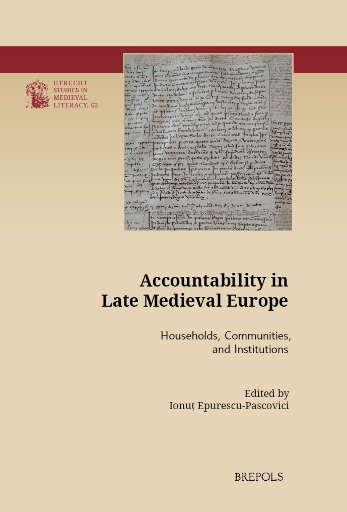
Accountability in Late Medieval Europe
Households, Communities, and Institutions
show More to view fulltext, buy and share links for:Accountability in Late Medieval Europe show Less to hide fulltext, buy and share links for: Accountability in Late Medieval EuropeThis volume brings together studies of late medieval accountability in both the domestic and the public realms. It traces practices of accountability across the social spectrum, from households to small businesses to communal and regnal administrations, highlighting the intersections between competing conceptions of personal and institutional responsibility. Focusing on France and Italy from the thirteenth to the early sixteenth centuries, the case studies follow territorial officers, consular agents, and town notables co-opted into local governance from Avignon and Marseille to Tuscany and the Venetian and Genoese overseas territories. The studies explore both personal and institutional accounting registers, as well as records of a textual nature, such as rulebooks and inquests, in an effort to reflect the range of records and procedures relied on to achieve a measure of accountability in late medieval Europe.
-
-
-
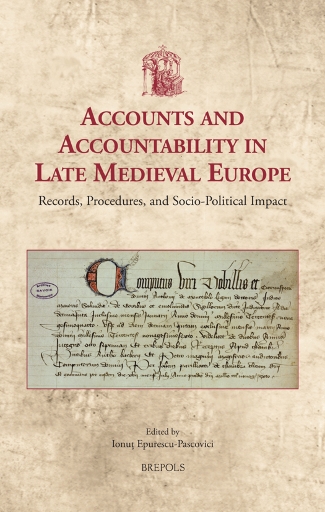
Accounts and Accountability in Late Medieval Europe: Records, Procedures, and Socio-Political Impact
show More to view fulltext, buy and share links for:Accounts and Accountability in Late Medieval Europe: Records, Procedures, and Socio-Political Impact show Less to hide fulltext, buy and share links for: Accounts and Accountability in Late Medieval Europe: Records, Procedures, and Socio-Political ImpactAccounts and Accountability in Late Medieval Europe traces the momentous transformation of institutions and administration under the impact of accounting records and procedures, c. 1250-1500. The volume’s focus on the materiality and organising logic of a range of accounts is complemented by close attention to the socio-political contexts in which they functioned and the agency of central and local officials.
The volume is divided into three parts: the role of financial accountability in the political designs of late medieval states, the uses of accounts auditing and information management as tools for governance, and their impact on the everyday life of local communities. Covering both the centre and the periphery of medieval Europe, from England and the Papal curia to Savoy and Transylvania, the case studies evince the difficult passage from the early experiments with financial accounts towards an accountability of office.
-
-
-
Achard de Saint-Victor métaphysicien
Le De unitate Dei et pluralitate creaturarum
show More to view fulltext, buy and share links for:Achard de Saint-Victor métaphysicien show Less to hide fulltext, buy and share links for: Achard de Saint-Victor métaphysicienAprès plus de 800 ans d'oubli paraissait, il y a une trentaine d'années, un chef d'œuvre de la philosophie médiévale - si ce n'est de la pensée occidentale dans son ensemble -, le De unitate Dei et pluralitate creaturarum d'Achard de Saint-Victor, devenu évêque d'Avranches en 1161, dans l'édition et la traduction de son unique exemplaire padouan que procurait Emmanuel Martineau en 1987.
C'est pour marquer cette renaissance qu'a été rééditée cette première édition et organisé le colloque dont le présent ouvrage publie les actes. Il rassemble des contributions nécessairement modestes et partielles, mais pionnières, dont le seul but est d'initier à l'explication d'un traité d'une audace, d'une complexité et d'une puissance spéculative exceptionnelles : « génial entrelacs de spiritualité hyper-augustinienne et de métaphysique hyper-platonicienne », où il s'agit de rien de moins que de penser l'uni-distinction essentielle de la Sagesse divine.
Puisse ce volume de la collection Ad argumenta. Quaestio Special Issues ouvrir à d'autres études qui donneront à leur tour le goût de cette sagesse sans laquelle la vérité ne saurait être saisie « par elle-même » : ipsa generalis, qua omnes sapiunt, sapientia.
-
-
-
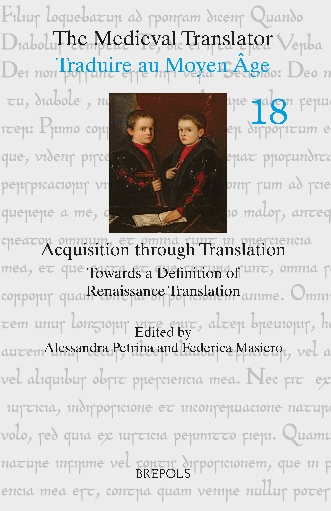
Acquisition through Translation
Towards a Definition of Renaissance Translation
show More to view fulltext, buy and share links for:Acquisition through Translation show Less to hide fulltext, buy and share links for: Acquisition through TranslationThe definition of translation in Renaissance Europe is here proposed as a process of acquisition: the book studies how a number of European languages, finding their identification in the newly evolving concept of nation, shape their countries’ vernacular libraries by appropriating ancient and contemporary classics.
The emergence of standard modern languages in early modern Europa entailed a competition with the dominant Latin culture, which remained the prevalent medium for the language of science, philosophy, theology and philology until at least the eighteenth century. In this process, translation played a very special role: in a number of significant instances we can identify in the undertaking of a specific translation a policy of acquisition of classical - and by definition authoritative - texts that contributed to the building of an intellectual library for the emerging nation. At the same time, the transmission of ideas and texts across Europe constructed a diasporic and transnational culture: the emerging vernacular cultures acquired not only the classical Latin models, incorporating them in their own intellectual libraries, but turned their attention also to contemporary, or near-contemporary, vernacular texts, conferring on them, through the act of translation, the status of classics. Through the examination of case studies, that take into account both literary and scientific texts, this volume offers an overview of how early modern Europe developed its vernacular national literatures, following the model suggested in the late Middle Ages, through a process of acquisition and translation.
-
-
-
Acquérir, prélever, contrôler: Les ressources en compétition (400-1100)
show More to view fulltext, buy and share links for:Acquérir, prélever, contrôler: Les ressources en compétition (400-1100) show Less to hide fulltext, buy and share links for: Acquérir, prélever, contrôler: Les ressources en compétition (400-1100)Les ressources matérielles sont un élément de première importance de la compétition au Haut Moyen Âge, en étant l’arrière-plan, souvent le moyen, parfois l’enjeu de la compétition elle-même. D'une part, la compétition conduit ou souvent impose de mobiliser des ressources, d’autre part, ses formes sont affectées par la disponibilité ou la rareté des ressources. Elles sont donc un point d’observation privilégié pour comprendre les systèmes de valeurs et les règles, souvent implicites, qui président alors aux actions des élites. Ce volume est le résultat du troisième colloque organisé à Rome par le groupe international de recherches sur la compétition dans les sociétés médiévales (400-1000). En croisant des perspectives qui tiennent de l’anthropologie et de certaines lignes de l’histoire économique, ce livre prend en considération les formes du rapport entre compétition et ressources dans une grande variété de milieux sociaux et institutionnels de l’Europe occidentale du haut Moyen Âge, de la famille aux élites politiques et religieuses, aux sociétés rurales, aux communautés artisanes et marchandes.
-
-
-
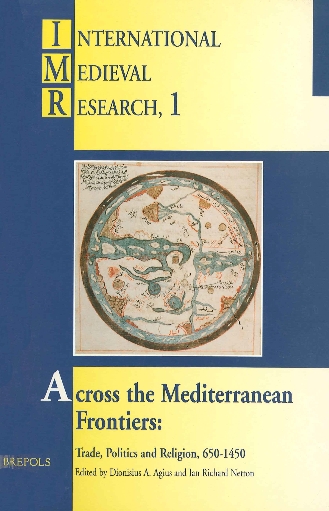
Across the Mediterranean Frontiers:
Trade, Politics and Religion, 650-1450
show More to view fulltext, buy and share links for:Across the Mediterranean Frontiers: show Less to hide fulltext, buy and share links for: Across the Mediterranean Frontiers:Using insights derived from the works of the great annaliste historian Fernand Braudel and those of David Abulafia, this volume aims at presenting a fully-rounded picture of the Medieval Islamic Mediterranean between the years 650 and 1450. It ranges from discussions on Islamic Spain and Sicily through essays on economic and cultural exchange to an examination of Islamic and western politics and religious thought. It also surveys work and warfare in some of the most fascinating centuries of the medieval period and concludes with a profound assessment of the Islamic sources and their transmission. This is a magisterial volume which no historian of the Mediterranean will wish to be without.
Dionisius A. Agius is Senior Lecturer in Arabic at the University of Leeds. He is author and editor of several books. His research interests include Arabic dialectology, the semantics of material culture in medieval Arabic travel and geography literature and the medieval Mediterranean.
Ian Richard Netton is Professor of Arabic Studies at the University of Leeds. He is author or editor of several books in the field of Middle Eastern Studies. His principal research interests are Islamic philosophy and theology, Sufism and Medieval Islamic travellers. His interest in Mediterranean Studies was aroused by his studies of Ibn Baṭṭūṭa and Ibn Jubayr.
-
-
-
Acta Martyrum Scillitanorum
A Literary Commentary
show More to view fulltext, buy and share links for:Acta Martyrum Scillitanorum show Less to hide fulltext, buy and share links for: Acta Martyrum ScillitanorumThe Acta Martyrum Scillitanorum is the first martyr text in Latin, and one of the earliest documents in Christian Latin. This short text presents a group of young Christians facing trial in Carthage before a Roman judge on July 17th, 180 A.D. This is the first full commentary on this important text in English. It studies the fiery altercation between the defendants and the Roman proconsul, highlighting the rhetorical and narrative aspects of the original Latin (and the Greek translation from late antiquity). Throughout the book, much attention is paid to the communication, or miscommunication, between antagonists. For this dramatic and narrative approach to the text, the Acta Martyrum Scillitanorum may be taken as it is: a coherent body of text, describing an altercation that either took place exactly like that, or was deemed by the author to be probable and natural, that is, a plausible and convincing dialogue between contrasting characters in a Roman judicial context.
-
-
-
Actes de l'apôtre André
show More to view fulltext, buy and share links for:Actes de l'apôtre André show Less to hide fulltext, buy and share links for: Actes de l'apôtre AndréLes Actes d'André, du IIe siècle, comptent parmi les Actes apocryphes d'apôtres les plus anciens. Leur lieu d'origine reste incertain. Jean-Marc Prieur traduit et commente dans ce volume tous les documents qui, en grec, en latin ou en copte, permettent encore d'accéder au texte primitif ou peuvent servir à sa reconstruction. Nous pouvons suivre les pérégrinations, les miracles et la prédication de l'apôtre André de l'Asie mineure jusqu'en Grèce où, à Patras, il convertit la femme du proconsul; par conséquent, celle-ci se refuse à son mari. Il en résulte le martyre de l'apôtre: arrêté, André est crucifié (on connaît la "croix de saint André" ...), tandis que son persécuteur, abandonné par sa femme, finit par se suicider.
Comme dans les autres Actes apocryphes, l'apôtre apparaît ici d'après le modèle de l'"homme divin", que le christianisme a repris des religions hellénistiques (et que l'apôtre Paul avait refusé...): c'est le prédicateur qui dans sa parole et ses prodiges révèle la puissance du dieu qu'il annonce. Les discours missionnaires d'André occupent une place importante et véhiculent une lecture particulière du plan mis en oeuvre par Dieu en faveur du salut des humains, et de la manière dont ceux-ci y adhèrent; cette lecture peut nous paraître singulière, mais elle témoigne d'une théologie qui a dû caractériser un milieu ecclésial donné.
Jean-Marc Prieur, professeur de théologie pratique à la Faculté de théologie protestante de Montpellier, est docteur en théologie de l'Université de Genève. Spécialiste des origines chrétiennes et de la littérature apocryphe en particulier, il est l'auteur d'une édition critique des Actes d'André accompagnée d'un large commentaire, qui a paru dans le Corpus Christianorum, Series Apocryphorum.
-
-
-
Actes de l'apôtre Philippe
show More to view fulltext, buy and share links for:Actes de l'apôtre Philippe show Less to hide fulltext, buy and share links for: Actes de l'apôtre PhilippeConsacré à un apôtre méconnu et négligés par les spécialistes, les Actes de Philippe avaient peu d'atouts pour devenir un succès de librairie. Mais la découverte récente d'un manuscrit dans un monastère du Mont Athos en Grèce bouleverse notre connaissance et notre appréciation de cet apocryphe. Ce témoin encore inédit, dont on trouvera ici la traduction intégrale, présente un texte nettement plus long que celui connu jusqu'alors.
En décrivant l'activité missionnaire haute en couleurs de l'apôtre, les Actes de Philippe polémiquent tour à tour contre les adversaires de la pureté, contre les chrétiens qui ne comprennent rien à la grâce de la contemplation du Christ et contre les païens qui se vautrent dans l'abomination du culte de la vipère à Hiérapolis en Phrygie. En dépit de leur caractère romanesque, les Actes de Philippe paraissent issus de cercles hétérodoxes d'Asie mineure des IVe et Ve siècles, épris d'ascèse et de mystique qui nourriront la spiritualité des moines de l'Orient chrétien.
François Bovon est professeur du Nouveau Testament et des origines chrétiennes et des origines chrétiennes à l'Université de Harvard et professeur honoraire de l'Université de Genève. Il est l'un des fondateurs de l'AELAC, dont il a exercé la présidence de 1981 à 1987.
Bertrand Bouvier est professeur de langue et littérature grecques modernes à l'Université de Genève.
Frédéric Amsler est maître d'enseignement et de recherche à la Faculté de théologie de l'Université de Genève et bénéficie d'un subside de recherche du Fonds national suisse de la recherche scientifique.
-
-
-
Acts of John
show More to view fulltext, buy and share links for:Acts of John show Less to hide fulltext, buy and share links for: Acts of JohnThe Acts of John is a second- or third-century work of unknown authorship combining elements of the apocryphal acts and pious romance genres. It was labeled heretical by both Eusebius and Augustine, and condemned at the Second Council of Nicea (787). Scholars debate the influence of Gnosticism and docetism upon the work. This narrative presents the lifelong ministry of the apostle John preaching and performing miracles in Ephesus, Smyrna, and elsewhere. At different turns in the exciting account, John resurrects the dead, reunites families, heals the sick, confronts pagan opponents, commands bedbugs, and divulges mysteries about his travels with Jesus. The present edition offers the celebrated Greek text of Junod and Kaestli (Corpus Christianorum, Series Apocryphorum, 1-2, 1983) alongside a new English translation on the facing pages, complete with hundreds of cross-references and other helpful notes for the reader.
-
-
-
Ad notitiam ignoti
L’ 'Organon' dans la 'translatio studiorum' à l’époque d’Albert le Grand
show More to view fulltext, buy and share links for:Ad notitiam ignoti show Less to hide fulltext, buy and share links for: Ad notitiam ignotiSituée au milieu du XIIIe siècle, la paraphrase d’Albert le Grand à l’Isagogè de Porphyre constitue un point de départ pour le présent volume. Son premier livre, un traité indépendant intitulé « Préalable à la logique », fournit un cadre de lecture qui s’étend bien au-delà des sources grécolatines habituelles à l’époque, et contribue à la fixation d’un questionnaire nouveau, engageant une véritable philosophie de la logique. Il porte sur l’essence de la logique, ses fonctions comme logique de la découverte (inventio) et logique de la justification (iudicium), son statut - art, science, instrument -, sa valeur de méthode enseignant comment « passer de l’inconnu au connu » (ad notitiam ignoti) à toute partie de la philosophie, de manière immanente, comme logica utens, ou réflexive, comme logica docens. L’étude des diverses traditions de l’Organon en domaines grec, syriaque, arabe, et latin montre que la mise en ordre des matériaux aristotéliciens fixée par l’édition d’Andronicos de Rhodes (Ier s. av. J-C.) a sans cesse été renégociée, tandis que le corpus logique a connu divers formats. Ce livre collectif explore les interactions qui s’opèrent entre les différentes définitions de la logique et les métamorphoses successives du corpus aristotélicien, dans un cadre ancien et médiéval où l’histoire de la logique est indissociable d’une histoire de l’Organon.
-
-
-
Adgar, Le Gracial
Miracles de la Vierge
show More to view fulltext, buy and share links for:Adgar, Le Gracial show Less to hide fulltext, buy and share links for: Adgar, Le GracialLe Gracial d’Adgar est le premier recueil de miracles de Notre-Dame en langue vernaculaire, en l’occurrence en anglo-normand. Il a été rédigé par un moine de Londres vers 1165. Il comporte 49 miracles internationaux ou locaux dont le plus important est le célèbre miracle de Théophile prototype du récit du pacte avec le Diable, appelé à un grand succès ultérieur. Pour la première fois le texte est intégralement traduit en français moderne et en anglais pour le miracle de Théophile. Une courte introduction présente ces récits qui se veulent historiques et qui cherchent à rivaliser avec la littérature profane courtoise en plein essor. Un fort contenu didactique se marie avec un merveilleux chrétien édifiant. Ce chef d’œuvre littéraire est à rapprocher des chefs d’œuvre de l’art gothique consacrés souvent à exalter l’amour de Notre-Dame.
-
-
-
Adolphe Franck, philosophe juif, spiritualiste et libéral dans la France du XIXe siècle
Actes du colloque tenu à l'Institut de France le 31 mai 2010
show More to view fulltext, buy and share links for:Adolphe Franck, philosophe juif, spiritualiste et libéral dans la France du XIXe siècle show Less to hide fulltext, buy and share links for: Adolphe Franck, philosophe juif, spiritualiste et libéral dans la France du XIXe siècleAdolphe Franck (1810-1893) est une figure importante et jusqu’ici négligée de la philosophie spiritualiste, du libéralisme politique et du judaïsme français. Né dans un village de Lorraine, il fut le premier israélite agrégé de philosophie, entra à l’Académie des sciences morales et politiques à trente-trois ans - par la volonté de Victor Cousin mais non sans titres personnels - enseigna le droit au Collège de France, fut membre du Conseil supérieur de l’Instruction publique, collabora au Journal des débats, appartint aux dirigeants du Consistoire israélite comme aux familiers de l’impératrice Eugénie. Dans une oeuvre bien diverse, il fut durablement à l’origine (non sans méprises) de l’étude scientifique de la Kabbale ; il devint le maître d’oeuvre du grand Dictionnaire des sciences philosophiques, monument du zèle des savants, des illusions généreuses de la pensée libérale et des présupposés philosophiques et méthodologiques de son temps ; il se singularisa par un intérêt pour la question spiritualiste poussé jusqu’à son terme logique, la prise au sérieux des écrits et des théories ésotériques du passé et du présent.
Une introduction et onze contributions, procédant d’un colloque tenu à l’Institut de France en 2010, considèrent Adolphe Franck sous quatre aspects : en tant que juif, en tant que philosophe, dans son rapport au religieux et dans son rapport au politique.
Jean-Pierre Rothschild, directeur de recherches au CNRS et directeur d’études à l’École pratique des hautes études, est spécialiste d’histoire des textes et des doctrines du moyen âge.
Jérôme Grondeux, maître de conférences à l’université Paris IV et à l’Institut d’études politiques de Paris, est spécialiste d’histoire de la pensée politique et religieuse dans la France du XIXe siècle.
-
-
-
Adoption, Adaption, and Innovation in Pre-Roman Italy
Paradigms for Cultural Change
show More to view fulltext, buy and share links for:Adoption, Adaption, and Innovation in Pre-Roman Italy show Less to hide fulltext, buy and share links for: Adoption, Adaption, and Innovation in Pre-Roman ItalyThe ancient Mediterranean basin was once thought to be populated by large, monolithic, cultural-political entities. In this conception, ‘the Greeks’, ‘the Romans’, and other stable and homogenous cultures interacted and vied for supremacy like early modern states or empires. Today, however, thanks largely to an ever-increasing archaeological record, critical and sensitive approaches to the literary evidence, and the impact and application of new theoretical approaches, the ancient Mediterranean region is instead argued to be full of dynamic microcultures organized in a fl uid set of overlapping networks. While this atomization of culture has resulted in more interesting and accurate micro-histories, it has also challenged how we understand cultural interaction and change.
This volume draws on this new understanding of cultural identity and contact to address the themes of adoption, adaption, and innovation in Pre-Roman Italy from the 9th-3rd centuries BCE. The contributors to this volume build upon recent paradigm shifts in research that challenge traditional Hellenocentric models and work to establish a new set of frameworks for approaching the tangled question of how ‘indigenous’ and ’foreign’ features relate to one another in the material record. Using focused case-studies, ranging from the role played by mobile populations in transferring ideas and technologies to the different ways in which ‘foreign’ artistic elements were used by Italian peoples, the volume explores what the - now commonly accepted - connectedness of a wider Mediterranean world meant for the people of Italy in practical terms, and offers new models for how concepts and ideas were transmitted, reinterpreted, repurposed, and re-appropriated in early Italy to fit within their local context.
-
-
-
Adorare caelestia, gubernare terrena. Atti del Colloquio Internazionale in onore di Paolo Lucentini (Napoli, 6-7 Novembre 2007), Arfé, Caiazzo, Sannino
show More to view fulltext, buy and share links for:Adorare caelestia, gubernare terrena. Atti del Colloquio Internazionale in onore di Paolo Lucentini (Napoli, 6-7 Novembre 2007), Arfé, Caiazzo, Sannino show Less to hide fulltext, buy and share links for: Adorare caelestia, gubernare terrena. Atti del Colloquio Internazionale in onore di Paolo Lucentini (Napoli, 6-7 Novembre 2007), Arfé, Caiazzo, SanninoAdorare caelestia, gubernare terrena indica una pericope dell’Asclepius che declina la natura essenziale e corporea dell’uomo in relazione alla duplice funzione del suo essere: «ammirare e adorare le realtà celesti, custodire e governare le realtà terrene» (Ascl. 8). Sotto questa epigrafe sono raccolti i contributi di venticinque studiosi che hanno inteso rendere omaggio a Paolo Lucentini (1937-2011), medievista di rilievo internazionale, fondatore e direttore di Hermes Latinus, il programma di ricerca per lo studio e per l’edizione dei testi ermetici, pubblicato nella collana del Corpus Christianorum. Continuatio Mediaeualis (Brepols, Turnhout). I saggi contenuti nel volume coprono un ampio arco cronologico, dalla tarda antichità all’epoca moderna, e sostanzialmente afferiscono ai tre filoni tematici perseguiti da Lucentini nella sua carriera scientifica: platonismo, ermetismo e eresia. Di filosofie dissidenti si sono occupate Alessandra Beccarisi e Antonella Straface. Allo studio della tradizione ermetica si sono dedicati Charles Burnett, Stefano Caroti, Chiara Crisciani, Peter Dronke, Michele Fatica, Françoise Hudry, Ilaria Parri e Pinella Travaglia; alle filosofie e alle tradizioni scientifiche medievali: Paul Kunitzsch, Fabrizio Lelli, Alfonso Maierù, Vittoria Perrone Compagni, Gregorio Piaia, Antonella Sannino, Valeria Sorge; agli influssi del platonismo: Pasquale Arfé, Carmela Baffioni, Irene Caiazzo, Luigi Catalani, Giulio d’Onofrio, Mark Delp, Michela Pereira e Pasquale Porro.
-
-
-
Adélard de Bath
Un passeur culturel dans la Méditerranée des croisades
show More to view fulltext, buy and share links for:Adélard de Bath show Less to hide fulltext, buy and share links for: Adélard de BathNé dans le dernier quart du XIe siècle, Adélard de Bath est de ces lettrés anglais formés aux arts libéraux en France. Dans ses premiers textes de philosophie naturelle et de cosmologie, il remet en cause le legs de ses maîtres, puis décide de poursuivre sa formation en Italie du Sud. Grâce aux réseaux des rois normands d’Angleterre, il part soudainement pour la Syrie peu après la première croisade et s’initie plusieurs années sur place à la langue arabe. À son retour, il traduit des sources venues du monde musulman d’une grande complexité, à la fois en astronomie et en mathématique, il en domine les enjeux scientifiques, et va jusqu’à se passionner pour l’astrologie et la magie. Il devient ainsi l’un des initiateurs du grand mouvement de traduction des textes scientifiques depuis l’arabe vers le latin, se faisant le défenseur d’une méthode de critique comparée entre univers culturels, tandis que d’autres choisissent l’affrontement armé.
-
-
-
Adémar de Chabannes, Chronique
show More to view fulltext, buy and share links for:Adémar de Chabannes, Chronique show Less to hide fulltext, buy and share links for: Adémar de Chabannes, ChroniqueAdémar de Chabannes, un des historiens les plus connus du XIe siècle, a laissé à Saint-Martial de Limoges, avant de partir pour Jérusalem où il est mort en 1034, un remarquable dossier de textes divers. Ils permettent de reconstituer sa formation, sa carrière monastique à Saint-Cybard d'Angoulême, et ses ncroyables efforts pour promouvoir saint Martial au rang des apôtres qui l'ont conduit à produire une extraordinaire collection de faux. La Chronique, composée entre 1025 et 1028, n'est-elle qu'une œuvre de faussaire? Ses deux premiers livres y rassemblent des ouvrages historiques antérieurs, des origines troyennes des Francs à Charlemagne, "compilation" sans doute mais dont le grand mérite est de nous faire pénétrer dans le scriptorium d'un historien de l'an Mil et de nous permettre d'appréhender l'état des connaissances historiques à cette époque. La partie "originale" de la Chronique (Livre III, 16-70) s'appuie sur des annales locales, sur la mémoire cléricale et monastique et surtout sur l'inlassable curiosité d'un moine à l'écoute des bruits qui lui viennent non seulement de son pays - le Limousin, l'Angoumois, le duché d'Aquitaine - au temps de Guillaume le Grand, des conciles de paix et des guerres châtelaines, mais encore de toute la Chrétienté et des terres d'Islam. Aux yeux d'un historien critique, Adémar commet bien trop d'erreurs et d'inventions. Il n'en reste pas moins qu'il a su parfaitement nous transmettre les violences, les craintes et les espoirs de son temps.
-
-
-
Aelius Aristide et la rhétorique de l'hymne en prose
show More to view fulltext, buy and share links for:Aelius Aristide et la rhétorique de l'hymne en prose show Less to hide fulltext, buy and share links for: Aelius Aristide et la rhétorique de l'hymne en proseThis book focuses on Aelius Aristides’ prose hymns (or. XXXVII-XLVI). These texts constitute the richest corpus of rhetorical eulogies of gods which we possess. The special status that these discourses had in the orator’s life and career are being analyzed for the very first time, along with the poetics they put to work, the ways in which they are deeply anchored in Greco-Roman society and the religiosity they display. Presented with a translation, each text is preceded by a note that relates the circumstances of its composition and pronunciation, comments on its structure, general spirit and main features. These notes also help clarify the historical, institutional and civic context of the oratory performance. Based on the 1898 Keil’s Berlin edition, the Greek text has been revised and freed from irrelevant conjectures.
Johann Goeken, specialist of Greek language and literature, is associate professor at the University of Strasbourg.
-
-
-
Aesthetics of Protestantism in Northern Europe
Exploring the field
show More to view fulltext, buy and share links for:Aesthetics of Protestantism in Northern Europe show Less to hide fulltext, buy and share links for: Aesthetics of Protestantism in Northern EuropeThis book explores the aesthetic consequences of Protestantism in Scandinavia. Fourteen case studies from the sixteenth to the twenty-first century discuss five abstract and trans-historical principles that characterize Scandinavian aesthetics and that arguably derive from Protestant thinking and practice, namely: simplicity, logocentrism, tension between pronounced individualism and collectivism, relatedness to the world, and ethics. The contributions address the peculiar aesthetics of Scandinavian print, literature, architecture, film, and opera and reflect on the influence of Protestant traditions on the establishment of genres and writing practices. This volume is the first in a new series that will focus on the aesthetics of Protestantism in Scandinavia, both theoretically and through exemplary individual analyses.
-
-
-
Aevum inter utrumque
Mélanges offerts à Gabriel Sanders, professeur émérite à l'Université de Gand
-
-
-
Affective Literacies
Writing and Multilingualism in the Late Middle Ages
show More to view fulltext, buy and share links for:Affective Literacies show Less to hide fulltext, buy and share links for: Affective LiteraciesNew Literacy Studies, close reading, and historical sociolinguistics inform Amsler's analyses of late medieval writing and textual cultures. Amsler argues that medieval reading and writing make sense not as individual expressions with discrete texts but as multilingual, sociocultural, and intertextual practices that 'make people up' and that sustain or challenge dominant ideologies and reading formations. Rather than a single Literacy, we find socially situated literacies within manuscript matrices. Bringing new historical dimensions to literacy studies, Amsler explores the intertextualities, affective relations, and social contests in these multilingual formations. Individual chapters examine literacies as cultural practice in schooling and in elite and popular texts by Chaucer, Christine de Pizan, Dante, Margery Kempe, devotional writers, Erasmus, and the Jewish convert Hermann von Sheda, along with grammatical writing, mythography, charms, drama, and educational texts. This volume illustrates the diversity of late medieval multilingual writings,textual performances, and embodied readings.
-
-
-
After Arundel
Religious Writing in Fifteenth-Century England
show More to view fulltext, buy and share links for:After Arundel show Less to hide fulltext, buy and share links for: After ArundelEngland’s religious life in the fifteenth century is worthy of sustained, nuanced, and meticulous analysis. This book offers a portrait of late medieval English religious theory and praxis that complicates any attempt to present the period as either quivering in the post-traumatic stress of Lollardy, or basking in the autumn sunshine of an uncritical and self-satisfied hierarchy’s failure to engage with undoubted European and domestic crises in ecclesiology, pastoral theology, anti-clericalism, and lay spiritual emancipation. After Arundel means not just because of or despite Archbishop Arundel (and the repressive legislation associated with him), for it also asks what models and taxonomies will be needed to move beyond Arundel as a fixed star in the firmament of (especially literary) scholarship in the period. It aims to supply the next phase of scholarly exploration of this still often dark continent of religious attitudes and writing with new tools and technical vocabularies, as well as to suggest new directions of travel.
-
-
-
After Ovid
Aspects of the Reception of Ovid in Literature and Iconography
show More to view fulltext, buy and share links for:After Ovid show Less to hide fulltext, buy and share links for: After OvidThe 2000th anniversary of Ovid’s death, in 2017-2018, led to an upsurge in conferences and publications dedicated to the author’s work and afterlife. One of these is the present volume, resulting from the conference Dopo Ovidio. Aspetti della ricezione ovidiana fra letteratura e iconografia, which was held on 7-8 May 2019 at the Department of Human Sciences (DSU) of the University of L’Aquila, and which looked at various aspects of Ovid’s fortune, from a diachronic and interdisciplinary perspective. The contributions cover a period of about fourteen centuries, from late antiquity until the end of the eighteenth century, and range from late Latin to medieval literature, from humanistic production to modern English and Italian literature, and from linguistics to the figurative arts. All these studies contribute to a collective appraisal of the multifarious impact of Ovid’s works, and especially of the Metamorphoses, the latter’s treatment of myth having been a starting point for integrations, developments, (re)interpretations and representations, in isolation or included in an iconographic program.
-
-
-
Agency and Intention in English Print, 1476–1526
show More to view fulltext, buy and share links for:Agency and Intention in English Print, 1476–1526 show Less to hide fulltext, buy and share links for: Agency and Intention in English Print, 1476–1526This volume offers a new intellectual framework for early print that bridges divisions between the study of print and the study of literature, between manuscripts and printed books, and between pre- and post-1500 textual cultures. Through an extensive focus on medieval texts and ideas, it is demonstrated here that in the half-century before the Reformation, English print was part of a highly energetic tradition of late medieval textual production. Central to this tradition was the expression of ethical agency, or moral ‘entente’, through the creation of texts and books. This insight reveals how the first English printed books expressed the deliberate moral and cultural commitments of individual printers.
By following early print across a range of genres (history writing, religious instruction, hagiography, law books, and translation), this study also sheds light on the contexts within which the agencies of early printers mattered, including mercantile politics, civic and statute law, and theological economics.
The volume, which treats the pre-Reformation press as a whole, is based in particular on the bibliographical evidence provided in editions by William Caxton, Wynkyn de Worde, Richard Pynson, John Rastell, and Thomas Berthelet, as well as on close readings of texts and contextual materials. The questions raised here, however, are about more than old books and early printers: ultimately, this study argues that the history of the material book is an intellectual history of agency and textual production.
-
-
-
Agents in Liturgy, Charity and Communication
The Tasks of Female Deacons in The Apostolic Constitutions
show More to view fulltext, buy and share links for:Agents in Liturgy, Charity and Communication show Less to hide fulltext, buy and share links for: Agents in Liturgy, Charity and CommunicationWhat did women deacons do in the early church? This study is a contribution to resolving this topical question through evaluating the tasks of female deacons in the Apostolic Constitutions. This fourth-century document is the largest among the so-called ancient church orders. Pylvänäinen divides the tasks of female deacons into three categories: liturgical, charitable and communicative. She analyses the individual concepts and verses within their contexts, paying special attention to the context of the document as a whole within the sphere of Jewish Christian interaction and from the viewpoint of the sources the compiler has used in remoulding the document.
-
-
-

Agir en commun durant le haut Moyen Âge
show More to view fulltext, buy and share links for:Agir en commun durant le haut Moyen Âge show Less to hide fulltext, buy and share links for: Agir en commun durant le haut Moyen ÂgeAu-delà des communautés stables et durables qu'on peut saisir autour des lieux ou dans un cadre institutionne, les petites communautés locales du haut Moyen Âge n’avaient habituellement pas de statut formalisé : en l’absence de cadres institutionnels, nous ne pouvons souvent saisir leurs caractères qu’à travers les récits de leurs actions, ou à travers d’autres traces, laissées par leurs actes dans la documentation, écrite ou archéologique. Mais encore faut-il se poser la question de savoir comment agissaient les communautés au haut Moyen Âge, dans quels contextes et dans quels buts ? L'action commune, surtout si elle est récurrente, fortifie-t-telle ou forme-t-elle la communauté ? Le présent ouvrage vise à décrypter les différentes manières "d'agir en commun" dans les sociétés du haut Moyen Âge, en posant les questions de l'initiative de l'action, des différents modes d'action et de leur influence sur la structure de la communauté, des types et des formes d'action communautaire.
-
-
-
Agire da donna
Modelli e pratiche di rappresentazione (secoli VI-X). Atti del convegno (Padova, 18-19 febbraio 2005)
show More to view fulltext, buy and share links for:Agire da donna show Less to hide fulltext, buy and share links for: Agire da donnaL’evidenza scritta e materiale sulle donne dell’alto medioevo presenta una importante caratteristica di fondo: la descrizione delle azioni femminili non è normalmente il prodotto della percezione delle donne, né appare organizzata e prodotta per fornire una rappresentazione diretta dell’operato, delle capacità e delle caratteristiche femminili in termini reali. Piuttosto, sia sotto il profilo materiale, sia sotto il profilo scritto, le donne sono utilizzate - dal loro gruppo parentale, dagli avversari oppure dai sostenitori dei loro congiunti - come paradigmi simbolicamente efficaci per far apprezzare le possibilità economiche e di prestigio dei gruppi famigliari, i meriti e gli errori dei loro uomini, il clima politico di un regno. Si rafforza quindi, nella società altomedievale, il tema retorico dell’ “influenza femminile” per spiegare, in modo diretto e persuasivo, la consonanza o la dissonanza con il clima politico complessivo. Come tali, dunque, i modelli di rappresentazione femminile, di volta in volta utilizzati, non sono semplici ripetizioni. Essi variano nel corso del tempo, precisamente in rapporto con la trasformazione dei valori condivisi dalle società altomedievali, e con le reali possibilità femminili che sono progressivamente accettate oppure disapprovate, misconosciute oppure valorizzate. Le immagini della regina buona che converte il proprio marito al cristianesimo e della regina perfida che lo tradisce, così come i ricchi corredi funerari e le iscrizioni femminili rappresentano lo specchio attraverso cui la società altomedievale valutava sé stessa, le proprie tensioni e le proprie certezze.
-
-
-
Agrarian Change and Imperfect Property
Emphyteusis in Europe (16th to 19th centuries)
show More to view fulltext, buy and share links for:Agrarian Change and Imperfect Property show Less to hide fulltext, buy and share links for: Agrarian Change and Imperfect PropertyThis book is situated at the crossroads of two recurring themes in rural history: agrarian contracts and property rights. Emphyteusis is at the heart of agrarian history in that it brings together agricultural history and the nature of social relations in traditional societies. Despite this, many such contracts have been blithely ignored, or unjustly dismissed, either because they are hard to identify, given the many variants that existed, or because, as a form of divided property, they are generally perceived in a negative light.
Nevertheless, emphyteusis is to be found everywhere, even in regions which deny its existence, and it is far from being obsolete. Rather, it is flourishing, prospering and long-lived, particularly in urban areas. Emphyteusis has a long history and has played a central role, sometimes misleading, but always crucial, in the process of agricultural development. It has held sway as a substitute when access to property has been impossible, and as a source of conflicts has often revealed the nature of power relations between property owners on the one hand, whether seigneurial or not, and cultivators, short-term and long-term tenants on the other. The different chapters in this volume illuminate these multiple facets and forms of this type of contract and imperfect property rights. Though the focus is on Mediterranean societies, the questions raised have relevance far beyond this specific area.
-
-
-
Agrarian Technology in the Medieval Landscape
Agrartechnik in mittelalterlichen Landschaften. Technologie agraire dans le paysage médiéval. 9th - 15th September 2013 Smolenice, Slovakia
show More to view fulltext, buy and share links for:Agrarian Technology in the Medieval Landscape show Less to hide fulltext, buy and share links for: Agrarian Technology in the Medieval LandscapeRuralia X includes 27 papers dealing with agrarian technologies in the medieval landscape as seen in different European countries. The subject areas include cultivation, livestock husbandry, gardening, viticulture and woodland management – interpreting the concept of agrarian production in a broad sense – studied mainly on the basis of archaeology, but also using iconography, documentary evidence and archaeo-environmental approaches.
Ruralia X, marks an important step on the way towards interpreting innovation, as well as understanding the varieties of agrarian activity from a Europe-wide perspective.
Authors from 14 countries provide a broad overview of the current issues, complemented by extensive bibliographies. Ruralia X represents one of the current fields of European archaeological research and offers a solid foundation for further comparative studies.
-
-
-
Agricultural Landscapes of Al-Andalus, and the Aftermath of the Feudal Conquest
show More to view fulltext, buy and share links for:Agricultural Landscapes of Al-Andalus, and the Aftermath of the Feudal Conquest show Less to hide fulltext, buy and share links for: Agricultural Landscapes of Al-Andalus, and the Aftermath of the Feudal ConquestThis volume presents recent archaeological research on the agriculture and society of al-Andalus during the Middle Ages, especially from the perspective of ‘hydraulic archaeology’ - an avenue of research developed by Spanish researchers which focuses on the analysis of irrigation systems created by Islamic colonists from the eighth century onwards. More recently, this research perspective has incorporated the analysis of other agricultural systems, such as dryland agriculture and pasturelands. All of these agricultural regimes are complementary in peasant-led subsistence agricultural systems. From a methodological perspective, this archaeological approach is highly innovative, and uses a wide range of techniques (aerial photography, cartographical analysis, field survey, archival research, and archaeological excavation) in order to outline the size and boundaries of cultivation and grazing areas, to define specific plots of land and the related road networks, and to identify other associated facilities, such as watermills.
In connection with these topics, several issues are discussed: the earmarking of rural or urban farming areas for irrigation, draining, or dryland agriculture; the process of construction and the subsequent evolution of these farming areas; the transformations undergone by these areas after the feudal conquest; and, finally, the identification of pasturelands and the analysis of the evidence concerning their management.
-
-
-
Agricultural specialisation and rural patterns of development
show More to view fulltext, buy and share links for:Agricultural specialisation and rural patterns of development show Less to hide fulltext, buy and share links for: Agricultural specialisation and rural patterns of developmentIn agricultural history, specialisation is usually considered as progress, turning peasants into market-orientated farmers and allowing them to escape from self-sufficiency. Recent developments in the field of productivist agriculture and the recent rise of alternative agriculture cast doubt on this conventional concept of agricultural specialisation. Several questions arise: Did specialisation necessarily mean that farms concentrated on a single product? Was it always a great step forward? Did it occur in the same form in earlier centuries as in contemporary economies?
The chapters of this book draw attention to several factors relevant to processes of specialisation, such as markets, transport, and the natural environment. The contributions deal with regions in 10 countries of Europe, from Sweden to Spain and from England to Bulgaria, and with periods between the seventeenth and the twentieth centuries. They suggest several conclusions. Specialisation can take place in various forms, ranging from focussing on a single major cash crop to giving preference to a combination of products. This is true both at the level of an individual farm as at a regional level. Specialisation did not always improve the farmers’ standard of living. And it was neither a linear nor an irreversible process. This can be observed in periods of war, but also in recent developments in post-communist countries.
Annie Antoine, professor of modern history at Rennes 2 University (Brittany, France), specialises in the history of rural societies and farming practices. Her latest book is a history of the rural landscape in Western France.
-
-
-
Agriculture in the Age of Fascism
Authoritarian Technocracy and rural modernization, 1922-1945
show More to view fulltext, buy and share links for:Agriculture in the Age of Fascism show Less to hide fulltext, buy and share links for: Agriculture in the Age of FascismThe agrarian policies of fascism have never before been studied from a comparative perspective. This volume offers an up-to-date overview, as well as new insights drawn from eight case-studies on Italy, Portugal, Hungary, Germany, Austria, Spain, Japan and Vichy France. The consensus that emerges from them is that the agricultural and rural policies of fascist regimes tended towards modernization and that many of them resembled initiatives pursued in the post-war decades and the Green Revolution, When viewed in this perspective, the fascist era appears less as an aberration and more as an integral part in the global process of agrarian “modernization”, a process whose merits are now being called into question.
-
-
-

Agrosystems and Labour Relations in European Rural Societies
(Middle Ages-Twentieth Century)
show More to view fulltext, buy and share links for:Agrosystems and Labour Relations in European Rural Societies show Less to hide fulltext, buy and share links for: Agrosystems and Labour Relations in European Rural SocietiesIt goes without saying that agriculture is a form of colonisation of nature by society. In the course of history the articulation of natural and societal features gave rise to a wide variety of agrosystems within the boundaries of Europe which were embedded in supra-regional political and economic contexts at least from the High Middle Ages onwards. By following an integrative approach, this volume defines agrosystems as production systems based on the ecological and socioeconomic relations involved in the reproduction of rural societies at multiple levels. The authors explore the articulation of natural and societal factors through the prism of labour relations. The structural and practical organization of labour is seen as the crucial link between rural production and reproduction. Accordingly, the contributions focus on the rural household as the basic unit of production and reproduction in different temporal and spatial contexts. Therefore, the question arises if the changes in ecosystems and social systems have so fundamentally altered European agriculture up to now that peasant family farming will disappear (if it is no longer sustained by state intervention).
-
-
-
Agôn. La compétition, Ve-XIIe siècle
show More to view fulltext, buy and share links for:Agôn. La compétition, Ve-XIIe siècle show Less to hide fulltext, buy and share links for: Agôn. La compétition, Ve-XIIe siècleAlors que le monde antique vit au rythme de la compétition individuelle et collective, celle-ci paraît perdre beaucoup de son importance dans l’Occident du haut Moyen Âge. Entre les dernières manifestations des jeux du cirque dans l’Occident latin au VIe siècle et la naissance des tournois chevaleresques à la fi n du XIe siècle, la dimension compétitive s’y efface, sauf exception comme l’Irlande, alors qu’elle garde une importance notable dans le monde byzantin et dans l’Islam. Les concours étaient depuis longtemps en butte aux critiques des penseurs chrétiens, en ce qu’ils ressortissent de la catégorie honnie des spectacles. À partir du milieu du Ve siècle, le coût économique de telles entreprises devint diffi cilement supportable, à un moment où la dépense somptuaire prenait d’autres cibles et où les systèmes de valeurs des royaumes barbares se détournaient des jeux au profi t de l’émulation entre pairs et de l’entraînement. Cependant, la compétition reste largement présente dans d’autres domaines. Les jeux de société intègrent cette dimension. La tradition de la joute oratoire se poursuit, d’Ennode aux tensos et aux jeux partis en passant par les rivalités poétiques de la cour carolingienne. Le vocabulaire de l’agôn est réinvesti par les auteurs chrétiens, sur la base de l’héritage patristique, spécialement à l’époque carolingienne ; avec des hauts et des bas, il s’adapte au martyre et plus généralement au combat de la vie chrétienne. La recherche des femmes, la quête de la gloire aux frontières peuvent aussi être lues au filtre de la compétition. Ces divers aspects sont traités dans le présent volume, qui inaugure une série dédiée à « la compétition dans les sociétés du haut Moyen Âge ».
-
-
-
Alain de Lille, le docteur universel
Philosophie, théologie et littérature au XIIe siècle
show More to view fulltext, buy and share links for:Alain de Lille, le docteur universel show Less to hide fulltext, buy and share links for: Alain de Lille, le docteur universelNé aux alentours de 1120, surnommé le «Docteur universel», Alain de Lille doit ce titre à ses talents de philosophe, de théologien, de prédicateur et de poète, ainsi qu’à l’étendue de ses connaissances. Celui dont l’épitaphe dit qu’«il a su tout ce que l’homme pouvait savoir» est à lui seul un résumé des intérêts multiples de son temps. Sa pensée est le point de rencontre des grands courants philosophico-théologiques du XIIe siècle; au fait des dernières avancées techniques dans les arts libéraux, il demeure en même temps un parfait témoin de l’humanisme littéraire. A l’occasion du huitième centenaire de sa mort, il était nécessaire de réexplorer la synthèse qu’a opérée Alain des savoirs de cette époque charnière, et de rappeler les pistes et les problématiques qu’il a ouvertes, peu avant le grand essor universitaire du XIIIe siècle.
-
-
-
Albert the Great and his Arabic Sources
Medieval Science between Inheritance and Emergence
show More to view fulltext, buy and share links for:Albert the Great and his Arabic Sources show Less to hide fulltext, buy and share links for: Albert the Great and his Arabic SourcesAlbert the Great created a new programme of science in the thirteenth-century Latin world by extensively commenting upon Aristotle’s philosophical corpus and supplementing that corpus with works of his own wherever he saw gaps. What were the preconditions for the emergence of such a comprehensively new scientific agenda and its centuries of success at the University of Paris and Dominican study houses across Europe? One answer is found in the rich Arabic sources that Albert had at his disposal in Latin translation, including Alfarabi, Avicenna, and Averroes, as well as Isaac Israeli, Maimonides, and more.
Never before in the history of Albert scholarship has there been a collected volume that examines this inheritance from the Arabic-speaking lands in its role as a major condition for the emergence of Albert’s scientific programme. In the present volume, twelve leading scholars in the field offer studies that range from Albert’s early theological works to his late philosophical writings. The volume focuses on the teachings that Albert actively inherited from the Arabic sources, the ways in which he creatively implemented those teachings into his scientific corpus, and the effects that these implementations had on his own programmatic take on scientia.
-
-
-
Album Christine de Pizan
show More to view fulltext, buy and share links for:Album Christine de Pizan show Less to hide fulltext, buy and share links for: Album Christine de PizanDe tous les écrivains du Moyen Âge, Christine de Pizan est celui dont le plus grand nombre de manuscrits originaux sont conservés, certains autographes, les autres réalisés sous sa direction. Ces cinquante-deux manuscrits forment donc un ensemble inestimable et représentent un objet d’étude d’une exceptionnelle richesse d’enseignements, tant pour les historiens du livre et les codicologues que pour les historiens de l’art ou de la littérature.
-
-
-
Alchemy, Chemistry and Pharmacy
Proceedings of the XXth International Congress of History of Science (Liège, 20-26 July 1997) Vol. XVIII
show More to view fulltext, buy and share links for:Alchemy, Chemistry and Pharmacy show Less to hide fulltext, buy and share links for: Alchemy, Chemistry and PharmacyThis volume consists of two parts. The first deals with alchemy and prelavoisian chemistry with papers on Democritus, Christine of Pizan, van Helmont, de Clave, Matte La Faveur, Marie Meurdrac and Galvani. The second part includes papers on chemistry in the 20th century in its political, academic and industrial context.
-
-
-

Alchemy, Medicine, and Commercial Book Production
A Codicological and Linguistic Study of the Voigts-Sloane Manuscript Group
show More to view fulltext, buy and share links for:Alchemy, Medicine, and Commercial Book Production show Less to hide fulltext, buy and share links for: Alchemy, Medicine, and Commercial Book ProductionThe Voigts-Sloane group of Middle English manuscripts, first described by Professor Emerita Linda Voigts in 1990, has attracted much curiosity and scholarly attention. The manuscripts exhibit a degree of uniformity that may originate from systematic copying of medical and alchemical manuscripts (possibly for speculative sale) in London or its metropolitan area in 1450s and 1460s — only decades before William Caxton established his printing press in Westminster. Some of the manuscripts share a strikingly similar mise-en-page, others present a standard anthology of medical treatises in a standard order.
This book provides a thorough re-examination of these manuscripts through a combination of codicological and linguistic methodologies. It examines different procedures which may have facilitated the production of the manuscripts, including speculative production and copying of separate booklets. The study also addresses the dialect of the manuscripts, and code-switching between Latin and Middle English. By showing that the manuscripts sharing a similar layout are also written in the same dialect, the book thus provides important new information on the dialects of medical writing, and shows that dialect is a further defining feature for this manuscript group. The book also highlights late medieval concerns over alchemy and medicine, explaining the apparent contradiction of the inclusion of alchemy (which was illegal) in commercially copied manuscripts.
This study thus provides both a comprehensive new description of these manuscripts, and sheds new light on the commercial and cultural contexts of book production in late medieval England.
-
-
-
Aldhelm of Malmesbury and the Ending of Late Antiquity
show More to view fulltext, buy and share links for:Aldhelm of Malmesbury and the Ending of Late Antiquity show Less to hide fulltext, buy and share links for: Aldhelm of Malmesbury and the Ending of Late AntiquityThis book is a study of Aldhelm (c.639-709) and his complementary roles as a spiritual theorist in a nascent Christian society and as an ecclesiastical administrator. In both, he is shown as innovative and purposeful. His own theology responded to an experiential knowledge of the realities of power in his society. Born into West Saxon royal kin, he spoke directly to the concerns and needs of his aristocratic society, transforming the patristic norms of Christian behavior into the heroic concepts intuitively meaningful to his Germanic society. For Aldhelm, the dedicated virgin was as heroic as a warrior serving his lord.
Despite the extensive work on the long-neglected Aldhelm by this last generation of Anglo-Saxonists, which has succeeded in restoring him as a major subject of Anglo-Saxon studies, there has not been a book-length treatment of Aldhelm’s career as a whole in over a century. Thus, the present book seeks to move beyond the somewhat parochial concerns of Anglo-Saxon history to bring Aldhelm into the mainstream of Late Antique studies, a figure as fully at home with the cultural trappings of Rome as he is with Christian patristic literature. Aldhelm was unique, among his fellow Anglo-Saxon notables of his period, in being a high ecclesiastic also engaged in innovative scholarship, though, in this, he stood very much in the mainstream of the great figures of Christian Late Antiquity, East and West, uniformly bishops and scholarly theologians. In many ways, Aldhelm was the last significant figure of Late Antiquity in the West.
George Dempsey is a Research Associate at the University of California at Davis. He has studied Aldhelm for some four decades, publishing many specialized articles. This book represents his summation of that effort to understand Aldhelm and his innovative adaptation of the theological certitudes of Christianity to the concerns and values of his society and, thus, Aldhelm’s place in Western intellectual history.
-
-
-
Alexander of Aphrodisias in the Middle Ages and the Renaissance
show More to view fulltext, buy and share links for:Alexander of Aphrodisias in the Middle Ages and the Renaissance show Less to hide fulltext, buy and share links for: Alexander of Aphrodisias in the Middle Ages and the RenaissanceThe greatest ancient interpreter of Aristotle, Alexander of Aphrodisias (fl. 200 AD) exerted a profound and enduring influence upon philosophy from Boethius until the modern era. Alexander’s interpretations laid the foundation for multiple philosophical views which were promoted as quintessentially Aristotelian by both Islamic and Latin thinkers throughout the Middle Ages. In the Renaissance, the University of Padua, a leading center of philosophical education and thought, established a scholarly tradition named “Alexandrinism” after him.
Paolo Accattino (1950-2015), a distinguished scholar of Alexander, made many noteworthy advancements to the field. With the aim of honoring Accattino’s memory, lifelong colleagues and associates P. Donini and L. Bertelli discuss his contributions. They are joined by a cohort of scholars (A. Bertolacci, M. Di Giovanni, J. Biard, A. Corbini, E. Rubino, L. Silvano, B. Bartocci, P.D. Omodeo, F. Iurlaro) who explore various key elements of Alexander’s legacy from Ibn Sīnā to Hugo de Groot. The volume presents new understandings concerning the reception of Alexander, offers new lines of inquiry, and opens potential avenues of research regarding his medieval and Renaissance afterlife.
-
-
-
Alexander the Great and the Campaign of Gaugamela
New Research on Topography and Chronology IAMNI 1 (Italian Archaeological Mission to Northern Iraq)
show More to view fulltext, buy and share links for:Alexander the Great and the Campaign of Gaugamela show Less to hide fulltext, buy and share links for: Alexander the Great and the Campaign of GaugamelaThe Battle of Gaugamela, in which Alexander the Great’s army faced the Persian army of King Darius III in 331 bce, remains a famous date in history, the last battle that led to Alexander’s conquest of the Achaemenid Empire. However, the topography and chronology of the campaign have, up to now, remained little studied. Taking these two elements as its starting point, this volume draws both on the latest archaeological research in the region and on recent advances in science (in particular GIS) to offer a completely new reconstruction of the Gaugamela campaign, arguing for a much shorter campaign than has hitherto been understood. By turning the spotlight for the first time onto the geographical and topographical context of the campaign, the author here also provides a new understanding of both the scale of Alexander’s military achievement and the long-term effects of the military reforms introduced by his father, Philip II.
-
-
-
Alfonsine Astronomy
The Written Record
show More to view fulltext, buy and share links for:Alfonsine Astronomy show Less to hide fulltext, buy and share links for: Alfonsine AstronomyCompiled between 1262 and 1272 in Toledo under the patronage of Alfonso X, the Castilian Alfonsine Tables were recast in Paris in the 1320s, resulting in what we now call the Parisian Alfonsine Tables. These materials circulated widely and fostered astronomical activities throughout Europe. This resulted in a significant number of new works, of which there are a few hundred, extant in more than 600 manuscript codices and dozens of printed editions. These manuscripts and imprints, broadly contemporary to the works they witness, comprise the written record of Alfonsine astronomy and provide the focus of this volume.
A first series of essays examines individual manuscripts containing Alfonsine works. The authors seek to reconstruct, from the manuscript evidence, the cultural, astronomical and mathematical worlds in which the manuscripts were initially copied, compiled, used and collected. A second series of essays turns from the particular codex to the individual work or author. These contributions ask how particular works have been transmitted in surviving manuscript witnesses and how broader manuscript cultures shaped the diffusion, over two centuries, of Alfonsine astronomy across Europe. A final essay reflects on the challenges and opportunities offered by digital humanities approaches in such collective studies of a large manuscript corpus.
-
-
-
Alfred Loisy. La crise de la foi dans le temps présent
(Essais d'histoire et de philosophie religieuses)
show More to view fulltext, buy and share links for:Alfred Loisy. La crise de la foi dans le temps présent show Less to hide fulltext, buy and share links for: Alfred Loisy. La crise de la foi dans le temps présentLa crise de la foi dans le temps présent : étrange manuscrit, sitôt écrit, sitôt mis de côté par son auteur, Alfred Loisy, qui l’utilise pourtant rapidement afi n d'y puiser la matière des chapitres centraux de L’Evangile et l’Eglise (1902), par quoi commence véritablement la crise moderniste. Manuscrit qu’il envisage, après l’orage, tout à la fois d’éditer et de détruire et qu’il lègue avec ses papiers à la Bibliothèque nationale de France… et à la postérité.
Un grand siècle plus tard, le temps est enfin venu de le lire dans son intégralité. Document impressionnant par sa dimension (il occupe presque les deux tiers de cet ouvrage) et par l’ampleur de ses vues (il embrasse une histoire croyante qu’il fait commencer avec l’Ancien Testament et qu’il amène jusqu’à l’actualité la plus brûlante), cet essai fut écrit en deux temps : une esquisse, au second semestre 1897, puis un texte définitif, rédigé sur une année pleine à partir de juillet 1898. Il porte un double titre, La crise de la foi dans le temps présent. Essais d’histoire et de philosophie religieuses, parce qu’il vise un double but, selon Loisy, commentateur de lui-même : faire « l’apologie du christianisme catholique » et proposer une « réforme du régime intellectuel dans le catholicisme romain ». Alfred Loisy, né en 1857, a 40 ans en 1897. Ecarté de l’Institut catholique en 1893 pour avoir voulu faire sérieusement le dangereux métier d’exégète, il exerce à Neuilly la fonction d’aumônier d’un pensionnat pour jeunes filles, où il prend à coeur sa modeste tâche tout en continuant ses publications savantes et en nouant des amitiés fécondes. Le premier exégète catholique de grand renom, depuis Richard Simon, écrit ici les réflexions d’un prêtre qui tente de déployer l’histoire du Salut en des termes qu’il veut à la fois exacts (rigueur exégétique) et actuels (relecture des dogmes).
L’entreprise collective qui a permis cette édition a vu le jour à l’initiative de François Laplanche, qui présente le texte de Loisy et en assure l’édition, et qui rappelle le contexte intellectuel et surtout exégétique des décennies précédentes. Deux autres spécialistes du Modernisme se sont mis, avec lui, au service de ce grand texte. Rosanna Ciappa scrute le temps d’une écriture d’immédiat réemploi et met en évidence la radicalisation des perspectives exégétiques de Loisy. Christoph Theobald restitue sa visée apologétique dans un xixe siècle fécond, de l’école de Tübingen à Newman, et dans un xxe siècle ponctué par le Concile de Vatican II. Claude Langlois esquisse, dans son avant-propos, les enjeux de la fin d’un siècle dont Loisy voulait aussi, à sa manière, être le contemporain.
François Laplanche✝, ancien directeur de recherches au CNRS, grand spécialiste de l’histoire de la Bible.
Rosanna Ciappa, professeur d’histoire du christianisme et de l’Eglise à l’Université Frédéric II de Naples.
Christoph Theobald, professeur de théologie fondamentale et dogmatique aux Facultés jésuites de Paris (Centre Sèvres), rédacteur en chef des Recherches de science religieuse.
Claude Langlois, directeur d’Etudes émérite à l’EPHE, ancien président de la Section des Sciences religieuses.
-
-
-
Allaiter de l’Antiquité à nos jours
Histoire et pratiques d’une culture en Europe
show More to view fulltext, buy and share links for:Allaiter de l’Antiquité à nos jours show Less to hide fulltext, buy and share links for: Allaiter de l’Antiquité à nos joursAujourd’hui, l’allaitement est au centre des préoccupations des organismes internationaux, en ce qui concerne les soins destinés aux nouveau-nés et la santé des femmes. Ces questions occupent une place importante dans les débats autour de la maternité et du travail féminin. Mais les pratiques et les représentations de l’allaitement sont traversées par des tensions politiques, économiques et religieuses. Pouvons-nous éclairer les controverses par une mise en perspective historique large de leurs enjeux socio-culturels ? Faire l’histoire de l’allaitement en Europe est une manière de contribuer à une approche globale de la question de la reproduction. Emboîtant le pas aux recherches récentes sur la maternité, les quatre sections de cet ouvrage proposent les résultats d’une vaste enquête collective pluridisciplinaire et ouvrent des pistes pour une réflexion critique sur les enjeux actuels de la parentalité et de la reproduction. Les chapitres de ce volume associent les investigations historiques, anthropologiques et archéologiques à l’histoire de l’art et aux études littéraires. L’ouvrage présente également une riche documentation visuelle et des focus conçus comme outils pour la recherche, la divulgation scientifique et la didactique.
-
-
-
Allegories of Love in Marguerite Porete's 'Mirror of Simple Souls'
show More to view fulltext, buy and share links for:Allegories of Love in Marguerite Porete's 'Mirror of Simple Souls' show Less to hide fulltext, buy and share links for: Allegories of Love in Marguerite Porete's 'Mirror of Simple Souls'Marguerite Porete’s Mirror of Simple Souls, dating probably to the 1290s, is the oldest known mystical work written in French, and the only surviving medieval text by a woman writer executed as a heretic. This volume analyses its use of interconnected allegories that describe the soul’s approach toward God in terms of human social relationships. These include romantic love between lovers in same-sex and mixed-sex pairs, relations among people of differing social rank such as servants and nobles, and rich and poor engaged in economic transactions such as taxation and gift-giving. Gender, rank, and exchange serve as remarkably versatile allegories for spiritual states. Porete uses comparison as an organizing principle that underlies her supple and creative use of allegory, personification, parables, metaphors, similes, proverbs, and glosses. The theologian invites her audience to cross boundaries among literal and figurative registers of meaning, in ways that are emblematic of the soul’s ultimate leap toward the divine. Porete’s social allegories, the author contends, can provide us with valuable evidence of a medieval thinker’s conceptions of God, gender, language, and human capacity for change.
-