


Brepols
Brepols is an international academic publisher of works in the humanities, with a particular focus in history, archaeology, history of the arts, language and literature, and critical editions of source works.751 - 800 of 3194 results
-
-
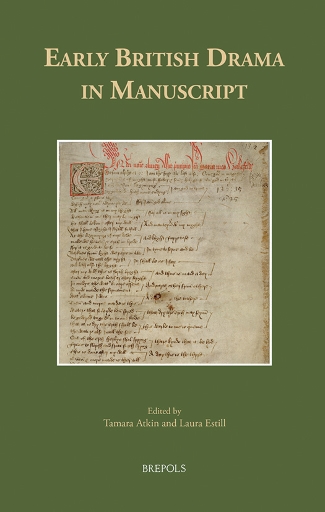
Early British Drama in Manuscript
show More to view fulltext, buy and share links for:Early British Drama in Manuscript show Less to hide fulltext, buy and share links for: Early British Drama in ManuscriptThis collection of essays examines medieval and early modern drama in the context of a rich and varied manuscript culture. Focusing on the production, performance, and reception of dramatic documents made in Britain between 1400 and 1700, the essays in this book shed new light on the role of dramatic manuscripts in a range of different social and literary spheres. From extant manuscripts of England’s mystery cycles to miscellanies kept by seventeenth-century readers, the documents discussed in this volume reflect a culture of producing and using drama in ways that have been overlooked by the recent critical focus on drama and print by theatre historians and literary critics. By showing the various continuities, exchanges, lendings, and borrowings between medieval and early modern scribal practices, as well as between manuscript and print practices, this volume interrogates accepted critical narratives about the way that drama has been historicized.
-
-
-
Early Medieval Ireland and Europe: Chronology, Contacts, Scholarship
Festschrift for Dáibhí Ó Cróinín
show More to view fulltext, buy and share links for:Early Medieval Ireland and Europe: Chronology, Contacts, Scholarship show Less to hide fulltext, buy and share links for: Early Medieval Ireland and Europe: Chronology, Contacts, ScholarshipThe pivotal role of Ireland in the development of a decidedly Christian culture in early medieval Europe has long been recognized. Still, Irish scholarship on early medieval Ireland has tended not to look beyond the Irish Sea, while continental scholars try to avoid Hibernica by reference to its special Celtic background. Following the lead of the honorand of this volume, Prof. Dáibhí Ó Cróinín, this collection of 27 essays aims at contributing to a reversal of this general trend. By way of introduction to the period, the first section deals with chronological problems faced by modern scholars as well as the controversial issues relating to the reckoning of time discussed by contemporary intellectuals. The following three sections then focus on Ireland’s interaction with its neighbours, namely Ireland in the insular world, continental influences in Ireland, and Irish influences on the Continent. The concluding section is devoted to modern scholarship and the perception of the Middle Ages in modern literature.
-
-
-
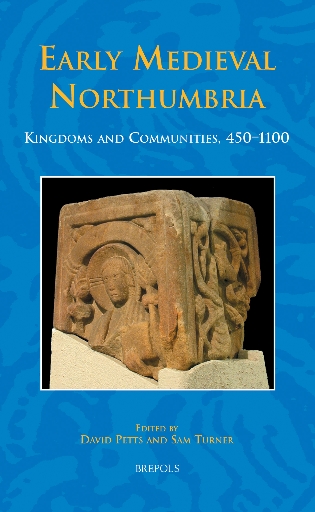
Early Medieval Northumbria
Kingdoms and Communities, AD 450–1100
show More to view fulltext, buy and share links for:Early Medieval Northumbria show Less to hide fulltext, buy and share links for: Early Medieval NorthumbriaResponding to renewed interest in the powerful early medieval kingdom of Northumbria, this volume uses evidence drawn from archaeology, documentary history, place-names, and artistic works to produce an unashamedly cross-disciplinary body of scholarship that addresses all aspects of Northumbria’s past. Northumbria at its peak stretched from the River Humber to the Scottish highlands and westwards to the Irish Sea, producing saints, kings, and scholars with contacts across Europe, from Scandinavia, Ireland, and Francia to Rome itself. This volume unites papers on all aspects of this major European power of its day, from its origins in the fifth and sixth centuries from British and Anglo-Saxon chiefdoms, through its ‘Golden Age’ as eighth-century Europe’s intellectual powerhouse, to its role as a key element of an international Viking kingdom. Where traditional scholarship has centred on the ecclesiastical high culture of the age of Bede, this work examines the kingdom’s social and economic life and its origins and decline as well. There is a stress on approaching established bodies of material from new perspectives and engaging with wider debates in the field, including monumentality, the development of kingships, and the evolution of the early Church. Areas investigated include the kingdom’s political history, its economy and society, and its wider place within Europe. Its unique artistic legacy, in the form of illuminated manuscripts and a rich sculptural tradition, is also explored.
-
-
-
Early Medieval Palimpsests
show More to view fulltext, buy and share links for:Early Medieval Palimpsests show Less to hide fulltext, buy and share links for: Early Medieval PalimpsestsPalimpsests are texts from which the primary text has been effaced to make room for fresh writing. The practice was particularly important in the early Middle Ages, when numerous, often precious, books were subjected to this treatment. As a result, many ancient texts lay hidden in European libraries for centuries.
Ever since the first palimpsests were discovered in the seventeenth century, scholars have been fascinated by the possibility of discovering hitherto unknown texts. For a long time, the lower script of palimpsests could only be brought back to the light of day through the use of chemical reagents that proved very detrimental to the manuscripts. The great advance away from these destructive techniques came at the beginning of the twentieth century with the application of ultra-violet photography. Today, striking advances in this field are again being made with the development of digital imaging.
The contributions in this volume focus mainly on the cultural evidence offered by palimpsests from the early Middle Ages. Some contributors have examined particular manuscripts in great detail (the London palimpsest of Jerome’s Chronicle or the Munich palimpsest codex from Benediktbeuern); others have looked at specific types of texts that have suffered deletion in this way (liturgical palimpsests, Carolingian letters). The volume also contains a handlist of all known palimpsested manuscripts in Beneventan script.
-
-
-
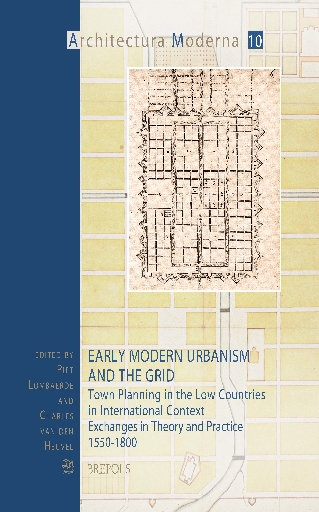
Early Modern Urbanism and the Grid
Town Planning in the Low Countries in International Context. Exchanges in Theory and Practice 1550-1800
show More to view fulltext, buy and share links for:Early Modern Urbanism and the Grid show Less to hide fulltext, buy and share links for: Early Modern Urbanism and the GridFrom the late sixteenth century until around 1800, new ideas and practices of urban planning and the implementation of public buildings, water works and fortifications from the Low Countries were disseminated across Europe and America. Engineers, mathematicians and other scientists in the Low Countries applied methods of design and land surveying that were gradually assimilated and often modified following exchanges within local practice. In some cases, models were projected onto the existing situation. This phenomenon of disseminating and exchanging theoretical models and practical methods between the Low Countries, Europe and its colonies during this period developed into a new Early Modern Urbanism movement within the Western World.
Grid-like plans figured prominently in these processes of dissemination and exchange. In the Low Countries, grid-like structures allowed a comprehensive approach to a multitude of complex problems in urban planning (for example, the connection of canals, streets and fortifications) in parts of existing towns, as well as in city extensions and ex novo cities. Moreover, the experimental approaches in Antwerp and other urban laboratories resulted in new theories on town planning and fortification as well. Given the distinct cultures of the Catholic Spanish Southern Netherlands and the Republican, Dutch Calvinist Northern Netherlands, the Low Countries provide an excellent case for studying the identity of urban forms. Both engaged in enormous expansion overseas, and the simultaneous exchange of practices between the southern and northern parts of the Low Countries lead to the combination of identities. In this new volume in the Architectura Moderna series, various scholars examine the dissemination of practical methods and theoretical models of urban planning from the Northern and Southern Low Countries, in addition to exchanges with local practices in Northern and Central Europe and in the New World.
Piet Lombaerde is professor in history and theory of architecture, urbanism and fortification at the Faculty of Design Sciences of the University College of Antwerp (UA).
Charles van den Heuvel is Head Research of History of Science at the Huygens Institute for the History of the Netherlands of the Royal Netherlands Academy of Arts and Sciences.
-
-
-
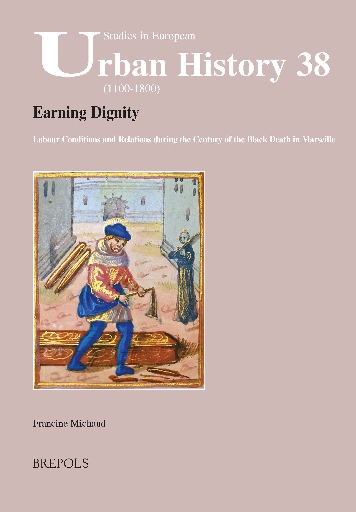
Earning Dignity: Labour Conditions and Relations during the Century of the Black Death in Marseille
show More to view fulltext, buy and share links for:Earning Dignity: Labour Conditions and Relations during the Century of the Black Death in Marseille show Less to hide fulltext, buy and share links for: Earning Dignity: Labour Conditions and Relations during the Century of the Black Death in Marseille'Earning Dignity: Labour Conditions and Relations during the Century of the Black Death' sheds a direct light on the changing labour market and working relations of medieval Marseille before and after the Black Death. The author's close analysis of hundreds of notarized contracts and legal suits provides an unparalleled comprehensive study of the prime actors in work relations - masters and employees; men, women, and children- integral to the Massilian port economy through its most turbulent period of pestilence, warfare, and tense labour relations after 1348. By establishing the longer trends of pre-plague conditions, the author reveals the predicaments masters found themselves in the new labour shortages after the Black Death, the intensified used of money in work relations, and the broader place of unskilled workers (not least among them, women) in urban, household, agricultural, and maritime trades. The study ends as the calamitous century drew to a close, when changing relations, long-term debt, and demanded dignity of labourers undoubtedly created the basis for longer term trends in work relations in the century to follow.
-
-
-
Earth Sciences, Geography and Cartography
Proceedings of the XXth International Congress of History of Science (Liège, 20-26 July 1997) Vol. X
-
-
-
East Central Europe and Ireland
Political, Economic, and Social Interconnections, 1000–1850
show More to view fulltext, buy and share links for:East Central Europe and Ireland show Less to hide fulltext, buy and share links for: East Central Europe and IrelandThis book explores the broad scope of political, economic, and social aspects of relations between Central Europe (focused on Poland and the lands of the Czechs) and Ireland. Taking a longitudinal approach, this study charts the interaction between the western and the central-eastern peripheries of Europe from the Middle Ages to the period after the Third Partition of Poland-Lithuania in 1795. The authors examine how the relationship between the geographically opposite ends of Europe evolved. Shaped by the shifts of ‘political tectonic plates’ they argue that the evolution can be described in general terms: from a largely unidirectional to an interconnected chain of events. This book demonstrates similarities and analyses differences in a complex, yet unexplored, past of the three emergent nations; nations which in the public perception were overshadowed by their mighty neighbours for far too long.
-
-
-
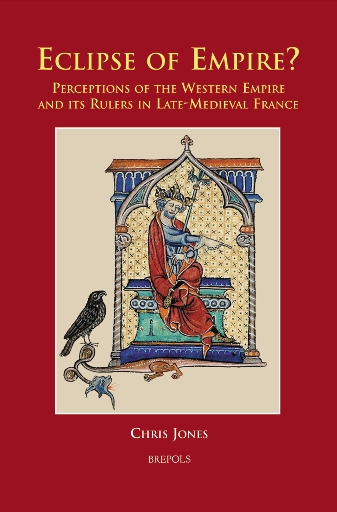
Eclipse of Empire?
Perceptions of the Western Empire and its Rulers in Late-Medieval France
show More to view fulltext, buy and share links for:Eclipse of Empire? show Less to hide fulltext, buy and share links for: Eclipse of Empire?Through an innovative and wide-ranging exploration this book examines the reality behind the assumption that the idea of a universal ruler became increasingly irrelevant in late-medieval Europe. Focusing on France in the century before the outbreak of the Hundred Years War, it explores attitudes towards the contemporary institution of the western Empire, its rulers, and its place in the world. Historians have tended to assume that there was little place for a universal Empire and its would-be rulers in late-medieval thought. Pointing to the rapid decline in the fortunes of the Empire after the death of the Emperor Frederick II, the rediscovery of Aristotle’s Politics by western Europeans, and the growing confidence – and burgeoning bureaucracy – of the kings of France and England, it is often argued that the claims to universal domination of men like the Emperor Henry VII, or indeed of popes like Boniface VIII, were becoming increasingly anachronistic, not to say a little ridiculous. Perceptions of the Empire undoubtedly changed in this period. Yet, whether it was in the cloisters of Saint-Denis, the pamphlets of Pierre Dubois, or even the thought of Charles d’Anjou, the first Angevin king of Sicily, this book argues that the Empire and its ruler still had an important, indeed unique, role to play in a properly ordered Christian society.
Chris Jones grew up in the Middle East before reading history at Durham. He now lives in New Zealand where he holds a lectureship in History at the University of Canterbury, Christchurch.
-
-
-
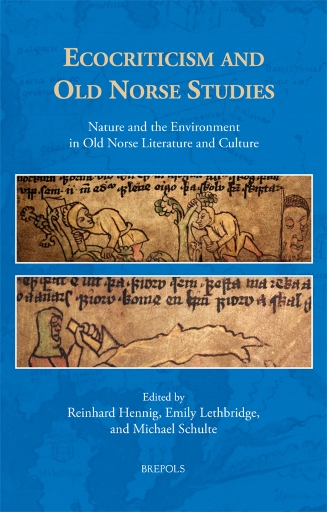
Ecocriticism and Old Norse Studies
Nature and the Environment in Old Norse Literature and Culture
show More to view fulltext, buy and share links for:Ecocriticism and Old Norse Studies show Less to hide fulltext, buy and share links for: Ecocriticism and Old Norse StudiesEcocriticism and Old Norse Studies is the first anthology to combine environmental humanities approaches and the study of premodern Nordic literature and culture. The chapters gathered here present innovative research based on the most recent developments within ecologically informed literary and cultural studies. Covering a wide variety of sources, the volume provides new insights into the Old Norse environmental imagination, showing how premodern texts relate to nature and the environment - both the real-world environments of the Viking Age and Middle Ages, and the fantastic environments of some parts of saga literature. Collectively, the contributions shed new light on the role of cultural contacts, textual traditions, and intertextuality in the shaping of Old Norse perceptions and representations of nature and the environment, as well as on the modern reception and (mis-)use of these ideas. The volume moreover has a contemporary relevance, inviting readers to consider the lessons that can be learned from how people perceived their environments and interacted with them in the past as we face environmental crises in our own times.
-
-
-

Economies, Public Finances, and the Impact of Institutional Changes in Interregional Perspective
The Low Countries and Neighbouring German Territories (14th-17th Centuries)
show More to view fulltext, buy and share links for:Economies, Public Finances, and the Impact of Institutional Changes in Interregional Perspective show Less to hide fulltext, buy and share links for: Economies, Public Finances, and the Impact of Institutional Changes in Interregional PerspectiveThe way and extent to which differences in economic systems and stages of development, and the impact of institutional changes affected the political economy and fiscal systems of regions, or vice versa, is the overall theme of this volume. One major problem is the non-convergence of economic regions, financial networks, political borders and fiscal systems. The question is whether a set of variables is supra-regional, interregional, regional, local or even a mix of all of these. These questions have broad implications for our understanding of urban society and the relations between town and countryside. This volume contains studies about economic, financial and political structures, and developments in different regions of the Low Countries and the Lower Rhine area in a regional comparative perspective during the Late Middle Ages and the Early Modern Period.
-
-
-
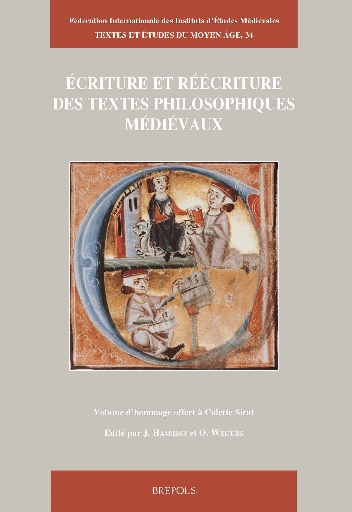
Ecriture et réécriture des textes philosophiques médiévaux
Volume d’hommage offert à Colette Sirat
show More to view fulltext, buy and share links for:Ecriture et réécriture des textes philosophiques médiévaux show Less to hide fulltext, buy and share links for: Ecriture et réécriture des textes philosophiques médiévauxPhilosophe et paléographe, Colette Sirat s’est illustrée dans ces deux domaines pendant toute sa carrière académique. Un fil conducteur relie d’ailleurs ces deux secteurs d’activité: les manuscrits qui sont toujours à la base de ses recherches, fournissant ainsi les sources mêmes et les documents de première main de ses études philosophiques.
Ses publications ont fait date tant dans l’histoire de la philosophie juive que dans les études de paléographie hébraïque et d’histoire de l’écriture. Le thème de ce volume la préoccupe depuis bien longtemps. En effet, la manière d’écrire des textes au moyen âge, la réécriture constante pour beaucoup d’entre eux, constitue un sujet encore peu étudié, bien qu’il s’agisse d’un trait essentiel de la culture écrite de cette époque. Il a été limité aux textes philosophiques, domaine dans lequel ce phénomène est particulièrement présent et qui est l’un des terrains de chasse de la récipiendaire.
Dans tous ses travaux, on découvre les mêmes traits fondamentaux, dont une grande curiosité intellectuelle, une largeur de vue due à un vaste programme de lectures dans des domaines très divers et une richesse d’idées nouvelles sont peut-être les plus marquants.
-
-
-
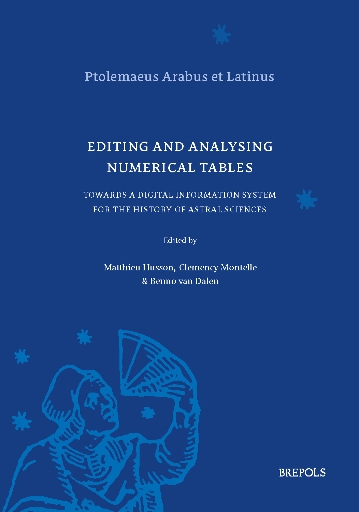
Editing and Analysing Numerical Tables
Towards a Digital Information System for the History of Astral Sciences
show More to view fulltext, buy and share links for:Editing and Analysing Numerical Tables show Less to hide fulltext, buy and share links for: Editing and Analysing Numerical TablesAstronomical tables are a significant yet understudied part of the scientific historical corpus. They circulated among many cultures, and were adopted and transformed by astronomical practitioners for a variety of purposes. The numerical data conveyed in these tables provides rich evidence for pre-modern scientific practices. In the last fifty years, new approaches to the analysis and critical editing of astronomical tables have flourished due to advances in computing power and associated modern mathematical tools. In more recent times, the rapid growth of digital humanities and modern data analysis promises exciting further developments in this area. The present collection of studies on astronomical tables captures this momentum. It is a result of long-term collaborative work on building a database of astronomical tables and other objects found in manuscripts, released under the name DISHAS (Digital Information System for the History of Astral Sciences). The fourteen contributions in this volume provide a broad coverage of astronomical traditions throughout Eurasia and North Africa, which, with very few exceptions, find their roots in the mathematical astronomy of Ptolemy. The contributions include critical editions of previously unexamined astronomical tables along with insightful mathematical analyses, as well as reflective methodological surveys that open up new perspectives for research on these fundamental sources for the history of mathematics and astronomy.
-
-
-

Editing and Interpretation of Middle English Texts
Essays in Honour of William Marx
show More to view fulltext, buy and share links for:Editing and Interpretation of Middle English Texts show Less to hide fulltext, buy and share links for: Editing and Interpretation of Middle English TextsThese fifteen essays, all published here for the first time, explore issues related to the editing and interpretation of Middle English literature. These include the treatment of various types of evidence (variant readings; punctuation; capitalization; rubrication; physical layout), in relation to both manuscript transmission and the transition from manuscript to print. The editorial representation of these and other aspects constitutes an act of textual interpretation at the most fundamental level, which subsequently influences scholarly understanding.
Two major fields of writing - religious texts and chronicles - provide the focus of this volume. Major works that receive attention include Trevisa’s translation of the Polychronicon, the Middle English Brut, Piers Plowman, Nicholas Love’s Mirror of the Blessed Life of Jesus Christ, and John Mirk’s Festial; a wide range of shorter devotional and historical texts, in both verse and prose, is also considered, as are aspects related to the translation of texts from Latin and French into Middle English. Almost all of the contributors are experienced editors of medieval texts. Several contribute further insights into texts they have edited, whilst others discuss or offer new editions of previously unpublished works. Collectively, these essays foreground the many and varied matters of interpretation that confront the editor of Middle English texts.
-
-
-
Egeria, Journey to the Holy Land
show More to view fulltext, buy and share links for:Egeria, Journey to the Holy Land show Less to hide fulltext, buy and share links for: Egeria, Journey to the Holy LandThe Itinerarium Egeriae is the travel diary of a late-fourth-century visit to Egypt and Palestine by a Christian woman from Western Europe. As well as stopping at many sites of biblical significance, she spent three years in Jerusalem and recorded in detail its liturgical practices throughout the yearly cycle. This is the first ever edition of the Latin text to be accompanied by an English translation in parallel. The volume includes an introduction, notes, and a substantial bibliography. There are also appendices containing recent fragmentary textual discoveries and the text and translation of the seventh-century letter of the Spanish monk Valerius which first identified the author.
-
-
-
Egidio d'Aquino. Liber avium viventium de rapina
show More to view fulltext, buy and share links for:Egidio d'Aquino. Liber avium viventium de rapina show Less to hide fulltext, buy and share links for: Egidio d'Aquino. Liber avium viventium de rapinaDatabile tra la fine del Duecento e gli inizi del secolo successivo, attribuito a Egidius de Aquino è un trattato di falconeria scritto originariamente in latino e in seguito tradotto in italiano. La sua struttura è formata da cinque parti principali: un breve ricettario, posto all'inizio, seguito da quattro sezioni dedicate rispettivamente a falconi, astori, smerigli e sparvieri.
-
-
-
Ei autem qui de politia considerat …
Aristotele nel pensiero politico medievale
show More to view fulltext, buy and share links for:Ei autem qui de politia considerat … show Less to hide fulltext, buy and share links for: Ei autem qui de politia considerat …Il volume raccoglie gli studi che l’Autrice ha dedicato alla ricezione della Politica di Aristotele nel Medioevo. L’indagine ruota innanzitutto intorno alle opere appartenenti al genere del commento filosofico, canali primi attraverso cui l’Occidente si riappropria della Politica - e tra queste il commento iniziato da Tommaso d’Aquino e ancor più la sua continuazione, opera di Pietro d’Alvernia, s’impongono alla riflessione successiva come "il commento", dettando la selezione delle questioni da affrontare e i modi con cui l’interpretazione delle asserzioni del Filosofo si attua -; annovera anche altri testimoni di tale ricezione, concepiti e realizzati a sostegno della politica reale (è il caso del De regimine principum di Egidio Romano). Nei capitoli dedicati alla riflessione sulla tirannide e sul finis hominis, l’indagine si amplia sino a comprendere l’elaborazione teorica precedente alla riscoperta dell’Aristotele etico-politico, permettendo in tal modo di cogliere i mutamenti che tale riscoperta consente. I temi oggetto d’analisi sono quelli fondanti della riflessione sulla politica: la determinazione della miglior forma di governo, la riflessione sulla cittadinanza, sulla guerra e la pace, sulla felicità individuale e collettiva, sulle degenerazioni della vita politica (la tirannide), sulle dinamiche economiche che regolano la vita della comunità politica.
-
-
-
Eight Logismoi in the Writings of Evagrius Ponticus
show More to view fulltext, buy and share links for:Eight Logismoi in the Writings of Evagrius Ponticus show Less to hide fulltext, buy and share links for: Eight Logismoi in the Writings of Evagrius PonticusThis book presents the teaching of Evagrius of Pontus (345-399) about eight passionate thoughts (logismoi), i.e. gluttony, impurity, avarice (greed), sadness, anger (wrath), acedia, vanity and pride. The study first reconstructs cosmology, eschatology, anthropology and spiritual teaching of the monk of Pontus in order to show the nature, dynamics and ways of combating against the eight passionate thoughts as proposed by Evagrius. His teaching in this regard became the basis for later Christian teaching on the Seven Deadly Sins and an inspiration in the future for some currents of modern psychology.
-
-
-
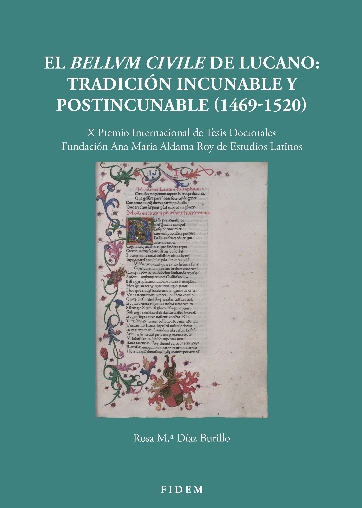
El Bellum Ciuile de Lucano: tradición incunable y postincunable (1469-1520)
show More to view fulltext, buy and share links for:El Bellum Ciuile de Lucano: tradición incunable y postincunable (1469-1520) show Less to hide fulltext, buy and share links for: El Bellum Ciuile de Lucano: tradición incunable y postincunable (1469-1520)Desde 1469, año en el que vio la luz la editio princeps del Bellum Ciuile en Roma, el poema de Lucano se imprimió íntegramente en diecisiete ocasiones en el siglo XV y en dieciocho en los primeros veinte años del siglo XVI. Así, su difusión y lectura durante el Renacimiento fue profusa. En muy poco tiempo, los ejemplares impresos, procedentes de diferentes talleres de imprenta europeos, sobre todo italianos, circularon por la Península Ibérica.
En el presente volumen se aborda, en primer lugar, el estudio filológico del texto transmitido por las ediciones incunables y postincunables del Bellum Ciuile. Durante estos primeros años de tradición impresa, se establecieron diferentes formas textuales del poemay finalmente se configuró la vulgata del texto. El análisis filológico del texto de Lucano transmitido en estas ediciones incunables y postincunables ha permitido precisar las relaciones de filiación entre ediciones, reconocer las diferentes familias textuales que convivieron en los primeros años de tradición impresa y dar los primeros pasos en la descripción de su relación con la tradición manuscrita, así como en la identificación de la intervención de los editores sobre el texto. Todo ello contribuye, desde el estudio de una tradición determinada, al conocimiento del trabajo editorial realizado en el Renacimiento sobre textos latinos antiguos.
Igualmente, se presenta el corpus de ejemplares conservados en bibliotecas españolas, atendiendo a las huellas de lectura y a los poseedores que han dejado su rastro en este valioso patrimonio bibliográfico del que somos herederos.
-
-
-
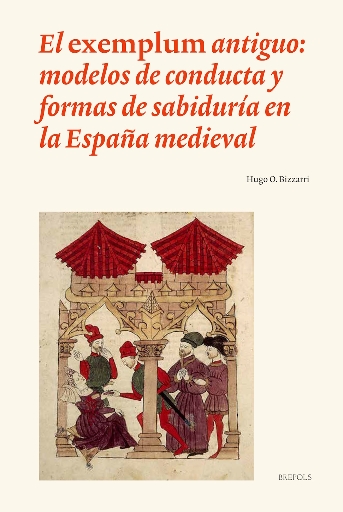
El exemplum antiguo: modelos de conducta y formas de sabiduría en la España medieval
show More to view fulltext, buy and share links for:El exemplum antiguo: modelos de conducta y formas de sabiduría en la España medieval show Less to hide fulltext, buy and share links for: El exemplum antiguo: modelos de conducta y formas de sabiduría en la España medievalL'exemplum antique est l'un des héritages les plus importants de l'Antiquité au Moyen Âge. Les anecdotes tirées des œuvres d'historiens latins tels que Tite-Live, Suétone, Valère Maxim et même de traités tels que Sénèque et Cicéron étaient diffusées sous la forme d'un récit bref. Mais l'Antiquité n'a pas transmis au Moyen Âge qu'une collection d'histoires. Ils étaient porteurs d'une idéologie, le mos maiorum, c'est-à-dire une série de vertus qui avaient constitué la base de l'Empire romain et que le Moyen Âge souhaitait appliquer à la chevalerie. Cette forme d'exemplum avait une longue tradition en Espagne. Dès le xii e siècle, des auteurs tels que Pedro Alfonso de Huesca s'en servent. Au xiv e siècle, il a été revalorisé et a commencé à faire partie du discours politique des ‘miroirs des princes’. Mais son moment de diffusion le plus important se situe au xv e siècle, au point que cette période peut être caractérisée comme une aetas valeriana.
-
-
-
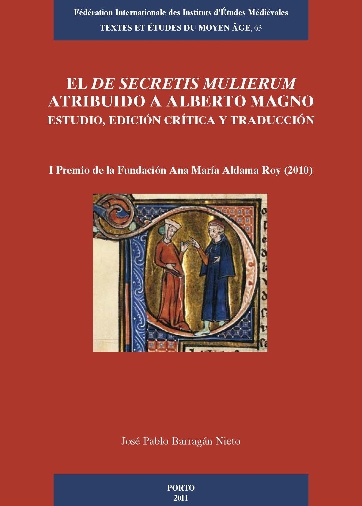
El 'De secretis mulierum' atribuido a Alberto Magno: estudio, edición crítica y traducción
show More to view fulltext, buy and share links for:El 'De secretis mulierum' atribuido a Alberto Magno: estudio, edición crítica y traducción show Less to hide fulltext, buy and share links for: El 'De secretis mulierum' atribuido a Alberto Magno: estudio, edición crítica y traducciónDesde los comienzos de la Baja Edad Media y hasta el siglo XVII circularon por Europa una enorme cantidad de libros que prometían revelar a sus lectores los misterios de la naturaleza y de las artes. Estos «libros de secretos» constituyen un tipo muy particular de literatura técnica, situado a medio camino entre los recetarios y los textos herméticos, y abierto a gran cantidad de temáticas, desde la fisiognomía hasta la magia, aunque las más extendidas fueron la alquimia y la medicina.
En este volumen se presenta la primera edición crítica del De secretis mulierum, un tratado bajomedieval de origen alemán que se inserta dentro de esa tradición de los libros de secretos y que constituye el primer representante de los secreta mulierum o «secretos de las mujeres», un subgénero muy particular, relacionado tanto con la filosofía natural como con la medicina y dedicado a desvelar los misterios del proceso de la generación humana. El De secretis mulierum, que conoció una amplísima difusión durante varios siglos, hecho al que no fue ajena su adscripción, errónea, a Alberto Magno, es un documento de gran importancia no sólo para los investigadores interesados en la filosofía natural y la medicina de las épocas medieval y renacentista, sino también para los que trabajen en campos como la astrología, la fisiognomía o la historia de las mujeres. Todos ellos encontrarán en la edición crítica del tratado una base textual sólida y segura sobre la que llevar a cabo sus investigaciones. El volumen incluye además una traducción del texto latino al castellano, así como un estudio introductorio en el que se realiza un acercamiento general a los libros de secretos medievales, prestando especial atención a los de contenido médico y, dentro de estos, a los secreta mulierum.
José Pablo Barragán Nieto es Doctor en Filología Clásica y licenciado en Teoría de la Literatura y Literatura Comparada por la Universidad de Valladolid. Forma parte del equipo de investigación Speculum medicinae del Departamento de Filología Clásica de la citada Universidad. Ha publicado diversos trabajos sobre lexicografía, textos médicos medievales y medicina antigua y medieval.
-
-
-
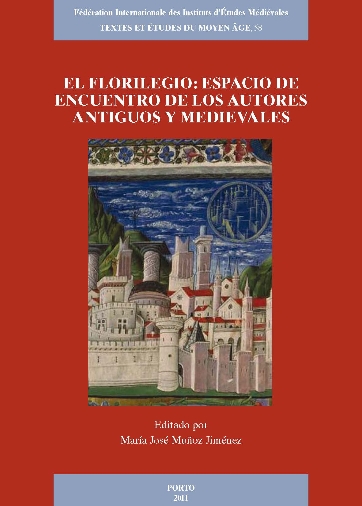
El florilegio : espacio de encuentro de los autores antiguos y medievales
show More to view fulltext, buy and share links for:El florilegio : espacio de encuentro de los autores antiguos y medievales show Less to hide fulltext, buy and share links for: El florilegio : espacio de encuentro de los autores antiguos y medievalesEn los florilegios se reúnen obras muy diferentes en su planteamiento, género y época formando una obra nueva con un plan y un tratamiento unitario, de manera que los escritores de la literatura latina clásica pueden convivir con los autores cristianos y medievales, contemporáneos en algunos casos al compilador del florilegio. Además, en ellos se realiza una lectura particular de los textos originales y una interpretación acorde con la finalidad buscada por el autor de la selección, perdiéndose características individuales de cada obra seleccionada y los rasgos del género literario en el que se escribieron, al sufrir un proceso de reescritura común.
En este volumen se presentan diversas formas de encuentro de los autores antiguos y medievales ofrecidas en los florilegios latinos, prestando especial atención a los manuscritos conservados en España, unos testimonios que han recibido, salvo raras excepciones, poca atención y que están siendo objeto de estudio de un Grupo de Investigación de la Universidad Complutense de Madrid. Las conclusiones alcanzadas bien pueden ser de aplicación general, puesto que entre los florilegios conservados en bibliotecas españolas se encuentran testimonios de obras con una amplia tradición, como el Florilegium Gallicum, al que se dedican dos colaboraciones sobre la presencia de Claudiano y de las epístolas literarias de Horacio; además, en otros dos capítulos se analiza la selección de Ovidio y de las Sátiras de Persio y Juvenal en el manuscrito 749-II de la Bibliothèque Municipale de Douai. Otras contribuciones analizan diversas formas de compilación confeccionadas en tierras hispanas.
Las autoras del libro forman el Grupo de Investigación de la Universidad Complutense de Madrid: La literatura latina en extractos: florilegios y antologías de la Edad Media y el Renacimiento. Desde el año 2000 han llevado a cabo cuatro Proyectos de I+D dedicados al estudio de «Los florilegios latinos conservados en España».
María Teresa Callejas, Patricia Cañizares, María Dolores Castro, Felisa del Barrio y María José Muñoz son profesoras del Departamento de Filología Latina de la UCM. Beatriz Fernández de la Cuesta, Montserrat Jiménez, Marta Cruz e Irene Villarroel son colaboradoras de los citados proyectos.
-
-
-
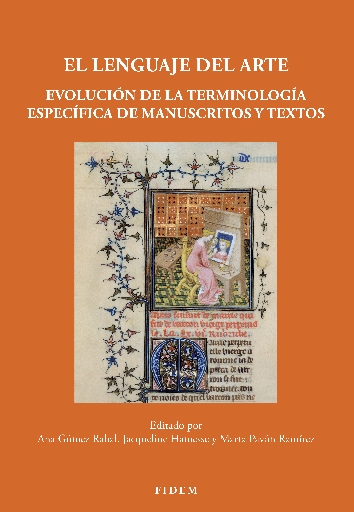
El lenguaje del arte
Evolución de la terminología específica de manuscritos y textos
show More to view fulltext, buy and share links for:El lenguaje del arte show Less to hide fulltext, buy and share links for: El lenguaje del arteEl análisis de la evolución de la terminología técnica utilizada en la descripción científi ca de textos y manuscritos desde la Edad Media hasta nuestros días es el argumento que los responsables de este volumen pretenden poner al alcance del lector como tema de discusión y de reflexión. La particularidad del libro manuscrito reside en constituir un unicum donde los elementos materiales, estructurales y de contenido (texto e imagen) se relacionan necesariamente entre sí. Asimismo, los usos lingüísticos de los coetáneos de los manuscritos medievales para denominar su propia realidad libresca y textual se erigen en un objeto de estudio que ahonda en la consideración del manuscrito y del texto, de su forma y de su contenido, como entidades indisociables.
Es recomendable, por lo tanto, un acercamiento multidisciplinar al libro manuscrito, un acercamiento que exige la colaboración de especialistas de disciplinas diversas, cada una de ellas con una terminología técnica propia. Con esa perspectiva, los trabajos presentados en estas páginas servirán como descripción del estado de la cuestión y, a la vez, como punto de partida útil para que paleógrafos, codicólogos, historiadores del arte o fi lólogos comparen sus respectivos modos de abordar el análisis del libro manuscrito y de sus textos, enriqueciéndose unos a otros mediante sus conocimientos propios y particulares sobre la materia, todo ello con el fi n de favorecer la utilización de un vocabulario adecuado y, si se considera posible y conveniente, común.
El presente libro tiene su origen en el Coloquio Anual de la Fédération Internationale des Instituts d’Études Médiévales organizado en Barcelona en julio de 2017, en la Institución Milá y Fontanals del CSIC. Cuenta con las contribuciones de Marina Bernasconi, Joanna Frońska, Ana Gómez Rabal, Jacqueline Hamesse, Christine Jakobi-Mirwald, Marta Pavón Ramírez, Merce Puig Rodríguez-Escalona, Pere J. Quetglas y Elena E. Rodríguez Díaz.
-
-
-
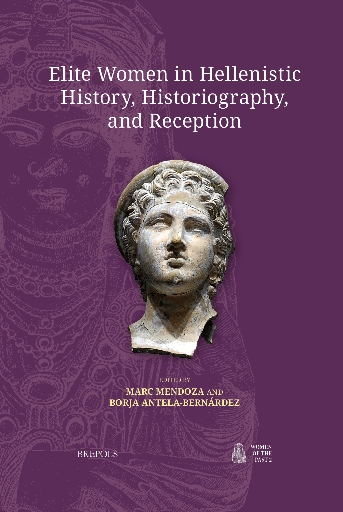
Elite Women in Hellenistic History, Historiography, and Reception
show More to view fulltext, buy and share links for:Elite Women in Hellenistic History, Historiography, and Reception show Less to hide fulltext, buy and share links for: Elite Women in Hellenistic History, Historiography, and ReceptionThe Hellenistic world, with its many new cultural trends and traditions, has often proved a challenging period for scholars. In the wake of changing political, religious, cultural, economic, and social conceptions and practices, gender roles and notions also underwent significant change, leading to the emergence of strong female figures. Up to now, however, no major encompassing research work on elite Hellenistic women has been published. This volume aims to fill this historiographical gap by gathering together contributions covering a wide range of geographical, chronological, and cultural backgrounds. While mostly focused on royal women, the chapters included here also seek to provide readers with an accurate and diverse description of the female experience in the Hellenistic period. The contributors to this book, both renowned scholars and new voices in the discipline, together advocate for a fresh approach that goes beyond the often problematic approaches of earlier historiography and provides a new understanding of elite women in the period.
-
-
-
Emblem Scholarship. Directions and Developments
A Tribute to Gabriel Hornstein
-
-
-
Emblemata sacra
Rhétorique et herméneutique du discours sacré dans la littérature en images. The Rhetoric and Hermeneutics of Illustrated Sacred Discourse
show More to view fulltext, buy and share links for:Emblemata sacra show Less to hide fulltext, buy and share links for: Emblemata sacraThe present volume of essays, Emblemata Sacra. The Rhetoric and Hermeneutics of Illustrated Sacred Discourse, follows a conference that took place in January 2005 in Leuven and Louvain-la-Neuve, thanks to the close collaboration between the Katholieke Universiteit Leuven (Literature Department) and the Université Catholique de Louvain (the research group ‘Figures et formes de la spiritualité dans la littérature et les expressions artistiques’).The 38 essays have been organised in seven sections. The first section (‘Historical and methodological issues’) presents methodological bases for the study of emblematics and spiritual images, as well as the elements necessary for the Christian contextualisation of the corpus. The second section (‘Exegesis of the Scriptures and the Creation’), complementary to the first section, is devoted to exegetical processes developed in different contexts and seeks to emphasise the correspondence between the exegesis of Sacred Scripture and the exegesis of the Creation, which are the two central symbolisms in Christianity. The third section (‘The image in absentia’) focuses on the most critical aspect of the encounter between the Word and the Image, in the form of a paradoxical iconoclastic image, already mentioned in the first section. The fourth section (‘Rhetoric and poetics of the image’) exposes the mutual exchanges between the word of the images and the images of the word. The last three sections all deal with the uses of figures in determined contexts. Thus, the fifth section (‘The image performance’) explores staged, incarnated, and exhibited figures, while the sixth section (‘Circulation of images among different faiths’) gathers studies about different confessional contexts in which spiritual images are used to support and feed the polemics, and the seventh section (‘The efficient image’) opens up the chronology toward the 19th century and then to our own time.
-
-
-
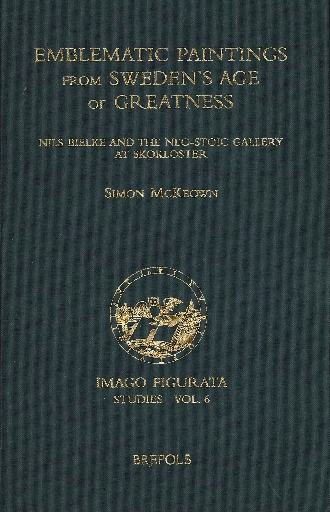
Emblematic Paintings from Sweden’s Age of Greatness
Nils Bielke and the Neo-Stoic Gallery at Skokloster
show More to view fulltext, buy and share links for:Emblematic Paintings from Sweden’s Age of Greatness show Less to hide fulltext, buy and share links for: Emblematic Paintings from Sweden’s Age of GreatnessEmblematic Paintings of the Swedish Baroque is the first full-length study of the cycle of emblematic canvases hanging in the corridors at Skokloster Castle outside Stockholm. These imposing paintings were commissioned by a wealthy nobleman and cultural patron from Sweden's Age of Greatness and were inspired by images from one of the most important emblem books of the seventeenth century, Otto Vænius's Emblemata Horatiana. The principal importance of the Skokloster paintings lies in the fact that they appear to be a unique instance of paintings wholly adapted from images in a printed emblem book, a phenomenon never previously recorded in emblem studies. As such, they prompt questions about the place of the emblem within the fine and applied arts, generic issues explored in some detail in the introductory essay. The study presents a detailed reconstruction of the paintings' place within a lost decorative milieu at the Uppland castle of Salsta, and offers interpretations of the role emblems played within its wider conceptive framework. The appeal of Vænius to the commissioning patron is also examined, and through this, a broader consideration of the reception of literary emblematics in seventeenth-century Sweden. This marks a significant attempt at opening up the rich subject of the emblem in Sweden, a national tradition hitherto largely neglected and little understood within emblem studies.
Emblematic Paintings of the Swedish Baroque is the result of extensive field and archival research in major public and private collections in Sweden, and documents a historically significant group of artworks little known outside Scandinavia. The introductory essay presents the necessary groundwork of the pictures' date, provenance, and probable circumstances of commission, as well as an extended reconstruction of the original context in which they were first displayed. Establishing that they were originally owned by Count Nils Bielke, the study examines the intellectual preoccupations of a Swedish nobleman, and the reasons he found the Neo-Stoic ideas promoted in Vænius's emblems conducive to his interests and tastes. The study situates the Skokloster paintings within the intellectual framework of Great Power Sweden, conceiving of the pictures as attempts at private self-representation, but concomitantly aesthetic expressions of the nationalist-mytholopoeic movement promoted by the scholars Olof Rudbeck, Johan Peringskiöld, and Urban Hjärne.
This volume presents the paintings as an emblem text, reassembling the paintings in the order in which they occur in Vænius, and providing each with a commentary on iconography, sources, and analogues. Each plate is accompanied by a moralizing gloss by the seventeenth-century French author and editor of Vænius, Marin Le Roy, Sieur de Gomberville in the translation of Thomas Mannington Gibbs.
-
-
-
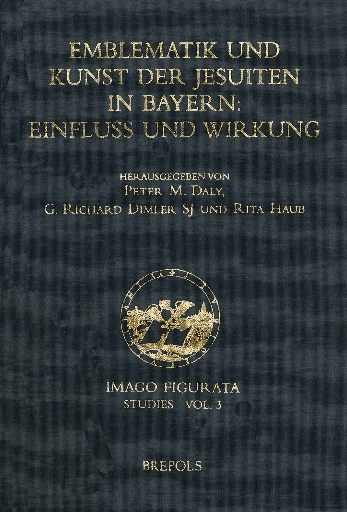
Emblematik und Kunst der Jesuiten in Bayern: Einfluss und Wirkung
show More to view fulltext, buy and share links for:Emblematik und Kunst der Jesuiten in Bayern: Einfluss und Wirkung show Less to hide fulltext, buy and share links for: Emblematik und Kunst der Jesuiten in Bayern: Einfluss und WirkungVom 5. - 5. Juli 1998 fand an der Hochschule für Philosophie in München ein internationales Symposion zum Thema "Jesuitische Emblematik in Bayern: Einfluss und Wirkung" statt, das sich mit der wissenschaftlichen Erforschung der Entstehungs-, Entwicklungs- und Verbreitungsgeschichte des Symbols auseinandersetzte.
Die vorliegende publikation beschränkt sich bewusst nur auf die "bayerischen" Beiträge des Symposions, erweitert durch ergänzende Studien zum Thema Emblematik und Kunst der Jesuiten in Bayern, wie der Vorstellung der Frontispize der Werke des grossen Naturwissenschaftlers Christoph Scheiner, Aspekte zu Georg Stengels Ova paschalia, Betrachtung der Jesuitenkirche Franz Xaver in Luzern oder der neuen Interpretationen eines Kupferstiches der Heiligen Familie vor der St. Michaelskirche München. Vorangestellt ist dem Band ein Abriss über Gründer, Leitmotiv, Signet und Satzungen der Gesellschaft Jesu und das neue Logo des Ordens in Zentral-europa. Einführung in die Thematik Rita Haub und Richard Müller SJ "Jesuiten" Alois Schmid; Templum aulicum. Das Jesuitenkolleg St.Michael zu München als Herrschaftskirche im frühneuzeitlichen Bayern Emblembücher Peter M. Daly; A Survey of Emblematic Publications of the Jesuits of the Upper German Province to the Year 1800 Rita Haub; Bey was erkennet man einen Catholischen Christen? Illustrationen im Bilderkatechismus des Petrus Canisius James Latham SJ; Text and Image in Jeremias Drexel's Orbis Phaëthon G. Richard Dimler SJ; Octiduum S. Francisco Borgiae (1671) : The Munich Jesuits Celebrate the Canonization of Francis Borgia Franz Daxecker; Frontspize in den Werken P. Christoph Scheiners SJ Helmut Zäh; Die Welt im Ei : Georg Stengels Ova paschalia Elisabeth Klecker; Regiae virtutis et felicitatis XII symbola (Dillingen 1636). Panegyrik und Paränese in einem Emblembuch für Ferdinand III Paul Richard Blum; Die Versuchung der Philosophie durch graphische Schemata : Berthold Hauser und die Arbor Porphyriana Angewandte Emblematik Bernhard Paal SJ; Die Heilige Familie vor der St. Michaelskirche in München. Ein theologisches und ikonographisches Programm-Bild Joseph Imorde; Gebaute Emblematik. Die Jesuitenkirche Franz Xaver in Luzern Sabine Mödersheim; Matthäus Rader und das allegorische Programm im Augsburger Rathaussaal. Einfluss und Wirkung jesuitischer Emblematik Alan Young; Protestant Meditation and Two 1647 English Translations of Jeremias Drexel's Zodiacus christianus Paul Begheyn SJ; The Emblem Books of Jeremias Drexel in the Low Countries
-
-
-
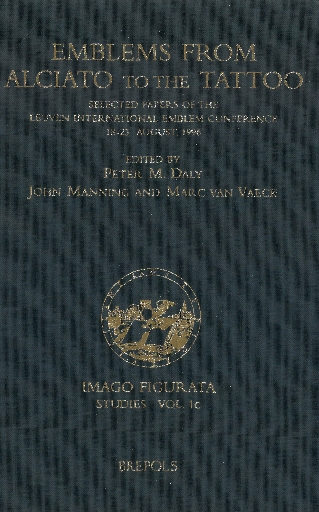
Emblems from Alciato to the Tattoo
Selected Papers of the Leuven International Emblem Conference, 18-23 August, 1996
show More to view fulltext, buy and share links for:Emblems from Alciato to the Tattoo show Less to hide fulltext, buy and share links for: Emblems from Alciato to the TattooThis collection of essays reflects the various manifestations of the emblem in cultural forms ranging from the first appearance of printed books in the sixteenth century to very recent visual equivalents in modern advertising and tattoos. The essays are revised versions of papers presented at the Fourth International Conference held at Leuven in 1996. The table of contents provides an overview of the variety of topics and approaches represented in the volume.
-
-
-
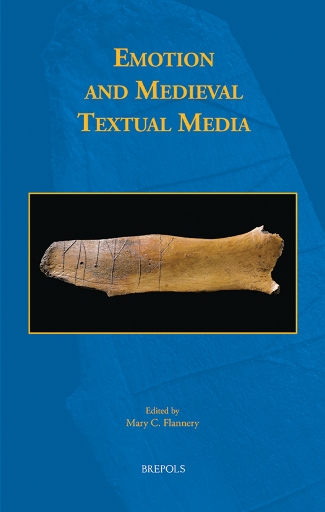
Emotion and Medieval Textual Media
show More to view fulltext, buy and share links for:Emotion and Medieval Textual Media show Less to hide fulltext, buy and share links for: Emotion and Medieval Textual MediaText is one of the most valuable and plentiful sources of information available to scholars interested in medieval emotion. The medieval world may have vanished centuries ago, and its human subjects with it, but a wealth of textual traces remains: sermons, romances, poems, plays, treatises, songs, inscriptions, graffiti, and much more. But how is emotion communicated and shaped by these different textual forms? That is the question at the heart of this collection of essays, which aims to open up our sense of what texts can contribute to the history of emotions by considering the variety of ways that texts can function as vehicles - media - for emotion.
The essays in this volume examine how literary and dramatic texts, chant, manuscript annotations, and material inscriptions mediate emotion - how they bring it about, communicate it, process it, and shape it via forms that act on various senses. Ranging between the eighth and fifteenth centuries and comprising contributions from scholars of musicology, Old English and Old Norse studies, material culture, Middle English literature, drama, and manuscript studies, the essays contained in this volume serve as a window onto the complex relationship between emotions and different textual forms.
-
-
-

Emotions in the Heart of the City (14th-16th century)
Les émotions au coeur de la ville (XIVe-XVIe siècle)
show More to view fulltext, buy and share links for:Emotions in the Heart of the City (14th-16th century) show Less to hide fulltext, buy and share links for: Emotions in the Heart of the City (14th-16th century)Whoever is curious about emotions and their expression in the Old Regime has to discover Johan Huizinga’s works. From his point of view, even if it is a real challenge to comprehend the world of the mind and of the sentimental life, historians of medieval and early modern societies cannot help themselves from examining character studies to reconcile daily life and historicity. Anglo-Saxon studies have proved since the beginning of the seventies that we can give historical meaning to fierce emotions like anger and fear, to mental suffering characterized by tears and pain, or even to the sudden feeling of aesthetic pleasure, mystical ecstasy and delight… all those emotions which put the breath of life into anonymous people crowded into our historical studies. Outside the debates of psycho-history, our study views the topic of emotions from the angle of social construction and civilization’s process.
The town reveals itself as an ideal context within which to articulate values, mentalities, customs and aesthetics. From the marketplace to the court of justice, from the procession route to the scaffold, from the theatre stage to the scene of riots, the town concentrates in its heart a public space where both delicate and strong emotions are repeatedly enacted. The purpose of this book is to develop different approaches —according to sphere, events, social categories, social relations, gender, etc.— and thus to suggest a more precise analysis of emotion as a means of communication inside the town. Three urban social «spheres» where divergent emotions were publicly expressed, manipulated, discussed and represented are put into focus: that of the urban revolt, that of the urban administration of justice and that of the staging of urban theatre and poetry.
-
-
-
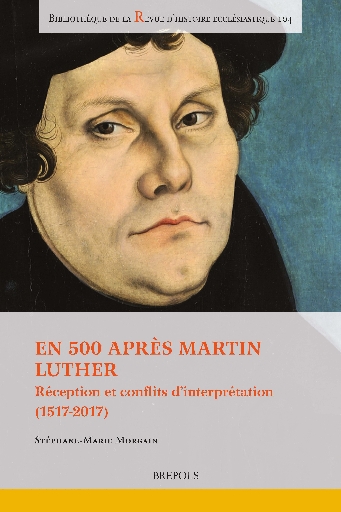
En 500 après Martin Luther
Réception et conflits d’interprétation (1517-2017). Colloque tenu à l’Institut catholique de Toulouse du 17 au 19 octobre 2017
show More to view fulltext, buy and share links for:En 500 après Martin Luther show Less to hide fulltext, buy and share links for: En 500 après Martin LutherPublication issue d'un colloque réalisé en octobre 2017 par l'institut catholique de Toulouse à l’occasion du 5e centenaire de la Réforme protestante.
L’approche est résolument celle de l’histoire des idées religieuses et de l’interdisciplinarité.
Sans négliger l’approche historique, la priorité est donnée à la réception et à l’interprétation de Martin Luther en luthéranisme et dans la théologie catholique contemporaine. Ainsi, cette publication vise à mettre en lumière les conflits d’interprétation, les points de rupture, mais aussi les points d’intersections avec d’autres confessions chrétiennes, principalement le catholicisme et le calvinisme, dans une perspective œcuménique.
Considérer Martin Luther comme point de départ, c’est s’intéresser davantage aux bouleversements auxquels il a conduit et à ses prodromes, qu’à ses origines ou ses inspirations. Il s’agit aussi de comprendre son projet de réforme, ses méthodes de retour aux sources, son emploi de l’histoire, les représentations qu’il produit du monde et de l’homme, des implications sociales et politiques de sa révolution théologique.
-
-
-
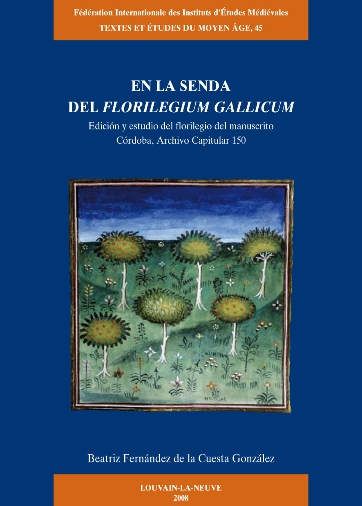
En la senda del 'Florilegium Gallicum'
Edición y estudio del florilegio del manuscrito Córdoba, Archivo Capitular 150
show More to view fulltext, buy and share links for:En la senda del 'Florilegium Gallicum' show Less to hide fulltext, buy and share links for: En la senda del 'Florilegium Gallicum'Son numerosos los manuscritos conservados en la actualidad que contienen florilegios medievales de diversa naturaleza. Aquellos que reúnen extractos de autores clásicos revisten interés tanto para la edición crítica de las obras antiguas como desde el punto de vista de la tradición de dichas obras en la Edad Media. Estos florilegios constituyen un vínculo estrecho entre la Literatura Romana y la producción literaria medieval en tanto que son instrumentos de trabajo de los intelectuales en el Medievo.
En este volumen se realiza una introducción general a la cuestión de los florilegios medievales en tanto género y un acercamiento al uso que la Edad Media ha hecho de las auctoritates de la Literatura latina, prestando una atención especial al Florilegium Gallicum, que es, sin duda, uno de los más importantes florilegios de autores clásicos de la Edad Media, ya que reúne un notable conjunto de obras y autores de la Literatura latina, algunos de los cuales se conservan gracias a una transmisión manuscrita extremadamente reducida. El estudio de los florilegios medievales de poetas clásicos y concretamente el estudio del Florilegium Gallicum abre también un camino importante a las investigaciones dedicadas a la canción medieval ya sea de troveros o de goliardos, y es indispensable para comprender el sustrato clásico en el que se fundamenta la especulación de los grandes teóricos de la música, especialmente a partir del siglo XIII.
La naturaleza peculiar de los florilegios medievales plantea, además, interesantes cuestiones de crítica textual, que se discuten en este volumen, ofreciendo propuestas al respecto y un modelo de edición de este tipo de textos. A partir de los principios defendidos por la autora se realiza la edición de uno de los testimonios inéditos del Florilegium Gallicum: el manuscrito 150 conservado en el Archivo Capitular de Córdoba. El texto de este florilegio es también minuciosamente estudiado en lo que a su origen, datación, composición, estructura y utilización se refiere.
Beatriz Fernández de la Cuesta González es Doctora Europea en Filología Clásica por la Universidad Complutense de Madrid y ha publicado diversos trabajos sobre los florilegios latinos medievales y sobre el Florilegium Gallicum.
-
-
-
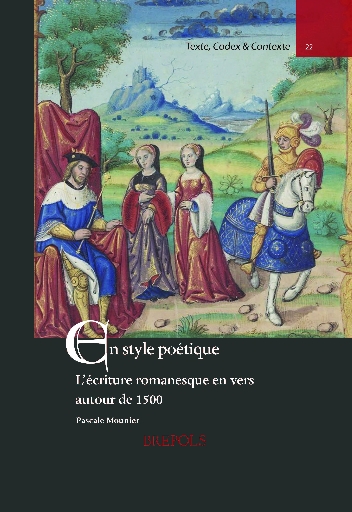
En style poétique
L’Écriture romanesque en vers autour de 1500
show More to view fulltext, buy and share links for:En style poétique show Less to hide fulltext, buy and share links for: En style poétiqueLe domaine des narrations composées en français aux XVe et XVIe siècles est massivement marqué par l’usage de la prose. Il s'avère toutefois que quelques romans sentimentaux ont été produits entre 1490 et 1530 sous forme versifiée. Il s’agit le plus souvent de fictions destinées à l’aristocratie, spécialement à la cour, à qui elles proposent soit de redécouvrir le roman breton du XIIe siècle, soit de se familiariser avec l'épopée chevaleresque ou le récit pathético-tragique produits en Italie, soit encore de voir refondus des genres ou des œuvres de différentes provenances pratiquant un dosage varié de la narration, du dialogue et du lyrisme. Un geste auctorial et éditorial aussi surprenant que celui-ci témoigne-t-il d’une aspiration passéiste ou d’une volonté d’innover ? Le style cultive-t-il le raffinement, voire l’artifice, ou tend-il vers la simplicité, voire le naturel ?
Le concept de « style poétique » s'avère productif pour soulever de telles questions. Le présent ouvrage le met à l'épreuve dans six fictions dont on conserve un ou plusieurs témoins. Quelques écrites par des auteurs ou des adaptateurs ne travaillant pas en concertation, elles se singularisent par le choix du vers pour raconter les aventures qui conduisent un couple d'amants à se former ou à se séparer. Elles exploitent de façon convergente cette forme d'écriture dans la conduite du récit, la restitution des voix et l'évocation des émotions. Les deux grandes valeurs qu'elles confèrent au vers renouvellent la narration en français à un moment donné de son histoire en faisant naître un véritable genre, le roman sentimental de type aristocratique.
-
-
-
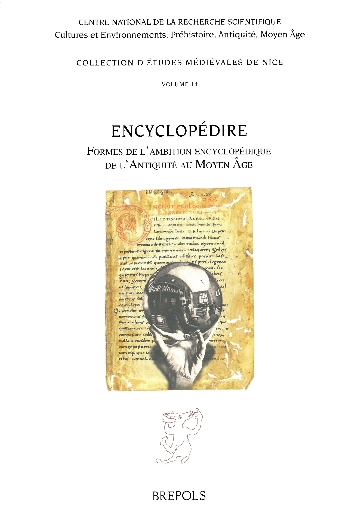
Encyclopédire
Formes de l'ambition encyclopédique dans l'Antiquité et au Moyen Âge
show More to view fulltext, buy and share links for:Encyclopédire show Less to hide fulltext, buy and share links for: EncyclopédireAu regard du modèle que représente l’Encyclopédie des Lumières, envisagée comme un aboutissement et non comme un commencement, plusieurs œuvres antiques et médiévales ont été perçues, au cours des dernières décennies, comme des préfigurations ou des prodromes de ce comble du savoir. Les contributions réunies dans ce volume n’entendent pas imposer le label d’encyclopédie à de nouveaux objets littéraires, ou confirmer celui qu’ont déjà reçu ailleurs des œuvres anciennes, mais réfléchir à la vocation profonde qui sous-tend, travaille et motive certains savants de l’Antiquité au Moyen Âge, construisant un horizon de savoir total et organisé.
L’ambition encyclopédique est dès lors la dynamique commune d’un programme de constitution d’un système du monde, où les sciences sont appelées à se coaliser pour former une culture rationnelle complète. Encyclopédire le monde, c’est engager son discours dans une perspective totalisante, même s’il ne porte que sur des aires partielles. Le défi majeur que porte une telle ambition est donc la synthèse des savoirs ; il lie étroitement trois questions : les enjeux scientifiques d’une visée encyclopédique, les choix de transmission et d’intégration des savoirs, et les principes et mode d’organisation interne des œuvres.
Les auteurs de cet ouvrage se sont interrogés sur des œuvres ou des genres révélateurs de cette ambition, sur les formes et les expressions de ce syndrome ou complexe encyclopédiste, et sur les modalités de cette volonté d’encyclopédire que l’on suppose tenace, archaïque et profonde.
-
-
-
Engineering and Engineers
Proceedings of the XXth International Congress of History of Science (Liège, 20-26 July 1997) Vol. XVII
show More to view fulltext, buy and share links for:Engineering and Engineers show Less to hide fulltext, buy and share links for: Engineering and EngineersThis volume is devoted to the history of engineers from the 16th to the 20th century. It begins with two general papers, the first one by M. Duffy on the nature of engineering, the other by E. Knob loch on engineers of the Renaissance and their illustrated manuscripts. The other papers deal with the training of engineers, their methods, and role in the international technological transfers as well as the biography of some famous engineers.
-
-
-

England and Rome in the Early Middle Ages
Pilgrimage, Art, and Politics
show More to view fulltext, buy and share links for:England and Rome in the Early Middle Ages show Less to hide fulltext, buy and share links for: England and Rome in the Early Middle AgesThis volume explores the special connection that linked England and Rome between the seventh and the eleventh centuries, a topic which in spite of its relevance and attraction has never before been dealt with in a publication of this scale and depth. By bringing together scholars from different countries and disciplines and by relying on important recent archaeological findings that have led to a firmer knowledge of early medieval Rome, the volume provides a detailed and integrated investigation of the ways in which contacts between England and the Eternal City developed across the early Middle Ages. With special attention to major themes such as pilgrimage, artistic exchange, and ecclesiastical politics, the essays in this volume show the continuity of the Anglo-Saxons’ relations with Rome as well as the ways in which, over time, these adapted to different circumstances. They also show that Anglo-Saxon England should not be thought of as just a passive recipient of influential cultural trends, but rather as an important player in the multi-faceted world of early medieval Europe in which Rome, by now the city of the popes, kept its centrality as a source of spiritual and political power.
-
-
-
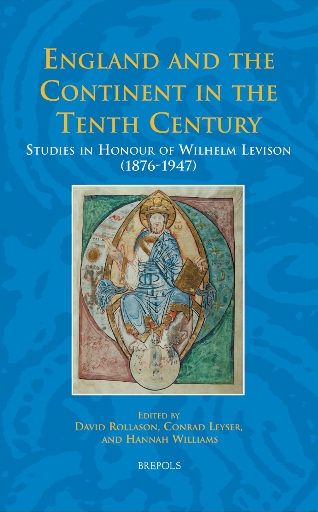
England and the Continent in the Tenth Century
Studies in Honour of Wilhelm Levison (1876-1947)
show More to view fulltext, buy and share links for:England and the Continent in the Tenth Century show Less to hide fulltext, buy and share links for: England and the Continent in the Tenth CenturyDedicated as a memorial to the great historian of England and the Continent in the eighth century, Wilhelm Levison, this book provides the widest and most in-depth exploration to date of relations between England and the Continent during an equally crucial period, the tenth century. The volume, which comes out of a sustained collaboration between English and Continental universities, contains thematically arranged essays by established leading specialists and also by younger scholars. By building on the approaches used by Levison as well as other methods that have been developed in the decades since his death, these essays tackle a broad range of questions: What routeways and modes of contact linked England with the Continent? How similar were attitudes to rulership and dynastic strategies? How did the law, the working of government, and the organization and culture of the church differ between England and the Continent? How was the past seen and represented on the two sides of the English Channel? In answering these questions, this volume offers news ways of exploring the links and developing the comparison between England and the Continent in the century after the collapse of the Carolingian Empire, a formative period for the development of Europe.
-
-
-
English Logic and Semantics, from the End of the Twelfth Century to the Time of Ockham and Burleigh.
Acts of the 4th European Symposium on Mediaeval Logic and Semantics, Leiden-Nijmegen, 23-27 April 1979
-
-
-
Entangled Histories at Conques
Interdisciplinary Perspectives on a Unique Site of Medieval Heritage
show More to view fulltext, buy and share links for:Entangled Histories at Conques show Less to hide fulltext, buy and share links for: Entangled Histories at ConquesConques has been an important node, a singularity within many entangled histories from late antiquity to the present. This volume publishes papers expanding on the second conference of the project “Conques in the Global World. Transferring Knowledge: from Material to Immaterial Heritage” (Marie Skłodowska-Curie Research and Innovation Staff Exchange H2020). Held in October 2023 at the Centre européen in Conques, the workshop brought together international experts from a variety of disciplines and geographies, indicating the directions future studies of this site might take and reflecting on its material, literary, and historiographical legacy.
The collected essays in this volume reflect scholarly and artistic fascination with Conques. They question, open, and reopen important dossiers, bringing fresh insights and perspectives on the site’s material, literary, and performative culture. These range from Bernard of Angers’s Miracles of Sainte Foy and the scholarly reception of this text to charged discussions of the architectural sources and models for the abbey-church and its role in regional and interregional dynamics. From the heated architectural history, the essays segue into the other hot topic of Conques: rethinking the elusive Majesty of Sainte Foy. Essays examine its fabrication history, its specific perception during the eleventh and twelfth centuries, and its staging and geographical anchoring. These analyses give way to an essay devoted to Conques’ nineteenth-century reconstruction. The present volume closes with a text devoted to the mediation of medieval literary culture within contemporary contexts. In their disciplinary diversity, this volume unites scholarly traditions, opening new avenues for the study of a medieval site which, through its entangled histories, captivates scholars around the world.
-
-
-
Entre Meuse, Rhin et Moselle
show More to view fulltext, buy and share links for:Entre Meuse, Rhin et Moselle show Less to hide fulltext, buy and share links for: Entre Meuse, Rhin et MoselleDie 1792 und 1794 besetzten und am 1. Oktober 1795 (9 Vendémiaire, Jahr IV) unter der Bezeichnung "Belgien und Lütticher Land" teilweise von der Französischen Republik annektierten Gebiete gehören heute größtenteils zum Königreich Belgien, zum Großherzogtum Luxemburg und, in geringerem Maße, zum Königreich der Niederlande sowie zu den deutschen Bundesländern Nordrhein-Westfalen und Rheinland-Pfalz. In diesen Ländern krankte die Geschichtsschreibung der französischen Zeit bis gegen 1960 im allgemeinen an einer flagranten Einseitigkeit, die durch vorgefasste Meinungen, voreilige Schlüsse und Klischees gekennzeichnet war. Die Religionsgeschichte war schon immer bevorzugtes Feld für Autoren die, nach dem Urteil von Gilbert Trausch, nie zum Kern der revolutionären Mentalität vorgedrungen sind und den Schwierigkeitsgrad der Probleme, mit denen die Französische Republik konfrontiert wurde, nie verstanden haben. Und die nie daran gedacht haben, dazwischen der Verkündigung eines Gesetzes in Paris und seiner Anwendung vor Ort manchmal eine enorme Lücke klaffen konnte. Vor Ort: das ist im vorliegenden Band der Reihe "Hommes de Dieu et Révolution" das Gebiet zwischen Maas, Rhein und Mosel, Grenz- und Begegnungsland an der nord-östlichen Grenze der Republik. Seine uneinheitliche Humangeographie (politischen Zersplitterung, Koexistenz der romanischen und germanischen Kultur, Vielsprachigkeit) verleiht diesem Raum eine Originalität, die auch den in komplexen Strukturen eingeschlossenen Klerus prägt. Die "Franzosenzeit" hat diese Originalität noch verstärkt, da hier, im Gegensatz zu Frankreich, die religiöse Krise und Verfolgung in der Zeit des Direktoriums ihren Hohepunkt erreichte. Diese beiden Elemente weisen der Verwaltungsgeschichte eine zentrale Stellung inmitten der politisch-religiösen Konflikte zu. Sicher hat der Priester, das Pfarroberhaupt, die Hauptrolle gespielt, aber er war den gegensätzlichen Einflüssen der Departements- und Munizipale
-
-
-
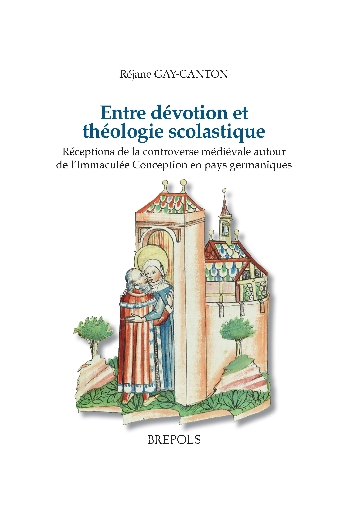
Entre dévotion et théologie scolastique
Réceptions de la controverse médiévale autour de l'Immaculée Conception en pays germaniques
show More to view fulltext, buy and share links for:Entre dévotion et théologie scolastique show Less to hide fulltext, buy and share links for: Entre dévotion et théologie scolastiqueLa deuxième moitié du XIIe siècle voit surgir en Occident les prémisses de ce qui deviendra dès le XIVe siècle une véritable controverse, celle de l’Immaculée Conception. Dans l’instant où elle fut conçue, Marie avait-elle contracté le péché originel ? La question, débattue dans des traités scolastiques mais également dans des sermons, a quitté immanquablement la sphère des doctes litterati pour venir toucher les illitterati qui ne comprenaient pas le latin.
Cet ouvrage est le premier dédié à la réception de la controverse dans la littérature allemande. Dans une approche résolument ouverte et pluridisciplinaire, il confronte l’évolution du débat universitaire et de la célébration liturgique avec leurs résonances dans les textes vernaculaires et dans les sources iconographiques. Quelles idées circulent entre litterati et illitterati ? Cette étude s’attache à les reconstruire et tout à la fois, à identifier les acteurs de cette transmission, à discerner les modalités de diffusion du savoir religieux qu’ils privilégient, voire à restituer ce que l’illitteratus pouvait comprendre de la controverse et comment il parvenait à se l’approprier. Réalisée sur le temps long sans renoncer à mettre en relief certains cas exemplaires de la transmission des idées, elle montre l’étonnant accueil réservé par une littérature vernaculaire aux débats savants. L’étendue du culte marial y trouve de nouvelles confirmations, tandis que l’on constate la volonté d’auteurs de catégories socio-culturelles diverses, du professeur au simple laïc, de familiariser les moins doctes avec l’une des questions théologiques les plus complexes qui soient.
Docteur de l’Université de Genève, Réjane Gay-Canton est chargée de recherche au sein du projet européen OPVS (ERC Starting Grant, IRHT, Paris).
-
-
-

Entre la ville, la noblesse et l’Etat: Philippe de Clèves (1456-1528), homme politique et bibliophile
show More to view fulltext, buy and share links for:Entre la ville, la noblesse et l’Etat: Philippe de Clèves (1456-1528), homme politique et bibliophile show Less to hide fulltext, buy and share links for: Entre la ville, la noblesse et l’Etat: Philippe de Clèves (1456-1528), homme politique et bibliophilePhilippe de Clèves (1456-1528) est un homme remarquable à plus d’un titre. Fils d’Adolphe, seigneur de Ravenstein, et de Béatrice de Coïmbre, Philippe jouit, à l’instar de bon nombre d’aristocrates à l’automne du Moyen Âge, d’un luxueux train de vie. Partisan de Maximilien d’Autriche dans sa lutte contre les cités du comté de Flandre jusqu’en 1488, il choisit alors de défendre le particularisme urbain contre l’autorité bourguignonne. Vaincu en 1492, il se tourne vers la cour du roi de France Charles VIII. Il parcourt l’Europe, gouverne Gênes pour finalement revenir aux Pays-Bas et demeurera fidèle à Charles Quint jusqu’à sa mort.
Les différentes contributions de ce volume entendent apporter une réponse à la question-clé des intérêts de Philippe durant cette période troublée: dans quelle mesure privilégie-t-il la relation avec le prince et avec les autres aristocrates ou entend-il plutôt assurer ses intérêts dans la ville? À partir d’une documentation largement inédite, l’attention est ainsi portée sur le rôle culturel, politique, social et militaire qu’a joué Philippe de Clèves dans les conflits entre la Ville et l’État. En outre, Philippe lui-même a rédigé L’instruction de toutes manieres de guerroyer. S’il est auteur, il est aussi collectionneur: plusieurs articles mettent également l’accent sur l’analyse du contenu de sa bibliothèque et sur la comparaison avec les librairies d’autres nobles et de certains fonctionnaires d’État.
Ce volume constitue la publication des Actes d’un colloque interdisciplinaire organisé à la Bibliothèque royale de Belgique dans le cadre du «Pôle d’Attraction Interuniversitaire» (La société urbaine dans les anciens Pays-Bas, bas Moyen Âge-XVIe siècle, projet V, n° 10), programme de recherche financé par la Politique scientifique fédérale belge.
-
-
-
Entre rhétorique et musique
Essai sur le rythme latin antique et médiéval
show More to view fulltext, buy and share links for:Entre rhétorique et musique show Less to hide fulltext, buy and share links for: Entre rhétorique et musique« La science de l’éloquence politique est une musique ; la différence avec le chant et la musique instrumentale est une différence de degré et non de nature ». Denys d’Halicarnasse pose ainsi le problème passionnant du rapport entre l’art du discours, c’est-à-dire la rhétorique, et la musique. Cet essai en propose une analyse philologique et anthropologique, prenant comme objet l’un des points de convergence essentiels entre ces deux disciplines : le rythme. Dans quelle mesure la parenté entre le rythme oratoire et le rythme chanté témoigne-t-elle des changements linguistiques et culturels qui ont marqué la latinité de Cicéron à Gui d’Arezzo ? Si le rythme chanté dans l’Antiquité grecque doit observer une mesure musicale pour que la mélodie puisse être dansée, le rythme oratoire en revanche ne saurait respecter strictement une pulsation. Varier et improviser les combinaisons rythmiques sans se soumettre à un cadre fixe, voilà, pour Cicéron, ce qui distingue le rythme oratoire du mètre et du rythme musical. Ces principes trouvent un écho saisissant au Moyen Âge dans le chant chrétien. Bien que le latin ait subi des modifications profondes, les règles rythmiques établies par l’éloquence classique infléchissent indéniablement les techniques de composition du « cantus prosaicus ».
-
