Brepols
Brepols is an international academic publisher of works in the humanities, with a particular focus in history, archaeology, history of the arts, language and literature, and critical editions of source works.1901 - 2000 of 3194 results
-
-
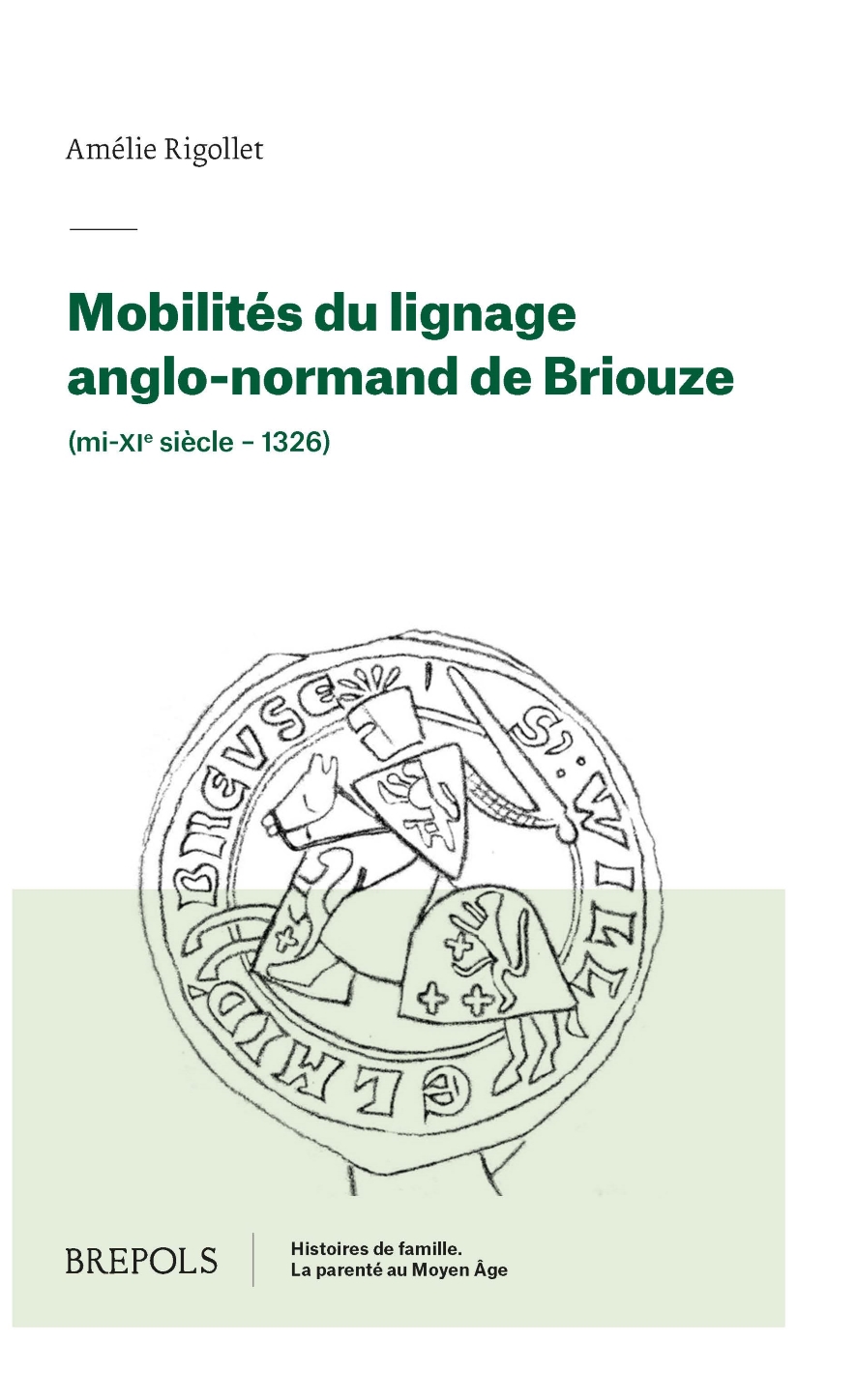
Mobilités du lignage anglo-normand de Briouze (mi-xi e siècle – 1326)
show More to view fulltext, buy and share links for:Mobilités du lignage anglo-normand de Briouze (mi-xi e siècle – 1326) show Less to hide fulltext, buy and share links for: Mobilités du lignage anglo-normand de Briouze (mi-xi e siècle – 1326)La famille de Briouze se désigne elle-même, depuis le milieu du xi e siècle, par un toponyme, en référence au centre originel de sa puissance territoriale. Le qualificatif d’« anglo-normand » employé pour désigner le lignage de Briouze permet d’évoquer sa double appartenance culturelle. Le lignage dépasse cette acception binaire en s’implantant dans les régions annexées par la couronne anglaise. Les Briouze sont des seigneurs transrégionaux, puisqu’au gré des conquêtes, ils construisent un vaste patrimoine transmaritime, morcelé à l’intérieur du monde anglo-normand.
Relier les parcours individuels et les stratégies lignagères aux évolutions d’ensemble : cette démarche permet de saisir la complémentarité des phénomènes à des échelles variées pour discerner les particularismes propres aux Briouze. L’interconnexion entre expansion territoriale, ascension sociale et loyauté envers la royauté est l’une des caractéristiques de leur histoire. Cette dernière est écrite par le recoupement d’actes collectés dans les fonds ecclésiastiques et les archives du pouvoir souverain, croisés aux discours produits par l’historiographie médiévale. Les discontinuités coïncident avec l’évolution de la structure du lignage et des rapports entre la famille et le pouvoir.
La capacité d’adaptation - ou l’inadaptation - du lignage de Briouze aux différentes formes de mobilités, question centrale de cet ouvrage, transparaît dans leur aptitude à affronter et surmonter les situations de crise. À l’intersection des formes de mobilités aux évolutions distinctes - politique, sociale, culturelle et économique - se trouve la mobilité géographique, trait d’union entre ces transformations différenciées ainsi imbriquées. Chaque rupture, chaque chute du lignage éclate sous la pression du pouvoir politique mais survient lorsque les possibilités d’expansions territoriales sont contrariées ou empêchées.
-
-
-
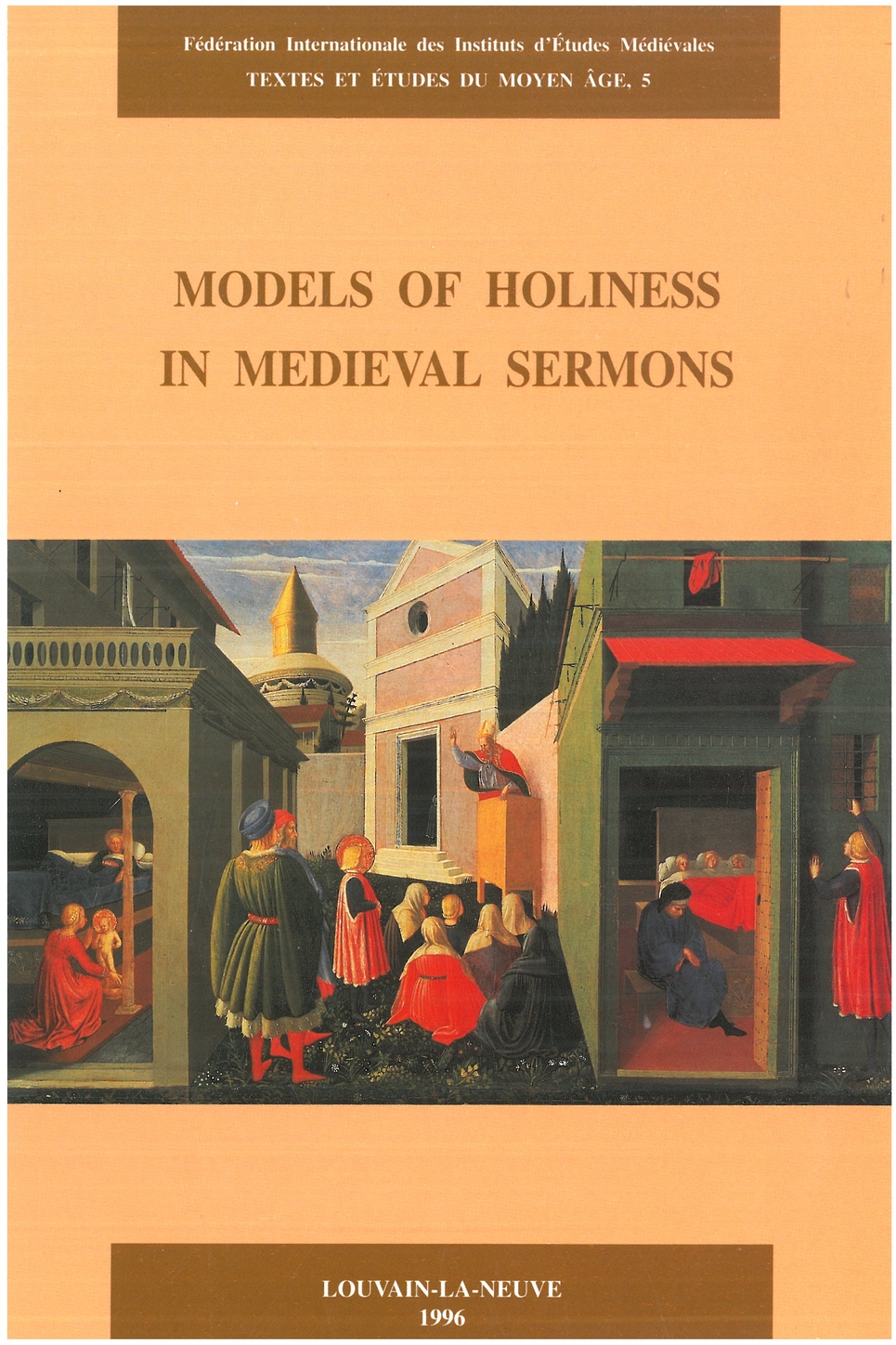
Models of Holiness in Medieval Sermons
Proceedings of the International Symposium (Kalamazoo, May 4-7, 1995), organised by the International Medieval Sermon Studies Society (IMSSS)
show More to view fulltext, buy and share links for:Models of Holiness in Medieval Sermons show Less to hide fulltext, buy and share links for: Models of Holiness in Medieval SermonsHagiographers and sermonists came together in 1995 to focus on the sermon, the central literary genre in the life of medieval Christians and Jews and the primary medium for conveying and adapting models of holiness to the public. The contribution in this volume elaborate the sermon's role in constructing and diffusing models of holiness in different cultural and chronological categories, from ninth-century Ireland to late medieval Germany, from the synagogues of medieval Spain to the piazzas of fifteenth-century Florence, and from the secret meetings of heretics to the papal court in Avignon.
While ideals of holiness remained relatively consistent, the practical interpretations varied widely. Among the topics explored are the swift construction and propagation of Becket's cult after his martyrdom; the reappearance of certain biblical figures in different milieux; the non-utilization of non-biblical models; the interpretation of models for lay listeners and female audiences: chronological shifts in the vocabulary of sanctity; the theological basis for encouraging lay preaching; and attitudes in the eve of the Reformation.
Methodological concerns are also elucidated here: the challenge in methodology shared by scholars of Jewish and Christian preaching; the sources other than sermons that bear on preaching; compilers' modifications to their sources; the role sermons played in canonization processes; expanding the definition of a sermon to encopass the activities of lay movements, laywyers, monarchs, and contexts beyond the framework of traditional worship.
-
-
-
Monachismes d’Orient. Images, échanges, influences
Hommage à Antoine Guillaumont. Cinquantenaire de la chaire des "Christianismes orientaux", EPHE SR
show More to view fulltext, buy and share links for:Monachismes d’Orient. Images, échanges, influences show Less to hide fulltext, buy and share links for: Monachismes d’Orient. Images, échanges, influencesL’année 2007-2008 a marqué le cinquantenaire de la création de la chaire des « Christianismes orientaux » à la section des sciences religieuses de l’École pratique des Hautes Études (Paris, Sorbonne). La direction d’étude et le Collège de France ont voulu commémorer cet événement en organisant un colloque scientifique international sur la question des monachismes d’Orient. Ce sont les actes de cette manifestation qui sont ici réunis. Cet ouvrage s’inscrit dans l’hommage particulier qui fut rendu à cette occasion aux travaux de M. Antoine Guillaumont, premier titulaire de la chaire, grand spécialiste de l’Orient chrétien et des milieux monastiques de Syrie et d’Égypte. Ce volume, dans un souci de transversalité, met l’accent sur les jeux d’influences réciproques que cristallise le phénomène monastique dans les différentes aires culturelles de l’Orient chrétien : Sinaï, Liban et Palestine, Égypte, Éthiopie, Mésopotamie, Perse, golfe Persique... Il s’adresse à tous ceux qu’intéresse l’histoire du Proche et Moyen-Orient dans l’Antiquité tardive et à l’époque médiévale. M. Antoine Guillaumont entra au CNRS en 1946. Il fut ensuite directeur d’études à la section des sciences philologiques et historiques de l’École pratique des Hautes Études (« Hébreu et araméen ») de 1952 à 1974, et occupa la chaire des « Christianismes orientaux » à la section des sciences religieuses depuis sa création en 1957 jusqu’en 1981. Élu au Collège de France en 1977, il devint membre de l’Académie des Inscriptions et Belles Lettres en 1983.
-
-
-
Monasteries on the Borders of Medieval Europe
Conflict and Cultural Interaction
show More to view fulltext, buy and share links for:Monasteries on the Borders of Medieval Europe show Less to hide fulltext, buy and share links for: Monasteries on the Borders of Medieval EuropeAs a historical and cultural phenomenon, monasticism always had a close connection with frontiers. The earliest monasteries were believed to be founded in wildernesses and deserts, thus existing beyond society and the inhabited world in general. As intercessors praying for their patrons and benefactors, monastic communities also existed on the border between the earthly and the spiritual worlds.
In medieval Europe, however, the frontier nature of monasticism had specific manifestations in addition to the founding myths of monastic wilderness. In the twelfth and thirteenth centuries the expansion of Latin Europe in East-Central Europe, the Iberian Peninsula, Scandinavia, and into the Holy Land and Greece opened possibilities for extending monastic networks and establishing new houses. One of the most important parts of this process was the interaction between these new religious communities and the social world around them - an interaction that was characterised by various shades of hostility, cooperation, and adaptation to the local social and cultural framework.
This is the first collection to consider the phenomenon of monastic frontiers in a cross-disciplinary manner. The book’s ten chapters explore the role of monasteries in maintaining political and cultural borders, in breaking and sustaining linguistic boundaries in late medieval Europe, as well as in building and stabilizing Latin Christian cultural identities on the northern and southern frontiers of Europe. Using a wide range of textual, archaeological, and material evidence, an international group of authors examines the expansion of monastic and mendicant networks in Scandinavia, Iberia, East-Central Europe, the British Isles, northern France, the Balkans, and Frankish Greece.
-
-
-

Monastic Communities and Canonical Clergy in the Carolingian World (780–840)
Categorizing the Church
show More to view fulltext, buy and share links for:Monastic Communities and Canonical Clergy in the Carolingian World (780–840) show Less to hide fulltext, buy and share links for: Monastic Communities and Canonical Clergy in the Carolingian World (780–840)In the years 816-819, a series of councils was held at the imperial palace in Aachen. The goal of the meetings was to settle a number of questions about ecclesiastical organization. These issues were hotly debated throughout the Christian Roman Empire of the fourth and fifth centuries, and then reinvigorated by the renewal of empire under Charlemagne and his son Louis the Pious. At the centre of the ensuing debate stood the distinction between monks and monastic communities on the one hand, and the so-called clerici canonici and their communities on the other. Many other reforms were proposed in its wake: the position of the episcopacy needed to be renegotiated, the role of the imperial court needed to be consolidated, and the place of every Christian within the renewed Carolingian Church needed to be redefined. What started out as a seemingly straightforward reorganisation of the religious communities that dotted the Frankish ecclesiastical landscape thus quickly turned into a broad movement that necessitated an almost complete categorization of the orders of the Church. The contributions to this volume each zoom in on various aspects of these negotiations: their prehistory, their implementation, and their influence. In doing so, previously held assumptions about the scope, the goals, and the impact of the ‘Carolingian Church Reforms’ will also be re-assessed.
-
-
-
Monastic Europe
Medieval Communities, Landscapes, and Settlements
show More to view fulltext, buy and share links for:Monastic Europe show Less to hide fulltext, buy and share links for: Monastic EuropeMonasticism became part of European culture from the early period of Christianity and developed into a powerful institution that had a profound effect on the greater Church, on wider society, and on the landscape. Monastic communities were as diverse as the societies in which they lived, following a variety of rules, building monasteries influenced by common ideals and yet diverse in their regionalism, while also contributing to the economic and spiritual well-being inside and outside their precincts.
This interdisciplinary volume presents the diversity of medieval European monasticism with a particular emphasis on its impact on the immediate environs. Geographically it extends from the far west in Ireland, Scotland, and Wales, to the east in Romania and the Balkans, through the north of Scandinavia to the south of the Iberian Peninsula. Drawing on archaeological, art and architectural, textual and topographical evidence, the contributors explore how monastic communities were formed, how they created a landscape of monasticism, how they wove their identities with those around them, and how they interacted with all levels of society to leave a lasting imprint on European towns and rural landscapes.
-
-
-
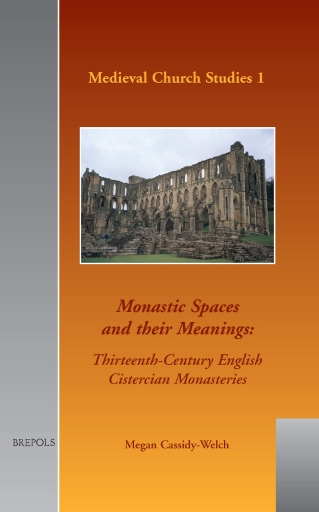
Monastic Spaces and their Meanings
Thirteenth-century English Cistercian Monasteries
show More to view fulltext, buy and share links for:Monastic Spaces and their Meanings show Less to hide fulltext, buy and share links for: Monastic Spaces and their MeaningsMedieval Cistercians distinguished between material and imagined space, while the landscapes in which they lived were perceived as both physical sites and abstract topographies. Ostensibly, Cistercians lived in intensely regulated and confined physical circumstances in accordance with ideals of enclosure articulated in the Regula S. Benedicti. However, Cistercian representations of space also express ideas of transcendence and freedom. This monograph focuses on the abbeys of northern England during the period 1132-1400 (Fountains, Rievaulx, Jervaulx, Meaux, Sawley, Roche, Byland and Kirkstall) to facilitate a microhistory of cultural, textual, personnel and architectural comparisons. Post-twelfth century Cistercian history has been understudied, in comparison with research into the euphoria of the order's foundation, and has tended to focus on 'ideals' versus 'reality', whereas this study considers Cistercian houses in terms of contingency, singularity and specificity. The author engages with the work of theorists such as Michel Foucault, Pierre Bourdieu and Henri Lefebvre, all of whom have explored the cultural production of space and the meanings attributed to certain spaces by abstract reference, performative practice and institutional direction. The study is richly illustrated with 45 images of the landscape and space of these houses and enables the reader to see how one monastic order positioned itself in relation to geography, architecture, institution, community and cosmos, and dealt with the dialectic between regulation and imagination, freedom and enclosure. Patrick Geary (UCLA) commends this study as being 'based on a wide reading of Cistercian texts and blends solid text-critical historical scholarship with more conceptual approaches in a most convincing way'.
-
-
-
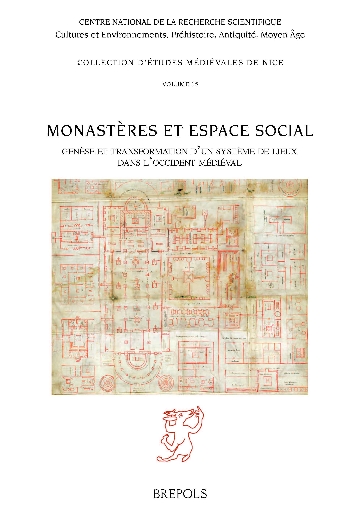
Monastères et espace social
Genèse et transformation d’un système de lieux dans l’Occident médiéval
show More to view fulltext, buy and share links for:Monastères et espace social show Less to hide fulltext, buy and share links for: Monastères et espace socialCet ouvrage présente les résultats d’une enquête, menée par des archéologues et des historiens, sur l’organisation spatiale du monachisme au Moyen Âge. Il propose tout à la fois des synthèses inédites sur plusieurs complexes ou cités monastiques et une réflexion sur les processus d’articulation et de hiérarchisation des lieux de vie, de culte et de production constitutifs des monastères occidentaux. Il s’intéresse entre autres aux différentes formes de circulation - déplacements pragmatiques, déambulations liturgiques, parcours mentaux - qui ont favorisé la structuration et la monumentalisation de ces ensembles religieux.
La mise en place et le développement des monastères sont ici appréhendés au travers des usages de l’espace, par l’étude des monuments, des textes et des images qui en portent la trace. Les auteurs de ce volume mettent ainsi en évidence la genèse et la transformation d’un système de lieux singulier qui fut, dans l’Occident médiéval, l’un des principaux laboratoires des représentations et des pratiques de l’espace social.
-
-
-
Monastères, convergences, échanges et confrontations dans l’Ouest de l’Europe au Moyen Âge
Actes du Colloque Anciennes Abbayes de Bretagne, Université de Toronto 5-6 mai, 2016
show More to view fulltext, buy and share links for:Monastères, convergences, échanges et confrontations dans l’Ouest de l’Europe au Moyen Âge show Less to hide fulltext, buy and share links for: Monastères, convergences, échanges et confrontations dans l’Ouest de l’Europe au Moyen ÂgeL’orientation vers les convergences, échanges et confrontations dans l’histoire monastique du grand Ouest européen au Moyen Âge permet de porter un regard nouveau sur la dynamique de divers établissements en observant les relations qui s’y sont développées tant au sein des communautés, qu’avec la société environnante. Les influences externes subies par les monastères et les conflits internes qui s’y jouent, les échanges dus aux pèlerinages, aux rouleaux des morts et aux confraternités sont au nombre des thèmes explorés.
-
-
-
Montpellier au Moyen Âge
Bilan et approches nouvelles
show More to view fulltext, buy and share links for:Montpellier au Moyen Âge show Less to hide fulltext, buy and share links for: Montpellier au Moyen ÂgeFondée à la fin du x e siècle, Montpellier connut une expansion fulgurante à partir du xii e, à la faveur du développement d’échanges culturels et économiques, vers la Méditerranée ou le nord de l’Europe. Cette expansion était le fruit de politiques menées par les Guilhem et confirmée lors du passage de la seigneurie sous l’autorité des rois d’Aragon et de Majorque après 1204, quand la ville obtint un gouvernement consulaire. Devenue une communauté urbaine d’importance au xiii e siècle, Montpellier était habitée par une population cosmopolite. Dans et hors les murs se croisaient grands marchands, changeurs et simples revendeurs, universitaires et intellectuels de renom, artisans et agriculteurs. L’attractivité et le rayonnement de Montpellier en faisaient l’une des principales villes du Bas-Languedoc. Pourtant, son histoire médiévale n’a bénéficié que d’une attention inégale de la part des chercheurs. Cet ouvrage procède d’un colloque international réuni à Montpellier en 2013 et rassemble des articles réalisés par les principaux contributeurs et principales contributrices à l’histoire et à l’archéologie de la ville. Basées sur des archives originales ou sur la réinterprétation de données connues, les recherches proposées ici, tout en présentant un bilan des travaux passés, empruntent des voies nouvelles démontrant les promesses des études historiques et archéologiques sur Montpellier.
-
-
-
Monuments & Memory: Christian Cult Buildings and Constructions of the Past
Essays in honour of Sible de Blaauw
show More to view fulltext, buy and share links for:Monuments & Memory: Christian Cult Buildings and Constructions of the Past show Less to hide fulltext, buy and share links for: Monuments & Memory: Christian Cult Buildings and Constructions of the PastThis volume honours Sible de Blaauw on the occasion of his retirement from Radboud University. It is above all a tribute to an influential and respected voice in the field of early Christian art and architecture. Thirty-one authors have sought to provide their own unique answer to the question of how Christian cult buildings have played a role in cultural memory in different periods and in various geographical and cultural contexts. From its very onset, this publication was envisioned as a parallel to De Blaauw’s own research interests: Rome and its monuments, early Christianity, Christian religious heritage, liturgy and architecture, continuity of tradition, and memory. The contributions have been arranged according to three sections: Monuments - Places - Decoration & Liturgical Furnishing. Every essay addresses the memorial potential of Christian buildings, of their location, or of the accoutrement, whether or not still in situ. Not surprisingly, Rome re-appears frequently in all sections, with Rome’s churches receiving special attention. Together the essays cover a period from Late Antiquity to modern times, from Helena to Gerhard Richter, from late antique poets to a Ravennesque mosaic in the 1930s. Thus, this volume assumes the diachronic nature that characterizes De Blaauw’s own scholarship. The leitmotifs of Christian cult and material and immaterial constructions of the past tie together the sections as well as the book as a whole. Nevertheless, the main binding element between the essays is their authors’ fondness and appreciation of Sible de Blaauw.
-
-
-
Morgante
show More to view fulltext, buy and share links for:Morgante show Less to hide fulltext, buy and share links for: MorgantePoète et courtisan, Luigi Pulci écrivit le Morgante á Florence dans la deuxième moitie du xv e siècle. Inspirée des chansons de geste, cette épopée héroïcomique de plus de 30 000 vers raconte les aventures de Roland, de son ami le géant Morgante et des paladins de Charlemagne. La légende arthurienne et les contes arabes font entrer dans la geste carolingienne les monstres et les décors exotiques d'un Orient de fantaisie, ainsi que les rencontres belliqueuses ou amoureuses avec les païens. C'est aussi une comédie humaine du temps des Médicis : dans les palais et les ruelles de Florence, on assiste aux réjouissances populaires et aux fêtes nocturnes, aux rixes des portefaix et aux joutes des princes, aux intrigues de cour et aux rivalités entre cites. Ecrit dans une langue qui parcourt tous les registres, du ton le plus soutenu á l' oralité, le Morgante multiplie les changements de ton de l'aristocratique au carnavalesque, détourne nombre de genres littéraires et refuse toute clôture. Faisant entendre a la fois les échos de la Renaissance et la voix des cantanbanchi au coin des places italiennes, c'est une œuvre profondément moderne par sa diversité.
-
-
-
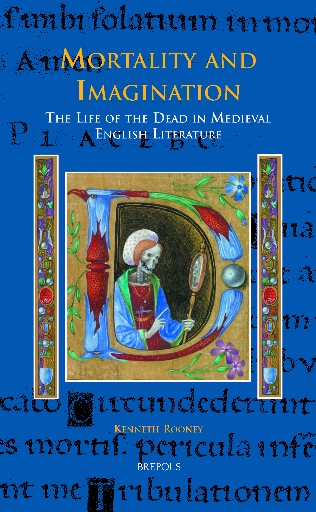
Mortality and Imagination
The Life of the Dead in Medieval English Literature
show More to view fulltext, buy and share links for:Mortality and Imagination show Less to hide fulltext, buy and share links for: Mortality and ImaginationThere have been many books on the medieval culture of death, but this book is the first devoted to the use and representation of the dead in English medieval writing. Mortality and Imagination is a history of the literary ‘life’ of the dead - in their narrative, aesthetic, and ideological formulation - a theme which up to now has been explored only fragmentarily, available only in studies of particular genres. Kenneth Rooney’s book explores a wider range of texts and genres than has been attempted before, and reads the vernacular representation of the dead against the impact of one of the most intriguing cultural phenomena of the Middle Ages - the macabre - a rhetorical and artistic idiom designed to evoke the dead at their most horrifying. Tracing the models for the representation of the dead available to English writers, the author offers fresh readings of texts both familiar and neglected, including sermons, tale collections, romances, drama, lyrics, and other genres in the period c.1100-1550. This book is a stimulating appraisal of the impact, in medieval insular contexts, of an international idea of great longevity and significance, and makes an important contribution to the study of death, belief, and society in pre-modern Europe.
Dr Kenneth Rooney is lecturer in medieval and renaissance literature in the School of English, University College Cork, Ireland. He has published widely on Middle English poetry and medieval romance.
-
-
-
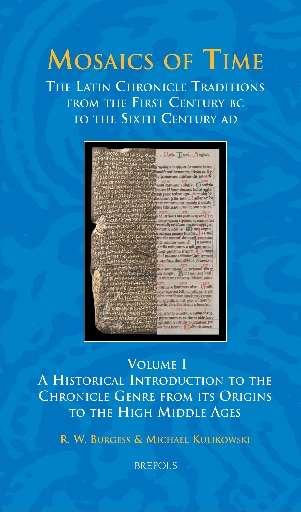
Mosaics of Time, The Latin Chronicle Traditions from the First Century BC to the Sixth Century AD
Volume I, A Historical Introduction to the Chronicle Genre from its Origins to the High Middle Ages
show More to view fulltext, buy and share links for:Mosaics of Time, The Latin Chronicle Traditions from the First Century BC to the Sixth Century AD show Less to hide fulltext, buy and share links for: Mosaics of Time, The Latin Chronicle Traditions from the First Century BC to the Sixth Century ADThe multivolume series Mosaics of Time offers for the first time an in-depth analysis of the Roman Latin chronicle traditions from their beginnings in the first century BC to their end in the sixth century AD. For each chronicle it presents a comprehensive introduction, edition, translation, and historical and historiographical commentary.
Chronicles seem to be everywhere in ancient and medieval history. Now for the first time, R. W. Burgess and Michael Kulikowski present a diachronic study of chronicles, annals, and consularia from the twenty-fifth century BC to the twelfth century AD, demonstrating the origins and interlinked traditions of the oldest and longest continuing genre of historical writing in the Western world. This introductory volume of Mosaics of Time provides both the detailed context for the study of the Latin chronicle traditions that occupies the remaining three volumes of this series as well as a general study of chronicles across three millennia from the ancient Egyptian Palermo Stone to the medieval European chronicle of Sigebert of Gembloux and beyond. The work is an essential companion to ancient and medieval history, historiography, and literary studies.
-
-
-
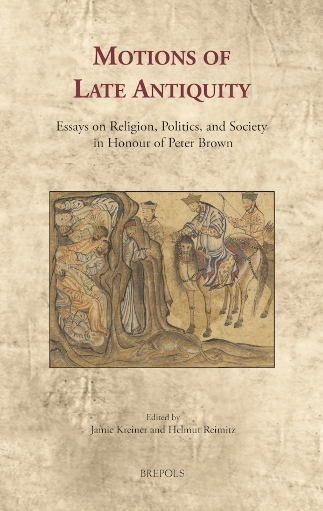
Motions of Late Antiquity
Essays on Religion, Politics, and Society in Honour of Peter Brown
show More to view fulltext, buy and share links for:Motions of Late Antiquity show Less to hide fulltext, buy and share links for: Motions of Late AntiquityWhen did Late Antiquity actually end? Peter Brown, who has done so much to define the field, once replied: ‘always later than you think’. This book takes stock of this insight and, in continual conversation with Peter Brown’s work, applies it to ever wider social and geopolitical horizons. The essays of this volume demonstrate that Late Antiquity is not just a period in which the late Roman world grew into the three successor cultures of the Roman Empire - the Latin West, Byzantium, and the Islamic world - but also a set of hermeneutical tools for exploring historical transformation. A late antique view considers both the profound plurality of past societies and the surprising instances when a culture coheres out of those differences. The studies here follow those motions of fracture and alignment, and they show how working along the lines of a single but deeply textured vision of Late Antiquity makes it possible to integrate different fields such as Roman, Byzantine, and Islamic studies, and to start a new conversation between ancient and medieval history.
-
-
-
Mots médiévaux offerts à Ruedi Imbach
show More to view fulltext, buy and share links for:Mots médiévaux offerts à Ruedi Imbach show Less to hide fulltext, buy and share links for: Mots médiévaux offerts à Ruedi ImbachCes Mots médiévaux offerts à Ruedi Imbach rendent un hommage dans les formes du lexique historique et historiographique. Plutôt que de brosser le portrait d' un professeur et d' un chercheur, ils présentent une image de son monde intellectuel et des intérêts des spécialistes qui travaillent le même champ disciplinaire que lui, la philosophie et l' histoire de la philosophie médiévale en particulier. Le lecteur circule librement à travers soixante-dix études courtes consacrées à des notions négligées, marginales ou encore mal définies de la culture médiévale; il accomplit aussi quelques excursions de l' Antiquité à la Modernité, à travers les aléas de l 'histoire de la transmission des doctrines philosophiques.
Le volume comprend des contributions de: Jan A. Aertsen, Etienne Anheim, Henryk Anzulewicz, Iñigo Atucha, Alessandra Beccarisi, Luca Bianchi, Joël Biard, Magdalena Bieniak, Serge-Thomas Bonino, Bruno-Marie Borde, Jean-Baptiste Brenet, Olivier Boulnois, Alain Boureau, Charles Burnett, Philippe Büttgen, Dragos Calma, Monica Calma, Stefano Caroti, Delphine Carron, Julie Casteigt, Laurent Cesalli, Stephen Chung, Emanuele Coccia, Valérie Cordonier, Iacopo Costa, Fernando Domínquez Reboiras, Gianfranco Fioravanti, Kurt Flasch, Frédéric Gabriel, Christophe Grellard, Barbara Hallensleben, Maarten J.F.M. Hoenen, Tobias Hoffmann, mary E. Ingham, Isabel Iribarren, Zénon Kaluza, Theo Kobusch, Catherine König-Pralong, Alfonso Maierù, John Marenbon, Jean-Luc Marion, Burkhart Mojsisch, Adriano Oliva, Dominic O' Meara, Gianfranco Pellegrino, Dominik Perler, Sylvain Piron, Dominique Poirel, Olaf Pluta, Pasquale Porro, François-Xavier Putallaz, Francis Python, Fiorella Retucci, Thomas Ricklin, Aurélien Robert, Andrea Robiglio, Anne-Sophie Robin, Irène Rosier-Catach, Jacob Schmutz, Peter Schulthess, Philibert Secrétan, Andreas Speer, Loris Sturlese, Tiziana Suarez-Nani, Christian Trottmann, Luisa Valente, Anca Vasiliu, Guido Vergauwen, Ubaldo Villani-Lubelli, Peter von Moos, Olga Weijers, Irene Zavattero.
-
-
-
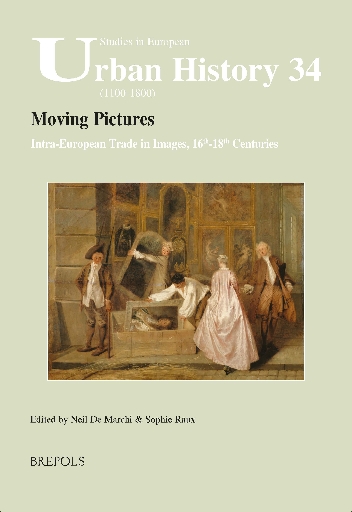
Moving Pictures
Intra-European Trade in Images, 16th-18th Centuries
show More to view fulltext, buy and share links for:Moving Pictures show Less to hide fulltext, buy and share links for: Moving PicturesThis collection focuses overtly on the internal dynamics and links between art markets in the Early Modern period, but presupposes that art objects - here visual images - are objects of desire. During this period, however, desire changed; a great deal more of these objects came to be made for ordinary domestic consumption, including devotional purposes, than as tokens of the magnificence, piety, cultivation or learning of individual commissioners. Probably most still were commissioned, but to satisfy tastes that, though differentiated internationally, were widely shared within one country or region. Most too were commissioned at a distance, by agents, and were moved between maker and end-point distributor by specialised traders, many of whom - though far from all - were large-scale operators. The dominant focus of contributors here is therefore on the agents of this distance trade, its mechanisms and its impacts in terms of both satisfying and subtly shaping tastes, all at a range of prices. Measurement and mappings are aspects of this traffic. Focus was sharpened by concentrating on three questions: what is currently known about the number of images, whether in the form of paintings, prints, small sculptures or woven textiles, that circulated in early modern Europe? Through what channels and networks were they distributed? And what were the economic, social and institutional contexts?
-
-
-
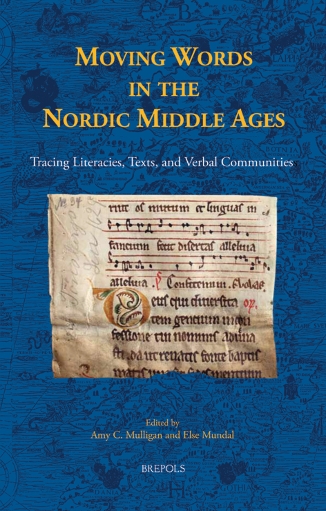
Moving Words in the Nordic Middle Ages.
Tracing Literacies, Texts, and Verbal Communities
show More to view fulltext, buy and share links for:Moving Words in the Nordic Middle Ages. show Less to hide fulltext, buy and share links for: Moving Words in the Nordic Middle Ages.The culmination of over a decade’s research on verbal culture in the pre- and post-Conversion medieval North at Bergen’s Centre for Medieval Studies, this volume traces the movement of words and texts temporally, geographically, and intellectually across different media and genres. The contributions gathered here begin with a reassessment of how the unique verbal cultures of Scandinavia and Iceland can be understood in a broader European context, and then move on to explore foundational Nordic Latin histories and vernacular sagas. Key case studies are put forward to highlight the importance of institutional and individual writing communities, epistolary and list-making cultures, and the production of manuscripts as well as runic inscriptions. Finally, the oral-written continuum is examined, with a focus on important works such as Íslendingabók and Landnámabók, Old-Norse Icelandic translated romances, and the development of prosimetra. Together, these essays form a state-of-the-art volume that offers new and vital insights into the role of literacy in the Norse-speaking world.
-
-
-

Moïse b. Sabbataï, lecteur juif du Livre des causes et adversaire de la kabbale, en Italie, vers 1340
show More to view fulltext, buy and share links for:Moïse b. Sabbataï, lecteur juif du Livre des causes et adversaire de la kabbale, en Italie, vers 1340 show Less to hide fulltext, buy and share links for: Moïse b. Sabbataï, lecteur juif du Livre des causes et adversaire de la kabbale, en Italie, vers 1340This previously unknown Hebrew writer is a unique witness of the blend of Aristotelianism and Neoplatonism as well as of Jewish and Christian sources in Jewish philosophy in Italy (first half of the 14th century).
-
-
-
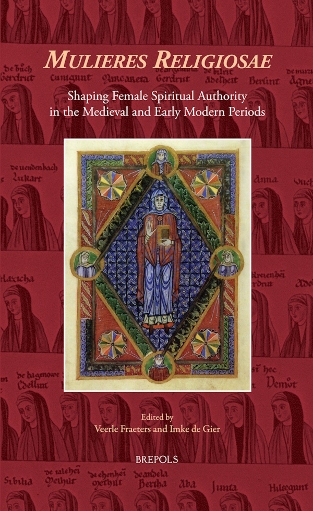
Mulieres Religiosae
Shaping Female Spiritual Authority in the Medieval and Early Modern Periods
show More to view fulltext, buy and share links for:Mulieres Religiosae show Less to hide fulltext, buy and share links for: Mulieres ReligiosaeTraditionally women were denied access to positions of official religious authority within Christianity and were therefore compelled to explore other avenues to acquire and express spiritual leadership. Through twelve case studies covering different regions in Europe, this volume considers the nuances of what constituted female spiritual authority, how it was acquired and manifested by religious women, and how it evolved from the high Middle Ages to the Early Modern period. Whilst current scholarship often emphasizes binaries within the fields of gender and religious authority, this volume examines the manifestation of female religious authority in its multiple facets. It looks both at individuals displaying exceptional forms of agency such as prophesying, as well as more commonplace, communal activities such as letter-writing and music-making. By taking into account the pervasiveness of spirituality in society as a whole in the Pre-Modern era, this collection of essays renegotiates the relationship between the spiritual and the social domain. Through the chronological organization of the contributions insight is gained into the changes in the means and forms female religious authority could take between 1150 and 1750. The narrative is clearly impacted by late medieval enclosure policies and by changing modes of spirituality. Whereas women in the earlier period tended to represent themselves as a door through which God could advance towards mankind, later on they functioned more frequently as a portal through which others could advance towards God.
-
-
-

Multi-disciplinary Approaches to Medieval Brittany, 450–1200
Connections and Disconnections
show More to view fulltext, buy and share links for:Multi-disciplinary Approaches to Medieval Brittany, 450–1200 show Less to hide fulltext, buy and share links for: Multi-disciplinary Approaches to Medieval Brittany, 450–1200While it is well-established that Brittany and the Insular world were closely linked during the medieval period, the precise nature of these connections continues to spark debate. Was there a significant migration in the fifth century, or were the connections more multi-faceted and enduring than medieval accounts suggest? And how might we triangulate the Atlantic connections with other influences on medieval Brittany, including those from the Carolingian world?
Drawing together research that was first presented at the conference ‘Brittany and the Atlantic Archipelago: Contact, Myth and History 450-1200’, held in Cambridge in December 2017, this volume seeks to present new and ground-breaking research into both Brittany and its broader European context during the medieval period. The chapters gathered here range across various disciplines, including textual history, archaeology, hagiography, onomastics, and the study of liturgical evidence, offering new insights into our understanding of medieval Brittany, as well as drawing out particular connections (and disconnections) between Brittany and its neighbours.
-
-
-
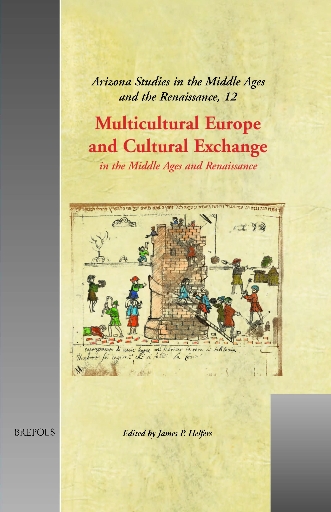
Multicultural Europe and Cultural Exchange
in the Middle Ages and Renaissance
show More to view fulltext, buy and share links for:Multicultural Europe and Cultural Exchange show Less to hide fulltext, buy and share links for: Multicultural Europe and Cultural ExchangeContemporary criticism focuses on contested issues at the borders and in the interstices of cultures. Medieval and Early Modern European culture, previously conceived as monolithic, is now being reconceived as heterogeneous, a site of tensions, contest, accommodation, and subversion. The essays in this volume describe a Europe that is multicultural in fact, and trace the exchanges between cultural groups, subcultures and dominant cultures, and between individuals and the cultures that they inhabit.
The critical works in this volume are drawn from a variety of disciplines: art history, literary studies, history and historiography, and cultural studies. A number are interdisciplinary, examining topics of cultural studies as diverse as fashion, rhetorical self-fashioning, and the history of architecture, all in the context of their surrounding contexts. A special strength of this volume is the visual impact of its three illustrated articles. These essays will appeal to all who see the importance of reconceiving European history in terms of contemporary multicultural perspectives, as well as to those who are specially interested in medieval architecture, the history of fashion, French and English Renaissance literature, Hebraic studies, and medieval and Renaissance Mediterranean history.
-
-
-
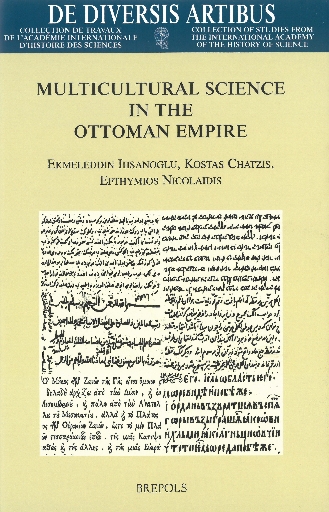
Multicultural science in the Ottoman empire
show More to view fulltext, buy and share links for:Multicultural science in the Ottoman empire show Less to hide fulltext, buy and share links for: Multicultural science in the Ottoman empireThis book contains research papers related to the scientific activities in the Ottoman Empire which comprise various scientific traditions, including the Islamic tradition inherited by the Ottoman Turks and carried on by the Arabs, who were part of the Empire and then joined by European peoples, such as the Bosnians and Albanians newly converted to Islam ; as well as the tradition of different Christian peoples living in Anatolia and the Balkans, (e.g. the Greek Colleges where “ new ” science was taught), and the contributions of native Jewish scholars as well as those who emigrated from Andalusia. The Ottoman world had the necessary grounds for the interaction of all these different traditions. The Ottoman Empire held vast lands in Europe and, as a result of the contact with European science from the very early ages, the new scientific European tradition spread in the Ottoman lands for the first time outside its own cultural environment where it originated.
The Ottoman Empire gave rise to 29 national states in Europe, the Middle East and North Africa. The Ottomans both depended on the previously established Turkish-Islamic scientific tradition and at the same time engaged in attempts to transfer the new technologies and sciences that developed in the Western world. The new European science and technology was also adopted very early by the followers of the Enlightenment and later by those of Nationalism among the non muslim populations of the Empire, and of course by the national states originated from this Empire.
All these aspects about the nature of science in the Ottoman Empire and the complex network of scientific and educational relations of the various populations in this Empire and the national states which followed, as well as the relations between the science of these populations and these new states and Europe, have been discussed in these papers almost for the first time.
-
-
-

Multilingualism in Medieval Britain (c. 1066-1520)
Sources and Analysis
show More to view fulltext, buy and share links for:Multilingualism in Medieval Britain (c. 1066-1520) show Less to hide fulltext, buy and share links for: Multilingualism in Medieval Britain (c. 1066-1520)This book is devoted to the study of multilingual Britain in the later medieval period, from the Norman Conquest to John Skelton. It brings together experts from different disciplines — history, linguistics, and literature - in a joint effort to recover the complexities of spoken and written communication in the Middle Ages. Each author focuses on one specific text or text type, and demonstrates by example what careful analysis can reveal about the nature of medieval multilingualism and about medieval attitudes to the different living languages of later medieval Britain. There are chapters on charters, sermons, religious prose, glossaries, manorial records, biblical translations, chronicles, and the macaronic poetry of William Langland and John Skelton. By addressing the full range of languages spoken and written in later medieval Britain (Latin, French, Old Norse, Welsh, Cornish, English, Dutch, and Hebrew), this collection reveals the linguistic situation of the period in its true diversity and shows the resourcefulness of medieval people when faced with the need to communicate. For medieval writers and readers, the ability to move between languages opened up a wealth of possibilities: possibilities for subtle changes of register, for counterpoint, for linguistic playfulness, and, perhaps most importantly, for texts which extend a particular challenge to the reader to engage with them.
-
-
-
Mundus Emblematicus
Studies in Neo-Latin Emblem Books
show More to view fulltext, buy and share links for:Mundus Emblematicus show Less to hide fulltext, buy and share links for: Mundus EmblematicusThe thirteen articles in this volume deal with the Neo-Latin emblem book after the birth of the genre with Andrea Alciato’s Emblematum libellus (1531). While the interest in emblematics has grown considerably during the last decades, the seminal Neo-Latin production has received relatively little attention. In Mundus Emblematicus an international team of experts in the field makes this part of the emblem tradition accessible to a broad scholarly audience. The articles cover a variety of emblem books published at the time, ranging from influential humanist collections (for instance those by Achille Bocchi, Hadrianus Junius, or Joachim Camerarius) to alchemist (Michael Maier) or religious emblems (such as the books of the Calvinist Théodere de Bèze, or the Jesuit Herman Hugo). In each paper subjects dealt with include the historical context of the work and its makers, the relation between word and image, the structure of the collection as a whole, and the emblematic game (intertextuality in word and image). Moreover, several articles explore the interaction between the emblem and connected literary phenomena, like the commonplace-book, the fable or the use of commentaries. All papers are in English and all examples from Latin texts are translated.
Together, these articles show the variety within the Neo-Latin emblem production, thus challenging traditional approaches of the emblem. As such Mundus Emblematicus contributes towards a more comprehensive view of the forms and functions of the genre as a whole
-
-
-
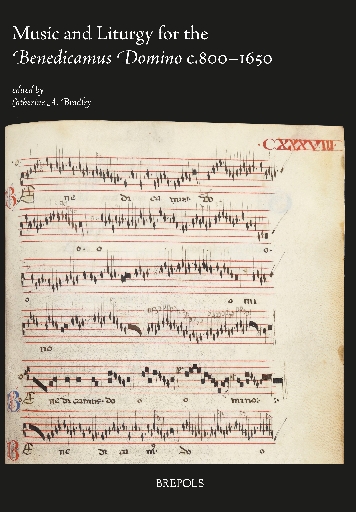
Music and Liturgy for the Benedicamus Domino c.800–1650
show More to view fulltext, buy and share links for:Music and Liturgy for the Benedicamus Domino c.800–1650 show Less to hide fulltext, buy and share links for: Music and Liturgy for the Benedicamus Domino c.800–1650For more than a millenium, singers in churches, monasteries, and private chapels across Europe have closed their worship with the joyful musical exclamation Benedicamus Domino (‘Let us Bless the Lord’). This moment has sounded in song many times a day: at the end of the Mass, the Office hours, outside the church walls in celebratory processions, as well as in informal sacred, devotional, and festive contexts. Benedicamus Domino was uniquely associated with an unprecedented amount of creative freedom in the sacred rituals of the Christian West: plainchant melodies could be adopted at will from other parts of the liturgy, and this moment inspired a proliferation of poetic and polyphonic elaborations from the eleventh century on.
This collection of essays brings together interdisciplinary contributions from eighteen scholars, illuminating the wide range of ritual, musical, poetic, manuscript, and generic contexts for the Benedicamus Domino versicle in the period c.800–1650. Individual chapters engage with the evidence of liturgical commentaries and Patristic texts, Ordines, and hagiographies. They present and analyse musical and textual embellishments of the Benedicamus Domino, as well as their written traces and material contexts, with several sources discovered or discussed in detail here for the first time. Encompassing a wide geographical and generic scope, this volume reveals unsuspected continuities and contrasts in the history of the Benedicamus Domino versicle in medieval and early modern Europe.
-
-
-
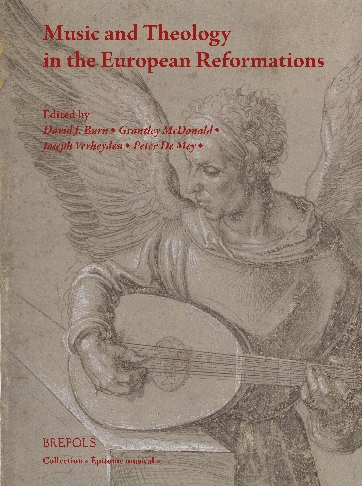
Music and Theology in the European Reformations
show More to view fulltext, buy and share links for:Music and Theology in the European Reformations show Less to hide fulltext, buy and share links for: Music and Theology in the European ReformationsThroughout the history of the Church, music has regularly been placed under the critical microscope. Nonetheless, the intensity of thought concerning music’s role in the liturgy and in spiritual life in general reached a peak during the period of the European Reformations. This multidisciplinary collection examines the debates and controversies around music and theology during that time from both Catholic and various Protestant perspectives. It includes twenty essays from musicologists, theologians, Biblical scholars, and Church historians that attempt to answer the following questions: What difference did the theological and ecclesiological developments of the sixteenth century make to musical forms and practices? What continuities of practice existed with former times? How was the desire to restore the church to an imagined pristine state manifest in music and liturgy? How did developments in exegesis arising from the massively increased knowledge and access to the Bible in Hebrew and Greek affect the way composers wrote and congregations heard? Why did some reformers embrace music, while others rejected it?
-
-
-
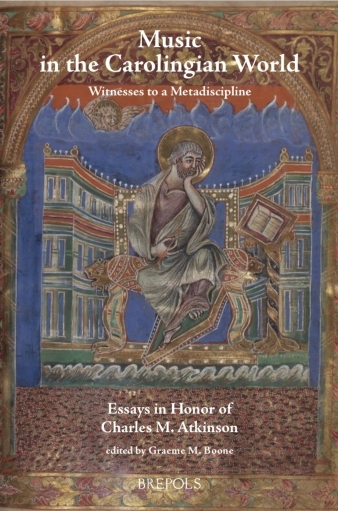
Music in the Carolingian World
Witnesses to a Metadiscipline, Essays in Honor of Charles M. Atkinson
show More to view fulltext, buy and share links for:Music in the Carolingian World show Less to hide fulltext, buy and share links for: Music in the Carolingian WorldMusic in the Carolingian World stems from a conference honoring the career and wide-ranging research of Prof. Charles M. Atkinson, leading scholar in early-medieval studies and author of the award-winning monograph, The Critical Nexus (2010). The volume brings together seventeen essays to explore the broad ramifications of music as an arena of study in early-medieval culture; taken together, they manifest the status of music not just as a field of research, but as a metadiscipline that embraces numerous fields and specializations in medieval studies, including philosophy, theology, literature, philology, paleography, liturgy, education, political and institutional history, as well as the practice, theory, and transmission of chant and related musical repertories. The essays are grouped into the four thematic categories of Verbum, Numerus, Ars, and Cultus, bookended by three keynote essays that touch in different ways on the theme of metadisciplinarity.
-
-
-

Music, Liturgy, and the Veneration of Saints of the Medieval Irish Church in a European Context
show More to view fulltext, buy and share links for:Music, Liturgy, and the Veneration of Saints of the Medieval Irish Church in a European Context show Less to hide fulltext, buy and share links for: Music, Liturgy, and the Veneration of Saints of the Medieval Irish Church in a European ContextThis book opens up discussion on the liturgical music of medieval Ireland by approaching it from a multidisciplinary, European perspective. In so doing, it challenges received notions of an idiosyncratic ‘Celtic Rite’, and of the prevailing view that no manuscripts with music notation have survived from the medieval Irish Church. This is due largely to a preoccupation by earlier scholars with pre-Norman Gaelic culture, to the neglect of wider networks of engagement between Ireland, Britain, and continental Europe. In adopting a more inclusive approach, a different view emerges which demonstrates the diversity and international connectedness of Irish ecclesiastical culture throughout the long Middle Ages, in both musico-liturgical and other respects.
The contributors represent a variety of specialisms, including musicology, liturgiology, palaeography, hagiology, theology, church history, Celtic studies, French studies, and Latin. From this rich range of perspectives they investigate the evidence for Irish musical and liturgical practices from the earliest surviving sources with chant texts to later manuscripts with music notation, as well as exploring the far-reaching cultural impact of the Irish church in medieval Europe through case studies of liturgical offices in honour of Irish saints, and of saints traditionally associated with Ireland in different parts of Europe.
-
-
-
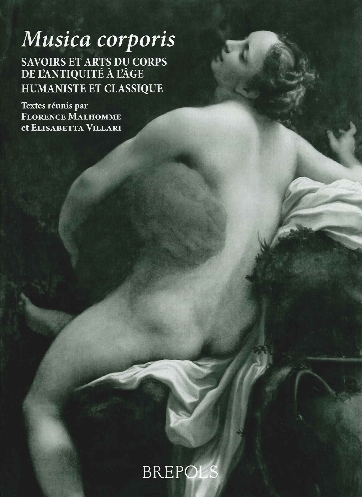
Musica corporis
Savoirs et arts du corps de l'antiquité à l'âge humaniste et classique
show More to view fulltext, buy and share links for:Musica corporis show Less to hide fulltext, buy and share links for: Musica corporisPenser le corps, à travers ses savoirs et ses arts, telle est la question que se propose d'examiner cet ensemble de contributions, à partir des divers points de vue et méthodes propres aux disciplines réunies, philosophie, philologie, histoire, histoire de l'art et de la musique.
Alors que nombreuses sont les approches que le sujet suscite, aujourd'hui plus que jamais, la réflexion développée ici pose sous l'arbitrage de l'art les fondements de la question: elle s'attache moins à l'être de nature qu'à l'objet, soumis à la recherche de perfection et de beauté, que l'art dessine et offre au monde.
La période retenue, de l'Antiquité à l'âge humaniste et classique, est en effet celle des civilisations artistes qui ont pensé et construit le corps de l'homme à partir de l'idée de beauté: les paradigmes architectural, sculptural, pictural et musical s'y entrecroisent autour des notions d'harmonie, d'eurythmie, de symétrie, de proportion, de nombre et de rythme, mais aussi de grâce, mouvement libre et dissonant qui confère légèreté à toute fabrica et en parachève l'ineffable beauté.
Des présocratiques à Platon et Aristote, d'Homère aux Tragiques, de Vitruve à Leon Battista Alberti, de Polyclète à Benvenuto Cellini, de Pline l'Ancien à Raphaël et au Corrège, d'Augustin et de Boèce à Francesco Zorzi, de Castiglione à Schiller, pour citer quelques-uns des auteurs abordés, l'on voudra mieux comprendre cet humanisme esthétique qui, par les arts du beau - les arts du disegno et la musique - et ceux du corps - la gymnastique, la danse, l'escrime, voire l'art équestre - vise à la connaissance, au perfectionnement et à la construction de soi.
-
-
-
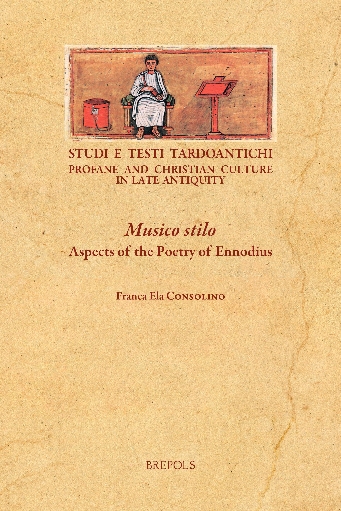
Musico stilo
Aspects of the Poetry of Ennodius
show More to view fulltext, buy and share links for:Musico stilo show Less to hide fulltext, buy and share links for: Musico stiloSince the end of the last century, Ennodius has been the object of increasing interest among scholars of late antiquity. Developments in Ennodian criticism are also addressed in this volume, that presents the results of more than twenty years of research on the relationship – always dialectical and not infrequently innovative – that Ennodius maintains as a poet with the Latin literary tradition, both profane and Christian. The chapters of the book revisit – in English and in one case with substantial modifications – eight of the author’s previously published papers on Ennodius, along with one unpublished contribution.
Areas that have been specifically investigated include the functions that he assigns to poetry compared to those he assigns to prose, his original re-treatment of some literary genres, and his thematic, stylistic, lexical and metric choices. The last chapter explores the literary influence exerted by Ennodius’ poetry on the text of his epitaph. The very fact that its unknown author – certainly a great admirer of the deceased – did his best to imitate his style is a significant testimony to the prestige that Ennodius enjoyed after his death in the diocese of Pavia of which he had been the bishop.
-
-
-
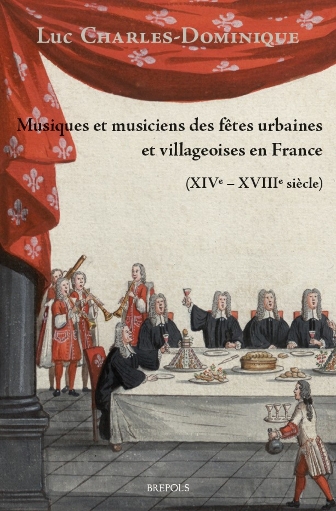
Musiques et musiciens des fêtes urbaines et villageoises en France (XIVe – XVIIIe siècle)
show More to view fulltext, buy and share links for:Musiques et musiciens des fêtes urbaines et villageoises en France (XIVe – XVIIIe siècle) show Less to hide fulltext, buy and share links for: Musiques et musiciens des fêtes urbaines et villageoises en France (XIVe – XVIIIe siècle)Si les premières traces de ritualisation musicale (noces, banquets…) remontent au début du xiii e siècle avec les jongleurs, ce n’est vraiment qu’à partir du siècle suivant que les ménétriers ou joueurs d’instruments sont chargés de la représentation des pouvoirs et de l’animation de la vie sociale dans sa totalité (fêtes politiques et religieuses, de métiers, calendaires, votives, familiales, etc.) et qu’ils se regroupent en confréries ou corporations.
S’appuyant sur son « terrain » toulousain premier ainsi que sur le dépouillement systématique de deux siècles de littérature sur les ménétriers des provinces françaises et sur la collaboration de certains chercheurs en régions, l’auteur propose une nouvelle réflexion d’ampleur sur le personnage historique du ménétrier (plus de trois mille musiciens recensés), son genre, son statut social (poids de la marginalité musicienne des aveugles, mendiants, concurrence des musiciens occasionnels comme les maîtres d’école), sa fonction, sa pratique et ses formes d’organisation.
Cette étude d’anthropologie musicale historique est doublée d’une approche territoriale, cette géographie ménétrière étant abordée au niveau des provinces, des villes (notamment des quarante ayant abrité des corporations et confréries ménétrières), des villages et de l’organisation administrative de ce vaste espace de la Ménestrandise (royauté et lieutenances ménétrières). Par ailleurs, cette histoire sensible de l’art des ménétriers est aussi celle de leur rapport aux musiques dites « savantes », d’église, aux cultures musicales autres, comme celle des Bohémiens.
À l’aide de nombreuses archives, de tableaux, cartes, documents iconographiques, cet ouvrage dépeint la grande fresque d’une musique historique encore méconnue, malgré sa longévité et sa centralité sociale et sociétale, celle des ménestrels et joueurs d’instruments.
-
-
-
My God, my God why have you abandoned me?
The Experience of God’s Withdrawal in Late Antique Exegesis, Christology and Ascetic Literature
show More to view fulltext, buy and share links for:My God, my God why have you abandoned me? show Less to hide fulltext, buy and share links for: My God, my God why have you abandoned me?The motif of God's turning away his face still matters in theology as a direct aftermath of the horrors that the world experienced during WWII and also in the wake of the promotion of an excessive reading of theology, called kenotic. It even appears in unexpected places with no discernible association to the historical development of the Christian doctrine (Caputo, Žižek and C.S.Lewis). This book provides a historical supplement to current approaches and explores the way that late antique theology laid out the theoretical substratum on which modern approaches could anchor themselves. It presents the nuanced ways in which the motif of divine abandonment developed in late antiquity, displays the various threads of thought that theology pursued in different contexts (exegesis, Christology and ascetic desert literature), and raises three points:
- the extent to which parallel lines were drawn in late antique theology between the experiences of the bride in the Song of Songs, Jesus on the cross and the early ascetics;
- the normativeness of divine abandonment in early Christian thought and its association to sinfulness;
- the possibility that late antique theology had introduced a Jesus-like ‘kind’ of abandonment.
-
-
-
Mystics, Goddesses, Lovers, and Teachers
Medieval Visions and their Modern Legacies / Studies in Honour of Barbara Newman
show More to view fulltext, buy and share links for:Mystics, Goddesses, Lovers, and Teachers show Less to hide fulltext, buy and share links for: Mystics, Goddesses, Lovers, and TeachersThe conjunction of medieval religious studies and gender studies in the past several decades has produced not only nuanced attention to medieval mystics and religious thinkers, but a transformation in the study of medieval culture more broadly. This volume showcases new investigations of mysticism and religious writing in the Middle Ages and the early modern period. It also presents groundbreaking explorations of the feminized divine, from medieval to modern, and the many debts of medieval secular texts and cultures to the religious world that surrounded them. Medieval crossover also defines this volume: the contributors examine the crossovers between male and female, cloister and saeculum, divine and human, and vernacular and Latin that characterized so much of the complexity of medieval literary culture. These collected chapters examine mystics from Hildegard of Bingen and Juliana of Cornillon to Richard Rolle, Julian of Norwich, and Tomás de Jesús; the modern theologies of Philip K. Dick and Charles Williams; goddesses like Fame, Dame Courtesy, and Mother Church; and the role of religious belief in shaping conceptions of pacifism, obscenity, authorship, and bodily integrity. Together, they show the extraordinary impact of Barbara Newman’s scholarship across a range of fields and some of the new areas of investigation opened by her work.
Contributors: Jerome E. Singerman, Kathryn Kerby-Fulton, Jesse Njus, Andrew Kraebel, Nicholas Watson, Laura Saetveit Miles, Bernard McGinn, Carla Arnell, Maeve Callan, Katharine Breen, Lora Walsh, Susan E. Phillips and Claire M. Waters, Carissa M. Harris, Stephanie Pentz, Craig A. Berry, Dyan Elliott.
-
-
-
Myth, Magic, and Memory in Early Scandinavian Narrative Culture
Studies in Honour of Stephen A. Mitchell
show More to view fulltext, buy and share links for:Myth, Magic, and Memory in Early Scandinavian Narrative Culture show Less to hide fulltext, buy and share links for: Myth, Magic, and Memory in Early Scandinavian Narrative CultureMyth, magic, and memory have together formed important, and often intertwined, elements to recent studies in the narrative culture of Viking-Age and Medieval Scandinavica. Analytical approaches to myth (prominent in the fields of history of religion, archaeology, language, and literature, and central to studies of visual cultures up to modern times), magic (drawing on a wealth of Norse folkloric and supernatural material that derives from pre-modern times and continues to impact on recent practices of performance and ritual), and memory (the concept of how we remember and actively construe the past) together combine to shed light on how people perceived the world around them.
Taking the intersection between these diverse fields as its starting point, this volume draws together contributions from across a variety of disciplines to offer new insights into the importance of myth, magic, and memory in pre-modern Scandinavia. Covering a range of related topics, from supernatural beings to the importance of mythology in later national historiographies, the chapters gathered here are written to honour the work of Stephen A. Mitchell, professor of Scandinavian Studies and Folklore at Harvard University, whose research has heavily influenced this multi-faceted field.
-
-
-
Mythical Ancestry in World Cultures, 1400-1800
show More to view fulltext, buy and share links for:Mythical Ancestry in World Cultures, 1400-1800 show Less to hide fulltext, buy and share links for: Mythical Ancestry in World Cultures, 1400-1800From Europe to the Ottoman Empire, from Mesoamerica to the Mughal dynasty, rulers and peoples in the early modern period put deities and culture heroes in their family trees. The essays in this collection investigate the issues of ancestry, descent, kinship, and kingship that are revealed by this worldwide practice. The authors explore the meaning and role of 'myth' in different global cultures, and how the social role of myth defined identity through genealogical discourse. What did people understand by 'mythical' and how did they think of themselves as related to their mythical past? How seriously were these various claims of mythical descent taken? And how did claims function within the different power relations of societies around the globe? Up to now, the predominant Eurocentric perspective in early modern studies has encouraged a focus on Renaissance Greco-Roman mythology and its role in literature and art. This volume, however, breaks new ground through its unique exploration of the way in which the genealogical use of 'myth' was shared by world cultures.
-
-
-
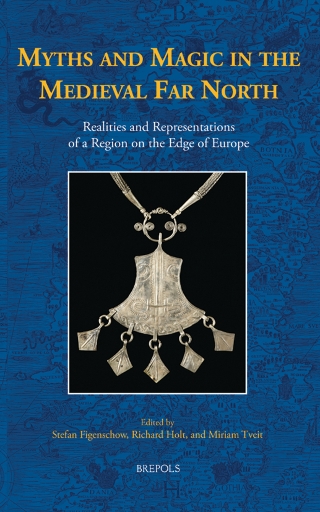
Myths and Magic in the Medieval Far North
Realities and Representations of a Region on the Edge of Europe
show More to view fulltext, buy and share links for:Myths and Magic in the Medieval Far North show Less to hide fulltext, buy and share links for: Myths and Magic in the Medieval Far NorthThe history of the Far North is tinged by dark fantasies. A remote location, harsh climate, a boundless and often mountainous wasteland, complex ethnic composition, and strange ways of life: all contributed to how the edge of Europe was misunderstood by outsiders. Since ancient times, the North has been considered as a place that exuded evil: it was the end of the world, the abode of monsters and supernatural beings, of magicians and sorcerers. It was Europe’s last bastion of recalcitrant paganism. Many weird tales of the North even came from within the region itself, and when newly literate Scandinavians began to re-work their oral traditions into written form after 1100 AD, these myths of their past underlay newer legends and stories serving to support the development to Christian national monarchies.
The essays in this volume engage closely with these stories, questioning how and why such traditions developed, and exploring their meaning. Through this approach, the volume also examines how historiographical traditions were shaped by authors pursuing agendas of nation-building and Christianization, at the same time that myths surrounding and originating among the multi-ethnic populations of the Far North continued to dominate the perception of the region and its people, and to define their place in Norwegian medieval history.
-
-
-
Mémoire de Gassendi
Vies et célébrations écrites avant 1700
show More to view fulltext, buy and share links for:Mémoire de Gassendi show Less to hide fulltext, buy and share links for: Mémoire de GassendiCe recueil contribue à poser une solide fondation en vue de l’élaboration de la biographie de Pierre Gassendi. Il regroupe les Vies de Gassendi écrites au XVIIe siècle, et offre la première étude analytique et comparative des deux versions de la vie « de base », rédigée par Antoine de la Poterie, le dernier secrétaire de Gassendi. Pour compléter la collection sont ajoutés plusieurs poèmes commémoratifs et ‘in memoriam’ dont plusieurs inédits. Ces documents permettent de suivre la formation et la diffusion de l’image de Gassendi que ses disciples et amis ont voulu créer. En même temps les événements de sa vie sont racontés en détail, la comparaison de rédactions différentes permettant de les contrôler et les vérifier. Tous les documents sont munis d’introductions et de commentaires. Ceux qui sont composés à l’origine en latin sont traduits.
-
-
-

Mémoires des passés antiques
Une élaboration continue (xiv e -xix e siècle)
show More to view fulltext, buy and share links for:Mémoires des passés antiques show Less to hide fulltext, buy and share links for: Mémoires des passés antiquesAlors que depuis plusieurs décennies, les recherches sur la mémoire – memory studies – prennent un essor exceptionnel, ce volume a pour objet les modalités de l’élaboration de mémoires particulières, celles de passés antiques, et prend en compte une longue durée allant du xive siècle jusque dans les années 1830. Les deux termes de « mémoire » et d’« élaboration » évoquent un acte de réception et de construction. Les mémoires de l’Antiquité ne sont pas un ensemble de connaissances reçues passivement et non transformées, elles sont des représentations consciemment élaborées par des auteurs et des artistes. Étudier le phénomène sur une longue temporalité permet de mieux analyser les constantes, qui relèvent sans nul doute d’une anthropologie de la mémoire, et aussi les évolutions. Ce volume porte sur des œuvres qui, illustrées ou non, sont écrites et/ou contiennent un texte. La réflexion qu’il propose s’inscrit en parallèle aux recherches dédiées à la réception de la Grèce ancienne dans la littérature française prémoderne (1320-1550) et le projet ERC Advanced Grant AGRELITA, « The Reception of Ancient Greece in Premodern French Literature and Illustrations of Manuscripts and Printed Books (1320-1550) ». Elle ouvre le champ d’analyse à une plus large diachronie et à un plus large corpus.
-
-
-
Méthodes et instruments du travail intellectuel au moyen âge
Études sur le vocabulaire
-
-
-
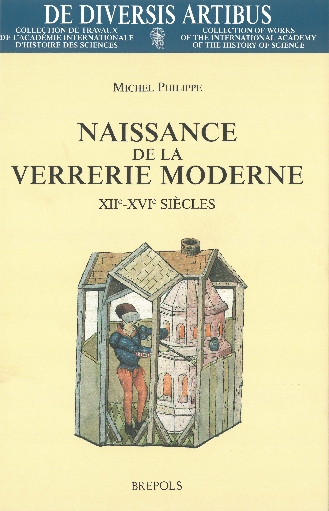
Naissance de la verrerie moderne, XIIe-XVIe siècles
Aspects économiques, techniques et humains
show More to view fulltext, buy and share links for:Naissance de la verrerie moderne, XIIe-XVIe siècles show Less to hide fulltext, buy and share links for: Naissance de la verrerie moderne, XIIe-XVIe sièclesCet ouvrage représente la première synthèse générale de toutes les données archéologiques et archivistiques relatives à l'histoire de la verrerie dans l'espace géographique français du xii e au xvii e siècle. Il analyse, région par région, l'évolution économique des ateliers, les dynasties verrrières, les approvisionnements, l'espace de travail, les fours et les techniques de la fabrication, les aspects administratifs et humains, ainsi que le commerce et l'usage du verre.
-
-
-
Narrating Power and Authority in Late Antique and Medieval Hagiography from East to West
show More to view fulltext, buy and share links for:Narrating Power and Authority in Late Antique and Medieval Hagiography from East to West show Less to hide fulltext, buy and share links for: Narrating Power and Authority in Late Antique and Medieval Hagiography from East to WestThis collection of essays explores the multifaceted representation of power and authority in a variety of late antique and medieval hagiographical narratives (Lives, Martyr Acts, oneiric and miraculous accounts). The narratives under analysis, written in some of the major languages of the Islamicate world and the Christian East and Christian West - Arabic, Armenian, Georgian, Greek, Latin, Middle Persian, Ottoman Turkish, and Persian - prominently feature a diverse range of historical and fictional figures from a wide cross-section of society - from female lay saints in Italy and Zoroastrians in Sasanian and Islamic Iran to apostles and bishops and emperors and caliphs. Each chapter investigates how power and authority were narrated from above (courts/ saints) and below (saints/laity) and, by extension, navigated in various communities. As each chapter delves into the specific literary and social scene of a particular time, place, or hagiographer, the volume as a whole offers a broad view; it brings to the fore important shared literary and social historical aspects such as the possible itineraries of popular narratives and motifs across Eurasia and commonly held notions in the religio-political thought worlds of hagiographers and their communities. Through close readings and varied analyses, this collection contributes to the burgeoning interest in reading hagiography as literature while it offers new perspectives on the social and religious history of late antique and medieval communities.
-
-
-

Narrative and History in the Early Medieval West
show More to view fulltext, buy and share links for:Narrative and History in the Early Medieval West show Less to hide fulltext, buy and share links for: Narrative and History in the Early Medieval WestThis collection deliberately brings together work which is chronologically, geographically and generically diverse. Texts studied include traditional narrative historiography, alongside poetry, chronicles, charters, dispute settlements and hagiography. The essays range from Italy and Frankia to Scandinavia and England, as they examine texts produced from the seventh to the early twelfth century. In exploring the nature and function of narrative in texts, which modern scholars use to study the Middle Ages, the contributors to this interdisciplinary volume integrate social, political, intellectual and literary history. Each essay and the volume as a whole illustrate that narrative form offers both new vantage points on the Middle Ages and new opportunities for collaborative study.
-
-
-
Narratives of a New Order
Cistercian Historical Writing in England, 1150-1220
show More to view fulltext, buy and share links for:Narratives of a New Order show Less to hide fulltext, buy and share links for: Narratives of a New OrderThe origins of the Cistercian monastic order are currently under intense scrutiny and revision, as scholars identify how the written word was used to ‘invent’ a unified corporate identity. Here Elizabeth Freeman examines the classic genre for inventing a past - the history, chronicle, and annal - and argues that historical narratives of the English Cistercians helped define the characteristics of both the new Cistercian monastic order and also the new orders of twelfth- and thirteenth-century England. She shows how Aelred of Rievaulx’s Relatio de standardo and Genealogia regum Anglorum articulated new senses of Englishness, and demonstrates through attention to library holdings that this focus on national self-definition continued throughout the twelfth century. The Fundacio abbathie de Kyrkestall shifts focus to local history and exploits Cistercian tropes of land-use in order to resolve the communal insecurity that characterised the Cistercians in around 1200. The Narratione de fundatione Fontanis monasterii features another method of reconciling the nostalgic quest for continuity with the intellectual recognition of change - it separates historical ‘fact’ from ‘meaning’ and imbues events with rich allegorical significance. Finally, Ralph of Coggeshall’s Chronicon Anglicanum indicates the multiple strategies Cistercian historians employed in order to turn the disparate and contradictory events of the past into a comprehensible and meaningful narrative.
-
-
-
Narratives on Translation across Eurasia and Africa
From Babylonia to Colonial India
show More to view fulltext, buy and share links for:Narratives on Translation across Eurasia and Africa show Less to hide fulltext, buy and share links for: Narratives on Translation across Eurasia and AfricaWhat has driven acts of translation in the past, and what were the conditions that shaped the results? In this volume, scholars from across the humanities interrogate narratives on the process of translation: by historical translators ranging from ancient Babylonia to early modern Japan and the British Empire, and by academics from the nineteenth to the twentieth centuries who interpreted these translators’ practices.
In Part 1 the volume authors reflect on the history of the approaches to the phenomenon of translation in their specific fields of competence in order to learn what shaped the academic questions asked, what theoretical and practical tools were deployed, which arguments were privileged, and why certain kinds of evidence (but not others) were thought to be the basis for understanding the function and purpose of all translation performed in a given culture. Part II explores how translators and authors from antiquity to modern times described their own motivations and the circumstances in which they chose to translate. In both parts, the contributors disentangle histories of translation from the specialized intellectual fields (such as science, religion, law, or literature) with which they have been bound in order to make the case that we understand translation best when we take into account all cultural practices and translation activities cutting synchronically and diachronically through the entire societal fabric.
-
-
-

Nature, Virtue, and the Boundaries of Encyclopaedic Knowledge
The Tropological Universe of Alexander Neckam (1157-1217)
show More to view fulltext, buy and share links for:Nature, Virtue, and the Boundaries of Encyclopaedic Knowledge show Less to hide fulltext, buy and share links for: Nature, Virtue, and the Boundaries of Encyclopaedic KnowledgeCan - and should - an encyclopaedia be a repository of all knowledge? Does the idea of total encyclopaedic knowledge constitute a boon for readers, or is it a labyrinthine nightmare? This book explores the pleasures and paradoxes of encyclopaedism, viewed through the interpretative lenses of the works of Alexander Neckam (1157-1217), an English Augustinian canon and scholar. Neckam wrote not just one but two encyclopaedias: the prose De naturis rerum (‘On the natures of things’) and the verse Laus sapientie divine (‘Praise of divine wisdom’). Poised between the end of the ‘renaissance’ of the twelfth century and the scholasticism-inspired thirteenth century, Neckam invites us into an unfamiliar universe in which encyclopaedias are intentionally incomplete, and in which warnings about the vanity of knowledge coexist with vivid descriptions of new technological inventions. This strange union is facilitated by the exegetical method of tropology or moral reading. Through analogy, vivid imagery, and constant recourse to ethics, Neckam’s encyclopaedias aim to educate their readers until they leave the text behind and engage in a reading of the world in a quest for knowledge, experiencing not only its pleasure and beauty, but also its inherent power.
-
-
-

Navigating Language in the Early Islamic World
Multilingualism and Language Change in the First Centuries of Islam
show More to view fulltext, buy and share links for:Navigating Language in the Early Islamic World show Less to hide fulltext, buy and share links for: Navigating Language in the Early Islamic WorldTraditional accounts of Arabicization have often favoured linear narratives of language change instead of delving into the diversity of peoples, processes, and languages that informed the fate of Arabic in the early Islamic world. Using a wide range of case studies from the caliphal centres at Damascus and Baghdad to the provinces of Arabia, Egypt, Armenia, and Central Asia, Navigating Language reconsiders these prevailing narratives by analysing language change in different regions of the early Islamic world through the lens of multilingualism and language change. This volume complicates the story of Arabic by building on the work of scholars in Late Antiquity who have abundantly demonstrated the benefits of embracing multilingualism as a heuristic framework. The three main themes include imperial strategies of language use, the participation of local elites in the process of language change, and the encounters between languages on the page, in the markets, and at work. This volume brings together historians and art historians working on the interplay of Arabic and other languages during the early Islamic period to provide a critical resource and reference tool for students and scholars of the cultural and social history of language in the Near East and beyond.
-
-
-
Neglected Barbarians
show More to view fulltext, buy and share links for:Neglected Barbarians show Less to hide fulltext, buy and share links for: Neglected BarbariansAlthough barbarians in history is a topic of perennial interest, most studies have addressed a small number of groups for which continuous narratives can be constructed, such as the Franks, Goths, and Anglo-Saxons. This volume examines groups less accessible in the literary and archaeological evidence. Scholars from thirteen countries examine the history and archaeology of groups for whom literary evidence is too scant to contribute to current theoretical debates about ethnicity. Ranging from the Baltic and northern Caucasus to Spain and North Africa and over a time period from 300 to 900, the essays address three main themes. Why is a given barbarian group neglected? How much can we know about a group and in what ways can we bring up this information? What sorts of future research are necessary to extend or fill out our understanding? Some papers treat these questions organically. Others use case studies to establish what we know and how we can advance. Drawing on those separate lines of research, the conclusion proposes an alternative reading of Late Antiquity and the early Middle Ages, viewed not from the ‘centre’ of the privileged but from the ‘periphery’ of the neglected groups. Neglected Barbarians covers a longer time span than similar studies of this kind, while its frequent use of the newest archaeological evidence has no parallel in any book so far published in any language.
-
-
-
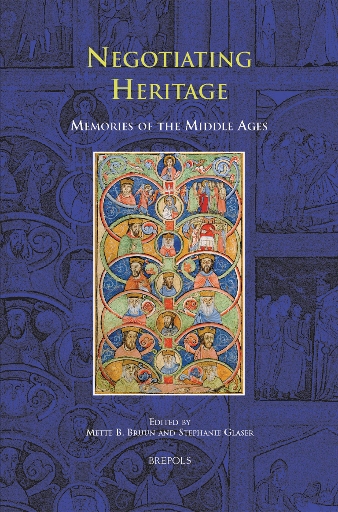
Negotiating Heritage
Memories of the Middle Ages
show More to view fulltext, buy and share links for:Negotiating Heritage show Less to hide fulltext, buy and share links for: Negotiating HeritageA key impulse of cultural transmission is engaging with the past for the benefit of the present. In seventeen essays on subjects that range from Paschasius Radbertus to Orhan Pamuk, the Regularis Concordia to Kurt Weill, and from Augustine to Adorno, Negotiating Heritage examines specific historical case-studies that reveal the appropriation, modification, or repudiation of a legacy. The overall focus of this interdisciplinary volume is memory: medieval conceptions of memory, resonances of the Middle Ages in later periods, and memory as a heuristic methodological device. Through tokens or other vestiges of the past - the physical memorial of a tomb, the ritualized retention of past acts or structures, the reverberations of a doctrinal, literary, musical, or iconographic topos, or the symbolic reminiscences of a past ideal - memory acts as the manifestation of something absent. This anthology studies such tokens in a way that provides a fruitful new perspective for the field of research into memory, and explores the methodological dimension of issues of heritage, genealogy, and tradition. Furthermore, Negotiating Heritage also probes the reception and construction of the Middle Ages in later periods; exploring the shifting territory of the meaning of the medieval itself. In its movement between medievalism and the medieval period, Negotiating Heritage is an important contribution to both established and emerging trends in critical thought.
-
-
-
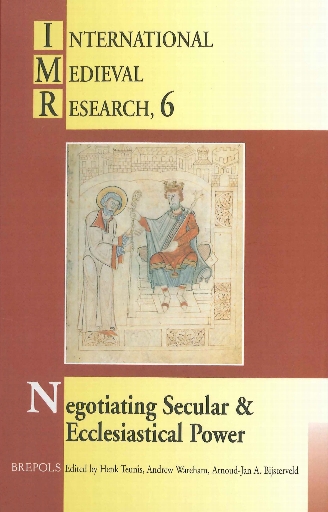
Negotiating Secular and Ecclesiastical Power
Western Europe in the Central Middle Ages
show More to view fulltext, buy and share links for:Negotiating Secular and Ecclesiastical Power show Less to hide fulltext, buy and share links for: Negotiating Secular and Ecclesiastical PowerTraditional historiography generally stresses the opposition and contradiction between secular and ecclesiastical power. By contrast, this volume focuses upon the interdependence of secular and ecclesiastical power and on the ways both secular rulers, kings, counts and other lords, and ecclesiastical authorities and institutions continuously interacted, trying to affirm the relationships between them. This selection of a historiographical introduction plus nine case-studies from England, northern France and the Low Countries enables a subtle comparison of secular and ecclesiastical links and social interactions in a series of regional and local contexts during the Central Middle Ages. The volume demonstrates that this process of negotiation led to an affirmation of shared values and contributed to the creation of common social values in medieval Europe.
Ludo Milis (Universiteit Gent), “This book, composed around three major themes (‘Texts as Tools of Power’, ‘Land and Kinship’, and ‘Conflict and Affirmation’), exemplifies how medievalists can reshape their discipline into a more responsive one. Its scope is not to offer a wide range of definitive explanations, but it shows how medievalists should try (and indeed do try) to return to a close reading of their documents. For far too long, institutional history, legal history, and histoire événémentielle have tried to monopolize power relationships and to encapsulate them in rather narrow explanatory schemes. This volume offers a broader and more encompassing approach.”
-
-
-
Neoplatonism in the Middle Ages
New Commentaries on 'Liber de Causis' and 'Elementatio Theologica'
show More to view fulltext, buy and share links for:Neoplatonism in the Middle Ages show Less to hide fulltext, buy and share links for: Neoplatonism in the Middle AgesOne of the most important texts in the history of medieval philosophy, the Book of Causes was composed in Baghdad in the 9th century mainly from the Arabic translations of Proclus’ Elements of Theology. In the 12th century, it was translated from Arabic into Latin, but its importance in the Latin tradition was not properly studied until now, because only 6 commentaries on it were known. Our exceptional discovery of over 70 unpublished Latin commentaries mainly on the Book of Causes, but also on the Elements of Theology, prove, for the first time, that the two texts where widely disseminated and commented on throughout many European universities (Paris, Oxford, Erfurt, Krakow, Prague), from the 13th to the 16th century. These two volumes provide 14 editions (partial or complete) of the newly-discovered commentaries, and yields, through historical and philosophical analyses, new and essential insights into the influence of Greek and Islamic Neoplatonism in the Latin philosophical traditions.
-
-
-
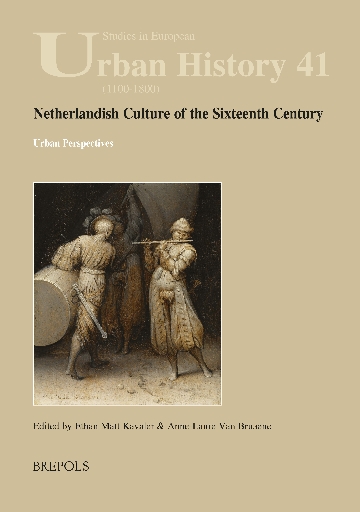
Netherlandish Culture of the Sixteenth Century
Urban Perspectives
show More to view fulltext, buy and share links for:Netherlandish Culture of the Sixteenth Century show Less to hide fulltext, buy and share links for: Netherlandish Culture of the Sixteenth CenturyThe authors of this volume examine various fields of cultural discourse in the Netherlands of the sixteenth century: the political, commercial, religious, artistic, and sensory domains, and less obviously metaphysical properties like time and space. What defined the Low Countries were not its borders and its territories but its cities, and their economies dominated political relations. A dense network of large cities and small towns developed hand in hand with a broad range of textile and luxury industries. In Antwerp, culture was commerce: its art and printing industries catered to much of the Western world and, at the same time, carved a confident self-image celebrating the liberal arts as a means of social and self-improvement. Antwerp is omnipresent in this book, with essays on its painting, printing, politics, and public festivals. But other cities such as Bruges, Leuven, and Leiden also figure prominently. It was precisely the interconnectedness of urban centers, large, middle and small, rather than their autonomous character, that defined civic culture in the Low Countries. Among the topics treated are differing notions of urban topography, the dialogue between city and court, issues of censorship, and the sensory and psychological response to texts and images.
-
-
-
Networking Europe and New Communities of Interpretation (1400–1600)
show More to view fulltext, buy and share links for:Networking Europe and New Communities of Interpretation (1400–1600) show Less to hide fulltext, buy and share links for: Networking Europe and New Communities of Interpretation (1400–1600)Long-distance ties connecting Europeans from all geographical corners of the continent during the fifteenth and sixteenth century facilitated the sharing of religious texts, books, iconography, ideas, and practices. The contributions to this book aim to reconstruct these European networks of knowledge exchange by exploring how religious ideas and strategies of transformation ‘travelled’ and were shared in European and transatlantic cultural spaces. In order to come to a better understanding of Europe-wide processes of religious culture and religious change, the chapters focus on the agency of the laity in ‘new communities of interpretation’, instead of intellectual elites, the aristocracy, and religious institutions. These new communities of interpretation were often formed by an urban laity active in politics, finance, and commerce. The agency of religious literatures in the European vernaculars in processes of religious purification, reform, and innovation during the long fifteenth century is still largely underestimated. ‘Networking Europe’ aims to step away from studying ‘national’ textual production and consumption by approaching these topics instead from a European and interconnected perspective. The contributions to this book explore late medieval and early modern networks connecting people and transporting texts following three main axes of investigation: ‘European Connections’, ‘Exiles, Diasporas, and Migrants’, and ‘Mobility and Dissemination’.
-
-
-
Networks in the Medieval North
Studies in Honour of Jón Viðar Sigurðsson
show More to view fulltext, buy and share links for:Networks in the Medieval North show Less to hide fulltext, buy and share links for: Networks in the Medieval NorthBy the late thirteenth century, Norgesveldet - the Norwegian realm - stretched far beyond its core in western Scandinavia. At its height in 1264, Norgesveldet connected Norse speakers in tributary territories ranging from the Irish Sea to Orkney and across the Atlantic to the Faroes, Iceland, and Greenland. But what held this disparate realm together? What were the dynamics of power between the men and women of the governing and elite classes of Norgesveldet? And what roles did different bodies play at different levels of society in creating and maintaining these networks - from kings and bishops to scribes and scholars, traders, and law-makers?
This volume aims to expand on and further recent important research into connections between Norway and the wider Norse North Atlantic from the eleventh century, during which the Norwegian kingdom began to emerge, through to the fourteenth-century decline of Norgesveldet with the creation of the Kalmar Union. Each chapter addresses a different facet of the Norgesveldet networks, building a complex picture of both their function and their evolving nature. Taking as its inspiration the research and career of its honorand, Jón Viðar Sigurðsson, the volume explores medieval Norway and its wider connections using three key frameworks - sociopolitical networks, legal and material networks, and literary networks - with the aim of shedding new light on the people and processes of this North Atlantic polity.
-
-
-
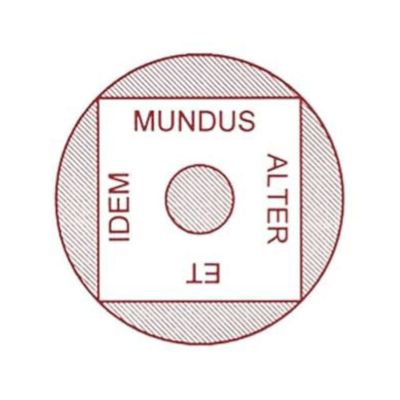
Neulateinisches Jahrbuch
Journal of Neo-Latin Language and Literature
show More to view fulltext, buy and share links for:Neulateinisches Jahrbuch show Less to hide fulltext, buy and share links for: Neulateinisches JahrbuchThe Neulateinisches Jahrbuch (NEULAT) publishes scholarly articles and shorter gleanings on Neo-Latin authors and topics, as well as editions of Neo-Latin texts. Other standard sections of NEULAT are book reviews, reports and presentations of scholarly projects, as well as announcements of other initiatives in the field of Neo-Latin studies.
More information about this journal on Brepols.net
-
-
-
New Approaches to Early Law in Scandinavia
show More to view fulltext, buy and share links for:New Approaches to Early Law in Scandinavia show Less to hide fulltext, buy and share links for: New Approaches to Early Law in ScandinaviaDuring recent years, there has been a revival of interest in the early laws of Scandinavia. In this volume several aspects of this field are presented and discussed. The collection begins by exploring the introduction and development of the næfnd in medieval Denmark, a kind of ‘jury’ which replaced the ordeal. The focus then moves to Sweden and Norway, with an analysis of the Hälsingelagen, and a comparison of the kristindómsbálkr (‘Ecclesiastical Law Section’) of the town law of Trondheim (Niðaróss Bjarkeyjarréttr) with the provincial law of medieval Trøndelag, Frostuþingslög. A further article explores how violence and homicide involving laymen and clerics was handled in late medieval Norway, drawing on the recent discovery of register protocols of the Penitentiary at the Papal Curia. The documentary aspects of law are examined through an analysis of the Äldre and Yngre Västgötalagen from existing manuscripts, in an attempt to discover the source of the initiative to write the laws down. A further study explores several words for ‘outlawry’ in Old Scandinavian languages.
This volume also provides a general theory of legal culture to show how the introduction of three new elements into Norwegian legal culture (norm-producing, large-scale lawmaking; conflict-resolving juries; equity as idea of justice) led to a major change in legal culture in medieval Norway. Finally, the book looks at the development of penal law in Denmark in the Middle Ages, attempting to explain that development in the light of both domestic conditions and foreign influence, especially from Sweden and Germany.
-
-
-

New Approaches to Medieval Communication
show More to view fulltext, buy and share links for:New Approaches to Medieval Communication show Less to hide fulltext, buy and share links for: New Approaches to Medieval CommunicationThis volume will serve as a textbook for studying this field, and as an introduction to current research. It is written in accessible language for non-specialists. The volume has three sections: introductions by two of the leading exponents worldwide: Michael Clanchy and Marco Mostert; a series of essays by members of the Utrecht ‘Pionierproject’ which consider writing and written culture against the background of all forms of communication available to a given medieval society, both in western and east-central Europe; and a comprehensive bibliography on the subject, comprising 1500 titles which will serve as a fundamental starting-point for work in this field.
-
-
-
New Approaches to the Materiality of Text in the Ancient Mediterranean
From Monuments and Buildings to Small Portable Objects
show More to view fulltext, buy and share links for:New Approaches to the Materiality of Text in the Ancient Mediterranean show Less to hide fulltext, buy and share links for: New Approaches to the Materiality of Text in the Ancient MediterraneanIn recent years, the study of epigraphy and ancient writings has undergone a ‘material turn’, as scholars have increasingly looked beyond just the contents of written sources to also focus on their broader material and visual contexts as a way of exploring the layers of different meanings that can attach to written evidence. Taking this interdisciplinary approach as its starting point, this volume draws together contributions from specialists in different fields in order to analyze text-bearing objects and monuments from across the ancient Mediterranean world.
From texts inscribed on large stone monuments and buildings, clay, or metal tablets, to writings on papyrus and parchment rolls, jewellery, vases, coins, and textiles, writing on different materials had manifold possibilities. The case studies gathered here examine novel approaches to the creation and display of inscribed objects, as well as to the ways in which such items were approached and perceived by people during a chronological period ranging from the Late Bronze Age to Late Antiquity. In doing so, the volume sheds new light not only on the interplay between ancient texts, text-bearers, and viewers within their wider spatial and physical contexts, but also on the possibilities opened by exploring the material aspects of writing through interdisciplinary approaches.
-
-
-
New Avenues in Biblical Exegesis in Light of the Septuagint
show More to view fulltext, buy and share links for:New Avenues in Biblical Exegesis in Light of the Septuagint show Less to hide fulltext, buy and share links for: New Avenues in Biblical Exegesis in Light of the SeptuagintThe detailed study of the Septuagint opens new avenues of interpretation of the biblical text and enables new advancements in exegetical studies. The Greek version can be studied through several different approaches and the application of exegetical methods, old and new, contributes to a better understanding of numerous literary, historical and theological aspects of the Bible. The present volume collects the contributions written by renowned scholars who address the issue of the role and impact of Septuagint studies on biblical exegesis and theology. The papers range from more methodological discussions to exegetical studies applying various approaches to the Septuagint text. The wide variety of methods applied reveals numerous aspects of the Septuagint and the biblical text in general, such as their composition, history, textual transmission, literary scope and shape, theology. The diversity of methods and analyses of the Septuagint represented in this book have, nevertheless, a common denominator: Biblical exegesis would benefit greatly from a deeper knowledge of the Septuagint.
-
-
-
New Directions in Early Medieval European Archaeology: Spain and Italy Compared
Essays for Riccardo Francovich
show More to view fulltext, buy and share links for:New Directions in Early Medieval European Archaeology: Spain and Italy Compared show Less to hide fulltext, buy and share links for: New Directions in Early Medieval European Archaeology: Spain and Italy ComparedThis book of essays is dedicated to the memory of Riccardo Francovich, one of Europe’s most eminent Medieval archaeologists, who died in 2007. It began as a one-day conference held at the British School at Rome the day after Riccardo Francovich would have been 65 years old, on the 11 June 2011.
The book takes as its core theme a comparison of Italian and Spanish Medieval Archaeology, in each case challenging the status quo and attempting to move the boundaries of our historical discussions ever forwards. The volume attempts to evaluate if the Medieval Archaeology of these two important Mediterranean countries, largely unfamiliar on the international stage, with their different ‘histories’, can be compared. To do this, a key moment in their formation is reviewed - the passage from the Ancient to the Medieval world. This approach highlights not only the identifi cation of singular conjunctures (the impact of the new ‘barbaric’ aristocracies on the social structures of the Roman world, and how Islam was established, for example, in the peninsula as in Sicily), but also parallel evolutions at the macro-structural level (for example, conditions in towns and the countryside). Taking the paradigm of fragmentation as a basic starting-point that characterizes the western world after the fall of the Roman Empire, it offers comparative archaeologies in terms of themes, but above all else in terms of shared methods.
-
-
-
New Essays on Metaphysics as “Scientia Transcendens”
Proceedings of the Second International Conference of Medieval Philosophy, held at the Pontifical Catholic University of Rio Grande do Sul (PUCRS), Porto Alegre/Brazil, 15-18 August 2006
show More to view fulltext, buy and share links for:New Essays on Metaphysics as “Scientia Transcendens” show Less to hide fulltext, buy and share links for: New Essays on Metaphysics as “Scientia Transcendens”This volume is not an historical study of the origins and development of medieval approaches to theories of transcendentals. Its point of departure is rather the role that transcendentals played in natural theology and metaphysical theories of the 13th. and 14th. centuries. Accordingly, the effort of John Duns Scotus (1265/6-1308) to systematize a theory of transcendental concepts provides the central inspiration for this book. The theories in focus are not only linked to metaphysical issues, but come to constitute the understanding of metaphysics as «First Philosophy». In the wake of the 13th-century reception of Aristotle, Scotus inaugurates a new beginning for the «science of reality as a whole», adumbrating theoretical elements that have exercised a remarkable influence on the history of philosophy and continue to do so today.
If Scotus offers a new understanding and a new systematic account of transcendentals in the form of an original conception of First Philosophy as the science of transcendentals - a conception which many believe introduces a «second beginning of metaphysics» within Western philosophy - the essays in this volume evaluate the innovations that his work inspired, and in this sense each of them is itself innovative. They offer a candid evaluation of the extrinsic and intrinsic merits of the Scotist interpretation - that is, they examine just how original the intepretation is within the history of ideas, and assess its internal consistency. In doing so, they take account of earlier philosophical attempts to understand both the interrelationship of transcendentals and the science of metaphysics. They also offer topical and expanded analyses of various elements of Scotus’s theory, as well as of its influence and developments within Scotist circles and the Franciscan tradition, as well as within Spanish scholasticism and the philosophical theology of our times.
-
-
-
New Light on Formulas in Oral Poetry and Prose
show More to view fulltext, buy and share links for:New Light on Formulas in Oral Poetry and Prose show Less to hide fulltext, buy and share links for: New Light on Formulas in Oral Poetry and ProseDuring the twentieth century scholars discovered that oral poetry in entirely unrelated cultures in the world share a basic characteristic: the use of verbal formulas, more or less fixed word strings, which were inherited from tradition. The discovery of formulas revolutionized the understanding of oral tradition, and how oral poetry was transmitted. Homer, Eddic poems, Karelian laments, Serbian heroic poetry, etc., were suddenly seen in a new light. But the original Oral-Formulaic Theory has also been questioned and revised. New approaches in the study of formulas have been developed among linguists and folklorists.
The present volume discusses new approaches, models, and interpretations of formulas in traditional poetry and prose. The twenty authors in the volume analyze formulas in a broad context by letting oral traditions from all over the world shed light on each other. The volume aims to deepen our understanding of the function and meaning of these formulas. A unique feature is that the volume focuses as much on formulas in oral prose as in poetry – usually formula studies have focused entirely or mainly on poetry.
-
-
-
New Medieval Literatures
show More to view fulltext, buy and share links for:New Medieval Literatures show Less to hide fulltext, buy and share links for: New Medieval LiteraturesNew Medieval Literatures is an annual work on medieval textual cultures. Its scope is inclusive of work across the theoretical, archival, philological, and historicist methodologies associated with medieval literary studies. The title announces an interest both in new writing about medieval culture and in new academic writing. As well as featuring challenging new articles, each issue includes an analytical survey by a leading international medievalist of recent work in an emerging or dominant critical discourse.
More information about this journal on Brepols.net
-
-
-
New Perspectives on the ‘Civil Wars’ in Medieval Scandinavia
show More to view fulltext, buy and share links for:New Perspectives on the ‘Civil Wars’ in Medieval Scandinavia show Less to hide fulltext, buy and share links for: New Perspectives on the ‘Civil Wars’ in Medieval ScandinaviaIn the twelfth and thirteenth centuries, Scandinavia was rocked by an ongoing period of ‘civil war’, conflicts traditionally characterized by medieval historians as internal struggles that took place in the context of predominantly national, state-centred, political and constitutional frameworks. This volume, however, aims to overturn these established narratives, with carefully curated essays written by experts in the field offering a new pan-Scandinavian perspective on the period in question that emphasizes the importance of fluid, often overlapping social networks, permeable borders between realms, and constant underlying hostilities between rival groups. Through detailed examinations of pivotal moments in Danish, Norwegian, and Swedish history, together with analyses of topographical patterns, gender issues, diplomacy, and three contributions that draw parallels within similar conflicts outside of Scandinavia, this book provides an important corrective to teleological narratives of the medieval ‘civil wars’ as a necessary stage on the route to state formation and modernity.
-
-
-

New Trends in Feminine Spirituality
The Holy Women of Liège and their Impact
show More to view fulltext, buy and share links for:New Trends in Feminine Spirituality show Less to hide fulltext, buy and share links for: New Trends in Feminine SpiritualityWas there a women’s movement in the thirteenth century and is such a question meaningful in its medieval context? Far from being resolved, the issue of whether women had a thirteenth-century renaissance has still decisively to unsettle the periodization of Western European history in twelfth and sixteenth-century humanist renaissances. Herbert Grundmann long ago demonstrated the participation of women in the eremitically-inspired reforming movements of the twelfth and thirteenth centuries, and in the production of vernacular literature. Yet it is upon his work that this volume builds, for the diocese of Liège is the key area in this development. It was from Liège that Jacques de Vitry approached the papacy to secure permission for the women of the bishopric of Liège, France and Germany to live together and to promote holiness in each other by mutual example. The seventeen contributors to this volume examine not only the beguine religious life in the southern Low Countries, but also the impact of this movement on later medieval Sweden, England and France, the new modes of influence exerted by women in their religious lives, and the revivals of feminine spirituality in the late medieval West through to contemporary North America. Research does not yet allow for a whole new synthesis, but this volume directs scholars to detailed work on specific localities and persons, with an awareness of the problems and possibilities of wider European comparisons.
-
-
-
Nichil Melius, Nichil Perfectius Caritate
Richard of St Victor’s Argument for the Necessity of the Trinity
show More to view fulltext, buy and share links for:Nichil Melius, Nichil Perfectius Caritate show Less to hide fulltext, buy and share links for: Nichil Melius, Nichil Perfectius CaritateIn his magnum opus De Trinitate, the twelfth-century canon Richard of St. Victor offers sustained reflection on core dogmatic claims from the Athanasian creed. At the heart of the treatise is Richard’s argument for exactly three divine persons. Starting with the necessity of a single, maximally perfect divine substance, Richard reasons along four steps: (i) God must have maximal charity, or other-love; (ii) to be perfectly good, delightful, and glorious, God’s other-love must be shared among at least two, and (iii) among at least three, divine persons; (iv) the metaphysics of divine processions and love each ensure the impossibility of four divine persons. For Richard, Scripture and trustworthy church authorities already provide certainty in these truths of faith. Even so, as an act of ardent love, Richard contemplates the Trinity as reflected in creation. From this epistemic point of departure, he supports his conclusions from common human experience alone.
Recently, philosophers of religion have employed Richard’s trinitarian reflection as a springboard for constructive work in apologetics and ramified natural theology. His unique and meticulous approach to the Trinity has garnered attention from scholars of medieval and Victorine studies, recognizing the novelty and rigour of his philosophical theology.
This volume presents the first focused exploration of Richard’s central thesis in De Trinitate, combining historical context with philosophical scrutiny. It confronts the most challenging aspects of his argument, presenting Richard’s insights as not merely intriguing but also profoundly compelling. His thesis, if validated, promises to significantly enrich modern dialogues on the philosophical and theological dimensions of the Trinity.
-
-
-
Nicholas Trevet’s Commentary on the Psalms (1317 – c. 1321): A Publishing History
show More to view fulltext, buy and share links for:Nicholas Trevet’s Commentary on the Psalms (1317 – c. 1321): A Publishing History show Less to hide fulltext, buy and share links for: Nicholas Trevet’s Commentary on the Psalms (1317 – c. 1321): A Publishing HistoryHow did medieval authors publish their works in the age before print? This study seeks to achieve new insights into the publishing strategies of medieval authors by focusing on Nicholas Trevet, an English Dominican friar and Oxford master. Shortly after 1317, Trevet was commissioned by his provincial prior to write a literal commentary on the Psalter. He chose as his reference version the less commonly used Latin translation by Jerome from the Hebrew, and delivered his work before 1321/22.
The first book-length examination of Trevet’s commentary, this detailed study traces the ways in which the work was circulated by the author and his proxies. Through a combined analysis of codicological, textual, and historical features of the nine extant fourteenth-century manuscripts, this study identifies contemporary efforts to make Trevet’s work available to readers within and without the Dominican Order, in England and on the Continent. Even during the author’s lifetime the commentary was copied in Paris and reached readers in Avignon and likely in Naples.
-
-
-
Nicholas of Dinkelsbühl and the Sentences at Vienna in the Early Fifteenth Century
show More to view fulltext, buy and share links for:Nicholas of Dinkelsbühl and the Sentences at Vienna in the Early Fifteenth Century show Less to hide fulltext, buy and share links for: Nicholas of Dinkelsbühl and the Sentences at Vienna in the Early Fifteenth CenturyThis volume examines the faculty of theology of the University of Vienna after the new institution produced its first students. Taking Nicholas of Dinkelsbühl as our guide to this nascent academic milieu, the five contributors illuminate the university system at Vienna, describe the evolution of doctrine, identify the network of professors that developed the specific curriculum, and trace the reception of the academic writings outside the university. Traditionally the history of medieval universities is based primarily on statutes, cartularies, or other documents relating to the organization of the university as an institution. The present studies instead inspect the underside of the iceberg and penetrate the academic context of Vienna by reading and editing the texts issuing from the practice of teaching. The papers gathered here shed new light on the main pedagogical protagonists, measure the impact of the transmission of ideas between the Universities of Paris and Vienna, and provide access to the community of scholars to whom this material was addressed.
-
-
-
Nicodemus Tessin the Elder. Architecture in Sweden in the Age of Greatness
show More to view fulltext, buy and share links for:Nicodemus Tessin the Elder. Architecture in Sweden in the Age of Greatness show Less to hide fulltext, buy and share links for: Nicodemus Tessin the Elder. Architecture in Sweden in the Age of GreatnessNicodemus Tessin the Elder was an architect, gentleman, and founder of the artistic dynasty that was immensely influential at the Swedish court in the seventeenth and eighteenth centuries. He was architect to the crown, to the nobility, and to the city of Stockholm, and he supplied buildings for a wide range of functions, from palaces to banks, courthouses, and fortifications. His unusually extensive travels in the Netherlands, Italy, France and Germany provided him with a comprehensive picture of contemporary European architecture, which he drew on as he synthesized a new group of buildings that would attract international attention as models for princely architecture. His productivity required a new approach to architecture, and he was part of the first generation of architects in northern Europe to develop the architectural studio, distinguishing the design process from the business of building, and in the process recreating himself as the modern architect.
Kristoffer Neville is assistant professor of early modern art and architecture in the department of art history at the University of California, Riverside.
-
-
-
Nicolaus Viti Gozzius, Breve compendium in duo prima capita tertii De anima Aristotelis
A Critical Edition with Introduction and Indices
show More to view fulltext, buy and share links for:Nicolaus Viti Gozzius, Breve compendium in duo prima capita tertii De anima Aristotelis show Less to hide fulltext, buy and share links for: Nicolaus Viti Gozzius, Breve compendium in duo prima capita tertii De anima AristotelisThis is the first edition of Nikola Vitov Gučetić’s (1549–1610) compendium of philosophical and theological problems arising from Aristotle’s De anima Book 3, Chapter 4, where he begins his discussion of the thinking part of the soul, that is, the intellect (nous). With the interpretation of Averroes (1126–1198), this text has structured much of the debate on the immortality of the soul in the Middle Ages and the Renaissance. Gučetić’s Breve compendium is a testament to these debates, interesting for its selection of issues for discussion in connection with Aristotle’s text, and for its open defence of the Averroist position in the late decades of the sixteenth century. Although Gučetić had a preliminary arrangement with Aldo Manuzio the Younger to print this text around 1590, at some point he abandoned the plan to publish it.
The main purpose of this book is to provide a critical edition of the Latin text for scholars in the humanities, especially historians of late Medieval and Renaissance philosophy. The edition is accompanied by an introductory study that places the author and his work in the historical and intellectual context, describes the manuscript, and gives a detailed synopsis of the work. This will make the book useful also to students of the humanities and those interested in the history and culture of Dubrovnik.
-
-
-

Nicole Oresme philosophe
Philosophie de la nature et philosophie de la connaissance à Paris au XIVe siècle
show More to view fulltext, buy and share links for:Nicole Oresme philosophe show Less to hide fulltext, buy and share links for: Nicole Oresme philosopheNicole Oresme est sans doute un des philosophes médiévaux les mieux connus. L’intérêt qu’il a suscité depuis longtemps dépasse le cercle étroit des spécialistes du fait de l’exceptionnelle variété de son œuvre, aujourd’hui presque complètement éditée. Cet intérêt a largement contribué à modifier l’image du Moyen Âge conçu traditionnellement comme une période obscure, mais a aussi, malheureusement, conduit à la production d’un nombre considérable de contre-sens, voire de fables.
C’est à l’occasion de la parution de son dernier texte important encore inédit, ses Questions sur la Physique, qu’à l’initiative de Christophe Grellard, nous avons organisé à la Sorbonne les 16 et 17 novembre 2012 deux journées d’études sur son activité philosophique, qui ont pu bénéficier des dernières avancées de la critique.
Ce livre est issu des communications produites à cette occasion, mais, à la lumière des discussions qui ont suivi elles ont été modifiées, puis révisées pour assurer la cohérence de l’ensemble. L’objectif était de réaliser un ouvrage qui ferait le point sur nos connaissances de l’œuvre d’Oresme en philosophie de la nature et en philosophie de la connaissance, et sur les débats dans lesquels elle s’inscrivait.
-
-
-
Nihil veritas erubescit
Mélanges offerts à Paul Mattei par ses élèves, collègues et amis
show More to view fulltext, buy and share links for:Nihil veritas erubescit show Less to hide fulltext, buy and share links for: Nihil veritas erubescitEn hommage à Paul Mattei, Professeur de langue et littérature latines à l’Université Lyon-II – Lumière, ce volume rassemble quarante-huit contributions consacrées à la patristique, au christianisme antique, ainsi qu’à la littérature tardoantique et médiévale.
Divisé en huit sections, le volume propose dans les quatre premières des études sur les Pères africains, sur Augustin en particulier ainsi que sur d’autres Pères latins et sur des questions exégétiques. Sont ainsi évoquées les figures de Tertullien, Cyprien de Carthage, Augustin d’Hippone, mais également Ambroise de Milan, ainsi que des aspects aussi bien lexicaux, littéraires que doctrinaux de la lecture de la Bible par les Pères, latins et grecs.
Les quatre sections suivantes proposent des contributions sur la poésie tardoantique, païenne ou chrétienne, sur la littérature latine et grecque du Moyen-Âge, sur l’histoire, en particulier ecclésiastique, et sur des questionnements linguistiques.
Les contributions inédites rassemblées dans ce volume témoignent de la richesse des liens scientifiques tissés par Paul Mattei.
-
-
-

Noble Magnificence
Culture of the Performing Arts in Rome 1644-1740
show More to view fulltext, buy and share links for:Noble Magnificence show Less to hide fulltext, buy and share links for: Noble MagnificenceThe thirty chapters in this book are based on the work of an international, multidisciplinary team of researchers and archivists brought together for the PerformArt project, funded by the European Research Council from 2016 to 2022. This project investigated the artistic patronage of the great Roman aristocratic families of the seventeenth and eighteenth centuries through research in the extant archives.After the accession to the papal throne of Innocent X in 1644, and more so after the Peace of the Pyrenees in 1659 – which led to a greater loss of power for the pope in his relations with other European states – the Roman families stepped up their efforts to assert their social preeminence not only through architecture and the fine arts, but also through the ephemeral performing arts: music, theatre, and dance, which were omnipresent throughout the year and especially during the intense period of artistic production that was the Roman Carnival. The search for traces of these spectacles in the archives of these families reveals that their desire to display their magnificence – an ideal well documented in the literature of the period – gave rise to lavish expenditure on a scale that could only be justified by the benefits (if not tangible, then at least symbolic) they hoped to gain.The essays in this book, which draw on social economic history, the history of ideas, and the evolving artistic practices of the time, make a major contribution to our knowledge of courtly societies in Ancien Régime Europe by integrating the performing arts into their analyses in innovative ways.
-
-
-
Noblesses transrégionales
Les Croÿ et les frontières pendant les guerres de religion (France, Lorraine et Pays-Bas, xvi e et xvii e siècle)
show More to view fulltext, buy and share links for:Noblesses transrégionales show Less to hide fulltext, buy and share links for: Noblesses transrégionalesLe caractère pan-européen des guerres de religion suscite des questions sur l’incidence des frontières et le rôle des acteurs qui les franchissent ou les transgressent. Cet ouvrage retrace les parcours transrégionaux et confessionnels des Croÿ, une puissante maison nobiliaire établie de part et d’autre des frontières séparant la France et les Pays-Bas habsbourgeois, à travers la reconstitution des engagements politiques et religieux de ses membres (Porcien, Aarschot, Chimay, Havré, et leurs épouses ou mères Amboise, Lorraine, Clèves, Brimeu, Dommartin).
Ce volume montre comment ces noblesses transrégionales bâtissent leur influence à l’ombre des rivalités internationales entre rois de France et d’Espagne, empereurs et ducs de Lorraine, et du choix de la religion au temps des Réformes; comment elles assemblent stratégiquement leurs domaines, patronnent une clientèle locale et se font reconnaître comme souverains de micro-principautés; et comment elles mobilisent ce capital politique en rivalisant avec d’autres lignages catholiques (Guise, Clèves) ou protestants (Condé, Bouillon), en désobéissant à leur prince ou en négociant leur réconciliation avec lui.
Ont contribué à ce volume Anne Mieke Backer, Aurélien Behr, Olivia Carpi, Nette Claeys, Gustaaf Janssens, Alain Joblin, Odile Jurbert, Tomaso Pascucci, Sanne Maekelberg, Pieter Martens, Jonathan Spangler et Sylvia van Zanen.
-
-
-
Nomads, Traders and Holy Men Along China's Silk Road
show More to view fulltext, buy and share links for:Nomads, Traders and Holy Men Along China's Silk Road show Less to hide fulltext, buy and share links for: Nomads, Traders and Holy Men Along China's Silk RoadThis collection of papers formed part of the symposium, “Nomads, Traders and Holy Men Along China’s Silk Road”, held at the Asia Society in New York on November 9-10, 2001. Although the Silk Road has inspired several important museum exhibitions, none had focused on the Hexi Corridor nor attempted to analyze the complexity of the cross-cultural relationships within China’s borders. Nor had any exhibition focused on the nearly four hundred years of political disunity, nomadic incursions and social upheaval, brought about by the collapse of the great Han dynasty (206 B.C.E.-220 C.E.), that then, after a series of short-lived dynasties, culminated in the reunification of China under the Tang empire (618-906).
-
-
-
Nommer les dieux
Théonymes, épithètes, épiclèses dans l'Antiquité
show More to view fulltext, buy and share links for:Nommer les dieux show Less to hide fulltext, buy and share links for: Nommer les dieuxAdvances in the modern interpretation of myth and in the history of ancient religion in general have radically modified our ways of studying the names and the naming of the gods. Two avenues of research notably are current today : the relationship between the narration of the myth and the name (all « speaking » names tell a story) and the necessity for the faithful to identify, to distinguish and to name the divine, in polytheisms naturally, but also in monotheisms. Can the name of a god be only a label? Calling (for help), singing (in praise), invoking (with others), calling to witness (as a guarantee), all involve this important act of identification, a recognition, in the heart of a process which seems more complex than it appeared to be at first glance.
The fact that this identification is made in common (and in community) draws attention to another methodological requirement. Beyond the signified « divine entity » lie the language act and its context, which are part of the naming : this means that its linguistic and social aspects must be taken into consideration.
By its treatment of the Greek and Roman religions, but also, in the interest of a comparatist point of view, the Egyptian religion (under the pharaohs and the Ptolemies), Oscan-speakers, Judaism and Christianism, by its treatment of texts, literary and other, in prose and in poetry, papyri, inscriptions, vascular graffiti, the present book opens new perspectives through the meeting of rhetoric and religion.
The result of two colloquia organised by the Universities of Rennes, of Strasbourg, and of Naples, Naming the Gods is a book which has been carefully constructed and thought out through time ; it promises to be a landmark.
-
-
-
Noms barbares I
Formes et contextes d'une pratique magique
show More to view fulltext, buy and share links for:Noms barbares I show Less to hide fulltext, buy and share links for: Noms barbares IQui veut comprendre la magie antique, les sociétés et cultures qui s’y rattachent, qui veut aller au-delà des apparences et des clichés, rencontre nécessairement les noms « barbares », dits aussi noms mystiques ou inintelligibles. Leur finalité première est d’opérer des prodiges par l’efficacité attribuée aux énoncés de noms divins. Peu de gens ont vu les prodiges, mais tout le monde connaît au moins quelqu’un qui les a vus : qu’il s’agisse d’apparitions de divinités, d’animaux qui parlent ou encore d’humains entrant dans la vie de l’univers. Aucune de ces opérations ne s’effectue sans noms barbares.
Pour la première fois, un ouvrage tente de comprendre le rôle et les mécanismes des noms barbares comme magie de nommer. Ils sont l’objet magique par excellence, fait de jeux de signes et de phonèmes, de transferts d’un panthéon à l’autre et de fusions des dynasties divines. Invoquer ses propres dieux dans un langage étrange, par des raccourcis phonétiques ou bien en utilisant les noms et épithètes des dieux des autres est le trait distinctif de la magie et de ses professionnels, de l’Orient gréco-sémitique à l’Occident latin.
Cet ouvrage, issu des séminaires de Michel Tardieu au Collège de France, est lié au projet de « Corpus des énoncés de noms barbares » (CENOB), dirigé par Jean-Daniel Dubois (EPHE). Il rassemble les contributions de spécialistes des sociétés et cultures utilisant dans leurs pratiques magiques respectives les noms barbares : Mésopotamie, Égypte, monde sémitique, littérature grecque orphique et classique, gnose, hermétisme, papyrus et intailles, tablettes de défixion.
Michel Tardieu est professeur honoraire au Collège de France, où il a occupé la chaire « Histoire des syncrétismes » de 1991 à 2008. Principaux ouvrages : Trois mythes gnostiques (1974), Le Manichéisme (19811, 19972, éd. américaine 2008), Le Codex de Berlin (1984), Les Paysages reliques (1990), Recherches sur l’Apocalypse de Zostrien et les sources de Marius Victorinus (1996).
Anna Van den Kerchove (École pratique des hautes études, Institut européen en sciences des religions, Laboratoire d’études sur les monothéismes) est chercheur en histoire des religions (gnose, hermétisme, manichéisme). Elle est secrétaire scientifique du projet ANR (Agence nationale de la recherche) pour le « Corpus des énoncés de noms barbares » (CENOB). Elle a notamment publié La Voie d’Hermès (Leyde, 2012).
Michela Zago est chercheur en histoire des religions à l’Université de Padoue. Elle a été attachée temporaire d’enseignement et de recherche au Collège de France (chaire « Histoire des syncrétismes ») pendant les années 2005-2006. Parmi ses publications : La Ricetta di immortalità (Milan, 2010), Tebe magica e alchemica. L’idea di biblioteca nell’Egitto romano: la Collezione Anastasi (Padoue, 2010).
Ont contribué à cet ouvrage collectif : Nicolas Corre, Jean-Daniel Dubois, Maria Gorea, Michaël Guichard, Yvan Koenig, Amina Kropp, Alice Mouton, Amaury Pétigny, Silvia Pieri, Flavia Ruani, Lucia Saudelli, Luciana Gabriela Soares Santoprete, Paolo Scarpi, Michel Tardieu, Anna Van den Kerchove, Jean Yoyotte (†2009), Michela Zago.
-
-
-
Non est excellentior status : Vaquer à la philosophie médiévale
Études offertes en hommage à Claude Lafleur
show More to view fulltext, buy and share links for:Non est excellentior status : Vaquer à la philosophie médiévale show Less to hide fulltext, buy and share links for: Non est excellentior status : Vaquer à la philosophie médiévaleCe volume regroupe les contributions de vingt-deux chercheur.es universitaires, collègues et ami.es de Claude Lafleur, qui ont voulu lui rendre hommage à l’occasion de son départ à la retraite en tant que professeur titulaire à la Faculté de philosophie de l’Université Laval. La diversité des aires géographiques et la pluralité des strates générationnelles auxquelles appartiennent les chercheur.es qui ont contribué à ce livre témoignent éloquemment de l’envergure de la « sphère d’influence » des productions intellectuelles de Claude Lafleur.
Les textes réunis relèvent des principaux champs de recherche que leur ami et mentor a patiemment labourés au cours de sa carrière académique : histoire des corpus et des manuscrits; transmission des textes philosophiques et de leurs notions fondamentales, de l’Antiquité au Moyen Âge; éditions critiques de textes issus des Facultés des arts et de théologie de l’Université de Paris aux xiiie-xive siècles; enseignement de la philosophie au xiiie siècle à la lumière des textes didascaliques; histoire des pratiques discursives dans les Facultés des arts médiévales; étude de concepts clés de la pensée de Thomas d’Aquin; discussion médiévale sur les universaux; philosophie de l’histoire des médiévistes contemporains.
Ce recueil d’études souhaite ainsi se faire le reflet de certains des intérêts heuristiques, des orientations méthodologiques et des thématiques historico-philosophiques que Claude Lafleur a poursuivis, explorées et étudiées dans ses propres écrits, ayant toujours été convaincu « qu’il n’y a pas de statut plus excellent que de vaquer à la philosophie ».
-
-
-

Normandy and its Neighbours, 900—1250
Essays for David Bates
show More to view fulltext, buy and share links for:Normandy and its Neighbours, 900—1250 show Less to hide fulltext, buy and share links for: Normandy and its Neighbours, 900—1250One of the most important aspects of David Bates’s distinguished career has been his readiness to engage — as few of his predecessors did — with the world of modern French scholarship. The outcome of this engagement and of his familiarity with French archives has been the reshaping of our understanding of the Anglo-Norman realm founded by William the Conqueror. The Norman Conquest has always been seen as a defining event in medieval English history, and David’s work has enabled us to place it in its broader European context. He has also welcomed insights from other disciplines, including archaeology, architectural history, and numismatics. His impact as a scholar has been profound. His writings have made academic debate accessible to the general public and the scholar alike, and he has conveyed his enthusiasm and commitment to both. He has brought together a generation of academics of various nationalities and from a broad range of disciplines to forge a new understanding of the relationship of England and Normandy in the central Middle Ages. This collection — offered in recognition of his contribution — acknowledges the many strands of his scholarship. It brings together specialist studies of Anglo-French culture, law, gender, and historiography.
-
-
-

Normes et hagiographie dans l'Occident latin (VIe-XVIe siècle)
Actes du colloque international de Lyon, 4-6 octobre 2010
show More to view fulltext, buy and share links for:Normes et hagiographie dans l'Occident latin (VIe-XVIe siècle) show Less to hide fulltext, buy and share links for: Normes et hagiographie dans l'Occident latin (VIe-XVIe siècle)Le Colloque Normes et Hagiographie, tenu à l’Université Lyon-III en octobre 2010, porte bien son nom: il ne s’est pas donné pour objet d’étude l’hagiographie latine comme source d’exemples de comportement, mais bien les relations complexes que les sources hagiographiques entretiennent avec les normes qui régulent les sociétés médiévales occidentales. Puisque, de fait, les textes hagiographiques forment un corpus commun de références et de modèles pour les sociétés christianisées, le projet des organisateurs a été de « partir des normes médiévales » pour évaluer dans quelle mesure l’hagiographie avait contribué à les élaborer, à les faire évoluer voire à les contredire. C’est une question d’histoire des textes, bien loin d’une approche morale des attitudes morales et religieuses. Marie-Céline Isaïa, maître de conférences en histoire du Moyen Âge à l’Université Jean-Moulin Lyon-III, est membre du CIHAM (UMR 5648). Depuis la parution de Remi de Reims. Histoire d’un saint, mémoire d’une Église (Paris, 2010), elle poursuit ses travaux sur les relations entre hagiographie et écriture de l’histoire, du Ve au XIe siècle. Thomas Granier est maître de conférences en histoire du Moyen Âge à l'Université Montpellier-III, membre du CEMM (EA 4583) et membre de l’École Française de Rome. Il a publié plusieurs articles sur l’'histoire de l’Italie du sud du haut Moyen Âge.
-
-
-

Norse-Gaelic Contacts in a Viking World
show More to view fulltext, buy and share links for:Norse-Gaelic Contacts in a Viking World show Less to hide fulltext, buy and share links for: Norse-Gaelic Contacts in a Viking WorldThis multi-disciplinary volume draws on the combined expertise of specialists in the history and literature of medieval Ireland, Iceland, Norway, and Scotland to shed new light on the interplay of Norse and Gaelic literary traditions. Through four detailed case-studies, which examine the Norwegian Konungs skuggsjá, the Icelandic Njáls saga and Landnámabók, and the Gaelic text Baile Suthach Sith Emhna, the volume explores the linguistic, cultural, and political contacts that existed between Norse and Gaelic speakers in the High Middle Ages, and examines the impetus behind these texts, including oral tradition, transfer of written sources, and authorial adaption and invention. Crucially, these texts are not only examined as literary products of the thirteenth century, but also as repositories of older historical traditions, and the authors seek to explore these wider historical contexts, as well as analyse how and why historical and literary material was transmitted. The volume contains English translations of key extracts and also provides a detailed discussion of sources and methodologies to ensure that this milestone of scholarship is accessible to both students and subject-specialists.
‘This is a brilliant and genuinely ground-breaking book, representing a significant step forward in literary and historical analysis of the Norse-Gaelic interface’. (Professor Ralph O’Connor, University of Aberdeen).
-
-
-
Notions of Privacy in Early Modern Correspondence
show More to view fulltext, buy and share links for:Notions of Privacy in Early Modern Correspondence show Less to hide fulltext, buy and share links for: Notions of Privacy in Early Modern CorrespondenceOur modern notions of privacy have their roots in the early modern period. When studying this historical background, one of the most important sources is correspondence. Letters sent from one person to another reflect specific situations, ideas, thoughts, emotions, and experiences. Contextualizing an epistolary exchange provides information about the world and values of past individuals.
This volume presents essays that deal with a variety of early modern correspondence. The letters analysed, written in French, Dutch, German, and English, speak to very different contexts and cultural codes. While each of the letters in question has its own unique story to tell, all contributions come together by focusing on notions of privacy. From the intimacy that unfolds in educational exchanges to specific letter-writers and their strategic use of the private, this volume offers ground-breaking insights that will be relevant to many different researchers and their respective fields: the history of science, the history of Christianity, the history of travel writing and education, gender studies, and the history of diplomacy. In addition, the contributions also tackle the issue of publishing letters in the early modern period, both as a cultural phenomenon and as a material praxis.
Together, the essays show how ‘privacy’ was an ambiguous term in the early modern period; the letter as literary genre and a means of communication demonstrates how privacy was perceived both as valuable and as a potential threat.
-
-
-
Notre-Dame de Paris 1163-2013
Actes du colloque scientifique tenu au Collège des Bernardins, à Paris, du 12 au 15 décembre 2012
show More to view fulltext, buy and share links for:Notre-Dame de Paris 1163-2013 show Less to hide fulltext, buy and share links for: Notre-Dame de Paris 1163-2013En 1163, débute le chantier de l’actuelle cathédrale Notre-Dame de Paris. Construit en un siècle environ, le nouvel édifice devient vite un des monuments les plus fameux de France, symbolisant jusqu’à aujourd’hui l’évêque, l’Église et la ville de Paris. Huit siècles et demi après le début de la construction, un congrès scientifique a réuni du 12 au 15 décembre 2012 des spécialistes d’histoire religieuse, sociale, liturgique, artistique, intellectuelle et institutionnelle. Le livre issu de ce colloque présente un ensemble d'études faisant le point sur l’église cathédrale jusqu’à aujourd’hui et sa fonction médiatrice revendiquée entre Dieu et les hommes : du contrôle sur l’Université aux conférences de Carême, en passant par l’action méconnue du chapitre cathédral, les relations avec la Couronne, le renouvellement du chant sacré, la célébration des grands événements de la nation, l’impact sur l’esthétique néo-gothique.
L’objectif est de mieux comprendre les façons diverses dont Notre-Dame de Paris et les hommes qui prient, travaillent et vivent sous son ombre - évêques, chantres, maîtres, chanoines, chapelains, prédicateurs, hospitaliers, etc. - ont durablement marqué le territoire d’une Cité, la vie d’une capitale et la mémoire d’une nation.
Cédric Giraud, ancien élève de l’École nationale des chartes et agrégé d’histoire, est maître de conférences à l’université de Lorraine et membre junior de l’Institut universitaire de France. Ses recherches portent sur l’histoire culturelle du Moyen Âge central et la philologie médiolatine.
-
-
-
Notre-Dame de Paris. Un manifeste chrétien, 1160-1230
show More to view fulltext, buy and share links for:Notre-Dame de Paris. Un manifeste chrétien, 1160-1230 show Less to hide fulltext, buy and share links for: Notre-Dame de Paris. Un manifeste chrétien, 1160-1230Les précédents colloques des Rencontres médiévales européennes ont renouvelé notre connaissance des origines de l’architecture gothique en mettant en évidence les liens qui existent entre le propos de Suger, tel qu’il a pris corps à Saint-Denis, et les nouveaux courants spirituels du xii e siècle. Les études réunies dans le présent volume prolongent cette enquête. Elles rappellent en particulier le rôle important joué par l’évêque de Paris, Maurice de Sully. Proche des Victorins, attentif aux directives réformatrices de la papauté, il fonde sa pastorale sur un renouveau liturgique dont l’exigence théologique n’est jamais exclue. C’est à lui, par exemple, que l’on doit la pratique de l’ostension de l’hostie. On trouvera ici le portrait de cet évêque exceptionnel ainsi que l’analyse de son grand dessein: la reconstruction de la cathédrale Notre-Dame de Paris. Cette entreprise fut accompagnée d’une renaissance artistique perceptible notamment dans le domaine musical. En arrière-plan, on retrouve l’abbaye de Saint-Victor, dont on a tenté d’évaluer l’influence dans la vie spirituelle du temps. L’œuvre de Godefroid, auteur d’un Microcosme, illustre bien ce milieu si original. Notre époque traversée de révolutions et d’incertitudes peut encore tirer des leçons du manifeste que fut en son temps Notre-Dame de Paris.
-
-
-
Nottingham Medieval Studies
show More to view fulltext, buy and share links for:Nottingham Medieval Studies show Less to hide fulltext, buy and share links for: Nottingham Medieval StudiesNottingham Medieval Studies was first issued in 1957 and published its sixtieth volume in 2017. It was, and remains, an interdisciplinary journal for the study of European history and literature from late Antiquity to the Reformation. The journal also features articles in related fields such as archaeology, art history, linguistics, musicology and philosophy. Nottingham Medieval Studies is published once a year.
More information about this journal on Brepols.net
-
-
-
Nouvelles recherches en domaine occitan: Approches interdisciplinaires
Colloque de l’Association internationale d’études occitanes, Albi, 11-12 juin 2009
show More to view fulltext, buy and share links for:Nouvelles recherches en domaine occitan: Approches interdisciplinaires show Less to hide fulltext, buy and share links for: Nouvelles recherches en domaine occitan: Approches interdisciplinairesLes Actes d'un colloque tenu à Albi en 2009 qui a réuni de jeunes universitaires présentant leurs recherches dans plusieurs domaines de l'étude de l'occitan: la littérature, la linguistique, la musique, du Moyen Âge à nos jours. De nouvelles approches scientifiques par des étudiants venant de plusieurs pays. Sous les rubriques de littérature et musique du Moyen Âge, des XVIIe et XVIIIe siècles, l'ère moderne, avec aussi des discussions de la langue et la littérature occitanes comme outil pour les historiens. Une mise en valeur non seulement des études occitanes mais de la langue même, utilisée pour présenter quelques-unes de ces communications scientifiques.
-
-
-
Nouvelles traductions et réceptions indirectes de la Grèce ancienne
Tome 1 : Histoires des héros grecs et troyens (textes et images, 1300-1560)
show More to view fulltext, buy and share links for:Nouvelles traductions et réceptions indirectes de la Grèce ancienne show Less to hide fulltext, buy and share links for: Nouvelles traductions et réceptions indirectes de la Grèce ancienneL’essor des traductions directes du grec au français commence dans les années 1550. Du début du xive siècle jusqu’au milieu du xvie siècle, les auteurs-traducteurs en langue française qui représentent la Grèce ancienne n’ont, sauf exception, aucune connaissance directe des œuvres grecques. Les savoirs sur la Grèce qu’ils transmettent et réinventent sont médiatisés par des filtres divers. Leur réception est indirecte, elle prend appui sur des œuvres antérieures, textuelles et iconographiques, dont les représentations de la Grèce ancienne sont déjà le fruit d’une ou de plusieurs réceptions.Les œuvres latines qu’ils traduisent et adaptentsont très diverses : des textes antiques jusqu’aux traductions humanistes d’œuvres grecques réalisées en Italie et aux Pays-Bas, en passant par des œuvres latines médiévales originales, des traductions latines du français et des traductions arabo-latines et arabo-hispano-latines. Les illustrations de nombreux manuscrits et imprimés redoublent cette traduction textuelle d’une traduction visuelle qui enrichit la mémoire de la Grèce ancienne ainsi recréée. La question de la réception de l’Antiquité grecque est ainsi explorée par une entrée différente de celle qui a été adoptée jusqu’à présent et qui a consisté en l’étude de la transmission et de la traduction directe des œuvres grecques. Le présent volume porte sur des traductions consacrées à des héros et héroïnes des temps mythiques jusqu’à la guerre de Troie.
-
-
-
Nouvelles traductions et réceptions indirectes de la Grèce ancienne. Tome 2 : Traductions de traductions de textes grecs et translatio studii
show More to view fulltext, buy and share links for:Nouvelles traductions et réceptions indirectes de la Grèce ancienne. Tome 2 : Traductions de traductions de textes grecs et translatio studii show Less to hide fulltext, buy and share links for: Nouvelles traductions et réceptions indirectes de la Grèce ancienne. Tome 2 : Traductions de traductions de textes grecs et translatio studiiL’essor des traductions directes du grec au français commence dans les années 1550. Du début du XIVe siècle jusqu’au milieu du XVIe siècle, les auteurs-traducteurs en langue française qui représentent la Grèce ancienne n’ont, sauf exception, aucune connaissance directe des œuvres grecques. Les savoirs sur la Grèce qu’ils transmettent et réinventent sont médiatisés par des filtres divers. Leur réception est indirecte, elle prend appui sur des œuvres antérieures, textuelles et iconographiques, dont les représentations de la Grèce ancienne sont déjà le fruit d’une ou de plusieurs réceptions.Les œuvres latines qu’ils traduisent et adaptentsont pour une part des œuvres antiques et médiévales qui ne sont pas des traductions, et pour une part des traductions ou adaptations d’œuvres grecques, avec parfois plusieurs transferts linguistiques à partir du grec. Elles sont très diverses : des textes antiques jusqu’aux traductions humanistes latines d’œuvres grecques réalisées en Italie et aux Pays-Bas, en passant par des œuvres latines médiévales originales, des traductions latines du français et des traductions arabo-latines et arabo-hispano-latines.
Les auteurs-traducteurs en langue française héritent ainsi de réceptions antérieures diverses, qu’ils s’approprient et transforment, poursuivant le processus d’invention de représentations de la Grèce ancienne. Comme les manuscrits et les imprimés de leurs nouvelles traductions sont souvent très illustrés, les artistes offrent dans le même temps des traductions visuelles qui elles aussi s’appuient sur des sources diverses et des réceptions antérieures et donnent à voir de nouvelles images de la Grèce ancienne. La question de la réception de l’Antiquité grecque sera donc explorée par une entrée différente de celle qui a été adoptée jusqu’à présent et qui a consisté en l’étude de la transmission et de la traduction directes des œuvres grecques. Le présent volume se focalise sur les traductions au second degré de textes grecs.
-