Brepols
Brepols is an international academic publisher of works in the humanities, with a particular focus in history, archaeology, history of the arts, language and literature, and critical editions of source works.951 - 1000 of 3194 results
-
-
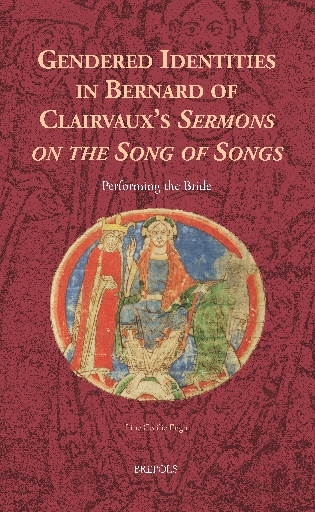
Gendered Identities in Bernard of Clairvaux’s 'Sermons on the Song of Songs'
Performing the Bride
show More to view fulltext, buy and share links for:Gendered Identities in Bernard of Clairvaux’s 'Sermons on the Song of Songs' show Less to hide fulltext, buy and share links for: Gendered Identities in Bernard of Clairvaux’s 'Sermons on the Song of Songs'In this analysis of Bernard of Clairvaux’s famous Sermons on the Song of Songs, gendered imagery is treated, for the first time, as an interpretative key. Through close readings of Bernard’s text and through the rich array of recent medieval studies on sex and gender, this book challenges familiar interpretations of body, gender, and asceticism, disrupting the commonplace view of medieval monasticism as desexualized and un-gendered.
Bernard not only interprets, but also embodies or actualizes the figure of the bride, generating images of celibacy as erotic pleasure and monks as fecund and female. Through his performance, Bernard provides a hermeneutical model on which he patterns himself and his audience, the Cistercian choir monk. By analyzing the rhetorical functions of Bernard’s female self-representation, the author explores how complex and varied female images in the text are absorbed into the bridal role - lactating mother, ecstatic virgin, weeping widow, needy girl.
By appropriating femaleness, Bernard transformed the Cistercian cloister into an inverted world that anticipated eschatological restoration and salvation. In this parallel monastic reality, the book argues, males performed all parts while gender hierarchy was upheld to establish notions of superior and inferior, worldly and heavenly, humility and sublimity. The male-female duality in this language is not one of equality, but was rather forged into a hermeneutical hierarchy in which, ultimately, a fully Christomimetic man both appropriates and negates femaleness.
-
-
-
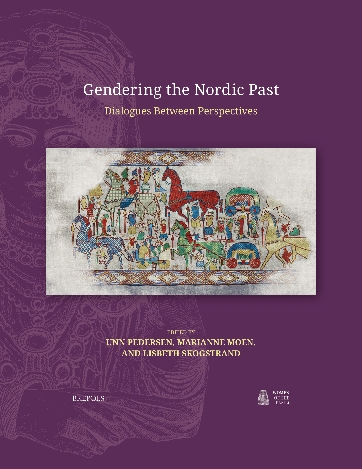
Gendering the Nordic Past
Dialogues between Perspectives
show More to view fulltext, buy and share links for:Gendering the Nordic Past show Less to hide fulltext, buy and share links for: Gendering the Nordic PastThe idea of the Nordic nations as champions of gender equality is firmly rooted in today’s perceptions of society. But how does such a modern comprehension influence our views of history? Does our understanding of gender impact on how we see the past? And do the ways in which we gender the past have an effect on our present identities?
From the Stone Age to the Early Modern period, and from warriors and queens to households and burials, this groundbreaking volume draws together research conducted as part of the project Gendering the Nordic Past, an inter-Nordic collaboration aimed at (re)evaluating and revitalizing the field of gender studies in the region. The chapters gathered in this volume, contributed by archaeologists and historians, theologians, art historians, and specialists in gender studies, aim to offer novel perspectives on the ways in which we gender the past. While many of the chapters focus explicitly on the Nordic countries, comparisons are also drawn with other regions in order to provide both internal and external views on the role of the collective past in present Nordic identities. The result, presented here, is an essential dialogue into the importance of gender in creating and maintaining past identities, as well as a new understanding of how the identities that we construct for the past can relate to heritage narratives.
-
-
-
Genre et compétition dans les sociétés occidentales du haut Moyen Âge (iv e-xi e siècle)
show More to view fulltext, buy and share links for:Genre et compétition dans les sociétés occidentales du haut Moyen Âge (iv e-xi e siècle) show Less to hide fulltext, buy and share links for: Genre et compétition dans les sociétés occidentales du haut Moyen Âge (iv e-xi e siècle)Si les études de genre utilisent abondamment les notions de discrimination ou d’inégalités, il est plus rare qu’elles abordent à proprement parler celle de compétition. Le présent volume aborde ce thème avec pour but de mettre en lumière la manière dont les périodes de forte compétition sociale influent sur la place et la redéfinition des attributs sexués, en même temps que l’importance relative donnée à ceux-ci dans les situations de rivalité ou de compétition. La dizaine de travaux rassemblés présentent une vaste enquête sur la notion de genre dans l'historiographie moderne et dans les sources de la fin de l'Antiquité et du haut Moyen Âge avant d'analyser des exemples venus aussi bien de l'archéologie que des chroniques ou de l'hagiographie, essentiellement en Gaule et en Italie. Les auteurs montrent comment genres et régimes de genre sont des outils et des produits des crises et des compétitions, aussi bien pour les hommes que pour les femmes de l'Occident altimédiéval.
-
-
-
Gens du livre et gens de lettres à la Renaissance
show More to view fulltext, buy and share links for:Gens du livre et gens de lettres à la Renaissance show Less to hide fulltext, buy and share links for: Gens du livre et gens de lettres à la RenaissanceLes articles rassemblés dans ce volume sont le fruit des débats du live colloque international d’études humanistes qui s’est déroulé à Tours en juin 2011. Ils prolongent une réflexion engagée dès 2009 dans un premier colloque parisien, intitulé Passeurs de textes : imprimeurs et libraires à l’âge de l’humanisme. L’enquête ici s’est élargie pour prendre en compte, selon l’heureuse expression de Robert Darnton, l’ensemble des « gens du livre » et des « gens de lettres » à la Renaissance : graveurs de caractères, voyageurs, colporteurs, auteurs, philologues et traducteurs - tous ces artisans ou ces érudits qui ont contribué, dans la fièvre des ateliers de libraires-imprimeurs, à la circulation des textes.
Autour de la figure, à la fois centrale et excentrée, du « passeur de textes », capable de faire franchir au savoir obstacles et frontières, les contributeurs de ce livre se sont interrogés sur la matérialité des textes qui circulent, leurs itinéraires géographiques, leurs cheminements intellectuels ; ils ont aussi cherché à retrouver les motivations de tous les acteurs qui ont patiemment rassemblé le patrimoine culturel de la Renaissance.
Livres, lettres, textes mais aussi images circulent d’un lieu à l’autre, migrent vers de nouveaux univers mentaux, empruntent d’autres langues pour déployer dans le monde occidental l’ensemble des connaissances botaniques, médicales, géographiques, philologiques ou architecturales qui constituent ce patrimoine culturel. Les presses de l’imprimeur deviennent un lieu de passage où s’élaborent des stratégies intellectuelles et commerciales complexes, où se nouent des liens entre les différents acteurs du monde du livre, où les compétences se croisent et se complètent ; la figure du grand graveur et fondeur de caractères typographiques, Claude Garamont, qui faisait en 2011 l’objet d’une commémoration nationale, s’y dessine de manière emblématique.
Depuis l’humble artisan parfois anonyme jusqu’au savant, philologue ou traducteur, qu’il ait nom Budé, Alberti ou Vésale, tous les acteurs évoqués ici interrogent les usages des savoirs, anticipent les goûts du public, construisent la connaissance - jouant pleinement leur rôle de passeurs et, plus encore, de veilleurs attentifs aux livres et aux textes.
-
-
-
Genèse des espaces politiques (IXe-XIIe siècle)
Autour de la question spatiale dans les royaumes francs et post-carolingiens
show More to view fulltext, buy and share links for:Genèse des espaces politiques (IXe-XIIe siècle) show Less to hide fulltext, buy and share links for: Genèse des espaces politiques (IXe-XIIe siècle)Depuis le XIXe siècle, les historiens français et allemands racontent une histoire fondamentalement différente de la transition entre le monde carolingien et les Xe-XIIe siècles : pour les premiers, l’apparition de principautés « territoriales » dans le monde post-carolingien est avant toute chose le signe de la désagrégation des institutions carolingiennes et représente une mutation fondamentale dans l’organisation des pouvoirs. Pour les seconds, il n’y a pas de véritable solution de continuité dans un système où le pouvoir a toujours reposé non sur la domination d’un territoire mais sur l’importance des liens interpersonnels entre le roi et l’aristocratie, et cela dès l’époque carolingienne. Le but de cet ouvrage est de montrer comment l’importance dévolue au caractère territorial du pouvoir – largement remis en question par la recherche actuelle – a influé sur la manière dont on raconte l’histoire de l’empire carolingien et des royaumes post-carolingiens à l’Est et à l’Ouest du Rhin, grâce à plusieurs mises au point historiographiques et à de nombreuses études de cas.
-
-
-
Genèses de l'acte de parole dans le monde grec, romain et médiéval
show More to view fulltext, buy and share links for:Genèses de l'acte de parole dans le monde grec, romain et médiéval show Less to hide fulltext, buy and share links for: Genèses de l'acte de parole dans le monde grec, romain et médiévalL'objectif de ce recueil est de définir l'acte de parole, ou plus exactement les différents statuts et composantes de l'acte de parole, à partir des pratiques grecques, romaines et médiévales, telles que peuvent rétrospectivement les éclairer les concepts et / ou les pratiques modernes et contemporaines, apparus en philosophie du langage avec les speech-acts d'Austin et en esthétique avec la « performance ». « Comment faire des choses avec des mots? », How to do things with words?, le titre de l'oeuvre d'Austin peut en effet servir de motif à une grande partie des pratiques discursives de l'Antiquité et du Moyen-Âge - le titre, mais non pas exactement les concepts qui se trouvent forgés aujourd'hui sous ce titre ou en rapport avec lui. Ce sont ainsi les singularités antiques et médiévales des actes de parole que nous voudrions déterminer: comprendre ce qu'est la « performance » d'avant le « performatif ».
-
-
-
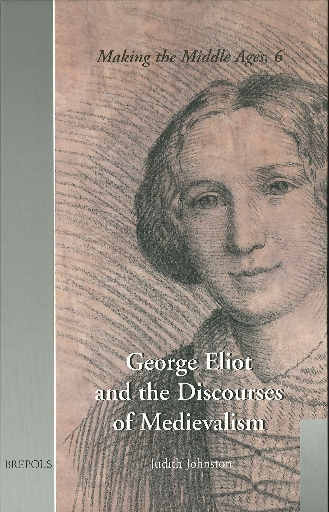
George Eliot and the Discourses of Medievalism
show More to view fulltext, buy and share links for:George Eliot and the Discourses of Medievalism show Less to hide fulltext, buy and share links for: George Eliot and the Discourses of MedievalismIn George Eliot's last two novels, Middlemarch (1871-72) and Daniel Deronda (1876), she abandons the realism she had explored and articulated so carefully, most famously in Adam Bede, 'a faithful account of men and things', for an unprecedented return to 'cloud-borne angels, [...] prophets, sibyls, and heroic warriors'. This study addresses Eliot's exploitation of Victorian medievalism by considering the way in which she utilizes the discourses of medievalism, both for their potential for subversiveness and their potential for mediation, to affirm that change is possible socially, culturally, and politically, in her modern contemporary world. The various medieval discourses are revealed as interstices within what initially appears to be a continuation of the realism of her earlier novels. They permit political and cultural readings of a different, and often unexpected, kind to the realist bourgeois values of novels like Adam Bede, and to a lesser extent, Felix Holt. These political and cultural readings reveal a more determined, more obvious feminist and socialist polemic in her two last and possibly greatest novels.
-
-
-
Georgia as a Bridge between Cultures
Dynamics of Artistic Exchanges
-
-
-
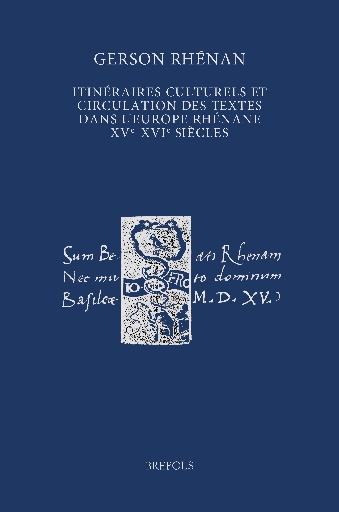
Gerson rhénan
Itinéraires culturels et circulation des textes dans l’Europe rhénane, XVe-XVIe siècles
show More to view fulltext, buy and share links for:Gerson rhénan show Less to hide fulltext, buy and share links for: Gerson rhénanChancelier de l’Université de Paris, Jean Gerson (1363-1429) est surtout connu comme théoricien de la théologie mystique et par son action réformatrice au sein de l’Église pendant les années difficiles du Grand Schisme, où il joua un rôle de premier plan. Or si la carrière universitaire et l’action politique de Gerson font de lui un intellectuel parisien, l’évidence de la transmission manuscrite et imprimée désigne sans équivoque le Rhin supérieur comme la région où la diffusion des œuvres du chancelier a été la plus foisonnante. Intervenant à une échelle comparable à la diffusion manuscrite des œuvres de Thomas d’Aquin, le rayonnement de l’œuvre de Gerson a ceci de spectaculaire qu’il dépasse largement le milieu universitaire et qu’il se déploie en moins d’un siècle. Le paradoxe reste pourtant intact de pourquoi l’Allemagne, et non la France, s’impose comme le lieu de rayonnement de l’œuvre de Gerson dans des proportions aussi importantes quantitativement ? Pour répondre à cette question, l’étude de la réception de l’œuvre du chancelier ne peut pas faire l’économie d’une réévaluation de la tradition manuscrite et imprimée des 15e et 16e siècles à partir des témoins préservés dans les bibliothèques du Rhin supérieur. En privilégiant le cas de Gerson comme point d’observation, ce volume se propose de renouveler les perspectives de l’histoire intellectuelle et culturelle dans le long 15e siècle en focalisant sur l’histoire des textes, les conditions et les circonstances de leur transmission, afin de dresser une cartographie des réseaux de communication dans la région rhénane dans les décennies qui entourent l’invention de l’imprimerie.
-
-
-
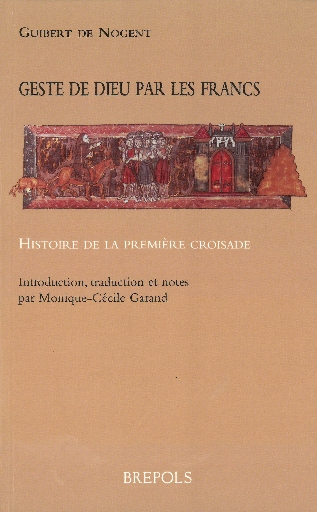
Geste de Dieu par les Francs
Histoire de la première croisade
show More to view fulltext, buy and share links for:Geste de Dieu par les Francs show Less to hide fulltext, buy and share links for: Geste de Dieu par les FrancsLa première croisade jeta sur les routes de l'Orient, à la suite du concile de Clermont, des milliers d'hommes, de femmes et d'enfants de toutes conditions. Elle aboutit à la prise de Jérusalem le 15 juillet 1099, et à la création d'Etats latins en Terre sainte. Cette prodigieuse aventure suscita de nombreuses chroniques. Celle de l'abbé Guibert de Nogent, écrite vers 1108-1109, tranche par la personnalité de son auteur. Ce n'est pas un témoignage, mais le point de vue d'un partisan passionné de la croisade, qui chercha à faire oeuvre d'historien en prenant ses distances pour mieux comprendre les événements, tout en comparant ses sources afin d'en dégager la vérité, et en recueillant les souvenirs de participants. A ses yeux, l'inspirateur et le chef de l'expédition fut Dieu lui-même, dirigeant jusqu'au bout les serviteurs qu'il s'était choisis. D'où le titre, difficilement traduisible: Les hauts faits de Dieu par l'intermédiaire des Francs. Sa prose mêlée de vers, imprégnée de réminiscences bibliques, prend souvent le ton de l'épopée. Il trace des portraits parfois élogieux, souvent cruels, des principaux acteurs. Doué d'un grand talent de conteur, il s'identifie aux croisés dans leurs moments de joie et d'angoisse, dans les famines comme dans les triomphes. Proclamant la gloire de ses compatriotes avec la partialité d'un historien de son temps, il apparaît dans ce texte comme l'un des meilleurs narrateurs du Moyen Age latin.
-
-
-
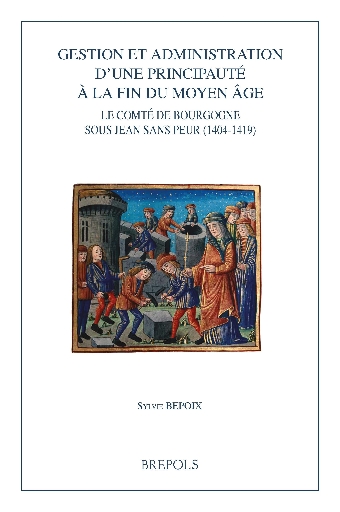
Gestion et administration d’une principauté à la fin du Moyen Âge
Le comté de Bourgogne sous Jean sans Peur (1404-1419)
show More to view fulltext, buy and share links for:Gestion et administration d’une principauté à la fin du Moyen Âge show Less to hide fulltext, buy and share links for: Gestion et administration d’une principauté à la fin du Moyen ÂgeJean sans Peur qui succède à son père Philippe le Hardi à la tête du duché de Bourgogne en 1404, dut attendre la mort de sa mère Marguerite pour hériter du comté en 1405. L’historiographie l’a longtemps montré comme détaché de son petit territoire comtois en raison de sa forte implication dans la politique du royaume de France voisin et de son plus grand attachement au duché. Si la gestion de l’ordinaire requérait peu son attention, elle permettait des rentrées d’argent que le duc-comte ne dédaignait pas. Ses interventions démontrent parfois une volonté d’améliorer la gestion, la majorité prouvant surtout son désir d’accroitre ce qu’il en retirait. Jean sans Peur n’a pas négligé son comté malgré sa faible importance au cœur de l’ensemble bourguignon. Graphiques et tableaux systématiquement employés pour appuyer la démonstration livrent des approches chiffrées du rapport de ce domaine bourguignon, mettant en lumière la gestion et l’administration d’un domaine princier en cette fin de Moyen Âge.
-
-
-
Gianfrancesco Pico della Mirandola: fede, immaginazione e scetticismo.
show More to view fulltext, buy and share links for:Gianfrancesco Pico della Mirandola: fede, immaginazione e scetticismo. show Less to hide fulltext, buy and share links for: Gianfrancesco Pico della Mirandola: fede, immaginazione e scetticismo.Nelle vicende storiografiche che determinano fortuna e ricezione dell’eredità di un autore, Gianfrancesco Pico della Mirandola ha conosciuto la sorte di chi esordisce all'ombra delle personalità distintive dell’epoca in cui vive e finisce per essere giudicato principalmente in relazione ad esse. Nipote di Giovanni Pico, discepolo di Girolamo Savonarola, Gianfrancesco ha faticato, così, a liberarsi dalle angustie delle definizioni di editore delle opere dello zio e apologeta del frate di San Marco, nonostante sia sopravvissuto all’uno come all’altro di quasi quarant’anni, lasciando una produzione tanto vasta da suggerire almeno cautela nella pretesa di ridurla a semplice ripresa di istanze altrui. Lo studio qui presentato propone una lettura complessiva dell’opera di Pico, individuando in fede, immaginazione e scetticismo i concetti intorno ai quali si articola la riflessione pichiana. Emerge così il profilo di una filosofia ‘inattuale’, costruita in tenace polemica con le istanze speculative tipiche del Rinascimento italiano ed europeo: all’ideale umanistico di concordia tra religione e sapienza pagana è contrapposto un atteggiamento critico nei confronti della razionalità filosofica, abbandonata a favore di una opzione fideistica; al mito cinquecentesco della dignitas hominis è sostituita una analisi delle debolezze, in campo etico e teoretico, della natura umana, condotta attraverso un originale ripensamento del ruolo dell’immaginazione, la facoltà conoscitiva che la maggior parte degli intellettuali del Rinascimento considerava segno delle capacità ‘magiche’ dell’anima. Proponendosi come una sorta di ‘anti-Ficino’ della propria epoca, Gianfrancesco introduce, primo tra i suoi contemporanei, temi destinati a lunga fortuna nella modernità: la messa in discussione del primato di Aristotele e del metodo scientifico aristotelico; il recupero dello scetticismo pirroniano, la riflessione sulla pluralità e la vanitas delle filosofie e l’interrogativo sulle diverse potenzialità epistemologiche di ratio e fides.
-
-
-
Gildas and the Scriptures
Observing the World through a Biblical Lens
show More to view fulltext, buy and share links for:Gildas and the Scriptures show Less to hide fulltext, buy and share links for: Gildas and the ScripturesGildas is the earliest insular writer who has left us a substantial legacy of theological writing. He is usually, however, not seen as a theological writer but as an historical source for ‘dark age’ Britain at the time of the Germanic invasions in the mid-sixth century. Yet the deacon Gildas saw himself as a prophet charged by God to call the rulers and clergy of his society back to being a chosen people of the covenant. The form this call took was that of an indictment of those groups based on the testimonia of the Christian scriptures.
This book is a study both of Gildas’s use of the scriptures (his text, his canon, his exegetical strategies) and of how, from the way he interprets sacred history, he created a distinctive theology of the church and of salvation.
Thomas O'Loughlin is Professor of Historical Theology at the University of Nottingham. His areas of interest are Patristic and Medieval Theology, History of Scriptural Interpretation, Early Church and Method in Historical Theology.
-
-
-
Giornale Italiano di Filologia
show More to view fulltext, buy and share links for:Giornale Italiano di Filologia show Less to hide fulltext, buy and share links for: Giornale Italiano di FilologiaGiornale Italiano di Filologia is a well-established international journal in classical philology, a field of study that it considers in its wide range and inherent interdisciplinarity. The journal thus welcomes contributions from linguists, historians, text editors, and literary critics, and aims to cover the Greek and Roman worlds up to the Latin Middle Ages, occasionally venturing into Romance philology.
More information about this journal on Brepols.net
-
-
-
Giornale storico della letteratura italiana
show More to view fulltext, buy and share links for:Giornale storico della letteratura italiana show Less to hide fulltext, buy and share links for: Giornale storico della letteratura italianaThe Giornale storico della letteratura italiana is one of the oldest and most prestigious journals dedicated to Italian literature. Founded in 1883, it focuses on the study of Italian literature from its medieval origins to the 19th century, including humanistic Latin literature. The journal aims to provide critical, interpretative, and historical-cultural perspectives on Italian literary works. It also emphasizes comparative studies and includes various sections such as articles, notes, discussions, and bibliographic reviews. Published quarterly, the journal is renowned for its rigorous scholarly standards and significant contributions to the field of Italian literary studies.
More information about this journal on Brepols.net
-
-
-
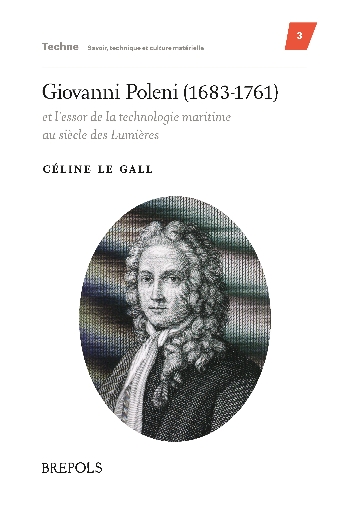
Giovanni Poleni (1683-1761) et l’essor de la technologie maritime au siècle des Lumières
show More to view fulltext, buy and share links for:Giovanni Poleni (1683-1761) et l’essor de la technologie maritime au siècle des Lumières show Less to hide fulltext, buy and share links for: Giovanni Poleni (1683-1761) et l’essor de la technologie maritime au siècle des LumièresCet ouvrage présente les traductions des trois traités de navigation écrits en latin (et restés à ce jour inédits) par Giovanni Poleni, professeur de mathématiques, physique, astronomie, philosophie mécanique expérimentale, navigation et construction navale à l'université de Padoue : La meilleure manière de mesurer sur mer le chemin d'un vaisseau, indépendamment des observations astronomiques (1733), Dissertations latines sur les ancres portant sur la figure optimale selon laquelle les ancres peuvent être formées, la technique la plus performante pour forger les ancres, la manière d'éprouver la force des ancres, soit leur résistance (1737), le troisième traité concerne l'amélioration de l'usage du cabestan : De Ergatae Navalis praestabiliore, facilioreque Usu, Dissertatio (1741). Ces trois traités furent primés par l'Académie Royale des Sciences de Paris (prix Rouillé de Meslay). Un corpus traduit de la correspondance latine de Poleni avec les savants européens, la traduction des programmes latins de ses cours de navigation ainsi qu'une enquête in situ à Venise, Vérone ou à Padoue furent nécessaires pour contextualiser les traités. La reconstitution grandeur nature de deux machines de navigation de Poleni : le cabestan et la machine pour mesurer la force du vent, réalisée par des étudiants de BTS Développement Réalisation Bois et des élèves de CAP Serrurerie Métallerie furent testées en mer. Cet ouvrage propose une biographie de Giovanni Poleni, les « appels à projets » de l'Académie Royale des Sciences de Paris (1733-1741), les traductions commentées des trois traités de Poleni ainsi que la reconstitution de ses machines.
-
-
-
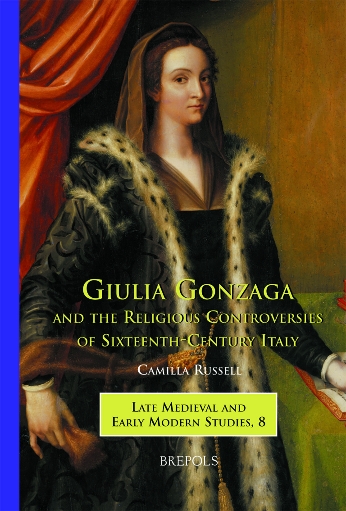
Giulia Gonzaga and the Religious Controversies of Sixteenth-Century Italy
show More to view fulltext, buy and share links for:Giulia Gonzaga and the Religious Controversies of Sixteenth-Century Italy show Less to hide fulltext, buy and share links for: Giulia Gonzaga and the Religious Controversies of Sixteenth-Century ItalyGiulia Gonzaga (1513-66) was renowned throughout sixteenth-century Italy as a model of pious widowhood and of female beauty. Yet over three decades she sustained a risky friendship and personal correspondence with Pietro Carnesecchi (1508-67), the one-time papal favourite who became infamous for his heretical religious beliefs and associations. Indeed, Carnesecchi was condemned to death by the Tribunal of the Roman Inquisition, implicated in part by evidence of his correspondence with donna Giulia.
This major new study traces the evolution of donna Giulia’s unorthodox religious ideas and networks. Considered alongside inquisitorial trial records and contemporary religious treatises, donna Giulia’s written dialogue with Carnesecchi and others, vividly reflects the religious tensions of mid-sixteenth-century Italy.
Giulia Gonzaga and the Religious Controversies of Sixteenth-Century Italy details donna Giulia’s important contribution to the exchange and currency of reformist ideas amongst an intellectual elite of women and men, clergy and laity that extended through the Italian peninsula and beyond.
-
-
-
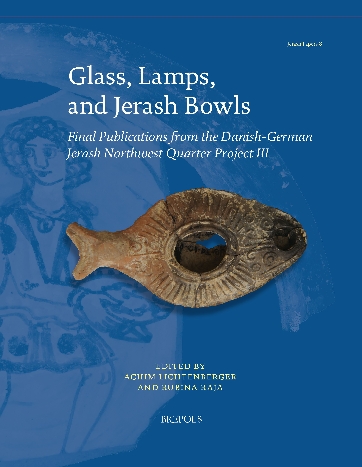
Glass, Lamps, and Jerash Bowls
Final Publications from the Danish-German Jerash Northwest Quarter Project III
show More to view fulltext, buy and share links for:Glass, Lamps, and Jerash Bowls show Less to hide fulltext, buy and share links for: Glass, Lamps, and Jerash BowlsThe Decapolis city of Jerash has long attracted attention from travellers and scholars, due both to the longevity of the site and the remarkable finds uncovered during successive phases of excavation that have taken place from 1902 onwards. Between 2011 and 2016, a Danish-German team, led by the universities of Aarhus and Münster, focused their attention on the Northwest Quarter of Jerash - the highest point within the walled city - and this volume is the third in a series of books presenting the team’s final results.
The contributions gathered together in this volume provide an in-depth analysis of the glass finds, the lamps, and the iconography of the Jerash bowls discovered in the Northwest Quarter during the excavations. Together, these chapters provide both general overviews and more detailed insights into these important groups of material evidence, and also examine their stratigraphic contextualization and chronological spread across the centuries.
-
-
-
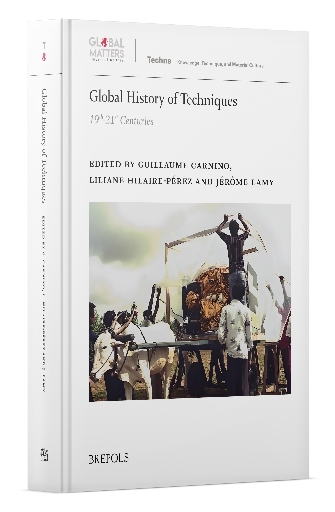
Global History of Techniques
(Nineteenth to Twenty-First Centuries)
show More to view fulltext, buy and share links for:Global History of Techniques show Less to hide fulltext, buy and share links for: Global History of TechniquesIt is impossible to understand societies without looking at their technological underpinnings. Technology constitutes the very fabric of societies' political, economic, cultural, and everyday realities. Building on recent historiography, this book offers the first overview of the global history of contemporary technology.
Gathering more than fifty specialists of the history of technology, the collection of essays presents an overview of technological evolutions on a global scale. The book challenges both teleological approaches on progress and eurocentric perspectives. It explores the complex socio-economic implications of ‘techniques’ (and not simply technology) as well as the systems of representation and power structures that led to the emergence of today’s world.
The purpose of the collected essays is to offer a new history of technology. In this perspective, a central question concerns the very category of the history of technology, i.e. the term ‘technology’ itself. Refusing both the limitations of ‘technology’ and of ‘useful knowledge’, the book stresses the necessity to study technology as embodying human activity as a whole. In that sense, history of technology, envisioned as techniques rather than purely technologies, is intrinsically linked to anthropology and ethnology.
This book is divided into three sections. The first section opens with a world tour of techniques, restoring the complexity of regional historiographies and of the meanings given to technological activities in different societies. The second part focuses on sectors of activity, processes, and products with a strong emphasis on means of production and communication, the exploitation of natural resources, major technological systems, infrastructures and networks. The final section provides access to major cross-related issues. It pays particular attention to the role played by technology/techniques in the process of globalization, particularly through colonization, imperialism, and the development of large technological systems.
-
-
-
Glosa Victorina super partem Prisciani De Constructione (ms. Paris, Bibliothèque de l'Arsenal 910)
show More to view fulltext, buy and share links for:Glosa Victorina super partem Prisciani De Constructione (ms. Paris, Bibliothèque de l'Arsenal 910) show Less to hide fulltext, buy and share links for: Glosa Victorina super partem Prisciani De Constructione (ms. Paris, Bibliothèque de l'Arsenal 910)From the twelfth century onwards, notable advances in the theoretical development occur in independent treatises on syntax, which on their side are intimately linked with medieval commentaries on the last two books, the so-called Priscian Minor, of the Institutiones Grammaticae I-XVIII, where Priscian deals with syntax. A number of the independent treatises on syntax are now available. But of the many commentaries on Priscian Minor known, only a few have been edited, so let me start by editing an interesting 12th c. gloss on Priscian Minor, called the Glosa Victorina. Priscian Minor itself begins with introducing the notion of what is a perfect sentence, what is a well-formed utterance and which parts of speech are indispensable or the most important, stating their order of importance : noun, verb, participle, pronoun, and the indeclinable word classes. As the argumentation unfolds, comparisons between letters, syllables and words are introduced providing a continuity and refinement on what was taught earlier in the so-called Priscian Maior, and how this concerns grammar on the level of syntax. Very quickly, this leads to an interdisciplinary discussion of what constitutes a perfect sentence (according to the grammarians and the dialecticians), involving the commentators in redefinitions of the principal parts of speech and explaining their distinguishing features. In this process, notions of substance, of person, of deixis, of reference - signification, and many other important grammatical issues are discussed. So in principle, the beginning of any commentary on Priscian Minor provides its author with scope for developing his particular doctrines and ideas of prime importance in linguistics.
Here the Glosa Victorina deserves a closer look, because it provides us with insights into discussions normally only hinted at by Abelard, or a use of terminology which then becomes refined and partially rejected by William of Conches and Petrus Helias.
-
-
-
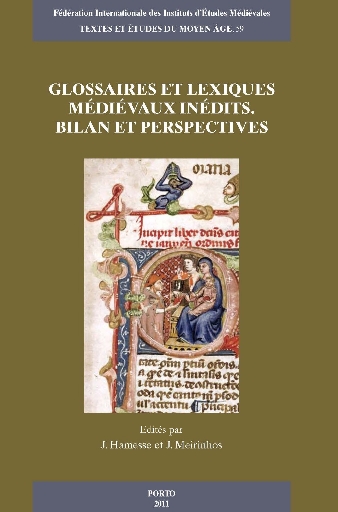
Glossaires et lexiques médiévaux inédits. Bilan et perspectives
show More to view fulltext, buy and share links for:Glossaires et lexiques médiévaux inédits. Bilan et perspectives show Less to hide fulltext, buy and share links for: Glossaires et lexiques médiévaux inédits. Bilan et perspectivesLa publication des actes d’un colloque organisé à Erice en 1994 sur le thème Les manuscrits des lexiques et glossaires de l’Antiquité tardive à la fin du moyen âge, a donné une impulsion nouvelle aux études consacrées à ces recueils inédits. Une documentation très intéressante avait été rassemblée et a déjà donné lieu à des éditions critiques de textes qui n’étaient pas encore publiés à cette époque. Mais tous les secteurs n’avaient pas été abordés pendant cette rencontre, étant donné l’ampleur du sujet. A la demande de plusieurs chercheurs, il a donc semblé intéressant de faire le point, quinze ans après, pour évaluer l’état d’avancement des recherches, mais aussi pour couvrir des domaines qui n’avaient pas encore été envisagés.
Beaucoup de progrès ont été faits depuis, surtout dans le domaine des lexiques bilingues et trilingues ainsi que pour certains recueils systématiques consacrés à diverses branches du savoir, comme la médecine, les sciences, la grammaire ou la philosophie, par exemple. Plusieurs équipes nationales et internationales travaillent d’ailleurs désormais dans ces secteurs.
Le but de ce volume, qui rassemble les actes du colloque organisé en 2010, est donc de faire un nouvel état de la question et de dresser une liste de priorités pour les glossaires et lexiques encore inédits. Le volume présente des études sur des recueils qui datent du IXe au XVe siècle. Certains d’entre eux illustrent d’ailleurs la progression des langues vernaculaires dans ce domaine. Le volume constitue donc non seulement un complément à l’ouvrage publié en 1996, mais donne aussi un aperçu des recueils qui mériteraient d’être édités rapidement.
Les articles sont l’oeuvre de F. Cinato (Paris), A. Cizek (Münster), O. Collet (Genève), E. Guadagnini et G. Vaccaro (Firenze), A. García González (Valladolid), A. Gómes Rabal (Barcelona), L. Holtz (Paris), A. I. Martín Ferreira (Valladolid), B. Merrilees (Toronto), E. Montero Cartelle (Valladolid), J. Olszowy-Schlanger (Paris), A. Rollo (Napoli), S. Toniato (Chambéry), G. Ucciardello (Messina).
-
-
-
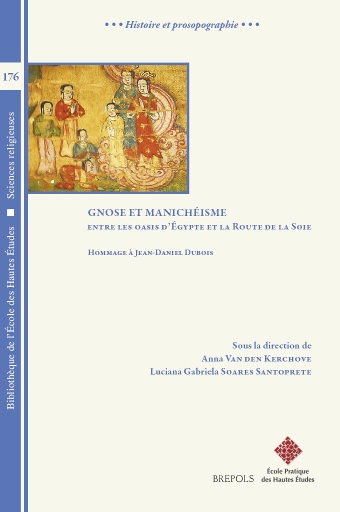
Gnose et manichéisme. Entre les oasis d’Égypte et la Route de la Soie
Hommage à Jean-Daniel Dubois
show More to view fulltext, buy and share links for:Gnose et manichéisme. Entre les oasis d’Égypte et la Route de la Soie show Less to hide fulltext, buy and share links for: Gnose et manichéisme. Entre les oasis d’Égypte et la Route de la SoieÀ l'occasion du départ à la retraite de Jean-Daniel Dubois de la direction d'études « Gnose et Manichéisme » à l'École pratique des hautes études en 2015, plusieurs de ses collègues et amis ont tenu à lui rendre hommage. La diversité des thèmes, des écrits et des communautés culturelles et linguistiques étudiés dans les quarante-quatre contributions ici publiées, témoigne de la richesse du parcours intellectuel de Jean-Daniel Dubois, lequel s'étend des oasis d'Égypte jusqu'à la Route de la Soie.
Ce volume s'adresse aux spécialistes de la Méditerranée, du Proche-Orient et de l'Extrême-Orient anciens. Il intéressera les historiens des religions, particulièrement ceux des mouvements chrétiens - dont les courants gnostiques -, du manichéisme, des cultes polythéistes et de l'islam, les philologues ainsi que les historiens de la philosophie de l'Antiquité tardive.
-
-
-
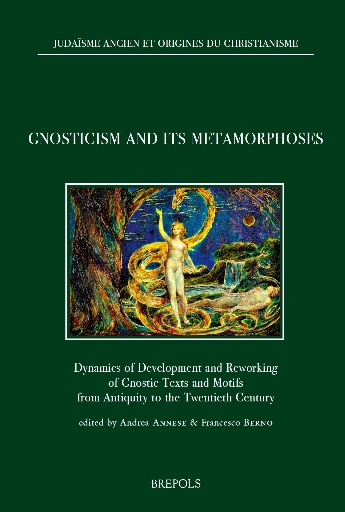
Gnosticism and Its Metamorphoses
Dynamics of Development and Reworking of Gnostic Texts and Motifs from Antiquity to the Twentieth Century
show More to view fulltext, buy and share links for:Gnosticism and Its Metamorphoses show Less to hide fulltext, buy and share links for: Gnosticism and Its MetamorphosesThe complex and multifaceted religious phenomenon called Gnosticism continues to fascinate both specialists and the wider audience. This volume explores the “metamorphoses” of Gnosticism, through the analysis of selected examples. Late antique Gnostic groups and schools of thought developed and even changed their ideas when interacting with other religious groups and with various sources. Confrontation and polemics with the so-called “Great Church” and with other Christian groups were crucial to doctrinal elaboration of all parties involved. On a different side, one can trace the metamorphoses of Gnostic ideasthrough the centuries, as these ideas influenced, and were reinterpreted by, other religious and cultural traditions and currents, from Manichaeism to medieval dualistic movements, modern esotericism, and even contemporary literature.
The essays gathered in this volume focus on two main topics, namely how ancient Gnostic groups developed their doctrines by interpreting and reworking their wide range of sources (Jewish, early Christian, Platonic ones, etc.), and how ancient Gnostic ideas and motifs survived – with new forms – in later philosophical, religious, and literary works, up to the twentieth century.
The volume consists of three sections, the first being dedicated to early anti-Gnostic controversy in texts embedding Jewish-Christian and Petrine traditions and using Gnostic motifs for polemical purposes; the second to some treatises from the Nag Hammadi corpus and other Gnostic manuscripts (plus Epiphanius’ Panarion) so as to provide fresh insights into late antique Gnostic texts and groups; and the third to three case studies of the modern reception and reworking of Gnostic writings and ideas.
-
-
-
God's Chosen People
Judah Halevi’s Kuzari and the Shī‘ī Imām Doctrine
show More to view fulltext, buy and share links for:God's Chosen People show Less to hide fulltext, buy and share links for: God's Chosen PeopleThe systematic formulation of the status of the People of Israel as the Chosen People of God stands at the heart of Judah Halevi’s famous theological and polemical treatise - the Kuzari.
The idea of the Chosen People is an ancient one and is deeply rooted in Judaism. Through a wide-ranging textual and phenomenological investigation, this book highlights the novel and systematic presentation of the Chosen People in the Kuzari and shows how Judah Halevi draws, in a creative manner, on terms, concepts, and themes borrowed from the Shī‘ī doctrine of the Imām as presented in Shī‘ī literature.
This book presents a historical perspective for understanding the basis of Judah Halevi’s attraction to Shī‘ī theology, with its unique category of God’s Chosen. The polemical argument over the issue of the legitimate successor to leadership in early Islam, as well as the debate around the legitimate successor-group in medieval interreligious disputes, emerges as the historical background for the seemingly surprising link between the Shī‘ī Imām doctrine and the idea of the Chosen People in Judah Halevi’s thought. This link on the one hand portrays Halevi as a bold, original thinker and, on the other, portrays the Shī‘ī Imām doctrine as exceedingly fruitful and reaching beyond the bounds of Islam.
-
-
-
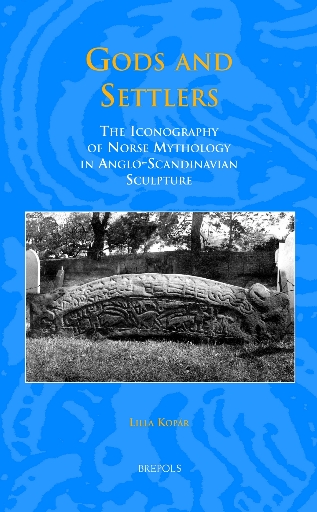
Gods and Settlers
The Iconography of Norse Mythology in Anglo-Scandinavian Sculpture
show More to view fulltext, buy and share links for:Gods and Settlers show Less to hide fulltext, buy and share links for: Gods and SettlersStone sculpture constitutes the richest surviving corpus of Viking-Age artefacts from the British Isles. In northern England, the geographical focus of the present study, sculptural production in the Viking period increased dramatically compared to the previous centuries, and stone monuments underwent changes in style and iconography, as well as in function and patronage. Consequently, stone sculpture provides rare visual evidence for the cultural changes that took place in the Scandinavian settlement areas and bears witness to intellectual and social processes that have otherwise left few traces in either the textual or material records.
Gods and Settlers is an interdisciplinary study that brings together iconography, literature, history, and religious studies to investigate a unique subset of this sculptural corpus: stone monuments with mythological and heroic iconography of Scandinavian origins. These carvings are particularly interesting because of the ecclesiastical roots of stone sculpture as a mode of artistic expression in England and the undoubtedly Christian context of the majority of the surviving monuments. The first half of the book is a detailed survey of the relevant carvings from northern England and a wide range of textual and visual parallels, together with an investigation of the sources and use of individual heroic and mythological characters and motifs. The second half focuses on the intellectual framework and social context of the artefacts, and presents a new view of these sculptures as cultural documents of the conversion of the Scandinavian settlers of northern England.
-
-
-
Gods in the House
Anthropology of Roman Housing – II
show More to view fulltext, buy and share links for:Gods in the House show Less to hide fulltext, buy and share links for: Gods in the HouseThe archaeological excavations conducted from one end of the Mediterranean zone to the other have illuminated the place of gods in the ritual practices in the dwellings of the Graeco-Roman era. The discovery of multiple artefacts, dedicated spaces, and figurative paintings support new avenues of historical, anthropological, and social reflection with the aim of better understanding domestic religious practices in the polytheistic contexts of antiquity. This collective volume organizes those reflections around three axes.The first axis centres on identifying the deities that were favoured in domestic sanctuaries. Which gods are represented and which are not? The second axisconcerns the interrelationships evident within domestic ritual spaces and sanctuaries.The third axis is dedicated to the anthropology of rituals. Lines of inquiry informed by anthropological, social, and phenomenological approaches are assuming ever-greater importance in scholarship on Antiquity. It is from this perspective that the authors explore the role that domestic ritual spaces play in shaping the lived environment.
-
-
-
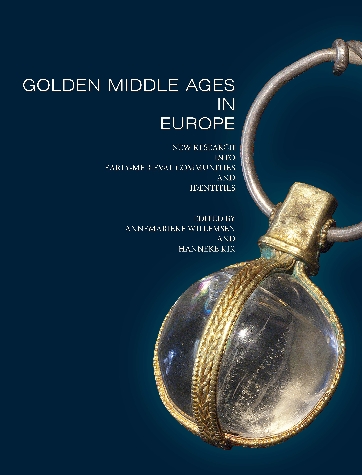
Golden Middle Ages in Europe
New Research into Early-Medieval Communities and Identities
show More to view fulltext, buy and share links for:Golden Middle Ages in Europe show Less to hide fulltext, buy and share links for: Golden Middle Ages in EuropeDorestad was an important harbour town in the middle of the present-day Netherlands, that had its hey-day in the Carolingian period, but was already an important settlement in the centuries before, with a famous 7th-century Frankish mint. In July 2014, the National Museum of Antiquities in Leiden hosted the second Dorestad congress, exactly five years after the first. This congress was attached to the exhibition ‘Golden Middle Ages: The Netherlands in the Merovingian World, 400-700 ad’ and brought together historians, archaeologists and linguists to discuss these ‘Dark Ages’, their burials and settlements, rituals and identities, and the position of the Low Countries in the world-wide networks of early-medieval Europe. Contributions in these congress proceedings are devoted to key themes like early-medieval identity and agency, so-called royal burials in Europe, significant find categories like garnets, coins and Merovingian glass, important new sites and finds from the Low Countries and recent work in the Carolingian ‘vicus famosus’ of Dorestad.
Dr. Annemarieke Willemsen is curator of the Medieval Department of the National Museum of Antiquities (Leiden), where she organized the 2009 exhibition & congress on Carolingian Dorestad and the 200 exhibition & congress on the early-medieval Netherlands.
Hanneke Kik m.a. is project manager at the same museum, and was secretary of the Dorestad Congress in 2009 and 2014.
-
-
-
Gott im Bild
Eidôlon – Studien zur Herkunft und Verwendung des Begriffes für das Götterbild in der Septuaginta
show More to view fulltext, buy and share links for:Gott im Bild show Less to hide fulltext, buy and share links for: Gott im BildIn the present day, the term ‘idol’ is often associated with a personality cult, but it still contains traces of its ancient meaning, namely above all the idea of worship. But this exactly creates a problem for the faith in God attested in the Old Testament. Worship and imagery obviously contradict the Old Testament commandment of worshipping the God of Israel without any image. This study fills a gap in the research in theological and religious studies by systematically exploring the various uses and connotations of the term eidôlon. The starting point is an examination of the use of eidôlon in Greek literature and in Egyptian sources from the Hellenistic period. The main part of the work is devoted to the various connotations of the term that later find their way into the Septuagint, the Greek Bible. There, as well as in later Jewish-Hellenistic literature, eidôlon becomes the terminus technicus for the pictorial representation of deities.
-
-
-
Gottes Schau und Weltbetrachtung. Interpretationen zum »Liber contemplationis« des Raimundus Lullus
Akten des Internationalen Kongresses aus Anlass des 50-jährigen Bestehens des Raimundus-Lullus-Instituts der Albert-Ludwigs-Universität Freiburg, 25.–28. November 2007
show More to view fulltext, buy and share links for:Gottes Schau und Weltbetrachtung. Interpretationen zum »Liber contemplationis« des Raimundus Lullus show Less to hide fulltext, buy and share links for: Gottes Schau und Weltbetrachtung. Interpretationen zum »Liber contemplationis« des Raimundus Lullus[In the year 2007, the Raimundus-Lullus-Institut at the University of Freiburg celebrated its 50th anniversary. To mark this occasion, an international congress was held on 25–28 November 2007, titled Vision of God and Contemplation of the World. Interpretations of Ramon Lull’s »Liber contemplationis«. The congress papers assembled in the present volume offer an informative survey of the Liber contemplationis in Deum (Catalan: Llibre de contemplació en Déu), the most comprehensive and probably most significant work of Lull’s. The Liber contemplationis comprises 366 chapters: one chapter for each day of the year, including one for the additional day of the leap year. The contents of the work have often been described as ‘encyclopaedic’. Its aim, however, is not to offer a comprehensive account of all that is known about reality, but rather to recognise and describe reality in the context of contemplating God, knowing the articles of faith as well as attaining a virtuous life agreeable to God.
The volume contains introductory studies of the Latin tradition of the text as well as detailed commentaries on individual chapters.
,Im Jahr 2007 konnte das Raimundus-Lullus-Institut der Universität Freiburg sein 50-jähriges Bestehen feiern. Aus diesem Anlass fand vom 25.–28. November 2007 ein internationaler wissenschaftlicher Kongress unter dem Titel Gottes Schau und Weltbetrachtung. Interpretationen zum »Liber contemplationis« des Raimundus Lullus statt. Die 20 Referentinnen und Referenten wurden bewusst nicht nur aus dem Kreis namhafter Lull-Spezialisten gewählt, sondern repräsentieren ein breites Spektrum internationaler mediävistischer Forschung. Mit ihren Tagungsbeiträgen, die in diesem Band gesammelt vorliegen, bieten sie eine informative Tour d’Horizon durch Ramon Lulls umfangreichstes und wohl bedeutendstes Werk, den Liber contemplationis in Deum (katalanisch: Llibre de contemplació en Déu).
Der Liber contemplationis umfasst 366 Kapitel: ein Kapitel für jeden Tag des Jahres und eines für den zusätzlichen Tag im Schaltjahr. Der Inhalt des Werkes ist oft als ‚enzyklopädisch‘ bezeichnet worden. Sein Ziel besteht jedoch nicht in einer umfassenden Darstellung des Wissens über die gesamte Wirklichkeit, sondern in der Bestimmung und Beschreibung der Wirklichkeit in Bezug auf die Betrachtung Gottes, die Erkenntnis der Glaubensartikel sowie die Erlangung eines tugendhaften, gottgefälligen Lebens.
Der vorliegende Band umfasst neben einführenden Untersuchungen zur lateinischen Textüberlieferung und zur Struktur des Werkes sowohl detaillierte Kommentare zu ausgewählten Kapiteln als auch Diskussionen von Einzelfragen vor dem Hintergrund von Lulls Gesamtwerk in seinem historischen Kontext.
]
-
-
-
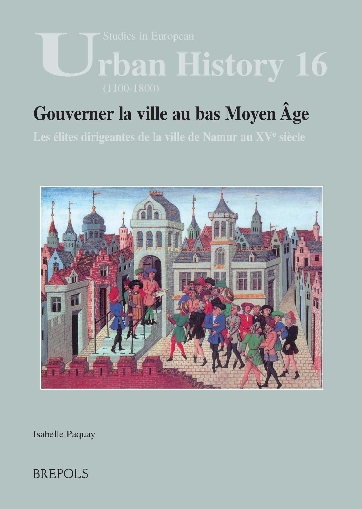
Gouverner la ville au bas Moyen Âge
Les élites dirigeantes de la ville de Namur au XVe siècle
show More to view fulltext, buy and share links for:Gouverner la ville au bas Moyen Âge show Less to hide fulltext, buy and share links for: Gouverner la ville au bas Moyen ÂgeSa position au confluent de la Meuse et de la Sambre font de Namur un carrefour commercial et stratégique non négligeable. Cette situation n’échappe pas à Philippe le Bon lorsqu’il achète le comté de Namur en 1421 au dernier comte Jean III, affaibli par ses difficultés financières et dynastiques. L’exercice du pouvoir à la tête de cette ville moyenne à l’échelle des Pays-Bas bourguignons n’est donc pas sans intérêt pour certains Namurois, leurs familles et pour le prince.
Une fois l’organisation institutionnelle namuroise, sa mise en place progressive et ses pouvoirs examinés en profondeur, ce livre part à la rencontre des hommes qui composent l’échevinage, véritable clé de voûte du gouvernement urbain. Une vaste enquête prosopographique, basée sur un corpus de sources riche et varié, a permis de sortir de l’ombre ces marchands namurois qui comptent parmi les manans et habitans des plus riches de la ville et du comté. Elle éclaire les atouts dont ils disposent et les stratégies qu’ils mettent en place avec leurs familles pour assurer leur intégration et leur maintien au Cabaret. Une réalité transparaît presque à chaque page : la gestion de la ville de Namur est avant tout synonyme de collusion systématique des intérêts publics et privés. Cette domination des marchands et cette pratique du pouvoir n’ont jamais été contestée, ni par la communauté urbaine qu’ils représentent, ni par les artisans, grands absents de la scène politique namuroise, et encore moins par le prince.
Cet ouvrage, en plus d’éclairer les institutions, les hommes et leurs champs d’actions, met en évidence le jeu subtil qui unit les ducs de Bourgogne au patriciat namurois, “ancien et nouveau”, véritable réservoir fiscal pour des princes en mal d’argent. Plus largement, il montre la façon dont s’est effectuée l’intégration de la ville et du comté de Namur à l’Etat bourguignon : une intégration réussie, sans véritable opposition, avec peu d’investissements en hommes et en réformes institutionnelles, mais relativement fructueuse au regard de la taille de cette petite principauté à dominante rurale. La logique du profit guide à chaque instant les gouvernants namurois, qu’il s’agisse des échevins ou du prince.
Cet ouvrage a reçu le Prix Dexia d’histoire urbaine 2005.
Médiéviste, Isabelle Paquay consacre ses recherches et ses publications au pouvoir urbain et aux milieux dirigeants des villes du sud des Pays-Bas bourguignons. Elle est actuellement enseignante et chercheuse aux Facultés universitaires Notre-Dame de la Paix.
-
-
-
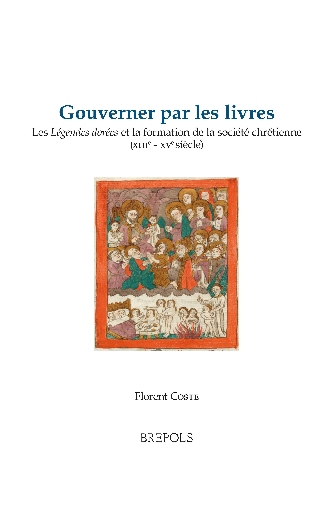
Gouverner par les livres
Les Légendes dorées et la formation de la société chrétienne (xiii e-xv e siècles)
show More to view fulltext, buy and share links for:Gouverner par les livres show Less to hide fulltext, buy and share links for: Gouverner par les livresLa Légende dorée de Jacques de Voragine constitue à n’en pas douter une œuvre centrale et incontournable de la littérature européenne. Le nombre considérable de ses témoins manuscrits dans toutes les langues de l’Occident médiéval permet largement de le mesurer, tout autant que la foule des œuvres qui s’en sont inspiré.
On ne peut manquer pourtant de s’étonner : la Légende dorée a certes circulé à travers les milieux sociaux, les aires linguistiques et les territoires les plus divers, mais au prix de substantielles transformations, dans sa matérialité, dans sa composition, dans ses significations et ses usages. Pourtant, sans devenir absolument méconnaissable, la compilation hagiographique confectionnée à la fin du xiii e siècle a rapidement constitué une matrice textuelle accueillante et ouverte aux interventions que ses lecteurs ultérieurs ont apportées pour mieux l’actualiser au gré de leurs besoins et selon les nécessités des contextes. Tel est bien le paradoxe d’une œuvre si plastique et polyvalente qu’avec une singulière longévité littéraire elle parvient à perdurer non pas malgré, mais grâce aux modulations considérables qu’elle connait.
C’est ainsi que la Légende dorée a pu s’imposer comme un instrument à la fois souple et robuste de la pastorale, tout à la fois tourné vers l’édification de l’individu et assurant l’interface entre la collectivité de tous les hommes et la grande Cour des saints.
-
-
-
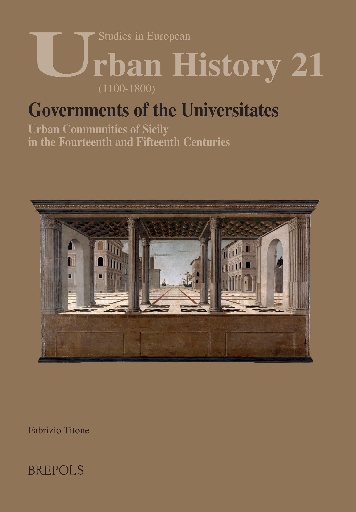
Governments of the Universitates: Urban Communities of Sicily in the Fourteenth and Fifteenth Centuries
show More to view fulltext, buy and share links for:Governments of the Universitates: Urban Communities of Sicily in the Fourteenth and Fifteenth Centuries show Less to hide fulltext, buy and share links for: Governments of the Universitates: Urban Communities of Sicily in the Fourteenth and Fifteenth CenturiesTitone refutes established historiographic interpretations in a long-term analysis of urban institutional and social transformations in Sicily during the Late Middle Ages and shows how distinct chronological divisions do not apply to these local governments characterized by both marked experimentation and striking continuity. The urban communities’ social and institutional deformities are brought to light along with the fact that intense communication among cities could produce common results. The pivotal role consistently played by the universitates in the affairs of the kingdom can be seen in the process of defining urban autonomy which often involved sovereign and community in interrelated decision making. Cities frequently oriented royal policy and this explains a unique feature of Sicilian pactism: a community might not implement a sovereign’s concession even though it ensued from municipal solicitations. The period of validity for a privilege when requested by only certain groups was linked to maintenance of the local status quo. Opposition from excluded parties and a shift in the balance of power originally underlying royal assent to a petition often meant the concession would not be put into without its being necessary to envolve the central government any further.
Fabrizio Titone is currently a post-doctoral Mellon Fellow at the Pontifical Institute of Mediaeval Studies in Toronto. His research interests focuses on the urban history of the Aragonese Crown.
-
-
-
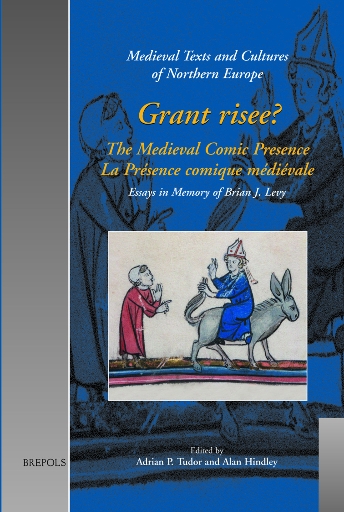
Grant risee?
The Medieval Comic Presence / La Présence comique médiévale: Essays in Memory of Brian J. Levy
show More to view fulltext, buy and share links for:Grant risee? show Less to hide fulltext, buy and share links for: Grant risee?Celebrating the work of Brian J. Levy in the realm of comedy and humour in the Middle Ages, this collection of twenty essays explores unusual, unexpected or unacknowledged elements of humour in medieval literature and art. Scholars from Britain, France, Italy, the USA, Denmark, and the Netherlands consider comic elements taking an unusual form; a comic presence in unexpected places; comic elements intentionally or unintentionally hidden; comic elements surprisingly vaunted; a comic presence in standard contexts which stands out for a particular reason; comic elements which are for some reason controversial; comic elements as yet unidentified or unacknowledged; a commonly acknowledged comic presence which is in fact no such thing. Essays in English and French deal with a broad range of subjects. If the Roman de Renart is particularly well represented amongst these essays, other subjects make up the majority of the book. These include: Cicero’s De Oratorei; the Mannekin pis; late-medieval wall paintings; German and French Drama; fabliaux; vernacular pious tales and dits; the romance epic Richard Coeur de Lyon; Les Quinze joyes de mariage; bestiaries; and misericords. Sometimes shocking, often surprising, and always intriguing, the medieval comic presence rarely corresponds to our expectations and assumptions. This book shows that in numerous cases the medieval joke is actually on the modern scholar.
-
-
-
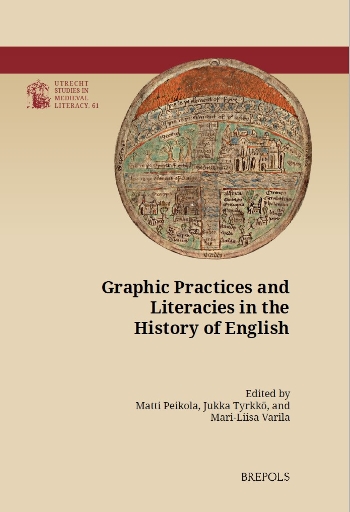
Graphic Practices and Literacies in the History of English
show More to view fulltext, buy and share links for:Graphic Practices and Literacies in the History of English show Less to hide fulltext, buy and share links for: Graphic Practices and Literacies in the History of EnglishGraphic devices such as tables and diagrams and other visual strategies of organising text and information are an essential part of communication. The use of these devices and strategies in books and documents developed throughout the medieval and early modern periods, as knowledge was translated and circulated in European vernaculars. Yet the use of graphic practices and multimodal literacies associated with them have mostly been examined in the context of Latin, Greek, Arabic, and Hebrew, and early vernacular writing remains an under-researched area. This volume brings together contributors from English historical linguistics and book studies to highlight multimodal graphic practices and literacies in texts across a range of genres and text types from the late medieval period until the eighteenth century. Contributions in the volume investigate both handwritten and printed materials, from books in the domains of medicine, religion, history, and grammar, to administrative records and letter writing.
-
-
-
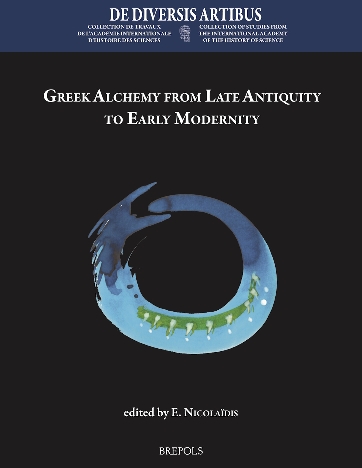
Greek Alchemy from Late Antiquity to Early Modernity
show More to view fulltext, buy and share links for:Greek Alchemy from Late Antiquity to Early Modernity show Less to hide fulltext, buy and share links for: Greek Alchemy from Late Antiquity to Early ModernityWhat do we really know about Greek alchemy throughout the ages? Certain periods, such as the Byzantine and post-Byzantine, have been somewhat overlooked. This volume engages in the the effort to shed light on certain aspects of Greek Alchemy from the 1st century CE to the 18th century, discussing and presenting relative sources, as well as the reception, transformation and use of this ‘art.’ The book also examines newly discovered manuscripts and offers a commented translation of Stephanos of Alexandria’s prayers. Furthermore, to better understand the material aspect of alchemy, it addresses the expectations and problems of laboratory replication and chemical explanation of early alchemical processes, and presents educational activities that use historical texts for the reconstruction of apparatuses in the school laboratory in secondary education.
-
-
-
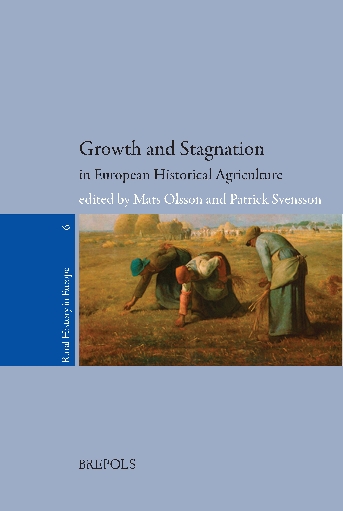
Growth and Stagnation in European Historical Agriculture
show More to view fulltext, buy and share links for:Growth and Stagnation in European Historical Agriculture show Less to hide fulltext, buy and share links for: Growth and Stagnation in European Historical AgricultureAgricultural production has been the basic and single most important factor for the well-being of mankind since the Neolithic revolution. Insufficient agricultural output has led to deficient means of subsistence and sometimes even starvation, while rich harvests brought about plenty and prosperity. Continuous increases in agricultural output have transformed whole societies and continents, bringing about radical changes in people’s lives and economic prospects.
This book is focused on measuring and explaining agricultural growth in Europe. For most countries statistics on agricultural production are either non-existing or shaky for the period up to the end of the nineteenth century. Consequently, researchers dealing with historical farming have been forced to put a lot of effort into reconstructing reliable data on inputs and outputs. The last decades have seen major progress, and new approaches to quantify and explain agricultural development have been adopted. The book is the result of these efforts and it encompasses estimations and explanations of European historical agriculture over time, from the ninth to the twentieth century, and over space, from the Iberian Peninsula to Scandinavia and from the British Isles to Russia.
Mats Olsson and Patrick Svensson are associate professors in Economic History at Lund University. Their major research area is the agricultural transformation of Sweden and its social and demographic consequences, covering the manorial system, peasant production and labour productivity, social mobility, and preindustrial land and capital markets.
-
-
-
Grumentum
The Epigraphical Landscape of a Roman Town in Lucania
show More to view fulltext, buy and share links for:Grumentum show Less to hide fulltext, buy and share links for: GrumentumAbout 130 Latin inscriptions shine a fascinating light on the medium-sized Roman town of Grumentum in ancient Lucania. Most of these stones have hardly been studied since the end of the 19th century. They now for the first time appear in a scholarly edition with revised Latin text, illustration, apparatus criticus, translation and extensive commentary. Both the introduction and the edition illustrate the richness of the material: archaeology, politics, institutions, the Roman army, economy, religion, family and life course, and Christianity are dealt with. The use learned scholars made of the inscriptions opens a window to Italian intellectual history from the Renaissance on. Written and presented in an accessible way, this volume avoids the pitfalls of highly technical epigraphical editions, and opens the field to archaeologists, (ancient) historians and a more general audience with an interest for Roman sites in general, and this hidden gem in Basilicata in particular.
-
-
-
Guerre, pouvoirs et idéologies dans l’Espagne chrétienne aux alentours de l’an mil
Actes du Colloque international organisé par le Centre d’Etudes Supérieures de Civilisation Médiévale, Poitiers-Angoulême (26, 27 et 28 septembre 2002)
show More to view fulltext, buy and share links for:Guerre, pouvoirs et idéologies dans l’Espagne chrétienne aux alentours de l’an mil show Less to hide fulltext, buy and share links for: Guerre, pouvoirs et idéologies dans l’Espagne chrétienne aux alentours de l’an milDepuis l’invasion arabo-berbère de la Péninsule ibérique en 711, les sociétés hispaniques chrétiennes sont très affectées par la guerre. Aux alentours de l’an mil, cette guerre prend une nouvelle dimension. Après une période de conflits internes et de défaites, culminant lors des fameux raids d’al-Mansûr, les principautés chrétiennes prennent l’offensive.
A cet égard, l’an mil constitue bien un tournant dans l’histoire de l’Espagne chrétienne. Vers le milieu du onzième siècle, la Reconquista est en marche, tandis que quatre forces politiques s’imposent: les royaumes de León, de Pampelune et d’Aragon, et les comtés catalans. La multiplication des conflits influe très fortement sur l’organisation des pouvoirs civils, et implique des enjeux fondamentaux dans la genèse des Espagnes chrétiennes médiévales, qui connaissent alors de profondes mutations culturelles, juridiques et idéologiques.
Les 26, 27 et 28 septembre 2002, plusieurs historiens et historiens de l’art venus de France, d’Espagne et d’Allemagne se sont retrouvés au Centre d’Etudes Supérieures de Civilisation Médiévale de Poitiers et à Angoulême pour travailler sur ces thèmes. Ils ont suivi trois axes de recherche, qui structurent les actes de ce colloque: la rencontre des mondes chrétien et musulman, la guerre comme enjeu de pouvoir et la dimension religieuse des idéologies.
-
-
-
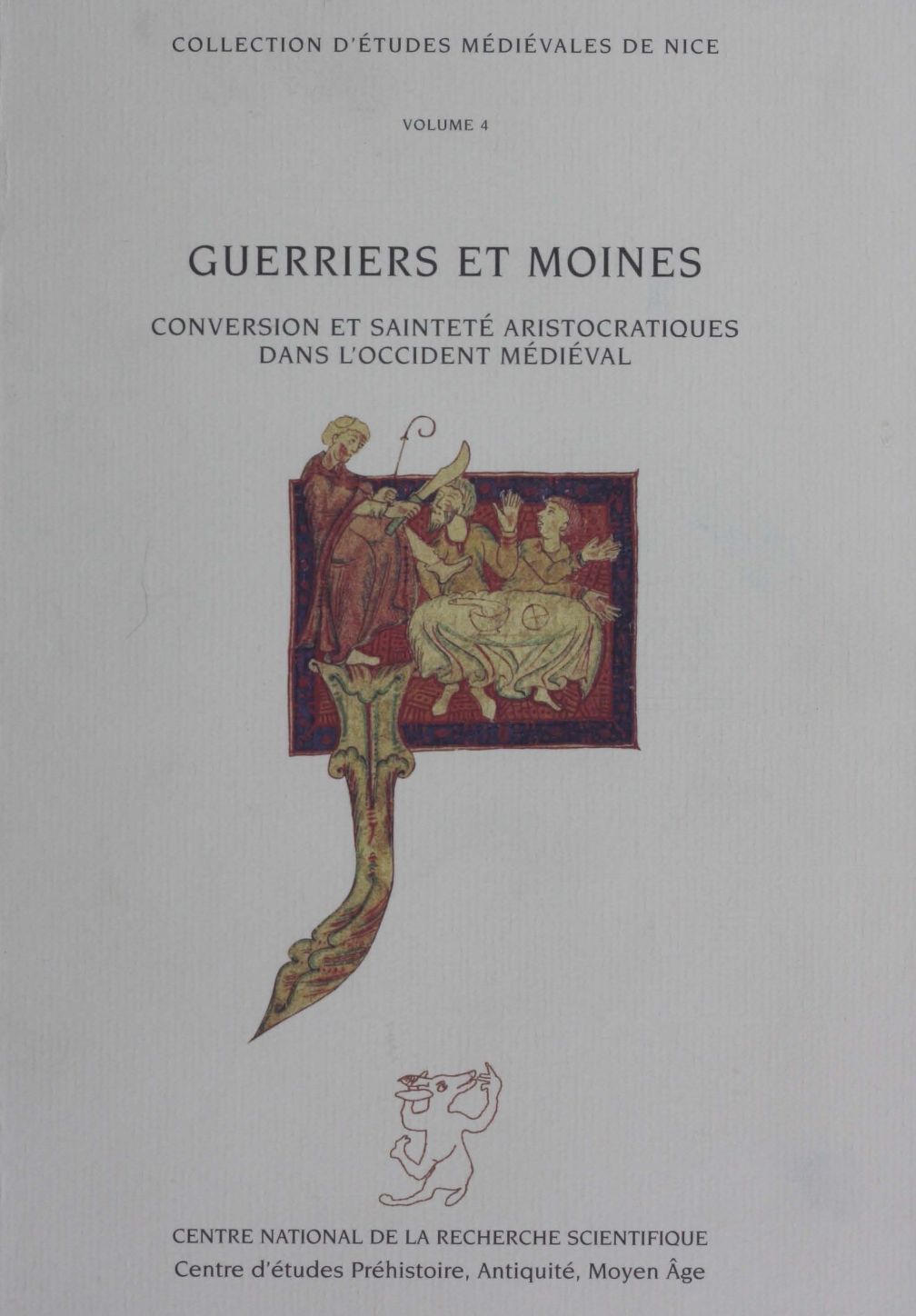
Guerriers et moines
Conversion et sainteté aristocratiques dans l'Occident médiéval (IXe-XIIe siècle)
show More to view fulltext, buy and share links for:Guerriers et moines show Less to hide fulltext, buy and share links for: Guerriers et moinesDans l'Occident du IXe siècle, les clercs se mirent à rédiger des traités pour définir la conduite que devaient observer les grands aristocrates, désormais envisagés comme les membres d'un « ordre des laïcs ». Un siècle plus tard, les modèles et recommandations proposés dans ces traités se retrouvent dans des récits, souvent composés par des moines, qui racontent la vie et vantent la sainteté de puissants laïcs ayant mené une activité guerrière avant de se « convertir », c'est-à-dire d'entrer au monastère. Ce sont ces Vies ou biographies pieuses, ainsi que le thème de la conversion de leurs protagonistes, qui constituent la matière principale de ce livre: pour la première fois, plusieurs chercheurs procèdent à un examen systématique des récits consacrés à ces saints des Xe, XIe et XIIe siècles, tout à la fois (ou successivement) guerriers et moines.
Dans quel but de tels récits ont-ils été mis par écrit ? À quoi ont-ils servi ? Que nous apprennent-ils sur la société féodale qui les a suscités ? Le développement de modèles de sainteté guerrière et d'un idéal de conversion des puissants est ici mis en rapport avec la réorganisation des structures sociales de l'Occident de cette époque. Les Vies de guerriers convertis participaient à une production idéologique, réalisée localement, au sein des ateliers d'écriture monastiques, qui définissait les formes légitimes de la domination et de la hiérarchie dans la société féodale, ainsi que les rapports entre les deux versants de la classe dominante, les guerriers et les moines.
-
-
-
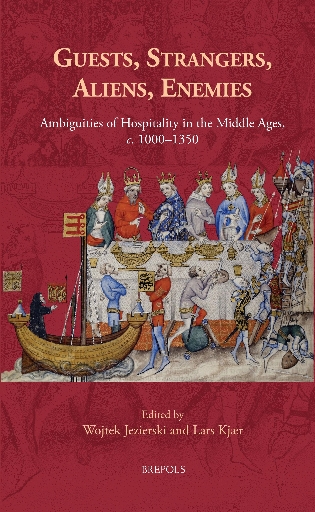
Guests, Strangers, Aliens, Enemies
Ambiguities of Hospitality in the Middle Ages, c. 1000–1350
show More to view fulltext, buy and share links for:Guests, Strangers, Aliens, Enemies show Less to hide fulltext, buy and share links for: Guests, Strangers, Aliens, EnemiesMany of our oldest and best-loved stories are about killing guests and betraying hosts. Hospitality is celebrated, in medieval texts and in medieval studies, as a way of binding individuals together and strengthening social cohesion, but both the practice and narration of hospitality was shot through with ambiguity and ambivalence.
This volume shifts the scholarly gaze from the high table — where kings, queens, and honoured guests are graciously served by skilled servants — to the shadowy corners of the hall, the places where gossip and complaint are exchanged, where outlaws hide under the guise of hospitality, where hostages and troublesome strangers are benched, where the light from the hall-fire reflects on drawn blades: prompting difficult reflections on the processes of extraction and predation that provided the material foundations for the feast.
The chapters in Guests, Strangers, Aliens, Enemies range from Silk Road caravanserais in Armenia and crusader relations in the Latin East, through ambassadorial and papal receptions in the Mediterranean, treatment of merchants and the poor in Scandinavia, elite feasts in Latin Europe, to hosting of outlaws and hostages in Eurasia. The authors explore ambiguities of hospitality in the Middle Ages through a wide range of sources and methodological approaches.
-
-
-
Guide pour l'histoire des ordres et congrégations religieuses, France, XVIe-XXe siècles
show More to view fulltext, buy and share links for:Guide pour l'histoire des ordres et congrégations religieuses, France, XVIe-XXe siècles show Less to hide fulltext, buy and share links for: Guide pour l'histoire des ordres et congrégations religieuses, France, XVIe-XXe sièclesCet ouvrage présente près de 250 Ordres et congrégations religieuses qui ont marqué l'histoire religieuse de la France du XVIe au XXe siècle. Sous la forme de notices historiques et bibliographiques rédigées par 190 chercheurs, universitaires et archivistes religieux, il fait une place importante à la mention et à la localisation des sources imprimées et manuscrites dans les dépôts publics et privés. Il se situe dans une perspective historique, autour de trois sections, l'héritage médiéval, la réforme catholique et la période contemporaine. Plusieurs index (sigles des congrégations, noms de personnes, dénominations des congrégations et mots clés) permettent des entrées croisées. Ce Guide s'adresse autant à des spécialistes du monde régulier et des congrégations, qu'à des étudiants ou chercheurs confrontés à un moment ou à un autre au phénomène congréganiste dans le cadre de travaux sur l'enseignement, le monde de la santé, la santé, l'histoire coloniale…
Daniel-Odon HUREL, né en 1963, est chargé de recherches au CNRS (Centre d'Etude des Religions du Livre) et chargé de conférences a l'École Pratique des Hautes Études (section Sciences religieuses). Spécialiste de l'histoire de la Congrégation de Saint-Maur et du monachisme bénédictin à l'époque moderne, il prépare actuellement l'inventaire et la publication de la correspondance de Dom Jean Mabillon ( † 1707).
-
-
-
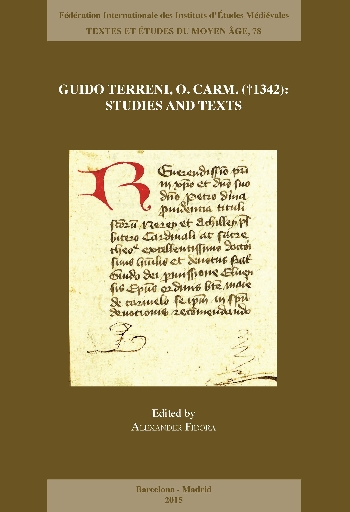
Guido Terreni, O. Carm. ( †1342)
Studies and Texts
show More to view fulltext, buy and share links for:Guido Terreni, O. Carm. ( †1342) show Less to hide fulltext, buy and share links for: Guido Terreni, O. Carm. ( †1342)The Catalan philosopher and theologian Guido Terreni (ca. 1270-1342) is one of the most outstanding fi gures in the history of the Carmelite order. The articles gathered in the first part of this volume explore the extremely rich, though still understudied, oeuvre of the Bishop of Majorca and Elne which comprises philosophicotheological, polemical, biblical and juridical texts. Since many of these works remain unedited, the second part of the volume contains selected text editions from Guido’s commentaries on Aristotle’s Physics and the Decretum Gratiani, as well as from his influential Quodlibetal Questions. Altogether, the sixteen contributions in this volume offer a comprehensive and up-to-date appraisal of Guido’s major contribution to the intellectual and political debates of his age and beyond.
-
-
-
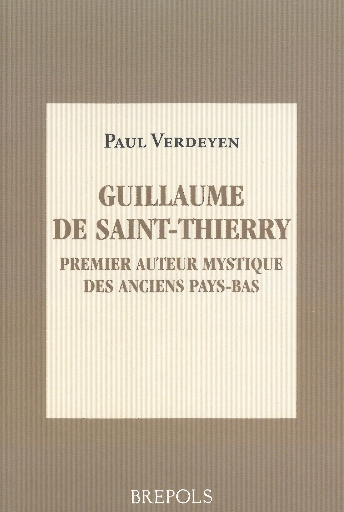
Guillaume de Saint-Thierry, premier auteur mystique des anciens Pays-Bas
show More to view fulltext, buy and share links for:Guillaume de Saint-Thierry, premier auteur mystique des anciens Pays-Bas show Less to hide fulltext, buy and share links for: Guillaume de Saint-Thierry, premier auteur mystique des anciens Pays-BasLa mystique occidentale naît dans l'infirmerie de l'abbaye de Clairvaux. Guillaume de Saint-Thierry et Bernard de Clairvaux y échangent leurs vues, pour la première fois dans l'église occidentale, sur le lien d'amour unissant le Créateur et sa créature. Cette intelligence inspirée de la langue et des images du Cantique des cantiques continuera à nourrir leurs écrits et aura une influence majeure sur d'autres grands auteurs mystiques tels que Ruusbroec, Hadewijch ou Jean de la Croix.
Paul Verdeyen analyse finement la pensée et la vie de Guillaume de Saint-Thierry: son combat contre Abélard et la scolastique, ses commentaires sur le Cantique des cantiques, son choix radical comme moine bénédictin en faveur du sévère ordre de Cîteaux, sa critique de l'affaiblissement de la vie religieuse dans les couvents et abbayes ...
Ce livre est très clair, et il est surtout original. Pour la première fois, cet auteur mystique oublié et pourtant si important a été remis à l'honneur. De nombreux extraits de son oeuvre traduits en français rendent désormais sa pensée accessible à tous.
Paul Verdeyen est professeur émérite de l'université d'Anvers. Il a réalisé l'édition critique de la version latine du Mirouer des simples âmes de la mystique Marguerite Porete et a consacré plusieurs ouvrages à l'histoire de la spiritualité au moyen âge.
-