


Brepols
Brepols is an international academic publisher of works in the humanities, with a particular focus in history, archaeology, history of the arts, language and literature, and critical editions of source works.2801 - 2900 of 3194 results
-
-
The Manuscripts of Leo the Great’s Letters
The Transmission and Reception of Papal Documents in Late Antiquity and the Middle Ages
show More to view fulltext, buy and share links for:The Manuscripts of Leo the Great’s Letters show Less to hide fulltext, buy and share links for: The Manuscripts of Leo the Great’s LettersThis book explores the transmission of the letters of Leo the Great (pope, 440-461). After setting out the contours of Leo’s papacy and the factors contributing to the sending and subsequent transmission of his letters to posterity, it deals in detail with around sixty collections of Leo’s letters and over 300 manuscripts ranging in date from the sixth up to the sixteenth century. Each period of the Middle Ages is introduced as the context for collecting and copying the letters, and the relationships between the letter collections themselves are traced. The result is a survey of the impact of Leo the Great upon Latin Christendom, an impact that was felt in theology and canon law, especially from the age of the Emperor Justinian to the Council of Ferrara-Florence, and moving through the major monasteries of Europe from Corbie to Clairvaux. At every cultural Renaissance, Leo was a presence, being copied, rearranged, interpreted, and eventually printed. This book is a testament to the legacy of one of the midfifth century’s most influential figures.
-
-
-
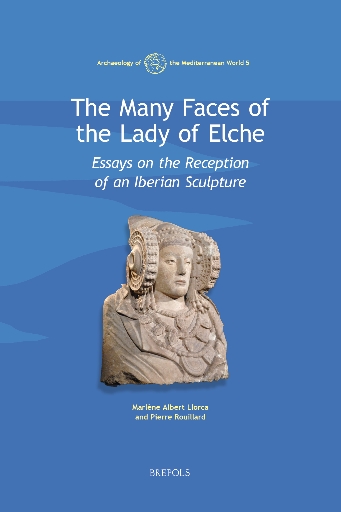
The Many Faces of the Lady of Elche
Essays on the Reception of an Iberian Sculpture
show More to view fulltext, buy and share links for:The Many Faces of the Lady of Elche show Less to hide fulltext, buy and share links for: The Many Faces of the Lady of ElcheOn 4 August 1897, farm workers in Elche — the site of ancient Ilici — discovered an Iberian sculpture of a woman that dated from the fifth– fourth centuries BCE. French archaeologist Pierre Paris dubbed this figure ‘the Lady of Elche’, and promptly purchased the sculpture on behalf of the Louvre Museum. There, she drew the attention of European scholars who were intrigued by her stylistic features, finally concluding that she bore witness to the existence of a specifically Iberian art. Since her discovery, the Lady of Elche has been a source of fascination not only for scholars, but also for artists, and she has become an icon of regional and national identity across Spain. This volume, co-written by an archaeologist and an anthropologist and translated here into English for the first time, seeks to explore the importance of the Lady of Elche, both for students of the past, and for the peoples of Iberia. The authors here explore not only what we know — and still do not know — about her creation, but also engage with key questions about what she represents for the men and women of our time who have questioned, manipulated, admired, loved, and often reinvented the singular beauty of this iconic figure.
-
-
-
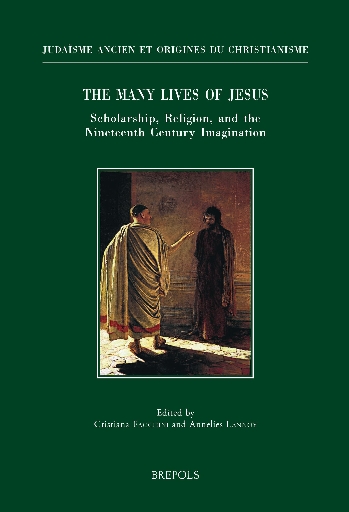
The Many Lives of Jesus
Scholarship, Religion, and the Nineteenth Century Imagination
show More to view fulltext, buy and share links for:The Many Lives of Jesus show Less to hide fulltext, buy and share links for: The Many Lives of JesusThis collection of essays aims to offer a multi-disciplinary approach to nineteenth and early twentieth century scholarship on Jesus and early Christianity, which illustrates the width and depth of the questions that critical reflections on the historical Jesus raised in and beyond the field of liberal theology. More precisely, it focuses on Jesus scholarship as practiced in various disciplines and fields that engaged with the academic study of religion. On the other hand, this volume aims for a comprehensive, multi-perspectivist historicization of this scholarship, considering the full range of religious, cultural, racial, political, and national dynamics that hosted the many controversies over the historical Jesus.Divided into five sections, the eleven essays in this book are organized according to guiding themes and a loose chronological structure. The first section revisits the roots of the Forschung in Liberal-Protestant Germany, and especially focuses on the maturation of historical-critical consciousness in the work of Reimarus (and his predecessors), Schleiermacher and Strauss. The second section is concerned with the rise of the “oriental Jesus” against the background of the making of the academic, non-theological study of religion as a scientific discipline. The third section explores how themes related to the historical Jesus and the rise of Christianity were treated among different academic disciplines from the early second half of the nineteenth century onwards. The fourth section explores how the historical Jesus was at the same time further explored by the biblical scholars and theologians who integrated new comparative methods in their research. The fifth section, finally, highlights the cultural-political appropriations that were made of scholarly writings on Jesus, which not rarely constituted the bricks with which radical political movements built their houses.
-
-
-
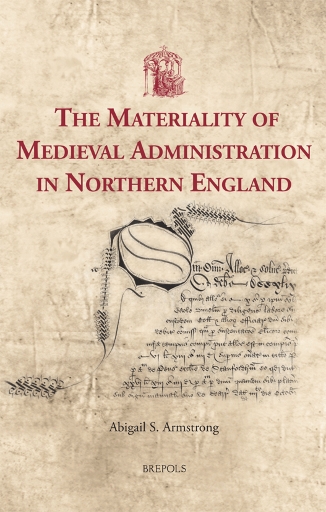
The Materiality of Medieval Administration in Northern England
show More to view fulltext, buy and share links for:The Materiality of Medieval Administration in Northern England show Less to hide fulltext, buy and share links for: The Materiality of Medieval Administration in Northern EnglandIn the late Middle Ages, the Percy earls of Northumberland and the bishops of Durham were two of the largest landholders in the North East of England. This book is a study of their estate administrations based on the extant manorial accounts from the fourteenth through sixteenth centuries. Examining the documents holistically, it investigates the shapes of the records and the materials they were written upon, as well as how they were used and stored to provide new insights into late medieval lordly administration. Such a material-focussed approach explores the concurrent use of rolls, booklets, paper, and parchment for different types of manorial accounts and at different steps of the multistage production and audit process. It also examines the hands drafting, editing, and auditing the accounts, in addition to the layout and presentation of the contents of the records to further our understanding of the written burden of proof required in the management and audit of large estates in late medieval England. Studying the financial accounts of the earls of Northumberland and the bishops of Durham from a material perspective reveals two highly sophisticated administrative systems and structures of accountability.
-
-
-

The Materiality of Sound in Chant Manuscripts in the East
show More to view fulltext, buy and share links for:The Materiality of Sound in Chant Manuscripts in the East show Less to hide fulltext, buy and share links for: The Materiality of Sound in Chant Manuscripts in the EastThe two books of Scriptor, Cantor & Notator present an innovative multi-author project dealing with the complex interconnections between learning, writing and performing chant in the Middle Ages. A number of different methodological approaches have been employed, with the aim of beginning to understand the phenomenon of chant transmission over a large geographical area, linking and contrasting modern definitions of East and West. Thus, in spite of this wide geographical spread, and the consequent variety of rites, languages and musical styles involved, the common thread of parallels and similarities between various chant repertoires arising from the need to fix oral repertories in a written form, and the challenges involved in so doing, are what bring this wide variety of repertoires and approaches together. This multi-centric multi-disciplinary approach will encourage scholars working in these areas to consider their work as part of a much larger geographical and historical picture, and thus reveal to reader and listener more, and far richer, patterns of connections and developments than might otherwise have been suspected. The Materiality of Sound in Chant Manuscripts in the East brings together articles on ancient Greek, Byzantine, Coptic and Armenian music scripts in the East. Together with the collection of essays published in The Materiality of Sound in Chant Manuscripts in the West, these books discuss local scribal peculiarities and idiosyncrasies beyond the cultural and geographical contexts of production and uses of their manuscript sources.
-
-
-
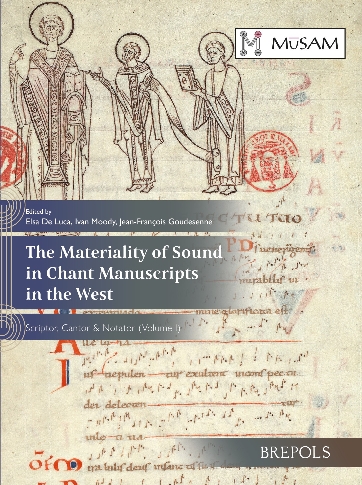
The Materiality of Sound in Chant Manuscripts in the West
show More to view fulltext, buy and share links for:The Materiality of Sound in Chant Manuscripts in the West show Less to hide fulltext, buy and share links for: The Materiality of Sound in Chant Manuscripts in the WestScriptor, Cantor & Notator is an innovative multi-author project dealing with the complex interconnections between learning, writing and performing chant in the Middle Ages. A number of different methodological approaches have been employed, with the aim of beginning to understand the phenomenon of chant transmission over a large geographical area, linking and contrasting modern definitions of East and West. Thus, in spite of this wide geographical spread, and the consequent variety of rites, languages and musical styles involved, the common thread of parallels and similarities between various chant repertoires arising from the need to fix oral repertories in a written form, and the challenges involved in so doing, are what bring this wide variety of repertoires and approaches together. This multi-centric multi-disciplinary approach will encourage scholars working in these areas to consider their work as part of a much larger geographical and historical picture, and thus reveal to reader and listener more, and far richer, patterns of connections and developments than might otherwise have been suspected.
Scriptor, Cantor & Notator is published in two books. The first, The Materiality of Sound in Chant Manuscripts in the West, brings together articles on several different families of early music scripts in the Latin West and provides a vividly diverse picture of some of the best current scholarship on the various types of ancient and medieval musical notation.
-
-
-
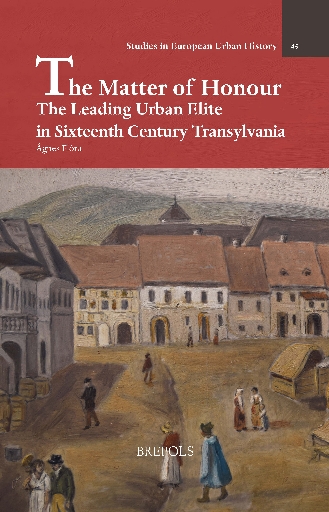
The Matter of Honour
The Leading Urban Elite in Sixteenth Century Transylvania
show More to view fulltext, buy and share links for:The Matter of Honour show Less to hide fulltext, buy and share links for: The Matter of HonourThis monograph entails a comparative study of two early modern urban centers in Transylvania: Cluj (Kolozsvár, Klausenburg) and Sibiu (Nagyszeben, Hermannstadt). It develops a new perspective on urban history in Transylvania, by filling the recent historiographical lacuna on early modern urban elites. This book attempts to combine traditional and modern research methods, by analyzing and comparing a large volume of unpublished data along three research lines. First, the historical background within which of the town elites in Cluj and Sibiu monopolized power are analyzed, including the development of town autonomy and governmental systems, the legal background of urban leadership, its continuity and the conditions under which the political urban elite acted in each town. Secondly, a thorough archontological and prosopographical research, with a special focus on marriage strategies and professional competence leads to a socio-political characterisation of the elites of Cluj and Sibiu. Finally, an attempt is made to provide insight into the representation and self-fashioning of these elites.
-
-
-
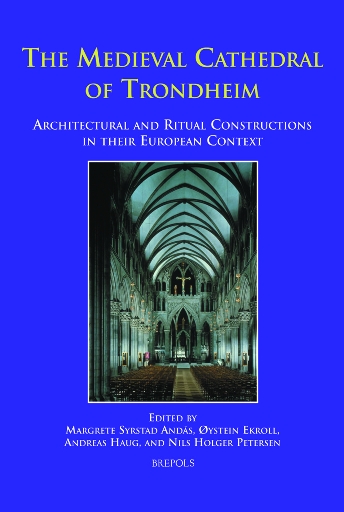
The Medieval Cathedral of Trondheim
Architectural and Ritual Constructions in their European Context
show More to view fulltext, buy and share links for:The Medieval Cathedral of Trondheim show Less to hide fulltext, buy and share links for: The Medieval Cathedral of TrondheimMedieval cathedrals and the various practices connected to them form an important and complex part of the European cultural heritage. The buildings themselves and their reception into the modern arts ensure their presence within today’s cultural memories and sensibilities. In the mid-twelfth century, a new archbishop’s seat was erected in the Norwegian city of Trondheim (or Nidaros) in the far north of Europe. This interdisciplinary volume, written by scholars of history, architecture, and liturgy, explores the medieval cathedral of Trondheim as a local construction in a European context. As a see of the Western Church, it was set in an international Latinate culture. At the same time, the construction of the building itself and the ritual practices in and around it were influenced by local political, religious, and cultural conditions. The relationship between the physical construction of a cathedral and its function in medieval liturgical and other ritual practices is a topic of wide relevance for architectural and liturgical scholarship. The so-called Ordo Nidrosiensis, the thirteenth-century ordinal of the province of Nidaros, is an immense help in interpreting the architectural construction and sacred space of Nidaros Cathedral and the Ordo is dealt with in many of the articles. In accordance with general medieval practice, both the Nidaros ordinal and this volume may be described as international in content but edited with regard to local considerations.
-
-
-
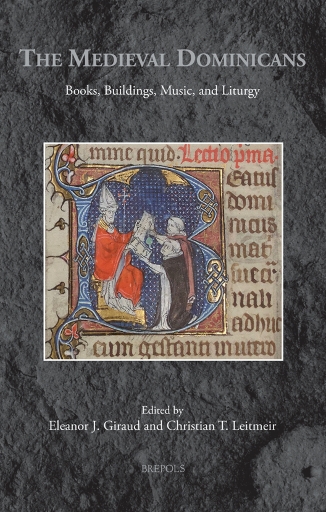
The Medieval Dominicans
Books, Buildings, Music, and Liturgy
show More to view fulltext, buy and share links for:The Medieval Dominicans show Less to hide fulltext, buy and share links for: The Medieval DominicansThe Order of Preachers has famously bred some of the leading intellectual lights of the Middle Ages. While Dominican achievements in theology, philosophy, languages, law, and sciences have attracted much scholarly interest, their significant engagement with liturgy, the visual arts, and music remains relatively unexplored. These aspects and their manifold interconnections form the focal point of this interdisciplinary volume.
The different chapters examine how early Dominicans positioned themselves and interacted with their local communities, where they drew their influences from, and what impact the new Order had on various aspects of medieval life. The contributors to this volume address issues as diverse as the making and illustrating of books, services for a king, the disposition of liturgical space, the creation of new liturgies, and a Dominican-made music treatise. In doing so, they seek to shed light on the actions and interactions of medieval Dominicans in the first centuries of the Order’s existence.
-
-
-
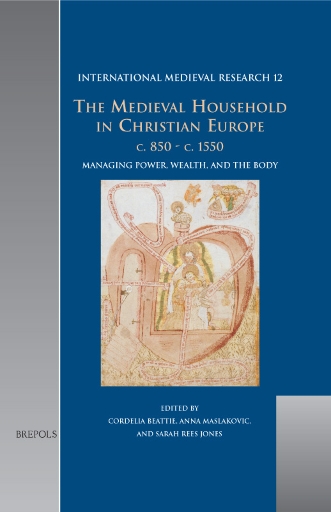
The Medieval Household in Christian Europe, c. 850-c. 1550
Managing Power, Wealth, and the Body
show More to view fulltext, buy and share links for:The Medieval Household in Christian Europe, c. 850-c. 1550 show Less to hide fulltext, buy and share links for: The Medieval Household in Christian Europe, c. 850-c. 1550This volume asks whether there was a common structure, ideology, and image of the household in the medieval Christian West. In the period under examination, noble households often exercised great power in their own right, while even quite humble households were defined as agents of government in the administration of local communities. Many of the papers therefore address the public functions and perceptions of the household, and argue that the formulation of domestic (or family) values was of essential importance in the growth and development of the medieval Christian state.
Contributors to this volume of collected essays write from a number of disciplinary perspectives (archaeological, art-historical, historical and literary). They examine socially diverse households (from peasants to kings) and use case studies from different regions across Europe in different periods within the medieval epoch from c. 850 to c. 1550. The volume both includes studies from archives and collections not often covered in English-language publications, and offers new approaches to more familiar material. It is divided into thematic sections exploring the role of households in the exercise of power, in controlling the body, in the distribution of wealth and within a wider economy of possessions.
-
-
-
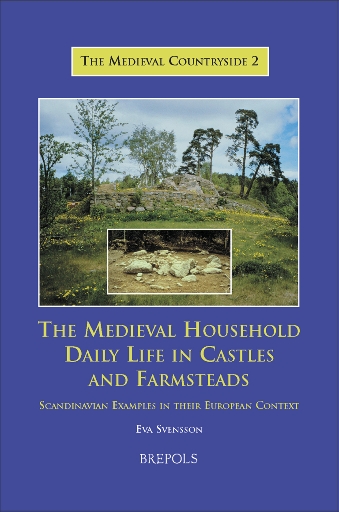
The Medieval Household: Daily Life in Castles and Farmsteads
Scandinavian Examples in their European Context
show More to view fulltext, buy and share links for:The Medieval Household: Daily Life in Castles and Farmsteads show Less to hide fulltext, buy and share links for: The Medieval Household: Daily Life in Castles and FarmsteadsRecent archaeological excavations in Scandinavia provide us with a fascinating insight into the household and its function as a social focus for people of different medieval social estates. This book investigates four excavated Swedish sites - the castles of Saxholmen and Edsholm, and the rural settlements of Skramle and Skinnerud - in order to juxtapose the daily life of nobles and peasants. The author argues that the practices of everyday life revealed by these sites offer new insights into social traditions, mentalities, and cultural patterns. In particular, she asserts that notwithstanding the huge social gulf between the peasantry and the nobility in medieval Scandinavia, the two social groups shared some fundamental experiences which point to a common cultural milieu. In turn, the author uses daily life as a prism for addressing the formation of common European cultural traits during the medieval period by comparing these excavations with material from comparable sites in Central and Western Europe. By means of this comparison, the author questions the degree to which we may talk about a process of ‘Europeanization’ taking place in this era.
-
-
-
The Medieval Paradigm
Religious Thought and Philosophy
show More to view fulltext, buy and share links for:The Medieval Paradigm show Less to hide fulltext, buy and share links for: The Medieval ParadigmMedieval culture is marked by a general acceptance of the mental attitude which both recognized and accepted the truths of the dominant religion. This is, then, the ‘general paradigm’ that programmatically directs the paths and results of intellectual activity in the Middle Ages. In the various fields of scientific research, in the different epochs and in the manifold social and institutional situations, there are also produced - based on the ‘general paradigm’ - many ‘particular paradigms’, which carry out some specified and graduated effects of the general one.
The idea pursued during the Congress is an attempt to determine, describe and evaluate the general and particular results the ‘paradigm’ had on the maturation of medieval philosophical and scientific thought with regard to the relationship - that was a dynamic and reciprocal one, and was not necessarily reduced to a theological understanding -between rational inquiry and religious belief.
List of Contributors: G. Alliney, M. Bartoli, A. Bisogno, A. Cacciotti, S. Carletto, C. Casagrande, A. Conti, G. d’Onofrio, P.F. De Feo, C. Erismann, G. Fioravanti, F. Fiorentino, A. Galonnier, R. Gatti, J. Gavin, M. Geoffroy, A. Guidi, M. Laffranchi, R. Lambertini, M. Lenzi, E. Mainoldi, C. Martello, C. Mews, A. Morelli, P. Müller, F. Paparella, M. Parodi, G. Perillo, I. Peta, A. Petagine, P. Porro, F. Seller, K. Tachau, Ch. Trottmann, S. Vecchio, M. Vittorini, J. Ziegler
-
-
-
The Medieval South Caucasus. Artistic Cultures of Albania, Armenia and Georgia
show More to view fulltext, buy and share links for:The Medieval South Caucasus. Artistic Cultures of Albania, Armenia and Georgia show Less to hide fulltext, buy and share links for: The Medieval South Caucasus. Artistic Cultures of Albania, Armenia and GeorgiaThe volume serves as an introduction to what its editors have chosen to call the “artistic cultures” prevalent during the Middle Ages in the region of the South Caucasus. Although far from comprehensive in terms of material, chronology and geography, the volume intends to raise awareness of a region whose artistic wealth and cultural diversity has remained relatively unknown to most medievalists. Stretching from Eastern Anatolia and the Black Sea in the West to the Caspian Sea in the East, and from the snow-capped Great Caucasus mountain range in the north to the Armenian highlands in the south, medieval southern Caucasia was originally divided into the kingdom of Caucasian Albania, Greater and Lesser Armenia, and western and eastern Georgia, that is, the kingdoms of Lazica (Egrisi) and Iberia (Kartli) respectively. Together, these entities made the South Caucasus a true frontier region between Europe and Asia and a place of transcultural exchange. Its official Christianization began as early as in the fourth century, even before Constantine the Great founded Constantinople or had himself been converted to Christianity. During the subsequent centuries, the region became a well-connected and strategic buffer zone for its neighboring and occupant Byzantine, Persian, Islamic, Seljuk and Mongol powers. And although subject to constantly shifting borders, the medieval kingdoms of the South Caucasus remained an internally diverse yet shared and distinct geographical and historical unity. Far from being isolated, these cultures were part of a much wider medieval universe. Because of the transcultural nature and elevated artistic quality of their objects and monuments, they have much to offer the field of art history, which has recently been challenged to think more globally in terms of transculturation, movement and appropriation among medieval cultures.
-
-
-
The Medieval Translator. Traduire au Moyen Age
show More to view fulltext, buy and share links for:The Medieval Translator. Traduire au Moyen Age show Less to hide fulltext, buy and share links for: The Medieval Translator. Traduire au Moyen AgeLe premier volume de cette collection chez Brepols est le cinquième d'une série du même nom, éditée par Roger Ellis, et publiée précédemment chez d'autres éditeurs. Comme ses prédécesseurs, il présente les communications faites lors de colloques internationaux et traitant de la théorie et de la pratique de la traduction au moyen âge. Les articles figurant au sommaire de ce volume ont été présentés lors du colloque de Conques, les 26-29 juillet 1993. Les articles sont rédigés dans une des langues internationales et sont accompagnés de résumés en anglais. Le fil conducteur est le phénomène de la traduction au moyen âge, et la série contient tant les études spécialisées que les approches plus générales. L'article phare du volume 5 (K. Ashley & P. Sheingorn, The translations of Sainte Foy: bodies, textes and places), par exemple, traite de l'interaction entre la transmission littéraire et la translation de reliques, en partant du cas de sainte Foy. D'autre part, la question des traductions post-médiévales ou contemporaines de textes mediévaux est également abordée.
-
-
-
The Medieval Translator. Traduire au Moyen Age
Proceedings of the International Conference of Göttingen (22-25 July 1996). Actes du Colloque international de Göttingen (22-25 juillet 1996)
show More to view fulltext, buy and share links for:The Medieval Translator. Traduire au Moyen Age show Less to hide fulltext, buy and share links for: The Medieval Translator. Traduire au Moyen AgeMost of the papers in this volume consider translation in medieval England (in both Old and Middle English and Anglo-Norman), though translations into other medieval vernaculars are also represented (Icelandic, Dutch, German), as is translation of classical Greek into Latin. Most of the translations are anonymous, though major translators are also included: Cicero, King Alfred, Robert Grosseteste, Jean de Meun, Chaucer. Several papers consider the troubled times during the late fourteenth and early fifteenth centuries in England, when a number of major translation projects were undertaken; others explore the place of translation in daily life (pro forma letters, gynaecological treatises, forged documents in support of a local shrine, texts rewritten so as to update legal references in them); another considers the importance of paper for the rapid dissemination of translated texts. Also featured prominently is the translation of different sorts of religious texts, originally variously in monastic, eremitical and mendicant milieux, and including the 'translations' for their readers of divine messages received by female visionaries. The more generous understanding of the term indicated by the use of quotation marks for these latter is also reflected in a paper considering representations of heaven and hell in visual arts. All the contributions share an awareness of translation as culturally specific - as originating in and addressing specific contexts: of; for example; nationality, politics, class and gender. Above all, translation as a new thing; with a life of its own, may provide a fuller, as well as a different, realisation of what was only partly present in its original.
-
-
-
The Medieval Translator. Traduire au Moyen Age
show More to view fulltext, buy and share links for:The Medieval Translator. Traduire au Moyen Age show Less to hide fulltext, buy and share links for: The Medieval Translator. Traduire au Moyen Age[Fundamental to all translation work, the concept of “displacement” allows one to take into account the multiple successive states inhering in a single text, and to interpret these variations. Translation is, in effect, a form of transfer; more specifically, it involves a movement from one context to another, be it national, social, political, historical, linguistic or religious. The texts examined here illustrate, each in their unique way, the relationship between contextual change and audience. They are also the product of subtle interactions between a variety of elements, the result of which is a “reinvention” of their respective roles and uses over time. For example, a text intending to entertain may also have educational outcomes; a book of local miracles may attract pilgrims and contribute to the economic life of a monastery; a text and its translations may at some point be appropriated for polemical purposes, while a library of translated texts founded on humanist principals may also serve political ends.
Furthermore, each successive adaptation and its accompanying annotations impacts upon the tonality of a text. While this diversity of meanings may inspire some (such as the medieval poet Marie de France), it moreover raises a number of important and difficult questions for the modern translator. How, for example, does one translate the “harmonics” underlying a series of mystical puns? The “solution” usually involves a compromise that both enhances and undermines the translated text.
This volume presents a selection of twenty-eight papers delivered at the Seventh International Conference dedicated to The Theory and Practice of Translation in the Middle Ages, which took place at the University of Paris III — Nouvelle Sorbonne in July 2004. The period covered by the texts and their translations extends from antiquity to the present day. The literary and critical breadth of these papers, as well as the rigorous interrogation of the modern translation theory, illustrates the remarkable vitality and diversity of current scholarship in this field.
,Au cœur de toute activité de traduction, le concept de déplacement permet de rendre compte des multiples états successifs d’un même texte et d’en interpréter les variations. Toute traduction est en effet une translation, c’est-à-dire un changement d’environnement, que ce dernier soit national, social, politique, historique, linguistique ou ecclésial. Les textes examinés ici témoignent chacun à sa manière des transformations qu’ils ont subies lorsque, changeant de langue, de style ou d’époque, ils ont changé de destinataires. La dynamique qui les traverse se nourrit de subtils côtoiements: un désir légitime de divertir peut fort bien s’accommoder d’une intention didactique; un recueil de miracles locaux peut attirer des pèlerins, contribuant ainsi à la vie économique d’un monastère; un texte et ses traductions peuvent devenir l’objet d’utilisations polémiques; se constituer en humaniste une bibliothèque de traductions peut aussi servir un dessein politique.
Par ailleurs les transpositions successives et leurs gloses, comme en musique, entraînent des changements de tonalité. Ce ‘surplus’ de sens qu’encourage Marie de France pourra cependant se heurter à des résistances: comment par exemple préserver d’une langue à l’autre toutes les harmoniques que libère un enchaînement de jeux de mots mystiques? Ainsi l’inévitable compromis qui s’imposera au traducteur sera souvent le choix d’un enrichissement doublé d’une déperdition.
Ce volume présente une sélection des communications entendues lors du septième colloque international consacré à la théorie et la pratique de la traduction des textes au Moyen Age qui s’est tenu à l’Université de Paris III — Sorbonne Nouvelle en juillet 2004. La période couverte par ces textes et leurs traductions s’étend de l’Antiquité jusqu’à nos jours. Ce sont au total vingt-huit études qui sont ici proposées. La richesse des domaines abordés, la haute technicité des analyses, de même que la place faite aux questionnements de la traductologie moderne illustrent la remarquable vitalité des études actuelles relatives aux multiples aspects de la traduction des textes médiévaux.
]
-
-
-
The Medieval Translator. Traduire au Moyen Age
In principio fuit interpres
show More to view fulltext, buy and share links for:The Medieval Translator. Traduire au Moyen Age show Less to hide fulltext, buy and share links for: The Medieval Translator. Traduire au Moyen AgeTranslation studies centering on medieval texts have prompted new ways to look at the texts themselves, but also at the exchange and transmission of culture in the European Middle Ages, inside and outside Europe. The present volume reflects, in the range and scope of its essays, the itinerant nature of the Medieval Translator Conference, at the same time inviting readers to reflect on the geography of medieval translation. By dividing the essays presented here into four groups, the volume highlights lines of communication and shifts in areas of interest, connecting the migrating nature of the translated texts to the cultural, political and linguistic factors underlying the translation process. Translation was, in each case under discussion, the result or the by-product of a transnational movement that prompted the circulation of ideas and texts within religious and/or political discussion and exchange.
Thus the volume opens with a group of contributions discussing the cultural exchange between Western Europe and the Middle East, identifying the pivotal role of Church councils, aristocratic courts, and monasteries in the production of translation. The following section concentrates on the literary exchanges between three close geographical and cultural areas, today identifiable with France, Italy and England, allowing us to re-think traditional hypotheses on sites of literary production, and to reflect on the triangulation of language and manuscript exchange. From this triangulation the book moves into a closer discussion of translations produced in England, showing in the variety and chronological span covered by the contributions the development of a rich cultural tradition in constant dialogue with Latin as well as contemporary vernaculars. The final essays offer a liminal view, considering texts translated into non-literary forms, or the role played by the onset of printing in the dissemination of translation, thus highlighting the continuity and closeness of medieval translation with the Renaissance.
Alessandra Petrina is Associate Professor of English Literature at the Università degli Studi di Padova, Italy. She has published extensively on late-medieval and Renaissance literature and intellectual history, as well as on modern children’s literature, and edited a number of volumes on early modern English culture.
-
-
-
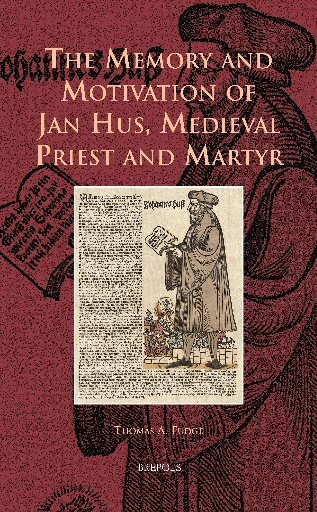
The Memory and Motivation of Jan Hus, Medieval Priest and Martyr
show More to view fulltext, buy and share links for:The Memory and Motivation of Jan Hus, Medieval Priest and Martyr show Less to hide fulltext, buy and share links for: The Memory and Motivation of Jan Hus, Medieval Priest and MartyrJan Hus (1371-1415) gave his name to a social and religious revolution which captured the attention of Europe. The central figure in a late medieval reform movement, he died a condemned heretic. Martyrdom made him famous but his essential identity has remained a point of controversy. Who was Jan Hus?
This work explores the driving forces in the life and work of this medieval priest as he moved from obscurity to the vulnerability of a publicly accused heretic and the disgraceful prelude to martyrdom. It also focuses on the construction and facilitation of the memory of Jan Hus. Historical “facts” are often compelling but these postulations cannot be approached apart from the manner and process in which those events are remembered.This book illuminates the life and work of the medieval priest and martyr who rose from humble origins to national hero and popular saint on the platform of a unique and renewed practice of the Christian faith. So profound were his challenges to the church and so bellicose were the reactions to his untimely demise, that the name Jan Hus was destined never to fade into oblivion.
-
-
-
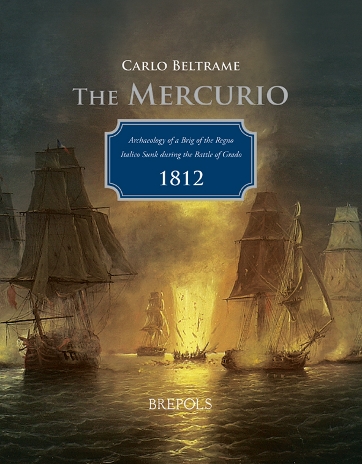
The Mercurio
A Brig of the Regno Italico Sunk During the Battle of Grado (1812)
show More to view fulltext, buy and share links for:The Mercurio show Less to hide fulltext, buy and share links for: The MercurioThe Italian brig Mercurio was escorting the French 80-gun vessel Rivoli from Venice on its very first expedition, in 1812, when it was sunk by an English ship during the Battle of Grado. Since the wreck was identified, the Mercurio has been the site of several underwater excavations, beginning in 2001 and continuing from 2004 to 2011 by a team from the Università Ca’ Foscari of Venice, together with the local Soprintendenza. Their work revealed a number of extraordinary finds and provided a unique insight into life - and death - on a brig during the period of the Napoleonic wars.
This volume offers a discussion and catalogue of the finds yielded by the Mercurio, including photogrammetry-plans of the bow and stern, together with an analysis of ship-building technique, detail of the equipment and arms used, and, uniquely, close detail of finds connected to the crew themselves. This is one of the few sites from the Mediterranean where human remains have been preserved, and through the work of anthropologists, it has even been possible to try and identify one of the men named on the crew list. Discovery of buttons, footwear, precious items, and even foodstuffs also serve to shed light on the daily life of the crew. This volume thus draws together a wealth of archaeological and historical information to tell the hitherto untold story of the Mercurio.
-
-
-

The Middle English Life of Christ
Academic Discourse, Translation, and Vernacular Theology
show More to view fulltext, buy and share links for:The Middle English Life of Christ show Less to hide fulltext, buy and share links for: The Middle English Life of ChristHow much did Latin academic theoretical discourse inform mainstream late medieval English literature? Rather than asking this question of secular poetic fiction (Chaucer, Gower), this book investigates a more central genre, lives of Christ. Any adequate understanding of vernacular textuality, in an age when most literature was translation of some sort, cannot escape the question of the influence of theory on transactions and ideology of mainstream literary culture in negotiating authority. Where better to test this than the life of Christ?
Derived from the Gospels, this genre provided the set text for human existence. Too often, however, it has been regarded by modern scholarship as an infantilizing clerical sop to a laity deprived of Scripture and intellectual or contemplative ambition. Inquiry into the translating and the spirituality of Middle English lives of Christ yields, however, eloquent examples not of antagonism and rupture between Latin and vernacular but of productive compatibility. This challenges the common modern supposition that vernacular texts and vernacular theology are at odds with Latinate clerical culture, and restores the genre’s historic value. Like their dissenting counterparts, lives of Christ, as well as being of interest in their own right, invested in learned literary and theological norms in their textual transactions. Such reliance demands modern (re)consideration.
-
-
-
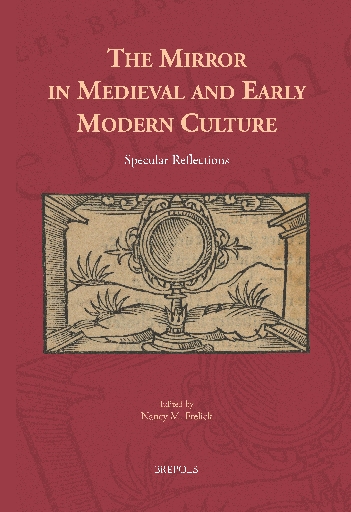
The Mirror in Medieval and Early Modern Culture
Specular Reflections
show More to view fulltext, buy and share links for:The Mirror in Medieval and Early Modern Culture show Less to hide fulltext, buy and share links for: The Mirror in Medieval and Early Modern CultureMirrors have always fascinated humankind. They collapse ordinary distinctions, making visible what is normally invisible, and promising access to hidden realities. Yet, these liminal objects also point to the limitations of human perception, knowledge, and wisdom. In this interdisciplinary volume, specialists in medieval and early modern science, cultural and political history, as well as art history, philosophy, and literature come together to explore the intersections between material and metaphysical mirrors in Europe and the Islamic world. During the time periods studied here, various technologies were transforming the looking glass as an optical device, scientific instrument, and aesthetic object, making it clearer and more readily available, though it remained a rare and precious commodity. While technical innovations spawned new discoveries and ways of seeing, belief systems were slower to change, as expressed in the natural sciences, mystical writings, literature, and visual culture. Mirror metaphors based on analogies established in the ancient world still retained significant power and authority, perhaps especially when related to Aristotelian science, the medieval speculum tradition, religious iconography, secular imagery, Renaissance Neoplatonism, or spectacular Baroque engineering, artistry, and self-fashioning. Mirror effects created through myths, metaphors, rhetorical strategies, or other devices could invite self-contemplation and evoke abstract or paradoxical concepts. Whether faithful or deforming, specular reflections often turn out to be ambivalent and contradictory: sometimes sources of illusion, sometimes reflections of divine truth, mirrors compel us to question the very nature of representation.
-
-
-

The Missing Interaction: Science and Diplomacy in the Early Cold War
show More to view fulltext, buy and share links for:The Missing Interaction: Science and Diplomacy in the Early Cold War show Less to hide fulltext, buy and share links for: The Missing Interaction: Science and Diplomacy in the Early Cold WarThis book enriches our understanding of the circumstances and conditions that have made the relation between science and diplomacy a primary concern of the political landscape in the twenty first century. As western liberal democracy and its effects on the environment but also on global war politics are under question, authors in this collective volume rethink the effects that an ahistorical definition of science diplomacy has had on world politics. They document the historicity of the entanglement between, on the one hand, epistemic practices and knowledge production and, on the other, foreign policy strategies and negotiation tactics. The book is the first in a series of what Rentetzi calls 'Diplomatic Studies of Science', a highly inter- and trans- disciplinary field that analyzes science and diplomacy as historically co-produced. It primarily focuses on the entanglements of science and diplomacy after the Second World War, bridging history of science, diplomatic history and international relations
-
-
-
The Multilingual Physiologus
Studies in the Oldest Greek Recension and its Translations
show More to view fulltext, buy and share links for:The Multilingual Physiologus show Less to hide fulltext, buy and share links for: The Multilingual PhysiologusThe Physiologus is an ancient Christian collection of astonishing stories about animals, stones, and plants that serve as positive or negative models for Christians. Written originally in Greek, the Physiologus was translated in ancient times into Latin, Armenian, Syriac, Coptic, Ethiopic, Georgian, Arabic, and Old Slavonic. Throughout its transformations and adaptations, the Physiologus has never lost its attraction.
The present volume offers an introduction to the significance of the Greek text, a new examination of its manuscript tradition, and a completely revised state of the art for each of the ancient translations. Two chapters of the Physiologus, on the pelican and on the panther, are edited in Greek and in each translation. These editions are accompanied by a new English rendering of the edited texts as well as short interpretative essays concerning the two animals.
The volume affords new insights into this fascinating book’s diffusion, transmission, and reception over the centuries, from its composition at the beginning of the third century CE in Alexandria to the end of the Middle Ages, and across all regions of the Byzantine Empire, the Latin West, Egypt and Ethiopia, the Middle East, the Caucasus, and Slavia orthodoxa.
-
-
-

The Multilingual Dynamics of Medieval Literature in Western Europe, c. 1200–c. 1600
show More to view fulltext, buy and share links for:The Multilingual Dynamics of Medieval Literature in Western Europe, c. 1200–c. 1600 show Less to hide fulltext, buy and share links for: The Multilingual Dynamics of Medieval Literature in Western Europe, c. 1200–c. 1600While the multilingualism of the medieval world has been at the forefront of research agendas across medieval studies in recent years, there nonetheless remain many questions to answer. What, for example, were the stakes and consequences of multilingualism for literary culture? And how do these change if we think of multilingualism through cultural, social, artistic, or material lenses? Taking such concerns as their starting point, the essays in this volume address a variety of aspects of medieval literature and literary culture related to multilingualism. They deal with multilingualism in relation to manuscripts, literary contexts, and historical contexts. The chapters gathered together here address considerations that have been overlooked in previous scholarship, and ask where the future of the study of medieval multilingualism lies. Contributions to the volume are grouped thematically, rather than by date or period, in order to draw out comparative perspectives, with the aim of encouraging innovative new approaches to future research in the field.
-
-
-
The Munich Court Chapel at 500
Tradition, Devotion, Representation
show More to view fulltext, buy and share links for:The Munich Court Chapel at 500 show Less to hide fulltext, buy and share links for: The Munich Court Chapel at 500This collection of essays is the first to focus exclusively on the Wittelsbach court of Duke Wilhelm IV of Bavaria (1493–1550). The contributors argue for a deeper understanding of this duke’s reign and acknowledge his crucial role in shaping the religious and cultural identity of the Duchy of Bavaria. By providing insights into the duke’s cultural aspirations, the organisation of the court, musical sources, religious musical practice, and everyday working life, this book aims to: (1) situate the court of Wilhelm IV in the context of the religious and political upheavals of the early sixteenth century; (2) trace the development of the musical repertoire and personnel of the Bavarian court chapel between 1500 and 1550; and (3) critically assess the degree to which the Munich court could be considered ‘modern’ by re-evaluating the broader cultural, religious, and musical life of the court around 1520. The volume thus sheds light on the cultural ambitions of a duke who defined music and art as expressions of strategic elements that interwove tradition, devotion, and representation in a programme of governance based on humanist education—a duke whose foresight enabled the Munich court to quickly become one of the most prestigious and famous seats of power in the Holy Roman Empire.
-
-
-
The Museum of Renaissance Music
A History in 100 Exhibits
show More to view fulltext, buy and share links for:The Museum of Renaissance Music show Less to hide fulltext, buy and share links for: The Museum of Renaissance MusicThis book collates 100 exhibits with accompanying essays as an imaginary museum dedicated to the musical cultures of Renaissance Europe, at home and in its global horizons. It is a history through artefacts-materials, tools, instruments, art objects, images, texts, and spaces-and their witness to the priorities and activities of people in the past as they addressed their world through music. The result is a history by collage, revealing overlapping musical practices and meanings-not only those of the elite, but reflecting the everyday cacophony of a diverse culture and its musics. Through the lens of its exhibits, this museum surveys music’s central role in culture and lived experience in fifteenth- and sixteenth-century Europe, offering interest and insights well beyond the strictly musicological field.
-
-
-
The Myth of Republicanism in Renaissance Italy
show More to view fulltext, buy and share links for:The Myth of Republicanism in Renaissance Italy show Less to hide fulltext, buy and share links for: The Myth of Republicanism in Renaissance ItalyThe period between the late thirteenth and early fourteenth centuries saw significant discussion in Italy about the two different political models of republicanism and seignorialism, reaching a climax at the end of the Trecento when the most influential scholars of Florence and Venice began to attack the despotism imposed on Milan by the Visconti. The arguments put forward by both sides were largely predictable: supporters of a Republic argued that liberty — represented by an elective government and independence from foreign powers — was of greatest importance, while those in favour of seignorialism instead claimed that they brought order, unity, and social peace.
In this book, the two systems of government represented in Italy are revisited, the arguments put forward by their supporters are compared and contrasted, and the development in the use of political language, especially in the city-states of Central and Northern Italy, is explored. The reality, it is suggested, is that the political systems of republicanism and seignorialism were not so very different. Republican governments ignored universal suffrage, those supported by signori did not always run totalitarian governments, and in both cases, power continued to be held by recurring oligarchical groups who were unwilling to enter into constructive dialogue with their opponents. However, as the two sides fought for power, the political arena became the testing ground for new forms of communication that could be used to manage and manipulate public opinion.
-
-
-
The Narrator, the Expositor, and the Prompter in European Medieval Theatre
show More to view fulltext, buy and share links for:The Narrator, the Expositor, and the Prompter in European Medieval Theatre show Less to hide fulltext, buy and share links for: The Narrator, the Expositor, and the Prompter in European Medieval TheatreInterest in the content of this book has developed out of an examination of the prompter who operated in full view of the audience and offered all the lines to the players. In 2001 at Groningen a production of the Towneley Second Shepherds’ Play focused on an examination of this convention. Many of the audience responses then were concerned with the figure of the prompter as he was seen to operate simultaneously both ‘inside’ and ‘outside’ the action of the play. Such a role and its function is fascinating, not only in its own right, but also in relation to how it might inform us about the nature and purpose of presented theatre. The ability of such a figure to move in and out of the action, and thus different realities, characterizes a relationship to the action and the audience. The same fascination exists in relation to roles of the narrator and the expositor. Sometimes these roles are overt ones; sometimes they ‘double up’ with roles of actors, personages or characters. These figures are of pivotal significance in the communication of those plays in which they operate. The purpose of this book is to investigate the nature of these roles in order to identify their influence upon the performance of medieval plays.
-
-
-
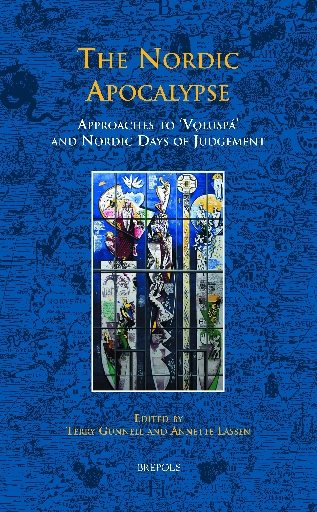
The Nordic Apocalypse
Approaches to Vǫluspá and Nordic Days of Judgement
show More to view fulltext, buy and share links for:The Nordic Apocalypse show Less to hide fulltext, buy and share links for: The Nordic ApocalypseThis book, with roots in a conference held in Iceland in May 2008, contains a series of articles reflecting modern approaches to the text, context, and performance of the Old Norse poem Vǫluspá, perhaps the best known and most discussed of all the Eddic poems. Rather than attempting to cover Eddic or Skaldic poetry as a genre, the main aim of this book is to present an overview of the ‘state of the art’ with regard to one particular Eddic poem. It focuses especially on the poem’s possible context within the apocalyptic tradition of Northern Europe in the early medieval period. The approaches of the articles range from placing the poem within the pre-Christian oral tradition to placing it within the written and liturgical context of Christianity. Two other chapters offer a possible context for the poem by examining the nature and background of the early medieval image of the Apocalypse known to have been on display in the Cathedral of Hólar in northern Iceland. While the approaches are focused on one specific poem, they are nonetheless applicable to many other Eddic works.
-
-
-
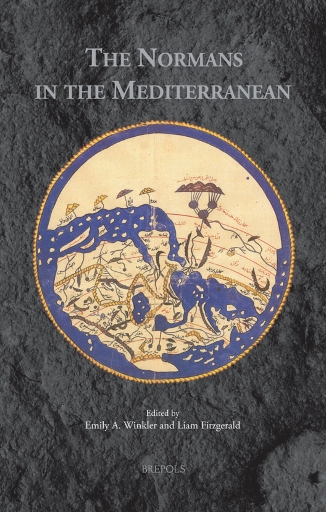
The Normans in the Mediterranean
show More to view fulltext, buy and share links for:The Normans in the Mediterranean show Less to hide fulltext, buy and share links for: The Normans in the MediterraneanIn both popular memory and in their own histories, the Normans remain almost synonymous with conquest. In their relatively brief history, some of these Normans left a small duchy in northern France to fight with Empires, conquer kingdoms, and form new ruling dynasties. This book examines the explosive Norman encounters with the medieval Mediterranean, c. 1000-1250. It evaluates new evidence for conquest and communities, and offers new perspectives on the Normans’ many meetings and adventures in history and memory.
The contributions gathered here ask questions of politics, culture, society, and historical writing. How should we characterize the Normans’ many personal, local, and interregional interactions in the Mediterranean? How were they remembered in writing in the years and centuries that followed their incursions? The book questions the idea of conquest as replacement, examining instead how human interactions created new nodes and networks that transformed the medieval Mediterranean. Through studies of the Normans and the communities who encountered them - across Iberia, the eastern Roman Empire, Lombard Italy, Islamic Sicily, and the Great Sea - the book explores macro- and micro-histories of conquest, its strategies and technologies, and how medieval people revised, rewrote, and remembered conquest.
-
-
-
The Notion of Liminality and the Medieval Sacred Space
show More to view fulltext, buy and share links for:The Notion of Liminality and the Medieval Sacred Space show Less to hide fulltext, buy and share links for: The Notion of Liminality and the Medieval Sacred SpaceThe thematic frame of this issue is the anthropological notion of liminality, applied both to physical as well as imaginary places of transition in medieval art. The volume is thus dedicated to the phenomenon of the limen, the threshold in medieval culture, understood mainly as a spatial, ritual and temporal category. The structure of the book follows the virtual path of any medieval visitor entering the sacred space. While doing so, the visitor encountered and eventually crossed several "liminal zones" that have been constructed around a series of physical and mental thresholds. In order to truly access the sacred - once again both physically and metaphorically - many transitional (micro)rituals were required and were therefore given particular attention within this volume. The volume was published as proceedings of the Liminality and Medieval Art II conference, which was held in October 2018 at the Masaryk University in Brno. Authors were supposed to conceive their contributions in pairs in order to reflect on the selected topics with an interdisciplinary approach. In the end, the very same pattern was also maintained for the final publication.
-
-
-
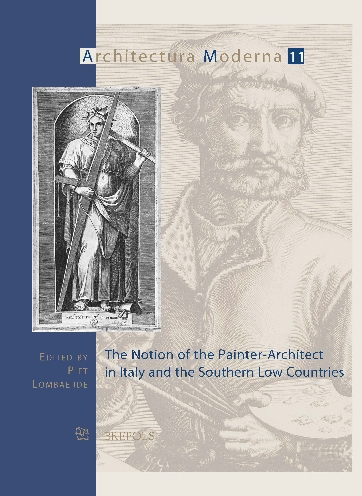
The Notion of the Painter-Architect in Italy and the Southern Low Countries
show More to view fulltext, buy and share links for:The Notion of the Painter-Architect in Italy and the Southern Low Countries show Less to hide fulltext, buy and share links for: The Notion of the Painter-Architect in Italy and the Southern Low CountriesSince the time of Vitruvius, architects have been expected to have a broad knowledge of the arts and sciences. The need for good skills in sketching and working up drawings even led, from the sixteenth century onwards, to fierce debates on the meaning and status of ‘disegno’. While Italy saw the emergence of famous painters who excelled as architects, also in the Southern Netherlands the notion that an architect must also have a mastery of the painter’s art became widespread, owing in part to the dissemination of publications by Sebastiano Serlio and Pieter Coecke van Aelst. In the seventeenth century, Peter Paul Rubens was able to make his own contribution to this discussion as a consequence of his sojourns in Italy (1601-1608). Bringing together distinguished art and architecture historians from Europe and North America, this interdisciplinary approach will shed light on the interrelationship of architecture and painting in the Southern Netherlands.
Piet Lombaerde is professor in theory and history of architecture and urbanism at the University of Antwerp, faculty of design sciences. His research interests cover the history of fortifications (1500-1900), urban history and the history of hydraulics. He is co-editor with Krista De Jonge (KU Leuven) of the series Architectura Moderna (Brepols Publisher) and author of several books on the history and theory of architecture and urban planning.
-
-
-
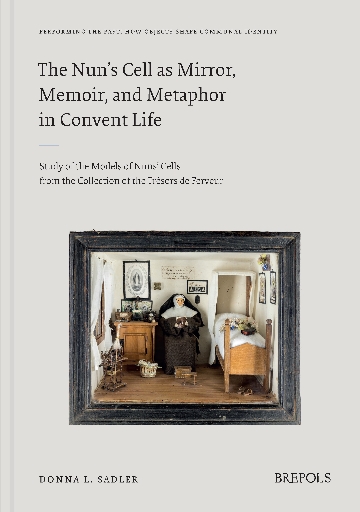
The Nun’s Cell as Mirror, Memoir, and Metaphor in Convent Life
Study of the Models of Nuns’ Cells from the Collection of the Trésors de Ferveur
show More to view fulltext, buy and share links for:The Nun’s Cell as Mirror, Memoir, and Metaphor in Convent Life show Less to hide fulltext, buy and share links for: The Nun’s Cell as Mirror, Memoir, and Metaphor in Convent LifeIn the eighteenth through the early twentieth century, French nuns from various orders created miniature simulacra of the cells in which they slept, studied, and performed their devotions. Each diorama contains an effigy of the nun, a prie-Dieu, devotional objects such as a crucifix, handiwork, and artifacts to foster study and contemplation. This book examines the lives of the brides of Christ as depicted in these dioramas, proposing that the material objects found in the chambers trace the contours of the collective and individual identities of the nuns who created these cells. Viewed as a type of memoir, the cells furnish the sisters a stage upon which to rehearse the meaning of their lives. The dioramas create a tension between the private and public presentations of the self, between verisimilitude and self-fashioning, and between reality and representation. The book contextualizes the miniature cells within the larger discourse of gender, identity, self-representation, monastic devotion, and the power wielded by the aesthetics of scale.
-
-
-
The Old English Homily
Precedent, Practice, and Appropriation
show More to view fulltext, buy and share links for:The Old English Homily show Less to hide fulltext, buy and share links for: The Old English HomilyThe quarter-century that has passed since Paul Szarmach’s and Bernard Huppé’s groundbreaking The Old English Homily and its Backgrounds (1978) has seen staggering changes in the field of Anglo-Saxon homiletics. Primary materials have become accessible to scholars in unprecedented levels, whether digitally or through new critical editions, and these have generated in turn a flood of secondary scholarship. The articles in this volume showcase and build on these developments. The first five essays consider various contexts of and infuences on Anglo-Saxon homilies: patristic and early medieval Latin sources, continental homiliaries and preaching practices, traditions of Old Testament interpretation and adaptation, and the liturgical setting of preaching texts. Six studies then turn to the sermons themselves, examining style and rhetoric in the Vercelli homilies, the codicology of the Blickling Book, sanctorale and temporale in the works of Ælfric, and the challenges posed by Wulfstan’s self-referential corpus. Finally, the last entries take us past the Conquest to discuss the re-use of homiletic material in England and its environs from the eleventh to eighteenth century. Together these articles offer medieval scholars a new Old English Homily, one that serves both as an introduction to key figures and issues in the field and as a model of studies for the next quarter-century.
-
-
-
The Old English Life of Saint Pantaleon
British Library MS Cotton Vitellius D. xvii
show More to view fulltext, buy and share links for:The Old English Life of Saint Pantaleon show Less to hide fulltext, buy and share links for: The Old English Life of Saint PantaleonThe Old English Life of Saint Pantaleon survives in one eleventh century manuscript: it appears here for the first time in an easily available edition. This edition is based both on independent research and on the work of previous scholars. It is a challenging text, from a much-damaged manuscript, but well worth reading: it is interesting both from a linguistic point of view, as a testimony of late Anglo-Saxon language, and also as a sign of continental influence on Anglo-Saxon culture and of a change in literary taste in England on the eve of the Norman Conquest. It is preceded by a full introduction dealing with the history of the text, from Greece to Western Europe and the context of its translation into Old English. The text is accompanied by copious notes dealing with difficult passages and it is made more accessible by a Modern English translation. The edition is completed by a 12th century Latin version which seems to be the closer to its Old English counterpart. The edition is completed by an Anglo-Saxon glossary.
-
-
-
The Old Norse Poetic Translations of Thomas Percy
A New Edition and Commentary
show More to view fulltext, buy and share links for:The Old Norse Poetic Translations of Thomas Percy show Less to hide fulltext, buy and share links for: The Old Norse Poetic Translations of Thomas PercyThomas Percy was the first serious translator of Old Norse-Icelandic poetry into English. He published his Five Pieces of Runic Poetry in London in 1763 and in 1770 published his translation of Mallet's very influential work on early Scandinavian literature and culture as Northern Antiquities (with extensive annotations and additions by Percy himself). In publishing Five Pieces, Percy was influenced by the success of Macpherson's first volume of Ossian poetry (1760) and his own wide-ranging interest in ancient, especially 'gothic' poetry. Five Pieces had a mixed reception and was never republished as a separate work, but reappeared as an appendix to the second edn. of Northern Antiquities. Nevertheless, it was a seminal work in the history of reception and understanding of Old Norse poetry in Britain and it also has more general significance in our understanding of the development of the discipline of Old Norse-Icelandic studies. This work makes available to the modern scholarly community the work of one of the pioneers of the discipline and produces in easily accessible format a text that is currently only available as a rare book. The study comprises a facsimile of the 1763 edition, with facing-page notes to allow the modern reader to situate Percy's work in its intellectual context, together with an introduction on Percy himself, his work on Old Norse-Icelandic studies, and the contemporary context of the reception of Old Norse poetry in Britain (and to some extent in the rest of Europe). In addition, this study publishes eight other poetic translations (one from Old English and the others from Old Icelandic) that Percy completed about the same time as the translations now in Five Pieces of Runic Poetry, but did not then publish, due to the restrictions of contemporary tolerance for demanding or difficult 'ancient' poetry. This publication reveals his full range as a translator for the first time.
-
-
-
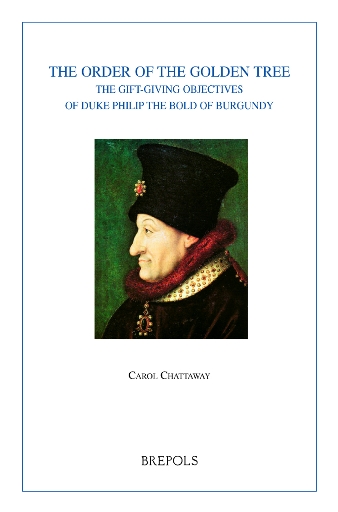
The Order of the Golden Tree
The Gift-giving Objectives of Duke Philip The Bold of Burgundy
show More to view fulltext, buy and share links for:The Order of the Golden Tree show Less to hide fulltext, buy and share links for: The Order of the Golden TreeThis book explores the policy objectives underlying the gift of this Order, to sixty men, on January 1 1403. Drawing primarily on Philip’s household accounts, it undertakes complementary iconographical and prosopographical analyses (of the Order insignia’s form, materials, design and motto; and of distinguishing common features among its recipients), refined by reference to his policy concerns around the occasion of its bestowal, to test seven hypotheses. The evidence from the analyses enables six of these (that it was purely decorative; a courtly conceit; crusade-related; a military chivalric order; a livery badge; or a military alliance) progressively to be discarded, pointing strongly to the seventh, that the Order was a specific policy alliance, designed in fashionable form, to obscure its politically sensitive purpose. The nature of that purpose then permits a revision of Philip’s role in history, particularly in relation to the creation of an independent Burgundian state, and the use of a co-ordinated propaganda campaign of slogan, badge, and supporting literature, to legitimise and popularise his plans. The analytical approach also offers insights into the significance of decorative, material gift-giving; the identification of networks; Christine de Pisan’s earlier political writings, and the origins of the Order of the Golden Fleece.
Carol Chattaway is Honorary Research Assistant at the Royal College of Art and University College, London University. She researches on the political significance of material objects at the Burgundian Court, in the later middle ages.
-
-
-
The Origin and Nature of Language and Logic.
Perspectives in Medieval Islamic, Jewish, and Christian Thought
show More to view fulltext, buy and share links for:The Origin and Nature of Language and Logic. show Less to hide fulltext, buy and share links for: The Origin and Nature of Language and Logic.The annual colloquium of the SIEPM in Freiburg, Germany, was groundbreaking in that it featured a more or less equal number of talks on all three medieval cultures that contributed to the formation of Western philosophical thought: the Islamic, Jewish, and Christian traditions. Indeed, the subject of the colloquium, ‘The Origin and Nature of Language and Logic in Medieval Islamic, Jewish, and Christian Thought’, lent itself to such a cross-cultural approach. In all these traditions, partially inspired by ancient Greek philosophy, partially by other sources, language and thought, semantics and logic occupied a central place. As a result, the chapters of the present volume effortlessly traverse philosophical, religious, cultural, and linguistic boundaries and thus in many respects open up new perspectives. It should not be surprising if readers delight in chapters of a philosophical tradition outside of their own as much as they do in those in their area of expertise.
Among the topics discussed are the significance of language for logic; the origin of language: inspiration or convention; imposition or coinage; the existence of an original language; the correctness of language; divine discourse; animal language; the meaningfulness of animal sounds; music as communication; the scope of dialectical disputation; the relation between rhetoric and demonstration; the place of logic and rhetoric in theology; the limits of human knowledge; the meaning of categories; the problem of metaphysical entailment; the need to disentangle the metaphysical implications of language; the quantification of predicates; and the significance of linguistic custom for judging logical propositions.
-
-
-
The Origins of Christianity in the Calendar Wars of the Second Century bce
show More to view fulltext, buy and share links for:The Origins of Christianity in the Calendar Wars of the Second Century bce show Less to hide fulltext, buy and share links for: The Origins of Christianity in the Calendar Wars of the Second Century bceIn the Gospels Jesus is called a ‘Nazarene’ or ‘Nazoraean’. Does this mean he came from Nazareth? Basing himself on Lidzbarski’s analysis of the Hebrew/Aramaic origins of the Greek terms Nazarênos and Nazôraios Dr Osborne proposes that these epithets indicate that Jesus was a nôṣrî, a ‘(Strict) Keeper/Guardian (of the Law)’. This meant he was a follower of the 364-day liturgical calendar known to us from 1 Enoch, Jubilees, and Qumran. An examination of the passages where these terms appear shows that this hypothesis leads to a deeper understanding of the circumstances in which the first Christian communities arose and clarifies greatly the background of Jesus’ crucifixion as Yēšû ha-Nôṣrî.
The book then traces the influence of the nôṣrîm on the history of Israel from their origin in the ‘calendar wars’ that tore apart the Jewish nation from 172-163 BCE. These broke out after the lunisolar calendar was introduced into the temple liturgy by Menelaus the high priest, and only came to an end when the 364-day calendar was reintroduced under his successor, Alcimus. In 151 BCE, however, Jonathan Maccabaeus was appointed high priest and reintroduced the lunisolar calendar. The nôṣrîm were suppressed and forced to emigrate or go underground. They reappear as leaders of Jewish resistance to Roman occupation after Pompey incorporated Judaea into the empire in 63 BCE. Eventually they became the chief instigators of the revolt against Rome that led to the destruction of Jerusalem in 70 CE. Osborne argues that the nôṣrîm thought to have been included in the Twelfth Benediction of the Amidah at Yavneh around 90 CE are these same ‘(Strict) Keepers/Guardians (of the Law)’.
-
-
-
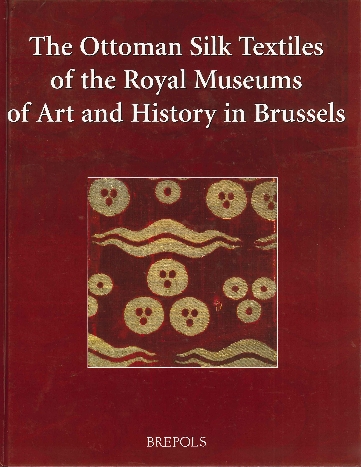
The Ottoman Silk Textiles of the Royal Museum of Art and History in Brussels
show More to view fulltext, buy and share links for:The Ottoman Silk Textiles of the Royal Museum of Art and History in Brussels show Less to hide fulltext, buy and share links for: The Ottoman Silk Textiles of the Royal Museum of Art and History in BrusselsThe Royal Museums of Art and History in Brussels, commonly known as the Cinquantenaire, possess a collection of about 1200 pieces of Islamic Art (not including some 1.000 potsherds from Fustat in Egypt). They originate from countries located between Spain and India, and date from the 7th to the beginning of the 20th century. The emphasis is on silk textiles. This we owe to Isabella Errera (Florence 1869 - Brussels 1929), who collected, published and eventually donated or bequeathed no less than 764 textiles to the museum, about three hundred of which are Islamic. The 43 Ottoman items in this collection form the subject of this study.
Except two, for which we cannot be certain, these Ottoman textiles were woven in the major metropolitan weaving centres of the Ottoman Empire, namely Bursa, Istanbul and their surroundings. They all date from the period between the second half of the 15th and the early 19th century. Two types of weaves are represented: velvets and kemha or lampas fabrics. One of the velvets, of which the collection numbers 25 examples, is an important çatma, probably the earliest preserved in the world. Six kemha or lampas fabrics, of which we possess 16 specimens, bear inscriptions; the others are decorated with various patterns. The third main type of Ottoman weave, the serâser or cloth of gold and silver, which is rare in Western collections, is not represented. Finally, the collection contains two silks in a distinctive weave, an extended tabby, of which one is a military banner. Although these fall slightly outside of the otherwise homogeneous group, they where included in this study because they were definitely produced within the Ottoman realm.
This catalogue is the result of a collaboration between different specialists. The technological study of the textiles was executed by Daniël De Jonghe, textile engineer, and Chris Verhecken-Lammens, both independent scientific collaborators at the Royal Museums of Art and History. Mieke Van Raemdonck, curator of the Islamic Collection and editor of the present publication, described the textiles and traced their origin. For the natural dye analysis and conservation treatment, the museum appealed to the Royal Institute for the Cultural Heritage, located in the same Cinquantenaire-complex. The study and report of the natural dyes were performed by Ina Vanden Berghe, textile engineer, and Dr Jan Wouters, chemist, Head of the Laboratory of Materials and Techniques, with the practical assistance of Marie-Christine Maquoi, lab technician. The conservation treatment took place under the responsibility of Vera Vereecken, Head of the Textile workshop, who also wrote the reports and comments on this aspect.
The aim of this catalogue is to present a status quaestionis of knowledge that was gathered the past ten years regarding this group of silks and to put it at the disposal of other museum curators and researchers. Since the scrutiny of the weaving technology and of the natural dyes can lead to a better understanding of the silk industry, special focus is laid on these aspects. They may indeed yield concrete information allowing us to delimit groups of textiles and - why not - workshops and production centres.
-
-
-
The Past as Present
Essays on Roman History in Honour of Guido Clemente
show More to view fulltext, buy and share links for:The Past as Present show Less to hide fulltext, buy and share links for: The Past as PresentThis volume in honour of Guido Clemente collects essays by nearly 40 established and younger scholars from all over the world, who want to express their gratitude for prof. Clemente's direct or indirect teaching. While the essays included in the volume cover domains ranging from methodology and (the history of) historiography, over archaeology and epigraphy, to politics and religion, they all resort under the main theme of ‘the past as present’. This main theme is inspired by a prominent feature of Guido Clemente's scholarly work: the awareness that from the last centuries of the Roman Republic up until Late Antiquity, a sense of the past ‘as present’ marked the rhythm of everyday life and provided the key to understanding ongoing societal change.
-
-
-
The Performance of Christian and Pagan Storyworlds
Non-Canonical Chapters of the History of Nordic Medieval Literature
show More to view fulltext, buy and share links for:The Performance of Christian and Pagan Storyworlds show Less to hide fulltext, buy and share links for: The Performance of Christian and Pagan StoryworldsThe present collection explores a hitherto understudied body of Nordic medieval literature which, although overlooked in traditional, language-based narratives, was in fact crucial in shaping social and religious identities.
By drawing on the ‘performance turn’ in cultural studies, the volume identifies a number of minor and peripheral literary forms and texts that had a vital connection to ritual and ritualized speech. These neglected traditions therefore offer an alternative insight into Nordic literary life and the sets of cultural expression, or storyworlds, underlying Nordic culture.
The collected studies explore different aspects of verbal performances as a primary vehicle for the Nordic storyworlds, with a preference for the Christian over the pagan traditions. Emphasis is placed on Latin, Old Norse, and Finnish traditions that were retold and reproduced over time. These ‘living’ literary forms highlight the importance of non-canonical texts for the interpretation of contact between the peripheries and centres of Nordic culture. Through the focus on the interaction between Latin and the vernacular, between eastern Baltic and western Latin influences, and between ritual and speech in religious practice, this collection demonstrates the importance of ‘minor’ texts for the re-construction of medieval Nordic culture and history.
-
-
-

The Playful Middle Ages
Meanings of Play and Plays of Meaning: Essays in Memory of Elaine C. Block
show More to view fulltext, buy and share links for:The Playful Middle Ages show Less to hide fulltext, buy and share links for: The Playful Middle AgesLove play or playing dead, wordplay or playing games - the notion of play inhabits all spheres of human activity. This collection of essays brings together international scholars from a range of disciplines to explore aspects of playfulness in the later European Middle Ages. From manuscript to performance and from the domestic to the doctrinal, the exuberance and ambiguity of verbal and visual play is interrogated in order to decode layers of meaning in texts and artefacts. These twelve papers celebrate the work of Elaine C. Block, whose dedicated study of misericords has, through countless articles and books, made the riches of this dizzying iconographic resource easily available to scholars for the first time. Her monumental Corpus on Medieval Misericords volumes will no doubt inform medieval scholars for generations to come, and those included in the present collection are both proud and grateful to be of the first generation to benefit from her work on this body of carvings which challengingly - and playfully - straddles thesometimes invisible line between the sacred and profane.
-
-
-
The Poet's Notebook
The Personal Manuscript of Charles d'Orléans (Paris, BnF MS fr. 25458)
show More to view fulltext, buy and share links for:The Poet's Notebook show Less to hide fulltext, buy and share links for: The Poet's NotebookThis study of Charles d'Orléans's personal manuscript of his poetry - the first in nearly a century - paves the way not only for a new edition of the duke's œuvre (by Mary-Jo Arn, John Fox, and R. Barton Palmer) but for a new view of it. Following the first complete modern description of the manuscript, this study reconstructs the history of the manuscript, copying layer by copying layer. Codicological observations supplemented with palaeographical, historical, art-historical, and textual information reveal the approximate sequence of the manuscript’s composition, which in turn allows a re-dating of the manuscript and some of the poems in it. Charles saw lyric form differently than did his predecessors and contemporaries, a view made manifest in the poet’s own numbering of his poems. He mixed his complaintes with ballades and his rondels with chansons, each pair of forms in a numbered series, but never presenting the longer alongside the shorter forms. The analysis of the manuscript’s construction corrects the current physical disorder of the later chansons and rondels, as well as that of the ‘En la forest de longue actente’ series (including the lyric omitted from the standard edition) and re-evaluates the handful of English poems in the manuscript. In the end, we come to understand the relationship between the visual ‘messiness’ of the manuscript and the poet’s strong concept of lyric order. The technical aspects of the study are clarified by many tables and fascimile pages; the interactive cd contains an index of first lines that can be sorted in various ways to reveal a variety of kinds of manuscript relationships.
-
-
-
The Politics of Exclusion in Early Renaissance Florence
show More to view fulltext, buy and share links for:The Politics of Exclusion in Early Renaissance Florence show Less to hide fulltext, buy and share links for: The Politics of Exclusion in Early Renaissance FlorenceNo previous work has examined political exclusion in Early Renaissance Florence or its significance for the transition from Florentine popular government to oligarchy. Between the fourteenth and the first half of the fifteenth century, political exclusion became a normal feature of political life, regardless of the type of political regime; it was an essential instrument by which new governments consolidated their control over the city and the countryside in one of the largest and most powerful cities of Early Renaissance Europe. Exclusion from the Republic of Florence–separation from friends and family, business and property, coupled with the degradation of public humiliation–engendered a new outlook on life. In Early Renaissance Florence, excluded citizens across social classes became common outlaws, no different for common criminals prosecuted for heresy, blasphemy, gambling, or sexual deviance. By investigating these practices and attitudes of Early Renaissance Florence, this book shows the dark side of Renaissance republicanism: its fear of political dissent in any form and its means to crush it at all costs. This study of the other side of Renaissance republicanism presents a new and crucial chapter in Renaissance history.
-
-
-
The Politics of Memory and Identity in Carolingian Royal Diplomas
The West Frankish Kingdom (840-987)
show More to view fulltext, buy and share links for:The Politics of Memory and Identity in Carolingian Royal Diplomas show Less to hide fulltext, buy and share links for: The Politics of Memory and Identity in Carolingian Royal DiplomasBased upon a ‘performative’ interpretation of royal charters, The Politics of Memory and Identity offers a new and surprising narrative of West Frankish history from the death of Louis the Pious in 840 to the demise of the Carolingian dynasty in 987. The key is a carefully contextualised analysis of the circumstances in which kings issued charters and an alert examination of the charters’ verbal and visual semiotics. For which monasteries and cathedrals did kings issue diplomas and under what conditions? Who were the patrons who interceded for the recipients of diplomas and what titles were they given? Which kings were named as predecessors and which were omitted? Such clues allow us to recover the meaning of events whose significance was concealed by chroniclers, and to find unsuspected continuities in 150 years of West Frankish politics. They allow us to see a ruthless exercise of power in the use of forgeries and a commitment to political reform in the reform of monasteries. They reveal the long shadow cast by the reign of Charles the Bald in West Frankish history and the importance of a handful of monasteries as ‘sites of memory’. Above all, an intertextual reading of diplomas shows that political leaders in the kingdom made decisions based on policy, where the policy was articulated in terms of lessons drawn from their understanding of the past, and diplomas were the records that conveyed the lessons.
-
-
-

The Poor Caitif
A Modern English Translation with Introductory Essays and Notes
show More to view fulltext, buy and share links for:The Poor Caitif show Less to hide fulltext, buy and share links for: The Poor CaitifThe Pore Caitif is a popular, late-fourteenth-century, carefully crafted compilation of biblical, catechetical, devotional and mystical material drawing on patristic and medieval sources, in Middle English, consisting of a Prologue and a variable number of sections of differing lengths according to each manuscript, assembled probably by a clerical writer for an increasing literate lay readership/audience.The Prologue sets out the reason for writing and its overall structure as an integrated ladder leading the reader to heaven. The text begins with basic catechetical instruction modelled on John Peckham’s Lambeth Constitutions of 1281 before continuing with more affective material, meditating, for example, on the Passion, and concludes with a treatise on virginity, leading the reader from an active to a contemplative way of life.
The Pore Caitif was written about the time the Lollards were starting to propagate their programme of universal vernacular education. The writer believes in the need to educate his readers in the truths necessary for salvation without necessarily subscribing to Lollard positions.
Although referred to in a number of secondary articles and books, and serving as the focus of three doctoral dissertations, an edition of the work was not published until 2019. Penkett's publication is the first Modern English translation based on the 2019 publication and is in a readily accessible format for the modern reader, accompanied by a series of ground-breaking essays.
-
-
-
The Popularization of Philosophy in Medieval Islam, Judaism, and Christianity
show More to view fulltext, buy and share links for:The Popularization of Philosophy in Medieval Islam, Judaism, and Christianity show Less to hide fulltext, buy and share links for: The Popularization of Philosophy in Medieval Islam, Judaism, and ChristianityThis volume explores attempts at the popularization of philosophy and natural science in medieval Islam, Judaism, and Christianity. Medieval philosophers usually wrote their philosophical books for philosophers, so the desire to convey psychological, cosmological, metaphysical, or even physical teachings to the ‘vulgus’ may seem surprising. Yet philosophy was indeed taught to non-philosophers and via a variety of literary genres. Indeed, scholars have argued that philosophy most infl uenced medieval society through popular forms of transmission. Among the questions this volume addresses are the following: Which philosophers or theologians sought to direct philosophical writings to the many? For what purposes did they seek to popularize philosophy? Was the goal to teach philosophical truths? For whom exactly were these popularized texts written? How did they go about teaching philosophy to a wide audience? In what ways did popularized philosophy impact upon society? To what extent were the considerations and problems in the medieval popularization of philosophy the same or different in the various religious traditions of philosophy? How philosophical was the popularized philosophy?
In addressing these questions and others, this pioneering volume is the fi rst of its kind to bring together scholars of medieval Islamic, Jewish, and Christian thought to discuss the popularization of philosophy in these three religious traditions of philosophy.
-
-
-
The Power of Space in Late Medieval and Early Modern Europe
The cities of Italy, Northern France and the Low Countries
show More to view fulltext, buy and share links for:The Power of Space in Late Medieval and Early Modern Europe show Less to hide fulltext, buy and share links for: The Power of Space in Late Medieval and Early Modern EuropeThis volume examines the politics of space in the most densely urbanized areas of Europe during the late Middle Ages and Renaissance. It ranges from Italy to the Parisian region and then to the greater Low Countries, home of Europe’s most powerful commercial cities of the period. Hardly inert sites on which political action took place, the spaces these authors investigate conferred power on those who possessed them. At the same time they were themselves transformed by the struggles, thus acquiring new powers that invited future contest. Thus implicitly responding to Georges Lefebvre’s claim that space is “produced”, the authors ask how space was perceived and used in everyday life, giving specific spaces cultural, social, and political coherence (“le perçu”); how it was represented or theorized, thus encoded in symbols, maps and laws (“le conçu”); and how it was lived, in effect the result of the dialectical relation between the perceived and the represented (“le vécu”).
Marc Boone is full professor of medieval social and political history of the (late) Middle Ages at Ghent University. He has been president of the European Association of Urban History and has published mainly in the field of urban history.
Martha C. Howell is Miriam Champion professor of History at Columbia University (New York). She has published on late medieval and early-modern European gender history and social history.
-
-
-
The Power of Textiles
Tapestries of the Burgundian Dominions (1363–1477)
show More to view fulltext, buy and share links for:The Power of Textiles show Less to hide fulltext, buy and share links for: The Power of TextilesTextiles were used as markers of distinction throughout the Middle Ages and their production was of great economic importance to emerging and established polities. This book explores tapestry in one of the greatest textile producing regions, the Burgundian Dominions, c. 1363-1477. It uses documentary evidence to reconstruct and analyse the production, manufacture, and use of tapestry. It begins by identifying the suppliers of tapestry to the dukes of Burgundy and their ability to spin webs between city and court. It proceeds by considering the forms of tapestry and their functions for urban and courtly consumers. It then observes the ways in which tapestry constructed social relations as part of gift-giving strategies. It concludes by exploring what the re-use, repair, and remaking of tapestry reveals about its value to urban and courtly consumers. By taking an object-centred approach through documentary sources, this book emphasises that the particular characteristics of tapestry shaped the strategies of those who supplied it and the ways it performed and constructed social relations. Thus, the book offers a contribution to the historical understanding of textiles as objects that contributed to the projection of social status and the cultural construction of political authority in the Burgundian polity.
-
-
-

The Power of Words in Late Medieval Devotional and Mystical Writing
Essays in Honour of Denis Renevey
show More to view fulltext, buy and share links for:The Power of Words in Late Medieval Devotional and Mystical Writing show Less to hide fulltext, buy and share links for: The Power of Words in Late Medieval Devotional and Mystical WritingThis volume honours Denis Renevey's contribution to late medieval devotional and mystical studies via a series of essays focusing on a topic that has been of central relevance to Denis's research: the power of words. Contributors address the centrality of language to devotional and mystical experience as well as the attitudes towards language fostered by devotional and mystical practices. The essays are arranged in four sections: 'Other Words: Figures and Metaphors: treating the application of the languages of romantic love, medicine, and travel to descriptions of devotional and mystical experience; 'Iconic Words: Images and the Name of Jesus; considering the deployment of words and the Word (Jesus) as powerful images in devotional practice; 'Testing Words: Syntax and Semantics; exploring the ways in which medieval writers stretch the conventions of language to achieve fresh perspectives on devotional and mystical experiences; and 'Beyond Words: The Apophatic and The Senses; offering novel perspectives on a group of texts that address the difficulty of expressing God and visionary experience with words.
The volume's global purpose is to demonstrate the attractions of an explicitly philological approach for scholars studying the Christian tradition.
-
-
-
The Prague Sacramentary
Culture, Religion, and Politics in Late Eighth-Century Bavaria
show More to view fulltext, buy and share links for:The Prague Sacramentary show Less to hide fulltext, buy and share links for: The Prague SacramentaryThe Prague Sacramentary is a unique liturgical manuscript which can be very precisely located in a specific social and historical context. It was written in the turbulent period when Charlemagne crossed Bavaria to fight the Avars and when his son Pippin rebelled against him, seeking support among the Bavarian nobility. The manuscript can be linked to specific groups of Bavarian elites that had to come to terms with this explosive political situation. It also elucidates the ways in which Christian culture was expressed and experienced in Bavaria at the end of the eighth century. Although Bavaria may be regarded as a periphery from a Frankish perspective, it was certainly no cultural backwater. Because of its geographical position at the crossroads of Italian, Bavarian, and Frankish culture, Bavaria produced unique and intriguing texts and artefacts.
One such object is analysed here by a team of experts, shedding renewed light on the earthly and heavenly concerns of an early medieval community in a specific region. It includes a discussion of the topics of the formal invocation of saints, vernacular understandings of Latin texts, marriage, politics, and concerns for ritual purity as well as the well-being of the conflict-ridden Carolingian family.
-
-
-
The Pre-Christian Religions of the North: History and Structures
show More to view fulltext, buy and share links for:The Pre-Christian Religions of the North: History and Structures show Less to hide fulltext, buy and share links for: The Pre-Christian Religions of the North: History and StructuresThe product of an international interdisciplinary team, the History and Structures strand of the Pre-Christian Religion of the North series aims to approach the subject by giving equal weight to archaeological and textual sources, taking into consideration recent theories on religion within all the disciplines that are needed in order to gain a comprehensive view of the religious history and world view of pre-Christian Scandinavia from the perspective of the beginning of the twenty-first century. Volume I presents the basic premises of the study and a consideration of the sources: memory and oral tradition, written sources, religious vocabulary, place names and personal names, archaeology, and images. Volume II treats the social, geographical, and historical contexts in which the religion was practiced and through which it can be understood. This volume also includes communication between worlds, primarily through various ritual structures. Volume III explores conceptual frameworks: the cosmos and collective supernatural beings (notions regarding the cosmos and regarding such collective supernatural beings as the norns, valkyries, giants, and dwarfs) and also gods and goddesses (including Þórr, Óðinn, Freyr, Freyja, and many others). Volume IV describes the process of Christianization in the Nordic region and also includes a bibliography and indices for the entire four-volume work.
-
-
-
The Pre-Christian Religions of the North: Research and Reception, Volume I: From the Middle Ages to c. 1850
show More to view fulltext, buy and share links for:The Pre-Christian Religions of the North: Research and Reception, Volume I: From the Middle Ages to c. 1850 show Less to hide fulltext, buy and share links for: The Pre-Christian Religions of the North: Research and Reception, Volume I: From the Middle Ages to c. 1850Over more than a thousand years since pre-Christian religions were actively practised, European - and later contemporary - society has developed a fascination with the beliefs of northern Europe before the arrival of Christianity, which have been the subject of a huge range of popular and scholarly theories, interpretations, and uses. Indeed, the pre-Christian religions of the North have exerted a phenomenal influence on modern culture, appearing in everything from the names of days of the week to Hollywood blockbusters. Scholarly treatments have been hardly less varied. Theories - from the Middle Ages until today - have depicted these pre-Christian religious systems as dangerous illusions, the works of Satan, representatives of a lost proto-Indo-European religious culture, a form of ‘natural’ religion, and even as a system non-indigenous in origin, derived from cultures outside Europe.
The Research and Reception strand of the Pre-Christian Religions of the North project establishes a definitive survey of the current and historical uses and interpretations of pre-Christian mythology and religious culture, tracing the many ways in which people both within and outside Scandinavia have understood and been influenced by these religions, from the Christian Middle Ages to contemporary media of all kinds. The present volume (I) traces the reception down to the early nineteenth century, while Volume II takes up the story from c. 1830 down to the present day and the burgeoning of interest across a diversity of new as well as old media.
-
-
-
The Pre-Christian Religions of the North: Research and Reception, Volume II: From c. 1830 to the Present
show More to view fulltext, buy and share links for:The Pre-Christian Religions of the North: Research and Reception, Volume II: From c. 1830 to the Present show Less to hide fulltext, buy and share links for: The Pre-Christian Religions of the North: Research and Reception, Volume II: From c. 1830 to the PresentOver more than a thousand years since pre-Christian religions were actively practised, European – and later contemporary – society has developed a fascination with the beliefs of northern Europe before the arrival of Christianity, which have been the subject of a huge range of popular and scholarly theories, interpretations, and uses. Indeed, the pre-Christian religions of the North have exerted a phenomenal influence on modern culture, appearing in everything from the names of days of the week to Hollywood blockbusters. Scholarly treatments have been hardly less varied. Theories – from the Middle Ages until today – have depicted these pre-Christian religious systems as dangerous illusions, the works of Satan, representatives of a lost proto-Indo-European religious culture, a form of 'natural' religion, and even as a system non-indigenous in origin, derived from cultures outside Europe.
The Research and Reception strand of the Pre-Christian Religions of the North project establishes a definitive survey of the current and historical uses and interpretations of pre-Christian mythology and religious culture, tracing the many ways in which people both within and outside Scandinavia have understood and been influenced by these religions, from the Christian Middle Ages to contemporary media of all kinds. The previous volume (i) traced the reception down to the early nineteenth century, while the present volume (ii) takes up the story from c. 1830 down to the present day and the burgeoning of interest across a diversity of new as well as old media.
-
-
-
The Presence of Medieval English Literature
Studies at the Interface of History, Author, and Text in a Selection of Middle English Literary Landmarks
show More to view fulltext, buy and share links for:The Presence of Medieval English Literature show Less to hide fulltext, buy and share links for: The Presence of Medieval English LiteratureThe modern period has read its own contingent values into Middle English literature, and a modern canon of vernacular medieval literary texts has evolved as a result. While this book works with a selection of texts that have achieved such canonical status, it brings to light some of the ways in which they nevertheless resist the flattening domestications and expectations of modern taste. It illustrates how they formerly existed as constituents of a past world richer, stranger, and less familiar than much modern opinion has supposed. Thus the book aims to recuperate lost senses in which the age in which these texts were conceived and written was present within them, as well as ways in which they may have been present to their age. This twin idea of ‘presence’ is the thread that binds a series of chapters on English verse and prose written between the thirteenth and fifteenth centuries together. While they may be read as discrete studies of individual literary land- marks, the chapters also entail an implicit and ramifying demonstration of the short- comings of some modern views of what makes certain currently prized Middle English texts worth reading, and of how the vernacular literature of medieval England is retrospectively to be defined and periodized.
-
-
-
The Pseudo-Bonaventuran Lives of Christ
Exploring the Middle English Tradition
show More to view fulltext, buy and share links for:The Pseudo-Bonaventuran Lives of Christ show Less to hide fulltext, buy and share links for: The Pseudo-Bonaventuran Lives of ChristThis is a collection of pioneering studies by a distinguished transatlantic team of scholars on a neglected yet canonical tradition of medieval English literature. From the fourteenth to the sixteenth centuries and beyond, the remarkable ‘pseudo-Bonaventuran’ tradition, flowing from the Latin Meditationes vitae Christi (and thought, wrongly, to have been composed by St Bonaventure), gave Europe orthodox models for how to represent, know, and follow Jesus Christ. The Meditationes, in a huge variety of Latin and vernacular versions, invite their readers and listeners to imagine themselves present within the Gospel narrative. How to live, what to believe, how to feel, and how to be saved: this eloquent mainstream tradition had an impact on the public and private lives of English people more profound and lasting than any text save the Bible itself. For many, it even did the Bible’s work. The tradition of the Meditationes provides us with a gauge of lived religious sensibility without equal in the English later Middle Ages.
Deriving from the Queen’s Belfast-St Andrews AHRC-funded research project, Geographies of Orthodoxy: Mapping the English Pseudo-Bonaventuran Lives of Christ, c. 1350-1550, this volume questions and revises previous descriptions of the devotional, cultural, and political contexts in which pseudo-Bonaventuran Lives of Christ were produced, circulated, read, and understood. The period spanning the rise and repression of Lollardy, the ostensibly ‘orthodox’ fifeenth century, and the Tudor Reformations will never look quite the same again.
-
-
-
The Pursuit of Happiness in Medieval Jewish and Islamic Thought
Studies Dedicated to Steven Harvey
show More to view fulltext, buy and share links for:The Pursuit of Happiness in Medieval Jewish and Islamic Thought show Less to hide fulltext, buy and share links for: The Pursuit of Happiness in Medieval Jewish and Islamic ThoughtThe articles in this volume explore the teachings on happiness by a range of thinkers from antiquity through Spinoza, most of whom held human happiness to comprise intellectual knowledge of that which is Good in itself, namely God. These thinkers were from Greek pagan, Muslim, Jewish, and Christian backgrounds and wrote their works in Greek, Arabic, Hebrew, and Latin. Still, they shared similar philosophical views of what constitutes the Highest Good, and of the intellectual activities to be undertaken in pursuit of that Good. Yet, they differed, often greatly, in the role they assigned to deeds and practical activities in the pursuit of this happiness. These differences were, at times, not only along religious lines, but also along political and ethical lines. Other differences treated the relationship between the body and intellectual happiness and the various ways in which bodily health and well-being can contribute to intellectual health and true happiness.
-
-
-
The Pursuit of Salvation. Community, Space, and Discipline in Early Medieval Monasticism
with a Critical Edition and Translation of the Regula cuiusdam ad uirgines
show More to view fulltext, buy and share links for:The Pursuit of Salvation. Community, Space, and Discipline in Early Medieval Monasticism show Less to hide fulltext, buy and share links for: The Pursuit of Salvation. Community, Space, and Discipline in Early Medieval MonasticismThe seventh-century Regula cuiusdam ad uirgines (Someone’s Rule for Virgins), which was most likely written by Jonas of Bobbio, the hagiographer of the Irish monk Columbanus, forms an ideal point of departure for writing a new history of the emergence of Western monasticism understood as a history of the individual and collective attempt to pursue eternal salvation.
The book provides a critical edition and translation of the Regula cuiusdam ad uirgines and a roadmap for such a new history revolving around various aspects of monastic discipline, such as the agency of the community, the role of enclosure, authority and obedience, space and boundaries, confession and penance, sleep and silence, excommunication and expulsion.
-
-
-
The Reception of Biblical Figures
Essays in Method
show More to view fulltext, buy and share links for:The Reception of Biblical Figures show Less to hide fulltext, buy and share links for: The Reception of Biblical FiguresThis volume explores the reception of biblical figures in Judaism, Christianity and Islam, with a particular focus on Antiquity and incursions in the Middle Ages and modernity. The contributions included here offer a glimpse of the complexity of the mechanics of transmission to which these figures were subjected in extra-biblical texts, either concentrating on one author or corpus in particular, or broadening the scope across time and cultural contexts. The volume intends to shed light on how these biblical figures and their legacies appear as channels of collective memory and identity; how they became tools for authors to achieve specific goals; how they gained new and powerful authority for communities; and how they transcend traditions and cultural boundaries. As a result, the vitality and fluidity of the developments of traditions become clear and prompt caution when using modern categories.
-
-
-
The Reception of P.P. Rubens's 'Palazzi di Genova' during the 17th Century in Europe: Questions and Problems
show More to view fulltext, buy and share links for:The Reception of P.P. Rubens's 'Palazzi di Genova' during the 17th Century in Europe: Questions and Problems show Less to hide fulltext, buy and share links for: The Reception of P.P. Rubens's 'Palazzi di Genova' during the 17th Century in Europe: Questions and ProblemsRubens' book 'Palazzi di Genova' was well diffused in European countries as England, the Netherlands, France, Germany and Italy thanks to the numerous contacts the famous painter and diplomat maintained in humanistic, artistic and political circles. From 1622 on this book, containing two volumes, was edited at several times during the 17th and 18th Century. But the direct influences of the numerous façades, plans, cross-sections, staircases and building details on modern architecture look rather limited, especially in his own country. In this study, several scholars in architectural history analyse how the examples of Genoese palazzi and churches as presented by Rubens were accepted in different European countries. Much attention is given to the question if these examples inspired a new architectural typology, in which the inner court of the houses was substituted by a 'salone in mezzo'. An attempt is made to situate Rubens' book among the late 16th and early 17th Century treatises and model books. The way in which Rubens presented the new Genoese architecture of villa's, palaces and churches and the introduction he wrote as a 'painter-architect' to this book were so modern at that time, that the reception of this prestigious edition in folio had more to do with changes in considering architectural theory and practice as with the propagation of a late renaissance style influenced by Antique examples.
-
-
-
The Regular Canons in the Medieval British Isles
show More to view fulltext, buy and share links for:The Regular Canons in the Medieval British Isles show Less to hide fulltext, buy and share links for: The Regular Canons in the Medieval British IslesOf all the new monastic and religious groups to settle in the British Isles in the course of the twelfth century the regular canons were the most prolific. At the heart of their existence was the vita apostolica, but even more than other such groups the regular canons became involved in active spiritual care of their communities. Perhaps as a result of this feature they also enjoyed sustained support from founders, patrons, and benefactors, and new foundations continued to be made long after the main force of the expansion of the monastic orders had declined. This interdisciplinary volume brings together scholars from Scotland, Ireland, Wales, and England who work on aspects of the history, culture, art history, and archaeology of the regular canons in the medieval British Isles. Between them, the chapters of this book consider the regular canons in their wider historical and historiographical context, assessing their role in the religious, social, cultural, economic, and political world of the medieval British Isles, and introducing new and recent research on this important religious group.
Medieval Church Studies is a series of monographs and, sometimes, collections devoted to the history of the Western Church from, approximately, the Carolingian reform to the Council of Trent. It builds on Brepols’ longstanding interest in editions of texts and primary sources, and presents studies that are founded on a traditional close analysis of primary sources but which confront current research issues and adopt contemporary methodological approaches.
-
-
-
The Renaissance Pulpit
Art and Preaching in Tuscany, 1400-1550
show More to view fulltext, buy and share links for:The Renaissance Pulpit show Less to hide fulltext, buy and share links for: The Renaissance PulpitThis volume examines the relationship between preaching and art, addressing with particular detail the use of works of art in preaching and the importance of the pulpit itself. A challenging issue in the field of sermon studies is the relationship between preaching and art, in particular the manner in which preachers used works of art in their preaching and described specific pictures in their sermons; and the pulpit itself.
The thesis of the book is that pulpits should be viewed in the context of the world of preaching in Renaissance Florence and in connection with sacred oratory. Indeed, like preached sermons, pulpits used rhetorical strategies to deliver religious messages. The author adopts an interdisciplinary approach to the topic by combining art history, historical analysis, and sermon studies; and she examines the pulpit's patronage, location, and function as well as its chronological development. This book combines a general survey of pulpits in Tuscany, with close analysis of five specific pulpits. Designed and executed by important artists located in Florence and Prato, these five pulpits are the most exquisite and impressive monuments of their type, and each has a complex and rich iconographic programme. The author reveals that the period between the fifteenth and early sixteenth centuries constitutes a distinct phase in the development of pulpits, different from the earlier tradition, and from pulpits constructed after the Council of Trent and during the Catholic Reformation.
-
-
-
The Rise of Cities Revisited
Reflections on Adriaan Verhulst's Vision of Urban Genesis and Developments in the Medieval Low Countries
show More to view fulltext, buy and share links for:The Rise of Cities Revisited show Less to hide fulltext, buy and share links for: The Rise of Cities RevisitedAdriaan Verhulst's The Rise of Cities in North-West Europe (1999) is the last comprehensive work written by a single author on the urban genesis and spatial developments of cities in the medieval Low Countries. Since then, monographs, specialised studies and articles have been published on various cities and towns, while urban archaeologists have carried out numerous excavations. Much new knowledge has been gained, yet many gaps and the need for comparative overviews remain.Twenty-five years after Verhulst’s synthesis, The Rise of Cities Revisited takes a fresh look at the origins and developments of cities and towns in the Low Countries between the tenth and the sixteenth centuries, critically assesses progress made in scholarship and outlines future directions for research. The chapters of the book are written by senior and junior specialists from various fields, including medieval history, historical geography, economic history, archaeology and building history. The Rise of Cities Revisited presents a state of the art and provides scholars with tools to study this complex subject in future.
-
-
-
The Rise of an Academic Elite : Deans, Masters, and Scribes at the University of Vienna before 1400
show More to view fulltext, buy and share links for:The Rise of an Academic Elite : Deans, Masters, and Scribes at the University of Vienna before 1400 show Less to hide fulltext, buy and share links for: The Rise of an Academic Elite : Deans, Masters, and Scribes at the University of Vienna before 1400Henry of Rheinfelden, a Dominican from Basel, spent the last decade of the fourteenth century at the University of Vienna studying theology. During this time he took notes on the academic activities of the first rectors of the university and deans of the Faculties of Arts and Theology. This volume explores Rheinfelden’s contribution to our understanding of the doctrinal, curricular, administrative, and prosopographical history of the early University of Vienna. Deciphering Rheinfelden’s surviving notebooks in the Universitätsbibliothek Basel sheds new light on the rise of an academic elite in Vienna. His manuscripts reveal a network of scholars sharing a passion for knowledge and supply a gallery of intellectual profiles, starting with the mentors of the group, Henry of Langenstein and Henry Totting of Oyta, and continuing with the lesser-known figures Stephen of Enzersdorf, Gerhard Vischpekch of Osnabrück, Paul (Fabri) of Geldern, Andreas of Langenstein, Rutger Dole of Roermond, Nicholas of Hönhartzkirchen, Nicholas of Dinkelsbühl, John Berwart of Villingen, John Stadel of Russbach, Peter de Treysa, Michael Suchenschatz of Hausleiten, Peter Schad of Walse, Thomas of Cleves, and Leonhard of Dorffen. The papers gathered in this volume highlight the intricate relationship between a commitment to administrative duty and an appetite for the creation of a doctrinal tradition via debating, forging arguments, defending and attacking positions, commenting on authorities, and adopting and adapting academic practices imported from Paris, since the majority of the authors in our gallery were educated in Paris and built their careers in Vienna. Through Rheinfelden’s notebooks, this volume provides access to unique and previously unknown texts that together offer a new image of the medieval University of Vienna.
-
-
-
The Roles of Medieval Chanceries
Negotiating Rules of Political Communication
show More to view fulltext, buy and share links for:The Roles of Medieval Chanceries show Less to hide fulltext, buy and share links for: The Roles of Medieval ChanceriesMedieval communication followed rules that were defined, negotiated, and altered in processes of exchange. Conflicts resulting from different communication practices, as well as forms of innovation, revolve around rules that are not self-evident. Political actors such as princes and cities, chanceries, secretaries, ambassadors, and councillors formed rules of political participation, which became visible in written documentation. These rules were both formed and negotiated via processes of communication. Medieval chanceries can thus be understood as a vast field of experimentation where different solutions were tested, passed on, or discarded.
This book explores communication practices in German, French, Italian, Tyrolian, and Gorizian chanceries, as well as at diets from the tenth to the sixteenth century. Its chapters examine royal, monastic, princely, and communal chanceries. For the early and high Middle Ages, a close analysis of documents will reconstruct negotiation and communication from within the documents themselves. For the later Middle Ages, focus will turn to the chancery, with the appearance of chancery orders and chancery annotations that provide explicit insight in communication between the chancellors, secretaries, and political authorities. The growing amount and variety of documents issued in the late Middle Ages allows us to retrace conflicts resulting from differing chancery practices as well as attempts to reorganise the chancery into a political instrument for the prince. The processes of political communication will be followed in three parts. Part I focuses on the rules within documents. Part II looks at administrative processes within specific chanceries, while Part III explores forms of exchange between the chancery and other political actors.
-
-
-
The Roman Senate as arbiter during the Second Century bc
Two Exemplary Case Studies: the Cippus Abellanus and the Polcevera Tablet
show More to view fulltext, buy and share links for:The Roman Senate as arbiter during the Second Century bc show Less to hide fulltext, buy and share links for: The Roman Senate as arbiter during the Second Century bcIn the wider context of the border conflicts that involve Rome as a third authority super partes, for which there is evidence already in the second century BC, two epigraphic documents stand out for the peculiarities distinguishing them from all others: the so-called Polcevera Tablet (concerning a dispute between Genuates and Viturii Langenses) and the Cippus Abellanus (related to a border dispute between Nolani and Abellani and written in Oscan). They make us aware of the political and municipal dynamics underlying the complex principle of Roman arbitration, often required to resolve territorial disputes, which were gradually evolving as Rome opened up to the East. What role did the Roman Senate play in such disputes? What exactly was the function of the referees sent by the City to settle the disputes with a super partes judgment? What was the importance of the agrarian reform of the Gracchi and the realisation of road axes in the acuity of such antagonisms? These are the questions to which this study tries to provide an answer.
-
-
-
The Royal Albert Hall
Building the Arts and Sciences
show More to view fulltext, buy and share links for:The Royal Albert Hall show Less to hide fulltext, buy and share links for: The Royal Albert HallThis groundbreaking study takes one of London’s most iconic buildings and deconstructs it to offer new insights into the society that produced it. As part of the new cultural quarter built in South Kensington on the proceeds from The Great Exhibition of 1851, the Royal Albert Hall was originally intended to be a ‘Central Hall of Arts and Sciences’. Prince Albert’s overarching vision was to promote technological and industrial progress to a wider audience, and in so doing increase its cultural and economic reach.Placing materiality at its core, this volume provides an intellectual history of Victorian ideas about technology, progress, and prosperity. The narrative is underpinned by a wealth of new sources – from architectural models and archival materials to 19th century newspapers. Each chapter focuses on a particular element of the Royal Albert Hall’s construction, chronicling the previously overlooked work of a host of contributors from all walks of life, including female mosaic-makers and the Royal Engineers.Lighting, ventilation, fireproofing, ‘ascending rooms’, cements, acoustics, the organ, the record-breaking iron dome, and the organisation of internal spaces were all attempts to attain progress - and subject to intense public scrutiny. From iron structures to terracotta, from the education of women to the abolition of slavery, in the making of the Royal Albert Hall scientific knowledge and socio-cultural reform were intertwined.This book shows, for the first time, how the Royal Albert Hall’s building was itself a crucible for innovation. Illustrious techniques from antiquity were reimagined for the new mechanical age, placing the building at the heart of a process of collecting, describing, and systematising arts and practices. At the same time, the Royal Albert Hall was conceived as a ‘manifesto’ of what the Victorians thought Britain ought to be, at a crucial moment of its socio-economic history: a symbolic cultural hub for the Empire’s metropole.This is the Royal Albert Hall: a central piece of the puzzle in Britain’s march towards modernity.
-
-
-
The Rural History of Medieval European Societies
Trends and Perspectives
show More to view fulltext, buy and share links for:The Rural History of Medieval European Societies show Less to hide fulltext, buy and share links for: The Rural History of Medieval European SocietiesThis collection gathers together a range of scholars who reflect on recent historiographical developments in medieval rural history within their respective countries. Each contribution provides a survey of a recent area of research, as well as documenting its significant results, and offering perspectives for future investigations. This international approach not only provides a deeper insight into how medieval rural studies relates to current debates in the social sciences, but it also highlights the connections between specific national historical traditions and present-day research issues in their historical contexts. By comparing different European regions it is possible to see more clearly the similarities and the differences which lie between them; this volume therefore constitutes a truer means of constructing syntheses and for identifying fruitful lines of future research.
-
-
-
The Rural World in the Sixteenth Century
Exploring the Archaeology of Innovation in Europe
show More to view fulltext, buy and share links for:The Rural World in the Sixteenth Century show Less to hide fulltext, buy and share links for: The Rural World in the Sixteenth CenturyThe sixteenth century in Europe was a time of profound change, the threshold between the ‘medieval’ and the ‘modern’, as new technologies were introduced, distant lands explored, oceanic trade routes opened, and innovative ideas pursued in fields as varied as politics, science, philosophy, law, and religion. But sweeping transformations also occurred in the rural world, profoundly altering the countryside in both appearance and practices. Crucially for historians, there is abundant documentary evidence for these changes but, while they are less well-documented, their impact can also be traced archaeologically.
This cutting-edge volume is the first to explore the archaeology of the rural world across the ‘long’ sixteenth century and to investigate the changing innovations that were seen in landscape, technology, agriculture, and husbandry during this period. Drawing together contributions from across Europe, and from a range of archaeological disciplines, including zooarchaeology, archaeobotany, landscape archaeology, material culture studies, and technology, this collection of essays sheds new light on a key period of innovation that was a significant precursor to modern economies and societies.
-
-
-

The Sanctuary of Parthenos at Ancient Neapolis (Kavala), Volume i
Incised and Painted Ceramic Inscriptions from the Sanctuary and in Aegean Thrace
show More to view fulltext, buy and share links for:The Sanctuary of Parthenos at Ancient Neapolis (Kavala), Volume i show Less to hide fulltext, buy and share links for: The Sanctuary of Parthenos at Ancient Neapolis (Kavala), Volume iThe ancient city of Neapolis (modern Kavala, Greece) was founded by Thasos in the seventh century bce at a strategic location where the Thracian hinterlands meet the Aegean Sea. The patron deity of this North Aegean polis was Parthenos (the Maiden), known to us through epigraphic and archaeological evidence. Her sanctuary came to light in the twentieth century during rescue excavations, and yielded numerous finds, most of which date from the Archaic period.
This monograph provides a discussion of the history of excavations at this sanctuary, as well as a contextual examination of the material, leading to a new interpretation of Parthenos’ identity. Among the wealth of finds from the site, the corpus of incised and painted ceramic inscriptions stands out, as it offers a unique glimpse into the history of the cosmopolitan temenos and the dedicatory practices and rituals that took place there. The inscribed vessels carry dedications, numerical and other graffiti, and dipinti, as well as the initials of the goddess, which designate them as sacred equipment. When considered in the context of the ceramic inscriptions from sanctuaries across Aegean Thrace, they further underscore the important role of Neapolis and the Sanctuary of Parthenos in the commercial networks and cultural dynamics of the Aegean, both in the early stages of Greek colonization, and in the centuries that followed.
-
-
-
The Sanctuary of Parthenos at Ancient Neapolis (Kavala), Volume ii
Pottery, Stone Inscriptions, and Small Finds
show More to view fulltext, buy and share links for:The Sanctuary of Parthenos at Ancient Neapolis (Kavala), Volume ii show Less to hide fulltext, buy and share links for: The Sanctuary of Parthenos at Ancient Neapolis (Kavala), Volume iiThe ancient city of Neapolis (modern Kavala, Greece) was founded by Thasos in the seventh century BCE at a strategic location where the Thracian hinterlands meet the Aegean Sea. The patron deity of this North Aegean polis was Parthenos (the Maiden), a goddess often associated with Artemis and known to us through epigraphic and archaeological evidence. Her sanctuary came to light in the twentieth century, during rescue excavations, and yielded numerous finds, most of which date from the Archaic period.
This edited volume draws together the material evidence from the Sanctuary of Parthenos, with a particular focus on the ceramic wares, stone inscriptions, and small finds from the site. Published as a counterpart to an earlier publication in this series, Amalia Avramidou’s monograph, The Sanctuary of Parthenos at Ancient Neapolis (Kavala): Incised and Painted Ceramic Inscriptions from the Sanctuary and in Aegean Thrace, the essays gathered here nonetheless form a stand-alone volume that sheds light on both the importance of the site as a place of cult, and more broadly the role that it played within the commercial networks and cultural dynamics of the Aegean.
-
-
-
The Scriptures and Early Medieval Ireland
Proceedings of the 1993 Conference of the Society for Hiberno-Latin Studies on Early Irish Exegesis and Homiletics
-
-
-
The Second Crusade
Holy War on the Periphery of Latin Christendom
show More to view fulltext, buy and share links for:The Second Crusade show Less to hide fulltext, buy and share links for: The Second CrusadeA seminal article published by Giles Constable in 1953 focused on the genesis and expansion in scope of the Second Crusade with particular attention to what has become known as the Syrian campaign. His central thesis maintained that by the spring of 1147 the Church “viewed and planned” the Second Crusade as a general Christian offensive against and the Muslims of Syria and the Iberian Peninsula and the pagan Wends of the southern Baltic lands. Constable's work remains extremely influential and provides the framework for the recent major works published on this extraordinary twelfth-century phenomenon. This volume aims to readdress scholarly predilections for concentrating on the venture in the Near East and for narrowly focusing on the accepted targets of the crusade. It aims instead to place established, contentious, and new events and concepts associated with the enterprise in a wider ideological, chronological, geopolitical, and geographical context.
Jason T. Roche is a Lecturer in Medieval History at Manchester Metropolitan University. His research interests cover the history of the crusades and the Latin East and the topography of medieval Anatolia and the Near East.
Janus Møller Jensen is head of department at Nyborg Castle, Museums of Eastern Funen, Denmark. His main research interests cover the history and historiography of the Crusades and Scandinavian medieval history.
-
-
-
The Secular Liturgical Office in Late Medieval England
show More to view fulltext, buy and share links for:The Secular Liturgical Office in Late Medieval England show Less to hide fulltext, buy and share links for: The Secular Liturgical Office in Late Medieval EnglandUntil recently, research on the late medieval English Office liturgy has suggested that all manuscripts of the same liturgical Use, including those of the celebrated and widespread Uses of Sarum and York, are in large part interchangeable and uniform. This study demonstrates, through detailed analyses of the manuscript breviaries and antiphonals of each secular liturgical Use of medieval England, that such books do share a common textual core. But this is in large part restricted to a single genre of text - the responsory. Other features, even within manuscripts of the same Use, are subject to striking and significant variation, influenced by local customs and hagiographical and textual priorities, and also by varying reception to liturgical prescriptions from ecclesiastical authorities. The identification of the characteristic features of each Use and the differentiation of regional patterns have resulted from treating each manuscript as a unique witness, a practice which is not common in liturgical studies, but one which gives the manuscripts greater value as historical sources. The term ‘Use’, often employed as a descriptor of orthodoxy, may itself imply a greater uniformity than ever existed, for the ways that the ‘Use of Sarum’, a liturgical pattern originally designed for enactment in a single cathedral, was realised in countless other venues for worship were dependent on the times, places, and contexts in which the rites were celebrated.
-
-
-
The Septuagint of Ruth
Translation Technique, Textual History, and Theological Issues
show More to view fulltext, buy and share links for:The Septuagint of Ruth show Less to hide fulltext, buy and share links for: The Septuagint of RuthFor many years, the Septuagint of Ruth (LXX-Ruth) has been considered a literal translation. Several authors have emphasized the similarities between the Greek text and the Masoretic Text, while others have also noted the divergences. In the wake of this second stream, this book seeks to answer the crucial question: How can we nuance the definition of “literalism” for LXX-Ruth, and which innovations and specifics can be detected in this text? A fresh analysis of the Greek rendering of the Hebrew proper names, toponyms, hapax legomena as well as legal aspects makes it possible to develop new perspectives on the translation technique of LXX-Ruth and to highlight several characteristics of this text. This volume, moreover, extends the discussion by including the analysis of the theological accents of LXX-Ruth and an up-to-date presentation of its textual history including the fragments of the book in the Dead Sea Scrolls. Overall, this volume enhances our understanding of the linguistic and literary background of the LXX, as well as its specific features.
-
-
-
The Septuagint: Multilateral Focus on the Text
Proceedings of the Conference Held in Bratislava, 22–23 April 2022
show More to view fulltext, buy and share links for:The Septuagint: Multilateral Focus on the Text show Less to hide fulltext, buy and share links for: The Septuagint: Multilateral Focus on the TextThe phenomenon of the Septuagint is a matter of interest for several areas of research – not only for Old Testament scholars, but also for researchers of Hellenistic Judaism, patristic exegesis, translation theory and practice, and others. What they all have in common is the text of the Septuagint. Unfortunately, the research is often so compartmentalized that scholars do not know about each other’s work and cannot profit from it. The aim of the conference “The Septuagint: Multilateral Focus on the Text” was to bring together scholars studying the text of the Septuagint in its various aspects: its reconstruction, peculiarities of language, and lexical semantics in their relationship with the Semitic background and within the Greek-speaking world, whether Jewish or Christian. These different approaches to the same matter are bound to lead to mutual enrichment.
-
-
-
The Sermons of William Peraldus
An Appraisal
show More to view fulltext, buy and share links for:The Sermons of William Peraldus show Less to hide fulltext, buy and share links for: The Sermons of William PeraldusThe French Dominican William Peraldus or Guillaume Peyraut (died c. 1275), well known for his long summae on the vices and virtues, also produced several cycles of sermons, of which two deal with the Epistle and the Gospel readings for the Sundays of the Church year. This study analyzes the latter in some detail and argues that, rather than collecting sermons he had preached earlier, Peraldus wrote these sermons systematically for the use of other preachers. The Epistle sermons for the first Sunday in Advent and the Gospel sermons for the third Sunday in Advent are presented in their original Latin text together with an English translation in order to demonstrate how Peraldus dealt with the biblical text as well as his moral concerns and his literary style. The selected texts are then compared with several other major cycles produced in France in Peraldus’s time. Like his summae on the vices and the virtues, Peraldus’s sermons became very popular in medieval Europe, as is witnessed by selective copying and citations that can be seen in a number of instances primarily from the sermon literature of later medieval England. One aspect of this popularity is the adaptation of his material into a genuine sermon, as it can be found in the sermons attributed to Repingdon, of which one is here examined in detail.
-
-
-
The Seven Sorrows Confraternity of Brussels
Drama, Ceremony, and Art Patronage (16th-17th Centuries)
show More to view fulltext, buy and share links for:The Seven Sorrows Confraternity of Brussels show Less to hide fulltext, buy and share links for: The Seven Sorrows Confraternity of BrusselsDevotion to the Virgin of Seven Sorrows flourished in the Low Countries in the late fifteenth and early sixteenth centuries under the auspices of the court of Philip the Fair. Quickly becoming a widespread phenomenon, the Seven Sorrows devotion generated dramatic plays, artistic works, music, and numerous miracles. Underlying the popularity of the devotion was the network of confraternity chapters dedicated to the Virgin of Sorrows. Of these chapters, the Seven Sorrows confraternity of Brussels was singled out, receiving the special patronage of Philip the Fair, Maximilian I, and Margaret of Austria. Taking the confraternity of Brussels as a focal point, this volume examines the Seven Sorrows devotion in its urban context. The essays of this collection explore the artistic, musical, and dramatic products of the Seven Sorrows devotion as created in and by the civic networks and artistic channels of Brussels. The structure of the confraternity and its historical importance for the city are also demonstrated. As an important counterpoint to work in Italian confraternity studies, this volume is the first interdisciplinary study of a confraternity in the Low Countries in English.
Emily S. Thelen is a musicologist specialising in music and liturgy of the fifteenth and sixteenth centuries in the Low Countries. She received her PhD from Princeton University and most recently has held a post-doctoral fellowship at KU Leuven.
-
-
-
The Shadow-Walkers
Jacob Grimm's Mythology of the Monstrous
show More to view fulltext, buy and share links for:The Shadow-Walkers show Less to hide fulltext, buy and share links for: The Shadow-WalkersElves and dwarves, trolls and giants, talking dragons, valkyries and werewolves: all these are familiar in modern movies and commercial fantasy. But where did the concepts come from? Who invented them? Almost two centuries ago, Jacob Grimm assembled what was known about such creatures in his work on 'Teutonic Mythology', which brought together ancient texts such as Beowulf and the Elder Edda with the material found in Grimm's own famous collection of fairy-tales. This collection of essays now updates Grimm, adding much material not known in his time, and also challenges his monolithic interpretations, pointing out the diversity of cultural traditions as well as the continuity of ancient myth.
-
-
-

The Sisterbook of Master Geert’s House, Deventer
The Lives and Spirituality of the Sisters, c. 1390‑c. 1460
show More to view fulltext, buy and share links for:The Sisterbook of Master Geert’s House, Deventer show Less to hide fulltext, buy and share links for: The Sisterbook of Master Geert’s House, DeventerThe Sisterbook of Master Geert’s House contains the lives of sixty-four Sisters of the Common Life who died between 1398 and 1456. Founded as an alms-house for destitute women in 1374, by the end of the fourteenth century Master Geert’s House had become a home for women desiring to live a life of humility and penitence, as well as in community of goods without vows. The Sisterbook was likely written sometime between 1460 and 1470, at a time when the religious fervour that had characterized the earlier Sisters had begun to wane. It was to incite the readers and hearers of the Sisterbook, which would have been read in the refectory during mealtimes, to imitate the earlier Sisters who are portrayed as outstanding examples of godliness and Sisters of the Common Life. The opening sentence of the Sisterbook succinctly sums up the author’s reason for writing it: ‘Here begin some edifying points about our earlier Sisters whose lives it behoves us to have before our eyes at all times, for in their ways they were truly like a candle on a candlestick’, and who, by implication, could still illumine the way for her own generation of Sisters. The first foundation of Sisters of the Common Life, Master Geert’s House became the ‘mother’ house of numerous other houses in the Low Countries and Germany directly as well as indirectly and served as an inspiration for others.
This book provides a study of the Sisterbook and its significance in the Devotio Moderna and late medieval female religiosity, while the accompanying translation introduces this important source to an English audience.
-
-
-
The Social Consequences of Literacy in Medieval Scandinavia
show More to view fulltext, buy and share links for:The Social Consequences of Literacy in Medieval Scandinavia show Less to hide fulltext, buy and share links for: The Social Consequences of Literacy in Medieval ScandinaviaBetween 1000 and 1536 Scandinavia was transformed from a conglomerate of largely pre-state societies to societies with state governments. The state increasingly monopolised ‘legitimate’ violence. Church and state used literacy to strengthen social control in central and important areas: jurisdiction, religion and accounting. Written laws made social norms more precise and easier to change, a necessity in an increasingly complex society. The basic social transformations of the period cannot be attributed to increasing literacy alone, but the written word rendered them more peaceful and gradual, and strengthened social conformity and cohesion. Writing in Roman letters was introduced late to Scandinavia (ca. 1000 ad); consequently the transition from orality to literacy is better documented than in many other European societies. The rich saga literature from the twelfth and thirteenth centuries emerged at the time that administrative literacy was introduced. Until the fourteenth century, literacy was mainly promoted by church and state in their efforts to pacify and control society. Then the literate elites grew, encompassing ever larger groups of officials, clerks, merchants and artisans, many of whom were now educated in town schools. The resulting elite culture prepared the ground for the development of a proto-national identity.
-
-
-
The Son is Truly Son
The Trinitarian and Christological Theology of Eusebius of Caesarea
show More to view fulltext, buy and share links for:The Son is Truly Son show Less to hide fulltext, buy and share links for: The Son is Truly SonTheology in the early fourth century was engrossed with questions about the nature of the Son of God in relation to the Father. How was he ‘from the essence’ of the Father? Was there a time when he was not? While generally treated as a minor footnote in the development of trinitarian and christological theology by most modern scholars, Eusebius of Caesarea provides a rich and original contribution to these debates about the trinity and theology in the midst of the Arian controversy. This project explores the theological framework of Eusebius, focusing specifically on his understanding of the Son of God. Therein, it proposes and employs an underutilized lens to view the bishop - according to his exegetical strategies and his explicitly theological works. In doing so, Eusebius’ primary understanding of the nature and role of the second person of the Trinity comes to the fore: the Son is truly Son. By focusing on his theology of the Son in multiple facets - trinitarianism, cosmology, soteriology, and Christology - his unique theological contribution to the church becomes clear. Eusebius is an important transmitter of Origenian theology and a foundational thinker for the later fourth and early fifth century.
-
-
-
The Song of Songs in European Poetry
(Twelfth to Seventeenth Centuries)Translations, Appropriations, Rewritings
show More to view fulltext, buy and share links for:The Song of Songs in European Poetry
(Twelfth to Seventeenth Centuries) show Less to hide fulltext, buy and share links for: The Song of Songs in European Poetry
(Twelfth to Seventeenth Centuries)Traditionally attributed to King Solomon and defined by Rabbi Aqiva as the Holy of Holies among the sacred Scriptures, the Song of Songs is one of the most fascinating and controversial biblical books. Celebrated as a key to the supreme mystery of the union between God and the faithful, this ambivalent book, which combined a sensual celebration of love with a well-established tradition of allegorical interpretation, was a text crucial to both the Middle Ages and the Renaissance, and held a particular appeal for poets. Indeed, the Song of Songs played a significant role in the development of European poetry from its very beginning, creating an exceptional convergence of sacred and secular languages and horizons of meaning.
Written by a group of distinguished international scholars, this volume explores the complex and multifaceted processes through which the Song of Songs entered, influenced, and interacted with medieval and Renaissance European poetry (twelfth to seventeenth centuries). Focusing on both individual authors – including Peter Riga, Dante Alighieri, Richard Rolle, and George Herbert – and particularly relevant poetic traditions – including Hebrew liturgical poetry and the Tristan and Ysolt tradition, Middle English and Petrarchan lyric, Renaissance verse versions and seventeenth-century musical compositions, dissident and prophetic texts – the volume unveils the relevant role played by the biblical book in the development of European poetry, thought and spirituality, highlighting its ability to contribute to different poetic genres and give voice to a variety of religious, political, philosophical, and artistic intentions.
-
-
-
The Spirit, the World and the Trinity
Origen’s and Augustine’s Understanding of the Gospel of John
show More to view fulltext, buy and share links for:The Spirit, the World and the Trinity show Less to hide fulltext, buy and share links for: The Spirit, the World and the TrinityIn a renowned and controversial passage Origen writes: “Of the subsistence of the Holy Spirit, no-one could have even a suspicion, except those who profess a belief in Christ” (De Principiis, 1,3). But how come that ancient Christian authors elaborated a theology of the Holy Spirit? This innovative study tackles this question by analysing how the exegesis of the Gospel of John shaped the trinitarian and soteriological agency of the Holy Spirit in the theologies of two of the most important Christian authors of all times: Origen and Augustine. In particular, the Johannine Father-Son-Spirit relation and the dichotomy between God and the world represent the foundation on which Origen and Augustine built their pneumatologies. At a closer look, one even realises that they both conceived the God-human relationship through a Johannine lens.
The heuristic comparison proposed in this book is focused on the three large themes, towards which Origen and Augustine represent opposite approaches: the understanding of the immanent Trinity, the dualism between God and the world and the proper role of the Holy Spirit. On the one hand, Origen put forward a paradigm of participation to explain the oneness and threeness of God. On the other, Augustine understands God’s self-relation through a paradigm of identity. These two trinitarian constructions are shaped by a different understanding of the Gospel of John: while Origen’s theology mostly smooths the gospel’s dualism by interpreting God’s salvific act as a gradual spiritualisation of the world, Augustine tends to accentuate the Gospel’s dichotomies by radicalising the Johannine dualism. This study will therefore clarify the two specific paradigms in the two authors’ theologies: participation/transformation in Origen and identity/separation in Augustine, showing also how these paradigms are patterned after their different understanding of the fourth Gospel.
-
-
-
The Spread of the Scientific Revolution in the European Periphery, Latin America and East Asia
Proceedings of the XXth International Congress of History of Science (Liège, 20-26 July 1997) Vol. V
show More to view fulltext, buy and share links for:The Spread of the Scientific Revolution in the European Periphery, Latin America and East Asia show Less to hide fulltext, buy and share links for: The Spread of the Scientific Revolution in the European Periphery, Latin America and East AsiaThis volume includes papers presented during a symposium on the spreading of the scientific revolution outside Western European countries, which was held during the XXth International Congress of History of Science in Liège in 1997.
The contributions aim to answer some recent historiographical questions such as the modalities of the spreading of science in different countries, the reception of the new science by different cultures, the kind of changes this reception set in motion, the periodisation in adopting the new scientific knowledge, the structures set up for this adoption.
Three geographical areas are presented here: the European countries in the border of the "scientific center", Latin America countries and East Asian regions.
The volume constitutes the first attempt at making a synthesis at an international level on the important question of the spreading of the "new science" throughout the world.
-
-
-
The State and Rural Societies
Policy and Education in Europe. 1750-2000
show More to view fulltext, buy and share links for:The State and Rural Societies show Less to hide fulltext, buy and share links for: The State and Rural SocietiesRural societies are conventionally thought to be bound by tradition and resistant to change. But from the 18th century onwards many countries began to see the countryside as the basis of national prosperity, with a healthy and increasing population, and rising agricultural output fostering general economic growth. It became an objective of the State to encourage the trend, but also to exert social control on this major part of the population in order to civilize the rude peasantry and acquire their electoral support.
This book deals with the various aspects of rural life in which the State intervened: economic matters, such as property rights and market regulations; social questions, from moral concerns to demographic policy; and the key issue of rural education.
From Sweden to the Iberian Peninsula, the United Kingdom to Hungary, and from the eighteenth century to the twentieth, using both broad surveys and in-depth studies, with an extensive introduction written from a comparative perspective, an international group of historians (brought together by the COST network A35) for the first time examine the rural concerns of the state, both economic and social, in a comparative European context.
Nadine Vivier is professor of social and economic history at the University of Maine (France). She has worked extensively on rural societies from 1750 to 2000 in France and in Europe.
-
-
-
The Stations of the Cross
The Placelessness of Medieval Christian Piety
show More to view fulltext, buy and share links for:The Stations of the Cross show Less to hide fulltext, buy and share links for: The Stations of the CrossThe Christian practice of the Stations of the Cross has historically largely been the purview of devotional authors. In this academic study, the Reverend Doctor Sarah Lenzi revisits the evidence-based history of the western European development of the Stations as it was laid out at the turn of the twentieth century. She begins with a discussion of how this history is often neglected in favor of a mythic history that places the development in Jerusalem at the time of the Crusades and she then reestablishes the western origins. While the early twentieth-century authors who worked on the Stations are invaluable for the history they uncovered, there were gaps in the analyses they offered based on that history. In the chapters that follow, Rev. Dr. Lenzi works to debunk those interpretations and to offer a new understanding of the development of the Stations of the Cross. A close examination of pilgrimage texts as well as medieval meditation manuals puts this particular practice in the broader context of Medieval Christian history and ritual, and works to place it appropriately on the spectrum of pietistic behavior. With a new understanding of the development of the Stations of the Cross, Rev. Dr. Lenzi helps to explore notions of time, place, and space in Medieval Christianity, arguing for an understanding of placelessness in Christian piety that is enabled through intentional ritualized use of imagination, narrative, body, and word.
-
-
-
The Strange Death of Pagan Rome
Reflections on a Historiographical Controversy
show More to view fulltext, buy and share links for:The Strange Death of Pagan Rome show Less to hide fulltext, buy and share links for: The Strange Death of Pagan RomeThe end of paganism in antique Rome strongly involves the nature of the relations between pagans and Christians in the fourth century AD. The historical paradigm of conflict has been disseminated by scholars as the Hungarian András Alföldi, who in 1934 presented a Christian Constantine in irreconcilable conflict with a pagan Rome, and by Herbert Bloch. The latter, most notably in 1958, in a seminar conference at the Warburg Institute, consolidated the idea of a conflictual model in which the aristocracy of Rome, faced with a tightening of measures against traditional cults, realized a real ‘pagan revival’ and led against Theodosius I «the last pagan army of the ancient world». This model was subjected to a massive critique by Alan Cameron in his The Last Pagans of Rome, Oxford 2011, but in the course of less than two years Cameron’s publication has aroused a strong response, especially on the part of European scholars, and the debate has gained new, effervescent relevance.
This volume, edited by Rita Lizzi Testa, collects the reflections of some Italian scholars - Guido Clemente, R. Lizzi Testa, Giorgio Bonamente, Silvia Orlandi, Giovanni Alberto Cecconi, Lellia Cracco Ruggini, Franca Ela Consolino, Isabella Gualandri, Gianfranco Agosti, Gianluca Grassigli, Alessandra Bravi - and of the illustrious professor François Paschoud from Geneva, on the theme of the last pagans of Rome. It is not only A. Alföldi’s and H. Bloch’s model that provides the dialectic reference for their discussions, but rather, the more insidious in its paradoxical nature, Alan Cameron’s. For the English scholar the concept of conflict is a pure historiographical construction because no real pagans remained in Rome when Theodosius issued laws against paganism. They were not pagan but classical élites, people totally soaked in classical culture, who accepted Christianity when it became compatible with classical culture and the imperial institutions. In his monumental book (more than 800 pages), he argues his position through learned demonstrations and the review of a vast amount of literary, archaeological, epigraphic and even artistic documentation. Nevertheless, much of this evidence can be read again from very different perspectives, and this is what the contributors of the volume try to do.
The volume continues a collection of monographic and miscellaneous studies, now taken over by Brepols Publishers: Giornale Italiano di Filologia. BILIOTHECA (GIFBIB). This series collects studies that are intended to discuss topics on literature, exegesis and textual criticism. The publication rhythm is of one volume per year. The series is a supplement to the scholarly journal Giornale Italiano di Filologia (GIF).
-
-
-
The Study of the Bible in the Carolingian Era
show More to view fulltext, buy and share links for:The Study of the Bible in the Carolingian Era show Less to hide fulltext, buy and share links for: The Study of the Bible in the Carolingian EraFrom the last quarter of the eighth until the beginning of the tenth century, Carolingian monasteries, cathedrals, and courts were the sites of a vigorous scholarship grounded in the study of sacred Scripture. The significance of Bible studies in this epoch is evident from the many extant Carolingian commentaries on virtually every book of the Old and New Testaments. More works of this kind survive from the period, often in multiple copies, than is true for any other genre of literature. Although scholars used to dismiss the Carolingian Bible commentaries as uncreative compilations of material borrowed from the Church Fathers, in recent years appreciation of these tracts’ essential creativity has grown significantly. In addition, there is now increased recognition of the degree to which the ‘exegetical’ culture nurtured within the Carolingian schools fertilized other aspects of contemporary intellectual and cultural endeavour.
The essays in this collection offer a fresh look at the range of biblical studies and their impact on diverse domains of Carolingian culture and learning. The bibliography provides a record of critical editions of Carolingian-era Bible commentaries and secondary scholarship in the field published within the last twelve years.
-
-
-
The Syriac Pseudo-Clementines
An Early Version of the First Christian Novel
show More to view fulltext, buy and share links for:The Syriac Pseudo-Clementines show Less to hide fulltext, buy and share links for: The Syriac Pseudo-ClementinesOf imperial family and eventually Peter’s heir as bishop of Rome, Clement relates here how he happened to become a Christian and how Peter instructed his companions as he refutes the arch-heretic Simon Magus in a series of debates. Clement also recounts the astonishing recovery of his long-lost family. All these events occur in the year of Christ’s death.
The Pseudo-Clementines were popular reading throughout the Middle Ages in a Latin translation and reemerged in early modern times via vernacular versions and especially the Faust-legend. Often considered the first and only ancient Christian novel, the Pseudo-Clementines originated in Syrian Jewish-Christianity in the early third century. Two ancient Syriac translations from the fourth century reflect Greek texts no longer preserved; they contain the essence of Clement’s biographical account and of Peter’s teachings and debates with Simon. Of particular interest is Peter’s detailed review of the origins of Christianity, which apparently seeks to rebut the canonical Acts of the Apostles and lays the blame for the unbelief of the Jews squarely at the feet of Paul.
This volume presents the first complete translation of the Syriac into any modern language and thereby opens the door for a new stage of historical research and literary appreciation.
-
-
-

The Tables of 1322 by John of Lignères
An Edition with Commentary
show More to view fulltext, buy and share links for:The Tables of 1322 by John of Lignères show Less to hide fulltext, buy and share links for: The Tables of 1322 by John of LignèresMedieval astronomers used tables to solve most of the problems they faced. These tables were generally assembled in sets, which constituted genuine tool-boxes aimed at facilitating the task of practitioners of astronomy. In the early fourteenth century, the set of tables compiled by the astronomers at the service of King Alfonso X of Castile and León (d. 1284), reached Paris, where several scholars linked to the university recast them and generated new tables. John of Lignères, one of the earliest Alfonsine astronomers, assembled his own set of astronomical tables, mainly building on the work of previous Muslim and Jewish astronomers in the Iberian Peninsula, especially in Toledo. Two major sets had been compiled in this town: one in Arabic, the Toledan Tables, during the second half of the eleventh century, and the Castilian Alfonsine Tables, under the patronage of King Alfonso.
This monograph provides for the first time an edition of the Tables of 1322 by John of Lignères. It is the earliest major set of astronomical tables to be compiled in Latin astronomy. It was widely distributed and is found in about fifty manuscripts. A great number of the tables were borrowed directly from the work of the Toledan astronomers, while others were adapted to the meridian of Paris, and many were later transferred to the standard version of the Parisian Alfonsine Tables. Therefore, John of Lignères’ set can be considered as an intermediary work between the Toledan Tables and the Parisian Alfonsine Tables.
-
-
-

The Teaching and Impact of the 'Doctrinale' of Thomas Netter of Walden (c. 1374-1430)
show More to view fulltext, buy and share links for:The Teaching and Impact of the 'Doctrinale' of Thomas Netter of Walden (c. 1374-1430) show Less to hide fulltext, buy and share links for: The Teaching and Impact of the 'Doctrinale' of Thomas Netter of Walden (c. 1374-1430)Thomas Netter of Walden (c. 1374-1430) was a Carmelite friar, royal confessor, diplomat, religious superior, and theologian. His only extant theological work, the Doctrinale antiquitatum fidei catholicae ecclesiae contra Wiclevistas et Hussitas, was written with the purpose of combating the errors of Wyclif and his followers. For this reason, Netter’s name and work are familiar mainly to those engaged in the study of Lollardy. Outside this field, Netter is almost unknown today, yet in his lifetime he was a highly regarded churchman who, it was said, could have had the pick of any diocese in England. From his death in 1430 until the middle of the eighteenth century Netter was a much-quoted and copied author whose exposition of Catholic teaching on subjects such as the Church, religious life, and the sacraments proved useful to many Counter-Reformation polemicists and apologists. This book is the first survey of the whole of the Doctrinale and it argues that there is more to Netter than anti-Lollard polemic. The author examines the principal topics in Netter’s work - God, humanity, Christ, the Church, religious life, prayer, the sacraments - and he makes the case that there is a definite plan which links the various parts of the Doctrinale into a whole giving it a certain theological unity.
The Very Rev. Kevin J. Alban, O. Carm. is Bursar General of the Carmelite Order. He read history at Balliol College, Oxford; he also holds degrees in philosophy and theology from the Pontifical Gregorian University and Catholic University Leuven, and a doctorate in church history from the University of London.
-
-
-
The Territories of Philosophy in Modern Historiography
show More to view fulltext, buy and share links for:The Territories of Philosophy in Modern Historiography show Less to hide fulltext, buy and share links for: The Territories of Philosophy in Modern HistoriographyIn the recent past, critical discussions concerning notions such as ‘cultural area’ and ‘area studies’ - as well as their relativization by means of conceptions that avoid splitting clearly identified areas (inter alia, ‘third space’, ‘hybridity’, ‘diaspora’, or ‘cosmopolitanism’) - have drawn attention to the long history of cultural territorialization. This book attempts to open the history of philosophy to reflexive and globalizing tendencies elaborated in the field of ‘world history’. From the seventeenth century onward, in both modern Europe and North America, historical sciences - notably philosophical historiography and cultural history - colonized both the past (or national pasts) and the ‘rest’ of the world. The contributions gathered in this volume address both phenomena to the extent that they have been linked with modern historicization of philosophy, sciences, and culture.
-
-
-
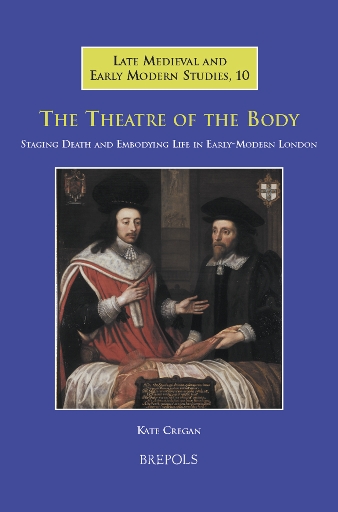
The Theatre of the Body
Staging Death and Embodying Life in Early-Modern London
show More to view fulltext, buy and share links for:The Theatre of the Body show Less to hide fulltext, buy and share links for: The Theatre of the BodyThis study is a threefold investigation of understandings of embodiment - as displayed in the playhouses, courthouses, and anatomy theatres of London between 1540 and 1696. These dates mark the waxing and waning of the Worshipful Company of Barber-Surgeons’ domination of the practice of dissection in London. In 1540 Henry VIII gave them his approval and encouragement but by 1696 Edward Ravenscroft’s The Anatomist: Or the Sham Doctor staged their loss of power. This loss of power, the book contends, is symptomatic of a major shift in the concept of embodiment. The book explains the changing understanding of the human body throughout this period by analysis of the interplay between the texts used in and the material practices of three specific public sites: the public playhouses, the Sessions House, and the Anatomy Theatre of the Worshipful Company of Barber-Surgeons of London. Using an approach which combines the socially textured understandings of fields of practice found in Bourdieu with the interpretations of progression across time found in Elias and Foucault, The Theatre of the Body demonstrates how the three fields of drama, law, and medicine are intimately inter-connected in that process.
In presenting this analysis, the author argues that the quality of embodiment begins to shift during this period from the mid-sixteenth century and throughout the course of the seventeenth century. In this shift one can observe how the earlier, ‘traditional’ interpretation of embodiment is intensified and resolidified into the beginnings of the medicalized ‘modern’ body.
-
-
-
The Theory and Practice of Translation in the Middle Ages
show More to view fulltext, buy and share links for:The Theory and Practice of Translation in the Middle Ages show Less to hide fulltext, buy and share links for: The Theory and Practice of Translation in the Middle Ages[El interés que los autores de estos trabajos demuestran por las complejidades y consecuencias de la traducción en la Edad Media, o de la traducción de textos medievales en el período moderno, ha dado como resultado un volumen diverso y estimulante intelectualmente. Los trabajos del presente volumen, escritos en inglés, francés y español, se centran en el tema de la traducción desde muchas perspectivas, ofreciendo una amplia gama de interpretaciones del concepto de traducción. El volumen contiene trabajos que abarcan en el tiempo desde el período Anglo-Sajón hasta el presente, y en temática desde libros de recetas medievales hasta argumentos a favor de que las mujeres administren la Eucaristía. Las lenguas que se estudian incluyen no sólo lenguas no europeas sino también el Latín y numerosas vernáculas europeas, ya sean como lengua origen o lengua meta. Como cualquier traductor o estudioso de la traducción puede rápidamente constatar, es imposible separar lengua de cultura. Todos los autores de este volumen han analizado en profundidad las complejidades de la traducción como hecho cultural, aún cuando el foco de atención pareciera ser específicamente lingüístico. Son estas complejidades las que dotan al estudio de la teoría y práctica de la traducción en la Edad Media de su perdurable fascinación.
,The interest of the writers of these essays in the intricacies and implications of translation in the Middle Ages, or of the translation of medieval texts in the modern period, has resulted in a diverse and intellectually stimulating volume. The papers in this volume, written in either English, French, or Spanish, approach translation from a wide variety of perspectives and offer a range of interpretations of the concept of translation. The volume contains essays ranging in time from the Anglo Saxon period to the present, and in topic from medieval recipe books to arguments in favour of women administering the sacrament. Languages studied include non-European languages as well as Latin and numerous European vernaculars as both source and target languages. As any translator or student of translation quickly becomes aware, it is impossible to divorce language from culture. All the contributors to this volume struggle with the complexities of translation as a cultural act, even when the focus would seem to be specifically linguistic. It is these complexities which lend the study of the theory and practice of translation in the Middle Ages its enduring fascination.
,Complexité et fascination: deux mots qui reviennent souvent à l’esprit au contact des textes médiévaux, au point qu’ils pourraient servir à caractériser la nature des rapports qui unissent ces textes à leurs traducteurs. Dans leur diversité, les communications entendues à Saint-Jacques-de-Compostelle illustrent, chacune à sa manière, de nombreux aspects de cette complexité, qu’il s’agisse des sujets traités ou des problèmes techniques soulevés. Le rapport au temps qu’impose le texte médiéval se double d’un rapport à la distance, car la différence culturelle se présente au traducteur comme un éloignement, ce qui, dans le travail de rapprochement que constitue alors la traduction, introduit la notion d’interprétation. A son tour cette interprétation, avec ses degrés, est étroitement dépendante des objectifs pédagogiques, culturels, politiques ou religieux que s’est fixés le traducteur, comme cela apparaîtra clairement à la lecture d’un certain nombre de ces communications. Plusieurs études de ce recueil confirment également que la traduction, loin d’être un travail de solitaire, est avant tout un acte social, une activité de mise en relations. C’est cette patiente recherche d’adaptation à des publics différents, en fonction d’époques et de goûts différents, accompagnée de choix tour à tour réjouissants et frustrants, qui constitue le travail de tout traducteur, qu’il appartienne au Moyen Âge ou au monde moderne. C’est aussi cette richesse, venue du passé mais toujours actuelle, et cette recherche sans cesse reprise d’un équilibre toujours instable, qui font que la traduction, dans sa pratique comme dans sa théorie, exerce sur tant d’esprits une réelle fascination.
]
-
-
-
The Translation of the Works of St Birgitta of Sweden into the Medieval European Vernacular
show More to view fulltext, buy and share links for:The Translation of the Works of St Birgitta of Sweden into the Medieval European Vernacular show Less to hide fulltext, buy and share links for: The Translation of the Works of St Birgitta of Sweden into the Medieval European VernacularThis volume of papers, from an international Conference held in Beverley in 1997 on the translation into the medieval European vernaculars of the works of St Birgitta of Sweden, forms volume 7 in the series The Medieval Translator. Previous volumes in the series have been based on papers heard at the Cardiff Conferences on the Theory and Practice of Translation in the Middle Ages (1987- ). While future volumes in the series will continue to provide a record of the Cardiff Conference (the next is planned for Compostella in 2001), the present volume provides a welcome development for the series, and paves the way for scholarly monographs on individual works and writers — including editions of medieval translations — and other publications more narrowly angled at the different questions raised by the study of medieval translation.
-
-
-
The Tree
Symbol, Allegory, and Mnemonic Device in Medieval Art and Thought
show More to view fulltext, buy and share links for:The Tree show Less to hide fulltext, buy and share links for: The TreeWith its vital character - growing, flowering, extending its roots into the ground, and its branches and leaves to the sky - the tree is a polyvalent metaphor, a suggestive symbol, and an allegorical subject. During the Middle Ages, a number of iconographic schemata were based on the image and structure of the tree, including the Tree of Jesse and the Tree of Virtues and Vices. From the late eleventh century onwards such formulae were increasingly used as devices for organizing knowledge and representing theoretical concepts. Despite the abstraction inherent in these schemata, however, the semantic qualities of trees persist in their usage.
The analysis of different manifestations of trees in the Middle Ages is highly instructive for visual, intellectual, and cultural history. Essays in this volume concentrate on the formative period for arboreal imagery in the medieval West, that is, the eleventh to fifteenth centuries. Using a range of methodological strategies and examining material from different media, ranging from illuminated manuscripts to wall painting, stained glass windows, and monumental sculpture, the articles in this volume show how different arboreal structures were conceived, employed, and appropriated by their specific contexts, how they functioned in their original framework, and how they were perceived by their audience.
-
-
-
The Tribunal of Zaragoza and Crypto-Judaism
1484-1515
show More to view fulltext, buy and share links for:The Tribunal of Zaragoza and Crypto-Judaism show Less to hide fulltext, buy and share links for: The Tribunal of Zaragoza and Crypto-JudaismSince the opening of the Inquisition's archives in Spain in the nineteenth century, historians and anthropologists alike have seized upon the institution and its remarkable archival legacy, and have scrutinized it from a multitude of political, socio-economic, and cultural angles. Perhaps one of the most contentious hypotheses to have recently emerged from the field has been Benzion Netanyahu's proposal that the inquisitors fabricated charges of Judaizing against the Spanish New Christians (Christians of Jewish descent). This book questions Netanyahu's hypothesis by turning to the extant trial records from Aragon's tribunal of Zaragoza, and employing them as a case study. This range of documents provides ample evidence of a true survival of Jewish ritual life and culture among the Aragonese conversos who were living and working in Zaragoza at the end of the fifteenth century. When the Inquisition was established in Zaragoza in 1484, members of the converso communities across Aragón, although denominationally Christian, were secretly observing the rituals of Judaism. Whether a continuing observance of the Sabbath, Yom Kippur, or Passover, enduring Jewish dietary practices or a deeply rooted prayer life, the picture of converso daily life which emerges from the trial records is essentially a Jewish one.
-
-
-
The Use of Pragmatic Documents in Medieval Wallachia and Moldavia (Fourteenth to Sixteenth Centuries)
show More to view fulltext, buy and share links for:The Use of Pragmatic Documents in Medieval Wallachia and Moldavia (Fourteenth to Sixteenth Centuries) show Less to hide fulltext, buy and share links for: The Use of Pragmatic Documents in Medieval Wallachia and Moldavia (Fourteenth to Sixteenth Centuries)In the region that was to become Moldavia and Wallachia, there are almost no traces of the use of writing for the millennium after the Roman Empire withdrew from Dacia. Written culture surfaces only by the second half of the fourteenth century, after the foundation of state institutions. This book surveys the earliest extant documents, their issuers, and the motives that triggered the development of documentary culture in Moldavia and Wallachia. By the fifteenth century, Moldavians were already accustomed to the use of charters. In Wallachia, noblemen also appealed to written records, but at that stage mainly in extraordinary circumstances. Women could not inherit land, and noblemen requested princely charters confirming a legal fiction that turned their daughters into sons. After the mid-sixteenth century, Wallachia experiences a steep growth in the number of charters issued. In this period of economic and social upheaval, charters proved an extraordinary means for the protection of landed property. Yet neither principality held secular archives - the storage of documents for later use in private hands suggests an early stage in the development of documentary culture.
By covering the ‘birth’ and spread of pragmatic literacy in medieval Moldavia and Wallachia, this book thus fills an important lacuna in what is known about the development of literacy in the later Middle Ages.
-