Brepols
Brepols is an international academic publisher of works in the humanities, with a particular focus in history, archaeology, history of the arts, language and literature, and critical editions of source works.3051 - 3100 of 3194 results
-
-
Village Elites and Social Structures in the Late Medieval Campine Region
show More to view fulltext, buy and share links for:Village Elites and Social Structures in the Late Medieval Campine Region show Less to hide fulltext, buy and share links for: Village Elites and Social Structures in the Late Medieval Campine RegionThe economy of the late medieval Low Countries is often portrayed in terms of dynamism and economic growth. However, several regions within this larger entity followed an alternate path of development. One example of this is the Campine (Kempen), a communal peasant region situated to the northeast of the sixteenth-century ‘metropolis’ of Antwerp. By contrast with other regions in the Low Countries, this area was characterised by a remarkable stability.
By focusing on ‘independent’ peasant elites, this study explores the social structures and the characteristics of inequality of this region, showing how these factors led to a different, more stable mode of economic development. Looking past standard societal measurements such as property distribution, this work combines a wide variety of sources to grasp the nuances of inequality in a communal society. It therefore takes into account other economic factors such as control over the commons, and market integration. It also focuses on political and social inequality, shedding light on aspects of inequality in village politics, social life, and poor relief.
Thus, in contrast to dominant depictions of pre-modern societies on the road to capitalism, this book provides a comprehensive portrayal of inequality and elite groups in a communal peasant society.
-
-
-
Villes de Flandre et d’Italie (XIIIe-XVIe siècle). Les enseignements d’une comparaison
show More to view fulltext, buy and share links for:Villes de Flandre et d’Italie (XIIIe-XVIe siècle). Les enseignements d’une comparaison show Less to hide fulltext, buy and share links for: Villes de Flandre et d’Italie (XIIIe-XVIe siècle). Les enseignements d’une comparaisonUne comparaison entre les villes de Flandre et d’Italie semble aller de soi tant apparaissent nombreuses, dans les études qui leur sont consacrées, les similitudes et les disparités esquissées. Entre les deux grands espaces urbanisés de l’Europe occidentale, pour qui s’intéresse à l’histoire des villes, le rapprochement paraît s’imposer. Pourtant, bien souvent, la juxtaposition prévaut et la comparaison se limite au seul domaine des convergences de l’histoire économique.
Cinq thèmes ont donc été retenus ici dans un souci de renouvellement et de réorientation des questionnements: la démographie, le fait religieux, les inscriptions et les symboliques du pouvoir, la «fabrique» de la mémoire et la représentation de l’espace. Dans cet ouvrage, est organisée une mise en parallèle qui permet d’identifier les spécificités qui façonnèrent en Italie et au nord de l’Europe les identités urbaines. Sur fond de relations marchandes et d’animation économique, les profils des communautés se précisent alors et la rare gageure d’une véritable histoire comparative est ainsi proposée au lecteur.
-
-
-
Vincent de Beauvais et le Grand Miroir du monde
show More to view fulltext, buy and share links for:Vincent de Beauvais et le Grand Miroir du monde show Less to hide fulltext, buy and share links for: Vincent de Beauvais et le Grand Miroir du mondeLe Grand Miroir du monde, Speculum maius, est la «Grande Encyclopedie» du Moyen Age. Ce livre présente les étapes de son élaboration comme outil du studium, par Frère Vincent de Beauvais, lecteur dominicain au service de son Ordre, et par ailleurs familier du roi Louis IX. Il caractérise la documentation mise en œuvre et son évolution. Conçu d'abord en deux parties, clans un esprit proche de la pensée victorine, ( vers 1244), l'ouvrage fut ensuite remis en avancées de la nouvelle science, tributaire d'Aristote et d'al-Farabi (vers 1260). L'influence naturaliste d'Albert le Grand faisant suite á celle, exégétique, de Hugues de Saint-Cher, le Speculum maius devient ainsi une œuvre en trois parties, Speculum naturale, consacre á l'histoire naturelle selon l'ordre des six jours de la création; Speculum doctrinale, inachevé, exposant toutes les branches du savoir (trivium propédeutique, sciences pratiques, sciences mécaniques, sciences théoriques); Speculum historiale, deroulant les facta et gesta de l'humanité (histoire proprement dite, histoire littéraire et hagiographie) jusqu'au Jugement dernier, selon la vision augustinienne de l'histoire.
Des documents traduits, dont !'important prologue, Libellus apologeticus, illustrent la méthode de composition et le contenu de l'œuvre, la mettent en relation avec d'autres ecrits paralleles du XIIIe siècle et témoignent de son succès au cours des siécles.
-
-
-
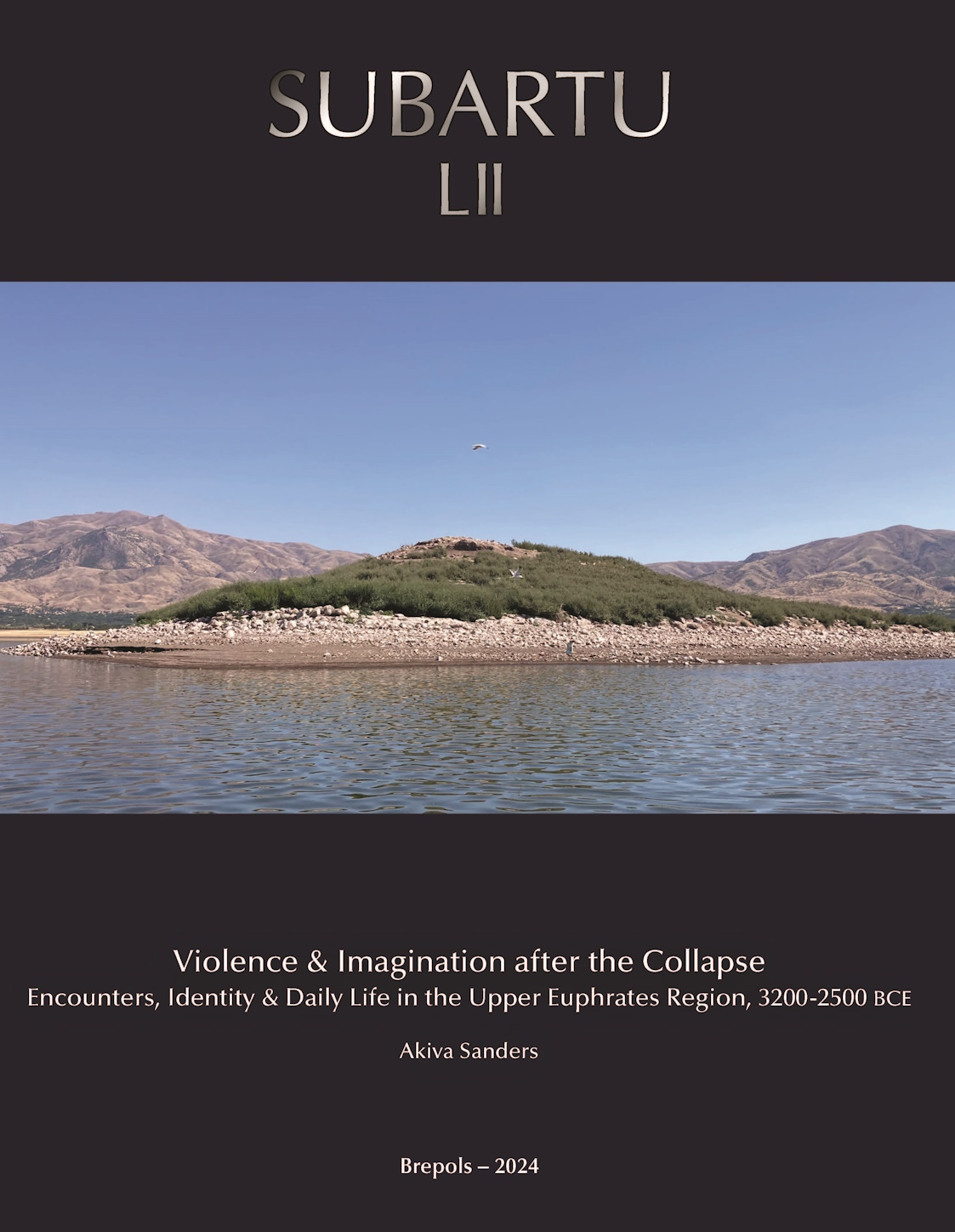
Violence and Imagination after the Collapse
Encounters, Identity and Daily Life in the Upper Euphrates Region, 3200-2500 BCE
show More to view fulltext, buy and share links for:Violence and Imagination after the Collapse show Less to hide fulltext, buy and share links for: Violence and Imagination after the CollapseIn the late fourth millennium BCE, the villages, temples, and palace of the Upper Euphrates region stood between two social worlds: the comparatively hierarchical, centrally organized Mesopotamian social tradition to the south and the comparatively egalitarian, decentralized Kura-Araxes social tradition to the north. Over the next seven centuries, this positioning and the interactions it sparked fed into reactions among the region’s inhabitants that ranged from cataclysmic violence to a flowering of innovation in visual culture and social arrangements. These events had a wide array of short-term and long-term impacts, some limited to a single house or settlement, and some, like the innovation of the Warrior Tomb template, that transformed societies across West Asia. With an eye towards detail, a theoretical approach emphasizing personal motivation, and multiple scales of analysis, this book organizes previously unpublished data from six sites in the region, Arslantepe, Ta kun Mevkii, Pulur, Nor untepe, Tepecik, and Korucutepe, dating to this dramatic and transformative period.
-
-
-
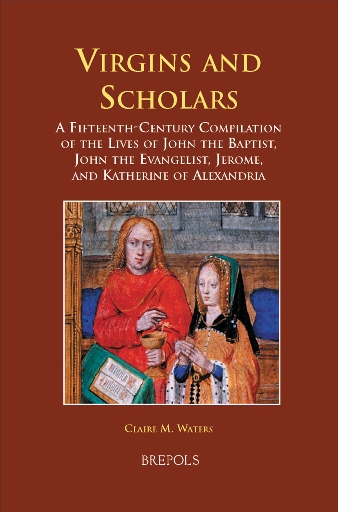
Virgins and Scholars
A Fifteenth-Century Compilation of the Lives of John the Baptist, John the Evangelist, Jerome, and Katherine of Alexandria
show More to view fulltext, buy and share links for:Virgins and Scholars show Less to hide fulltext, buy and share links for: Virgins and ScholarsThis collection of prose vitae of four virgins and scholars - Saints John the Baptist, John the Evangelist, Jerome, and Katherine of Alexandria - was almost certainly copied, and the texts very likely composed, at Syon Abbey or Sheen Charterhouse in the mid-fifteenth century. The lives cover a wide range of hagiographic modes, from hagiographic romance to affective, devotional appreciation to doctrinal treatise in narrative form. From the life of Jerome, composed by a monk for his aristocratic spiritual daughter, to the life of Katherine, reputedly translated for Henry V, to those of John the Baptist and John the Evangelist, which set their subjects in a recognizably Birgittine context, they show the interaction of men and women, lay and monastic, in the production of devotional literature. The diversity of their approaches and sources, moreover, shows the links between English dynastic politics and continental religious literature and spiritual traditions. As examples of translation practices, of monastic politics, and of religious instruction, these lives provide a window onto the devotional culture and literary worlds of fifteenth-century Europe.
-
-
-
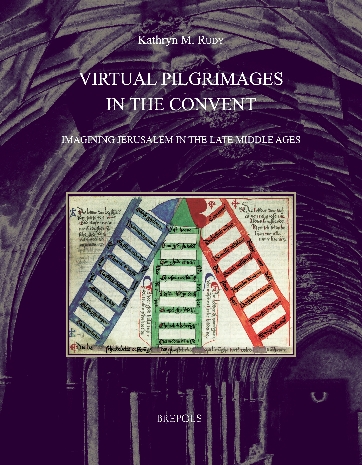
Virtual Pilgrimages in the Convent
Imagining Jerusalem in the Late Middle Ages
show More to view fulltext, buy and share links for:Virtual Pilgrimages in the Convent show Less to hide fulltext, buy and share links for: Virtual Pilgrimages in the Convent‘Walking in Christ’s footsteps’ was a devotional ideal in the late Middle Ages. However, few nuns and religious women had the freedom or the funding to take the journey in the flesh. Instead they invented and adjusted devotional exercises to visit the sites virtually. These exercises, largely based on real pilgrims’ accounts, made use of images and objects that helped the beholder to imagine walking alongside Christ during his torturous march to Calvary. Some provided scripts whereby votaries could animate paintings and sculptures. Others required the nun to imagine her convent as a miniature model of Jerusalem. This volume is grounded in more than a dozen texts from manuscripts written by medieval nuns and religious women, which appear here transcribed and translated for the first time, and a multiplicity of (occasionally three-dimensional) images. They attest to the ubiquity and variety of virtual pilgrimages among religious women and help to reveal the functions of certain late medieval devotional images.
Kathryn M. Rudy, Lecturer at the University of St Andrews, is an authority on Northern European illuminated manuscripts and prints. She has written about indulgences and the functions of images.
-
-
-
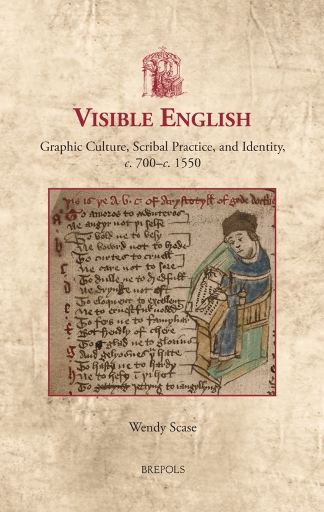
Visible English
Graphic Culture, Scribal Practice, and Identity, c. 700-c. 1550
show More to view fulltext, buy and share links for:Visible English show Less to hide fulltext, buy and share links for: Visible EnglishVisible English recovers for the first time the experience of reading and writing the English language in the medieval period through the perspectives of littera pedagogy, the basis of medieval learning and teaching of literate skills in Latin. Littera is at the heart of the set of theories and practices that constitute the ‘graphic culture’ of the book’s title. The book shows for the first time that littera pedagogy was an ‘us and them’ discourse that functioned as a vehicle for identity formation. Using littera pedagogy as a framework for understanding the medieval English-language corpus from the point of view of the readers and writers who produced it, Visible English offers new insights on experiences of writing and reading English in communities ranging from those first in contact with Latin literacy to those where print was an alternative to manuscript. Discussing a broad range of materials from so-called ‘pen-trials’ and graffiti to key literary manuscripts, Visible English provides new perspectives on the ways that the alphabet was understood, on genres such as alphabet poems, riddles, and scribal signatures, and on the different ways in which scribes copied Old and Middle English texts. It argues that the graphic culture underpinned and transmitted by littera pedagogy provided frameworks for the development and understanding of English-language literacy practices and new ways of experiencing social belonging and difference. To be literate in English, it proposes, was to inhabit identities marked by Anglophone literate practices.
-
-
-
Visions of Medieval History in North America and Europe
Studies on Cultural Identity and Power
show More to view fulltext, buy and share links for:Visions of Medieval History in North America and Europe show Less to hide fulltext, buy and share links for: Visions of Medieval History in North America and EuropeIn this volume, scholars from North America and Europe explore the intersection of medieval identity with ethnicity, religion, power, law, inheritance, texts, and memory. They offer new historiographical interventions into questions of identity, but also of ethnonyms, conflict studies, the feudal revolution, gender and kinship studies, and local history. Employing interdisciplinary approaches and textual hermeneutics, the authors represent an international scholarly community characterized by intellectual restlessness, historiographical experimentation, and defiance of convention.
-
-
-
Visions of North in Premodern Europe
show More to view fulltext, buy and share links for:Visions of North in Premodern Europe show Less to hide fulltext, buy and share links for: Visions of North in Premodern EuropeThe North has long attracted attention, not simply as a circumpolar geographical location, but also as an ideological space, a place that is ‘made’ through the understanding, imagination, and interactions of both insiders and outsiders. The envisioning of the North brings it into being, and it is from this starting point that this volume explores how the North was perceived from ancient times up to the early modern period, questioning who, where, and what was defined as North over the course of two millennia.
Covering historical periods as diverse as Ancient Greece to eighteenth-century France, and drawing on a variety of disciplines including cultural history, literary studies, art history, environmental history, and the history of science, the contributions gathered here combine to shed light on one key question: how was the North constructed as a place and a people? Material such as sagas, the ethnographic work of Olaus Magnus, religious writing, maps, medical texts, and illustrations are drawn on throughout the volume, offering important insights into how these key sources continued to be used over time. Selected texts have been compiled into a useful appendix that will be of considerable value to scholars.
-
-
-
Visions of Unity after the Visigoths
Early Iberian Latin Chronicles and the Mediterranean World
show More to view fulltext, buy and share links for:Visions of Unity after the Visigoths show Less to hide fulltext, buy and share links for: Visions of Unity after the VisigothsThis study focuses on post-Visigothic Latin chronicles as testimonies of an intense search for models of stability and social cohesion on the Iberian Peninsula. As the principal source of Iberian political thought between the eighth and mid-thirteenth centuries, these texts have long been regarded from the perspective of modern-day national boundaries of a political entity called Spain. From the post-national perspective of Mediterranean studies, which considers Iberian centres of power in cultural contact with the broader world, post-Visigothic Iberian chronicle writing is seen as a cultural practice that seeks to reconcile the imperative of unity and stability with the reality of diversity and social change.
The book examines, firstly, the Andalusi Christian narrative of Visigothic political demise, which originated in Iberian dhimmī communities between the mid-eighth and mid-ninth centuries. Second, it explores the narrative of sovereignty, developed in Asturias-León from the late ninth century onwards. Finally, it examines the historiographical manipulation of both of these traditions in Rodrigo Jiménez de Rada’s Historia de rebus Hispanie (1243).
The ongoing contact between Iberian Latin textual communities and the broader Mediterranean is interpreted as central to both the development of Iberian historical mythology and its historiographical renovation.
-
-
-
Visual Constructs of Jerusalem
show More to view fulltext, buy and share links for:Visual Constructs of Jerusalem show Less to hide fulltext, buy and share links for: Visual Constructs of JerusalemThe special position of Jerusalem among the cities of the world stems from a long history shared by the three Abrahamic religions, and the belief that the city reflected a heavenly counterpart. Because of this unique combination, Jerusalem is generally seen as extending along a vertical axis stretching between past, present, and future. However, through its many ‘earthly’ representations, Jerusalem has an equally important horizontal dimension: it is represented elsewhere in all media, from two-dimensional maps to monumental renderings of the architecture and topography of the city’s loca sancta.
In documenting the increasing emphasis on studying the earthly proliferations of the city, the current book witnesses a shift in theoretical and methodological insights since the publication of The Real and Ideal Jerusalem in Jewish, Christian, and Islamic Art in 1998. Its main focus is on European translations of Jerusalem in images, objects, places, and spaces that evoke the city through some physical similarity or by denomination and cult - all visual and material aids to commemoration and worship from afar. The book discusses both well-known and long-neglected examples, the forms of cult they generate and the virtual pilgrimages they serve, and calls attention to their written and visual equivalents and companions. In so doing, it opens a whole new vista onto the summa of representations of Jerusalem.
-
-
-
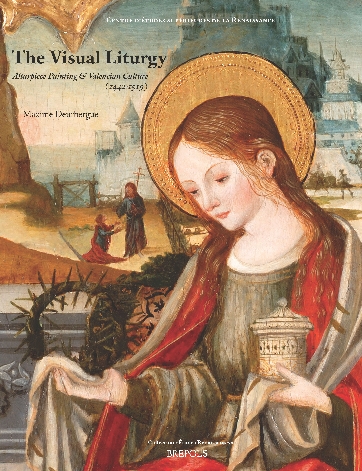
Visual Liturgy: Altarpiece Painting and Valencian Culture (1442-1519)
show More to view fulltext, buy and share links for:Visual Liturgy: Altarpiece Painting and Valencian Culture (1442-1519) show Less to hide fulltext, buy and share links for: Visual Liturgy: Altarpiece Painting and Valencian Culture (1442-1519)In the introduction to his Early Netherlandish Painting, Erwin Panofsky characterised 15th-century European painting with an opposition between the art of Italy and that of Flanders, and significantly, he recalled that in the eyes of a Luther or of a Michelangelo, no other School deserved attention. Six centuries later, Spanish art of this period remains little known outside the Iberian Peninsula. The fact that a large number of the works of art are still kept in their original location surely plays a part in this, but there is also a lasting prejudice that this art is aesthetically and intellectually little exciting. Retables were then the utmost artistic expression. At first sight, they mostly look the same. Because this art seems changeless, its exegesis has been routine and vague.
The Visual Liturgy challenges this situation. Focusing on the Aragonese city of Valencia, then at the height of its pride and glory, it examines a school of painters, which reflects a wider scene, namely the civic and religious preoccupations of a whole culture. Not only does it provide a comprehensive view of current research on Valencian painting, it connects it to the wider context of Valencian piety and tackles the dialectics at work in civic culture: how the monarchy took hold of the municipality; how foreign influences challenged local tradition; how sophisticated altarpieces emerged from the standard stock of artistic production; how, finally, the liturgy prevented ruptures between the religion of the learned and more popular, even at times slightly unorthodox, expressions of the faith.
The Visual Liturgy thus provides a better understanding of 15th-century Spanish art. It sheds important new light on the birth of an artistic school in a context of competing foreign influences, and on the reception of such influences into a radically different culture; finally, it is the first attempt to explore the meaning of Valencian altarpieces with reference to their cultural, spiritual and liturgical context of creation.
-
-
-
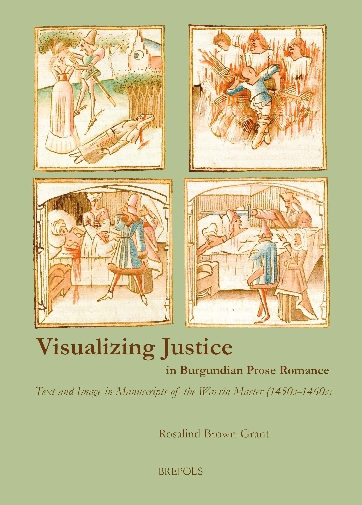
Visualizing Justice in Burgundian Prose Romance
Text and Image in Manuscripts of the Wavrin Master (1450s–1460s)
show More to view fulltext, buy and share links for:Visualizing Justice in Burgundian Prose Romance show Less to hide fulltext, buy and share links for: Visualizing Justice in Burgundian Prose RomanceThis is the first monograph devoted to manuscripts illuminated by the mid-fifteenth-century artist known as the Wavrin Master, so-called after his chief patron, Jean de Wavrin, chronicler and councillor at the court of Philip the Good of Burgundy. Specializing in the production of pseudo-historical prose romances featuring the putative ancestors of actual Burgundian families, the artist was an attentive interpreter of these texts which were designed to commemorate the chivalric feats of past heroes and to foster their emulation by noble readers of the day. Integral to these heroes’ deeds is the notion of justice, their worth being measured by their ability to remedy criminal acts such as adultery, murder, rape, and usurpation. In a corpus of 10 paper manuscripts containing the texts of 15 romances and over 650 watercolour miniatures, the stylized, expressive images of the Wavrin Master bring out with particular clarity the lessons in justice which these works offered their contemporary audience, many of whom, from the Burgundian dukes downwards, would have been responsible for upholding the law in their territories. Chapters are devoted to issues such as the nature of just war and how it is linked to good rulership; what forms of legal redress the heroines of these tales are able to obtain with or without the help of a male champion; and what responses are available in law to a spouse betrayed by an adulterous partner. The book will be of interest to scholars of medieval art, literature, legal and cultural history, and gender studies.
-
-
-
Vivarium. I libri, il destino
show More to view fulltext, buy and share links for:Vivarium. I libri, il destino show Less to hide fulltext, buy and share links for: Vivarium. I libri, il destinoIn its understated way, this work establishes several theses each one of which, taken separately, could reasonably be considered sensational. First we have the discovery of the autograph of Cassiodorus. In shorthand, as one would expect from a busy man with a strong sense of time management, it testifies that Cassiodorus reviewed (Cassiodorus legi), or verified (perlegi Cassiodorus) a text. The signature occurs in codices that had already, through other considerations, been associated with Vivarium, and becomes in turn a strong criterion for the identification of works not previously associated with the Calabrian foundation. In some manuscripts a hand already known as 'manus prima', can now be identified with those of scribes active at Vivarium. These hands were not simply copying orthodox texts, but critically examining those written by authors of different persuasions: we know now that a codex well-known for its Arian scholia was studied and annotated at Vivarium. Cassiodorus and his team of writers/translators were squirreling away on texts by Church Fathers and heretics, analysing them, taking from them what could be suitable, reading everything. So, Vivarium was a militantly Chalcedonian monastery, but also one where the alternatives, dubbed by modern scholars 'Arian scholia' were duly studied and annotated. These essays by Fabio Troncarelli are an example of 'integral palaeography' in the sense of the definition, by now a classic, of Leonard E. Boyle (Medieval Latin Palaeography, Author's Preface, p. xv). Through the highly specialised technique of demanding discipline, the author succeeds in reconstructing the intellectual climate and the historical setting of Vivarium.
-
-
-
Vocabulaire des collèges universitaires (XIIIe - XVIe siècles)
Actes du colloque, Leuven 9-11 avril 1992
-
-
-
Vocabulaire des écoles et des méthodes d'enseignement au moyen âge
Actes du colloque, Rome 21-22 octobre 1989
-
-
-
Vocabulaire du livre et de l'écriture au moyen âge
Actes de la table ronde, Paris 24-26 septembre 1987
-
-
-
Vocabulary of Teaching and Research Between Middle Ages and Renaissance
Proceedings of the Colloquium London, Warburg Institute, 11-12 March 1994
-
-
-
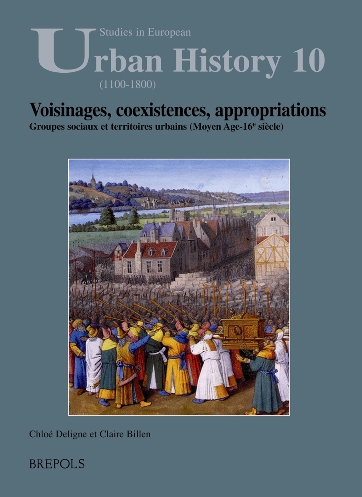
Voisinages, coexistences, appropriations
Groupes sociaux et territoires urbains (Moyen Age-16e siècle)
show More to view fulltext, buy and share links for:Voisinages, coexistences, appropriations show Less to hide fulltext, buy and share links for: Voisinages, coexistences, appropriationsFruit des travaux du colloque intitulé «Groupes sociaux et territoires urbains (Moyen Age-16e siècle)» organisé en décembre 2004 à l’Université Libre de Bruxelles, cet ouvrage rassemble douze contributions originales consacrées aux dynamiques sociales de l’espace urbain en Europe de l’ouest durant le bas Moyen Âge.
Dans sa première partie, l’ouvrage montre la structuration à long terme de l’espace urbain par les stratégies d’occupation de groupes dominants: chapitres canoniaux, élites scabinales, métiers (Tours, Namur, Trévise). Il confronte ce processus d’appropriation à la capacité de réagencement matériel ou symbolique déployée par certains acteurs urbains. Accident aléatoire (Tortosa), circonstances politiques (Bruges), modulation des rapports à la ville (Ratisbonne) redessinent les territoires respectifs, rallument sans cesse la lutte pour la maîtrise de l’espace et de ses éléments signifiants.
Dans sa seconde partie, l’ouvrage donne à penser la société urbaine dans ses relations avec des horizons plus lointains. Dans un premier temps sont abordées les relations des villes avec leur arrière-pays, sur lequel les groupes citadins dominants réinventent sans cesse les modalités économiques et juridiques de leur contrôle (Bruxelles, Chieri, Dijon). Dans un second temps, sont considérées les armatures urbaines de certains territoires (Brabant, Hainaut, Saint-Empire) dont la vivacité économique dépend de l’intensité des relations marchandes.
Les articles réunis ici éclairent, souvent d’un jour nouveau, non seulement l’histoire singulière des villes concernées mais plus fondamentalement les processus et les logiques à l’œuvre dans l’agencement et le réagencement permanent des espaces urbains.
-
-
-
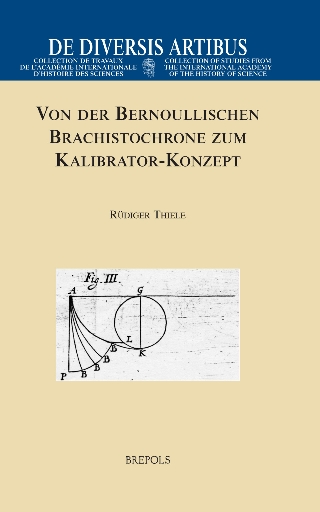
Von der Bernoullischen Brachistochrone zum Kalibrator-Konzept
Ein historischer Abriß zur Entstehung der Feldtheorie in der Variationsrechnung (hinreichende Bedingungen in der Variationsrechnung)
show More to view fulltext, buy and share links for:Von der Bernoullischen Brachistochrone zum Kalibrator-Konzept show Less to hide fulltext, buy and share links for: Von der Bernoullischen Brachistochrone zum Kalibrator-KonzeptDie Aufgabe der klassischen Variationsrechnung besteht darin, Kurven oder Funktionen zu bestimmen, denen im Vergleich mit anderen eine bestimmte Eigenschaft im größten oder kleinsten Maße zukommt. Die Art des Vergleichens bestimmt dabei den Charakter des Extremums. In dieser Studie wird die Frage untersucht, wie für starke Extrema (in der Norm des C 0) hinreichende Kriterien (sogenannten Feldtheorie) entstanden, entwickelt und eingesetzt worden sind. Diese Untersuchungen sind mit Namen wie Joh. Bernoulli, Jacobi, Weierstraß, Schwarz, Darboux, Hilbert, Kneser, Carathéodory, Lepage und anderen verbunden. Der Zeitraum reicht von Brachistochronenproblem 1696 bis in die Mitte des vorigen Jahrhunderts, betrachtet werden sowohl einfache als auch mehrdimensionale Variationsprobleme mit mehreren gesuchten Funktionen. Neben den entsprechenden gedruckten Arbeiten sind in die Untersuchungen in einem Maße, wie es in der Geschichte der Variationsrechnung bisher noch nicht erfolgt ist, ungedruckte Quellen wie einschlägige Briefe, Notizbücher, Vorlesungskonzepte, -mitschriften und -ausarbeitungen einbezogen worden, wodurch selbst in manchen Fragen auf die allgemeine Entwicklung der Variationsrechnung neues Licht geworfen wird.
-
-
-
Vérité et apparence
Mélanges en l’honneur de Carlos Lévy, offerts par ses amis et ses disciples
show More to view fulltext, buy and share links for:Vérité et apparence show Less to hide fulltext, buy and share links for: Vérité et apparenceBien qu’il soit encore bien trop tôt pour dresser un bilan critique de l’activité scientifique de Carlos Lévy, qui demeure en pleine évolution et qui promet toujours de nouvelles contributions à nos études, il est déjà évident qu’il a laissé une empreinte très importante dans les disciplines classiques au moins à deux égards : du point de vue de la méthode, Carlos Lévy a enseigné combien il est important, à une époque où la recherche se spécialise toujours plus, de ne pas perdre au contraire la capacité de « penser sans frontières », en joignant la sensibilité de l’intuition géniale à la rigueur des principes philologiques et à une compétence dans la discipline aussi solide qu’étendue et complète. C’est dans cette perspective que s’épanouit sa surprenante capacité de travailler à la fois comme historien de la philosophie, spécialiste de la pensée politique classique, expert en rhétorique et en éloquence, autant qu’en linguistique et en sémantique historique ; dans cette perspective encore que se comprend sa volonté d’étudier textes grecs comme textes latins, appartenant à toutes les écoles philosophique de l’Antiquité, et aussi ceux d’auteurs éloignés du domaine de la philosophie ; dans cette perspective enfin que se dessine son ouverture vers la modernité, la permanence de l’époque classique, le dialogue avec la philosophie contemporaine. Du point de vue des contenus, d’autre part, il est évident que l’activité scientifique de Carlos Lévy s’est concentrée surtout - mais certainement pas seulement - sur le sujet fascinant et toujours actuel du rapport entre vérité et apparence, entre dogme et incertitude, entre ontologie et gnoséologie. C’est donc autour du binôme vérité et apparence, envisagé autant d’un point de vue philosophique que d’un point de vue plus proprement rhétorique ou poétique, à travers l’étude d’auteurs de l’Antiquité à la Renaissance, que s’est construit ce volume d’amitié.
Perrine Galand, normalienne, ancien membre junior de l’Institut Universitaire de France, directeur d’études à l’École pratique des Hautes Études, est spécialiste de la poétique de la Renaissance européenne.
Ermanno Malaspina, professeur d’histoire de la langue latine à Turin, s’occupe de Cicéron, de Sénèque et du paysage littéraire en latin.
-
-
-
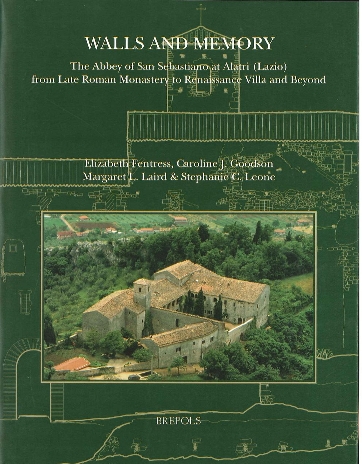
Walls and Memory: The Abbey of San Sebastiano at Alatri (Lazio), from Late Roman Monastery to Renaissance Villa and Beyond
show More to view fulltext, buy and share links for:Walls and Memory: The Abbey of San Sebastiano at Alatri (Lazio), from Late Roman Monastery to Renaissance Villa and Beyond show Less to hide fulltext, buy and share links for: Walls and Memory: The Abbey of San Sebastiano at Alatri (Lazio), from Late Roman Monastery to Renaissance Villa and BeyondThe abbey of San Sebastiano, which lies not far from the town of Alatri in Southern Lazio, preserves within its walls almost fifteen hundred years of history. This history is unusually bound to a number of important figures, from Saint Benedict to Pope Nicholas V and his circle of humanists. For the past four years a small team has been investigating the extant structures of the abbey, analyzing the stratigraphy of the standing walls and tracing the various building phases. The study has produced some startling discoveries: the plan and preserved walls of one of the oldest monasteries in Europe, and one of the earliest Renaissance villas. The book gives an account of the architecture and the history of the building, showing how each phase relates to the last both structurally and thematically.
The project was initiated at the American Academy in Rome, where Elizabeth Fentress was Andrew Mellon Professor, and Caroline Goodson, Margaret L. Laird and Stephanie C. Leone were Fellows. Margaret Laird and Stephanie Leone are now assistant professors at the University of Washington, Seattle and at Boston College. Other contributors include Caroline Bruzelius, Professor of the History of Art at Duke University, Antonio Manfredi, Vatican Library, Serena Romano, Professor of the History of Art at the University of Lausanne, Marco Rossi, director of the Museum of Alatri, and Ingrid Rowland, Andrew Mellon Professor at the American Academy in Rome.
-
-
-
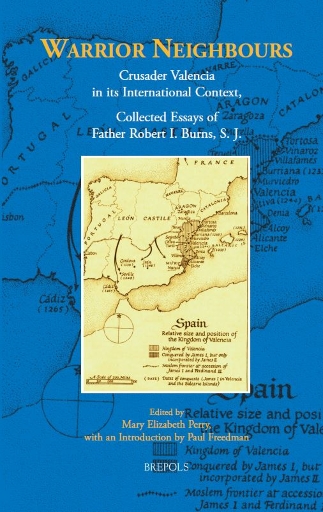
Warrior Neighbours
Crusader Valencia in its International Context, Collected Essays of Father Robert I. Burns, S. J.
show More to view fulltext, buy and share links for:Warrior Neighbours show Less to hide fulltext, buy and share links for: Warrior NeighboursThis volume presents the impressive corpus of studies by Robert I. Burns, SJ, on the topic that he has spent a half-century exploring in meticulous detail: the Crusader Kingdom of Valencia. These studies focus on one of Europe’s greatest medieval monarchs, James the Conqueror of Aragon-Catalonia, who made an enduring contribution to Western civilization.
James I ‘the Conqueror’ conquered Mediterranean Spain from Islam during fifty crusading years (1225-1276). Not only did he contend with ‘infidel’ powers around him, he frequently vied with warring Christian neighbours. This book presents a rich depiction of King James’s warrior neighbours, Muslim and Christian, from the king who was his greatest ally and greatest rival, Alfonso X the Learned (1212-1284), to the redoubtable and resourceful al-Azraq, a Muslim adventurer, rebel, and leader of one of the most formidable Islamic countercrusades in Spain. These studies illuminate such themes as cultural conflict and interchange, border tensions and frontier relations, medieval warfare and crusading, piracy, brigandage and reprisals, grievance management, medieval queenship and papal relations, the role of Jews in a pluri-ethnic kingdom, Mudejars and Moriscos, and the warrior heroes of Islam. King James presided over a society more complex than any in Christendom, and these studies unlock the details of this stunning achievement.
Robert I. Burns, SJ, Ph.D. (Johns Hopkins University), Doc. es Sc. Hist. (Fribourg University, Switzerland), was Professor Emeritus of History at UCLA and Director of the Institute of Medieval Mediterranean Spain. He was an elected Fellow of the Medieval Academy of America, and of the Hispanic Society of America, and a Guggenheim Fellow. His distinctions include the Haskins gold medal of the Medieval Academy of America, seven national book awards, eight honorary doctorates, and the Order of the Cross of St George.
-
-
-
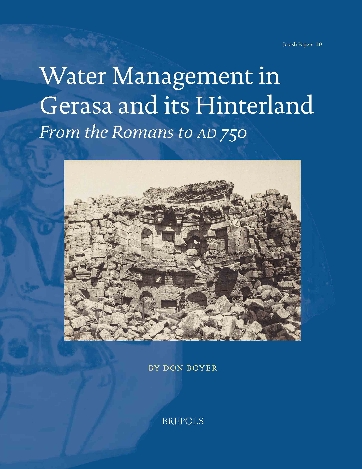
Water Management in Gerasa and its Hinterland
From the Romans to ad 750
show More to view fulltext, buy and share links for:Water Management in Gerasa and its Hinterland show Less to hide fulltext, buy and share links for: Water Management in Gerasa and its HinterlandThe Decapolis city of Gerasa has seen occupation since the Bronze Age but reached its zenith in the Roman to early Islamic period as a population centre and trading hub. Located in a fertile valley in the limestone foothills of the Ajlun mountains, the city benefitted from a benign climate and an excellent local water supply from karstic springs and perennial streams. By the Roman-Early Byzantine period, these water sources were harnessed and managed by extensive aqueduct and distribution networks that satisfied the broad range of water needs of both urban and rural dwellers.
This volume offers an up-to-date, comprehensive, and multidisciplinary analysis of the water management system employed in both Gerasa and its hinterland from the time of Roman occupation to the devastating earthquakes that struck the city at the end of the Umayyad period. Drawing on archaeological evidence from the author’s field research, together with a critical and detailed analysis of the evidence of water installations and the results of a radiocarbon dating study, this insightful book offers the first diachronic interpretation of Gerasa’s water distribution, setting the city in its geoarchaeological, historical, and landscape contexts, and contributing to the broader understanding of its archaeological history.
-
-
-
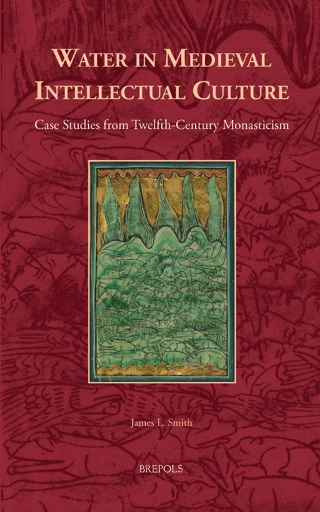
Water in Medieval Intellectual Culture
Case Studies from Twelfth-Century Monasticism
show More to view fulltext, buy and share links for:Water in Medieval Intellectual Culture show Less to hide fulltext, buy and share links for: Water in Medieval Intellectual CultureThis volume provides a new contribution to the understanding of twelfth-century monasticism and medieval intellectual culture by exploring the relationship between water and the composition of thought. It provides a fresh insight into twelfth-century monastic philosophies by studying the use of water as an abstract entity in medieval thought to frame and discuss topics such as spirituality, the natural order, knowledge visualization, and metaphysics in various high medieval texts, including Godfrey of Saint-Victor’s Fons Philosophiae, Peter of Celle’s letter corpus, and the Description of Clairvaux.
Through case studies of water in poetry, landscape narrative, and epistolary communication, this work traces the role of water as a uniquely medieval instrument of thought. Theoretical chapters of this book use water to explore the shaping of the medieval metaphor. Further case studies examine the differing and complex uses of water as a metaphor in various monastic texts. Focussing on the changeable power and material properties of water, this volume assesses the significance and deployment of environmental imagery in the composition, narration, and recollection of organized thought within the twelfth-century monastic community.
-
-
-
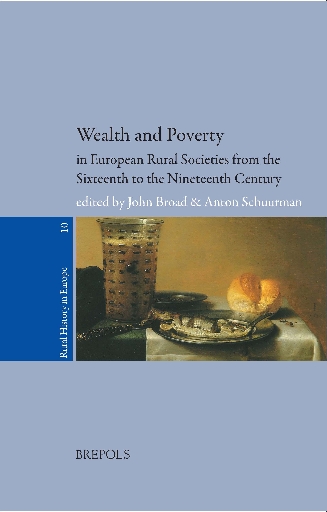
Wealth and Poverty in European Rural Societies from the Sixteenth to Nineteenth Century
show More to view fulltext, buy and share links for:Wealth and Poverty in European Rural Societies from the Sixteenth to Nineteenth Century show Less to hide fulltext, buy and share links for: Wealth and Poverty in European Rural Societies from the Sixteenth to Nineteenth CenturyThis book sheds new light on old problems of wealth, poverty and material culture in rural societies. Much of the debate has concentrated on north-west Europe and the Atlantic world. This volume widens the geographic range to compare less well known areas, with case studies on the Mediterranean world (Catalonia and Greece), from central Europe (Bohemia and Hungary), and from the Nordic countries (Denmark). Methodologically, several papers link the possession of goods to the use of room space, while others highlight the importance of the channels for the circulation of goods, problems of stocks and flows of goods, and the complexities of urban/rural difference. Finally, this book seeks to stimulate new comparative studies in living standards and lifestyles by providing an overview of achievements up till now.
John Broad is visiting academic at the Cambridge Group for the History of Population and Social Structure, University of Cambridge. He has published on rural society and poverty in England, and his current research interests include a book on English rural housing, and large-scale surveys of population, religion, and landholding in England in the eighteenth century.
Anton Schuurman is associate professor of Rural History at Wageningen University. He has published on the history of material culture and rural transformations in the Netherlands. Currently he is writing a book on the processes of modernisation and democratisation in the Dutch countryside from 1840 till 1920.
-
-
-
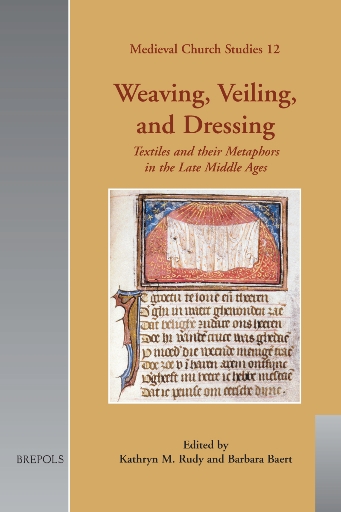
Weaving, Veiling, and Dressing
Textiles and their Metaphors in the Late Middle Ages
show More to view fulltext, buy and share links for:Weaving, Veiling, and Dressing show Less to hide fulltext, buy and share links for: Weaving, Veiling, and DressingChristianity is a religion of clothing. To become a priest or a nun is to take the cloth. The Christian liturgy is intimately bound with veiling objects and revealing them. Cloths hide the altar, making it all the more spectacular when it is revealed. Fragments of imported silk cradle the relic, thereby giving identity to the dessicated bone. Much of that silk came from the east, meaning that a material of Islamic origin was a primary signifier of sanctity in Christianity. Weaving, Veiling, and Dressing brings together twelve essays about text and textile, about silk and wool, about the formation of identity through fibre. The essays bring to light hitherto unseen material, and for the first time, establish the function of textiles as a culturally rich way to approach the Middle Ages. Textiles were omnipresent in the medieval church, but have not survived well. To uncover their uses, presence, and meanings in the Middle Ages is to reconsider the period spun, draped, clothed, shrouded, and dressed. Textiles in particular were essential to the performance of devotion and of the liturgy. Brightly dyed cloth was a highly visible maker of meaning. While some aspects of culture have been studied, namely the important tapestry industry, as well as some of the repercussions and activities of cloth guilds, other areas of textile studies in the period are yet to be studied. This book brings an interdisciplinary approach to new material, drawing on art history, anthropology, medieval text history, theology, and gender and performance studies. It makes a compelling miscellany exploring the nature of Christianity in the largely uninvestigated field of text and textile interplay.
-
-
-
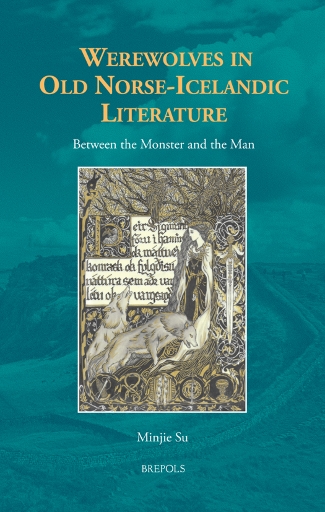
Werewolves in Old Norse-Icelandic Literature
Between the Monster and the Man
show More to view fulltext, buy and share links for:Werewolves in Old Norse-Icelandic Literature show Less to hide fulltext, buy and share links for: Werewolves in Old Norse-Icelandic LiteratureAt the heart of any story of metamorphosis lies the issue of identity, and the tales of the werwulf (lit. ‘man-wolf’) are just as much about the wolf as about the man. What are the constituents of the human in general? What symbolic significance do they hold? How do they differ for different types of human? How would it affect the individual if one or more of these elements were to be subtracted?
Focusing on a group of Old Norse-Icelandic werewolf narratives, many of which have hitherto been little studied, this insightful book sets out to answer these questions by exploring how these texts understood and conceptualized what it means to be human. At the heart of this investigation are five factors key to the werewolf existence - skin, clothing, food, landscape, and purpose - and these are innovatively examined through a cross-disciplinary approach that carefully teases apart the interaction between two polarizations: the external and social, and the interior and psychological. Through this approach, the volume presents a comprehensive new look at the werewolf not only as a supernatural creature and a literary motif, but also as a metaphor that bears on the relationship between human and non-human, between Self and Other, and that is able to situate the Old-Norse texts into a broader intellectual discourse that extends beyond medieval Iceland and Norway.
-
-
-
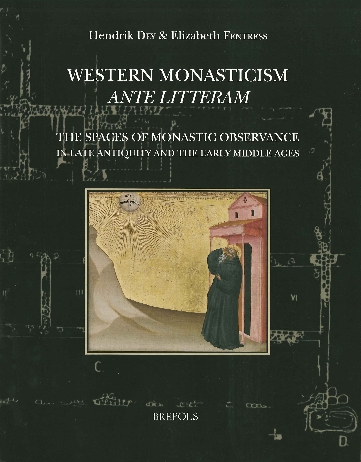
Western Monasticism ante litteram
The Spaces of Monastic Observance in Late Antiquity and the Early Middle Ages
show More to view fulltext, buy and share links for:Western Monasticism ante litteram show Less to hide fulltext, buy and share links for: Western Monasticism ante litteramSpace has always played a crucial part in defining the place that monks and nuns occupy in the world. Even during the first centuries of the monastic phenomenon, when the possible varieties of monastic practice were nearly infinite, there was a common thread in the need to differentiate the monk from the rest: whatever else they were supposed to be, monks were beings apart, unique, in some sense separate from the mainstream. The physical contours of monastic topographies, natural and constructed, are thus fundamental to an understanding of how early monks went about defining the parameters of their everyday lives, their modes of religious observance, and their interactions with the larger world around them. The group of eminent historians and archaeologists present at the American Academy in Rome in March, 2007 for the conference ‘Western monasticism ante litteram. The spaces of early monastic observance’, whose contributions comprise the bulk of this volume, have sought to reconsider the theory, the practice and above all the spaces of early monasticism in the West, in the hope of creating a more complete picture of that seminal period, from the fourth century until the ninth, when notions of what it meant to be a monk were as numerous as they were varied and (often) conflicting.
-
-
-
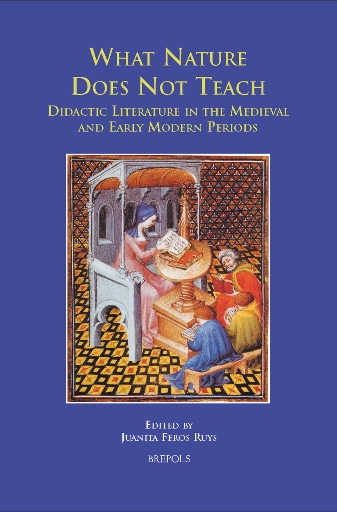
What Nature Does Not Teach
Didactic Literature in the Medieval and Early-Modern Periods
show More to view fulltext, buy and share links for:What Nature Does Not Teach show Less to hide fulltext, buy and share links for: What Nature Does Not TeachThis interdisciplinary study takes as its subject the multi-faceted genre of didactic literature (the literature of instruction) which constituted the cornerstone of literary enterprise and social control in medieval and early-modern Europe. Following an introduction that raises questions of didactic meaning, intent, audience, and social effect, nineteen chapters deal with the construction of the individual didactic voice and persona in the premodern period, didactic literature for children, women as the creators, objects, and consumers of didactic literature, the influence of advice literature on adult literacy, piety, and heresy, and the revision of classical didactic forms and motifs in the early-modern period. Attention is paid throughout to the continuities of didactic literature across the medieval and early-modern periods — its intertextuality, reliance on tradition, and self-renewal — and to questions of gender, authority, control, and the socially constructed nature of advice. Contributors particularly explore the intersection of advice literature with real lives, considering the social impact of both individual texts and the didactic genre as a whole. The volume deals with a wide variety of texts from the early Middle Ages to the eighteenth century, written in languages from Latin through the European vernaculars to Byzantine Greek and Russian, offering a comprehensive overview of this pervasive and influential genre.
-
-
-
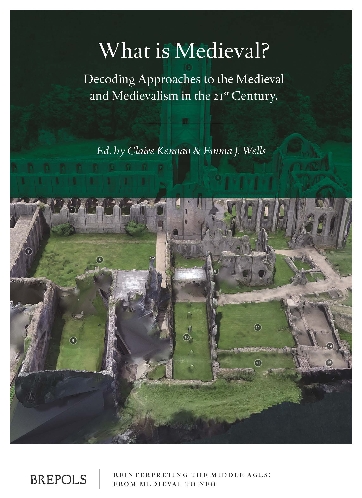
What is Medieval?
Decoding Approaches to the Medieval and Medievalism in the 21st Century
show More to view fulltext, buy and share links for:What is Medieval? show Less to hide fulltext, buy and share links for: What is Medieval?The Middle Ages and Medievalism have been used and abused throughout history–and this continues. This narrative deserves a reassessment. But, what is Medieval? This is the central question that unifies the contributions in this volume.
‘Medievalism’, or the study of the Middle Ages in its broadest sense, refers to the perception, conceptualisation and movement towards the era post the fifteenth century. Its study is therefore not about the period otherwise referred to as the ‘Middle Ages’, but rather the myriad ways it has since been conceived. And the field of medievalism is still in its relative infancy which has led to the emergence of various existential questions about its scope, remit, theoretico-methodological and pedagogical underpinnings, interpretation, periodization, and its relationship to established disciplines and more emerging subdisciplines and specialised fields—both within and without the academy.
In turn, neomedievalism has allowed insight into and a response to the medieval often dominated by the modern. This has provoked debate over the nature of neomedievalism as a discipline, subdiscipline, genre, field or offshoot in direct or contrasting relation to the more traditional medievalism.
Featuring interdisciplinary contributions from academics, educational practitioners as well as museum, digital and heritage professionals, this volume provides a fresh reflection on past methods to emerging pedagogies as well as new avenues of enquiry into the ways we think about the medieval. It is by reconciling these seemingly disparate forms that we can better understand the continual, interconnected, and often politicised, reinvention of the Middle Ages throughout cultures and study.
-
-
-
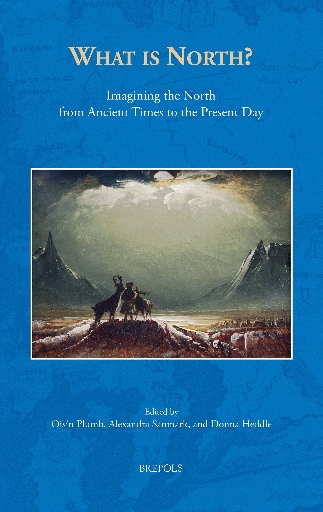
What is North?
Imagining the North from Ancient Times to the Present Day
show More to view fulltext, buy and share links for:What is North? show Less to hide fulltext, buy and share links for: What is North?The British Isles, Scandinavia, Iceland, Greenland, and Eastern Canada, alongside many small islands, form a broken bridge across the northern extremities of the Atlantic Ocean. This ‘North Atlantic World’ is a heterogeneous but culturally intertwined area, ideally suited to the fostering of an interest in all things northern by its people. For the storytellers and writers of the past, each more northerly land was far enough away that it could seem fabulous and even otherworldly, while still being just close enough for myths and travellers’ tales to accrue. This book charts attitudes to the North in the North Atlantic World from the time of the earliest extant sources until the present day. The varied papers within consider a number of key questions which have arisen repeatedly over the centuries: ‘where is the North located?’, ‘what are its characteristics?’, and ‘who, or what lives there?’. They do so from many angles, considering numerous locations and an immense span of time. All are united by their engagement with the North Atlantic World’s relationship with the North.
-
-
-
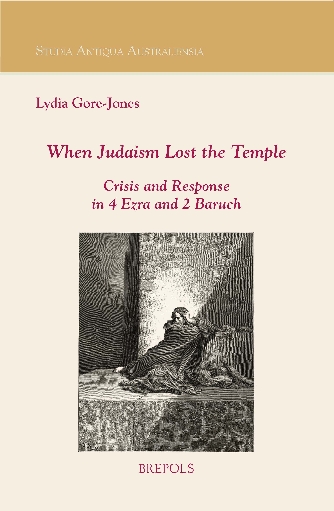
When Judaism Lost the Temple
Crisis and Reponse in 4 Ezra and 2 Baruch
show More to view fulltext, buy and share links for:When Judaism Lost the Temple show Less to hide fulltext, buy and share links for: When Judaism Lost the TempleThis book presents a study of religious thought in two Jewish apocalypses, 4 Ezra and 2 Baruch, written as a response to the destruction of the Jerusalem Temple by the Romans in 70 CE. The true nature of the crisis is the perceived loss of covenantal relationship between God and Israel, and the Jewish identity that is under threat. Discussions of various aspects of thought, including those conventionally termed theodicy, particularism and universalism, anthropology and soteriology, are subordinated under and contextualized within the larger issue of how the ancient authors propose to mend the traditional Deuteronomic covenantal theology now under crisis.Both 4 Ezra and 2 Baruch advocate a two-pronged solution of Torah and eschatology at the centre of their scheme to restore that covenant relationship in the absence of the Temple. Both maintain the Mosaic tradition as the bulwark for Israel’s future survival and revival. Whereas 4 Ezra aims to implant its eschatology into the Sinaitic tradition and make it part of the Mosaic Law, 2 Baruch extends the Deuteronomic scheme of reward and retribution into an eschatological context, making the rewards of the end-time a solution to the cycle of sins and punishments of this age. Considerable emphases are also placed on the significance of the portrayals of the pseudonymous protagonists, Ezra and Baruch, the use of symbolism in the two texts as scriptural exegesis, as well as their relationship with each other and links with the Hebrew Bible and other Jewish and Christian writings.
-
-
-
When the Potato Failed. Causes and Effects of the Last European Subsistence Crisis, 1845-1850
show More to view fulltext, buy and share links for:When the Potato Failed. Causes and Effects of the Last European Subsistence Crisis, 1845-1850 show Less to hide fulltext, buy and share links for: When the Potato Failed. Causes and Effects of the Last European Subsistence Crisis, 1845-1850The decade that gave rise to the term ‘the Hungry Forties’ in Europe is often regarded, and rightly so, as one of deprivation, unrest, and revolution. Two events, the Great Irish Famine and the various political events of ‘1848’, stand out. This book is the first to discuss the subsistence crisis of the 1840s in a truly comparative way. This subsistence crisis may be divided into two rather distinct elements. On the one hand, the failure of the potato caused by the new, unfamiliar fungus, phytophthera infestans, which first struck Europe in mid-1845, resulted in a catastrophe in Ireland that killed about one million people, and radically transformed its landscape and economy. Poor potato crops in 1845 and in the following years also resulted in significant excess mortality elsewhere in Europe. On the other hand, this period, and 1846 in particular, was also one of poor wheat and rye harvests throughout much of Europe. Failure of the grain harvest alone rarely resulted in a subsistence crisis, but the combination of poor potato and grain harvests in a single place was a lethal one. Connections between the local and the global, between the economic and the political, and between the rural and the industrial, make the crisis of the late 1840s a multi-layered one.
This book offers a comparative perspective on the causes and the effects of what is sometimes considered as the ‘last’ European subsistence crisis. It begins with an extensive introduction that treats the topic in comparative perspective. The subsistence crisis had its most catastrophic impact in Ireland, and three chapters in the current volume are concerned mainly with that country. A fourth chapter uses price data to shed comparative perspective on the crisis, while the remaining nine chapters are case studies covering countries ranging from Sweden to Spain and from Scotland to Prussia. Throughout, the contributors focus on a range of common themes, such as the extent of harvest deficits, the functioning of food markets, fertility and mortality, and public action at local and national levels.
Cormac Ó Gráda is professor of economics at University College, Dublin. He has worked extensively on the history of famines in Ireland and worldwide.
Richard Paping teaches economic and social history and economics at University of Groningen. He has done extensive research on developments in standard-of-living, economy and demography in the Netherlands.
Eric Vanhaute is professor social and economic history and world history at Ghent University. He has mainly published on the history of the rural society and of labour markets in Flanders and outside.
Table of contents:
Eric Vanhaute, Richard Paping and Cormac Ó Gráda, The European Subsistence Crisis of 1845-1850: a Comparative Perspective
PART I - The Irish Famine in an International Perspective
Cormac Ó Gráda, Ireland’s Great Famine. An overview - Mary E. Daly, Something Old and Something New. Recent Research on the Great Irish Famine - Peter M. Solar, The Crisis of the Late 1840s. What Can Be Learned From Prices? - Peter Gray, The European Food Crisis and the Relief of Irish Famine, 1845-1850
PART II - A Potato Famine Outside Ireland?
Tom M. Devine, Why the Highlands Did Not Starve. Ireland and Highland Scotland During the Potato Famine - Eric Vanhaute, “So Worthy an Example to Ireland”. The Subsistence and Industrial Crisis of 1845-1850 in Flanders - Richard Paping and Vincent Tassenaar, The Consequences of the Potato Disease in the Netherlands 1845-1860: a Regional Approach - Hans H. Bass, The Crisis in Prussia - Gunter Mahlerwein, The Consequences of the Potato Blight in South Germany - Nadine Vivier, The Crisis in France. A Memorable Crisis But Not a Potato Crisis - Jean Michel Chevet and Cormac Ó Gráda, Crisis: What Crisis? Prices and Mortality in Mid-Nineteenth Century France - Pedro Díaz Marín, Subsistence Crisis and Popular Protest in Spain. The Motines of 1847- Ingrid Henriksen, A Disaster Seen From the Periphery. The Case of Denmark - Carl-Johan Gadd, On the Edge of a Crisis: Sweden in the 1840s
-
-
-
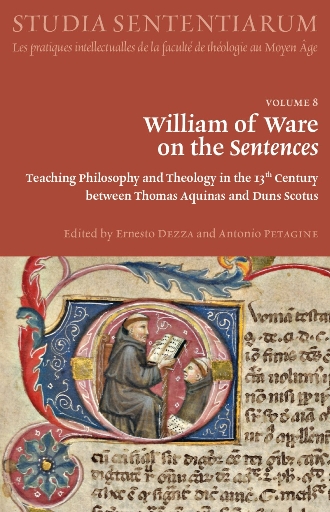
William of Ware on the Sentences
Teaching Philosophy and Theology in the 13th Century between Thomas Aquinas and Duns Scotus
show More to view fulltext, buy and share links for:William of Ware on the Sentences show Less to hide fulltext, buy and share links for: William of Ware on the SentencesThe Franciscan William of Ware – the Magister Scoti – flourished as a theologian at the end of the thirteenth century. Although he wielded significant influence on fourteenth-century theological and philosophical debates, his thought remains little known and even less studied than it deserves. A major cause for this situation lies in the difficulty of accessing the text of his Questions on the Four Books of the Sentences, which is largely unedited.
This volume is the first entirely devoted to William of Ware. It aims to promote a renewed knowledge of his texts and doctrines. The book includes updated information on studies and editions of Ware's texts, and specific studies on crucial aspects of his doctrines, such as theology, metaphysics, physics, epistemology, Christology, and anthropology. Additionally, the volume presents previously unpublished questions from his Commentary on the Sentences.
Overall, the volume serves as an essential reference for the thought and texts of William of Ware and provides a new and illuminating perspective on scholastic culture during the turn from the thirteenth to the fourteenth century.
-
-
-
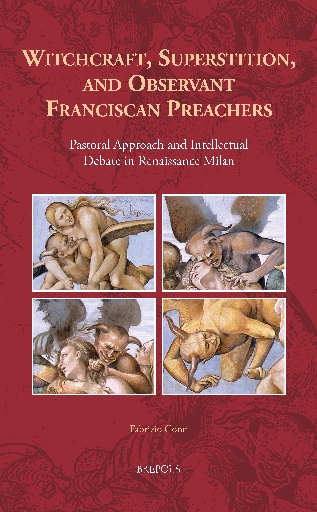
Witchcraft, Superstition, and Observant Franciscan Preachers
Pastoral Approach and Intellectual Debate in Renaissance Milan
show More to view fulltext, buy and share links for:Witchcraft, Superstition, and Observant Franciscan Preachers show Less to hide fulltext, buy and share links for: Witchcraft, Superstition, and Observant Franciscan PreachersThis book offers a new and innovative approach to the study of magic and witchcraft in Italy between the late Middle Ages and the early modern period. Unusually, this subject is explored not through inquisitorial trial records or demonological literature, but through the sermons and confession manuals produced by Observant Franciscan friars, focusing on the so-called ‘pastoral’ approach to folklore, superstition, and witchcraft - an approach that appears to have been notably less harsh than that taken by inquisitors and dedicated demonologists.
Central to this research are the writings of a number of friars active at the friary of St Angelo’s in Milan. Among them were preachers and confessors such as Bernardino Busti, who treated superstition as part of a model that categorized the beliefs and behaviours of the faithful, as well as dedicated intellectuals such as Samuele Cassini, who took scepticism towards elements of belief in witchcraft still further, ultimately leading to a clash with groups such as the Dominicans.
By considering the writings of these men in their wider literary and pastoral context, and in the light of the broader reforming aims of the Franciscans, this unique study not only offers new insights into the late medieval understanding of superstition and witchcraft, but also makes an important contribution to the history of pastoral care.
-
-
-
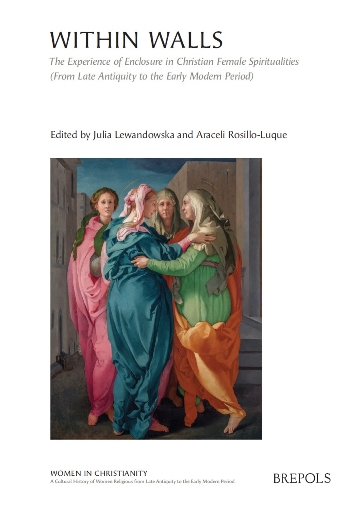
Within Walls
The Experience of Enclosure in Christian Female Spiritualities (From Late Antiquity to the Early Modern Period)
show More to view fulltext, buy and share links for:Within Walls show Less to hide fulltext, buy and share links for: Within WallsWhat different mechanisms did women religious use to interpret the communal and individual aspects of enclosure throughout history? To what extent was enclosure a pivotal feature of Christian spiritual, social and cultural life? How did social and political contexts shape the strategies of nuns and beatas in accepting or rejecting strict enclosure?
Within Walls explores the diverse experiences of enclosure within female Christian spiritualities, presenting it as a crucial concept for a deep understanding of the history of women religious. The volume primarily aims to show the different ways in which women religious lived, negotiated and redefined enclosure in its material and symbolic dimensions. Covering the period from the New Testament era to the late sixteenth century, and spanning regions from the Holy Land and Egypt to Western Europe and colonial Mexico, it explores the evolving meanings and uses of the confined life as experienced and shaped by women religious in Christianity.
The case studies presented in this volume—from the strategies of seclusion of early Christian anchoresses to the plethora of voices of Mediaeval and Early Modern female communities and the authority wielded by individual nuns, pilgrims, prioresses, reformers and mystics—argue that there was by no means a single form of enclosure in female Christian religious life. Instead, inspired by Philip Sheldrake’s interpretation of sacred spaces as polyphonic, this volume stresses the multivocality and multilocality of the term. Adopting an interdisciplinary approach that integrates microhistory, human geography, the cultural analysis of materiality, literary studies, feminist and gender studies, indigenous methodologies, art studies, postcolonial anthropology and the philosophy of religion and spirituality, Within Walls provides fresh perspectives on the most intricate dimension of religious life in history.
-
-
-
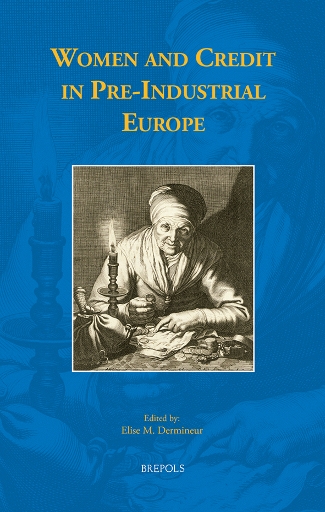
Women and Credit in Pre-Industrial Europe
show More to view fulltext, buy and share links for:Women and Credit in Pre-Industrial Europe show Less to hide fulltext, buy and share links for: Women and Credit in Pre-Industrial EuropeThis collection of essays compares and discusses women’s participation and experiences in credit markets in early modern Europe, and highlights the characteristics, common mechanisms, similarities, discrepancies, and differences across various regions in Europe in different time periods, and at all levels of society. The essays focus on the role of women as creditors and debtors (a topic largely ignored in traditional historiography), but also and above all on the development of their roles across time. Were women able to enter the credit market, and if so, how and in what proportion? What was then the meaning of their involvement in this market? What did their involvement mean for the community and for their household? Was credit a vector of female emancipation and empowerment? What were the changes that occurred for them in the transition to capitalism? These essays offer a variety of perspectives on women’s roles in the credit markets of early modern Europe in order to outline and answer these questions as well as analysing and exploring the nature of women, money, credit, and debt in a pre-industrial Europe.
-
-
-
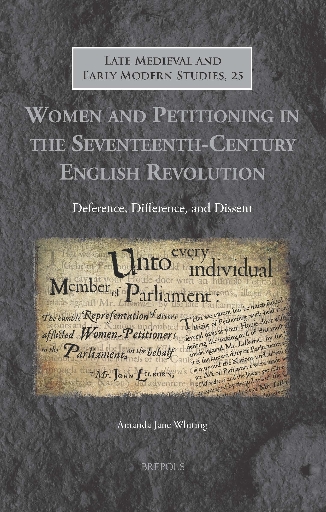
Women and Petitioning in the Seventeenth-Century English Revolution
Deference, Difference, and Dissent
show More to view fulltext, buy and share links for:Women and Petitioning in the Seventeenth-Century English Revolution show Less to hide fulltext, buy and share links for: Women and Petitioning in the Seventeenth-Century English RevolutionDuring the English Civil Wars and Revolution (1640-60), the affairs of Church and State came under a crucial new form of comment and critique, in the form of public petitions. Petitioning was a readily available mode of communication for women, and this study explores the ways in which petitioning in seventeenth-century England was adapted out of and differed from pre-Revolutionary modes, whilst also highlighting gendered conventions and innovations of petitioning in that period.
Male petitioning in the seventeenth century did not have to negotiate the cultural assumptions about intellectual inferiority and legal incapacity that constrained women. Yet just because women did not claim separate (and modern) women’s rights does not mean that they were passive, quiescent, or had no political agency. On the contrary, as this study shows, women in the Revolution could use petitioning as a powerful way to address those in power, precisely because it was done from an assumed position of weakness. The petition is not simply a text, authored by a single pen, but a series of social transactions, performed in multiple social and political settings, frequently involving people previously excluded from participation in political discussion or action. To the extent that women participated in collective petitioning, or turned their individual addresses into printed artefacts for public scrutiny, they also participated in the public sphere of political opinion and debate.
-
-
-
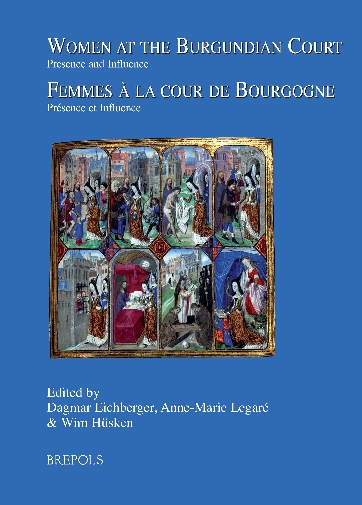
Women at the Burgundian Court: Presence and Influence
Femmes à la Cour de Bourgogne: Présence et Influence
show More to view fulltext, buy and share links for:Women at the Burgundian Court: Presence and Influence show Less to hide fulltext, buy and share links for: Women at the Burgundian Court: Presence and InfluenceThis collection of essays charts the role of women at the Burgundian court by analysing the ways in which medieval women, such as Isabella of Portugal, Margaret of York, Mary of Burgundy, Margaret of Austria made an impact through their physical, moral and spiritual presence at court. During the absence of the prince these well-educated and internationally experienced spouses, mothers and aunts were put in charge of the courtly household or were in some cases appointed regent of the Netherlandish territories for a limited period of time. The youngest generation of women represented by the sisters and consorts of Charles V and Ferdinand I — now forming part of the extended family network — continued this tradition and took it to Germany, Spain, France and Portugal. The court developed into a kind of ‘gender laboratory’, in which women actively negotiated their position of power, thus consolidating their influence in politics, diplomacy, education and art.
-
-
-
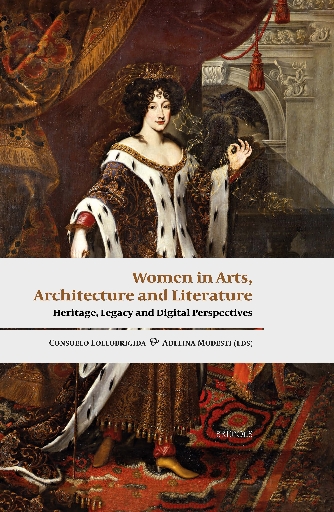
Women in Arts, Architecture and Literature: Heritage, Legacy and Digital Perspectives
Proceedings of the First Annual International Women in the Arts Conference
show More to view fulltext, buy and share links for:Women in Arts, Architecture and Literature: Heritage, Legacy and Digital Perspectives show Less to hide fulltext, buy and share links for: Women in Arts, Architecture and Literature: Heritage, Legacy and Digital Perspectives
Rome, 20–22 October 2021In the last few decades, the study of women in the arts has largely increased in terms of scholars involved in research and investigation, with the reception of the outcomes especially acknowledged by museums which are dedicating part of their mission to organizing exhibitions and/or acquiring the works of women. The Annual International Women in Arts Conference seeks to advance contemporary discussions on how female creativity has helped shape European culture in its heterogeneity since the Middle Ages. This volume collects the proceedings of the first conference organised in Rome, in October 2021. It focuses on the role of women in literature, art, and architecture. Throughout history, these domains were often seen as very masculine. Yet, there have been many women who have made their mark as writers, illuminators, artists and architects, or have played a decisive role as patrons and supporters in these arts. This collection of essays aims to bring these women to the fore and sheds a new light on the heritage and legacy of women in the creative arts and architecture from the Middle Ages until the 20th century.
-
-
-
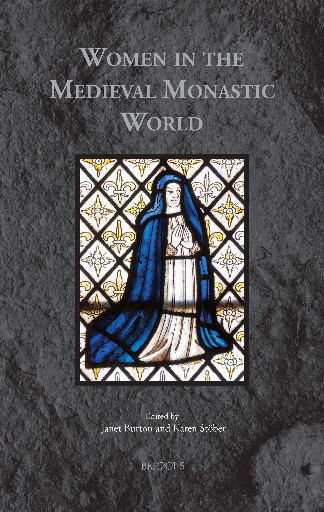
Women in the Medieval Monastic World
show More to view fulltext, buy and share links for:Women in the Medieval Monastic World show Less to hide fulltext, buy and share links for: Women in the Medieval Monastic WorldThere has long been a tendency among monastic historians to ignore or marginalize female participation in monastic life, but recent scholarship has begun to redress the balance, and the great contributions made by women to the religious life of the Middle Ages are now attracting increasing attention. This interdisciplinary volume draws together scholars from Spain, Italy, France, the Low Countries, Germany, Transylvania, Scandinavia, and the British Isles, and offers new insights into the history, art history, and material culture, and the religiosity and culture of medieval religious women.
The different chapters within this book take a comparative approach to the emergence and spread of female monastic communities across different geographical, political, and economic settings, comparing and contrasting houses that ranged from rich, powerful royal abbeys to small, subsistence priories on the margins of society, and exploring the artistic achievements, the interaction with neighbours and secular and ecclesiastical authorities, and the spiritual lives that were led by their inhabitants. The contributors to this volume address issues as diverse as patronage and relationships with the outside world, organizational structures, the nature of Cistercian observance and identity among female houses, and the role of male authority, and in doing so, they seek to shed light on the divergences and commonalities upon which the female religious life was based.
-
-
-
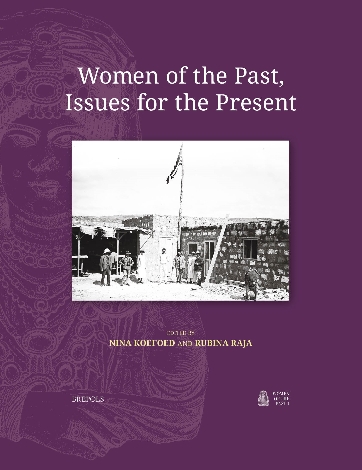
Women of the Past, Issues for the Present
show More to view fulltext, buy and share links for:Women of the Past, Issues for the Present show Less to hide fulltext, buy and share links for: Women of the Past, Issues for the PresentThe roles played by women in history, and even the very idea of what it is to be female, have always been in flux, changing over centuries, between cultures, and in response to diverse social and economic parameters. Even today, women’s roles and women’s rights continue to face changes and pressures. In establishing the series Women of the Past: Testimonies from Archaeology and History, the ambition is to build on the profound theoretical and empirical developments that have taken place over the last fifty years of gender-focused research and to explore them in a contemporary context.
The aim of this series is to shed light on not just the outstanding and extraordinary women who were trendsetters of their time, but also the not quite so outstanding women, often overshadowed by outstanding men, and the ordinary women, those who simply went about their everyday life and kept their world turning in their own quiet way. This edited volume, Women of the Past, Issues for the Present, is the inaugural volume of the series and shows the wide span of the series chronologically, geographically, and socially in terms of the research presented. From Roman slaves to Viking women, and from medieval wet-nurses to the nineteenth-century wives who supported their archaeologist husbands on excavation, this groundbreaking volume opens a new vista in our understanding of the past.
-
-
-
Words and Deeds
Shaping Urban Politics from below in Late Medieval Europe
show More to view fulltext, buy and share links for:Words and Deeds show Less to hide fulltext, buy and share links for: Words and DeedsThis book focuses on the city and urban politics, because historically towns have been an interesting laboratory for the creation and development of political ideas and practices, as they are also today. The contributions in this volume shed light on why, how and when citizens participated in the urban political process in late medieval Europe (c. 1300-1500). In other words, this book reconsiders the involvement of urban commoners in political matters by studying their claims and wishes, their methods of expression and their discursive and ideological strategies. It shows that, in order to garner support for and establish the parameters of the most important urban policies, medieval urban governments engaged regularly in dialogue with their citizens. While the degree of citizens’ active involvement differed from region to region and even from one town to the next, political participation never remained restricted to voting for representatives at set times. This book therefore demonstrates that the making of politics was not the sole prerogative of the government; it was always, to some extent, a bottom-up process as well.
-