


Brepols Online Books Other Monographs Collection 2013 - bob2013moot

Collection Contents
4 results
-
-
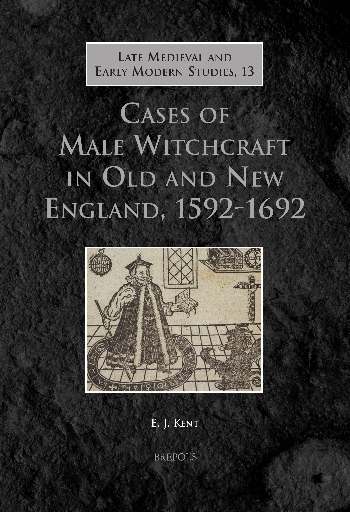
Cases of Male Witchcraft in Old and New England, 1592-1692
show More to view fulltext, buy and share links for:Cases of Male Witchcraft in Old and New England, 1592-1692 show Less to hide fulltext, buy and share links for: Cases of Male Witchcraft in Old and New England, 1592-1692This study explores cases in which men were accused of witchcraft in England and the British colonies of New England between 1592 and 1692. Using a series of case studies that begin in Elizabethan Norfolk and end with the Salem trials in Massachusetts, this book examines six individual male witches and argues they are best understood as masculine witches, not feminized men. Each case considers the social circumstances of the male witch as a gendered context for the accusations of witchcraft against him.
Instead of seeking to identify a single causal condition or overarching gendered circumstance whereby men were accused of witchcraft, this study examines the way that masculinity shaped the accusations of witchcraft made against each man. In each case, a range of masculine social and cultural roles became implicated in accusations of witchcraft, making it possible to explore how beliefs in witches interacted with early modern English gender cultures to support the religious, legal, and cultural logic of the male witch. The result is an approach to early modern English witchcraft prosecution that includes, rather than problematizes, the male witch.
-
-
-
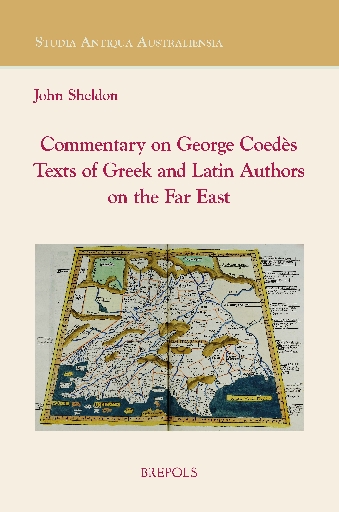
Commentary on George Coedès' Texts of Greek and Latin Authors on the Far East
show More to view fulltext, buy and share links for:Commentary on George Coedès' Texts of Greek and Latin Authors on the Far East show Less to hide fulltext, buy and share links for: Commentary on George Coedès' Texts of Greek and Latin Authors on the Far EastThis is a companion volume to Texts of Greek and Latin Authors on the Far East (Brepols 2010) originally compiled by George Coedès and recently translated by John Sheldon. There are nearly one hundred different authors whose writings have been quoted in the text volume. All these authors are introduced and all quotations are placed in context and given detailed literary, linguistic and historical commentary by Dr Sheldon. The Greek and Latin texts have been re-examined and a number of suggestions for improved readings are made in the Commentary. In a number of places traditional interpretations of the ancient geography of the Far East have been superseded mainly owing to an improved understanding of the text. This volume, which should be used in conjunction with the text volume, will be a useful, at times an essential, tool for future researchers in this field.
-
-
-
Contro gli Acefali
show More to view fulltext, buy and share links for:Contro gli Acefali show Less to hide fulltext, buy and share links for: Contro gli AcefaliIl Contro gli Acefali del diacono romano Rustico, composto fra il 553 e il 564, si inserisce nel contesto della controversia dei Tre Capitoli e si propone di confutare la cristologia monofisita ('acefali' era infatti il nome con cui all'epoca si indicavano, appunto, gli esponenti di questa fazione). L’opera si presenta come un dialogo, preceduto da un breve prologo, fra due interlocutori, un ortodosso (indicato con il nome dell’autore), portavoce di una cristologia strettamente calcedonese, ed un monofisita di stampo severiano, qualificato come ‘eretico’. Nel corso della discussione Rustico sviluppa una approfondita ed originale riflessione sui concetti di natura, persona, sostanza e sussistenza, nella quale si possono riconoscere significativi punti di contatto, sia nel metodo che nei contenuti, con i trattati teologici di Boezio; e proprio nel complesso rapporto con il modello boeziano, importantissimo punto di riferimento ma anche oggetto di critica, risiede il particolare interesse di un’opera purtroppo ancora poco conosciuta, ma che sta suscitando negli ultimi anni una rinnovata attenzione da parte degli studiosi.
Sara Petri si è laureata ed ha conseguito il dottorato di ricerca in Filologia e Letteratura Greca e Latina presso l'Università di Pisa, sotto la direzione del prof. C. Moreschini. Attualmente insegna materie letterarie presso il Liceo Classico di Grosseto. Si occupa di letteratura cristiana antica di lingua latina, in particolare delle controversie cristologiche fra V e VI secolo.
La versione latina originale del testo proposto in traduzione in questo volume è pubblicata nella collana Corpus Christianorum Series Latina con il titolo Rusticus Diaconus, Contra Acephalos (CCSL 100). I rimandi alle pagine corrispondenti dell’edizione sono forniti a margine di questa traduzione.
Sara Petri si è laureata ed ha conseguito il dottorato di ricerca in Filologia e Letteratura Greca e Sara Petri si è laureata ed ha conseguito il dottorato di ricerca in Filologia e Letteratura Greca e Latina presso l’Università di Pisa, sotto la direzione del prof. C. Moreschini. Attualmente insegna materie letterarie presso il Liceo Classico di Grosseto. Si occupa di letteratura cristiana antica di lingua latina, in particolare delle controversie cristologiche fra V e VILatina presso l’Università di Pisa, sotto la direzione del prof. C. Moreschini. Attualmente insegna materie letterarie presso il Liceo Classico di Grosseto. Si occupa di letteratura cristiana antica di lingua latina, in particolare delle controversie cristologiche fra V e VI
-
-
-
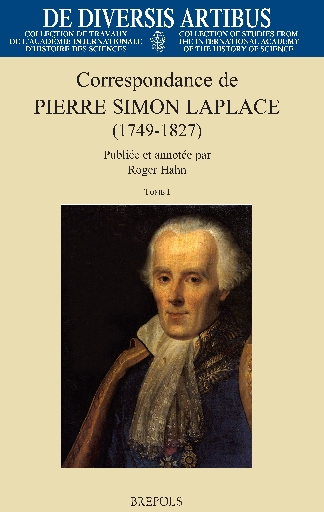
Correspondance de Pierre Simon Laplace (1749-1827)
show More to view fulltext, buy and share links for:Correspondance de Pierre Simon Laplace (1749-1827) show Less to hide fulltext, buy and share links for: Correspondance de Pierre Simon Laplace (1749-1827)Ce nouveau volume de la Collection de travaux est à bien des égards exceptionnel. C’est l’œuvre d’une vie, car pendant cinquante ans, jusqu’à sa mort en 2011, Roger Hahn a patiemment rassemblé les lettres de Laplace éparses dans les collections publiques et privées. C’est aussi un document capital pour l’histoire du XVIIIe et du XIXe siècle, depuis l’Ancien Régime jusqu’à la Restauration, dans tous ses aspects. En effet, Laplace ne fut pas seulement un scientifique de premier ordre en mécanique céleste, en astronomie, en mathématique, il exerça d’importantes fonctions politiques et administratives sous les régimes successifs. Enfin, la correspondance apporte un témoignage de première main, souvent émouvant, sur la vie personnelle et sur l’évolution philosophique du « doyen des athées ».
-