


Brepols Online Books Other Monographs Collection 2013 - bob2013moot

Collection Contents
1 - 20 of 21 results
-
-
Architectures de papier. La France et l'Europe (xvie-xviie siècles)
show More to view fulltext, buy and share links for:Architectures de papier. La France et l'Europe (xvie-xviie siècles) show Less to hide fulltext, buy and share links for: Architectures de papier. La France et l'Europe (xvie-xviie siècles)
-
-
-
Asketische Schriften
show More to view fulltext, buy and share links for:Asketische Schriften show Less to hide fulltext, buy and share links for: Asketische SchriftenDieser Band enthält asketische Schriften des Mönches Markos in deutscher Übersetzung. Über den Autor ist so gut wie gar nichts bekannt, außer dass er mehrere seiner Schriften um 1260 für die Schwester Irene des Kaisers Michael VIII. Palaiológos verfasste. Die umfangreichste darunter ist ein Väterflorilegium zu ihrer Erbauung. Der Autor steht in einer Tradition byzantinischer spiritueller Florilegien, er verfasste offenbar nacheinander zwei solche für Irene. Das kleinere, von dem drei Handschriften bekannt sind, liegt hier in Übersetzung mit kurzen Kommentaren vor, daneben ein Widmungsbrief dazu und drei eigene Traktate mit einer Lebensanweisung an Irene (die er ihr offenbar vor den Florilegien schrieb), einer recht ähnlichen solchen an einen Laien und einem Typikon für Nonnen. Für alle diese Werke verfügen wir über eine vom Autor diktierte Handschrift. Markos vertritt einen traditionellen, untechnischen Hesychasmus und behandelt dazu am ausführlichsten das ununterbrochene Gebet und das Fasten, die ihm als unerlässliche Handlungen für jeden Christen – also nicht nur für Mönche, sondern auch für Laien – besonders wichtig sind. Alle Texte sind durchtränkt von Väterzitaten; ausführlich zitiert werden besonders oft Gregor von Nazianz, Nilus, Maximus, Johannes Klímakos und Isaak von Ninive. Auch Zitate aus anderen Florilegien, insbesondere demjenigen des Níkon vom Schwarzen Berg (11. Jh.), kommen vor.
Der diesem Band zugrundeliegende Text erschien in der Reihe Corpus Christianorum Series Graeca als Marcus monachus, Opera ascetica: Florilegium et sermones tres (CCSG 72). Die Ziffern am Seitenrand verweisen auf die entsprechenden Seiten der Edition.
-
-
-
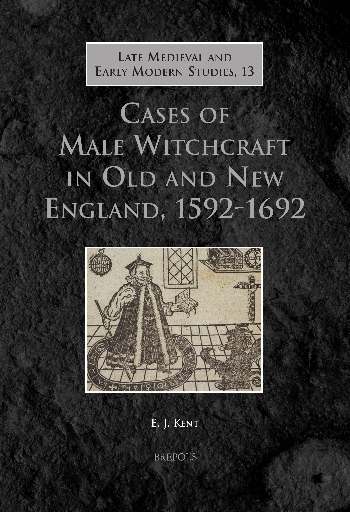
Cases of Male Witchcraft in Old and New England, 1592-1692
show More to view fulltext, buy and share links for:Cases of Male Witchcraft in Old and New England, 1592-1692 show Less to hide fulltext, buy and share links for: Cases of Male Witchcraft in Old and New England, 1592-1692This study explores cases in which men were accused of witchcraft in England and the British colonies of New England between 1592 and 1692. Using a series of case studies that begin in Elizabethan Norfolk and end with the Salem trials in Massachusetts, this book examines six individual male witches and argues they are best understood as masculine witches, not feminized men. Each case considers the social circumstances of the male witch as a gendered context for the accusations of witchcraft against him.
Instead of seeking to identify a single causal condition or overarching gendered circumstance whereby men were accused of witchcraft, this study examines the way that masculinity shaped the accusations of witchcraft made against each man. In each case, a range of masculine social and cultural roles became implicated in accusations of witchcraft, making it possible to explore how beliefs in witches interacted with early modern English gender cultures to support the religious, legal, and cultural logic of the male witch. The result is an approach to early modern English witchcraft prosecution that includes, rather than problematizes, the male witch.
-
-
-
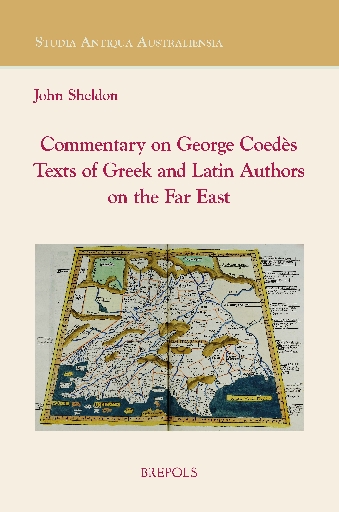
Commentary on George Coedès' Texts of Greek and Latin Authors on the Far East
show More to view fulltext, buy and share links for:Commentary on George Coedès' Texts of Greek and Latin Authors on the Far East show Less to hide fulltext, buy and share links for: Commentary on George Coedès' Texts of Greek and Latin Authors on the Far EastThis is a companion volume to Texts of Greek and Latin Authors on the Far East (Brepols 2010) originally compiled by George Coedès and recently translated by John Sheldon. There are nearly one hundred different authors whose writings have been quoted in the text volume. All these authors are introduced and all quotations are placed in context and given detailed literary, linguistic and historical commentary by Dr Sheldon. The Greek and Latin texts have been re-examined and a number of suggestions for improved readings are made in the Commentary. In a number of places traditional interpretations of the ancient geography of the Far East have been superseded mainly owing to an improved understanding of the text. This volume, which should be used in conjunction with the text volume, will be a useful, at times an essential, tool for future researchers in this field.
-
-
-
Contro gli Acefali
show More to view fulltext, buy and share links for:Contro gli Acefali show Less to hide fulltext, buy and share links for: Contro gli AcefaliIl Contro gli Acefali del diacono romano Rustico, composto fra il 553 e il 564, si inserisce nel contesto della controversia dei Tre Capitoli e si propone di confutare la cristologia monofisita ('acefali' era infatti il nome con cui all'epoca si indicavano, appunto, gli esponenti di questa fazione). L’opera si presenta come un dialogo, preceduto da un breve prologo, fra due interlocutori, un ortodosso (indicato con il nome dell’autore), portavoce di una cristologia strettamente calcedonese, ed un monofisita di stampo severiano, qualificato come ‘eretico’. Nel corso della discussione Rustico sviluppa una approfondita ed originale riflessione sui concetti di natura, persona, sostanza e sussistenza, nella quale si possono riconoscere significativi punti di contatto, sia nel metodo che nei contenuti, con i trattati teologici di Boezio; e proprio nel complesso rapporto con il modello boeziano, importantissimo punto di riferimento ma anche oggetto di critica, risiede il particolare interesse di un’opera purtroppo ancora poco conosciuta, ma che sta suscitando negli ultimi anni una rinnovata attenzione da parte degli studiosi.
Sara Petri si è laureata ed ha conseguito il dottorato di ricerca in Filologia e Letteratura Greca e Latina presso l'Università di Pisa, sotto la direzione del prof. C. Moreschini. Attualmente insegna materie letterarie presso il Liceo Classico di Grosseto. Si occupa di letteratura cristiana antica di lingua latina, in particolare delle controversie cristologiche fra V e VI secolo.
La versione latina originale del testo proposto in traduzione in questo volume è pubblicata nella collana Corpus Christianorum Series Latina con il titolo Rusticus Diaconus, Contra Acephalos (CCSL 100). I rimandi alle pagine corrispondenti dell’edizione sono forniti a margine di questa traduzione.
Sara Petri si è laureata ed ha conseguito il dottorato di ricerca in Filologia e Letteratura Greca e Sara Petri si è laureata ed ha conseguito il dottorato di ricerca in Filologia e Letteratura Greca e Latina presso l’Università di Pisa, sotto la direzione del prof. C. Moreschini. Attualmente insegna materie letterarie presso il Liceo Classico di Grosseto. Si occupa di letteratura cristiana antica di lingua latina, in particolare delle controversie cristologiche fra V e VILatina presso l’Università di Pisa, sotto la direzione del prof. C. Moreschini. Attualmente insegna materie letterarie presso il Liceo Classico di Grosseto. Si occupa di letteratura cristiana antica di lingua latina, in particolare delle controversie cristologiche fra V e VI
-
-
-
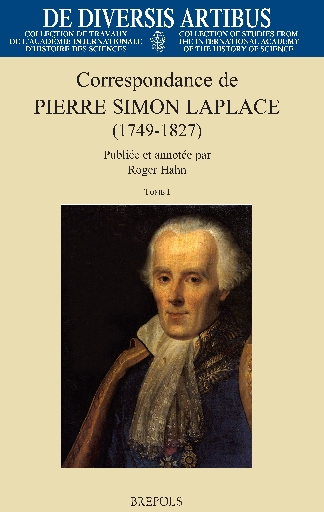
Correspondance de Pierre Simon Laplace (1749-1827)
show More to view fulltext, buy and share links for:Correspondance de Pierre Simon Laplace (1749-1827) show Less to hide fulltext, buy and share links for: Correspondance de Pierre Simon Laplace (1749-1827)Ce nouveau volume de la Collection de travaux est à bien des égards exceptionnel. C’est l’œuvre d’une vie, car pendant cinquante ans, jusqu’à sa mort en 2011, Roger Hahn a patiemment rassemblé les lettres de Laplace éparses dans les collections publiques et privées. C’est aussi un document capital pour l’histoire du XVIIIe et du XIXe siècle, depuis l’Ancien Régime jusqu’à la Restauration, dans tous ses aspects. En effet, Laplace ne fut pas seulement un scientifique de premier ordre en mécanique céleste, en astronomie, en mathématique, il exerça d’importantes fonctions politiques et administratives sous les régimes successifs. Enfin, la correspondance apporte un témoignage de première main, souvent émouvant, sur la vie personnelle et sur l’évolution philosophique du « doyen des athées ».
-
-
-
Holy War and Rapprochement
show More to view fulltext, buy and share links for:Holy War and Rapprochement show Less to hide fulltext, buy and share links for: Holy War and RapprochementThe sixty year struggle (1260-1320) between the Mamluk Sultanate of Syria and Egypt and the Ilkhanate, the Mongol realm in Iran and the surrounding countries, had a profound impact on the region’s ruling elites and the general population, as well as on neighboring countries and beyond. It is possible to speak of a thirteenth century “world war”: on one side were arrayed the Mamluks and the Mongol Golden Horde of southern Russia, at times Genoa and the Byzantine empire, while on the other side we find the Ilkhanate, the Venetians (albeit still trading with the Mamluks), the states of western Europe, the Papacy, the Armenians of both the Caucasus and Cilicia, and Georgia. To these we could add minor, but still important actors: the Bedouin of Syria, the Seljuqs of Rum (Anatolia), the Turcoman of that country, and even more. Far away, the Mongols of Central Asia and the Great Khan in China also had an impact on affairs along the Mediterranean coast and southwest Asia.
The present volume is based on four lectures given at the Ecole Pratique des Hautes Etudes in Paris in February 2007, and first provides an overview of the military struggle between these two regional powers, continues with a detailed discussion of the ideological posturing and sparring between them - both before and after the conversion of the Mongols to Islam in the 1290s, and finally reviews and compares how the Mamluks and Mongols presented themselves to the local, mainly Muslim, populations that they ruled. The book provides an analysis of an important chapter in Middle Eastern, Asian and world history.
Reuven Amitai holds the Eliyahu Elath Chair for Muslim History at the Hebrew University of Jerusalem, where he is now the dean of the Faculty of Humanities. His publications include Mongols and Mamluks: The Mamluk-Ilkhanid War, 1260-1281 (Cambridge, 1995) and The Mongols in the Islamic Lands: Studies in the History of the Ilkhanate (Aldershot, 2007).
-
-
-
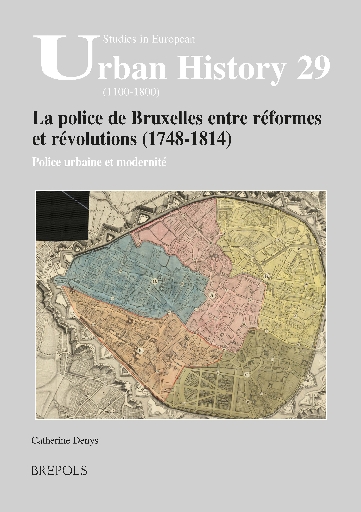
La police de Bruxelles entre réformes et révolutions (1748-1814). Police urbaine et modernité
show More to view fulltext, buy and share links for:La police de Bruxelles entre réformes et révolutions (1748-1814). Police urbaine et modernité show Less to hide fulltext, buy and share links for: La police de Bruxelles entre réformes et révolutions (1748-1814). Police urbaine et modernitéComment améliorer la police de Bruxelles ? La question tracasse les élites administratives qui dirigent de près ou de loin la police de la capitale des Pays-Bas autrichiens au XVIIIe siècle. Les réponses sous forme de projets se multiplient, mais la réforme de la police urbaine se heurte à des obstacles puissants et la configuration policière change apparemment peu jusqu’aux réformes joséphistes. Après l’échec de la création de la Police Générale, la police bruxelloise traverse les révolutions, les restaurations autrichiennes et les invasions françaises jusqu’à la stabilisation dans l’Empire napoléonien.
Au-delà des péripéties politiques et des mutations administratives de l’appareil policier bruxellois pris dans cette histoire tumultueuse, ce livre montre comment la modernisation des polices commence bien avant l’époque française (1794-1814), dans les interrogations qui émergent au XVIIIe siècle et dans un mouvement long, mais irréversible, de professionnalisation des polices urbaines en Europe.
Catherine Denys est Professeur d’histoire moderne à l’université de Lille3 et chercheur de l’Institut de Recherches Historiques du Septentrion, unité mixte CNRS-Lille3. Ses travaux portent sur la police et l’armée au XVIIIe siècle.
-
-
-
Metalogicon
show More to view fulltext, buy and share links for:Metalogicon show Less to hide fulltext, buy and share links for: MetalogiconJohn of Salisbury has long been celebrated as one of the foremost humanists of the twelfth-century renaissance, an erudite correspondent, legal expert, historian, poet, diplomat and political thinker, and clerk to two successive archbishops of Canterbury, Theobald and Thomas Becket. His Metalogicon, ostensibly a defence of the role of logic and of Aristotle’s Organon in the educational syllabus of the day, makes a powerful argument for an educational system of real practical utility for society, one whose intellectual coherence and rigour should underpin political morality and rational governance. As such, it has been seen to stand alongside the more famous Policraticus as an integral part of the intellectual contribution of one of Europe’s great political theorists. Based on John’s own experiences as a student and a teacher, the treatise offers unique evidence of the educational system of twelfth-century Paris at a critical stage in the early development of the schools, and of the earliest reception of the Aristotelian texts of the ‘new logic’. It is also an important contribution to the tradition of pedagogical and educational thought, with its unique attention to teaching methods and its belief in the purpose of education both for the formation of the person and for the good of society. The treatise has been accorded an important place in many modern scholarly debates, including those on the origins of the universities, on medieval philosophy and on medieval humanism. This new translation is based on the edition of J.B. Hall, auxiliata K.S.B. Keats-Rohan, which appeared in Corpus Christianorum Continuatio Mediaeualis as Iohannes Saresberiensis - Metalogicon (CCCM 98), and so makes available to the student and general reader for the first time a translation of a text of this important work established on modern critical principles. References to the corresponding pages of the Corpus Christianorum edition are provided in the margins of this translation.
Professor J.B. Hall is Hildred Carlile Professor of Latin Emeritus, University of London. Apart from John of Salisbury, he has published books on the textual criticism of Claudian, Ovid and Statius.
Dr Julian P. Haseldine is Senior Lecturer in Medieval History at the University of Hull. He has edited the letters of Peter of Celle and published widely on medieval friendship and friendship networks.
-
-
-
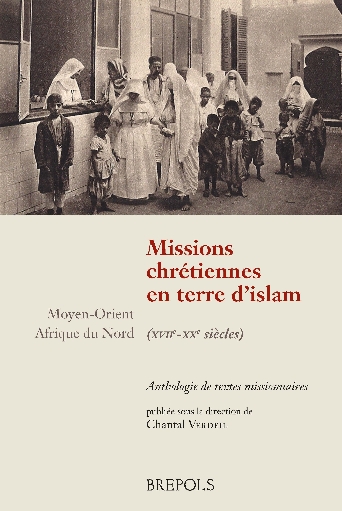
Missions chrétiennes en terre d'islam (XVIIe-XIXe siècles)
show More to view fulltext, buy and share links for:Missions chrétiennes en terre d'islam (XVIIe-XIXe siècles) show Less to hide fulltext, buy and share links for: Missions chrétiennes en terre d'islam (XVIIe-XIXe siècles)Hommes, femmes, catholiques, protestants, Européens, Américains, appartenant à des congrégations missionnaires prestigieuses ou membres de sociétés plus modestes, les missionnaires auteurs des textes réunis dans cette anthologie vivent tous en terre d’islam au contact, même distant, des musulmans : hommes de pouvoir et plus rarement de religion, élèves ou étudiants fréquentant leurs établissements scolaires, malades soignés dans leurs dispensaires ou leurs hôpitaux. Quelles étaient leurs relations avec ces musulmans ? Que savaient-ils de l’islam ? Ces différentes questions ont guidé les choix des textes de cette anthologie qui évoquent l’Algérie, la Tunisie, la Syrie, la Palestine, l’Anatolie et l’Iran.
Chantal Verdeil est maître de conférences en histoire du Moyen-Orient contemporain à l’INALCO (Institut National des Langues et Civilisations Orientales). Elle a notamment publié en 2011 La mission jésuite du Mont-Liban et de Syrie (1830-1864) et, en collaboration avec A.-L. Dupont et C. Mayeur-Jaouen, Le Moyen-Orient par les textes.
-
-
-
On Lamentations
show More to view fulltext, buy and share links for:On Lamentations show Less to hide fulltext, buy and share links for: On LamentationsWilliam, a Benedictine monk of Malmesbury in western England (died c. 1143), is well known as the author of major historical works. But his commentary on Lamentations was not published in full until 2011. It presents itself as an abbreviation of the work of a ninth-century predecessor, Paschasius Radbertus. But William aimed to re-write and improve on his source in both content and style. His characteristic mastery of the Bible and of an astonishingly wide range of classical and patristic texts is everywhere apparent. His Latin is elegant, not to say mannered and sometimes obscure, and presents many problems to the translator.William tells us that he had just turned forty, and had moved away from history to something more religious, that would conduce to his own moral improvement and to that of his readers. But the evils of the present age are often attacked, and commentary becomes moralising history by another means.A personal note, too, often comes through. William feels freer in this medium to comment adversely on the Norman conquest of England, and his struggles with the demons that tempted him and with his own conscience are often vividly evoked. Heartfelt prayers regularly round off the sections of his book. Profoundly influenced by Augustine, he made his commentary a meditation.
The source text of this volume appeared in Corpus Christianorum Continuatio Mediaeualis as Willelmus Meldunensis monachus - Liber super explanationem Lamentationum Ieremiae prophetae (CCCM 244). References to the corresponding pages of the Corpus Christianorum edition are provided in the margins of this translation.
Michael Winterbottom (born in 1934) spent most of his career teaching in Oxford, where he was Corpus Christi Professor of Latin from 1993 to 2001; he has edited several Latin prose texts of the classical period, but for thirty years has been working especially on William of Malmesbury, in collaboration with R. M. Thomson.
-
-
-
Rationale IV
show More to view fulltext, buy and share links for:Rationale IV show Less to hide fulltext, buy and share links for: Rationale IVWilliam Durand (c. 1230-Nov. 1, 1296), Bishop of Mende, France, was unquestionably the most renowned liturgical scholar of the later Middle Ages. His encyclopedic allegorical exposition of the rites and worship services of the Latin Church, the Rationale divinorum officiorum, or "Rationale for the divine offices," is the best known medieval work in its genre. Divided into eight books of varying length, the Rationale is exhaustive in its treatment of a wide variety of subjects: the church building and liturgical art; the ministers of the church and their functions; liturgical vestments; the Mass and the Divine Office; the Church's calendar and its feast days.
Modern scholarship has clearly shown that Durand's Rationale superseded all previous liturgical commentaries within only a few years of its publication (c. 1292-1296). By the end of the fifteenth century, it had become one of the most widely disseminated treatises of its kind in western Europe.
Book 4, Durand’s lengthy and detailed commentary on the Mass, has never been translated into English. The present volume makes this important text available for modern students of liturgy, musicology, theology, and art history for whom the original Latin text is not accessible. The present translation also provides extensive annotation and explanation of Durand’s sometimes cryptic etymologies, while bringing to light important source material embedded within his commentary.
The source text of this volume appeared in Corpus Christianorum Continuatio Mediaeualis as Guillelmus Durantus - Rationale divinorum officiorum IV (CCCM 140). References to the corresponding pages of the Corpus Christianorum edition are provided in the margins of this translation.
-
-
-
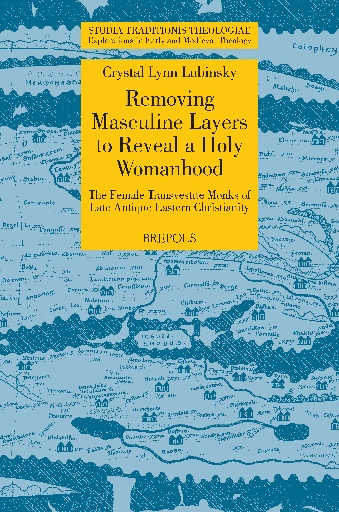
Removing Masculine Layers to Reveal a Holy Womanhood: The Female Transvestite Monks of Late Antique Eastern Christianity
show More to view fulltext, buy and share links for:Removing Masculine Layers to Reveal a Holy Womanhood: The Female Transvestite Monks of Late Antique Eastern Christianity show Less to hide fulltext, buy and share links for: Removing Masculine Layers to Reveal a Holy Womanhood: The Female Transvestite Monks of Late Antique Eastern ChristianityFemale monks have been discussed within the spheres of socio-history, theology, and literary analysis, but no comprehensive study has focused on their historical and gendered context until now. This book reexamines their hagiographies to reveal that female protagonists possess a holy womanhood regardless of having layers of masculinity applied to their characters. Each masculine layer is scrutinized to explore its purpose in the plots and the plausible motivations for the utilization of transvestite figures in religious literature. Hagiographers had no intention of transforming their religious protagonists into anything but determined, holy women who are forced to act drastically in order to sustain ascetic dreams begun while mothers, wives, daughters, and sisters. Through an intertextual method, masculinity and literary themes work to contextualize praise for a holy womanhood within an acceptable gendered language, which seems to support a belief in the spiritual potential of women. This book highlights the potential for complex irony to develop around a female transvestite, which supplies religious tales with intrigue and interest, an ability to instruct/chastise mixed audiences, and a potential to portray the reversal inherent in the human drama of salvation.
Dr. Crystal Lynn Lubinsky received her PhD from the University of Edinburgh in Ecclesiastical History and currently lectures on ancient history and religious studies for the History Department and Religious Studies Program at University of Massachusetts at Dartmouth in the United States. Her research interests and future projects include andromimesis, instances of Christian reversal and redemption, monasteries as refuge, and the Christian Desert Myth.
-
-
-
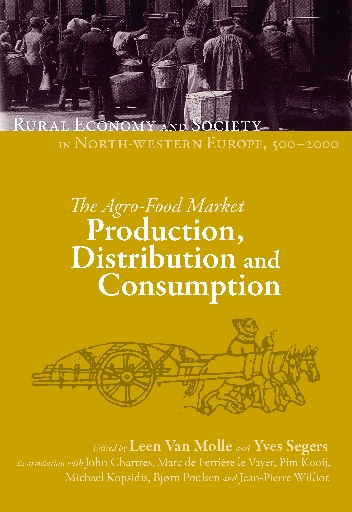
The Agro-Food Market: Production, Distribution and Consumption
show More to view fulltext, buy and share links for:The Agro-Food Market: Production, Distribution and Consumption show Less to hide fulltext, buy and share links for: The Agro-Food Market: Production, Distribution and ConsumptionVolume editorial board:
Leen Van Molle (University of Leuven, Belgium), Yves Segers (University of Leuven, Belgium) (directors)
John Chartres (University of Leeds,UK) , Marc de Ferrière le Vayer (University of Tours, France), Pim Kooij (Wageningen University, Netherlands), Michael Kopsidis (IAMO, Halle (Saale), Bjørn Poulsen (Aarhus University, Denmark), Jean-Pierre Williot (University of Tours, France)
Agriculture and alimentation have, from early times, always been crucial elements in the development of market systems. Shortage and surplus gave shape to different forms of exchange and sale, to the dynamics of supply and demand, and to expanding interconnections between both regions and social groups. Farmers learned to adapt their production to market conditions and to the shifting needs and tastes of a growing and demanding public. But the path from a self-supporting way of life to the present forms of market integration in the complex, global world was far from uniform and linear. Food production, market structures and market mechanisms changed over time and differed between regions and countries of the North Sea area. This volume aims at exploring and unravelling the complexity of the agro-food market, from the field to the table.
-
-
-
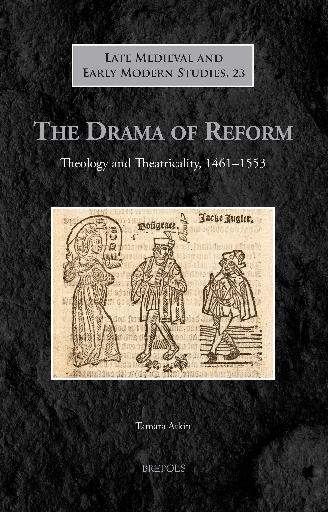
The Drama of Reform
show More to view fulltext, buy and share links for:The Drama of Reform show Less to hide fulltext, buy and share links for: The Drama of ReformThe Drama of Reform establishes the impact of late medieval and early modern religious reform on dramaturgy. Taking an interdisciplinary approach, it examines the interactions between theatricality and theology across a range of different plays including the Croxton Play of the Sacrament, Jacke Jugeler, John Bale’s Three Laws, and Lewis Wager’s Life and Repentaunce of Mary Magdalene. Tracing the development of arguments concerning the interpretation of the sacraments, the relationship between priests and players, and the use and abuse of imagery and drama in religious worship, The Drama of Reform draws on a rich variety of contextual materials including liturgical texts, heresy trial accounts, dramatic treatises, polemical tracts, and religious laws.
Focussed on the period between Archbishop Arundel’s Constitutions in the fifteenth century and Archbishop Cranmer’s second Book of Common Prayer in the sixteenth, The Drama of Reform explores the phenomenological similarities between drama and certain religious rites, notably the eucharist, and proposes that religious reform prompted attempts to reform dramaturgy. In presenting this analysis, the author argues that while drama continued to function as dramatic propaganda, efforts to initiate new modes of playing were only partially successful.
-
-
-
To See into the Life of Things: The Contemplation of Nature in Maximus the Confessor and his Predecessors
show More to view fulltext, buy and share links for:To See into the Life of Things: The Contemplation of Nature in Maximus the Confessor and his Predecessors show Less to hide fulltext, buy and share links for: To See into the Life of Things: The Contemplation of Nature in Maximus the Confessor and his PredecessorsMaximus the Confessor (580-662) is one of the great minds of the Christian tradition and his Ambigua to John are a collection of texts uniquely expressive of the speculative contours of his thought. They have not, however, received a synthetic treatment until now. This work provides such a synthetic treatment and argues that Maximus’ central concern in the Ambigua to John is to articulate the nature of philosophy and, more precisely, the scope of the contemplation of nature (θεωρία φυσική) within the philosophical life, where "philosophy," the love of wisdom, is nothing less than the love of the Divine. Part I of this study provides a thorough background in Greek philosophical and patristic philosophies of nature, showing how Maximus’ predecessors understood knowledge of the world in relation to philosophical life, discourse, and praxis. Part II studies the contemplation of nature in the Ambigua and analyzes Maximus’ account of human affectivity in the world, his account of the coherence of philosophical life (praxis and contemplation) as a response to this affectivity, his understanding of the relation between God and the world, and his reconciliation of these various aspects of philosophy in the Christian economy of salvation, which he understands as the renewal of nature and its contemplation.
-
-
-
Gildas and the Scriptures
show More to view fulltext, buy and share links for:Gildas and the Scriptures show Less to hide fulltext, buy and share links for: Gildas and the ScripturesGildas is the earliest insular writer who has left us a substantial legacy of theological writing. He is usually, however, not seen as a theological writer but as an historical source for ‘dark age’ Britain at the time of the Germanic invasions in the mid-sixth century. Yet the deacon Gildas saw himself as a prophet charged by God to call the rulers and clergy of his society back to being a chosen people of the covenant. The form this call took was that of an indictment of those groups based on the testimonia of the Christian scriptures.
This book is a study both of Gildas’s use of the scriptures (his text, his canon, his exegetical strategies) and of how, from the way he interprets sacred history, he created a distinctive theology of the church and of salvation.
Thomas O'Loughlin is Professor of Historical Theology at the University of Nottingham. His areas of interest are Patristic and Medieval Theology, History of Scriptural Interpretation, Early Church and Method in Historical Theology.
-
-
-
Historiographie et littérature au XVIe siècle en Provence: l'oeuvre de Jean de Nostredame
show More to view fulltext, buy and share links for:Historiographie et littérature au XVIe siècle en Provence: l'oeuvre de Jean de Nostredame show Less to hide fulltext, buy and share links for: Historiographie et littérature au XVIe siècle en Provence: l'oeuvre de Jean de NostredameJean de Nostredame est connu pour la publication en 1575 des Vies des plus celebres et anciens poetes provençaux que la critique médiéviste a souvent critiqué ou dénigré pour ses « inventions ». Camille Chabaneau avait mis au jour des proses historiographiques qui révélaient l’ampleur d’un travail historique et littéraire, d’une pensée linguistique au cœur du XVIe siècle provençal. Par l’édition des Memoires Historiques, réalisée d’après le manuscrit original d’Aix-en-Provence, la place de Jean de Nostredame est ainsi considérablement réévaluée. Nous ne sommes pas en présence d’un « faussaire », mais d’un humaniste provençal dont l’œuvre et l’action ont été méconnues, négligées, et que l’on doit relire à l’aune de nos connaissances actuelles. Jean de Nostredame devient ainsi un historien et un écrivain dont la pensée s’est effacée, et ce à cause de la situation particulière des lettres occitanes, tombant en quelque sorte dans « un trou de la pensée littéraire et linguistique ». Il n’est que justice aujourd’hui de le redécouvrir et d’apprécier ce que furent son œuvre et sa pensée.
Jean-Yves Casanova est professeur à l’Université de Pau et des Pays de l’Adour. Il est notamment l’auteur de plusieurs ouvrages et études critiques sur la littérature occitane, du XVIe siècle à l’œuvre de Frédéric Mistral.
-
-
-
La trasmissione dei testi patristici latini: problemi e prospettive
show More to view fulltext, buy and share links for:La trasmissione dei testi patristici latini: problemi e prospettive show Less to hide fulltext, buy and share links for: La trasmissione dei testi patristici latini: problemi e prospettiveIl volume raccoglie gli atti del Convegno « La trasmissione dei testi patristici latini: problemi e prospettive », tenutosi a Roma dal 26 al 28 ottobre 2009 presso l’Università ‘La Sapienza’ e l’Istituto Patristico Augustinianum. L’intento è stato quello di promuovere un incontro tra specialisti di differenti ambiti e discipline, nell’ottica di costituire un punto di partenza verso molteplici direzioni: innanzitutto una riflessione metodologica sulla filologia dei testi patristici latini, che ancora necessita di una messa a punto generale e condivisa secondo i parametri delle più recenti acquisizioni della critica del testo. Inoltre la filologia dei testi cristiani si configura come un trait d’union, non solo cronologico, tra la filologia classica e quella mediolatina, e può illuminarne le continuità e le fratture anche dal punto di vista del metodo. Infine, l’ampliamento della prospettiva dalla mera critica del testo alla storia della trasmissione del testo stesso implica la considerazione di un orizzonte disciplinare più vasto, che rende imprescindibile e proficuo lo scambio con discipline complementari quali la paleografia.
Compongono la raccolta i contributi di Clara Burini De Lorenzi, Luciano Canfora, Guglielmo Cavallo, Paolo Chiesa, Emanuela Colombi, Leopoldo Gamberale, Franco Gori, Gert Partoens, Emanuela Prinzivalli, Francesco Scorza Barcellona, Manlio Simonetti, Klaus Zelzer, Michaela Zelzer.
-
-
-
Republicanism, Sinophilia, and Historical Writing
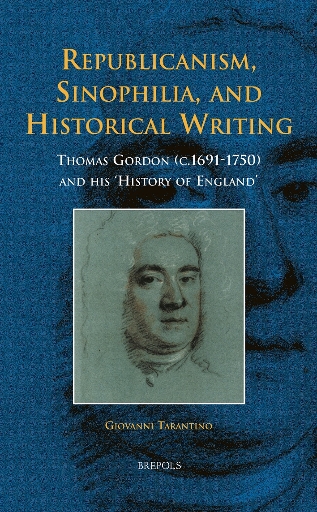
show More to view fulltext, buy and share links for:Republicanism, Sinophilia, and Historical Writing show Less to hide fulltext, buy and share links for: Republicanism, Sinophilia, and Historical WritingThomas Gordon (c.1691-1750) was a prolific Scottish journalist and pamphleteer working in eighteenth-century London. His works circulated in a variety of forms and for many years in Europe and the British North American colonies. Gordon’s conception of ‘republicanism’ was essentially that of a secular and tolerant society free from providential designs; his works reflected a lifelong commitment to defending the rule of law, the balance of powers, and the rotation of representative bodies.
This study sets out to produce a fuller profile of Gordon, to investigate his specific and controversial contribution as a political theorist, and finally to present for the first time an annotated edition of his unfinished and unpublished (mainlymedieval) History of England: a highly readable text whose main metanarrative theme is the struggle between ‘the Government of Will’ and ‘the Government of Laws’- with the struggle between ‘God’s Will’ and ‘the Will of the Clergy’ as an essential rhetorical subtheme.
The book also deals with a hitherto unexplored aspect of Gordon’s thinking, his Sinophilia. Gordon’s ‘sensible Chinese’ is drawn in as a rhetorical tool to voice bitter judgements on both Catholic and Protestant inconsistencies. By resorting to the utopian model of a distant Orient, Gordon aimed to expose the severe impact on Western societies of clerical interference in State affairs, concluding that ‘men who are oppressed, or who foresee inevitable oppression, will be naturally thinking of the means of security and escape’, or possibly dreaming about distant civilizations.
-