Brepols Online Books Medieval Miscellanea Collection 2018 - bob2018mime

Collection Contents
42 results
-
-

Medieval Francophone Literary Culture Outside France
show More to view fulltext, buy and share links for:Medieval Francophone Literary Culture Outside France show Less to hide fulltext, buy and share links for: Medieval Francophone Literary Culture Outside FranceIn medieval Europe, cultural, political, and linguistic identities rarely coincided with modern national borders. As early as the end of the twelfth century, French rose to prominence as a lingua franca that could facilitate communication between people, regardless of their origin, background, or community. Between the twelfth and fifteenth centuries, literary works were written or translated into French not only in France but also across Europe, from England and the Low Countries to as far afield as Italy, Cyprus, and the Holy Land. Many of these texts had a broad European circulation and for well over three hundred years they were transmitted, read, studied, imitated, and translated.
Drawing on the results of the AHRC-funded research project Medieval Francophone Literary Culture Outside France, this volume aims to reassess medieval literary culture and explore it in a European and Mediterranean setting. The book, incorporating nineteen papers by international scholars, explores the circulation and production of francophone texts outside of France along two major axes of transmission: one stretching from England and Normandy across to Flanders and Burgundy, and the other running across the Pyrenees and Alps from the Iberian Peninsula to the Levant. In doing so, it offers new insights into how francophone literature forged a place for itself, both in medieval textual culture and, more generally, in Western cultural spheres.
-
-
-
Anselmo d’Aosta e il pensiero monastico medievale
show More to view fulltext, buy and share links for:Anselmo d’Aosta e il pensiero monastico medievale show Less to hide fulltext, buy and share links for: Anselmo d’Aosta e il pensiero monastico medievaleQuesto volume raccoglie le relazioni discusse da oltre venti studiosi italiani e tedeschi al XVIII Convegno della Società Italiana per lo Studio del Pensiero Medievale (SISPM), dedicato al pensiero e all’influenza di Anselmo d’Aosta (1033-1109), una delle figure chiave della filosofia e della teologia medievali. I saggi presentano i principali aspetti della speculazione di Anselmo, con particolare attenzione alle posizioni teologiche da lui sostenute, alla sua metodologia per la costruzione di un pensiero sistematico e razionale, e ai suoi orientamenti in materia di pedagogia, politica, logica, nonché alla sua concezione della vita monastica. Molti studi sono inoltre dedicati alla diffusione e all’influsso del suo pensiero: tracce della sua speculazione sono facilmente riconoscibili nei maggiori pensatori del secolo xii (a partire da Abelardo e Ugo di San Vittore) e giungono fino a Duns Scoto e Nicolò Cusano.
Per la varietà degli approcci d’indagine, e la profondità e l’attenzione delle analisi filosofiche e teologiche dei singoli contributi, il volume si propone di offrire una completa panoramica sullo stato degli studi su Anselmo e la cultura monastica del suo tempo.
-
-
-
Barbarian and Jews
show More to view fulltext, buy and share links for:Barbarian and Jews show Less to hide fulltext, buy and share links for: Barbarian and JewsThe essays in this volume attempt to re-evaluate, understand and explain various aspects of Jewish history within the broader historical context of the post-Roman Barbarian world. They address a wide variety of topics, sources, and geographies, and together they provide a nuanced and more balanced history of the Jews in the early medieval West. Although written independently of one another by some of the most prominent historians of Late Antiquity and the early Middle Ages, the various essays collected here reveal a remarkable tension between the ‘imaginary’ (or ‘hermeneutical’) Jew and the ‘real’ one. As this volume demonstrates, Augustine’s positive theological understanding of Jews and Judaism was often overshadowed by anti-Jewish sentiments, and consequently anti-Jewish invective remained the drive wheel of Christian theology, especially in the context of debates and polemics among the Christians themselves.
-
-
-
Booldly bot meekly
show More to view fulltext, buy and share links for:Booldly bot meekly show Less to hide fulltext, buy and share links for: Booldly bot meeklyWhen, back in the 1980s, Roger Ellis first sounded out academic colleagues in British universities and beyond about their possible interest and participation in a conference on medieval translation theory and practice, he perhaps did not envisage that the resulting gathering - intellectually curious, animated, convivial - at Gregynog Hall in Wales (1987) would be the first of a series of international conferences with a strong continental European base, which now provides a regular forum in which one can initiate, and engage with, research questions about this near all-encompassing aspect of medieval culture. Since that first meeting, the Cardiff Conferences on the Theory and Practice of Translation in the Middle Ages have charted and drawn anew the parameters of scholarly debate on the topic, while their Proceedings, hosted since 1996 by Brepols’ Medieval Translator series, cumulatively present a body of work valuable to anyone interested in translation in its medieval, broadly European, manifestations.
The contributors of this volume’s essays, assembled in tribute to Roger Ellis on the occasion of his seventieth birthday, have profited from the intellectual opportunities the Medieval Translator conferences foster, and in particular from Roger’s friendship and academic acumen. The essays draw in many cases on Roger’s work to inform a collective project that reflects on his specific interests in translation, including latemedieval piety and Birgittine texts, scholarly editions and studies of genre, considering literary and linguistic relations within and across languages, registers, national boundaries, time and space, refining, even re-defining, our understanding of translation. We offer these essays with warm thanks to and appreciation of Roger Ellis for his work in this field, not least for establishing, with this conference series, a means to demonstrate that translation, and translation studies, is above all a question of different voices speaking productively in dialogue.
-
-
-
Byzantine Hagiography: Texts, Themes & Projects
show More to view fulltext, buy and share links for:Byzantine Hagiography: Texts, Themes & Projects show Less to hide fulltext, buy and share links for: Byzantine Hagiography: Texts, Themes & ProjectsIn recent years Byzantine hagiography has attracted renewed interest of the international community of Byzantine scholars and not only thanks to studies dedicated to this subject and critical editions of individual texts, but also because hagiography has been the main focus of numerous major research projects: databases, new repertories, a new version of the Bibliotheca Hagiographica Graeca and some very useful handbooks dedicated to this literary genre during the Byzantine Empire. These researches have analysed Byzantine hagiography in relation to the hagiographic writings composed in neighbouring areas, the West, the Syriac and Arabic Middle East, the Southern Slavs, etc. but also the relations between the hagiographical texts and other literary genres.
This volume introduces the current developments of hagiographical studies and on-going projects on the subject, and investigates a variety of texts and authors from the Patristic period to the end of Byzantium.
-
-
-
Charlemagne : les temps, les espaces, les hommes
show More to view fulltext, buy and share links for:Charlemagne : les temps, les espaces, les hommes show Less to hide fulltext, buy and share links for: Charlemagne : les temps, les espaces, les hommesCe volume comprend les actes du colloque qui a eu lieu en 2014 à Paris à l’occasion du 1200e anniversaire de la mort de Charlemagne. Les articles ne commémorent pas en Charlemagne le père de l’Europe ni le fondateur d’empire, mais ils situent le demi-siècle de son gouvernement dans un jeu d’échelle spatial et temporel qui fait la part des traditions et des innovations et qui donne une meilleure place aux périphéries et aux laboratoires qu’elles ont pu constituer. Il s’agit de se départir autant que possible du travers historiographique qui consiste, en privilégiant toujours les mêmes sources, à attribuer à l’homme et au règne des initiatives et des réalisations qui participent de temporalités et d’expériences diverses et qui ne naissent pas toutes entre Loire et Rhin. Par une relecture et une déconstruction des sources les plus variées, le règne, la période et les acteurs sont reconsidérés dans toute leur complexité chronologique et spatiale.
-
-
-
Concepts of Ideal Rulership from Antiquity to the Renaissance
show More to view fulltext, buy and share links for:Concepts of Ideal Rulership from Antiquity to the Renaissance show Less to hide fulltext, buy and share links for: Concepts of Ideal Rulership from Antiquity to the RenaissanceAncient works On Kingship have received a lot of attention in recent scholarship, where the main focus is usually on classic works such as Seneca’s On Clemency, Isocrates’ Cyprian Orations or Dio of Prusa’s Kingship Orations. In this volume, we deliberately turn to the periphery, to the grey zone where matters usually prove more complicated. This volume focuses on authors who deal with analogous problems and raise similar questions in other contexts, authors who also address powerful rulers or develop ideals of right rulership but who choose very different literary genres to do so, or works on kingship that have almost been forgotten. Departing from well-trodden paths, we hope to contribute to the scholarly debate by bringing in new relevant material and confront it with well-known and oft-discussed classics. This confrontation even throws a new light upon the very notion of ‘mirrors for princes’. Moreover, the selection of peripheral texts from Antiquity to the Renaissance reveals several patterns in the evolution of the tradition over a longer period of time.
-
-
-
Coopétition
show More to view fulltext, buy and share links for:Coopétition show Less to hide fulltext, buy and share links for: CoopétitionCe livre est centré sur la « coopétition », un concept qui désigne la capacité des acteurs à rivaliser et à coopérer simultanément. Certes, les sociétés du premier Moyen Âge sont des sociétés conflictuelles, qui développent souvent des formes de compétition agressive, mais le désir de paix est universel et la compétition ne détermine pas seulement un gagnant et un perdant. Les acteurs ont aussi eu intérêt à collaborer avec leurs rivaux, dans la perspective d’un gain réciproque (gagnant-gagnant) ou d’un profit futur, y compris dans l’au-delà. Pour comprendre les stratégies, le jeu qui se joue derrière les interactions compétitives et les bénéfices attendus, ce livre prend donc en compte les jeux d’échelle, les relations entre le centre et la périphérie, entre l’ici-bas et l’au-delà, mais aussi la capacité des autorités à développer le consensus et à susciter la confiance sans laquelle on ne peut prendre le risque de coopérer avec un rival. Il embrasse les différents espaces et le temps long, en se focalisant sur des périodes caractérisées par une alternance d’instabilité et de stabilité sur le plan politique. Il éclaire ainsi d’un jour nouveau le jeu de la compétition dans les sociétés du premier Moyen Âge.
-
-
-
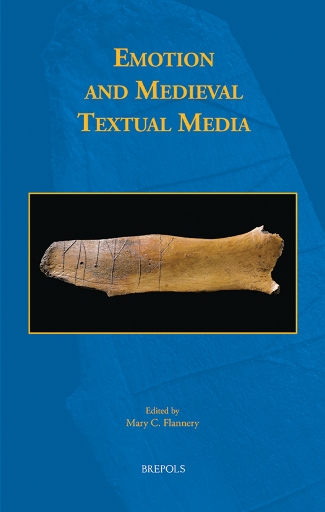
Emotion and Medieval Textual Media
show More to view fulltext, buy and share links for:Emotion and Medieval Textual Media show Less to hide fulltext, buy and share links for: Emotion and Medieval Textual MediaText is one of the most valuable and plentiful sources of information available to scholars interested in medieval emotion. The medieval world may have vanished centuries ago, and its human subjects with it, but a wealth of textual traces remains: sermons, romances, poems, plays, treatises, songs, inscriptions, graffiti, and much more. But how is emotion communicated and shaped by these different textual forms? That is the question at the heart of this collection of essays, which aims to open up our sense of what texts can contribute to the history of emotions by considering the variety of ways that texts can function as vehicles - media - for emotion.
The essays in this volume examine how literary and dramatic texts, chant, manuscript annotations, and material inscriptions mediate emotion - how they bring it about, communicate it, process it, and shape it via forms that act on various senses. Ranging between the eighth and fifteenth centuries and comprising contributions from scholars of musicology, Old English and Old Norse studies, material culture, Middle English literature, drama, and manuscript studies, the essays contained in this volume serve as a window onto the complex relationship between emotions and different textual forms.
-
-
-
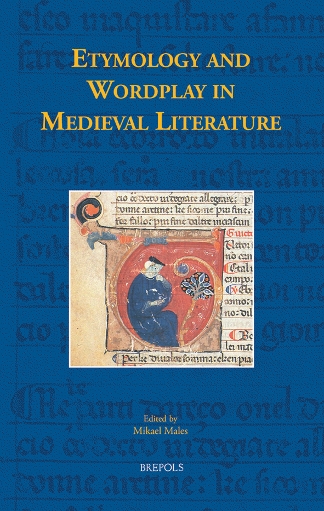
Etymology and Wordplay in Medieval Literature
show More to view fulltext, buy and share links for:Etymology and Wordplay in Medieval Literature show Less to hide fulltext, buy and share links for: Etymology and Wordplay in Medieval LiteratureIn modern scholarship, etymology and wordplay are rarely studied in tandem. In the Middle Ages, however, they were intrinsically related, and both feature prominently in medieval literature. Their functions are often at variance with the expectations of the modern reader, in particular when wordplay is used to arrive at crucial answers or to convey theological insights. The studies in this book therefore carry important implications for our understanding of the reception of medieval texts. The authors show how etymology and wordplay in the Middle Ages often served as an impetus for meditation and as a route to truth, but that they could also be put to more mundane uses, such as the bolstering of national pride. In a narrative context, the functions of etymology and wordplay could range from underlining the sexual bravado of the protagonist to being the key indicator of whether the hero would live or die.
This book presents case studies of the uses of etymology and wordplay in a number of medieval literatures (Latin, Old French, Middle High German, Italian, Old Irish, Old English, Old Norse, Slavic). By moving beyond the strictly etymological discourse into different parts of medieval literature, the functions of these devices are highlighted in various contexts. Their significance ranges from the bawdy to the sublime, from the open-ended to the specific. Classical and medieval developments of etymology and wordplay are described in a background chapter.
-
-
-
Genre et compétition dans les sociétés occidentales du haut Moyen Âge (iv e-xi e siècle)
show More to view fulltext, buy and share links for:Genre et compétition dans les sociétés occidentales du haut Moyen Âge (iv e-xi e siècle) show Less to hide fulltext, buy and share links for: Genre et compétition dans les sociétés occidentales du haut Moyen Âge (iv e-xi e siècle)Si les études de genre utilisent abondamment les notions de discrimination ou d’inégalités, il est plus rare qu’elles abordent à proprement parler celle de compétition. Le présent volume aborde ce thème avec pour but de mettre en lumière la manière dont les périodes de forte compétition sociale influent sur la place et la redéfinition des attributs sexués, en même temps que l’importance relative donnée à ceux-ci dans les situations de rivalité ou de compétition. La dizaine de travaux rassemblés présentent une vaste enquête sur la notion de genre dans l'historiographie moderne et dans les sources de la fin de l'Antiquité et du haut Moyen Âge avant d'analyser des exemples venus aussi bien de l'archéologie que des chroniques ou de l'hagiographie, essentiellement en Gaule et en Italie. Les auteurs montrent comment genres et régimes de genre sont des outils et des produits des crises et des compétitions, aussi bien pour les hommes que pour les femmes de l'Occident altimédiéval.
-
-
-
La controverse carolingienne sur la prédestination
show More to view fulltext, buy and share links for:La controverse carolingienne sur la prédestination show Less to hide fulltext, buy and share links for: La controverse carolingienne sur la prédestinationLa controverse carolingienne sur la double prédestination au paradis et à l'enfer (années 840-870), provoquée par la prédication du moine Gottschalk d'Orbais, est la plus importante querelle théologique de l'histoire carolingienne : elle met aux prises le roi, la cour, les évêques, les abbés et clercs lettrés, les simples clercs et moines, et déchire les clergés des royaumes francs - qui, pour la première fois, se condamnent les uns les autres en concile. Ce conflit entraîne la production de documents de tous genres : actes conciliaires, traités savants, libelles et feuilles volantes de polémique et de propagande, florilèges et autres notes préparatoires... Les manuscrits annotés par les acteurs de la controverse (Florus de Lyon, Hincmar de Reims, Loup de Ferrières, Prudence de Troyes, Ratramne de Corbie) sont préservés par dizaines. Ces documents n'ont pas encore été suffisamment étudiés pour ce qu'ils sont vraiment : les témoins d'une compétition acharnée, autour des textes et de leurs supports manuscrits, pour le contrôle de l'information. Pour comprendre les raisons sociales et politiques de la controverse, il faut entreprendre l'étude croisée, philologique et historique, de ces textes, de leurs sources, de leurs formats et de leurs supports manuscrits. À travers une série de cas d'étude, les contributeurs de ce volume collectif, le premier jamais consacré à cet épisode, vont au contact de la réalité matérielle de la controverse pour éclairer les structures du débat public : la stratégie littéraire des auteurs, leur travail d'atelier, la participation des simples clercs, le rôle respectif de l’oral et de l’écrit dans les querelles théologiques du haut Moyen Âge.
-
-
-

Landscape and Myth in North-Western Europe
show More to view fulltext, buy and share links for:Landscape and Myth in North-Western Europe show Less to hide fulltext, buy and share links for: Landscape and Myth in North-Western EuropeThis volume explores the intersection of landscape and myth in the context of northwestern Atlantic Europe. From the landscapes of literature to the landscape as a lived environment, and from myths about supernatural beings to tales about the mythical roots of kingship, the contributions gathered here each develop their own take on the meanings behind ‘landscape’ and ‘myth’, and thus provide a broad cross-section of how these widely discussed concepts might be understood.
Arising from papers delivered at the conference Landscape and Myth in North-Western Europe, held in Munich in April 2016, the volume draws together a wide selection of material ranging from texts and toponyms to maps and archaeological data, and it uses this diversity in method and material to explore the meaning of these terms in medieval Ireland, Wales, and Iceland. In doing so, it provides a broadly inclusive and yet carefully focused discussion of the inescapable and productive intertwining of landscape and myth.
-
-
-

Le légendier de Moissac et la culture hagiographique méridionale autour de l’an mil
show More to view fulltext, buy and share links for:Le légendier de Moissac et la culture hagiographique méridionale autour de l’an mil show Less to hide fulltext, buy and share links for: Le légendier de Moissac et la culture hagiographique méridionale autour de l’an milA l’instar du Livre des Miracles de sainte Foy de Conques, on connaît surtout de l’hagiographie méridionale aux alentours de l’an mil les récits de miracles des saints dont l’actualité est ravivée dans le contexte de la Paix de Dieu, de la constitution de nouveaux pouvoirs et d’une concurrence accrue entre les monastères. Or, à cette époque et avant son affiliation à Cluny, le scriptorium de Moissac, alors en pleine activité, produit, entre autres manuscrits, un grand légendier enluminé dont nous conservons d’importants fragments (BNF, Ms. Lat. 5304 et 17002). Ce légendier, le plus grand de son temps, transmet 150 textes dont certains sont très rares. L’étude collective de ce manuscrit permet de réfléchir à la culture hagiographique méridionale depuis le monde wisigothique jusqu’au XIVe siècle. En abordant tour à tour la genèse, les usages et la diffusion d’une telle collection de textes, ce livre invite à un voyage savant dans l’histoire longue du christianisme. Il permet de mieux comprendre la mémoire des premiers temps chrétiens dans le Midi, mais également dans d’autres espaces, du monde hispanique à la Perse, de l’Afrique à la Gaule du Nord.
-
-
-
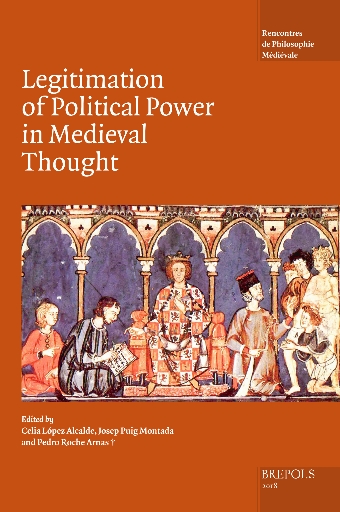
Legitimation of Political Power in Medieval Thought
show More to view fulltext, buy and share links for:Legitimation of Political Power in Medieval Thought show Less to hide fulltext, buy and share links for: Legitimation of Political Power in Medieval ThoughtWhat makes political power legitimate? Without legitimation, subjects will not accept power, and, since religion permeated medieval society, religion became foundational to philosophical legitimations of political power.
In 2013, the xix Annual Colloquium of the International Society for the Study of Medieval Philosophy took place in Alcalá de Henares, one of the medieval centers of political debate within and between Jewish, Christian and Muslim communities. The members of these communities all shared the common belief that God constitutes the remote or proximate cause of legitimation. Yet, beyond this common belief, they differed significantly in their points of departure and how their arguments evolved. For instance, the debate among Western Christians in the conflict between secular power and Papal authority sowed the seeds for a secular basis of legitimacy.
The volume reflects the results of the colloquium. Many contributions focus on key Christian thinkers such as Marsilius of Padua, Thomas Aquinas, John Quidort of Paris, Giles of Rome, Dante, and William of Ockham; other studies focus on major authors from the Jewish and Muslim traditions, such as Maimonides and Alfarabi. Finally, several papers focus on lesser-known but no less important figures for the history of political thought: Manegold of Lautenbach, Ptolemy of Lucca, Guido Terrena, John of Viterbo, Pierre de Ceffons, John Wyclif and Pierre de Plaoul. The contributions rely on original texts, giving the readers a fresh insight into these issues.
-
-
-
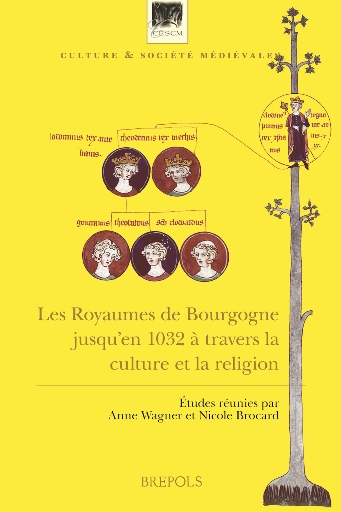
Les Royaumes de Bourgogne jusq'en 1032 à travers la culture et la religion
show More to view fulltext, buy and share links for:Les Royaumes de Bourgogne jusq'en 1032 à travers la culture et la religion show Less to hide fulltext, buy and share links for: Les Royaumes de Bourgogne jusq'en 1032 à travers la culture et la religionInstallés en Sapaudie (Savoie) par Aetius, les Burgondes étendirent leur royaume dans la vallée du Rhône, de la Durance et de la Saône. Leur implantation est attestée par des sépultures peu nombreuses dont les individus présentent des déformations céphaliques, caractéristiques de peuples associés. Bien qu’ariens, les rois sont tolérants et les évêques catholiques jouent un rôle politique réel ; paradoxalement le premier roi catholique, Sigismond, fondateur de Saint-Maurice d’Agaune, critiqué par son épiscopat, perd son royaume et sa vie face aux Francs. Toutefois, le culte de saint Maurice se développe et fait école. Sur le modèle d’Agaune, où le culte de Sigismond se développe, Gontran fonde, en 577, Saint-Marcel à Chalon-sur-Saône. Au VIe siècle, les clercs élaborent un cycle rassemblant les martyrs de Bourgogne : Lyon devient le « centre d’un royaume de Dieu ». Au sein de l’Empire carolingien, l’identité burgonde, qui semblait fragile, résiste à la perte d’autonomie politique. Au IXe siècle, l’héritage de Lothaire II est divisé entre le futur duché de Bourgogne et les royaumes Bosonides de Provence et Rodolphiens de Transjurane, qui fusionnent au Xe siècle, états fondés sur des cultes dynamiques, des monastères réformés et des évêchés puissants.
-
-
-
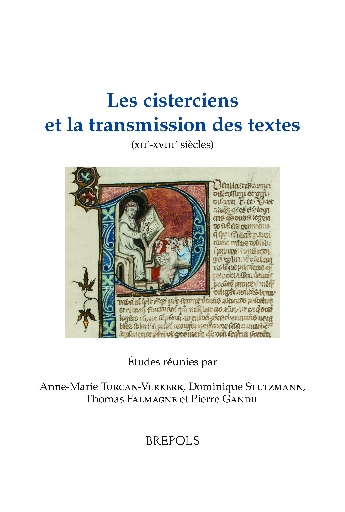
Les cisterciens et la transmission des textes (XIIe-XVIIIe siècles)
show More to view fulltext, buy and share links for:Les cisterciens et la transmission des textes (XIIe-XVIIIe siècles) show Less to hide fulltext, buy and share links for: Les cisterciens et la transmission des textes (XIIe-XVIIIe siècles)Les cisterciens sont moins connus pour avoir recherché et retravaillé les textes que pour leurs efforts de centralisation et d’unification dans l’architecture et les arts, la liturgie et la vie quotidienne, et pour leur utilisation active de l’écrit pragmatique – pour ne citer que ces quelques domaines. Et pourtant, leurs bibliothèques, parfois immenses, font mentir par leur richesse et les textes rarissimes ou inattendus qu’elles nous ont conservés l’idée d’un ordre peu consacré aux études. Où les cisterciens ont-ils trouvé ces textes ? Quels étaient leurs réseaux ? Avaient-ils des critères pour choisir les textes à copier et les modèles ? La recherche des textes était-elle dans ces abbayes réfléchie, concertée ? En somme, les cisterciens ont-ils été des transmetteurs par hasard, ou parce que leur intérêt pour les textes allait bien au-delà de ce que nous croyons habituellement ? Ce livre montre que la seconde réponse est certainement la plus juste.
-
-
-
Les formes laïques de la philosophie
show More to view fulltext, buy and share links for:Les formes laïques de la philosophie show Less to hide fulltext, buy and share links for: Les formes laïques de la philosophieSi les auteurs de la philosophie médiévale sont majoritairement des clercs qui écrivent en latin, de nouveaux lieux institutionnels des savoirs se développent peu à peu dans toute l’Europe à la fin du Moyen Âge et dans la première modernité, permettant l’existence de formes philosophiques proprement laïques ; une redéfinition de l’objet philosophique en ses formes et ses matières s’impose alors. Autodidacte, philosophe et théologien, poète, Raymond Lulle invente de nouvelles formes d’écriture de la philosophie, romanesque, poétique, invitant à oublier toute distinction entre philosophie et littérature pour mieux proposer un art dynamique et systématique. Les études ici réunies contribuent à donner à l’œuvre de Raymond Lulle la place qui lui revient dans l’histoire de la philosophie médiévale et de cette philosophie alternative, celle des laïcs, trop souvent méconnue.
-
-
-
Medieval Romances Across European Borders
show More to view fulltext, buy and share links for:Medieval Romances Across European Borders show Less to hide fulltext, buy and share links for: Medieval Romances Across European BordersThey were the bestsellers of their time; in the late medieval period, a number of shorter romances and tales, such as Floire et Blancheflor, Partonopeus de Blois, Valentine and Orson, and many others, enjoyed striking popularity across different regions of Europe. In this volume, scholars from across Europe and beyond examine the processes by which medieval romances were adapted across regional and national borders. By considering how the content, form, and broader contextualisation of individual romances were altered by the transition from one region to another, the chapters variously address the role translators, narrators, editors, and compilers played in adapting the tales to different cultural and codicological settings. In this context, they discuss not only the shifting plotlines of the tales, but also the points at which the generic features of the texts shift in response to changing cultural codes. In doing so, they raise broader questions concerning the links between genre, manuscript form, cultural assimilation, and the popularity of certain romance texts in different cultural communities.
-
-
-
Medieval Thought Experiments
show More to view fulltext, buy and share links for:Medieval Thought Experiments show Less to hide fulltext, buy and share links for: Medieval Thought ExperimentsThroughout the Middle Ages, fictional frameworks could be used as imaginative spaces in which to test or play with ideas without asserting their truth. The aim of this volume is to consider how intellectual problems were approached - if not necessarily resolved - through the kinds of hypothetical enquiry found in poetry and in other texts that employ fictional or imaginative strategies. Scholars working across the spectrum of medieval languages and academic disciplines consider why a writer might choose a fictional or hypothetical frame to discuss theoretical questions, how a work’s truth content is affected and shaped by its fictive nature, or what kinds of affective or intellectual work its reading demands. By reading literary, philosophical, and spiritual texts from England, France, and Italy alongside each other, this collection offers a new interdisciplinary approach to the history of medieval thought.
-
-
-
Miracles in Medieval Canonization Processes
show More to view fulltext, buy and share links for:Miracles in Medieval Canonization Processes show Less to hide fulltext, buy and share links for: Miracles in Medieval Canonization ProcessesWhen a beneficiary or an eye-witness to a miracle met a scribe at a saint’s shrine or a notary at a canonization hearing, it was necessary to establish that the experience was miraculous. Later, the same incident may have been re-told by the clergy; this time the narration needed to entertain the audience yet also to contain a didactic message of divine grace. If the case was eventually scrutinized at the papal Curia, the narration and deposition had to fulfil the requirements of both theology and canon law in order to be successful. Miracle narrations had many functions, and they intersected various levels of medieval society and culture; this affected the structure of a collection and individual narration as well as the chosen rhetoric.
This book offers a comprehensive methodological analysis of the structure and functions of medieval miracle collections and canonization processes as well as working-tools for reading these sources. By analysing typologies of miracles, stages of composition, as well as rhetorical elements of narrations and depositions, the entertaining, didactic, and judicial aspects of miracle narrations are elucidated while the communal and individual elements are also scrutinized.
-
-
-
Nuns’ Literacies in Medieval Europe: The Antwerp Dialogue
show More to view fulltext, buy and share links for:Nuns’ Literacies in Medieval Europe: The Antwerp Dialogue show Less to hide fulltext, buy and share links for: Nuns’ Literacies in Medieval Europe: The Antwerp DialogueThe present volume is the third in a series of three integrated publications, the first produced in 2013 as Nuns’ Literacies in Medieval Europe: The Hull Dialogue and the second in 2015 as Nuns’ Literacies in Medieval Europe: The Kansas City Dialogue. Whereas the first volume focused primarily on Northern Europe, the second expanded the range to include material in minority languages such as Old Norse and Old Irish and focused particularly on education and other textual forms, such as the epistolary and the legal.
The third volume expands the geographical range by including a larger selection of female religious, for instance, tertiaries, and further languages (for example, Danish and Hungarian), as well as engaging more explicitly on issues of adaptation of manuscript and early printed texts for a female readership. Like the previous volumes, this collection of essays, focused on various aspects of nuns’ literacies from the late seventh to the mid-sixteenth century, brings together the work of specialists to create a dialogue about the Latin and vernacular texts that were read, written, and exchanged by medieval nuns. Contributors to this volume investigate the topic of literacy primarily from palaeographical and textual evidence and by discussing information about book ownership and production in convents.
-
-
-
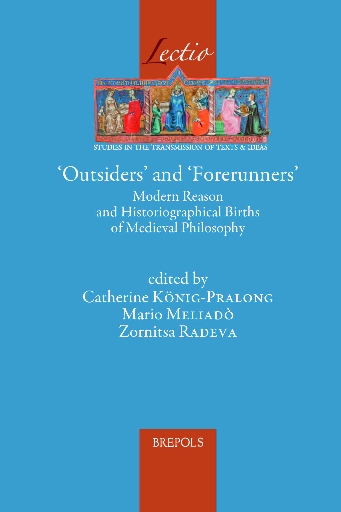
Outsiders and Forerunners
show More to view fulltext, buy and share links for:Outsiders and Forerunners show Less to hide fulltext, buy and share links for: Outsiders and ForerunnersThis book focuses on the emergence and development of philosophical historiography as a university discipline in the 18th and 19th centuries. During that period historians of philosophy evaluated medieval philosophical theories through the lenses of modern leitmotifs and assigned to medieval thinkers positions within an imaginary map of cultural identities based on the juxtaposition of ‘self ’ and ‘other’. Some medieval philosophers were regarded as ‘forerunners’ who had constructively paved the way for modern rationality; whereas others, viewed as ‘outsiders’, had contributed to the same effect by way of their struggle against established forms of philosophy. The contributions gathered in this volume each deal with the creative reception of a particular figure in modern history of philosophy. From the 9th century, with al-Fārābī, to the 16th century, these philosophers belong to four historical worlds which have been characterized by European cultural history or have defined themselves as such: the (Jewish-)Arabic world (al-Fārābī, Avicenna, Maimonides), Latin scholasticism (Roger Bacon, Henry of Ghent, William of Ockham, Marsilius of Padua), medieval lay philosophy (Ramon Lull, Petrarch), and Humanism in a broader sense (Nicholas of Cusa, Petrus Ramus, Andrea Cesalpino).
-
-
-
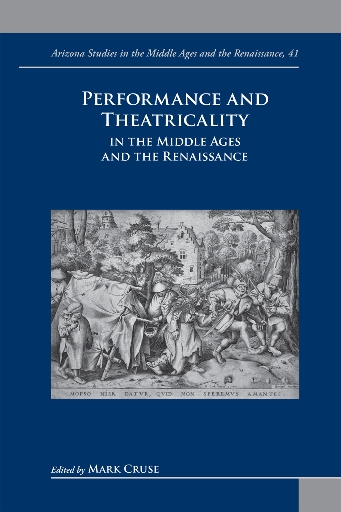
Performance and Theatricality in the Middle Ages and the Renaissance
show More to view fulltext, buy and share links for:Performance and Theatricality in the Middle Ages and the Renaissance show Less to hide fulltext, buy and share links for: Performance and Theatricality in the Middle Ages and the RenaissanceThis volume is a contribution to the cross-cultural study of theater and performance in the Middle Ages and the Renaissance. The studies gathered here examine material from Austria, England, France, Germany, Italy, the Netherlands, Russia, and Spain from the thirteenth to the eighteenth century. Underlying all of these essays is the understanding that performance shapes reality - that in all of the cultural contexts included here, performance opened a space in which patrons, rulers, writers, painters, spectators, and readers could see themselves or their societies differently, and thereby could assume different identities or construct alternative communities. Addressing confession and private devotion, urban theater and pageantry, royal legitimacy and religious debate, and a wide range of genres and media, this volume offers a panoramic mosaic of theater’s world-making role in medieval and early modern European societies.
-
-
-
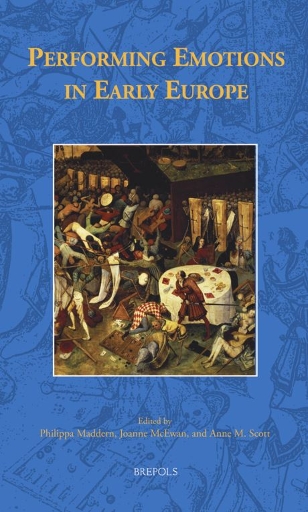
Performing Emotions in Early Europe
show More to view fulltext, buy and share links for:Performing Emotions in Early Europe show Less to hide fulltext, buy and share links for: Performing Emotions in Early EuropeDrawing on a range of interdisciplinary approaches and innovative methodologies, this collection contributes ground-breaking new scholarship in the burgeoning field of emotions studies by examining how medieval and early modern Europeans communicated and ‘performed’ their emotions. Rejecting the notion that emotions are ‘essential’ or ‘natural’, this volume seeks to pay particular attention to cultural understandings of emotion by examining how they were expressed and conveyed in a wide range of historical situations. The contributors investigate the performance and reception of pre-modern emotions in a variety of contexts — in literature, art, and music, as well as through various social and religious performances — and in a variety of time periods ranging from the twelfth to the eighteenth centuries. These studies provide both case-studies of particular emotions and emotional negotiations, and examinations of how their categorisation, interpretation, and meaning has changed over time.
The contributors provide new insights into the expression and performance of pre-modern emotions from a wide range of disciplinary fields, including historical studies, literature, art history, musicology, gender studies, religious studies, and philosophy. Collectively, they theorise the performativity of medieval and early modern emotions and outline a new approach that takes fuller account of the historical specificity and cultural meanings of emotions at particular points in time.
This volume forms a companion to Understanding Emotions in Early Europe, edited by Michael Champion and Andrew Lynch (2015); http://www.brepols.net/Pages/ShowProduct.aspx?prod_id=IS-9782503552644-1
-
-
-
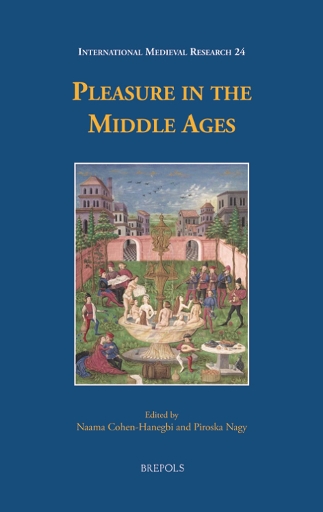
Pleasure in the Middle Ages
show More to view fulltext, buy and share links for:Pleasure in the Middle Ages show Less to hide fulltext, buy and share links for: Pleasure in the Middle AgesThis volume explores the diverse manifestations and uses of pleasure in medieval culture. Pleasure is a sensation, an affirmation, a practice, and is at the core of the medieval worldview, no less than pain.
Applying a variety of methodological perspectives, the essays collected here analyse the role of pleasure in relation to a variety of subjects such as the human body, love, relationships, education, food, friendship, morality, devotion, and mysticism. They also integrate a wide range of sources including literature (monastic to courtly), medical texts, illuminated prayer books, iconography, and theatrical plays.
Each document, each discipline, and thus each essay combine to provide a complex and diversified picture of medieval joys and delights - a picture that shows the extent to which pleasure is engrained in the period’s culture. This collection shows how pleasure in the Middle Ages is at once a coveted feeling and a constant moral concern, both the object and the outcome of a constant negotiation between earthly and divine imperatives.
-
-
-
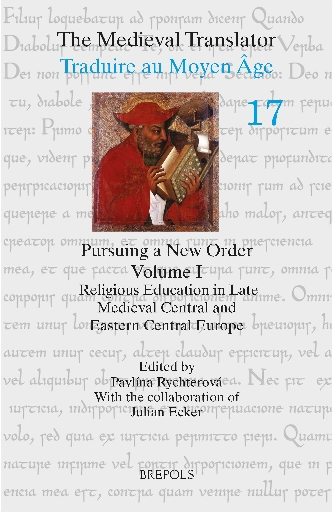
Pursuing a New Order I.
show More to view fulltext, buy and share links for:Pursuing a New Order I. show Less to hide fulltext, buy and share links for: Pursuing a New Order I.Concentrating on the period of the emergence of the vernaculars in the context of religious text production in Central and Eastern Central Europe from the fourteenth to the sixteenth centuries, the individual studies in this volume present material so far neglected by nationally defined historiographies and literary studies. The process of vernacularization created a new sociolinguistic field for the negotiation of social order through the choice of texts and topics. This volume seeks to answer the questions of whether, why and how distinctive new communicative, literary, and political cultures developed after the vernacular languages had acquired ever higher levels of literacy and education. The volume fills a gap in contemporary scholarship on the role of the vernaculars and vernacular literatures in European medieval societies and with the focus on Eastern European regions it breaks new ground in regard to questions that have so far only been explored on the basis of material from Europe’s ‘West’.
-
-
-
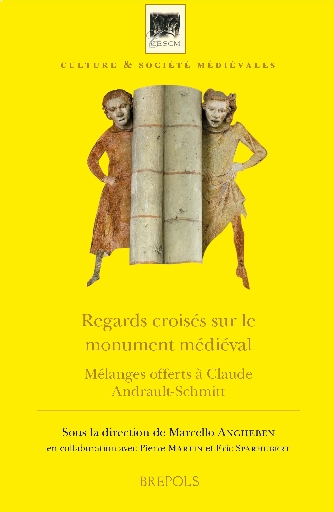
Regards croisés sur le monument médiéval
show More to view fulltext, buy and share links for:Regards croisés sur le monument médiéval show Less to hide fulltext, buy and share links for: Regards croisés sur le monument médiévalClaude Andrault-Schmitt a consacré la majeure partie de sa carrière d’enseignant-chercheur à l’étude des arts de l’ancien duché d’Aquitaine, en accordant un intérêt particulier à l’architecture religieuse. Dans sa démarche intellectuelle, elle s’est constamment interrogée sur les questions d’historiographie, de méthodologie et d’épistémologie, ce qui l’a amenée à défendre plusieurs principes qui lui sont chers : appliquer à l’architecture un vocabulaire adapté aux réalités et aux usages médiévaux, se méfier des idées reçues héritées de l’historiographie et des étiquettes - à commencer par le traditionnel clivage entre le roman et le gothique -, aborder les rapports entre les formes et les différentes fonctions d’une église et rassembler le plus grand nombre de disciplines autour d’un même édifice pour en comprendre toutes les facettes : historiens, archéologues, spécialistes des matériaux, de l’épigraphie, de l’iconographie, musicologues.
À l’occasion de son départ à la retraite, ses collègues et ses élèves ont souhaité lui rendre hommage en lui dédiant trente et une contributions reflétant ces différentes préoccupations, regroupées dans quatre sections intitulées Contextualisations, De l’archéologie monumentale à l’archéologie du bâti, Les ordres réformés et Le décor monumental . Ces contributions forment ensemble un panorama très représentatif de l’état de la recherche actuelle dans ces différents domaines et des orientations encouragées par Claude Andrault-Schmitt, que ce soit dans ses publications ou dans son enseignement.
-
-
-
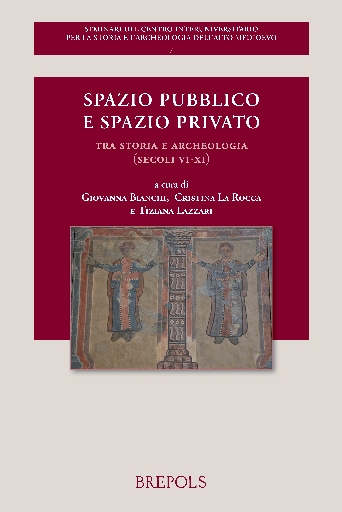
Spazio pubblico e spazio privato
show More to view fulltext, buy and share links for:Spazio pubblico e spazio privato show Less to hide fulltext, buy and share links for: Spazio pubblico e spazio privatoI contributi contenuti nel volume affrontano il tema degli spazi materiali e simbolici, di ambito pubblico e privato, tra Tarda Antichità e Alto Medioevo, attraverso ricerche condotte su fonti scritte e materiali.
Il volume è suddiviso in tre sezioni. La prima, Una nuova dimensione del pubblico e del privato, raccoglie lavori che offrono quadri di insieme ampi, ciascuno su un problema di lunga tradizione storiografica. La seconda sezione, I luoghi del potere e gli spazi privati, accosta ricerche basate sia su fonti scritte sia su fonti archeologiche, per meglio definire gli spazi destinati all’esercizio del potere e quelli relativi alla sfera domestica. Nella terza sezione, Gestione e controllo delle risorse, sono contenuti contributi che, attraverso i dati offerti dalle fonti materiali, riflettono sui sistemi economici in relazione ai regimi proprietari e di sfruttamento delle risorse, alla creazione di riserve, alle forme di produzione destinate sia a una circolazione ristretta sia a una distribuzione di controllo pubblico.
La scelta di tematiche ad ampio raggio ha inteso offrire una riflessione articolata sull’utilità - e sulla possibilità stessa - di applicare la contrapposizione pubblico/privato allo studio degli spazi fisici e simbolici tardo antichi e altomedievali. Il volume, raccogliendo l’insieme delle prospettive di indagine che sul rapporto pubblico/privato si sono sviluppate negli ultimi anni, intende contribuire con nuovi spunti e strumenti di analisi alle future ricerche sul tema.
-
-
-

Supernatural Encounters in Old Norse Literature and Tradition
show More to view fulltext, buy and share links for:Supernatural Encounters in Old Norse Literature and Tradition show Less to hide fulltext, buy and share links for: Supernatural Encounters in Old Norse Literature and TraditionThe Icelandic sagas have long been famous for their alleged realism, and within this conventional view, references to the supernatural have often been treated as anomalies. Yet, as this volume demonstrates, such elements were in fact an important part of Old Norse literature and tradition, and their study can provide new and intriguing insights into the world-view of the medieval Icelanders.
By providing an extensive and interdisciplinary treatment of the supernatural within sagas, the eleven chapters presented here seek to explore the literary and folkloric interface between the natural and the supernatural through a study of previously neglected texts (such as Bergbúa þáttr, Selkollu þáttr, and Illuga saga Gríðarfóstra), as well as examining genres that are sometimes overlooked (including fornaldarsögur and byskupa sögur), law codes, and learned translations. Contributors including Ármann Jakobsson, Margaret Cormack, Jan Ragnar Hagland, and Bengt af Klintberg explore how the supernatural was depicted within saga literature and how it should be understood, as well as questioning the origins of such material and investigating the parallels between saga motifs and broader folkloric beliefs. In doing so, this volume also raises important questions about the established boundaries between different saga genres and challenges the way these texts have traditionally been approached.
-
-
-
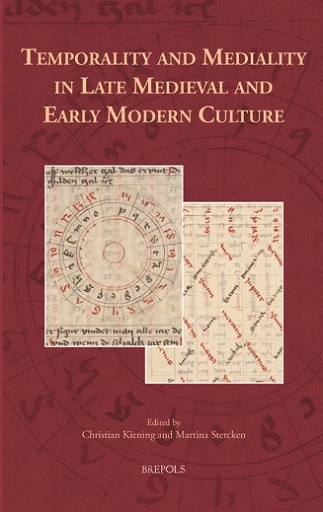
Temporality and Mediality in Late Medieval and Early Modern Culture
show More to view fulltext, buy and share links for:Temporality and Mediality in Late Medieval and Early Modern Culture show Less to hide fulltext, buy and share links for: Temporality and Mediality in Late Medieval and Early Modern CultureThis interdisciplinary volume explores the ways in which time is staged at the threshold between the Middle Ages and the early modern period. Proceeding from the reality that all cultural forms are inherently and inescapably temporal, it seeks to discover the significance of time in mediations and communications of all kinds.
By showing how time is displayed in diverse cultural strategies and situations, the essays of this volume show how time is intrinsic to the very concept of tradition. In exploring a variety of medial forms and communicative practices, they also reveal that while the beginning of the age of printing (around 1500) may mark a fundamental change in terms of reproduction and circulation, artefacts and other historical traditions continue to employ earlier systems and practices relating time and space.
The volume features articles by leading researchers in their respective fields, including studies on mosaics as a medium reflecting space and time; the triptych’s potential as a time machine; winged altarpieces mediating eternity; texts and images of the passion of Christ permeating past, present, and future; dimensions of time embedded in maps; a compendium of world knowledge organized by forms of time and temporality; the figuration of prophecy in times of crisis; the portrayal of time in architecture.
The volume thus provides a new approach to media and mediality from the perspective of cultural history.
-
-
-
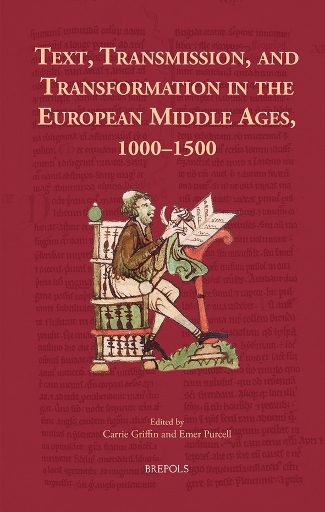
Text, Transmission, and Transformation in the European Middle Ages, 1000–1500
show More to view fulltext, buy and share links for:Text, Transmission, and Transformation in the European Middle Ages, 1000–1500 show Less to hide fulltext, buy and share links for: Text, Transmission, and Transformation in the European Middle Ages, 1000–1500These essays are concerned primarily with the different ways in which European writers, translators, and readers engaged with texts and concepts, and with the movement and exchange of those texts and ideas across boundaries and geographical spaces. It brings together new research on Anglophone and Latinate writings, as well as on other vernaculars, among them Old Norse, Anglo-Saxon, Medieval Irish, Welsh, Arabic, Middle Dutch, Middle German, French, and Italian, including texts and ideas that are experienced in aural and oral contexts, such as in music and song. Texts are examined not in isolation but in direct relation and as responses to wider European culture; several of the contributions theorize the translation of works, for example, those relating to spiritual instruction and prayer, into other languages and new contexts.
The essayists share a common concern, then, with the transmission and translation of texts, examining what happens to material when it moves into contexts other than the one in which it was produced; the influence that scribes, translators, and readers have on textual materiality and also on reception; and the intermingling different textual traditions and genres. Thus they foreground the variety and mobility of textual cultures of the Middle Ages in Europe, both locally and nationally, and speak to the profound connections and synergies between peoples and nations traceable in the movement and interpretation of texts, versions, and ideas. Together the essays reconstruct an outward-looking, networked, and engaged Europe in which people used texts in order to communicate, discover, and explore, as well as to record and preserve.
-
-
-
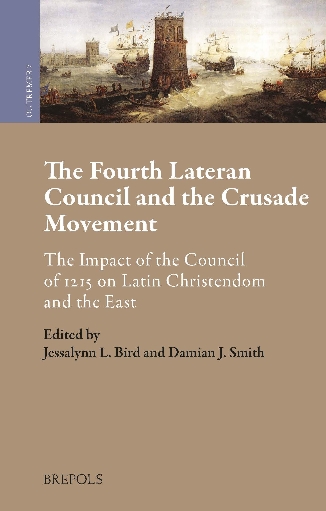
The Fourth Lateran Council and the Crusade Movement
show More to view fulltext, buy and share links for:The Fourth Lateran Council and the Crusade Movement show Less to hide fulltext, buy and share links for: The Fourth Lateran Council and the Crusade MovementThe Fourth Lateran Council of 1215 is often considered as the high water-mark for the medieval church with its decisions affecting the cultural, social, religious and intellectual history of the later medieval world. The council was also a major event in the history of the crusades not only because the reform of the church and the recovery of the Holy Land were the central concerns of Pope Innocent III (1198-1216) but also because at the time of the council political decisions were made which affected all theatres of crusading and the canons of the council dealt with issues concerning piety and economics which had very long-term implications for the crusading movement. This book, bringing together an international team of scholars, is the first to deal with Fourth Lateran and the crusades in entirety and argues for the centrality of the council in the history of the crusades. It will be of interest not only to scholars of the history of the crusades but also to those interested in the history of the religious life of the Middle Ages as well to students of the particular areas and themes under discussion.
-
-
-

The Idea of the Gothic Cathedral
show More to view fulltext, buy and share links for:The Idea of the Gothic Cathedral show Less to hide fulltext, buy and share links for: The Idea of the Gothic CathedralCentral to many medieval ritual traditions both sacred and secular, the Gothic cathedral holds a privileged place within the European cultural imagination and experience. Due to the burgeoning historical interest in the medieval past, in connection with the medieval revival in literature, visual arts, and architecture that began in the late seventeenth century and culminated in the nineteenth, the Gothic cathedral took centre stage in numerous ideological discourses. These discourses imposed contemporary political and aesthetic connotations upon the cathedral that were often far removed from its original meaning and ritual use.
This volume presents interdisciplinary perspectives on the resignification of the Gothic cathedral in the post-medieval period. Its contributors, literary scholars and historians of art and architecture, investigate the dynamics of national and cultural movements that turned Gothic cathedrals into symbols of the modern nation-state, highlight the political uses of the edifice in literature and the arts, and underscore the importance of subjectivity in literary and visual representations of Gothic architecture. Contributing to scholarship in historiography, cultural history, intermedial and interdisciplinary studies, as well as traditional disciplines, the volume resonates with wider perspectives, especially relating to the reuse of artefacts to serve particular ideological ends.
-
-
-
Towards the Authority of Vesalius
show More to view fulltext, buy and share links for:Towards the Authority of Vesalius show Less to hide fulltext, buy and share links for: Towards the Authority of VesaliusThe authority of Andreas Vesalius (1514-1564) in reviving human anatomy is without any doubt a landmark in the history of science. Yet his breakthrough was inconceivable without his predecessors’ works. Moreover, later on, his own legacy would not remain untouched or undisputed. The question of scientific authority is not new; however it has hardly been tackled in a multidisciplinary and diachronic way. This volume brings together contributions from international scholars working in the field of theology, art history, philosophy, history of science and historical linguistics. Its goal is to contextualize and analyse the complex interaction between dogma and authority on the one hand and empirical progress on the other, both in the development of anatomy and the views on the human body, mainly before Vesalius’s time. Indeed, it is not the volume’s aim to focus exclusively on the role of Vesalius nor to assess the concept of medical and anatomical authority in a comprehensive way. Avoiding to repeat insights from the history of science as such, it intends to put old views to the test, and to bring up new questions and answers from diverse perspectives concerning the work of Vesalius and his predecessors and successors, by presenting different case studies from Antiquity to the Early Modern Times.
-
-
-
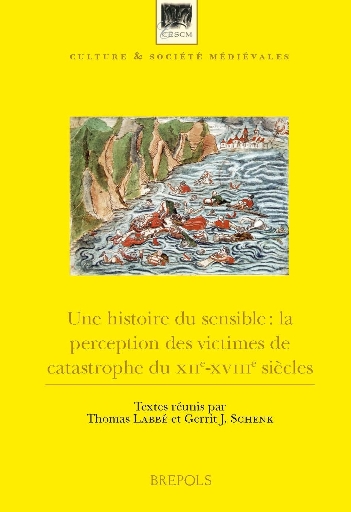
Une histoire du sensible : la perception des victimes de catastrophe du xii e au xviii e siècle
show More to view fulltext, buy and share links for:Une histoire du sensible : la perception des victimes de catastrophe du xii e au xviii e siècle show Less to hide fulltext, buy and share links for: Une histoire du sensible : la perception des victimes de catastrophe du xii e au xviii e siècleCet ouvrage se propose de réfléchir à la construction historique de la condition de victime, en relation avec les événements traumatiques dans l'Europe médiévale et moderne. Dans le contexte contemporain, le discours et la gestion des situations de catastrophe ou de mort de masse s'organisent en priorité autour de la place des victimes dans la fabrique événementielle. Cette attitude de la société contemporaine face à la dévastation, qualifiée tantôt de « compassionnelle », tantôt « d'humanitaire », ou bien encore de « tragique », reflète une forme de sensibilité qui définit en premier lieu la réalité catastrophique comme un drame.
Une telle approche de la souffrance possède-t-elle cependant une histoire ou constitue-t-elle une constante anthropologique de la société occidentale ? Quel regard les sociétés médiévales et modernes ont-elles posé sur cet aspect autant éthique que social du réel ? Les essais réunis dans ce volume proposent d'offrir quelques pistes de réflexion. À la lecture ambiguë de la victime au Moyen Âge, entre souffrance et responsabilité, la Renaissance semble commencer à proposer une vision plus « tragique » des individus souffrants. Les victimes peuvent dès lors entrer progressivement dans une politique des émotions qui triomphe au xviii e siècle.
-
-
-
Victorine Christology
show More to view fulltext, buy and share links for:Victorine Christology show Less to hide fulltext, buy and share links for: Victorine ChristologyThe Canons following the Rule of St Augustine at St Victor in Paris were some of the most influential religious writers of the Middle Ages. They combined exegesis and spiritual teaching in a theology that was deeply rooted in tradition but also attuned to current developments in the schools of Paris. The importance of Victorine Christology in this great age of theological speculation is unquestionable. The writings translated in this volume cover the foundational and maturing periods of Victorine Christology during the 1130s to the 1150s when Hugh of St Victor championed the paradigm of the “assumed man” (homo assumptus) and Robert of Melun advanced his Christology into the most comprehensive treatment in the twelfth century.
-
-
-
Visions of North in Premodern Europe
show More to view fulltext, buy and share links for:Visions of North in Premodern Europe show Less to hide fulltext, buy and share links for: Visions of North in Premodern EuropeThe North has long attracted attention, not simply as a circumpolar geographical location, but also as an ideological space, a place that is ‘made’ through the understanding, imagination, and interactions of both insiders and outsiders. The envisioning of the North brings it into being, and it is from this starting point that this volume explores how the North was perceived from ancient times up to the early modern period, questioning who, where, and what was defined as North over the course of two millennia.
Covering historical periods as diverse as Ancient Greece to eighteenth-century France, and drawing on a variety of disciplines including cultural history, literary studies, art history, environmental history, and the history of science, the contributions gathered here combine to shed light on one key question: how was the North constructed as a place and a people? Material such as sagas, the ethnographic work of Olaus Magnus, religious writing, maps, medical texts, and illustrations are drawn on throughout the volume, offering important insights into how these key sources continued to be used over time. Selected texts have been compiled into a useful appendix that will be of considerable value to scholars.
-
-
-
Late Antique Calendrical Thought and its Reception in the Early Middle Ages
show More to view fulltext, buy and share links for:Late Antique Calendrical Thought and its Reception in the Early Middle Ages show Less to hide fulltext, buy and share links for: Late Antique Calendrical Thought and its Reception in the Early Middle AgesLate antique and early medieval science is commonly defined by the quadrivium, the four subjects of the seven liberal arts relating to natural science: astronomy, geometry, arithmetic, and music. The seven-fold division of learning was designed in Late Antiquity by authors such as Martianus Capella, and these authors were studied intensively from the Carolingian age onwards. Because these subjects still have currency today, this leads to the anachronistic view that the artes dominated intellectual thought in Late Antiquity and the early Middle Ages.
Quite the contrary, the artes were an idealized curriculum with limited application in practice. Certainly, the artes do not help in our understanding of the intellectual endeavour between the early fifth and the late eighth centuries. This period was dominated by computus, a calendrical science with the calculation of Easter at its core. Only computus provides a traceable continuation of scientific thought from Late Antiquity to the early Middle Ages. The key questions were the mathematical modeling of the course of the sun through the zodiac (the Julian calendar) and of the moon phases (in various lunar calendars).
This volume highlights key episodes in the transmission of calendrical ideas in this crucial period, and therewith helps explaining the transformation of intellectual culture into its new medieval Christian setting.
-
-
-
The Annotated Book in the Early Middle Ages
show More to view fulltext, buy and share links for:The Annotated Book in the Early Middle Ages show Less to hide fulltext, buy and share links for: The Annotated Book in the Early Middle AgesAnnotations in modern books are a phenomenon that often causes disapproval: we are not supposed to draw, doodle, underline, or highlight in our books. In many medieval manuscripts, however, the pages are filled with annotations around the text and in-between the lines. In some cases, a ‘white space’ around the text is even laid out to contain extra text, pricked and ruled for the purpose. Just as footnotes are an approved and standard part of the modern academic book, so the flyleaves, margins, and interlinear spaces of many medieval manuscripts are an invitation to add extra text.
This volume focuses on annotation in the early medieval period. In treating manuscripts as mirrors of the medieval minds who created them - reflecting their interests, their choices, their practices - the essays explore a number of key topics. Are there certain genres in which the making of annotations seems to be more appropriate or common than in others? Are there genres in which annotating is ‘not done’? Are there certain monastic centres in which annotating practices flourish, and from which they spread?
The volume investigates whether early medieval annotators used specific techniques, perhaps identifiable with their scribal communities or schools. It explores what annotators actually sought to accomplish with their annotations, and how the techniques of annotating developed over time and per region.
-
-
-
Toward a Historical Sociolinguistic Poetics of Medieval Greek
show More to view fulltext, buy and share links for:Toward a Historical Sociolinguistic Poetics of Medieval Greek show Less to hide fulltext, buy and share links for: Toward a Historical Sociolinguistic Poetics of Medieval GreekHow can historical sociolinguistic analyses of Medieval Greek aid in the interpretation of Medieval Greek texts? This is the main question addressed by the papers collected in this volume. Historical sociolinguistics (HSL) is a discipline that combines linguistic, social, historical, and philological sciences, and suggests that a language cannot be studied apart from its social dimension. Similarly, the study of a language in its social dimension is nothing else than the study of communication between members of a given speech community by the means of written texts, the shared “signs” used by authors to communicate with their audiences.
This volume is divided into two parts. In the first, Cuomo’s and Bentein’s papers aim to offer an overview of the discipline and examples of applied HSL. Valente’s, Bianconi’s, and Pérez-Martín’s papers show how the context of production and reception of Byzantine texts should be studied. These are followed by Horrocks’ study on some features of Atticized Medieval Greek. In the second part, the contributions by Telelis, Odorico, and Manolova focus on the context of reception of texts by Georgios Pachymeres, Theodoros Pediasimos, and Nikephoros Gregoras respectively.
-