


BOB2020MIOT

Collection Contents
3 results
-
-
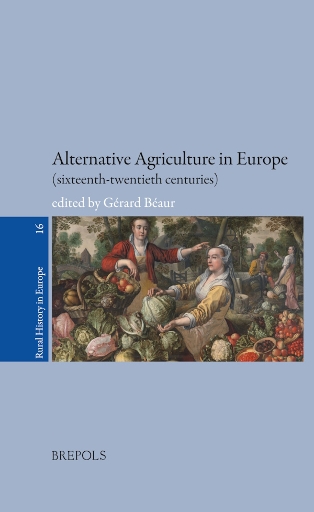
Alternative Agriculture in Europe (sixteenth-twentieth centuries)
show More to view fulltext, buy and share links for:Alternative Agriculture in Europe (sixteenth-twentieth centuries) show Less to hide fulltext, buy and share links for: Alternative Agriculture in Europe (sixteenth-twentieth centuries)The treatment of long-term agricultural transformation remains a lively topic for historians. Much debate arose when agricultural development patterns were discovered that did without a dominant, production-oriented cereal crop, even when it was accompanied by livestock farming. Joan Thirsk hoped to conclude this debate by putting forward the hypothesis that such “alternative agriculture” was the farmers’ way of responding to the difficulties caused by periods of low agricultural prices. This theory stirred up controversy and arguments both for and against.
The contributions to this volume take this hypothesis seriously and attempt to assess its validity. Examining a large number of “alternative agricultures” over the long term, from the fifteenth to the twentieth century, they discuss the issues encountered in tracing the links between the spread of alternative crops, such as fruits and vegetables, flowers, and industrial crops, and the general economic environment, across a vast swathe of territory stretching from Flanders to Spain and from France, through Italy and Switzerland, as far as Russia.
-
-
-
Anthropology of Roman Housing
show More to view fulltext, buy and share links for:Anthropology of Roman Housing show Less to hide fulltext, buy and share links for: Anthropology of Roman HousingAt a time when we reflect intensively on the issue of social cohesion, on the influence of architecture in lifestyles, and on relationships between neighbourhoods within large modern cities, this book aims to approach the study of "inhabiting modes" in Roman urban dwellings. Drawing on concepts common to historical anthropology and incorporating evidence from multiple lines of research (archaeological, iconographic, textual, and others), this volume aims to contribute to the invigoration of a social history of ancient housing through new research projects, publications, and digital tools from both individual and collaborative efforts. This field of study is currently undergoing a period of disciplinary revitalization and this volume is an opportunity to present the most recent work and to conduct a dialogue in an interdisciplinary perspective.
-
-
-
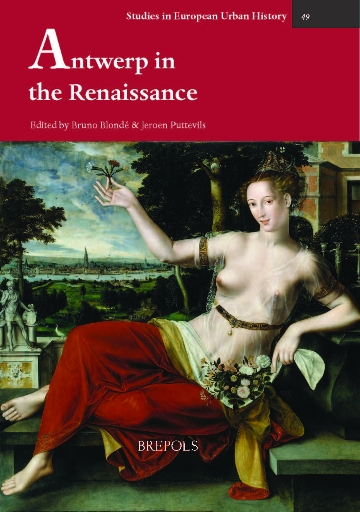
Antwerp in the Renaissance
show More to view fulltext, buy and share links for:Antwerp in the Renaissance show Less to hide fulltext, buy and share links for: Antwerp in the RenaissanceThis book engages with Antwerp in the Renaissance. Bringing together several specialists of sixteenth-century Antwerp, it offers new research results and fresh perspectives on the economic, cultural and social history of the metropolis in the sixteenth century. Recurrent themes are the creative ways in which the Italian renaissance was translated in the Antwerp context. Imperfect imitation often resulted from the specific social context in which the renaissance was translated: Antwerp was a metropolis marked by a strong commercial ideology, a high level affluence and social inequality, but also by the presence of large and strong middling layers, which contributed to the city’s ‘bourgeois’ character. The growth of the Antwerp market was remarkable: in no time the city gained metropolitan status. This book does a good job in showing how quite a few of the Antwerp ‘achievements’ did result from the absence of ‘existing structures’ and ‘examples’. Moreover, the city and its culture were given shape by the many frictions, and uncertainties that came along with rapid urban growth and religious turmoil.
-