


BOB2020MIOT

Collection Contents
1 - 20 of 26 results
-
-
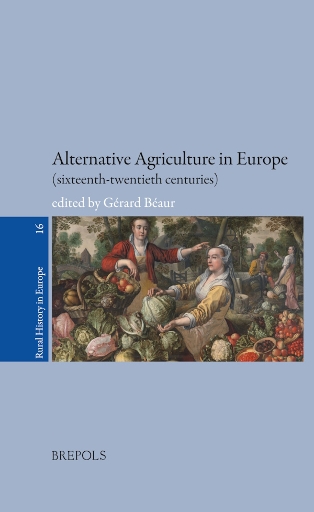
Alternative Agriculture in Europe (sixteenth-twentieth centuries)
show More to view fulltext, buy and share links for:Alternative Agriculture in Europe (sixteenth-twentieth centuries) show Less to hide fulltext, buy and share links for: Alternative Agriculture in Europe (sixteenth-twentieth centuries)The treatment of long-term agricultural transformation remains a lively topic for historians. Much debate arose when agricultural development patterns were discovered that did without a dominant, production-oriented cereal crop, even when it was accompanied by livestock farming. Joan Thirsk hoped to conclude this debate by putting forward the hypothesis that such “alternative agriculture” was the farmers’ way of responding to the difficulties caused by periods of low agricultural prices. This theory stirred up controversy and arguments both for and against.
The contributions to this volume take this hypothesis seriously and attempt to assess its validity. Examining a large number of “alternative agricultures” over the long term, from the fifteenth to the twentieth century, they discuss the issues encountered in tracing the links between the spread of alternative crops, such as fruits and vegetables, flowers, and industrial crops, and the general economic environment, across a vast swathe of territory stretching from Flanders to Spain and from France, through Italy and Switzerland, as far as Russia.
-
-
-
Anthropology of Roman Housing
show More to view fulltext, buy and share links for:Anthropology of Roman Housing show Less to hide fulltext, buy and share links for: Anthropology of Roman HousingAt a time when we reflect intensively on the issue of social cohesion, on the influence of architecture in lifestyles, and on relationships between neighbourhoods within large modern cities, this book aims to approach the study of "inhabiting modes" in Roman urban dwellings. Drawing on concepts common to historical anthropology and incorporating evidence from multiple lines of research (archaeological, iconographic, textual, and others), this volume aims to contribute to the invigoration of a social history of ancient housing through new research projects, publications, and digital tools from both individual and collaborative efforts. This field of study is currently undergoing a period of disciplinary revitalization and this volume is an opportunity to present the most recent work and to conduct a dialogue in an interdisciplinary perspective.
-
-
-
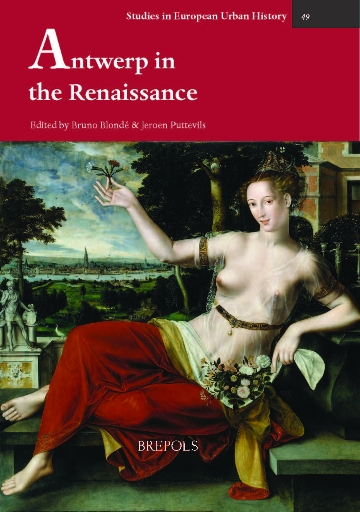
Antwerp in the Renaissance
show More to view fulltext, buy and share links for:Antwerp in the Renaissance show Less to hide fulltext, buy and share links for: Antwerp in the RenaissanceThis book engages with Antwerp in the Renaissance. Bringing together several specialists of sixteenth-century Antwerp, it offers new research results and fresh perspectives on the economic, cultural and social history of the metropolis in the sixteenth century. Recurrent themes are the creative ways in which the Italian renaissance was translated in the Antwerp context. Imperfect imitation often resulted from the specific social context in which the renaissance was translated: Antwerp was a metropolis marked by a strong commercial ideology, a high level affluence and social inequality, but also by the presence of large and strong middling layers, which contributed to the city’s ‘bourgeois’ character. The growth of the Antwerp market was remarkable: in no time the city gained metropolitan status. This book does a good job in showing how quite a few of the Antwerp ‘achievements’ did result from the absence of ‘existing structures’ and ‘examples’. Moreover, the city and its culture were given shape by the many frictions, and uncertainties that came along with rapid urban growth and religious turmoil.
-
-
-
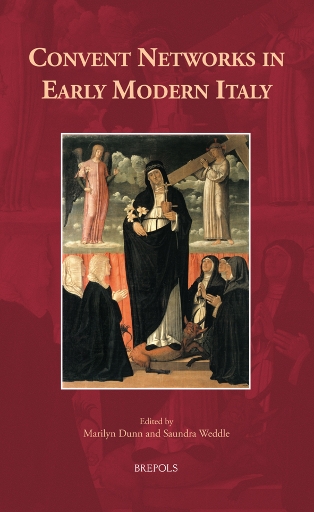
Convent Networks in Early Modern Italy
show More to view fulltext, buy and share links for:Convent Networks in Early Modern Italy show Less to hide fulltext, buy and share links for: Convent Networks in Early Modern ItalyThe walls of early modern convents suggested the existence of absolute conditions that seldom existed in reality. While the built enclosure communicated the convent’s isolation from the world outside, connections between women religious and individuals or groups outside their communities extended into and from these houses, with each constituency exploiting these associations to serve its own aims.Likewise, the walls conveyed the presence of a homogeneous and unified community where, often, differences in status, power, and other interests led to the development of internal alliances and factions.
Building on an upsurge of scholarly interest in convent networks that previously has not been focused in a single volume, this collection of interdisciplinary essays examines how and why such associations existed. The collection examines personal, spatial, and temporal networks that emerged in, among, and beyond convents in Italy during the early modern period. These ties were established, cultivated, or even rejected in a variety of ways that influenced nuns’ devotional lives, their relationships with patrons, and their cultural engagement and production.
These essays cover the time period before and after the Council of Trent, permitting an analysis of convents’ responses to changing power dynamics, both inside and outside the enclosure. The book also engages a broad geographical and cultural range, with chapters focusing on the centres of Florence, Venice, and Rome, the courts of Urbino, Ferrara, and Mantua, and smaller cities across Northern Italy, offering unprecedented insights into early modern Italian convent life and its varied forms and modes of expression.
-
-
-

De canonicis qui seculares dicuntur
show More to view fulltext, buy and share links for:De canonicis qui seculares dicuntur show Less to hide fulltext, buy and share links for: De canonicis qui seculares dicunturÀ la veille de la révolution française, le territoire de l’actuelle Belgique comptait près de quatre-vingt communautés de chanoines séculiers, dont cinq communautés féminines. En dépit de cette densité extrêmement élevée par rapport aux autres pays et malgré la richesse de leurs archives, les chapitres de chanoines séculiers sont jusqu’à présent éclipsés dans l’historiographie par les établissements monastiques et les communautés de chanoines réguliers. Comparés à ces formes de vie religieuse mieux connues, les collèges de chanoines séculiers, dont la principale mission était l’office choral, souffrent d’une méconnaissance prolongée jusqu’à nos jours. Il s’agissait pourtant d’institutions complexes et très diverses. La flexibilité avec laquelle les chapitres séculiers se sont adaptés aux évolutions sociétales pendant le Moyen Âge et l’époque moderne est surprenante et explique la diversification de ces établissements qui présentent de nombreuses spécificités locales. Le présent recueil veut contribuer à une meilleure connaissance et compréhension de ces oubliés de l'histoire, en présentant un aperçu des recherches récentes en Belgique et aux Pays-Bas. Les contributions offrent des aperçus synthétiques des évolutions dans une région et durant une période données, mais aussi des études de cas avec des analyses plus détaillées de l’histoire d’un établissement ou d’une certaine thématique. La diversité des approches permet de présenter un panorama très large, allant du Haut Moyen Âge jusqu’au XXe siècle, qui reflète l’hétérogénéité et la flexibilité de la vie des chanoines et chanoinesses séculiers.
-
-
-
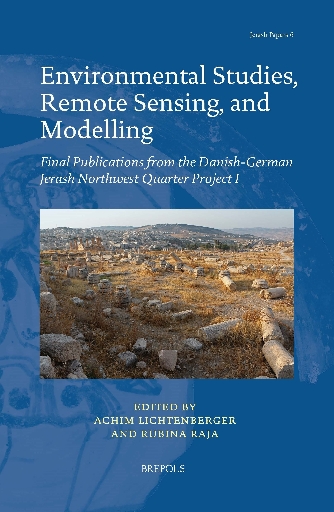
Environmental Studies, Remote Sensing, and Modelling
show More to view fulltext, buy and share links for:Environmental Studies, Remote Sensing, and Modelling show Less to hide fulltext, buy and share links for: Environmental Studies, Remote Sensing, and ModellingThe Decapolis city of Jerash has long attracted attention from travellers and scholars, due both to the longevity of the site and the remarkable finds uncovered during successive phases of excavation that have taken place from 1902 onwards. Between 2011 and 2016, a Danish-German team, led by the universities of Aarhus and Münster, focused their attention on the Northwest Quarter of Jerash - the highest point within the walled city - and this volume is the first in a series of books presenting the team’s final results.
Covering different themes and categories of finds, this volume focuses on the geophysical survey and other remote-sensing work undertaken in and around the Northwest Quarter, and also presents an in-depth discussion of the environmental studies performed at the site. This includes the geoscientific analysis carried out in various contexts, as well as radiocarbon dating, studies of both human and animal bones, and conclusions drawn from the archaeobotanical research.
-
-
-
Falsifications and Authority in Antiquity, the Middle Ages and the Renaissance
show More to view fulltext, buy and share links for:Falsifications and Authority in Antiquity, the Middle Ages and the Renaissance show Less to hide fulltext, buy and share links for: Falsifications and Authority in Antiquity, the Middle Ages and the RenaissanceConfronted with the shifting idea of the authority of a text and its transmission and reception in a variety of genres, settings and contexts, this collective volume envisages to enlarge and deepen our understanding of these notions by tangling literary forgery and emulation. Authority and authoritative literary productions provoke all kinds of interest and emulation. Hermeneutical techniques, detailed exegesis and historical critique are invoked to put authority, and indeed also possible falsifications, to the test. Scholars from various disciplines working on texts, either authoritative or forged, and stemming from different periods of time, reflect on these topics on a methodological basis and from a hermeneutical entrance. In doing so, a threefold axis for questioning the phenomenon is proposed, namely the motif of falsification, the mechanism or technique applied, and the direct or indirect effect of this fraud.
-
-
-
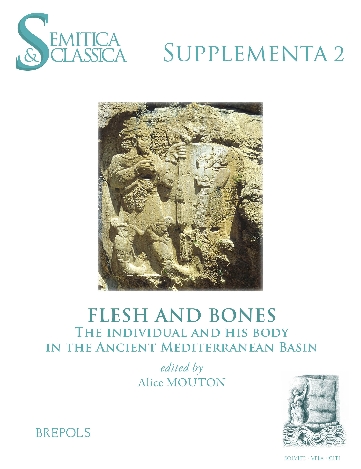
Flesh and Bones
show More to view fulltext, buy and share links for:Flesh and Bones show Less to hide fulltext, buy and share links for: Flesh and BonesThis volume gathers the papers presented during an interdisciplinary research seminar entitled “The individual and his body in the Ancient Mediterranean Basin.” This seminar was at the crossroads of history of religions and social anthropology, creating a dialogue between philologists, archaeologists, historians of religions and anthropologists. Its main aim consisted in studying self-perceptions of the body in the Ancient Near East, with incursions in other parts of the Mediterranean Basin in a comparatist perspective. In this volume, various themes are examined, such as: 1) the relationship between the body and language; 2) the body, perceptions and society, including a study of the senses as they are described in the texts; 3) the body as a symbol of social belonging; 4) the body as a medium for religious experience.
-
-
-
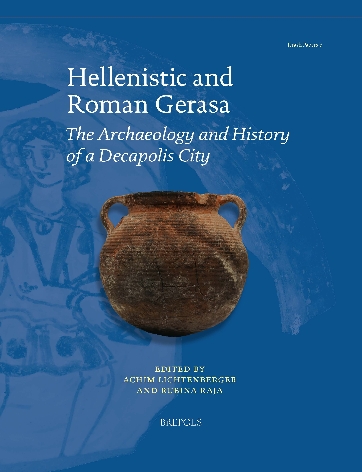
Hellenistic and Roman Gerasa
show More to view fulltext, buy and share links for:Hellenistic and Roman Gerasa show Less to hide fulltext, buy and share links for: Hellenistic and Roman GerasaThe Graeco-Roman Decapolis city of Gerasa was a flourishing centre of population from the Late Hellenistic up to the Early Islamic period. It was also home to a vibrant ceramics industry. Kilns found throughout the city, with a concentration in the Hippodrome, suggest that Gerasa was in fact a mass-production centre in the Decapolis region over a number of centuries, manufacturing a vast array of material to suit the changing needs of daily life.
Drawing on finds yielded during excavations by the Danish-German Northwest Quarter Project and other archaeological projects, as well as the research undertaken within the Ceramics in Context project, this volume evaluates the pottery from Gerasa produced in the Late Hellenistic and Roman periods. Typology, development over time, and variations in the Gerasene pottery are explored, and rare examples of imported material are analysed in order to shed light both on the inner workings of the city, and on the networks that extended beyond Gerasa’s walls. The contributions gathered here examine the archaeology and history of Gerasa and assess ceramic remains alongside other finds from both the city and neighbouring urban centres. In doing so, they seek to contextualize this material in a broader cultural and historical context, and to improve our understanding of consumption, trading, and networks in the wider Decapolis area.
-
-
-
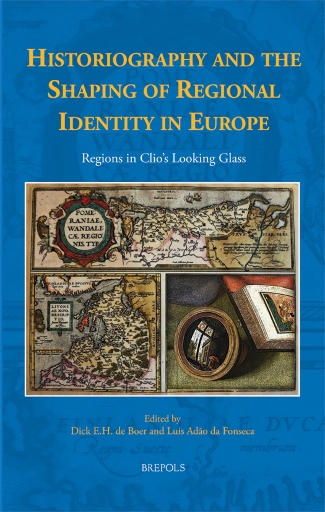
Historiography and the Shaping of Regional Identity in Europe
show More to view fulltext, buy and share links for:Historiography and the Shaping of Regional Identity in Europe show Less to hide fulltext, buy and share links for: Historiography and the Shaping of Regional Identity in EuropeOver the centuries, historiography - in many different forms - became an important vehicle by which to create, articulate, and express the existence, awareness, and characteristics of Europe’s regions. Be it the histories of noble families that were important stakeholders in a region, urban histories describing the developing urban networks through which regions could function, dynastic histories emphasizing the relationship between ruler and region, or hagiographies describing holy men and women and their veneration as focal points within regions - all of them represented and reflected identities within an understood spatial and or mental sphere. Historiography can therefore help us to understand the way in which regions were seen from within and from without, and to understand the patterns and dynamics of regional cohesion. Moreover, it sheds light on the dialectic between nation and region, and on the relationship between the regional sphere and the wider (inter)national sphere.
The authors of this volume look at individual European regions from different points of view, using historiography as a lens. They analyse the ways in which history as a construct has played a role in establishing regional identity, providing examples of the ways in which recording, interpreting, and recounting the history of regions through the ages has been instrumental in shaping these regions. The first section of the volume explores regional identity in medieval and early modern historiography; the second shows how, in the age of the invention and triumph of the European nation-state (the long nineteenth century), historiography of a new kind was applied for a deliberate creation of regional identity, or at least reflected the need for a historical confirmation of identities.
-
-
-
I generi letterari in Properzio: modelli e fortuna
show More to view fulltext, buy and share links for:I generi letterari in Properzio: modelli e fortuna show Less to hide fulltext, buy and share links for: I generi letterari in Properzio: modelli e fortunaTra Omero e Virgilio, passando attraverso la tragedia, l'epos enniano, l'epigramma e il registro epigrafico, la tradizione etiologica e didascalica e la formularità giuridica, la silloge properziana guadagna grazie a questo XXII Convegno una nuova primazia nel macrotesto augusteo. La sua poetica appare meno rettilinea, ma più dialogante, alla ricerca di una via per uscire dalla gabbia dello stereotipo erotico: e se non così 'difficile' come in passato risulta la sua adesione alle direttive augustee, più ricca appare la strumentazione posta in atto da Properzio per nutrire la propria vocazione, per cercare una strada autonoma: far risuonare nella propria la voce virgiliana ma con un mutato orientamento, una nuova discorsività. Del resto, dobbiamo prepararci a pensare in termini rinnovati o perlomeno più definiti lo stesso personaggio Properzio: un Sesto Properzio finanzia in età augustea o giulio-claudia la costruzione in Assisi di un teatro probabilmente legato alla Domus Musae. Così, la prosopografia properziana si profila strettamente intrecciata alla storia della letteratura di età imperiale, e può gettare luce anche sui possibili consumatori di poesia elegiaca.
-
-
-
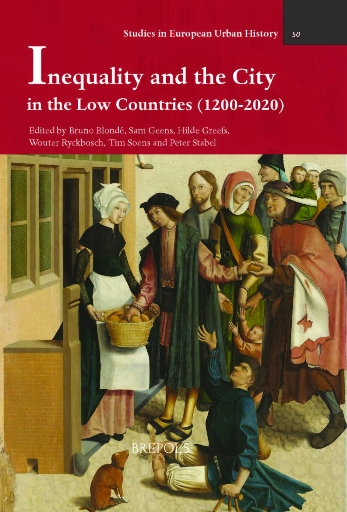
Inequality and the City in the Low Countries (1200-2020)
show More to view fulltext, buy and share links for:Inequality and the City in the Low Countries (1200-2020) show Less to hide fulltext, buy and share links for: Inequality and the City in the Low Countries (1200-2020)Social inequality is one of the most pressing global challenges at the start of the 21st century. Meanwhile, across the globe at least half of the world’s population lives in urban agglomerations, and urbanisation is still expanding. This book engages with the complex interplay between urbanisation and inequality. In doing so it concentrates on the Low Countries, one of the oldest and most urbanised societies of Europe. It questions whether the historic poly-nuclear and decentralised urban system of the Low Countries contributed to specific outcomes in social inequality. In doing so, the authors look beyond the most commonly used perspective of economic inequality. They instead expand our knowledge by exploring social inequality from a multidimensional perspective. This book includes essays and case-studies on cultural inequalities, the relationship between social and consumption inequality, the politics of (in)equality, the impact of shocks and crises, as well as the complex social relationships across the urban network and between town and countryside.
-
-
-

Introduction générale à la philosophie chez les commentateurs néoplatoniciens
show More to view fulltext, buy and share links for:Introduction générale à la philosophie chez les commentateurs néoplatoniciens show Less to hide fulltext, buy and share links for: Introduction générale à la philosophie chez les commentateurs néoplatoniciensLes prolégomènes à la philosophie a été le tout premier ouvrage abordé par les étudiants en philosophie dans l’Antiquité tardive. Cette œuvre, à caractère propédeutique et déclinée en plusieurs versions au fil des générations, nous donne un bon aperçu du raffinement pédagogique qui était alors en usage dans l’école néoplatonicienne. Les définitions et les divisions de la philosophie qu’on y lisait avaient pour but de donner un avant-goût du cursus philosophique et de l’orientation exégétique adoptée par l’enseignant. Cette littérature isagogique dont l’influence s’est étendue jusqu’aux sphères culturelles de langue arabe et syriaque, reste encore le « parent pauvre » des études néoplatoniciennes, alors qu’elle renferme encore des aspects méconnus qui demandent à être élucidées et approfondis. Ce volume, qui réunit cinq contributions, vise donc à clarifier certaines questions clés susceptibles d’apporter un éclairage nouveau sur la naissance, l’évolution et la diffusion de cette œuvre représentative du savoir-faire pédagogique de l’Antiquité tardive.
-
-
-
La Vulgate au XVIe siècle
show More to view fulltext, buy and share links for:La Vulgate au XVIe siècle show Less to hide fulltext, buy and share links for: La Vulgate au XVIe siècleLa traduction latine de la Bible faite en grande partie par Jérôme à la fin du IVe siècle et au début du Ve et à laquelle on devait donner le nom de Vulgate s’impose en Occident dès le haut moyen âge comme texte autoritatif. Sans cesse recopiée, souvent révisée, elle connaît un essor encore plus prodigieux avec la naissance de l’imprimerie. Les imprimeurs du XVIe siècle s’efforcent d’en donner un texte corrigé et les progrès dans l’étude de l’hébreu et du grec encouragent les travaux critiques savants. Mais ce n’est qu’au concile de Trente (1546) que le texte de la Vulgate est reconnu comme seule traduction biblique faisant autorité. Le même concile demande qu’une édition corrigée soit réalisée ; une commission est mise en place. Le résultat de ses travaux remarquables sera ce qu’on appelle la « Bible clémentine », publiée en 1592 sous le pape Clément VIII, dont le texte a été celui de l’Église catholique jusqu’à Vatican II.
-
-
-
Les Passions de l’âme et leur réception philosophique
show More to view fulltext, buy and share links for:Les Passions de l’âme et leur réception philosophique show Less to hide fulltext, buy and share links for: Les Passions de l’âme et leur réception philosophiqueLes Passions de l'âme sont le dernier livre publié par Descartes. Quand il paraît en 1649, à la fois à Amsterdam et à Paris, le philosophe est déjà à Stockholm, à l'invitation de Christine de Suède. Mais c'est sans doute la discussion avec Elisabeth, quelques années auparavant, qui fournit l'occasion de sa rédaction, même si Descartes considérait vraisemblablement qu'il fût requis pour achever le plan d'études prévu pour les Principia philosophiae. « Mon dessein, dit Descartes en le présentant, n'a pas été d'expliquer les passions en orateur, ni même en philosophe moral, mais seulement en physicien ». En annonçant le 15 avril 1649 à Henry More la publication prochaine d'un court traité de affectibus, il précisait déjà qu'il montrerait « comment tous les mouvements des membres qui accompagnent nos passions se produisent en nous-mêmes non par l'âme, mais par le seul mécanisme du corps ».
Pour autant, Descartes ne s'est pas contenté de parler des passions en physicien. Il a pris d'autres décisions philosophiques capitales qui le distinguent de tous le moralistes du Grand Siècle : doter la physique mécaniste d'une théorie de passivité ; faire de l'admiration la première des passions primitives ; proposer une définition inédite de l'amour ; substituer le principe de l'estime de soi aux condamnations traditionnelles de l'amour de soi ; donner à la liberté la figure de générosité, etc. Les Passions de l'âme sont donc, à plus d'un titre, une œuvre singulière.
En réunissant les communications prononcées lors du double colloque qui s'est tenu en 2014 à Paris et Lecce, le présent volume clôt un riche ensemble d'études initié en 1987 à l'occasion du 350e anniversaire du Discours de la méthode, systématiquement consacré aux œuvres publiées par Descartes lui-même. Les articles qui composent ces actes ajoutent à l'analyse méticuleuse des Passions de l'âme l'examen de leur contexte contemporain et font droit à la réception du traité, de Malebranche à Husserl. S'ensuivra une intelligence renouvelée de l'œuvre qui livre les derniers fruits de la philosophie cartésienne. Elle n'en dissipe cependant pas l'énigme : car elle est celle même de son objet, « la nature de l'homme ».
-
-
-
Literature Squared
show More to view fulltext, buy and share links for:Literature Squared show Less to hide fulltext, buy and share links for: Literature SquaredThis collection of essays focuses on a crucial aspect of late antique thought and literature that has hitherto largely been neglected: its self-reflexivity, i.e. its unprecedented ability to make language and literature into its main and often its only subject matter. Adopting a variety of perspectives and methodologies, the essays included in this volume approach the notion of self-reflexivity in two main ways. On the one hand (literature as a reflection of literature), it implies a self-conscious reflection of preceding literary models, which are creatively mirrored in new but intrinsically 'derivative' works of art, taking the form of remakes, parodies, homages, commentaries, retellings, centos, paraphrases, allegorizations, and more or less free 're-enactments'. On the other hand (literature as reflection on literature), the term also implies a self-questioning reflection on the literary work and the very concepts of language and literature, thus referring to its own artificiality or contrivance while opening up all sorts of theoretical discussions of the mechanisms, the conventions, and even the relevance of linguistic and literary representation.
-
-
-
L’historiographie romaine. Morphologie, thématiques et postérité d’un genre littéraire
show More to view fulltext, buy and share links for:L’historiographie romaine. Morphologie, thématiques et postérité d’un genre littéraire show Less to hide fulltext, buy and share links for: L’historiographie romaine. Morphologie, thématiques et postérité d’un genre littéraireCe volume pluridisciplinaire propose une étude ciblée des principales questions afférentes à l'historiographie romaine. Il envisage successivement la morphologie, les thématiques et la postérité d'un genre littéraire majeur. Tant il est vrai que, étymologiquement, l'historiographie se présente moins comme une science que comme un art visant à exprimer par l'écriture la signification des messages humains que contient le passé. A cet égard, on ne perdra jamais de vue que les connaissances historiques chez les Romains s'avèrent indispensables aussi bien à la formation des citoyens qu'à celle des hauts dirigeants, dont il s'agit de mettre en perspective les actions au service de l'Etat.
-
-
-
Poco a poco. L’apport de l’édition italienne dans la culture francophone
show More to view fulltext, buy and share links for:Poco a poco. L’apport de l’édition italienne dans la culture francophone show Less to hide fulltext, buy and share links for: Poco a poco. L’apport de l’édition italienne dans la culture francophoneLa notion d’italianisme est, depuis plus d’un siècle, une étiquette prête à l’emploi sous laquelle la critique a voulu rassembler les phénomènes les plus divers, relevant aussi bien des arts que des lettres, des modèles politiques et des pratiques sociales, ou encore des savoirs philosophiques, scientifiques et techniques. Ce volume porte un regard différent sur cette question, car il a comme point de départ l’étude de l’influence de la culture imprimée en langue italienne dans les aires francophones à la Renaissance, mais aussi la persistance de cette culture tout au long de l’Ancien Régime dans les grandes collections publiques et privées. Fruit des recherches conjointes des chercheurs participants, parfois de façon continue, parfois épisodiquement, au projet de recherche ANR-13-BSH3-0010-01 L’édition italienne dans l'espace francophone à la première modernité (EDITEF), ce volume ouvre des nouvelles perspectives méthodologiques et scientifiques sur des aspects méconnus de l’appropriation de la culture italienne dans le monde francophone, tout en suivant la parabole de la diffusion des textes dès leur impression jusqu’à leur conservation, en passant par leur commercialisation, traduction et appropriation dans les contextes sociaux les plus variés.
-
-
-
Pulchritudo tam antiqua et tam nova
show More to view fulltext, buy and share links for:Pulchritudo tam antiqua et tam nova show Less to hide fulltext, buy and share links for: Pulchritudo tam antiqua et tam novaThis volume contains twenty-two articles that colleagues and friends of Mathijs Lamberigts, Dean of the Faculty of Theology at KULeuven and Director of the Revue d’histoire ecclésiastique - Louvain Journal Church History, offer him for his 65th birthday. These articles cover all periods in the history of Christianity, from the apocrypha on Saint Matthew to contemporary Christianity, and focus on themes dear to the dedicatee (Pelagianism, Julian of Eclan, Christianity in Flanders, the Louvain’ tradition, the Second Vatican Council).
-
-
-
The Litany in Arts and Cultures
show More to view fulltext, buy and share links for:The Litany in Arts and Cultures show Less to hide fulltext, buy and share links for: The Litany in Arts and CulturesThe articles in this book encompass a broad historical panorama and consider the presence of litanic prayers and songs in different religions, beginning with written records in the Egyptian, Sumerian and Hebrew languages and finishing with Christian works from diverse denominations. The research presents the litany as an exceptionally long-lasting genre which for several thousand years existed in the Middle-Eastern and European traditions, easily conforming to changes in religious or historical circumstances. An interdisciplinary approach by scholars representing different fields of study, including the history of liturgy, Egyptology, Assyriology, literary studies, musicology and ethnosemiotics, allows the eclectic character of litanies to be revealed, litanies which not only were a form of church prayer but also had an impact on the organization of social rituals as well as being appropriated by all the major fields of art, oetry, the fine arts and music. The musicological articles in the book address the performance of Sumerian prayers, the liturgical songs of the Middle Ages, litanies in Tudor England and polyphonic works of the great composers, such as Wolfgang Amadeus Mozart.
-