


BOB2020MIOT

Collection Contents
2 results
-
-
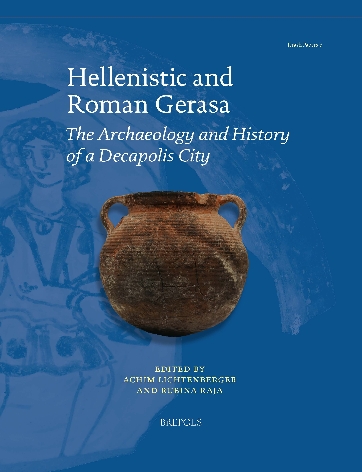
Hellenistic and Roman Gerasa
show More to view fulltext, buy and share links for:Hellenistic and Roman Gerasa show Less to hide fulltext, buy and share links for: Hellenistic and Roman GerasaThe Graeco-Roman Decapolis city of Gerasa was a flourishing centre of population from the Late Hellenistic up to the Early Islamic period. It was also home to a vibrant ceramics industry. Kilns found throughout the city, with a concentration in the Hippodrome, suggest that Gerasa was in fact a mass-production centre in the Decapolis region over a number of centuries, manufacturing a vast array of material to suit the changing needs of daily life.
Drawing on finds yielded during excavations by the Danish-German Northwest Quarter Project and other archaeological projects, as well as the research undertaken within the Ceramics in Context project, this volume evaluates the pottery from Gerasa produced in the Late Hellenistic and Roman periods. Typology, development over time, and variations in the Gerasene pottery are explored, and rare examples of imported material are analysed in order to shed light both on the inner workings of the city, and on the networks that extended beyond Gerasa’s walls. The contributions gathered here examine the archaeology and history of Gerasa and assess ceramic remains alongside other finds from both the city and neighbouring urban centres. In doing so, they seek to contextualize this material in a broader cultural and historical context, and to improve our understanding of consumption, trading, and networks in the wider Decapolis area.
-
-
-
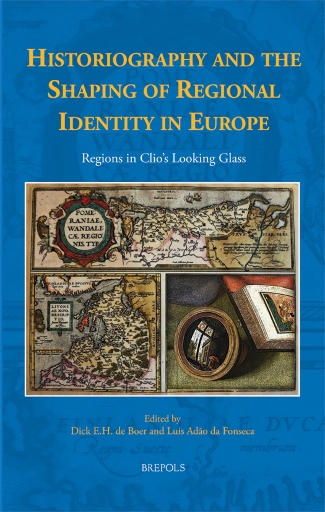
Historiography and the Shaping of Regional Identity in Europe
show More to view fulltext, buy and share links for:Historiography and the Shaping of Regional Identity in Europe show Less to hide fulltext, buy and share links for: Historiography and the Shaping of Regional Identity in EuropeOver the centuries, historiography - in many different forms - became an important vehicle by which to create, articulate, and express the existence, awareness, and characteristics of Europe’s regions. Be it the histories of noble families that were important stakeholders in a region, urban histories describing the developing urban networks through which regions could function, dynastic histories emphasizing the relationship between ruler and region, or hagiographies describing holy men and women and their veneration as focal points within regions - all of them represented and reflected identities within an understood spatial and or mental sphere. Historiography can therefore help us to understand the way in which regions were seen from within and from without, and to understand the patterns and dynamics of regional cohesion. Moreover, it sheds light on the dialectic between nation and region, and on the relationship between the regional sphere and the wider (inter)national sphere.
The authors of this volume look at individual European regions from different points of view, using historiography as a lens. They analyse the ways in which history as a construct has played a role in establishing regional identity, providing examples of the ways in which recording, interpreting, and recounting the history of regions through the ages has been instrumental in shaping these regions. The first section of the volume explores regional identity in medieval and early modern historiography; the second shows how, in the age of the invention and triumph of the European nation-state (the long nineteenth century), historiography of a new kind was applied for a deliberate creation of regional identity, or at least reflected the need for a historical confirmation of identities.
-