


BOB2020MOME

Collection Contents
1 - 20 of 28 results
-
-
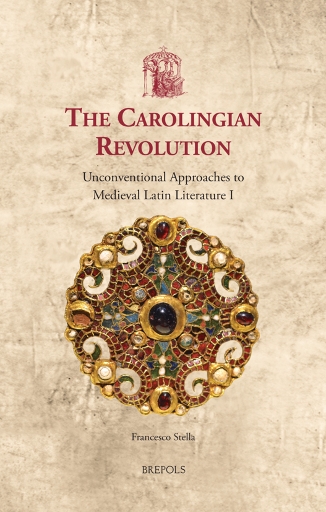
The Carolingian Revolution
show More to view fulltext, buy and share links for:The Carolingian Revolution show Less to hide fulltext, buy and share links for: The Carolingian RevolutionThis book presents samples of experimental methods for reading medieval Latin texts that have scarcely been adopted, if at all, by mainstream research in the field. It contributes to the discovery of some underestimated aspects of early medieval (especially Carolingian) Latin literature: intertextuality as intercultural relationship (in Biblical epic), intermediality (text-image-sound connections), interdisciplinarity (science, religion, and poetry), hermeneutics (Biblical exegesis as poetry-engine), post-colonial reading (medieval Latin as a second language), socio-literary approaches (monastic epigraphs as witnesses of everyday life, writing as a status symbol of an intellectual class and a whole civilization). It also discusses quantitative methods, which are explored in more detail in a second volume, Digital Philology and Quantitative Criticism of Medieval Literature: Unconventional Approaches to Medieval Latin Literature II): http://www.brepols.net/Pages/ShowProduct.aspx?prod_id=IS-9782503588018-1.
The book thus seeks to encourage scholarly interest in obscure or less familiar elements of the Carolingian literary renewal, interpreted here as more a laboratory of innovations than a revival of traditional patterns.
-
-
-
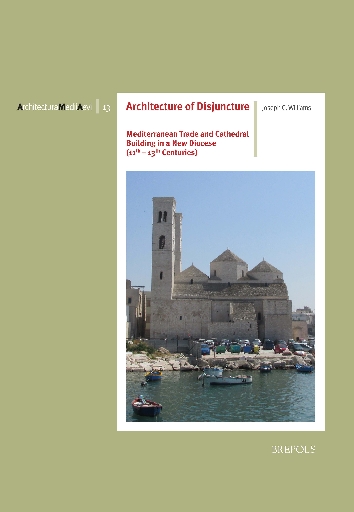
Architecture of Disjuncture
show More to view fulltext, buy and share links for:Architecture of Disjuncture show Less to hide fulltext, buy and share links for: Architecture of DisjunctureThrough careful analysis of the Romanesque cathedral of Molfetta (in Apulia, southern Italy), Williams demonstrates how the commercial boom of the medieval Mediterranean changed the way churches were funded, designed, and built. The young bishopric of Molfetta, emerging in an economy of long-distance trade, competed with much wealthier institutions in its own diocese. Funding for the cathedral was slow and unpredictable. To adapt, the builders designed toward versatility, embracing multi-functionalism, change over time, specialization, and a heterogeneous style.
-
-
-
Bernard de Clairvaux et la philosophie des Cisterciens du xii e siecle
show More to view fulltext, buy and share links for:Bernard de Clairvaux et la philosophie des Cisterciens du xii e siecle show Less to hide fulltext, buy and share links for: Bernard de Clairvaux et la philosophie des Cisterciens du xii e siecleBernard de Clairvaux, philosophe? Une école cistercienne au XIIe siècle? Telles sont les deux questions affrontées dans chacune des parties de ce livre.
Une historiographie contemporaine oppose souvent à un Abélard renouvelant la philosophie par l’accueil de la logica nova et de la dialectique un Bernard dogmatique, dernier des Pères de l’Église. Prenant le contrepied de cette caricature, la première partie affronte la première question et présente un Bernard de Clairvaux philosophe, fleuron du socratisme chrétien. Reconnu comme tel depuis Pierre Courcelle, Bernard donne toutefois à cette philosophie socratique une inflexion marquant le primat de l’humilité (Ch. I), le détour nécessaire par la charité (Ch. II) en vue de parvenir à la contemplation (Ch. IV). Entre ces deux points d’inflexion, un chapitre développe le rôle central pour lui du libre arbitre et celui de la conscience (Ch. III).
Il est de coutume d’opposer le cloître et l’école au XIIe siècle. Toutefois, si nous entendons par là, non un lieu d’enseignement où l’on noterait les présents et les absents, mais un réseau d’influence intellectuelle, voire spirituelle, il devient possible de parler d’une école cistercienne. La deuxième partie recherche la présence ou non des caractéristiques humanistes mises en évidence dans la première chez divers auteurs cisterciens de ce temps. Ils sont pris d’abord parmi les plus proches de Bernard: Aelred de Rievaulx, Guerric d’Igny, Geoffroy d’Auxerre (Ch. I). Puis (Ch. II) sont examinés trois auteurs cisterciens parmi les plus philosophes du XIIe siècle: Isaac de l’Étoile, Garnier de Rochefort et Hélinand de Froidmont. Enfin (Ch. III), on en vient à trois auteurs qualifiés de «satellites» dont le rapport à l’Ordre Cistercien est plus complexe: Guillaume de Saint-Thierry, Alain de Lille et Joachim de Flore.
-
-
-
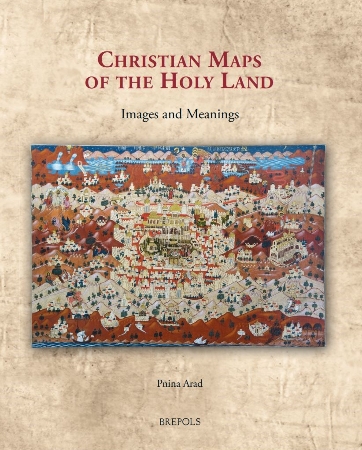
Christian Maps of the Holy Land
show More to view fulltext, buy and share links for:Christian Maps of the Holy Land show Less to hide fulltext, buy and share links for: Christian Maps of the Holy LandThis book offers a way of reading maps of the Holy Land as visual imagery with religious connotations. Through a corpus of representative examples created between the sixth and the nineteenth centuries, it studies the maps as iconic imagery of an iconic landscape and analyses their strategies to manifest the spiritual quality of the biblical topography, to support religious tenets, and to construct and preserve cultural memory.
Maps of the Holy Land have thus far been studied with methodologies such as cartography and historical geography, while the main question addressed was the reliability of the maps as cartographic documents. Through another perspective and using the methodology of visual studies, this book reveals that maps of the Holy Land constructed religious messages and were significant instruments through which different Christian cultures (Byzantine, Catholic, Protestant, and Greek Orthodox) shaped their religious identities. It does not seek to ascertain how the maps delivered geographical information, but rather how they utilized the geographical information in formulating religious and cultural values.
Through its examination of maps of the Holy Land, this book thus explores both Christian visual culture and Christian spirituality throughout the centuries.
-
-
-

Contest, Translation, and the Chaucerian Text
show More to view fulltext, buy and share links for:Contest, Translation, and the Chaucerian Text show Less to hide fulltext, buy and share links for: Contest, Translation, and the Chaucerian TextThis sophisticated volume sheds new light on the transmission of texts in the medieval period by drawing into dialogue a study of medieval translation between English and French with questions concerning the Chaucerian canon and its reception. The author takes as a focus point three Middle English translations of French-language works - The Romaunt of the Rose, the Belle Dame Sans Mercy, and An ABC to the Virgin - and assesses the way in which these works respond to and reconfigure their source material, while at the same time questioning how the connection of these translations with Chaucer has influenced our critical understanding of them. In this book, these three translations are therefore removed from their habitual place on the fringes of the English Chaucer canon, and are instead analysed in the context of late-medieval literary and cultural hybridity. The result is a fascinating reconceptualization of these works as creative, cross-channel participations in late- medieval debates, and simultaneously a call for the reappraisal of ‘the Chaucerian’ as a critical category.
-
-
-
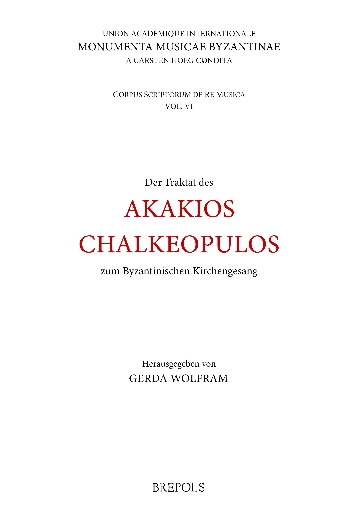
Der Traktat des Akakios Chalkeopulos zum Byzantinischen Kirchengesang
show More to view fulltext, buy and share links for:Der Traktat des Akakios Chalkeopulos zum Byzantinischen Kirchengesang show Less to hide fulltext, buy and share links for: Der Traktat des Akakios Chalkeopulos zum Byzantinischen KirchengesangDie musiktheoretische Schrift des Akakios Chalkeopulos stellt ein von allen bis jetzt im Rahmen des Corpus Scriptorum de Re Musica edierten Theorien unabhängiges Werk dar. Es entstand Anfang des 16. Jahrhunderts in Kreta, im venezianischen Einflussbereich. In dem Autographon, Athen, Hs. EBE 917, versuchte Akakios den Sonnen- und Mondzyklus mit der Berechnung des Paschalion aufzuzeigen, und eine Verbindung zur Kirchenmusik herzustellen. Neben diesen theoretischen Berechnungen weist eine große Zahl von Musikbeispielen darauf hin, dass für Akakios die Unterweisung der Sänger in der musikalischen Praxis Kretas ein großes Anliegen war. Besonders die Aufführungspraxis hatte die Aufmerksamkeit des Akakios auf sich gezogen, und seine Abhandlung ist das früheste Dokument, in dem der Begriff "Exegese" im Kontext des byzantinischen Gesangs verwendet wird. Da sowohl die Musiktheorie als auch das angeschlossene Anastasimatarion, das Hymnar des Akakios, ein Unikat darstellen, ist zu vermuten, dass mit den aufgezeichneten Melodien eine orale kretische Tradition zum Ausdruck kommt, die von Akakios weiterentwickelt wurde.
-
-
-

Digital Philology and Quantitative Criticism of Medieval Literature
show More to view fulltext, buy and share links for:Digital Philology and Quantitative Criticism of Medieval Literature show Less to hide fulltext, buy and share links for: Digital Philology and Quantitative Criticism of Medieval LiteratureBuilding on The Carolingian Revolution: Unconventional Approaches to Medieval Latin Literature I (http://www.brepols.net/Pages/ShowProduct.aspx?prod_id=IS-9782503587998-1), this is the second of two volumes proposing ways of reading medieval Latin texts which, up to now, have had little or no attention within literary studies. This volume is founded on the belief that ‘the unprecedented empirical power of digital tools and archives offers a unique chance to rethink the categories of literary study’ (F. Moretti).
The book’s first section presents cases studies applying ‘quantitative’ criticism based on the linguistic and stylistic use of frequency wordlists which, thanks to digital tools and to a larger literature, are becoming more easily accessible and more powerful. The chapters of this section lead the reader from an application of stylometry within a traditional critical exercise, via the structured use of frequency indexing as a warning light for cultural or stylistic phenomena undetectable to the naked eye, to more technical corpus analysis experiments based on linguistic evolution or authorship attribution. The second section explores the encoding problems the author has faced when working on the realisation of digital editing projects such as the Corpus Rhythmorum Musicum, the Archivio della Latinità Italiana del Medioevo (ALIM), Lexicon, and the Eurasian Latin Archive (ELA), and proposes reflections on the typology of digital philological editions.
-
-
-
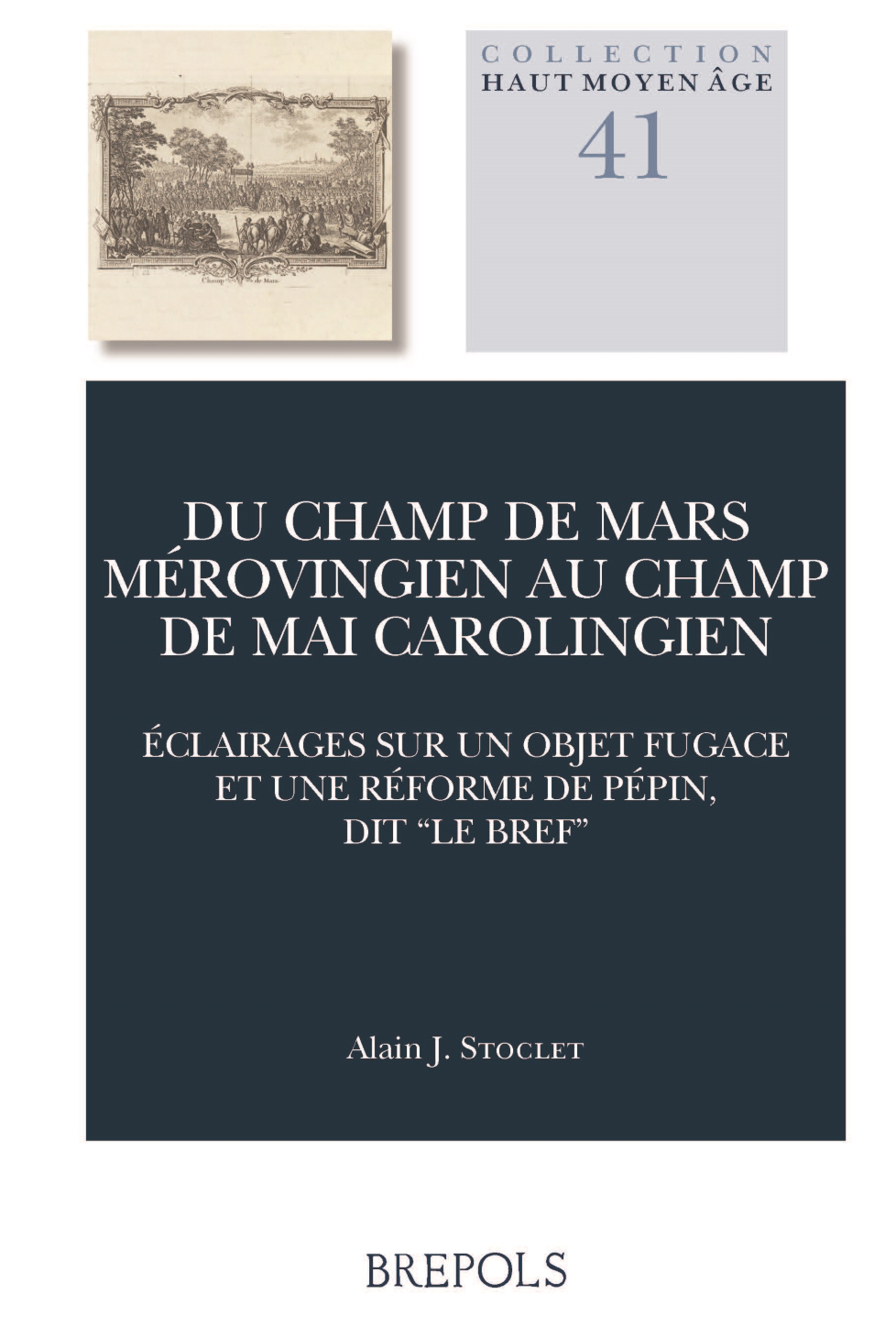
Du Champ de Mars mérovingien au Champ de Mai carolingien
show More to view fulltext, buy and share links for:Du Champ de Mars mérovingien au Champ de Mai carolingien show Less to hide fulltext, buy and share links for: Du Champ de Mars mérovingien au Champ de Mai carolingienQu’est-ce que le « Champ de Mars » qui fait de brèves apparitions dans les sources sous les premiers Carolingiens et auquel, nous dit-on, Pépin « le Bref » aurait substitué un « Champ de Mai » tout aussi énigmatique ? Quel rapport entre ce Champ de Mars et celui qui fut l’un des centres névralgiques de la Rome républicaine ? Telles sont les questions qui inspirent le présent ouvrage. Il n’y répond pas tant « de front » - les données exploitables, rares, éparses et fragmentaires n’y suffisent pas - que par petites touches, en apportant des éclairages nouveaux ou renouvelés sur un certain nombre de points choisis : l’historiographie du sujet, qui révèle, entre autres aspects inattendus, la vitalité et la permanence extraordinaires de formules d’une très haute antiquité, relayées et amplifiées par l’érudition du Grand Siècle ; l’exploration des six ou sept cents ans séparant l’original romain de l’avatar alto-médiéval, qui livre la trace ténue de continuités d’un ordre différent, liées, notamment, aux cérémonies d’investiture des princes de ce monde ; puis, au cœur de l’ouvrage, l’examen des témoins textuels de la tradition franque (diplômes mérovingiens, chronique de Nibelung, annales dérivées de celles, perdues, de Murbach, vignettes sur les derniers Mérovingiens apparentées à celle d’Éginhard, célèbre entre toutes) ; enfin, la dimension calendaire de la réforme pippinienne, son rapport supposé à l’affirmation ou à la diffusion de créneaux religieux exclusifs (Quatre-Temps, Carême). L’enquête dont on pose ici quelques jalons prend donc en quelque sorte le contrepied des mégalographies des Lumières, si déterminantes en dépit de leurs défauts évidents - l’histoire n’était guère, alors, qu’une science auxiliaire au service de la philosophie politique.
-
-
-
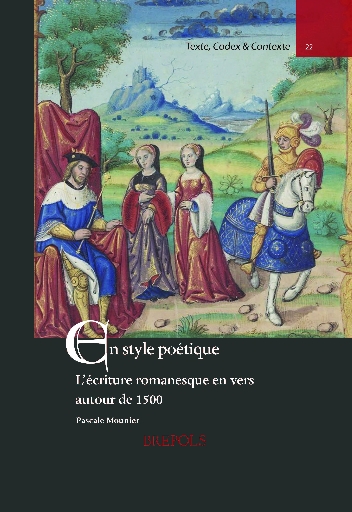
En style poétique
show More to view fulltext, buy and share links for:En style poétique show Less to hide fulltext, buy and share links for: En style poétiqueLe domaine des narrations composées en français aux XVe et XVIe siècles est massivement marqué par l’usage de la prose. Il s'avère toutefois que quelques romans sentimentaux ont été produits entre 1490 et 1530 sous forme versifiée. Il s’agit le plus souvent de fictions destinées à l’aristocratie, spécialement à la cour, à qui elles proposent soit de redécouvrir le roman breton du XIIe siècle, soit de se familiariser avec l'épopée chevaleresque ou le récit pathético-tragique produits en Italie, soit encore de voir refondus des genres ou des œuvres de différentes provenances pratiquant un dosage varié de la narration, du dialogue et du lyrisme. Un geste auctorial et éditorial aussi surprenant que celui-ci témoigne-t-il d’une aspiration passéiste ou d’une volonté d’innover ? Le style cultive-t-il le raffinement, voire l’artifice, ou tend-il vers la simplicité, voire le naturel ?
Le concept de « style poétique » s'avère productif pour soulever de telles questions. Le présent ouvrage le met à l'épreuve dans six fictions dont on conserve un ou plusieurs témoins. Quelques écrites par des auteurs ou des adaptateurs ne travaillant pas en concertation, elles se singularisent par le choix du vers pour raconter les aventures qui conduisent un couple d'amants à se former ou à se séparer. Elles exploitent de façon convergente cette forme d'écriture dans la conduite du récit, la restitution des voix et l'évocation des émotions. Les deux grandes valeurs qu'elles confèrent au vers renouvellent la narration en français à un moment donné de son histoire en faisant naître un véritable genre, le roman sentimental de type aristocratique.
-
-
-

Excerptum de Talmud
show More to view fulltext, buy and share links for:Excerptum de Talmud show Less to hide fulltext, buy and share links for: Excerptum de TalmudIn 1239 the Christian convert Nicholas Donin submitted thirty-five articles to Pope Gregory IX that decried the indecency, blasphemy, and heresy in the Talmud. As a result, the pope triggered a campaign across Europe that gave rise to a trial of the Talmud in Paris in 1240. The Latin translation of the Talmud - namely, the 1245 Extractiones de Talmud and later versions such as the Excerptum de Talmud - emerged from these events.
This volume offers the first critical edition, along with an English translation, of the Excerptum de Talmud. Drawing on the substantial translation of the Babylonian Talmud known as the Extractiones de Talmud (Paris, 1245), the Excerptum provided a selection of passages from the Talmud which its compiler organized according to controversial topics.
This book consists of two principal parts. The first contains a study of the Excerptum, its textual source (the Extractiones de Talmud), and an overview of the historical background which prompted this translation. The second part consists of an edition and translation of the text, as well as an edition of the passages from the Extractiones which served as the basis for the Excerptum.
These texts mark a significant chapter in Christian anti-Jewish disputations and Latin polemical works in the Middle Ages. This volume will thus prove useful to scholars interested in Latin philology, religious disputation, medieval translation and transmission of knowledge, and the history of Christian-Jewish relations.
-
-
-
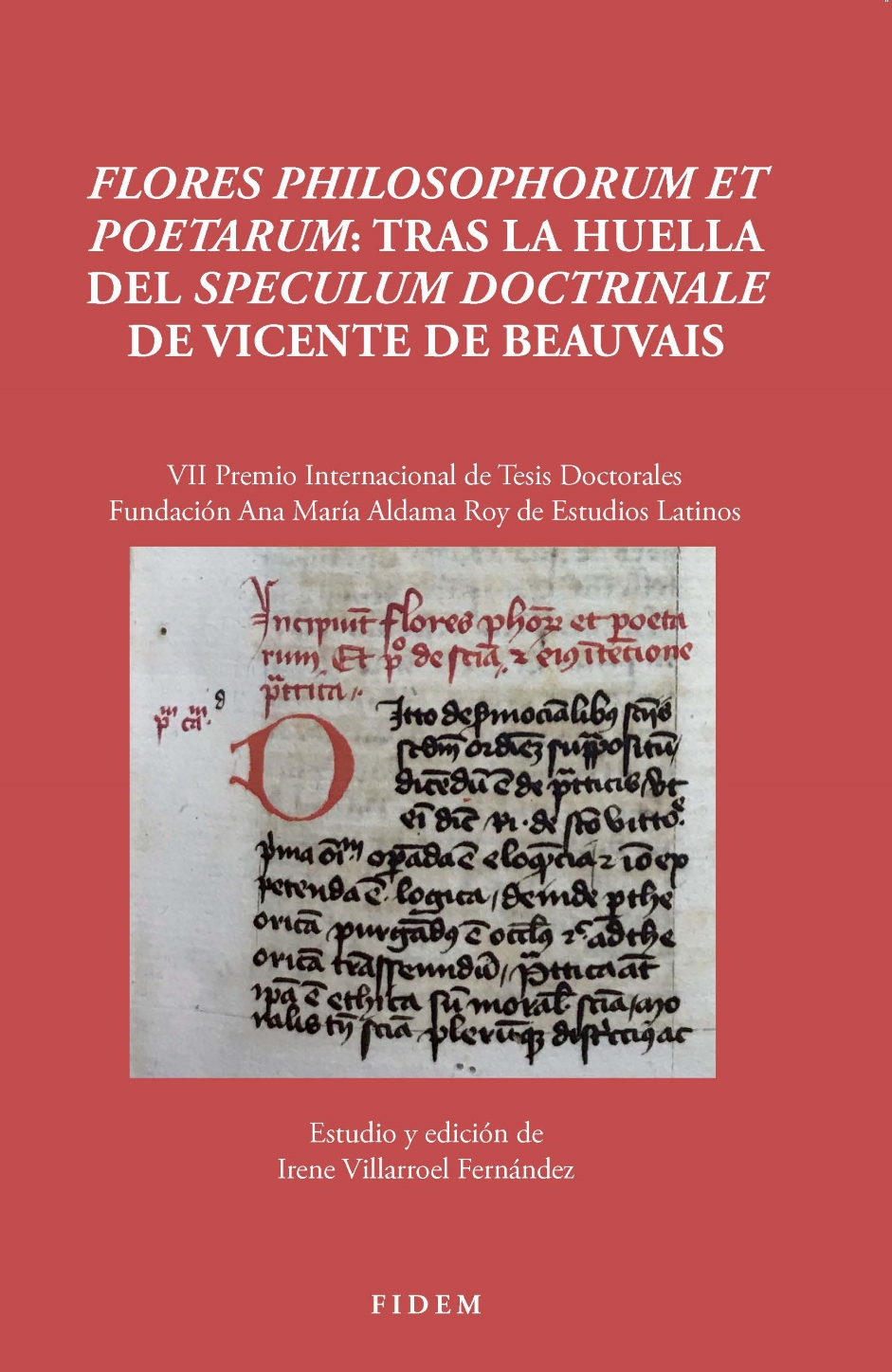
Flores philosophorum et poetarum: tras la huella del Speculum doctrinale de Vicente de Beauvais
show More to view fulltext, buy and share links for:Flores philosophorum et poetarum: tras la huella del Speculum doctrinale de Vicente de Beauvais show Less to hide fulltext, buy and share links for: Flores philosophorum et poetarum: tras la huella del Speculum doctrinale de Vicente de BeauvaisLa transmisión manuscrita de una obra depara, en ocasiones, sorpresas y sucesos inesperados. Este es el caso de los libros V y VI del Speculum doctrinale de Vicente de Beauvais, dedicados a la ethica monastica, que muy pronto se independizaron de la obra completa, creando una tradición propia, de la que incluso surgió, tras diversas transformaciones, una obra nueva, los Flores philosophorum et poetarum.
En el presente volumen, se aborda, en primer lugar, el estudio de los libros V y VI del Speculum doctrinale, sus características y su transmisión manuscrita, y, posteriormente, las modificaciones sufridas por estos dos libros, tanto en su estructura como en su contenido, que dan origen a los Flores philosophorum et poetarum y que implican una nueva fase en su transmisión con una evolución de enciclopedia a florilegio. Finalmente se presentan los testimonios manuscritos del florilegio y su filiación con la obra enciclopédica de Vicente de Beauvais.
La edición crítica de los Flores philosophorum et poetarum, que ocupa la segunda parte del libro, tiene en cuenta la doble condición de esta obra, original y a la vez subordinada a los libros V y VI del Speculum doctrinale de Vicente de Beauvais, por lo que se presenta con tres aparatos (de fuentes, crítico e intertextual), con la intención de reflejar su transición entre la enciclopedia y el florilegio.
-
-
-
Le statut de la perception sensible dans les Questions à Thalassios de Maxime le Confesseur
show More to view fulltext, buy and share links for:Le statut de la perception sensible dans les Questions à Thalassios de Maxime le Confesseur show Less to hide fulltext, buy and share links for: Le statut de la perception sensible dans les Questions à Thalassios de Maxime le ConfesseurLa doctrine anthropologique qui se dégage dans les Questions à Thalassios de Maxime le Confesseur donne une place de choix à la perception sensible, qui est considérée comme la première étape indispensable à toute connaissance humaine. Le juste exercice de la sensation est un des enjeux fondamentaux de la vie pratique, c’est-à-dire de la morale, puisque le développement des passions mauvaises dans la vie humaine découle d’une ignorance et d’une erreur de jugement, précisément en ce qui concerne l’appréhension du monde sensible. Le juste exercice de la sensation est aussi la condition de possibilité de la contemplation naturelle, car il permet à l’homme de voir à travers les figures du monde visible l’intention et le plan du Créateur. C’est grâce à cette contemplation du créé que l’être humain accomplit sa mission d’unification du monde sensible et du monde intelligible, et accède à la connaissance de Dieu et à l’union avec Dieu en vue de laquelle il a été créé.
-
-
-
Lire Grégoire de Nazianze au x e siècle
show More to view fulltext, buy and share links for:Lire Grégoire de Nazianze au x e siècle show Less to hide fulltext, buy and share links for: Lire Grégoire de Nazianze au x e siècleAu Xe siècle, le prestige de Grégoire de Nazianze, dit le Théologien, est à son zénith dans l’empire byzantin : Constantin VII Porphyrogénète vient de déposer les reliques du saint homme à l’église des Saints-Apôtres, dans la capitale impériale, et ses textes sont désormais enseignés dans les écoles byzantines aux côtés d’auteurs comme Homère et Démosthène. C’est dans ce contexte que Basile le Minime, évêque de Césarée de Cappadoce et proche de l’empereur, écrit ses Commentaires aux Discours de Grégoire, afin de rendre les œuvres du Théologien accessibles à un plus large public de lecteurs.
Fruit de leur époqure, les Commentaires de Basile offrent une source d'information appréciable sur la réception des Discours de Grégoire et sur la culture byzantine en général. Alliant paraphrases explicatives, commentaires de texte et explications savantes, Basile propose, sous la forme de scholies, une « lecture expliquée » du texte de Grégoire comme pouvait le dispenser à ses élèves un maître de grammaire. Il renvoie en miroir à ses lecteurs leur propre culture. Sur ses traces, le présent ouvrage s'intéresse à la démarche exégétique de Basile comme témoignage de l'érudition de son époque. Il propose une approche originale qui met en lumière la spécificité des commentaires byzantins et de ceux de Basile en particulier, en prenant pour point de départ ses Commentaires aux Discours 4 et 5, récemment publiés dans le Corpus Christianorum (Series Graeca 90 ; Corpus Nazianzenum 29).
-
-
-
L’œuvre de Godefroid de Saint-Victor
show More to view fulltext, buy and share links for:L’œuvre de Godefroid de Saint-Victor show Less to hide fulltext, buy and share links for: L’œuvre de Godefroid de Saint-VictorÉlève des écoles parisiennes vers 1145-1150, en particulier de celle d’Adam du Petit-Pont, devenu lui-même enseignant - vers 1150-1155 environ - Godefroid entre à Saint-Victor où il «se soumit à l’autorité d’un maître» qui fut Richard, avant d’y déployer une activité intellectuelle et enseignante «en prose, en vers rythmiques et métriques, et en mélismes» et de remplir la charge de bibliothécaire et liturge (armarius). Philosophe et poète (auteur d’un Fons philosophiae dédié à Étienne de Tournai), prédicateur fécond (on conserve un volume de ses sermons), orateur quasi-officiel (dans des chapitres généraux de l’Ordre victorin ou des synodes parisiens), musicien et poète dans une abbaye qui illustre le genre de la séquence liturgique, un peu artiste (il aura laissé des autoportraits), auteur d’une compilation canonique: ces talents multiples n’ont pas empêché Godefroid d’être considéré comme un auteur du second rang, dont l’œuvre n’est accessible, en des éditions dispersées, que pour une faible part. Son Microcosmus pourtant va bien au-delà, et pas seulement par sa masse, de l’opuscule de circonstance. Plus encore, Godefroid est, avec Guillaume de Saint-Thierry et Absalon de Saint-Victor, un des rares auteurs du xii e siècle dont on possède des autographes. La découverte, après l’édition princeps de Philippe Delhaye en 1951, des autographes entiers ou partiels du Microcosmus, demandait qu’en soit reprise à nouveaux frais l’édition, en tenant compte de la transcription de Godefroid, de ses propres interventions sur son manuscrit, de sa transcription par un copiste, des repentirs de celui-ci et des nouvelles interventions de l’auteur. Un apparat critique génétique permet de rejoindre le texte de Godefroid et de baliser les étapes de son émergence.
-
-
-
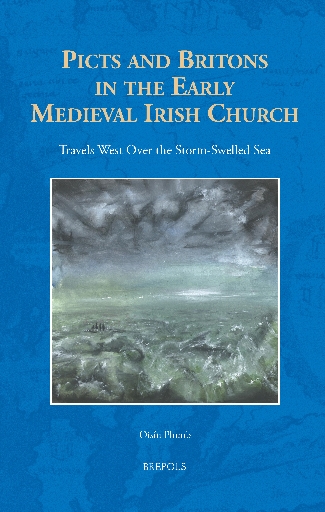
Picts and Britons in the Early Medieval Irish Church
show More to view fulltext, buy and share links for:Picts and Britons in the Early Medieval Irish Church show Less to hide fulltext, buy and share links for: Picts and Britons in the Early Medieval Irish ChurchBetween the fifth and ninth centuries AD, the peoples of Britain, Ireland, and their surrounding islands were constantly interacting - sharing cultures and ideas that shaped and reshaped their communities and the way they lived. The influence of religious figures from Ireland on the development of the Church in Britain was profound, and the fame of monasteries such as Iona, which they established, remains to this day. Yet with the exception of St Patrick, far less attention has been paid to the role of the Britons and Picts who travelled west into Ireland, despite their equally significant impact.This book aims to redress the balance by offering a detailed exploration of the evidence for British and Pictish men and women in the early medieval Irish Church, and asking what we can piece together of their lives from the often fragmentary sources. It also considers the ways in which writers of later ages viewed these migrants, and examines how the shaping of the ‘migration narrative’ throughout the centuries had a major effect on the way that the earliest centuries of the church came to be viewed in later years in both Scotland and Ireland. In doing so, this volume offers important new insights into our understanding of the relationships between Britain and Ireland in this period.
-
-
-
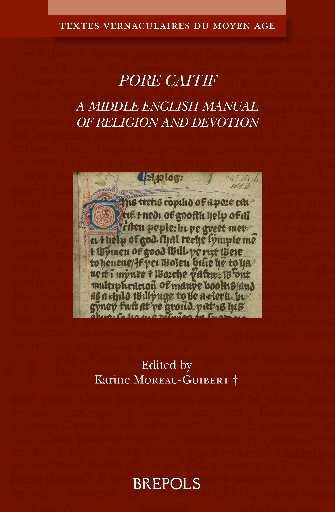
Pore Caitif
show More to view fulltext, buy and share links for:Pore Caitif show Less to hide fulltext, buy and share links for: Pore CaitifThe Pore Caitif is an anonymous late fourteenth-century manual of devotion and religious instruction destined for a lay readership. The text, in its various forms, circulated widely and was evidently very popular, as the fifty of so extant manuscripts and fragments readily attest. Of them, no fewer that twenty-eight transmit a full text showing remarkable fidelity to the now presumably lost archetype. As such, the Pore Caitif invites comparison with the considerable production and diffusion of religious texts in English which figure prominently in the fourteenth and fifteenth centuries. In this respect, it is to note that some critics have argued for the presence of Lollard interpolators or commentators in a number of the extant manuscripts, including the influence of the Wycliffite Bible translation.
This edition will be published in two volumes. This, the first, provides a full Introduction to the manuscripts and their transmission, classifying them in groups, while examining some of the trends observable in some of the more notable variants they inevitably preserve. A commentary on the text is followed by a full glossary. The second volume will discuss manuscript relationships and the problems arising therefrom.
-
-
-
Quasi aurora consurgens
show More to view fulltext, buy and share links for:Quasi aurora consurgens show Less to hide fulltext, buy and share links for: Quasi aurora consurgensThe present work tries to set the Victorine theological anthropology in the context of doctrinal history. In the twelfth century, the canons of Saint-Victor formed the single largest community of theologians with the most extensive literary legacy. But is there a distinctive, characteristically Victorine model of theological anthropology? The first half of the present volume investigates this question through a close reading of the works of Hugh, Richard, Walter and Achard, and concludes with a positive answer. In a period of theological experimentation Hugh of Saint-Victor elaborated, through selectively reading and altering Patristic sources, his own model of theological anthropology. Its principles and concepts also appear in the spiritual works of other Victorine authors and set the Victorines apart from other spiritualities of the period. The second half of the work investigates the immediate, thirteenth-century reception of this model. That scholastic authors held Hugh and Richard in high regard is well-known, but a closer investigation reveals a different picture. The testimony of various theological sources (from Sentences glosses and commentaries, to spiritual works) shows that thirteenth-century theologians have already found elements of the Victorine anthropology either untenable or unintelligible,as their reaction varies from explicit rejection to selective reading and reinterpretation. This transition from acceptable and inspirative to problematic occurred in less than a century’s time, and still influences the way Victorine texts are read. Thus, considering a twelfth-century model, together with all of its necessary distortions, in thirteenth-century interpretations, may give us a better understanding of the limitations and potentials of the Victorine theology.
-
-
-
Signa Iudicii
show More to view fulltext, buy and share links for:Signa Iudicii show Less to hide fulltext, buy and share links for: Signa IudiciiSurgida en la remota Antigüedad, la leyenda de los signa iudicii ha permeado tradiciones y pueblos, culturas y religiones diversas, durante siglos. En todo ese tiempo, esta relación de signos que precederán al fin del mundo ha sufrido variada suerte, desde la gran productividad que presentó durante los albores de la apocalíptica, con un primitivo catálogo de siete señales ampliado paulatinamente, pasando por un uso pragmático y proselitista durante el período medieval, hasta su eclipse con la llegada del racionalismo epistemológico. Se trata de un repertorio de señales escatológicas de amplia naturaleza (atmosférica, legendaria, geológica, espiritual) que buscaba impactar en el imaginario social y colectivo a través de lo que hemos denominado factor miedo. La materia tuvo inmensa repercusión en las tradiciones gaélica, anglosajona o latina, y la recogen desde autores como Lactancio, Orígenes o Comodiano, hasta el mismo Agustín de Hipona. Posteriormente, su difusión fue dilatada, primero a través de varios teóricos y exégetas del cristianismo durante los siglos X, XI y XII, y más tarde de mano de los autores en lenguas vernáculas occidentales. A partir del siglo XIII se introduce en la Península Ibérica, inaugurándose con un texto que Gonzalo de Berceo dedicó a los muy grandes signos ante [...] del Judicio cabdal. Paralelamente a las versiones cristianas, destaca la incidencia que la materia tuvo entre varios autores musulmanes peninsulares a lo largo de los siglos.
-
-
-
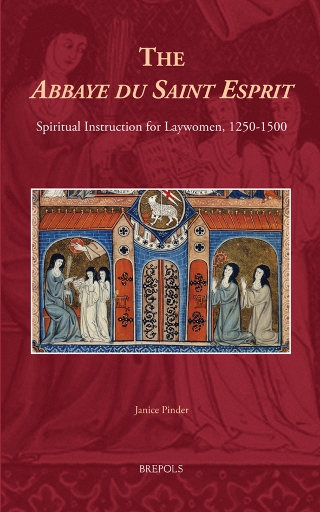
The Abbaye du Saint Esprit
show More to view fulltext, buy and share links for:The Abbaye du Saint Esprit show Less to hide fulltext, buy and share links for: The Abbaye du Saint EspritThe Abbaye du Saint Esprit was a successful work of vernacular spiritual advice for women, surviving in sixteen manuscripts and a widely copied Middle English translation. Unlike many other didactic religious texts, it offers few prescriptions for behaviour; rather, it instructs the reader to build a convent of virtues in her conscience and uses the allegorical structure of the building and its inhabitants to arrange brief teachings on prayer and virtuous practice. Between its genesis in the last quarter of the thirteenth century to its final development towards the end of the fifteenth, it was reworked several times for new audiences of women both lay and cloistered, bourgeois and aristocratic. The examination of these successive adaptations offers insights into the growth of lay religious culture, the participation of women in new religious movements, and the use and transformation of twelfth and early thirteenth-century monastic formation literature for new audiences.This book also offers, for the first time, editions of all the French versions of the Abbaye and a modern English translation of the earliest version.
-
-
-
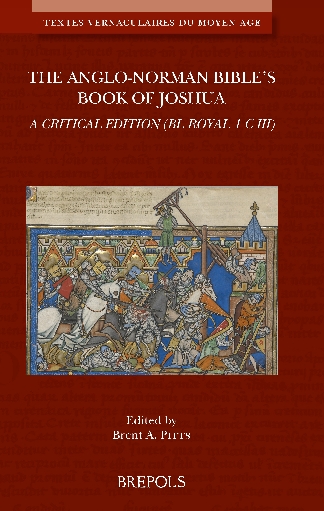
The Anglo-Norman Bible’s Book of Joshua, a Critical Edition
show More to view fulltext, buy and share links for:The Anglo-Norman Bible’s Book of Joshua, a Critical Edition show Less to hide fulltext, buy and share links for: The Anglo-Norman Bible’s Book of Joshua, a Critical EditionThe Anglo-Norman Bible’s Joshua includes tales of spies, giants, the prostitute Rahab, the punishment of Achan, oracles, and Joshua’s brilliant military victories. Joshua stops the sun. The first half of the book relates Joshua’s stunning conquests in Canaan. The second half, the apportionment of the land among the tribes, detailed geographical surveys of territorial boundaries, and the death of Joshua.
Skilful, well-paced story telling is a feature of the ANB’s Joshua. To the accounts of Rahab and Achan we may add the chronicle of Joshua’s successful, crushing campaign in the wake of the destruction of Makkedah. In rapid succession, and in an annalistic style involving staccato repetition of key phrases, the narrator relates the destruction of Libnah, Lachish, Eglon, Hebron, and Debir.
The text of the ANB’s Joshua is extant in British Library Royal 1 C III (base manuscript, L) and Paris, Bibliothèque nationale de France, MS français 1 (P), both c. 1350 and both the Bibles of kings. L belonged at some point in the fifteenth century to Reading’s Benedictine abbey, entering the royal library in 1530. Characteristic of L is its occasional insertion of short glosses in English or Latin to clarify or correct the Anglo-Norman text. An illustrated text, P was prepared by an English workshop for the fourth baron de Welles, John, and his wife, Maud, daughter of William, Lord Ros. This is clearly the Bible of a wealthy and well-connected English family. After the Welles family, the manuscript belonged to Louis de Bruges († 1492), then to King Louis XII of France.
-