


Brepols Online Books Medieval Miscellanea Collection 2022 - bob2022mime

Collection Contents
1 - 20 of 47 results
-
-
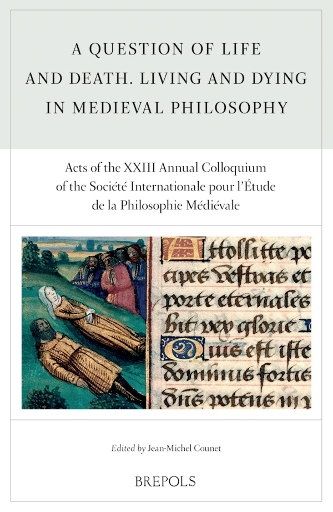
A Question of Life and Death. Living and Dying in Medieval Philosophy
show More to view fulltext, buy and share links for:A Question of Life and Death. Living and Dying in Medieval Philosophy show Less to hide fulltext, buy and share links for: A Question of Life and Death. Living and Dying in Medieval PhilosophyLiving and dying are essential concepts in Aristotelian natural philosophy and psychology. It is then no surprise that when the libri naturales were translated into Latin from the twelfth century onwards, this gave birth to an extensive interpretative tradition in the Latin West in which life and death as conceived by Aristotle were theorized and reflected upon, for example in the numerous commentaries of the De Anima but also of the Parva Naturalia. Yet the medieval inquiry into living and dying is not limited to natural philosophy nor the Aristotelian tradition but can also be found in ethics, metaphysics, theology, medicine and others domains. Many topics are addressed in the volume: radical moisture and the possibility of increasing lifespan, suicide, essence of life, contrast between life of the body and life of the soul, future life, and so on. The volume is also a hommage to Pieter De Leemans, an eminent specialist of the Latin translations of Aristotle’s books on natural philosophy, who was the intitiator of this scientific project.
-
-
-
After Ovid
show More to view fulltext, buy and share links for:After Ovid show Less to hide fulltext, buy and share links for: After OvidThe 2000th anniversary of Ovid’s death, in 2017-2018, led to an upsurge in conferences and publications dedicated to the author’s work and afterlife. One of these is the present volume, resulting from the conference Dopo Ovidio. Aspetti della ricezione ovidiana fra letteratura e iconografia, which was held on 7-8 May 2019 at the Department of Human Sciences (DSU) of the University of L’Aquila, and which looked at various aspects of Ovid’s fortune, from a diachronic and interdisciplinary perspective. The contributions cover a period of about fourteen centuries, from late antiquity until the end of the eighteenth century, and range from late Latin to medieval literature, from humanistic production to modern English and Italian literature, and from linguistics to the figurative arts. All these studies contribute to a collective appraisal of the multifarious impact of Ovid’s works, and especially of the Metamorphoses, the latter’s treatment of myth having been a starting point for integrations, developments, (re)interpretations and representations, in isolation or included in an iconographic program.
-
-
-
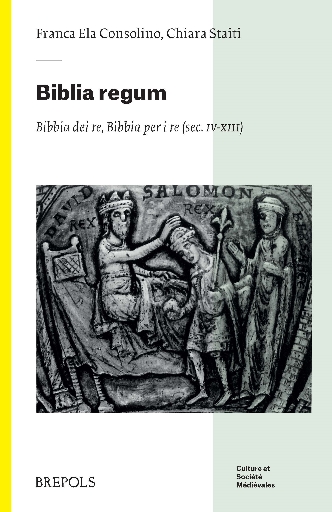
Biblia regum
show More to view fulltext, buy and share links for:Biblia regum show Less to hide fulltext, buy and share links for: Biblia regumThis volume collects contributions from the international conference Biblia regum. Bibbia dei re, Bibbia per i re (sec. iv-xiii) held at the University of L’Aquila, 16-17 April 2018. The collection sheds a new light on the relation between the Bible and royal authority in the late antique and medieval West. By focussing both on the use of biblical quotations and on distinct features of biblical manuscripts - such as dedications, comments, translations and illustrations - contributors investigate how the Bible functioned as a behavioural model to which rulers and their subjects should conform, as well as a text that supported royal power. Collectively, the contributions address significant aspects of the layered interconnection between royal power and the Holy Writ, and lead to a fruitful dialogue between different fields of research.
-
-
-
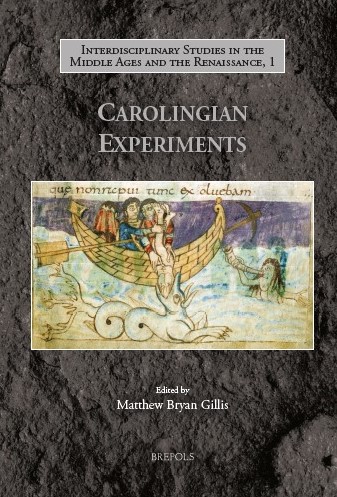
Carolingian Experiments
show More to view fulltext, buy and share links for:Carolingian Experiments show Less to hide fulltext, buy and share links for: Carolingian ExperimentsThis volume presents essays exploring how the Carolingians (ca. 700-ca. 900 CE) - a regime known especially for concerns over imperial power, order, and moral correction - fostered a remarkable era of experimentation in medieval Europe. The scholars featured here ask new questions and conduct their own methodological experiments to uncover some of the many ways that people innovated within the Carolingian world. To that end, numerous themes are covered in this volume: culture and society, family and politics, religion and spirituality, literature and historiography, law and hierarchy, epistemology and science. This array of scholarly experiments reveals some of the range and depth of Carolingian invention. Furthermore, the essays consider how Carolingian innovation can be found in places both more and less known today, employing novel approaches to unearth some unexpected, even uncanny phenomena. This volume consequently offers a defamiliarizing view of the Franks, unveiling them as a people whose seemingly straightforward imperialism and reform were effective precisely because they stimulated and nurtured potent, creative impulses. In fact, one might argue that the Carolingian world’s conservative, moralizing authorities - despite, or perhaps at times because of, their determination to instil correct thought and behaviour in their subjects - fostered many varieties of experimentation. Collectively, the authors of this volume seek to inspire new thinking about the Carolingians, while modelling alternative approaches and potential avenues for future research. Carolingian Experiments overall encourages readers to see that much remains unexplored, unknown and even unexpected about the Carolingians and their world.
-
-
-
Chronicle, Crusade, and the Latin East
show More to view fulltext, buy and share links for:Chronicle, Crusade, and the Latin East show Less to hide fulltext, buy and share links for: Chronicle, Crusade, and the Latin EastChronicle, Crusade, and the Latin East offers a collection of essays exploring three closely connected thematic areas: the narrative traditions surrounding the early crusading movement, the influence of these textual traditions on wider processes of medieval historical writing and storytelling, and the history of crusading and the Latin East.
In recent years, the field of crusade studies has witnessed a significant groundswell of scholarly work, with particular emphasis on the narrative construction of crusading deeds in text and song, of the important role played by memory and memorialisation in transmitting crusading tales and promoting participation, and the nature of life in the Latin states of the East. This volume not only engages with, and offer fresh insights into, these topics, but also serves as a monument to the career of Susan B. Edgington, who has done so much to increase modern understanding of crusade narratives and the crusading past, and who has made a significant impact on the careers of many scholars. The collection of essays gathered here by established and early career historians, Edgington’s friends and students, thus furthers the study of both crusading as narrative and crusading as a lived experience.
-
-
-
Communities, Environment and Regulation in the Premodern World
show More to view fulltext, buy and share links for:Communities, Environment and Regulation in the Premodern World show Less to hide fulltext, buy and share links for: Communities, Environment and Regulation in the Premodern WorldWho had a say in making decisions about the natural world, when, how and to what end? How were rights to natural resources established? How did communities handle environmental crises? And how did dealing with the environment have an impact on the power relations in communities? This volume explores communities’ relationship with the natural environment in customs and laws, ideas, practices and memories. Taking a transregional perspective, it considers how the availability of natural resources in diverse societies within and outside Europe impacted mobility and gender structures, the consolidation of territorial power and property rights. Communities, Environment and Regulation in the Premodern World marks Peter Hoppenbrouwers’s career, spanning over three decades, as a professor of medieval history at Leiden University.
-
-
-
Constructing Iberian Identities, 1000–1700
show More to view fulltext, buy and share links for:Constructing Iberian Identities, 1000–1700 show Less to hide fulltext, buy and share links for: Constructing Iberian Identities, 1000–1700Over the past several decades, scholars of medieval and early modern Iberia have transformed the study of the region into one of the most vibrant areas of research today. This volume brings together twelve essays from a diverse group of international historians who explore the formation of the multiple and overlapping identities, both individual and collective, that made up the Iberian peninsula during the eleventh through seventeenth centuries. Individually, the contributions in this volume engage with the notion of identity in varied ways, including the formation of collective identities at the level of the late medieval city, the use of writing and political discourse to construct or promote common political or socio-cultural identities, the role of encounters with states and cultures beyond the peninsula in identity formation, and the ongoing debates surrounding the peninsula’s characteristic ethno-religious pluralism.Collectively, these essays challenge the traditional dividing line between the medieval and early modern periods, providing a broader framework for approaching Iberia’s fragmented yet interconnected internal dynamics while simultaneously reflecting on the implications of Iberia’s positioning within the broader Mediterranean and Atlantic worlds.
-
-
-

Crossing Disciplinary Boundaries in Studies of the Viking Age
show More to view fulltext, buy and share links for:Crossing Disciplinary Boundaries in Studies of the Viking Age show Less to hide fulltext, buy and share links for: Crossing Disciplinary Boundaries in Studies of the Viking AgeWhat happens when scholars cross outside the perceived ‘boundaries’ of their discipline? What problems arise when a scholar trained in one field employs materials or methodologies from an adjacent subject area, engaging with new sources, research methodologies, and traditions, and how can such issues be resolved? Taking as its starting point the increasing shift towards interdisciplinarity seen within Viking-age studies, this collection of essays aims to explore the benefits and pitfalls that can arise from crossing disciplinary borders in this area, and to gain new knowledge about how to address issues that have occurred in previous examples of interdisciplinary combinations. The volume draws together contributions from authors in different disciplines, among them philology, history, archaeology, literary studies, folklore studies and history of religion, in order to hold a constructive and multi-perspective discussion on the benefits and issues arising from interdisciplinary research in studies of the Viking Age. Together, these chapters aim to bridge the gap that often exists between scholars from adjacent fields of research, and in doing so, to stimulate the trend in interdisciplinary approaches to research that can improve our understanding of the past.
-
-
-

Crusading and Ideas of the Holy Land in Medieval Britain
show More to view fulltext, buy and share links for:Crusading and Ideas of the Holy Land in Medieval Britain show Less to hide fulltext, buy and share links for: Crusading and Ideas of the Holy Land in Medieval BritainCrusading and western interaction with the Holy Land is often a contentious topic, not least because modern popular perception of medieval east-west contact is that it was defined by violence, conquest, and religious persecution. Building on recent scholarship, this collection of essays takes an interdisciplinary approach to the role of crusading and contact with the Holy Land in medieval Britain in order to investigate the myriad ways in which these contacts influenced artistic, literary, visual, and social culture in medieval Britain. By looking at new material and focusing on the domestic response to crusading and the Holy Land, the contributions gathered here offer new insights into the influence of these contacts on the medieval British world view, as well as their impact on topics such as ideals about masculinity and kingship, geographical perception, and aspirational codes of conduct for the medieval British elite.
-
-
-
Disciplined Dissent in Western Europe, 1200–1600
show More to view fulltext, buy and share links for:Disciplined Dissent in Western Europe, 1200–1600 show Less to hide fulltext, buy and share links for: Disciplined Dissent in Western Europe, 1200–1600This innovative collection explores the causes and effects of ‘disciplined dissent’ - forms of protest or political action positioned between the poles of submission and defiance. To identify the political influence of commoners, the emphasis is neither ‘top down’ nor ‘bottom up’ but on mutual influence and the interplay between rulers and ruled. Contributions concerning quite diverse polities show a careful opposition of non-elite people through an effort to respect the legislative system and to find common ground with the authorities. The aim was to emphasize aspects of the norms and institutions in favour of the benefit of the community, or to ensure adjustments of some aspects if found to be beneficial for the few and detrimental for many. The examination of non-violent pressure can help us to have a more exhaustive understanding of the protagonists, causes, and effects of socio-political changes in contexts of governmental development. The analysis includes cases of violent action that managed to secure royal approval. The premise of the book is that inequality, far from being accepted as normal and inevitable, was frequently questioned by less powerful people. When targeted by more or less evident forms of political marginalization, they laid claim to principles of justice and on this basis developed a critical comprehension of government, pursued a selective rejection of injustice, and gained recognition through negotiation.
-
-
-
Intercultural Encounters in Medieval Greece after 1204
show More to view fulltext, buy and share links for:Intercultural Encounters in Medieval Greece after 1204 show Less to hide fulltext, buy and share links for: Intercultural Encounters in Medieval Greece after 1204Based on the evidence of artistic production and material culture this collective volume aims at exploring cross-cultural relations and interaction between Greeks and Latins in late medieval Greece in the aftermath of the Fourth Crusade. Fourteen essays discuss mostly new and unpublished archaeological and artistic material, including architecture, sculpture, wall-paintings and icons, pottery and other small finds, but also the evidence of music and poetry. Through the surviving material of these artistic activities this volume explores the way Byzantines and Latins lived side by side on the Greek mainland and the Aegean islands from the thirteenth to the fifteenth centuries and traces the mechanisms that led to the emergence of the new, composite world of the Latin East. Issues of identity, patronage, papal policy, the missionary activities of the Latin religious orders and the reactions and responses of the Byzantines are also re-considered, offering fresh insights into and a better understanding of the various manifestations of the interrelationship between the two ethnicities, confessions and cultures.
-
-
-

Monastic Communities and Canonical Clergy in the Carolingian World (780–840)
show More to view fulltext, buy and share links for:Monastic Communities and Canonical Clergy in the Carolingian World (780–840) show Less to hide fulltext, buy and share links for: Monastic Communities and Canonical Clergy in the Carolingian World (780–840)In the years 816-819, a series of councils was held at the imperial palace in Aachen. The goal of the meetings was to settle a number of questions about ecclesiastical organization. These issues were hotly debated throughout the Christian Roman Empire of the fourth and fifth centuries, and then reinvigorated by the renewal of empire under Charlemagne and his son Louis the Pious. At the centre of the ensuing debate stood the distinction between monks and monastic communities on the one hand, and the so-called clerici canonici and their communities on the other. Many other reforms were proposed in its wake: the position of the episcopacy needed to be renegotiated, the role of the imperial court needed to be consolidated, and the place of every Christian within the renewed Carolingian Church needed to be redefined. What started out as a seemingly straightforward reorganisation of the religious communities that dotted the Frankish ecclesiastical landscape thus quickly turned into a broad movement that necessitated an almost complete categorization of the orders of the Church. The contributions to this volume each zoom in on various aspects of these negotiations: their prehistory, their implementation, and their influence. In doing so, previously held assumptions about the scope, the goals, and the impact of the ‘Carolingian Church Reforms’ will also be re-assessed.
-
-
-
Order into Action
show More to view fulltext, buy and share links for:Order into Action show Less to hide fulltext, buy and share links for: Order into ActionThe construction (and application) of models that order complex phenomena such as ‘the world’ is not a ‘neutral’ activity: theoretical models and ideas help us to perceive and categorize the information conveyed by experience and tradition alike; in turn, they also influence the behaviour and actions of individuals and groups.
Collecting a global series of case studies on premodern societies, this volume proposes new research into premodern models of world-order and their effects. With its focus on the period between c. 1300 and 1600, it seeks to open up fresh perspectives for premodern Global History and the analysis of phenomena of transcultural contact and exchange.
Focussing on religious, political, and geographical ideas and models, the contributions explore whether and how large-scale concepts influenced or even determined concrete actions. The examples include socio-religious concepts (Christianity, terra paganorum, dār al-harb), political concepts (empire) and geographical notions. A special section is dedicated to comparative insights into societies in Sub-Saharan Africa, Australia, and pre-Columbian America. Taken together, the contributions underline the importance and effects of historically shaped cultural traits in the long term.
-
-
-
Pierre Abélard, génie multiforme
show More to view fulltext, buy and share links for:Pierre Abélard, génie multiforme show Less to hide fulltext, buy and share links for: Pierre Abélard, génie multiformeÉtudiant terrible et maître illustre, amant légendaire et logicien virtuose, moine instable et abbé réformateur, poète de génie et philosophe précurseur, théologien prestigieux et deux fois condamné pour hérésie, auteur entre autres de commentaires sur Porphyre et sur la Bible, de traités sur la dialectique et sur la Trinité, de poèmes amoureux et liturgiques, et encore - dans le même dossier - d’une autobiographie controversée, d’une correspondance passionnée et d’une règle religieuse, Pierre Abélard n’est pas seulement une des figures les plus célèbres de tout le Moyen Âge, il en est aussi, comme homme, comme écrivain et comme penseur, une des plus riches, des plus complexes et des plus insaisissables. Aussi a-t-il semblé utile de rassembler autour de sa personne - il en aurait sûrement été ravi - quelques spécialistes parmi les meilleurs de l’histoire, de la logique, de l’éthique, de la théologie, du droit, de la littérature et de l’historiographie du Moyen Âge.
-
-
-

Qui nous délivrera du grand Alexandre le Grand
show More to view fulltext, buy and share links for:Qui nous délivrera du grand Alexandre le Grand show Less to hide fulltext, buy and share links for: Qui nous délivrera du grand Alexandre le GrandBien que la dérision s’inscrive aux marges du corpus littéraire et artistique sur Alexandre, il existe une veine comique qui rabaisse le souverain le plus prestigieux de l’Antiquité, avec une tonalité joyeuse ou bien plus grave et accusatrice. Si elle ne cesse d’évoluer au fil des siècles tant le rire, l’irrévérence et la satire sont ancrés dans l’historicité, elle s’affirme, dans ses différentes incarnations esthétiques, comme un discours parallèle, un discours d’à côté, qui devient parfois un véritable contre-discours. L’objet de ce volume est ainsi d’entamer une analyse diachronique - qui n’a encore jamais été menée - des modes de dérision à l’encontre d’Alexandre et de ce qu’il incarne, de leurs significations et de leurs motivations. Comique divertissant, célébration paradoxale d’une icône de la royauté, satire politique de la mégalomanie et de l’autoritarisme, ou parodie révélatrice d’un rejet de conventions esthétiques et de leurs instrumentalisations politiques et culturelles : les écritures visuelles et textuelles de la dérision à l’encontre du grand Alexandre le Grand engagent tous ces aspects depuis l’Antiquité.
-
-
-
Rewriting History in the Central Middle Ages, 900–1300
show More to view fulltext, buy and share links for:Rewriting History in the Central Middle Ages, 900–1300 show Less to hide fulltext, buy and share links for: Rewriting History in the Central Middle Ages, 900–1300In the Middle Ages, rewriting history was a distinct activity within the larger sphere of historical writing. Rewriting started with existing historical accounts, recasting them into new forms as new stories about the past. Changes in circumstances drove rewriting, encouraging historically literate writers and their patrons to examine their histories anew, to jettison what no longer made sense or was useful, and to supply new material to fill gaps or expand ideas. Writers rewrote not only for the present and future, but also for the past. They curated the past and reorganized its intellectual artifacts, thereby revealing new facets of old history to future eyes.
Rewriting was a defining characteristic of the central Middle Ages (900-1300), distinct both from earlier traditions of universal history and from later traditions of making continuations which left the narrative core intact. Reimagining the past by rewriting happened across genres, in the vernaculars as well as the universal languages of Latin and Greek, and across Europe, west and east. The chapters in this book explore the reasons and methods for rewriting, ranging across the Anglo-Norman realm, France and Flanders, Christian Iberia, Norman Italy and the Mediterranean, Byzantium, and Georgia and Armenia. Together, they show a set of rewriters who made themselves the authorities for their own age.
-
-
-
Royal Nunneries at the Center of Medieval Europe
show More to view fulltext, buy and share links for:Royal Nunneries at the Center of Medieval Europe show Less to hide fulltext, buy and share links for: Royal Nunneries at the Center of Medieval EuropeThe contributions of this special issue - proceedings of the conference on royal nunneries that took place in Prague in July 2020 - focus on the monasteries connected to the ruling houses, which were endowed with special privileges and enriched by royal and aristocratic donations, often serving as instrumenta regni. They are introduced as active cultural hubs, stages for royal and courtly promotion, and places of personal and dynastic self-representation. This includes female monasteries, the agency of female élites in medieval society and their role as patrons and addressees of works of art.
-
-
-
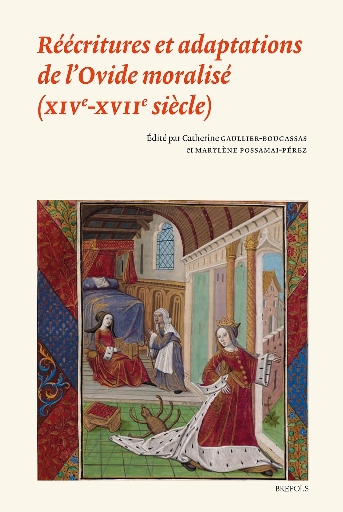
Réécritures et adaptations de l’Ovide moralisé (xiv e-xvii e siècle)
show More to view fulltext, buy and share links for:Réécritures et adaptations de l’Ovide moralisé (xiv e-xvii e siècle) show Less to hide fulltext, buy and share links for: Réécritures et adaptations de l’Ovide moralisé (xiv e-xvii e siècle)L’Ovide moralisé a joué un rôle significatif pour la connaissance des mythes antiques et la création de nouvelles œuvres littéraires qui se les approprient au moins jusque dans la première moitié du xvi e siècle, avant qu’il ne soit moqué et condamné. Dès son écriture au xiv e siècle, cette traduction en langue française des Métamorphoses d’Ovide accompagnée d’interprétations chrétiennes a rapidement connu le succès et une diffusion large auprès de publics divers qui la lisaient souvent, elle et ses gloses, plutôt que l’œuvre latine d’Ovide. De nombreux auteurs en français, en latin ou en anglais se sont inspirés de son texte pour créer leurs propres représentations littéraires de héros et héroïnes antiques, dans des œuvres poétiques, didactiques et historiographiques, ou pour élaborer leurs écritures de la moralisation. Les deux mises en prose de l’Ovide moralisé à la cour d’Anjou et à la cour de Bourgogne, les réécritures et remaniements qui sont ensuite imprimés, la traduction anglaise imprimée par William Caxton ont aussi contribué à prolonger l’influence qu’il a exercée. Cette dernière se lit aussi sans nul doute dans certaines des nouvelles traductions des Métamorphoses qui sont composées au xvi e siècle. Si cette influence a souvent été notée, si des emprunts de poètes du xiv e et du xv e siècles - Guillaume de Machaut, Jean Froissart, Eustache Deschamps, Christine de Pizan, Chaucer, Gower - ont été étudiés, la postérité de l’Ovide moralisé reste encore pour une large part à explorer. C’est l’objet de ce volume collectif, le premier qui soit consacré à la réception du texte du xive au xviie siècle.
-
-
-
Sainthood, Scriptoria, and Secular Erudition in Medieval and Early Modern Scandinavia
show More to view fulltext, buy and share links for:Sainthood, Scriptoria, and Secular Erudition in Medieval and Early Modern Scandinavia show Less to hide fulltext, buy and share links for: Sainthood, Scriptoria, and Secular Erudition in Medieval and Early Modern ScandinaviaWhile medieval Iceland has long been celebrated and studied for its rich tradition of vernacular literature, in recent years attention has increasingly been paid to other areas of Old Norse-Icelandic scholarship, in particular the production of hagiographical and religious literature. At the same time, a similar renaissance has arisen in other fields, in particular Old Norse-Icelandic paleography, philology, and manuscript studies, thanks to the development of the so-called ‘new philology’, and its impact on our understanding of manuscripts. Central to these developments has been the scholarship of Kristen Wolf, one of the foremost authorities in the fields of Old Norse-Icelandic hagiography, biblical literature, paleography, codicology, textual criticism, and lexicography, who is the honorand of this volume.
Taking Prof. Wolf’s own research interests as its inspiration, this volume takes an unprecedented interdisciplinary approach to the theme of Sainthood, Scriptoria, and Secular Erudition in Medieval and Early Modern Scandinavia in order both to celebrate Wolf’s profound career, and to illustrate the many ways in which these seemingly different fields overlap and converse with each other in important and productive ways. From sculpture to sagas, and from skaldic verse to textual editions and the translation of hitherto unpublished works, the contributions gathered here offer new and important insights into our knowledge of medieval and early modern Scandinavian literature, history, and culture.
-
-
-

The Cult of Saints in Nidaros Archbishopric
show More to view fulltext, buy and share links for:The Cult of Saints in Nidaros Archbishopric show Less to hide fulltext, buy and share links for: The Cult of Saints in Nidaros ArchbishopricScandinavia has often been considered as a peripheral part of the Christian world, with its archbishopric in Nidaros an isolated outpost of the Catholic Church. This volume, however, offers a reassessment of such preconceptions by exploring the way in which the Nidaros see celebrated the cult of saints and followed traditions that were both part of, and distinct from, elsewhere in Christian Europe. The contributions gathered here come from specialists across different disciplines, among them historians, philologists, art historians, and epigraphists, to offer a multifaceted insight into how texts and objects, sculpture, runes, and relics all drove the cult of saints in this northern corner of Europe. In doing so, the volume offers a nuanced understanding of the development of cults, the saints themselves, and their miracles, not only in the Norse world, but also more widely.
-