


BOB2022MOOT

Collection Contents
2 results
-
-

Commento al profeta Abacuc
show More to view fulltext, buy and share links for:Commento al profeta Abacuc show Less to hide fulltext, buy and share links for: Commento al profeta AbacucGirolamo completa il Commentario al profeta Abacuc nel 393 e lo dedica all'amico Cromazio, vescovo di Aquileia. Nel percorso esegetico che lo vede impegnato a spiegare l'intero corpus profetico, l'interpretazione di Abacuc dipende fortemente da Origene, sulla cui eredità sorgerà proprio in quell'anno la famosa controversia. Girolamo offre un doppio commento, al testo ebraico e a quello greco dei Settanta. Al primo dedica una spiegazione per lo più letterale, mentre al secondo è riservata l'esegesi di stampo allegorico. Un punto qualificante del commento di Girolamo è la coerenza interpretativa, che riesce a stabilire anche fra l’esegesi dei primi due capitoli e il terzo, il cosiddetto cantico di Abacuc, che ha la forma di un salmo. I suoi predecessori, notando una certa estraneità fra la vicenda storica dell’oppressione di Nabucodonosor (cap. 1-2) e il cantico, avevano dato di quest’ultimo testo una lettura cristologica indipendente dall’interpretazione della prima parte. Girolamo, invece, riesce a congiungere nella sua esegesi anche quest’ultima parte (che verosimilmente risulta aggiunta da un redattore al testo profetico), anticipando e applicando il senso cristologico anche ai primi due capitoli grazie a inserti in cui annuncia proletticamente la venuta di Cristo.
La versione latina originale del testo proposto in traduzione in questo volume è pubblicata nella collana Corpus Christianorum. Series Latina con il titolo Hieronymus - Commentarius in Abacuc (CCSL 76-76A bis 1). I rimandi alle pagine corrispondenti dell’edizione sono forniti a margine di questa traduzione.
-
-
-
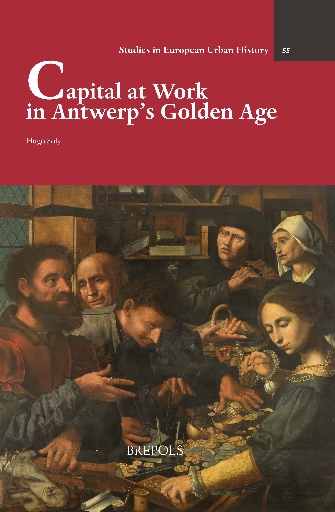
Capital at Work in Antwerp’s Golden Age
show More to view fulltext, buy and share links for:Capital at Work in Antwerp’s Golden Age show Less to hide fulltext, buy and share links for: Capital at Work in Antwerp’s Golden AgeErasmus Schetz, Gaspar Ducci, and Gilbert van Schoonbeke. Contemporaries made it indisputably clear that these three moneymakers were exceptional, from different perspectives and for different reasons, but all commentators implicitly or explicitly referred to their unique economic achievements, and they were right to do so. The exceptional careers of the three protagonists shed light on the potential of the most dynamic economic centre of Europe - and the world - during early globalization. Precisely because their economic initiatives were far more ambitious than what other businessmen in Antwerp could or would consider or achieve, their careers are ideal vantage points for observing and analysing ‘capital at work’. They also provide an opportunity to examine how commercial capitalism changed and/or was transformed, and in what measure the three protagonists extended the frontiers of capitalism.
-