


BOB2022MOOT

Collection Contents
1 - 20 of 24 results
-
-
Acts of John
show More to view fulltext, buy and share links for:Acts of John show Less to hide fulltext, buy and share links for: Acts of JohnThe Acts of John is a second- or third-century work of unknown authorship combining elements of the apocryphal acts and pious romance genres. It was labeled heretical by both Eusebius and Augustine, and condemned at the Second Council of Nicea (787). Scholars debate the influence of Gnosticism and docetism upon the work. This narrative presents the lifelong ministry of the apostle John preaching and performing miracles in Ephesus, Smyrna, and elsewhere. At different turns in the exciting account, John resurrects the dead, reunites families, heals the sick, confronts pagan opponents, commands bedbugs, and divulges mysteries about his travels with Jesus. The present edition offers the celebrated Greek text of Junod and Kaestli (Corpus Christianorum, Series Apocryphorum, 1-2, 1983) alongside a new English translation on the facing pages, complete with hundreds of cross-references and other helpful notes for the reader.
-
-
-
Arnobius Iunior, Praedestinatus
show More to view fulltext, buy and share links for:Arnobius Iunior, Praedestinatus show Less to hide fulltext, buy and share links for: Arnobius Iunior, PraedestinatusFor the first time in English, the Praedestinatus represents a moment in the fifteen-century old theological conversation in Latin Christianity about the topics of grace, predestination and free will. Written as a response to Augustine’s growing theological influence, this book should not merely be regarded as a work of apologetics, despite the author’s intention, but seen as breaking controversial new ground because of his claim that a small circle of heretics was acting as a ‘fifth column’ within the Church, undermining orthodox beliefs concerning God, his providence and all-inclusive love.
After a three hundred year hiatus since Jacques Sirmond’s 1643 editio princeps, interest in the Praedestinatus revived in the twentieth century thanks to German and French scholars who studied the book’s theological trajectory and claims. Its critical edition was eventually accomplished in 2000 by Italian scholar Franco Gori. The present translation is based on Gori’s edition.
-
-
-
Bede and the Beginnings of English Racism
show More to view fulltext, buy and share links for:Bede and the Beginnings of English Racism show Less to hide fulltext, buy and share links for: Bede and the Beginnings of English RacismThis book examines how the Venerable Bede constructs a racial order in his most famous historical writing, Ecclesiastical History of the English People, a remarkable eighth-century work known for how it combines myth and history into a compelling, charming narrative of the English conversion to Christianity. Yet Bede’s History also disturbingly deploys Scripture’s tropes and types, many of them anti-Jewish, to render unflattering sketches of some of Britain’s “races” (gentes)-especially the Britons.
To uncover the History’s characterizations of what it identifies as the British, Irish, English, and Latin races, Foley examines three of its episodes that narrate attempted conversions of the first three races- respectively-either to Christianity or to a better, more orthodox, catholic, Latin version of it. This close analysis exposes the theological dimensions of each episode’s racial constructions. Foley argues that, unlike modern conceptions of race, which are grounded in imagined biological difference, Bede’s is rooted in his perception of a particular race’s affective disposition, its habits of the heart. More than that, Bede closely ties a race’s disposition to its relative proximity to theological orthodoxy and catholicity. This book’s close reading also highlights surprising similarities between Bede’s medieval Christian discourse and modern, secular and white discourses on race.
-
-
-
Boire sous l’œil de Gorgias
show More to view fulltext, buy and share links for:Boire sous l’œil de Gorgias show Less to hide fulltext, buy and share links for: Boire sous l’œil de GorgiasPlato’s Symposium and Xenophon’s Symposium are unexpected and untapped sources on rhetoric and its links to the socio-religious rite of banqueting. They offer two different and sometimes opposing points of view on rhetoric, and both, contrary to what has often been said, include a critical view of the rituals of sociability. Plato and Xenophon both react to the realities of their times and suggest, each in his own way, that rhetoric, under certain conditions, can be a mode of conviviality, i.e. an intellectual tool, an exercise in citizenship learning, a research instrument, or even a step towards truth. In both cases, the tutelary and fascinating figure of Gorgias is summoned, sometimes to criticize the deadly rhetoric of the sophists which constitutes an obstacle to convivial dialogue, sometimes to promote a constructive practice of speech in the communicational and visual space that symposium creates.
-
-
-

Commento al profeta Abacuc
show More to view fulltext, buy and share links for:Commento al profeta Abacuc show Less to hide fulltext, buy and share links for: Commento al profeta AbacucGirolamo completa il Commentario al profeta Abacuc nel 393 e lo dedica all'amico Cromazio, vescovo di Aquileia. Nel percorso esegetico che lo vede impegnato a spiegare l'intero corpus profetico, l'interpretazione di Abacuc dipende fortemente da Origene, sulla cui eredità sorgerà proprio in quell'anno la famosa controversia. Girolamo offre un doppio commento, al testo ebraico e a quello greco dei Settanta. Al primo dedica una spiegazione per lo più letterale, mentre al secondo è riservata l'esegesi di stampo allegorico. Un punto qualificante del commento di Girolamo è la coerenza interpretativa, che riesce a stabilire anche fra l’esegesi dei primi due capitoli e il terzo, il cosiddetto cantico di Abacuc, che ha la forma di un salmo. I suoi predecessori, notando una certa estraneità fra la vicenda storica dell’oppressione di Nabucodonosor (cap. 1-2) e il cantico, avevano dato di quest’ultimo testo una lettura cristologica indipendente dall’interpretazione della prima parte. Girolamo, invece, riesce a congiungere nella sua esegesi anche quest’ultima parte (che verosimilmente risulta aggiunta da un redattore al testo profetico), anticipando e applicando il senso cristologico anche ai primi due capitoli grazie a inserti in cui annuncia proletticamente la venuta di Cristo.
La versione latina originale del testo proposto in traduzione in questo volume è pubblicata nella collana Corpus Christianorum. Series Latina con il titolo Hieronymus - Commentarius in Abacuc (CCSL 76-76A bis 1). I rimandi alle pagine corrispondenti dell’edizione sono forniti a margine di questa traduzione.
-
-
-
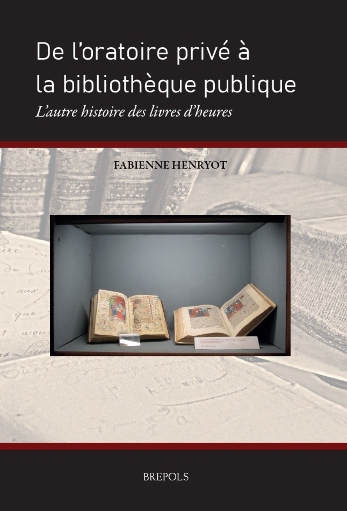
De l’oratoire privé à la bibliothèque publique
show More to view fulltext, buy and share links for:De l’oratoire privé à la bibliothèque publique show Less to hide fulltext, buy and share links for: De l’oratoire privé à la bibliothèque publiqueLes livres d’heures, best-seller durant six siècles, sont le meilleur témoin des mutations qui affectent l’objet-livre entre le xiv e et le xx e siècle. L’économie dans laquelle il s’insère, les mutations iconographiques et textuelles, enfin les usages symboliques qu’en font leurs propriétaires sont révélateurs des inflexions majeures que connaît le livre au cours du temps. Au-delà d’une classique histoire du livre, cet essai entend aussi et surtout prolonger la réflexion en direction des usages patrimoniaux des livres de prière : comment un livre conçu pour les oratoires domestiques renaît-il aujourd’hui dans les réserves climatisées des bibliothèques publiques d’Occident ? Ce parcours est retracé dans le détail, des cabinets des collectionneurs depuis le xvii e siècle jusqu’aux équipements culturels actuels, en passant par les salles des ventes, les bureaux des érudits depuis le xix e siècle, les manuels scolaires, les tables à dessin des enlumineurs amateurs. Une attention particulière est réservée aux politiques culturelles et aux mesures conservatoires édictées par l’État depuis le début du xix e siècle, et aux effets des « classements » sur les biens patrimoniaux.
Cette histoire des livres d’heures entend donc articuler le temps de la production et de la consommation d’une part, et celui des requalifications patrimoniales sur le temps long.
-
-
-
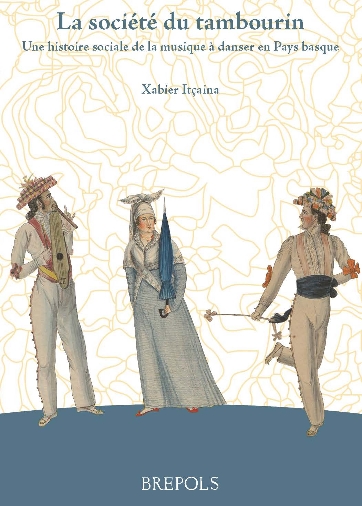
La société du tambourin
show More to view fulltext, buy and share links for:La société du tambourin show Less to hide fulltext, buy and share links for: La société du tambourinPlus vivaces que jamais, les traditions musicales et dansées du Pays basque peuvent parfois donner l’impression d’une intemporalité qui aurait traversé les siècles. Or, ici comme ailleurs, les traditions ont une histoire, et seule l’analyse du temps long permet de restituer l’épaisseur des permanences, mutations, emprunts qui émaillent l’histoire de la musique et des danses sur ce territoire. Ce livre s’attache à résoudre l’énigme du recours contemporain à la tradition en analysant l’historicité de la musique à danser et de ses usages sociaux. Des ménétriers rehaussant les corporations urbaines d’Ancien régime jusqu’aux usages sociopolitiques contemporains de la farce charivarique en passant par la relecture de la musique par le mouvement culturel basque au xix e siècle, ce livre propose un voyage à la fois musical et sociohistorique qui, bien au-delà du cas basque, informe sur notre rapport sélectif aux héritages culturels.
-
-
-
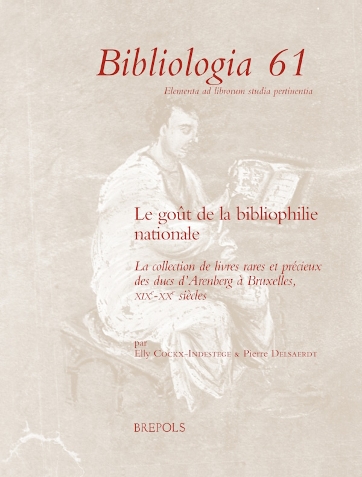
Le goût de la bibliophilie nationale
show More to view fulltext, buy and share links for:Le goût de la bibliophilie nationale show Less to hide fulltext, buy and share links for: Le goût de la bibliophilie nationaleDans ce volume, les auteurs présentent le résultat de leurs recherches sur la célèbre Collection spéciale du duc Engelbert-Auguste d’Arenberg (1824-1875). Cette bibliothèque de premier plan se trouvait à Bruxelles, tout près du Palais d'Egmont où la famille d'Arenberg possédait déjà une importante bibliothèque d'étude et de lecture.
La Collection spéciale était constituée en majeure partie d’imprimés des anciens Pays-Bas datant des xv e et xvi e siècles. Elle s'attacha à illustrer l'histoire des Pays-Bas et l'ancienne littérature en néerlandais et doit donc être comprise comme témoignage de la patrimonialisation du livre au xix e siècle. Il s'agissait d'une collection de tout premier ordre, avec bon nombre d'incunables et post-incunables fort rares et même uniques.
Les auteurs situent la Collection spéciale dans le contexte des orientations de la bibliophilie belge au xix e siècle. Ils la reconstituent et en analysent le contenu. Ils décrivent également la façon dont elle fut assemblée, puis dispersée. Si la Collection spéciale d'Arenberg parvint à ce degré de perfection, c'est entre autres grâce à l'acquisition de nombreux volumes rarissimes et même uniques ayant fait partie de la bibliothèque du bibliophile gantois Constant Philippe Serrure (1805-1872).
Malheureusement, la Collection spéciale n'eut pas la vie longue. Au cours des années 1950, elle fut graduellement vendue. Aujourd'hui, des volumes ayant fait partie de la Collection spéciale se trouvent dans d'importantes bibliothèques européennes et américaines, de Bruxelles à Washington. C'est ce qui fait le prix du catalogue raisonné de la collection, riche de 1418 numéros qui sont ici décrits en détail.
-
-
-
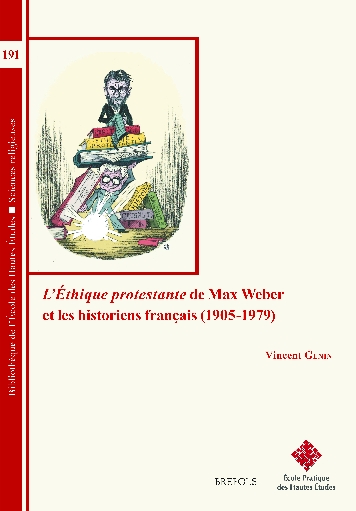
L’Éthique protestante de Max Weber et les historiens français (1905-1979)
show More to view fulltext, buy and share links for:L’Éthique protestante de Max Weber et les historiens français (1905-1979) show Less to hide fulltext, buy and share links for: L’Éthique protestante de Max Weber et les historiens français (1905-1979)Voici un siècle que Max Weber est mort. Ses thèses, parfois audacieuses, font encore couler beaucoup d’encre aujourd’hui. Auteur en sciences humaines parmi les plus lus, cités, convoqués dans la sphère publique et intellectuelle, le sociologue allemand du début du xx e siècle avait avancé que l’essor du capitalisme au xvi e siècle puisait certaines de ses origines dans la conduite quotidienne des protestants puritains anglais. C’est la thèse d’un chercheur inclassable. Les historiens francophones, de Lucien Febvre à Fernand Braudel, en passant par Henri Pirenne, seront des obstacles, à de rares exceptions, à la diffusion des thèses de Weber, qui mirent plusieurs décennies avant d’être traduites en français. Ce livre porte sur l’histoire d’un refus, d’une absence de désir d’une communauté de savoir à l’égard d’un auteur auquel on reproche de maltraiter la causalité en histoire, de pratiquer l’anachronisme, le jugement de valeur, de jargonner, d’incarner une science allemande dont la rationalité n’a pas évité deux guerres mondiales et d’avoir lancé un défi hors norme à la notion de discipline. Cette occultation de Weber donne à voir un impensé des intellectuels et des historiens dans la France du xx e siècle. Ce qu’ils n’ont pas lu ou refusent de comprendre nous informe avant tout sur eux-mêmes.
-
-
-
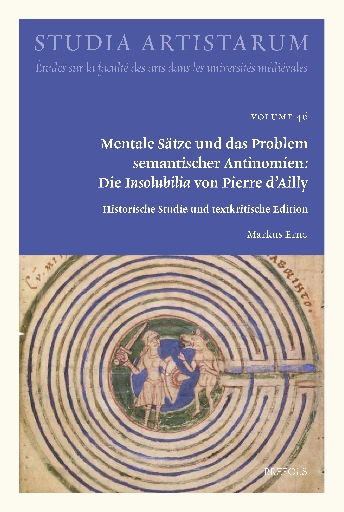
Mentale Sätze und das Problem semantischer Antinomien: Die Insolubilia von Pierre d’Ailly
show More to view fulltext, buy and share links for:Mentale Sätze und das Problem semantischer Antinomien: Die Insolubilia von Pierre d’Ailly show Less to hide fulltext, buy and share links for: Mentale Sätze und das Problem semantischer Antinomien: Die Insolubilia von Pierre d’AillyPierre d’Aillys Insolubilia, verfasst um 1372 an der Universität von Paris, sind ein wichtiges Zeugnis in der Geschichte der Logik und Philosophie des späten Mittelalters. Sie erfreuten sich bereits eine Generation nach ihrer Entstehung aufgrund ihres klaren Stils großer Beliebtheit bei zeitgenössischen Autoren und stießen noch über das 15. Jahrhundert hinaus auf reges Interesse. Ihr Thema - semantische Antinomien wie die berühmte Antinomie des Lügners - wurde seit dem späten 12. Jahrhundert für mehr als drei Jahrhunderte an den Artes-Fakultäten kontrovers diskutiert, eine reich überlieferte Insolubilia-Literatur entstand. Indem Antinomien wie der „Lügner“ mit dem aristotelischen Gesetz vom Widerspruch in Konflikt stehen, fordern sie die traditionelle Logik in einem ihrer wichtigsten Prinzipien heraus. Die sophismatische Disputation solcher Non-Standard-Materialien führte so zur Analyse der fundamentalen Begriffe des Satzes, der Wahrheit und der Bedeutung. Abhandlungen wie die Insolubilia Pierre d’Aillys geben damit einen Einblick in die zur Zeit des Autors vertretenen Positionen zum Verhältnis von Sprache, Geist und Wirklichkeit. Die vorliegende Edition ist die erste moderne, textkritische Edition der Insolubilia und basiert auf Grundlage aller Zeugen des Textes. Sie bietet dem heutigen Leser erstmals einen zuverlässigen und authentischen Text des Traktats.
-
-
-
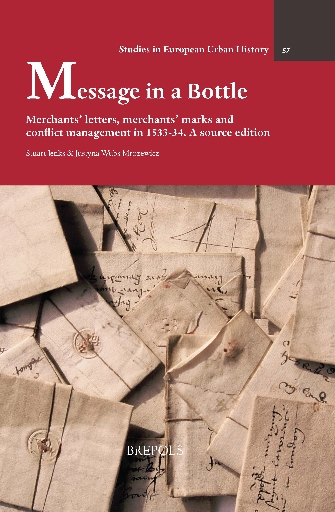
Message in a Bottle
show More to view fulltext, buy and share links for:Message in a Bottle show Less to hide fulltext, buy and share links for: Message in a BottleIn 1533, a batch of merchant letters was to be delivered from Antwerp to London. They never reached their destination, and were only opened in a Hanseatic archive almost 500 years later. Like a message in a bottle, the letters unfold unknown individual stories and large-scale drama. They offer a fascinating glimpse into the world of the early 16th century, from hard-nosed business and prices in code sent to a wife, to the fond greetings of an English father to his three young sons or a secretive message of a grandmother from Antwerp. At the backdrop, war was looming: the letters were part of a booty taken in the English Channel in August of 1533. Lübeck privateers plundered six neutral ships, carting the goods of English, Dutch, Spanish, Venetian and Hanseatic merchants off to Lübeck and Hamburg. As a result, Henry VIII of England exploded with rage and restitution claims were made. Soon after, Lübeck realized the potential political cost of the action and an administrative machinery for the return of the booty was set in motion. Extensive documentation was produced under the eye of notaries, providing an overview of properties of the involved parties, including many merchant marks.
The combination of unique letters and administrative documents offers new openings into the study of economic, political and social history of pre-modern northern Europe. Highlights are the migration of people and goods, resourceful conflict management and the voice of ordinary people, captured in their letters.
-
-
-
Participation in Heavenly Worship
show More to view fulltext, buy and share links for:Participation in Heavenly Worship show Less to hide fulltext, buy and share links for: Participation in Heavenly WorshipThe idea of participation in heavenly worship is a fascinating perspective on the Christian Eucharistic liturgy. Although somewhat forgotten in modern times, the early church knew it as a central aspect of meaning in interpretations of the Eucharistic rite. Through this rite worshippers could see themselves in communion with angels and saints in the eternal liturgy of heaven. Interpretations along such lines emerge clearly in catechesis and homilies from the fourth century onwards, and continue to develop in the following centuries, especially in the eastern liturgical traditions. The question remains, however, what are the origins of this concept?
In Participation in Heavenly Worship, Sverre Lied explores how the relations between the earthly and heavenly realms were understood within the context of Christian worship during the first three centuries CE. He argues that the idea of participation is an aspect of Christian worship that may be traced back to Jewish Christian apocalyptic mysticism, and shows how this concept, with considerable variations, was preserved and developed during the following centuries. These observations also shed new light on the appearance of the Sanctus in the Eucharistic liturgy.
-
-
-
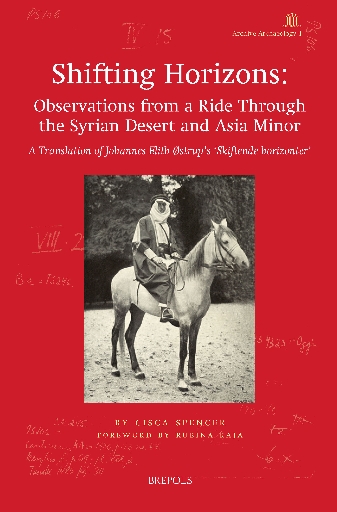
Shifting Horizons
show More to view fulltext, buy and share links for:Shifting Horizons show Less to hide fulltext, buy and share links for: Shifting HorizonsJohannes Elith Østrup (1867-1938), son of a Danish farmer, philologist of Turkish and Semitic languages, and later Vice Chancellor of Copenhagen University, spent 1891-1893 travelling by horse around Syria, Lebanon, and Anatolia. Unlike most European travellers, his language skills allowed him to chat with locals in cafés, stay in people’s homes, and travel with the Bedouin. A curious young man, Østrup travelled with eyes, ears, and mind open to the unknown, and recorded his journey in this lively travelogue, Skiftende horizonter (1894). His writing offers a vivid account of his time in the region, and dwells with equal interest on both the region’s broader political, ethnic, and religious struggles, and the day-to-day concerns of those who lived there.
Now, for the first time, this text is available to English-speaking readers thanks to this translation by Cisca Spencer, Østrup’s great granddaughter and a former Australian diplomat. With a foreword by Rubina Raja, Professor of Classical Archaeology at Aarhus University, together with Østrup’s own photographs and new maps, this volume captures all the charm and enthusiasm of the original in bringing this nineteenth-century travelogue to a modern readership.
-
-
-

The Heresy of the Brothers, a Heterodox Community in Sixteenth-Century Italy
show More to view fulltext, buy and share links for:The Heresy of the Brothers, a Heterodox Community in Sixteenth-Century Italy show Less to hide fulltext, buy and share links for: The Heresy of the Brothers, a Heterodox Community in Sixteenth-Century ItalyAround the mid-sixteenth century, one of the largest Italian heterodox communities developed in Modena: the community of ‘Brothers’. At the beginning of the century, a flourishing humanistic tradition had inspired protests against the authority of the Church and had led many of the city’s prominent figures to sympathize with Luther and the Reformation. Over the following decades, such positions became more extreme: most of the ‘Brothers’ held radical convictions, ranging from belief in predestination to contestation of the Antichrist pope. In some cases, the ‘Brothers’ even went so far as to deny the value of baptism.
This heterodox community in Modena created a hidden network for the free expression of its reformed faith. Within twenty years, however, the election of Pope Pius V (1566-1572) and the consolidation of the Holy Office led to a harsh campaign to disperse dissenters in the city. Despite the protection of illustrious members of the Roman Catholic hierarchy, the bishops of Modena, and the dukes of Ferrara, the Holy Office succeeded in repressing the community. The history of the ‘Brothers’ of Modena therefore provides a case study for understanding how the Inquisition influenced the balance of religious Italy, changing the face of the Peninsula forever.
-
-
-

Traité sur la prédication de la croisade
show More to view fulltext, buy and share links for:Traité sur la prédication de la croisade show Less to hide fulltext, buy and share links for: Traité sur la prédication de la croisadeLe traité De predicatione crucis, composé vers 1266-1268 par Humbert de Romans, le cinquième maître général de l’ordre dominicain, est sans doute l’instruction la plus détaillée pour les prédicateurs de la croix dont nous disposons. L’auteur donne ses commentaires sur les questions qu’il croit d’être les plus essentielles pour prêcher la croisade, sans pourtant donner des sermons prêts à être prononcés: le prédicateur est censé composer le sermon lui-même en utilisant le traité comme manuel. Il procure aussi des extraits de la Bible et des textes non-bibliques pour le même but.
Le texte latin, dont on trouvera ici la traduction, a été édité dans Humbertus de Romanis, De predicatione crucis (Corpus Christianorum. Continuatio Mediaeualis 279). Des renvois aux pages correspondantes de l'édition sont fournis dans les marges de cette publication.
-
-
-
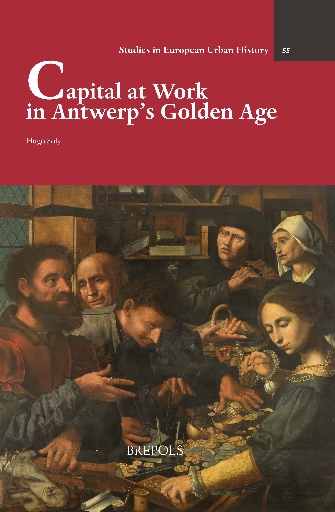
Capital at Work in Antwerp’s Golden Age
show More to view fulltext, buy and share links for:Capital at Work in Antwerp’s Golden Age show Less to hide fulltext, buy and share links for: Capital at Work in Antwerp’s Golden AgeErasmus Schetz, Gaspar Ducci, and Gilbert van Schoonbeke. Contemporaries made it indisputably clear that these three moneymakers were exceptional, from different perspectives and for different reasons, but all commentators implicitly or explicitly referred to their unique economic achievements, and they were right to do so. The exceptional careers of the three protagonists shed light on the potential of the most dynamic economic centre of Europe - and the world - during early globalization. Precisely because their economic initiatives were far more ambitious than what other businessmen in Antwerp could or would consider or achieve, their careers are ideal vantage points for observing and analysing ‘capital at work’. They also provide an opportunity to examine how commercial capitalism changed and/or was transformed, and in what measure the three protagonists extended the frontiers of capitalism.
-
-
-
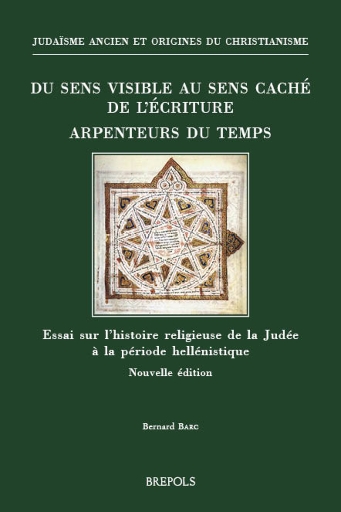
Du sens visible au sens caché de l’Écriture. Arpenteurs du temps
show More to view fulltext, buy and share links for:Du sens visible au sens caché de l’Écriture. Arpenteurs du temps show Less to hide fulltext, buy and share links for: Du sens visible au sens caché de l’Écriture. Arpenteurs du tempsLa rédaction finale de la Torah est communément datée de période perse (entre 400 et 350 avant notre ère). C’est à partir de cette époque que « la Bible » aurait occupé une place centrale dans la religion judéenne. L’artisan de cette réforme aurait été un grand prêtre venu de Babylone, Esdras. Il aurait bénéficié du soutien officiel d’un roi perse. Cette version des faits s’est imposée depuis que les juifs et les chrétiens ont reconnu le statut de « texte sacré » au livre d’Esdras. Aujourd’hui encore la plupart des spécialistes retiennent ce scénario, au moins dans ce qu’il a d’essentiel : « la Torah serait devenue la clé de voûte de la religion judéenne à la période perse ». Il existe pourtant une autre version dont le scénario est identique, mais dans laquelle les noms et les dates sont autres. La réforme aurait eu lieu, non pas à la période perse, mais deux siècles plus tard à la période hellénistique. La Torah aurait bien été promulguée par un grand prêtre, mais son nom serait Siméon fils d’Onias. Il serait bien venu de l’étranger, mais d’Égypte. Il aurait bénéficié du soutien d’un roi étranger, mais d’un roi grec d’Alexandrie. Le texte fondateur des religions juive et chrétienne a-t-il été « écrit » par Esdras pour une communauté judéenne encore imprégnée de sa culture traditionnelle ou par Siméon pour une élite sacerdotale largement ouverte à la culture hellénistique ? Son auteur est-il un personnage de légende dont on ignore tout, ou un acteur connu de l’histoire politique, sociale et culturelle de la Judée de 200 avant notre ère ?
-
-
-
Eradication ou modération des passions. Histoire de la controverse chez Cicéron, Sénèque et Philon d’Alexandrie
show More to view fulltext, buy and share links for:Eradication ou modération des passions. Histoire de la controverse chez Cicéron, Sénèque et Philon d’Alexandrie show Less to hide fulltext, buy and share links for: Eradication ou modération des passions. Histoire de la controverse chez Cicéron, Sénèque et Philon d’AlexandrieCe livre retrace l’histoire de la controverse qui opposa les Stoïciens aux Péripatéticiens à propos des passions. Alors que les Stoïciens prônent un sage dépourvu de toute passion, les Péripatéticiens quant à eux admettent les passions modérées. Contrairement aux études dont la démarche consiste à reconstruire la doctrine stoïcienne au moyen d’une lecture synoptique de fragments issus de sources et de périodes variées, cette étude favorise les témoignages complets et se concentre sur les textes qui attestent clairement de la polémique entre éradication et modération des passions. Ainsi, cet ouvrage s’attelle aussi bien à l’argumentation théorique qu'aux différentes articulations de la controverse telle qu’elle émerge chez Cicéron, le premier témoin important de la dispute, Sénèque et Philon d’Alexandrie. L’approche de cette étude est à la fois analytique et historique et s’articule autour de trois objectifs majeurs. Il s’agit tout d’abord 1) d’éclairer les problématiques philosophiques soulevées ou relayées par la polémique à propos des passions à chaque époque déterminée, 2) d’élucider les mécanismes polémiques ainsi que 3) de comprendre la manière dont les identités philosophiques sont articulées à travers la controverse. La double méthodologie (analytique et historique) permet d'éclairer les fondements théoriques de la théorie des passions du Portique ainsi que d'aborder la question des acteurs, des sources, des modes d’expression de la dispute ainsi que de la terminologie à travers laquelle elle fut véhiculée à chaque époque.
-
-
-
Geloion mimēma: studi sulla rappresentazione culturale della scimmia nei testi greci e greco-romani
show More to view fulltext, buy and share links for:Geloion mimēma: studi sulla rappresentazione culturale della scimmia nei testi greci e greco-romani show Less to hide fulltext, buy and share links for: Geloion mimēma: studi sulla rappresentazione culturale della scimmia nei testi greci e greco-romaniComment les Grecs et les Romains ont-ils représenté le singe, cet animal qui, dans la culture occidentale des deux derniers siècles, a surtout incarné de nouvelles possibilités de repenser la relation entre les hommes et les non-humains ? En dehors du paradigme évolutionniste élaboré par Darwin, sans les données de la génétique et le dispositif disciplinaire de la primatologie, les textes anciens ont construit d’autres représentations culturelles du singe sans le concevoir comme un cousin ou un parent proche avec lequel nous aurions un ancêtre commun.
À travers une analyse philologique rigoureuse des textes anciens, des traités savants de la zoologie et la médecine grecques aux élaborations symboliquement plus complexes du théâtre comique ou de la fable, cette étude propose une analyse approfondie de la représentation discursive des primates non humains dans la culture antique.
Des questions essentielles pour la compréhension des cultures anciennes - de l’anthropomorphisme des animaux au débat sur l’intelligence des vivants en passant par les élaborations autour de l’importante catégorie de la mimésis - sont abordées selon une approche d’anthropologie historique. Les relations interspécifiques, la représentation de l’altérité géographique et culturelle, les jugements de valeur exprimés sur les groupes minoritaires et marginaux seront traités à travers la perspective transversale donnée par l’analyse d’une partie spécifique de l’encyclopédie culturelle ancienne, à savoir le singe des Anciens.
-
-
-
Heralds of Hope
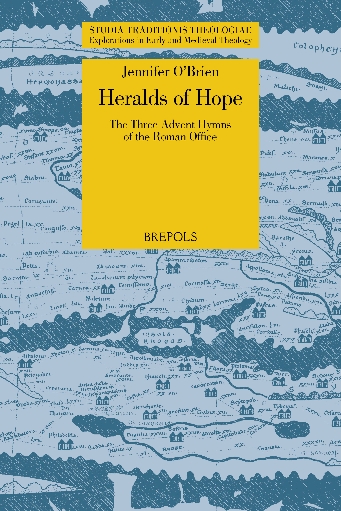
show More to view fulltext, buy and share links for:Heralds of Hope show Less to hide fulltext, buy and share links for: Heralds of HopeThis book shares the fruits of several years of research on the Advent Hymns of the Roman Office. It provides an opportunity to gain fresh insights into the gradual development of the liturgical season of Advent and the particular characteristics assumed in its Roman form. The journey of the exquisite treasure of the Western Church that is the Latin hymn is explored before each of the three Advent hymns of the Roman Office is mined for its theology and rich scriptural associations. Its sometimes rocky journey through successive revisions of the Roman Office is considered through the lens of the three Advent hymns. Finally, a number of important pastoral issues dealing with the celebration of the Advent Season in our contemporary Church are considered, taking into account the nature of Advent as revealed in the traditional hymn texts, the liturgical reforms following the Second Vatican Council and current liturgical texts for Advent.
-