


Brepols Online Books Medieval Miscellanea Collection 2024 - bob2024mime

Collection Contents
5 results
-
-

Agir en commun durant le haut Moyen Âge
show More to view fulltext, buy and share links for:Agir en commun durant le haut Moyen Âge show Less to hide fulltext, buy and share links for: Agir en commun durant le haut Moyen ÂgeAu-delà des communautés stables et durables qu'on peut saisir autour des lieux ou dans un cadre institutionne, les petites communautés locales du haut Moyen Âge n’avaient habituellement pas de statut formalisé : en l’absence de cadres institutionnels, nous ne pouvons souvent saisir leurs caractères qu’à travers les récits de leurs actions, ou à travers d’autres traces, laissées par leurs actes dans la documentation, écrite ou archéologique. Mais encore faut-il se poser la question de savoir comment agissaient les communautés au haut Moyen Âge, dans quels contextes et dans quels buts ? L'action commune, surtout si elle est récurrente, fortifie-t-telle ou forme-t-elle la communauté ? Le présent ouvrage vise à décrypter les différentes manières "d'agir en commun" dans les sociétés du haut Moyen Âge, en posant les questions de l'initiative de l'action, des différents modes d'action et de leur influence sur la structure de la communauté, des types et des formes d'action communautaire.
-
-
-
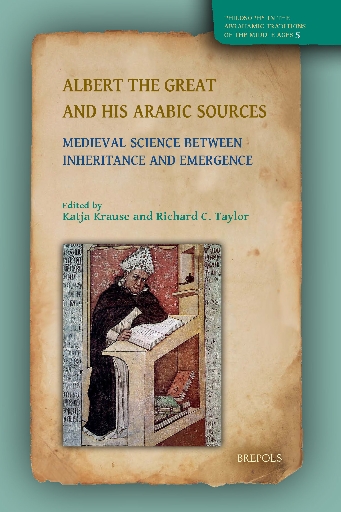
Albert the Great and his Arabic Sources
show More to view fulltext, buy and share links for:Albert the Great and his Arabic Sources show Less to hide fulltext, buy and share links for: Albert the Great and his Arabic SourcesAlbert the Great created a new programme of science in the thirteenth-century Latin world by extensively commenting upon Aristotle’s philosophical corpus and supplementing that corpus with works of his own wherever he saw gaps. What were the preconditions for the emergence of such a comprehensively new scientific agenda and its centuries of success at the University of Paris and Dominican study houses across Europe? One answer is found in the rich Arabic sources that Albert had at his disposal in Latin translation, including Alfarabi, Avicenna, and Averroes, as well as Isaac Israeli, Maimonides, and more.
Never before in the history of Albert scholarship has there been a collected volume that examines this inheritance from the Arabic-speaking lands in its role as a major condition for the emergence of Albert’s scientific programme. In the present volume, twelve leading scholars in the field offer studies that range from Albert’s early theological works to his late philosophical writings. The volume focuses on the teachings that Albert actively inherited from the Arabic sources, the ways in which he creatively implemented those teachings into his scientific corpus, and the effects that these implementations had on his own programmatic take on scientia.
-
-
-
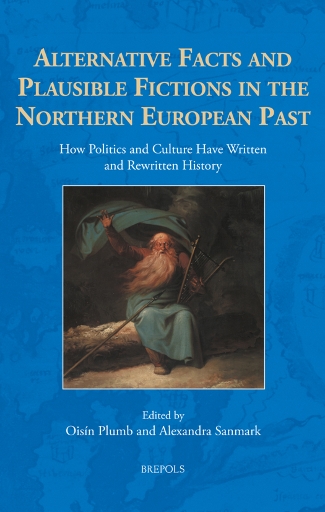
Alternative Facts and Plausible Fictions in the Northern European Past
show More to view fulltext, buy and share links for:Alternative Facts and Plausible Fictions in the Northern European Past show Less to hide fulltext, buy and share links for: Alternative Facts and Plausible Fictions in the Northern European PastThe use of the past for contemporary purposes has been a feature of historical and archaeological investigation from ancient times. This ‘politicization of the past’ is often associated with, at best, an inadvertent detachment from an objective use of evidence, and at worst, its wilful misuse. Such use of the past is perhaps most evident in the construction of narratives of nations and ethnic groups — particularly in relation to origins or the perceived ‘golden ages’ of peoples.
This book seeks to assess the role played by different ideologies in the shaping of the past, from early times up until the present day, in the interpretation of the history and archaeology of Northern Europe, whether in Northern Europe itself or further afield. It also considers how those who research, interpret, and present the Northern European past should respond to such uses. The chapters drawn together here explore key questions, asking how contemporary ideologies of identity have shaped the past, what measures should be taken to discourage an inaccurate understanding of the past, and if scholars should draw on the past in order to counter racism and xenophobia, or if this can itself lead to potentially dangerous misunderstandings of history.
-
-
-
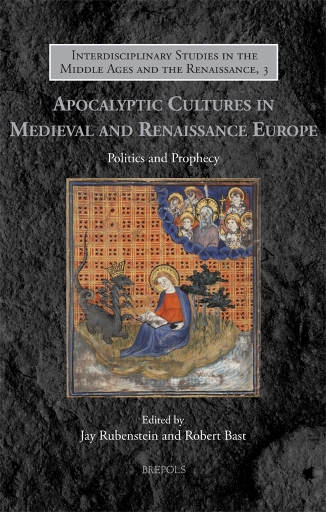
Apocalyptic Cultures in Medieval and Renaissance Europe
show More to view fulltext, buy and share links for:Apocalyptic Cultures in Medieval and Renaissance Europe show Less to hide fulltext, buy and share links for: Apocalyptic Cultures in Medieval and Renaissance EuropeThe essays in this collection were presented at the 2020 Symposium on Apocalypticism, sponsored by the Marco Institute for Medieval and Renaissance Studies at the University of Tennessee. The authors offer new readings of medieval and Renaissance Apocalypticism in quotidian terms, not as ‘counterculture’ but as the pragmatic expression of spiritualities that informed both debate and practice, on subjects as mundane and diverse as warfare, pilgrimage, gender, cartography, environmentalism, and governance. Topics include the origins of imperial eschatology; reflections on cosmology and the fate of the earth; the fusion of history, prophecy, and genealogy; Joachite readings of the political landscape of Italy; the influence of the Great Schism on Burgundian art; eschatology and gender in pilgrimage literature; the late medieval interpretation of the Revelationes of Pseudo-Methodius; and the appropriation of apocalyptic tropes in the propaganda and policies of the German emperor Maximilian I. The essays that open and close this collection offer meditations on the enduring legacy of Apocalypticism by focusing on the events — pandemic, political unrest, and the proliferation of conspiracy theories manifest in both — that mark the historical era in which this symposium took place.
-
-
-
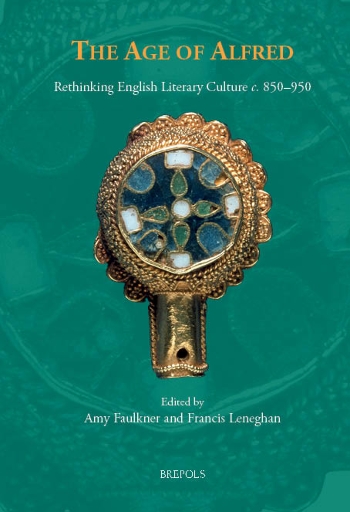
The Age of Alfred
show More to view fulltext, buy and share links for:The Age of Alfred show Less to hide fulltext, buy and share links for: The Age of AlfredKing Alfred the Great (r. 871–899) remains a key figure in English literary history. Although his reputation as a scholar who was personally responsible for the translation of a number of Latin works is no longer secure, the figure of the wise king nevertheless casts a long shadow over vernacular writing from the late ninth century through to the twelfth. This volume takes stock of recent developments and debates in the field of Alfredian scholarship and showcases new directions in research. Individual chapters consider how English authors before, during, and after Alfred’s reign translated and adapted Latin works, often in innovative and imaginative ways. Other contributions provide new contexts and connections for Alfredian writing, highlighting the work of Mercian scholars and expanding the corpus beyond the works traditionally attributed to the king himself. Together, these essays force us to rethink what we mean by ‘Alfredian’ and to revise the literary history of the ‘long ninth century’.
-