


Brepols Online Books Medieval Miscellanea Collection 2024 - bob2024mime

Collection Contents
7 results
-
-
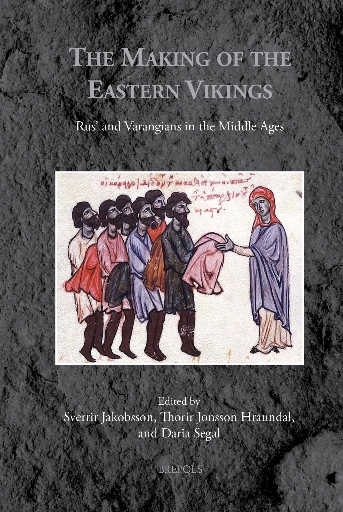
The Making of the Eastern Vikings
show More to view fulltext, buy and share links for:The Making of the Eastern Vikings show Less to hide fulltext, buy and share links for: The Making of the Eastern VikingsHistoriography on the Vikings of the East — the Rus' and the Varangians — has been both multiform and varied, but it has been invariably focused on actual historical events, and the extent to which these are accurately reflected in written sources. In contrast, very little attention has been paid up to now to the narrators behind these medieval accounts, to their motives in writing, or to the context in which they were working.
This volume aims to redress the balance by offering a re-examination of medieval sources on the Eastern Vikings and by highlighting ongoing ‘debates’ concerning the identities of the Rus' and the Varangians in the medieval period. The chapters gathered here compare and contrast sources emanating from different cultures — Byzantium, the Abbasid Caliphate and its successor states, the early kingdoms of the Rus', and the high medieval Scandinavian kingdoms — and examine what significance these sources have attached to the Rus' and the Varangians in different contexts. The result is a new understanding of how different cultures chose to define themselves in relation to one another, and a new perspective on the history of the Scandinavian peoples in the East.
-
-
-

Maritime Exchange and the Making of Norman Worlds
show More to view fulltext, buy and share links for:Maritime Exchange and the Making of Norman Worlds show Less to hide fulltext, buy and share links for: Maritime Exchange and the Making of Norman WorldsBetween c. 1000 and c. 1200 ad, emigrants from Normandy travelled long distances from their homeland, spreading their political influence to the shores of the North Sea, the Irish Sea, the Mediterranean, the Black Sea, and the Baltic. Their willingness to cross the seas gave Normans access to new territories and new ideas, extending their authority and reputation far beyond northern France. But how and why were these Norman groups able to develop such power? The chapters collected here engage directly with this question by examining the sites and processes that underpinned this expansion. The contributors ask what different Norman groups took from the societies around them, and what they rejected; they consider how non-Norman powers — in Ireland, England, the Fatimid Caliphate, Byzantium, the Holy Land, and Rus — responded to, and were shaped by, their interactions with Normans in contested zones; and they examine how Normans understood and imagined their own relationship with the sea as a place of exchange, a zone of uncertain control, and an ambiguous kind of border. Drawing together material culture and written evidence, this far-reaching volume offers a fully-developed discussion of how, and in what ways, these Norman worlds and societies could be said to be ‘transcultural’, and in doing so, makes a compelling case that attention to movement and maritime exchange must be central to our understanding of the extension of Norman influence in this period.
-
-
-

Mastering Nature in the Medieval Arabic and Latin Worlds
show More to view fulltext, buy and share links for:Mastering Nature in the Medieval Arabic and Latin Worlds show Less to hide fulltext, buy and share links for: Mastering Nature in the Medieval Arabic and Latin WorldsUnderstanding and influencing nature were preeminent aims of medieval Arabic science, and attracted European fascination with its accomplishments. This volume draws together studies on central themes, presenting a world of enquiry into the earth and the heavens, and ways to harness this information for divination and the occult sciences. It gives examples of how Arabic science travelled to Latin Europe through texts and instruments, and how it underwent transformation there as diverse fields were put to use and reinterpreted. The studies introduce a range of learning and perspectives: astrology conducted with planetary lots; a geography where features of the earth's surface move over time; knowledge of the elements and climates which Adelard of Bath learned from Arab masters; Avicenna’s meteorology explaining the extremes of fire storms and catastrophic floods; debates about the eternity or creation of the world; evaluations of magic as a rational, intellectual discipline, or alternatively a danger needing censorship and linked to female witchcraft; and a precious astrolabe which in the Renaissance was reused and inspired new theoretical writings. Together these studies sketch a landscape of medieval Arabic science and Latin European engagement with this new frontier.
-
-
-

Medieval Svaneti: Objects, Images, and Bodies in Dialogue with Built and Natural Spaces
show More to view fulltext, buy and share links for:Medieval Svaneti: Objects, Images, and Bodies in Dialogue with Built and Natural Spaces show Less to hide fulltext, buy and share links for: Medieval Svaneti: Objects, Images, and Bodies in Dialogue with Built and Natural SpacesThe essays collected in this volume emphasize the importance of Svaneti, a historical region of the Georgian Great Caucasus as an unparalleled treasury of medieval arts, describe some of its outstanding monuments, provide interpretations of their political and religious role at the intersection of different cultural traditions, and explore the dynamics whereby they have constantly invested with new functions and associations throughout their long history.
-
-
-
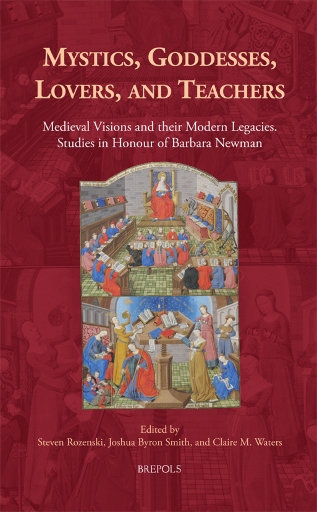
Mystics, Goddesses, Lovers, and Teachers
show More to view fulltext, buy and share links for:Mystics, Goddesses, Lovers, and Teachers show Less to hide fulltext, buy and share links for: Mystics, Goddesses, Lovers, and TeachersThe conjunction of medieval religious studies and gender studies in the past several decades has produced not only nuanced attention to medieval mystics and religious thinkers, but a transformation in the study of medieval culture more broadly. This volume showcases new investigations of mysticism and religious writing in the Middle Ages and the early modern period. It also presents groundbreaking explorations of the feminized divine, from medieval to modern, and the many debts of medieval secular texts and cultures to the religious world that surrounded them. Medieval crossover also defines this volume: the contributors examine the crossovers between male and female, cloister and saeculum, divine and human, and vernacular and Latin that characterized so much of the complexity of medieval literary culture. These collected chapters examine mystics from Hildegard of Bingen and Juliana of Cornillon to Richard Rolle, Julian of Norwich, and Tomás de Jesús; the modern theologies of Philip K. Dick and Charles Williams; goddesses like Fame, Dame Courtesy, and Mother Church; and the role of religious belief in shaping conceptions of pacifism, obscenity, authorship, and bodily integrity. Together, they show the extraordinary impact of Barbara Newman’s scholarship across a range of fields and some of the new areas of investigation opened by her work.
Contributors: Jerome E. Singerman, Kathryn Kerby-Fulton, Jesse Njus, Andrew Kraebel, Nicholas Watson, Laura Saetveit Miles, Bernard McGinn, Carla Arnell, Maeve Callan, Katharine Breen, Lora Walsh, Susan E. Phillips and Claire M. Waters, Carissa M. Harris, Stephanie Pentz, Craig A. Berry, Dyan Elliott.
-
-
-
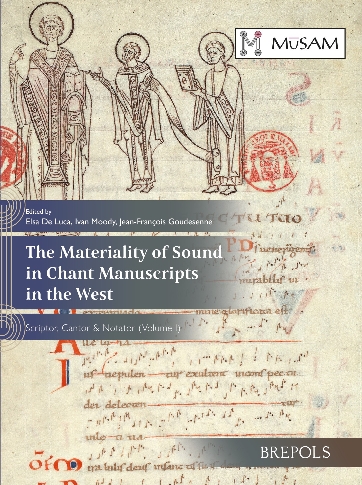
The Materiality of Sound in Chant Manuscripts in the West
show More to view fulltext, buy and share links for:The Materiality of Sound in Chant Manuscripts in the West show Less to hide fulltext, buy and share links for: The Materiality of Sound in Chant Manuscripts in the WestScriptor, Cantor & Notator is an innovative multi-author project dealing with the complex interconnections between learning, writing and performing chant in the Middle Ages. A number of different methodological approaches have been employed, with the aim of beginning to understand the phenomenon of chant transmission over a large geographical area, linking and contrasting modern definitions of East and West. Thus, in spite of this wide geographical spread, and the consequent variety of rites, languages and musical styles involved, the common thread of parallels and similarities between various chant repertoires arising from the need to fix oral repertories in a written form, and the challenges involved in so doing, are what bring this wide variety of repertoires and approaches together. This multi-centric multi-disciplinary approach will encourage scholars working in these areas to consider their work as part of a much larger geographical and historical picture, and thus reveal to reader and listener more, and far richer, patterns of connections and developments than might otherwise have been suspected.
Scriptor, Cantor & Notator is published in two books. The first, The Materiality of Sound in Chant Manuscripts in the West, brings together articles on several different families of early music scripts in the Latin West and provides a vividly diverse picture of some of the best current scholarship on the various types of ancient and medieval musical notation.
-
-
-
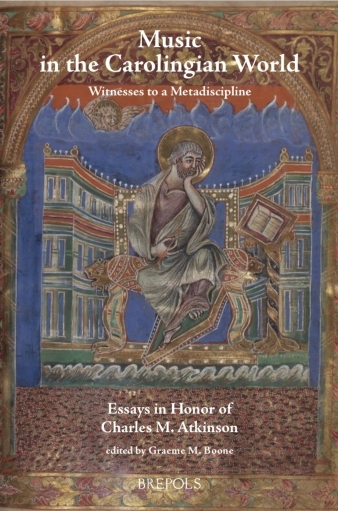
Music in the Carolingian World
show More to view fulltext, buy and share links for:Music in the Carolingian World show Less to hide fulltext, buy and share links for: Music in the Carolingian WorldMusic in the Carolingian World stems from a conference honoring the career and wide-ranging research of Prof. Charles M. Atkinson, leading scholar in early-medieval studies and author of the award-winning monograph, The Critical Nexus (2010). The volume brings together seventeen essays to explore the broad ramifications of music as an arena of study in early-medieval culture; taken together, they manifest the status of music not just as a field of research, but as a metadiscipline that embraces numerous fields and specializations in medieval studies, including philosophy, theology, literature, philology, paleography, liturgy, education, political and institutional history, as well as the practice, theory, and transmission of chant and related musical repertories. The essays are grouped into the four thematic categories of Verbum, Numerus, Ars, and Cultus, bookended by three keynote essays that touch in different ways on the theme of metadisciplinarity.
-