


BOB2025MOOT

Collection Contents
2 results
-
-
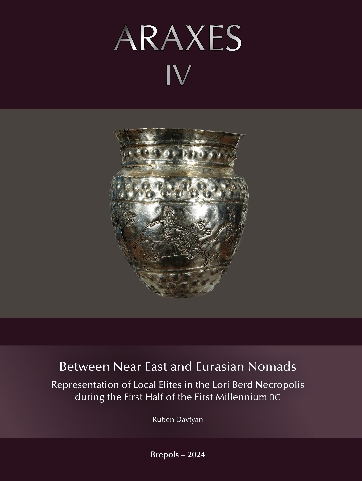
Between Near East and Eurasian Nomads
show More to view fulltext, buy and share links for:Between Near East and Eurasian Nomads show Less to hide fulltext, buy and share links for: Between Near East and Eurasian NomadsThe site of Lori Berd, located in northern Armenia, is home to an extraordinary necropolis that once housed the dead of the local elite during a period that spanned from 2200 to 400 BC. Influenced both by Urartian conquests from the south and by invasions from the Eurasian nomadic tribes from the north, the people of this region buried their dead with prestigious artefacts, complex customs, and a particular reverence shown during the later stages of the Early and Middle Iron Ages (1000–550 BC). This volume offers a detailed account of the archaeological significance of the site, providing detailed accounts of thirty-one tombs, the majority of which have never before been comprehensively published, and seeking to set Lori Berd in its broader historical and material context. Through this approach, the book offers a comprehensive exploration of the Iron Age in the South Caucasus, unravelling the interconnected themes of wealth, power, and cultural expressions.
-
-
-
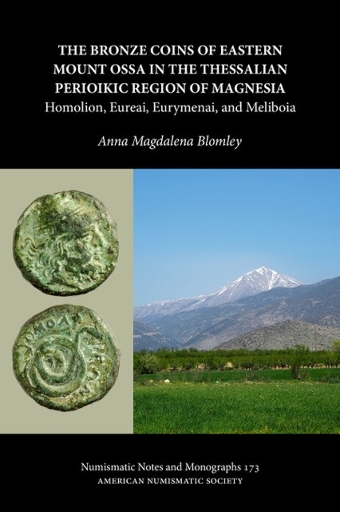
The Bronze Coins of Eastern Mount Ossa in the Thessalian Perioikic Region of Magnesia
show More to view fulltext, buy and share links for:The Bronze Coins of Eastern Mount Ossa in the Thessalian Perioikic Region of Magnesia show Less to hide fulltext, buy and share links for: The Bronze Coins of Eastern Mount Ossa in the Thessalian Perioikic Region of MagnesiaThis monograph examines the Late Classical and Hellenistic bronze coinages of five mints in the Thessalian perioikic region of Magnesia. At the core of this work lies a new die-study of the coins produced by the strategically and economically important coastal cities of Homolion and Meliboia as well as the lesser-known mints of Eureai, Eurymenai, and Rhizous. Combining this die-study with a close examination of the cities’ topographical context in a border region between Thessaly and Macedon and drawing on archaeological data from Magnesia and beyond, the monograph addresses key questions concerning the chronology, denominations, and circulation patterns of the bronze issues minted on eastern Mount Ossa. This analysis not only throws new light on coin production in Late Classical and Hellenistic Magnesia, but also allows a discussion of the possible military and non-military functions of the region’s different bronze issues.
Placing the coins of Eureai, Eurymenai, Homolion, Meliboia, and Rhizous in their wider context, this monograph furthermore addresses broader issues in the history of Thessalian coinage. In particular, the monograph’s regional approach offers an unusual opportunity to examine to what extent Thessaly’s Late Classical and Hellenistic civic coins were genuinely local in design, production, and function. The monograph thus both explores the coins of Mount Ossa and contributes towards a better understanding of the introduction and development of bronze coinages in the wider Thessalian region and beyond.
-