


BOB2025MOOT

Collection Contents
3 results
-
-
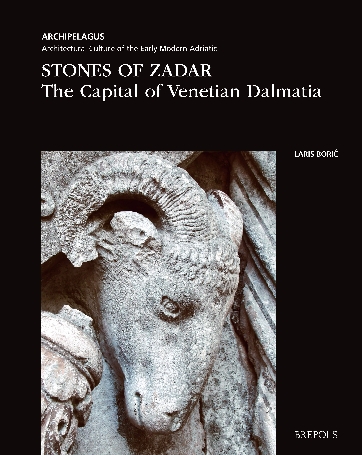
Stones of Zadar
show More to view fulltext, buy and share links for:Stones of Zadar show Less to hide fulltext, buy and share links for: Stones of ZadarThe book investigates the transformation of the architectural and visual language in Zadar, eastern Adriatic town, at the dawn of the early modern era, when the mighty mediaeval commune was being transformed by the emerging governmental structures of the Republic of Venice. These events coincided with the Ottoman Empire's takeover of the hinterland of Dalmatian cities, transforming Zadar into a city on the brink of two worlds.
A highly autonomous mediaeval commune was a lively trans-Adriatic artistic centre, a network of builders, painters, and sculptors from Dalmatia, Venice, Marche and Lombardy, so with the early adoption of humanist concepts by the local elite, this practice continued. However, the transformations the governmental structure and economic policies steadily limited its community autonomy and commercial sources. The crisis worsened in the 16th century, when the local elites lost a large portion of their revenue from the fertile hinterland captured by the Ottoman Empire.
This launched an ongoing militarisation of social structures and fortifying the town. These events were reflected in the fields of architecture and art. The process of adopting a new architectural and artistic language began in the second half of the 15th century, as demonstrated by motifs in architectural decoration and sculpture with impulses from important Dalmatian sculptural and stonemasons’ circles, as well as Venetian models from the circles of Pietro Lombardo and Mauro Codussi. When the new classical language of architecture began spreading in the middle of the 16th century, it expressed mostly in the renovation of administrative structures, with occasional departures from the stylistic canons of artistic centres.
-
-
-
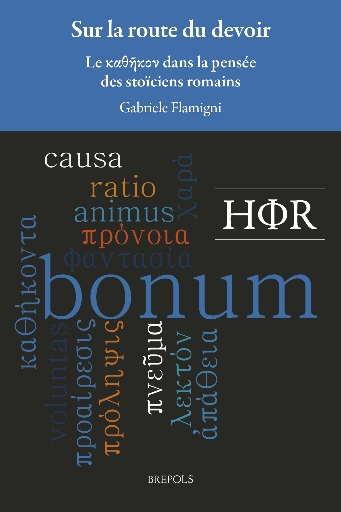
Sur la route du devoir
show More to view fulltext, buy and share links for:Sur la route du devoir show Less to hide fulltext, buy and share links for: Sur la route du devoirQu’y a-t-il à l’origine du devoir, une idée d’une importance capitale dans l’histoire intellectuelle de l’Occident ? Parmi ses premières incarnations, il faut reconnaître le καθῆκον stoïcien, « ce qui est convenable », latinisé en officium, « devoir ». Cette notion a été développée par les stoïciens hellénistiques, mais les témoignages les plus amples à ce sujet proviennent des représentants de l’école ayant vécu à l’époque de l’Empire romain, à savoir Sénèque, Musonius Rufus, Épictète, Hiéroclès et Marc Aurèle. Dans ce livre, nous essayons de reconstruire une histoire aussi complète que possible du καθῆκον à travers une analyse exhaustive des sources disponibles.
-
-
-

The Sanctuary of Parthenos at Ancient Neapolis (Kavala), Volume i
show More to view fulltext, buy and share links for:The Sanctuary of Parthenos at Ancient Neapolis (Kavala), Volume i show Less to hide fulltext, buy and share links for: The Sanctuary of Parthenos at Ancient Neapolis (Kavala), Volume iThe ancient city of Neapolis (modern Kavala, Greece) was founded by Thasos in the seventh century bce at a strategic location where the Thracian hinterlands meet the Aegean Sea. The patron deity of this North Aegean polis was Parthenos (the Maiden), known to us through epigraphic and archaeological evidence. Her sanctuary came to light in the twentieth century during rescue excavations, and yielded numerous finds, most of which date from the Archaic period.
This monograph provides a discussion of the history of excavations at this sanctuary, as well as a contextual examination of the material, leading to a new interpretation of Parthenos’ identity. Among the wealth of finds from the site, the corpus of incised and painted ceramic inscriptions stands out, as it offers a unique glimpse into the history of the cosmopolitan temenos and the dedicatory practices and rituals that took place there. The inscribed vessels carry dedications, numerical and other graffiti, and dipinti, as well as the initials of the goddess, which designate them as sacred equipment. When considered in the context of the ceramic inscriptions from sanctuaries across Aegean Thrace, they further underscore the important role of Neapolis and the Sanctuary of Parthenos in the commercial networks and cultural dynamics of the Aegean, both in the early stages of Greek colonization, and in the centuries that followed.
-