


Brepols Online Books Medieval Miscellanea Original Archive v2016 - bobar16mimeo

Collection Contents
161 - 180 of 254 results
-
-
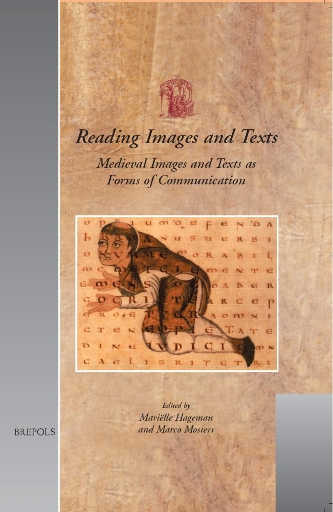
Reading Images and Texts
show More to view fulltext, buy and share links for:Reading Images and Texts show Less to hide fulltext, buy and share links for: Reading Images and TextsRelations between images and texts have benefited from an increase in scholarly attention. In medieval studies, art historians, historians, codicologists, philologists and others have applied their methods to the study of illuminated manuscripts and other works of art. These studies have shifted from a concern about the contents of the messages contained in the artefacts (e.g. in iconography) to an interest in the ways in which they were communicated to their intended audiences. The perception of texts and images, their reception by contemporaries and by later generations have become topics in their own right. According to some, medieval images may be ‘read’. According to others, the perception of images is fundamentally different from that of texts. The analysis of individual manuscripts and works of art remains the basis for any consideration of their transmission and uses. The interactions between non-verbal and verbal forms of communication, more in particular the relations between visual symbols other than writing and the recording of speech in writing, are important for the evaluation of both images and texts.
-
-
-
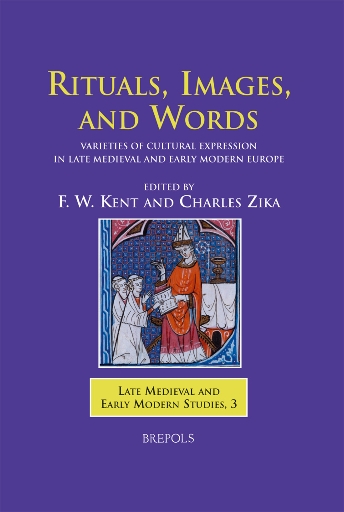
Rituals, Images, and Words
show More to view fulltext, buy and share links for:Rituals, Images, and Words show Less to hide fulltext, buy and share links for: Rituals, Images, and WordsThis collection of essays by Australian scholars offers a wealth of contemporary perspectives on cultural communication amongst men and women in late medieval and early modern Europe. Essays dealing with Florence and Venice, with Rome, Lucca, Ferrara, and Bologna, as well as with Germany, England, and Lorraine, draw attention to the array of cultural expressions which competed for space and influence across European societies of the period.
These rich studies demonstrate the vitality of cultural production during a period of rapid and often violent transition. Variously focused on formal religious rites, on painting, sculpture, and woodcuts, on sermons, poetry, and letters, the contributors pursue cultural meaning as a matter of social identity and social context - as a performance that can be shown to affirm and also exclude particular topical values. Rituals, Images, and Words highlights the complex and subtle power of rhetorical forms in the history and historiography of late medieval and early modern Europe.
-
-
-
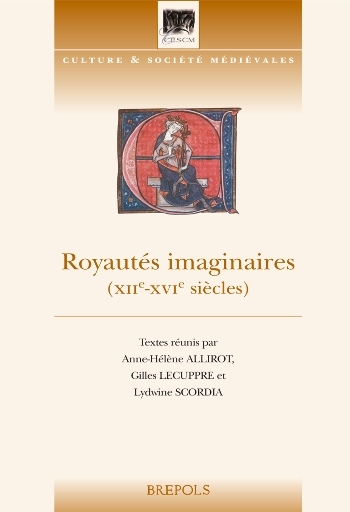
Royautés imaginaires
show More to view fulltext, buy and share links for:Royautés imaginaires show Less to hide fulltext, buy and share links for: Royautés imaginairesL’imaginaire ne se réduit pas au chimérique, au non-être. Depuis l’Antiquité, artistes, poètes et philosophes pressentent qu’il procède du désir et appartient en premier lieu au registre de l’individuel: forces pulsionnelles, messages de soi à soi, le rêve et bientôt la création n’ont pas attendu le discours de la psychanalyse ou des diverses sciences de la culture pour forger leurs mondes autour de la réalité partagée. Les sociétés à leur tour se sont lancées par cette voie dans la quête de leur identité et ont assigné à leurs mythes le soin d’exprimer leur structure. Pour autant, le lecteur s’apercevra au fil des douze communications assemblées ci-après que les royautés évoquées ressortissent rarement du pur imaginaire et conservent jalousement un lien organique avec leur référent concret. Il conviendrait davantage de parler de la royauté comme objet d’imagination, en ce qu’elle représente le point de fixation suprême du désir.
-
-
-
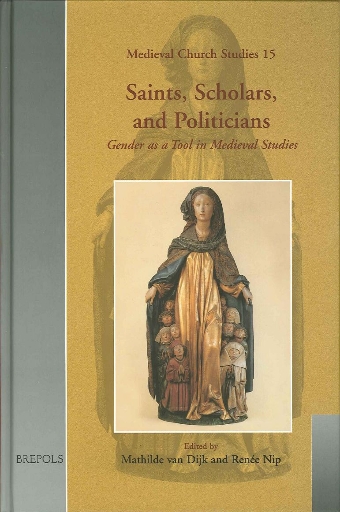
Saints, Scholars, and Politicians
show More to view fulltext, buy and share links for:Saints, Scholars, and Politicians show Less to hide fulltext, buy and share links for: Saints, Scholars, and PoliticiansOver the past eighteen years, gender has become a major analytical tool in medieval studies. The purpose of this volume is to evaluate its use and to search for ways in which to improve and enhance its value. The authors address the question of how gender relates to other tools of medieval research. Several articles criticize the way in which an exclusive focus on gender tends to obscure the impact of other factors, for instance class, politics, economy, or the genre in which a source is written. Other articles address ‘wrong’ ways of using gender, for instance monolithic or anachronistic views of what constitutes differences between men and women. The intention is that this selection of case studies further establishes and enhances the indispensability of gender as an analytical tool within medieval studies.
The volume has been produced in recognition of the work of the Groningen medievalist, Anneke B. Mulder-Bakker, on the occasion of her sixty-fifth birthday. She is the person primarily responsible for introducing to the Netherlands gender as a legitimate and useful tool in medieval studies. The contributors are medievalists from a range of countries and different backgrounds. They were selected in order to test Dr Mulder-Bakker’s ideas on methodology and interdisciplinarity through a series of case-studies.
-
-
-
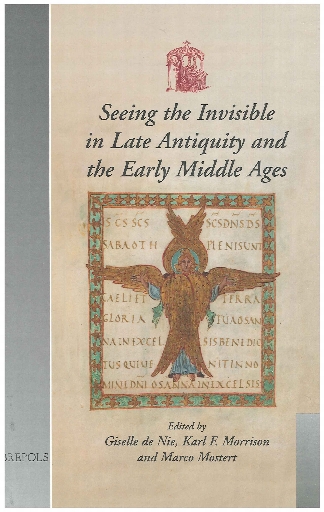
Seeing the Invisible in Late Antiquity and the Early Middle Ages
show More to view fulltext, buy and share links for:Seeing the Invisible in Late Antiquity and the Early Middle Ages show Less to hide fulltext, buy and share links for: Seeing the Invisible in Late Antiquity and the Early Middle AgesLimiting itself to the vital centuries when the late Roman West reshaped itself into a first “Europe”, the conference on which the volume is based explored the dominant understanding of human nature in that era: that human existence was both body (in the visible world of material things) and soul (in the invisible world of spirit). This was a legacy of pre-Christian elements handed down from Greek philosophy and the Hebrew Scriptures. Assimilating it to indigenous cultures in the Roman West, many alien to the ancient Mediterranean world, precipitated sea-changes in the conception of human psychology. Ensuing frictions sparked extraordinary expressions of creativity in words and visual images. It also created dangerously subversive disequilibria in the collective mentality within élites and between them and majority cultures. The papers in this volume investigate numerous configurations of a new culture taking shape in that volatile environment. They contribute to continuing debates about the cognitive co-ordination of words and pictorial images, and to cross-disciplinary dialogues in such disparate fields as art history, religious literature, mysticism, and cultural anthropology.
-
-
-
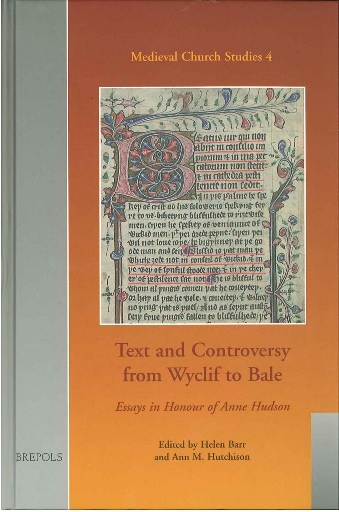
Text and Controversy from Wyclif to Bale
show More to view fulltext, buy and share links for:Text and Controversy from Wyclif to Bale show Less to hide fulltext, buy and share links for: Text and Controversy from Wyclif to BaleText and Controversy from Wyclif to Bale reflects and develops Anne Hudson’s pioneering work in textual criticism and religious controversy from the late medieval period to the Reformation. Written by newly emergent as well as internationally recognised scholars, the volume explores the wide spectrum of religious thought and practices between c. 1360 and c. 1560. Many essays, following the methodology of Anne Hudson’s scholarship, engage in the close study of manuscripts and archival holdings, disclosing new material and offering significant re-evaluation of documentary evidence and neglected texts. At a time of urgent calls for the reform of the Church, both in Britain and in mainland Europe, the voices of heresy can not always be distinguished from those of orthodox critics. Anne Hudson’s coinage of the term ‘grey area’ to describe the indeterminate boundary between radical orthodoxy and heterodoxy provides the lead for investigations into theological debate, devotional habits, and censorship. The volume significantly redefines our understanding of texts, history, and controversies from Wyclif to Bale.
-
-
-
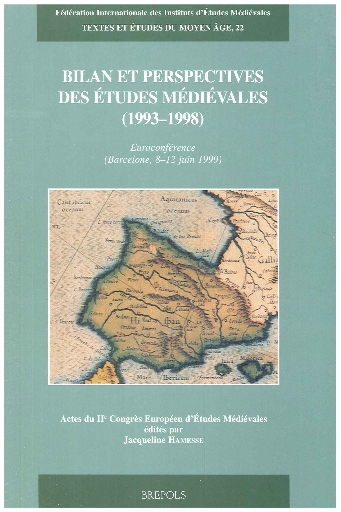
Bilan et perspectives des études médiévales (1993-1998)
show More to view fulltext, buy and share links for:Bilan et perspectives des études médiévales (1993-1998) show Less to hide fulltext, buy and share links for: Bilan et perspectives des études médiévales (1993-1998)Le bilan des études médiévales en Europe dressé lors du Ier Congrès européen d’Etudes médiévales organisé pour la première fois à Spolète en mai 1993 n’avait pas pu couvrir tous les domaines de notre discipline. Aussi le IIème Congrès a-t-il continué ce bilan en s’attachant par priorité à traiter des sujets peu ou insuffisamment couverts en 1993. Ce fut le cas de l’histoire politique, de l’archéologie médiévale, de l’histoire économique et sociale, de l’histoire religieuse, de la spiritualité et de l’hagiographie, de la philologie et de la littérature latines du moyen âge, de l’histoire de l’art, de l’étude des manuscrits, de la philosophie et de la théologie, de l’histoire des sciences, de la musique et de la liturgie, des études byzantines ainsi que du passage du moyen âge à la Renaissance.
Les bilans contenus dans cet ouvrage sont l’œuvre des meilleurs spécialistes en la matière. Ils permettent de voir les progrès réalisés de 1993 à 1998 ainsi que les lacunes qui existent encore dans certaines disciplines. Ils inciteront surtout de jeunes chercheurs à entreprendre des études dans des domaines encore mal connus.
-
-
-
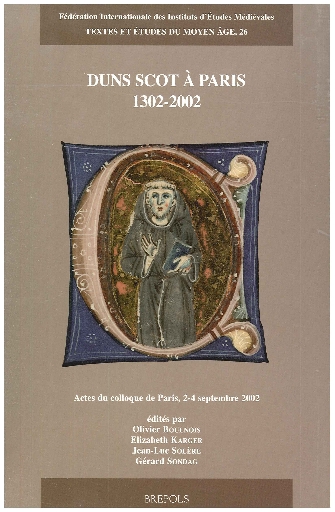
Duns Scot à Paris, 1302-2002
show More to view fulltext, buy and share links for:Duns Scot à Paris, 1302-2002 show Less to hide fulltext, buy and share links for: Duns Scot à Paris, 1302-2002Le colloque «Duns Scot à Paris, 1302-2002» (2-4 septembre 2002) a commémoré le sept centième anniversaire de l’arrivée, à l’Université de Paris, de Jean Duns Scot, l’une des rares dates connues dans la vie du plus grand philosophe et théologien du tournant des XIIIe et XIVe siècles. Il a permis de faire le point des dernières découvertes historiques et philologiques, et de donner un état des recherches scotistes en cours, qui ont connu un essor rapide et même inattendu ces dernières années. Après une introduction de caractère historique (‘Paris, 1302’), l’on trouvera dans ce volume une succession d’études portant sur la logique, l’épistémologie et la sémantique (2e partie), la métaphysique (3e partie), l’éthique et la psychologie (4e partie), la théologie (5e partie). La sixième partie enfin (‘Paris 2002’) compare les contributions de Duns Scot aux réflexions contemporaines (sur le temps, autrui, le langage). Cet volume est un instantané des travaux les plus récents: à la fois un bilan des connaissances sur la fin du XIIIe siècle, une série d’interprétations originales et une somme d’analyses philosophiques.
-
-
-
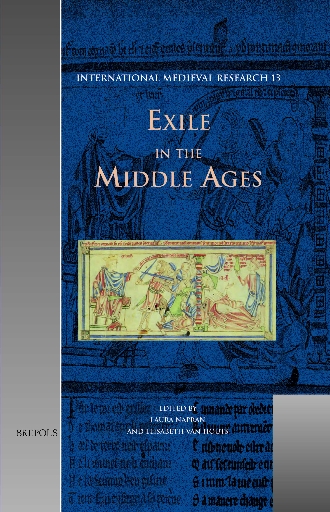
Exile in the Middle Ages
show More to view fulltext, buy and share links for:Exile in the Middle Ages show Less to hide fulltext, buy and share links for: Exile in the Middle AgesExile in the Middle Ages took many different forms. As a literary theme it has received much scholarly attention in the Latin, Greek and vernacular traditions. The historical and legal phenomenon of exile is relatively unexplored territory. In the secular world, it usually meant banishment of a person by a higher authority for political reasons, resulting in the exile leaving home for a shorter or longer period. Sometimes an exile did not wait to be expelled but left of his or her own accord. Leaving home to go on pilgrimage, or, in the case of women to marry, could be experienced as a form of exile. In the ecclesiastical sphere, two forms of exile stand out. Monasticism was often seen as a form of spiritual (permanent) exile from the secular world. Excommunication was a punishment exercised by the Church authorities in order to eject persons (often only temporarily) from the community of Christians. Banishment as a form of social punishment is therefore the central theme of this volume on Exile in the Middle Ages. The book covers the period of the central Middle Ages from ca. 900 to ca. 1300 in Western Europe, though some chapters have a wider remit. The genesis of the volume was a series of presentations delivered at the Leeds International Medieval Congress in 2002, which was devoted to the theme of Exile.
-
-
-
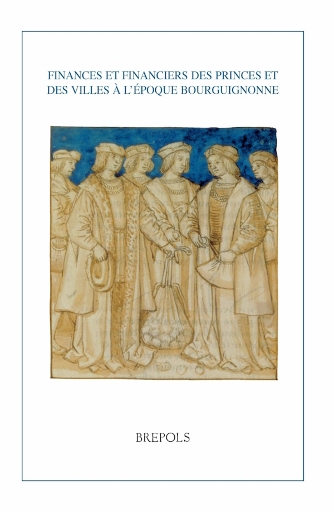
Finances et financiers des princes et des villes à l’époque bourguignonne
show More to view fulltext, buy and share links for:Finances et financiers des princes et des villes à l’époque bourguignonne show Less to hide fulltext, buy and share links for: Finances et financiers des princes et des villes à l’époque bourguignonneGérer les finances des princes et des villes est devenu à la fin du moyen âge l’affaire de professionnels de l’argent et de ses techniques. Ces hommes dont les employeurs requièrent compétence et loyauté appartiennent au monde en pleine ascension des officiers, des «fonctionnaires». Les nécessités de la guerre et de la paix, les coûts des armées et de la diplomatie, l’entretien et le fonctionnement des rouages du gouvernement et de l’administration, les aléas et les pressions de la situation économique, tout cela donne un sens à leur travail et requiert leur vigilante attention.
Accroître des moyens matériels, par des expédients ou des réformes durables, rendre plus performants des outils de gestion, voilà des objectifs qui peuplent ces pages, à travers plus d’un siècle et demi du passé des anciens Pays-Bas. Les études publiées regorgent ainsi d’apports nouveaux pour l’histoire de l’impôt, de l’emprunt, des rentes, du crédit et du commerce de l’argent. Elles éclairent aussi une face essentielle des relations entre gouvernants et gouvernés, dictées par des recettes et dépenses mais en même temps orientées par ceux qui y pourvoient et en font carrière.
-
-
-
Functions and Decorations: Art and Ritual at the Vatican Palace in the Middle Ages and the Renaissance
show More to view fulltext, buy and share links for:Functions and Decorations: Art and Ritual at the Vatican Palace in the Middle Ages and the Renaissance show Less to hide fulltext, buy and share links for: Functions and Decorations: Art and Ritual at the Vatican Palace in the Middle Ages and the Renaissance
-
-
-
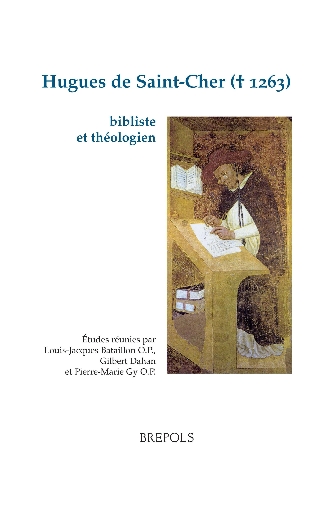
Hugues de Saint-Cher († 1263), bibliste et théologien
show More to view fulltext, buy and share links for:Hugues de Saint-Cher († 1263), bibliste et théologien show Less to hide fulltext, buy and share links for: Hugues de Saint-Cher († 1263), bibliste et théologienSi l’action du cardinal Hugues de Saint-Cher († 1263) a parfois suscité l’intérêt des historiens, il s’agit ici du premier ouvrage concernant l’œuvre de cet auteur, dont la place est pourtant capitale dans l’évolution de la pensée en Occident chrétien au xiii e siècle. Ce maître dominicain de la deuxième génération assimile le brillant héritage du xii e siècle et prépare l’essor qui va suivre dans le domaine des études bibliques et de la théologie, avec le développement de l’enseignement universitaire. Les différents aspects de son œuvre sont examinés dans ce volume, qui réunit les spécialistes de l’histoire intellectuelle du xiii e siècle. Le commentaire biblique de Hugues, ou Postille, imprimé jusqu’au xviii e siècle, a connu une fortune étonnante; il est, tout comme les concordances et le correctoire biblique diffusés sous son nom, le résultat d’un travail collectif, dirigé par le maître lors de son séjour parisien au couvent de Saint-Jacques. L’œuvre théologique, comportant le premier véritable commentaire des Sentences et de nombreuses quaestiones, aborde les problèmes de fond de la pensée chrétienne comme des aspects plus pratiques. Le point est fait également sur ses sermons, moins connus mais dont le rôle a été important. Ainsi, cet ouvrage, issu d’un colloque international tenu à Paris en mars 2000, apporte-t-il une contribution majeure à l’histoire de la pensée dans la première moitié du xiii e siècle.
-
-
-
Le médiéviste et la monographie familiale: sources, méthodes et problématiques
show More to view fulltext, buy and share links for:Le médiéviste et la monographie familiale: sources, méthodes et problématiques show Less to hide fulltext, buy and share links for: Le médiéviste et la monographie familiale: sources, méthodes et problématiquesLongtemps cantonnée à un cercle restreint de savants soldés par des mécènes en mal de reconnaissance sociale ou en quête d’exemption fiscale, puis rejetée par les courants historiographiques les plus novateurs du XXe siècle, la monographie familiale connaît de nos jours un regain de faveur parmi les médiévistes. L’irruption de la prosopographie en histoire sociale et le prestige retrouvé de la micro-histoire sont pour beaucoup dans cette évolution, favorable à l’éclosion d’études qui retracent le devenir d’un groupe familial déterminé. De nouvelles problématiques accompagnent ce changement épistémologique. En effet, l’arbre généalogique ne saurait plus cacher la forêt de l’histoire totale de la famille, conçue souvent comme le plus déterminant des éléments de tout système social. C’est à partir de sources diplomatiques, mais aussi d’écrits de nature généalogique, que le groupe de parenté et ses relations sont habituellement appréhendés par les chercheurs. L’étude de cette documentation exige des techniques érudites particulières, dont l’usage quotidien fait rarement l’objet d’une réflexion de méthode. Cette approche, en même temps concrète et abstraite, du métier de l’historien est au cœur de cet ouvrage.
-
-
-
L’Université de Médecine de Montpellier et son rayonnement (XIIIe-XVe siècles)
show More to view fulltext, buy and share links for:L’Université de Médecine de Montpellier et son rayonnement (XIIIe-XVe siècles) show Less to hide fulltext, buy and share links for: L’Université de Médecine de Montpellier et son rayonnement (XIIIe-XVe siècles)Fréquenté par des étudiants venus de tous les pays, recrutant des maîtres eux-mêmes d’origines diverses, le studium de Montpellier s’est imposé dès le xiii e siècle comme l’un des grands centres européens des études médicales, formant des praticiens compétents, assurés, après y avoir conquis leurs grades, d’accomplir des carrières brillantes, du moins pour la plupart d’entre eux, fondées sur le prestige intellectuel, la considération sociale et l’aisance financière.
Dès le xiii e siècle, l’Université de médecine a été dotée de statuts. Elle a pu dès lors développer la formation des futurs praticiens sur des bases institutionnelles solides, attirant vers elle des professeurs renommés, tels Bernard de Gordon, Gérard de Solo, Arnaud de Villeneuve, Guy de Chauliac, Jean de Tournemire.
L’élaboration du savoir médical, outre le recours classique aux auctoritates antiques et arabes, s’est également souciée d’intégrer, à Montpellier, l’apport des disciplines voisines, telles la chirurgie et l’astrologie. Parmi les pathologies, les maladies de l’œil et la lèpre ont fait l’objet d’une attention particulière, tandis que les thérapeutiques, mettant en œuvre notamment les régimes de santé et intégrant la médecine montpelliéraine dans le cadre des pratiques universelles, ont pu harmonieusement combiner l’expérience et la réflexion savante. Forte de sa renommée et du rayonnement de son enseignement, la médecine montpelliéraine a ainsi construit une pensée dont les manuscrits conservés témoignent de la diffusion et illustrent l’influence que Montpellier, en ce domaine comme en d’autres, a exercée en Europe à la fin du Moyen Age.
-
-
-
Maistresse of My Wit
show More to view fulltext, buy and share links for:Maistresse of My Wit show Less to hide fulltext, buy and share links for: Maistresse of My WitThis volume explores the reciprocal relationships that can develop between medieval women writers and the modern scholars who study them. Taking up the call to ‘research the researcher’, the authors indicate not only what they bring to their study from their own personal experience, but how their methodologies and ways of thinking about and dealing with the past have been influenced by the medieval women they study. Medieval women writers discussed include those writing in the vernacular such as Christine de Pizan and Margaret Paston, those writing in Latin such as Hildegard of Bingen, Heloise, and Birgitta of Sweden, and the works transcribed from women mystics such as Margery Kempe, Hadewijch, and Julian of Norwich. Attention is also given to medieval women as the readers, consumers and patrons of written works. Issues considered in this volume include the place of ethics, interestedness and social justice in contemporary medieval studies, questions of alterity, empathy, essentialism and appropriation in dealing with figures of the medieval past, the permeable boundaries between academic medieval studies and popular medievalism, questions of situatedness and academic voice, and the relationship between feminism and medieval studies. Linked to these issues is the interrelation between medieval women and medieval men in the production and consumption of written works both for and about women and the implications of this for both female and male readers of those works today. Overarching all these questions is that of the intellectual and methodological heritage - sometimes ambiguous, perhaps even problematic - that medieval women continue to offer us.
-
-
-
Medieval Memory. Image and Text
show More to view fulltext, buy and share links for:Medieval Memory. Image and Text show Less to hide fulltext, buy and share links for: Medieval Memory. Image and TextScholars of medieval literary and cultural history have grown more aware of the crucial role of memory in the production, reception and functioning of texts and manuscripts. We owe this to the pioneering studies of Frances Yates and, more recently, Mary Carruthers and Susan Hagen.
Historical linguists for their part try to describe the linguistic means by which listeners and readers are enabled to store the information flow in their memories.
The relationship between medieval texts and memory is at the centre of this book. Seven historians of literature, three linguists and one art historian have contributed eleven essays, subsumed under three sections. The first section, ‘Memory Texts’, discusses genres that belong to medieval mnemonics. In the second and most extensive section, ‘Memory Aspects in Texts’, the focus is on literature and, more particularly, on how attention for mnemonics can enhance our insight into the form, composition and functioning of literary texts and manuscripts. Mental and visual images play a central role here. ‘Text Memory’, the final section, analyses medieval (French) literary discourse as a fabric of reference chains, in which different grammatical markers generate and organise mental representations in the memory.
-
-
-
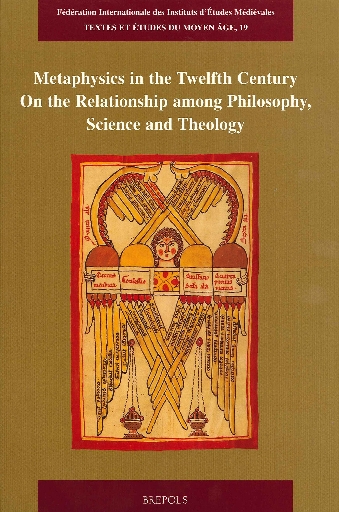
Metaphysics in the Twelfth Century
show More to view fulltext, buy and share links for:Metaphysics in the Twelfth Century show Less to hide fulltext, buy and share links for: Metaphysics in the Twelfth CenturyAlthough metaphysics as a discipline can hardly be separated from Aristotle and his works, the questions it raises were certainly known to authors even before the reception of Aristotle in the thirteenth century. Even without the explicit use of this term the twelfth century manifested a strong interest in metaphysical questions under the guise of “natural philosophy” or “divine science”, leading M.-D. Chenu to coin the expression of a twelfth century “éveil métaphysique”. In their commentaries on Boethius and under the influence of Neoplatonism, twelfth century authors not only anticipate essential elements of thirteenth century metaphysics, they also make an original contribution to the history of metaphysics by attempting to integrate the theory of first principles, philosophical theology and ontology. This volume presents and examines the contributions of the twelfth century to metaphysics made by selected Jewish, Christian and Muslim authors of the Iberian Peninsula and Francia.
-
-
-
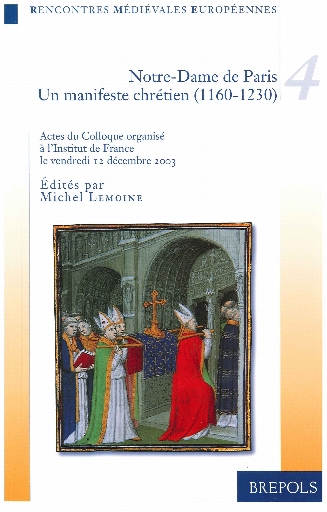
Notre-Dame de Paris. Un manifeste chrétien, 1160-1230
show More to view fulltext, buy and share links for:Notre-Dame de Paris. Un manifeste chrétien, 1160-1230 show Less to hide fulltext, buy and share links for: Notre-Dame de Paris. Un manifeste chrétien, 1160-1230Les précédents colloques des Rencontres médiévales européennes ont renouvelé notre connaissance des origines de l’architecture gothique en mettant en évidence les liens qui existent entre le propos de Suger, tel qu’il a pris corps à Saint-Denis, et les nouveaux courants spirituels du xii e siècle. Les études réunies dans le présent volume prolongent cette enquête. Elles rappellent en particulier le rôle important joué par l’évêque de Paris, Maurice de Sully. Proche des Victorins, attentif aux directives réformatrices de la papauté, il fonde sa pastorale sur un renouveau liturgique dont l’exigence théologique n’est jamais exclue. C’est à lui, par exemple, que l’on doit la pratique de l’ostension de l’hostie. On trouvera ici le portrait de cet évêque exceptionnel ainsi que l’analyse de son grand dessein: la reconstruction de la cathédrale Notre-Dame de Paris. Cette entreprise fut accompagnée d’une renaissance artistique perceptible notamment dans le domaine musical. En arrière-plan, on retrouve l’abbaye de Saint-Victor, dont on a tenté d’évaluer l’influence dans la vie spirituelle du temps. L’œuvre de Godefroid, auteur d’un Microcosme, illustre bien ce milieu si original. Notre époque traversée de révolutions et d’incertitudes peut encore tirer des leçons du manifeste que fut en son temps Notre-Dame de Paris.
-
-
-
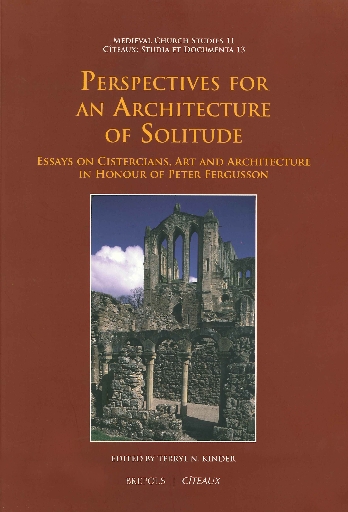
Perspectives for an Architecture of Solitude
show More to view fulltext, buy and share links for:Perspectives for an Architecture of Solitude show Less to hide fulltext, buy and share links for: Perspectives for an Architecture of SolitudeWhat was it that gave medieval art and architecture its form and style? What is it that attracts people to medieval art and architecture, especially that of the Cistercians? What shaped medieval buildings and determined their embellishments - and what now determines the way we look at them?
Some of the most intriguing questions in monastic and ecclesiastical architecture and archaeology are discussed in this tribute to Peter Fergusson and his lifetime of scholarship as an historian of medieval art and architecture, especially of the Cistercians.
These thirty-four essays range from a discussion of the earliest Christian legislation on art (fourth century) to an account of a garden project of 1811 designed to efface all previous monastic habitation. Between these chronological signposts are studies on the design, siting, building, and archaeology of churches, infirmaries, abbots’ lodgings, gatehouses, private chambers, grange chapels, and the life lived within and around them. Geographically, the papers range from the British Isles through Spain, France, Flanders, and Germany to the centre of the medieval world: Jerusalem.
They treat of the complexities of building and re-building; of architectural and artistic adaptations to place, period, and political upheaval; of the interrelationship of text and structure; and of the form, iconography, and influence of some of the great churches and cathedrals of the Middle Ages. This is a wide-ranging and authoritative collection of studies which is essential reading for any historian of medieval art and architecture.
-
-
-
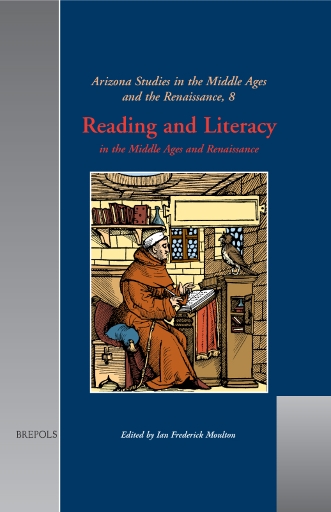
Reading and Literacy
show More to view fulltext, buy and share links for:Reading and Literacy show Less to hide fulltext, buy and share links for: Reading and LiteracyIt is not surprising that the development of the internet and related electronic technologies has coincided with an academic interest in the history of reading. Using and transmitting texts in new ways, scholars have become increasingly aware of the precise ways in which manuscripts and printed books transmitted texts to early modern readers. This volume collects nine essays on reading and literacy in Europe from the fourteenth to the seventeenth centuries. Topics include: the function of marginalia in vernacular medieval manuscripts; the trope of reading in the fourteenth century; the definition of literacy in early modern England; marginalia and reading practices in early modern Italy; revision of medieval texts in the Renaissance; the prevalence of translated French poetry in sixteenth-century England; the use of poems as props in the plays of Shakespeare; the private reading of the playscripts of masques; and early-modern women’s reading practices. These essays demonstrate the energy and excitement of the rapidly developing field of the history of reading. They will appeal to those interested in European cultural history, the transition from manuscript to print culture, the history of literacy, and the history of the book.
-