


Antiquité Tardive - Late Antiquity - Spätantike - Tarda Antichità
Revue Internationale d'Histoire et d'Archéologie (IVe-VIIIe siècle)
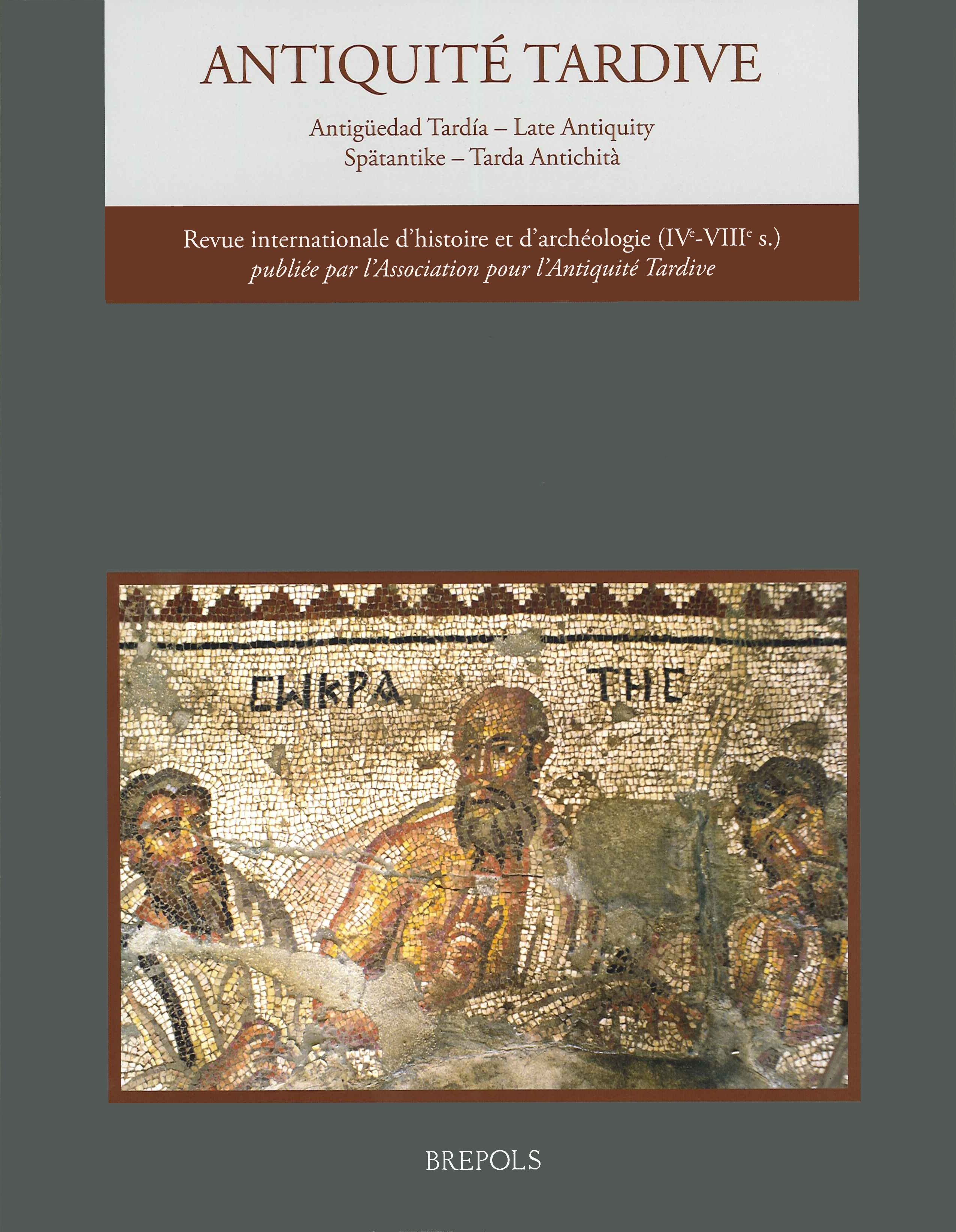
Volume 4, Issue 1, 1997
-
-
Remarques sur les origines latines de l'article défini des langues romanes (A propos de : Maria Selig, Die Entwicklung der Nominaldeterminanten im Spätlatein) ; S. Déléani, Chronique de latin tardif
show More to view fulltext, buy and share links for:Remarques sur les origines latines de l'article défini des langues romanes (A propos de : Maria Selig, Die Entwicklung der Nominaldeterminanten im Spätlatein) ; S. Déléani, Chronique de latin tardif show Less to hide fulltext, buy and share links for: Remarques sur les origines latines de l'article défini des langues romanes (A propos de : Maria Selig, Die Entwicklung der Nominaldeterminanten im Spätlatein) ; S. Déléani, Chronique de latin tardifBy: Michèle FruytAbstractMaria Selig's book looks at the development of the definite article from Latin to the Romance languages, seeking out the various elements that played a role in that process. Her work is not limited to just those lexical units that phonetically developed into the Romance articles (ille, ipse), but covers a variety of units and expressions. However, the author appears to concentrate too much on the anaphoric function, ignoring to a large extent the other functions of these elements. Her analysis of this development of the definite article produces a complex and multi-faceted picture, a "multi-factorial" model claiming its justification from variational linguistics. The main criticisms of this work concern: the questionable use of the universal standard called "written Latin"; the author's criteria of choice for the texts she has analysed; and her method of counting occurrences, which does not take account of the different functions of the words counted. Moreover the author views her mate rial from the point of view of Romance linguistics rather than from that of Latin itself. Her abstract linguistic reasoning could be difficult to follow for a non-specialist, especially since she almost never gives any concrete exemples. Although the abstract principles she analyses are very intersting, it is believed that she could have exploited her material better, and that much more could have been made of the texts she has choosen to study. This is also the case of the numerous tables of word frequency presented by M. Selig in her book.
-
Volumes & issues
-
Volume 32 (2024)
-
Volume 31 (2024)
-
Volume 30 (2022)
-
Volume 29 (2022)
-
Volume 28 (2021)
-
Volume 27 (2020)
-
Volume 26 (2019)
-
Volume 25 (2018)
-
Volume 24 (2017)
-
Volume 23 (2016)
-
Volume 22 (2015)
-
Volume 21 (2013)
-
Volume 20 (2013)
-
Volume 19 (2012)
-
Volume 18 (2011)
-
Volume 17 (2010)
-
Volume 16 (2009)
-
Volume 15 (2008)
-
Volume 14 (2007)
-
Volume 13 (2006)
-
Volume 12 (2005)
-
Volume 11 (2004)
-
Volume 10 (2003)
-
Volume 9 (2002)
-
Volume 8 (2001)
-
Volume 7 (2000)
-
Volume 6 (1999)
-
Volume 5 (1998)
-
Volume 4 (1997)
-
Volume 3 (1995)
-
Volume 2 (1994)
-
Volume 1 (1993)
Most Read This Month
