


Brepols
Brepols is an international academic publisher of works in the humanities, with a particular focus in history, archaeology, history of the arts, language and literature, and critical editions of source works.701 - 750 of 3194 results
-
-
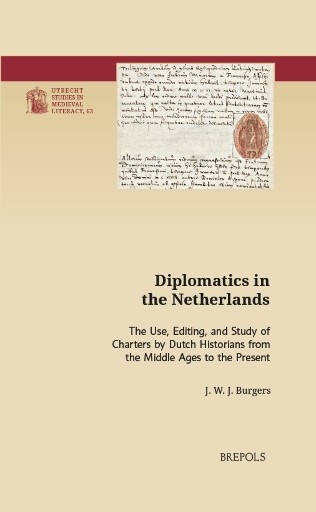
Diplomatics in the Netherlands
The Use, Editing, and Study of Charters by Dutch Historians from the Middle Ages to the Present
show More to view fulltext, buy and share links for:Diplomatics in the Netherlands show Less to hide fulltext, buy and share links for: Diplomatics in the NetherlandsCharters and other administrative texts have long had the full attention of medievalists as primary sources in their historiographical work. This also applies to scholars from the Netherlands. Ever since the late Middle Ages, they recognised the value of these sources, included them as testimony in their historiography and gradually began to realise that charters and other documents required a specific form of textual criticism and a special way of editing. In this, Dutch historians usually followed developments abroad. Sometimes, as in the early seventeenth century, they were ahead methodologically, but for long periods they depended for new insights on developments elsewhere. This was especially true in the nineteenth century, when scientific diplomatic methods and editing techniques emerged which would only be introduced and applied in the Netherlands in the next century. In the twenty-first century, Dutch scholars are fully participating in the ‘digital turn’ that is creating new research tools in diplomatics.
Ultimately, the history of diplomatics in the Netherlands is part of the broad development of historiography in the country, and therefore a valuable aspect of the history of scholarship in general.
-
-
-
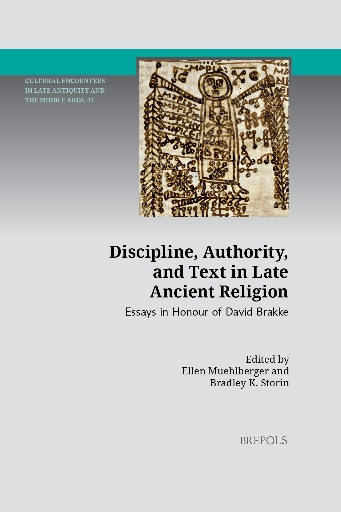
Discipline, Authority, and Text in Late Ancient Religion
Essays in Honour of David Brakke
show More to view fulltext, buy and share links for:Discipline, Authority, and Text in Late Ancient Religion show Less to hide fulltext, buy and share links for: Discipline, Authority, and Text in Late Ancient ReligionThis collection of essays on religious practice in the Mediterranean, Near East, and Middle East (ca. 100–800 ce) celebrates the impact that Professor David Brakke has had on the study of late antique religious history. Nineteen scholars celebrate the career of Professor Brakke with essays on a range of subjects on late ancient religion. Some chapters treat monastic texts, ascetic practice, and ritual performance; others address the roles of magic, demons, and miracle stories; still others examine Christian violence and martyrdom.
In particular, many of these essays explore the kinds of ascetic theory, practice, identity, organization, performance, and writing found throughout the diverse authors, groups, and locales of Late Antiquity. Essay topics cross disciplinary boundaries and operate in the overlapping intellectual space of Religious Studies, History, Classics, English, Anthropology, and Comparative Literature. By treating asceticism as a phenomenon within a relatively confined time period and geography across a variety of religious and literary traditions, this volume highlights the ascetic impulse within new areas.
The volume thus stands alone for its multifaceted discussions of religion and asceticism in Late Antiquity, and advances scholarly investigation of and discourse about late antique asceticism by expanding conceptual and disciplinary boundaries in new and exciting directions.
-
-
-
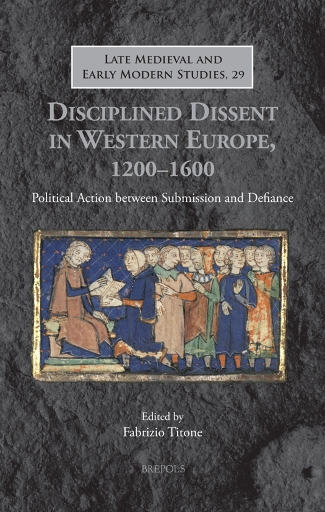
Disciplined Dissent in Western Europe, 1200–1600
Political Action between Submission and Defiance
show More to view fulltext, buy and share links for:Disciplined Dissent in Western Europe, 1200–1600 show Less to hide fulltext, buy and share links for: Disciplined Dissent in Western Europe, 1200–1600This innovative collection explores the causes and effects of ‘disciplined dissent’ - forms of protest or political action positioned between the poles of submission and defiance. To identify the political influence of commoners, the emphasis is neither ‘top down’ nor ‘bottom up’ but on mutual influence and the interplay between rulers and ruled. Contributions concerning quite diverse polities show a careful opposition of non-elite people through an effort to respect the legislative system and to find common ground with the authorities. The aim was to emphasize aspects of the norms and institutions in favour of the benefit of the community, or to ensure adjustments of some aspects if found to be beneficial for the few and detrimental for many. The examination of non-violent pressure can help us to have a more exhaustive understanding of the protagonists, causes, and effects of socio-political changes in contexts of governmental development. The analysis includes cases of violent action that managed to secure royal approval. The premise of the book is that inequality, far from being accepted as normal and inevitable, was frequently questioned by less powerful people. When targeted by more or less evident forms of political marginalization, they laid claim to principles of justice and on this basis developed a critical comprehension of government, pursued a selective rejection of injustice, and gained recognition through negotiation.
-
-
-
Discipuli dona ferentes
Glimpses of Byzantium in honour of Marlia Mundell Mango
show More to view fulltext, buy and share links for:Discipuli dona ferentes show Less to hide fulltext, buy and share links for: Discipuli dona ferentesIn recognition and celebration of the achievements of Marlia (Maria Cordelia) Mundell Mango as a researcher and as a teacher, twelve of her doctoral students offer her this volume of collected essays, showcasing recent research in Byzantine archaeology and material culture studies. The essays are divided into three sections. The first comprises studies on Byzantine economy, shipping, road networks, production and trade from Late Antiquity down to the time of the Crusades. The studies in the second part discuss facets of the material culture and the lifestyle especially of the upper social strata in the Byzantine Empire, while those of the final section explore aspects of artistic creativity in the lands of the empire. Taken together, these diverse studies offer ‘glimpses’ into the Byzantine economy and trade, lifestyle and religion, ideology and identity, artistic creativity and its impact beyond the Byzantine frontier, illustrating a variety of methodological approaches and pointing towards new directions for future research. Their wide chronological, geographic and thematic coverage is in itself a tribute to Marlia Mango’s breadth of knowledge and a reflection of her far-ranging research interests.
-
-
-
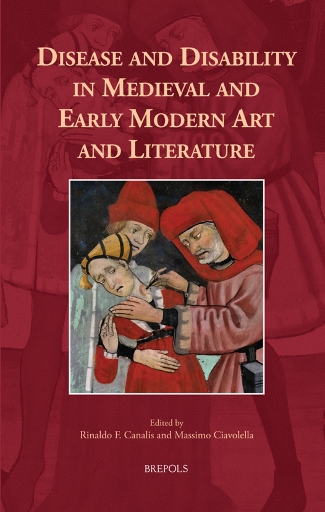
Disease and Disability in Medieval and Early Modern Art and Literature
show More to view fulltext, buy and share links for:Disease and Disability in Medieval and Early Modern Art and Literature show Less to hide fulltext, buy and share links for: Disease and Disability in Medieval and Early Modern Art and LiteratureHumanity has always shown a keen interest in the pathological, ranging from a morbid fascination with ‘monsters’ and deformities to a genuine compassion for the ill and suffering. Medieval and early modern people were no exception, expressing their emotional response to disease in both literary works and, to a somewhat lesser extent, in the plastic arts. Consequently, it becomes necessary to ask what motivated writers and artists to choose an illness or a disability and its physical and social consequences as subjects of aesthetic or intellectual expression. Were these works the result of an intrusion in their intent to faithfully reproduce nature, or do they reflect an intentional contrast against the pre-modern portrayal of spiritual ideals and, later, through the influence of the classics, the rediscovered importance and beauty of the human body?
The essays contained in this volume address these questions, albeit not always directly but, rather, through an analysis of the societal reactions to the threats and challenges that essentially unopposed disease and physical impairment presented. They cover a wide range of responses, variable, of course, according to the period under scrutiny, its technological moment, and the usually fruitless attempts at treatment.
-
-
-
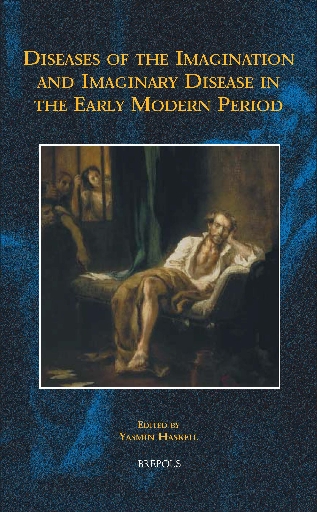
Diseases of the Imagination and Imaginary Disease in the Early Modern Period
show More to view fulltext, buy and share links for:Diseases of the Imagination and Imaginary Disease in the Early Modern Period show Less to hide fulltext, buy and share links for: Diseases of the Imagination and Imaginary Disease in the Early Modern PeriodThe early modern period was arguably the greatest ‘age of the imagination’ in Europe, and certainly the period in which the powers attributed to that faculty had the greatest consequences - both in theory and in ordinary people’s lives. Theologians and physicians debated the reality of witchcraft (no simple battle between Religion and Science, as believers and doubters could be found on both sides); the existence and pathology of werewolves and vampires; the role of the imagination in influencing the unborn child and in causing disease even in remote others. The imagination was implicated in conditions from plague, lovesickness, and anger through to hysteric and hypochondriac disease - the latter a frightening syndrome of gastric, respiratory, cardiac, and psychiatric problems believed to be epidemic. The essays in this volume, by established and emerging scholars from diverse intellectual and cultural traditions, explore Latin and vernacular, philosophical, medical, poetic, dramatic, epistolary, and juridical sources to expose the tangled conceptual roots of our modern affective, anxiety and somatoform disorders. They confirm that controversies about ‘mad’ versus ‘bad’, ‘real’ versus ‘psychosomatic’ complaints, and the interdependence of perception, emotion, and physical illness are by no means a monopoly of our times.
-
-
-
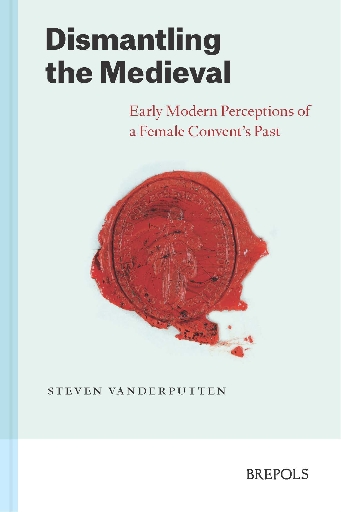
Dismantling the Medieval
Early Modern Perceptions of a Female Convent’s Past
show More to view fulltext, buy and share links for:Dismantling the Medieval show Less to hide fulltext, buy and share links for: Dismantling the MedievalDismantling the Medieval studies the paradoxical relationship of the early modern canonesses of Bouxières abbey with the medieval past of their institution. While various documentary, material, spatial, and immaterial legacies of that past remained a crucial presence in the convent’s narrative of self, the canonesses also used and manipulated them to pursue and justify drastic changes in their organization and lifestyle. Thanks to an unusually rich and varied body of evidence, we are able to reconstruct in unprecedented detail this elite convent’s highly fl exible memory culture over a period of more than two centuries. Guiding the reader back through time, the book gradually reveals how and why the canonesses’ connection to the medieval past lived on throughout many crises and transformations, including even the abbey’s dissolution in .
-
-
-
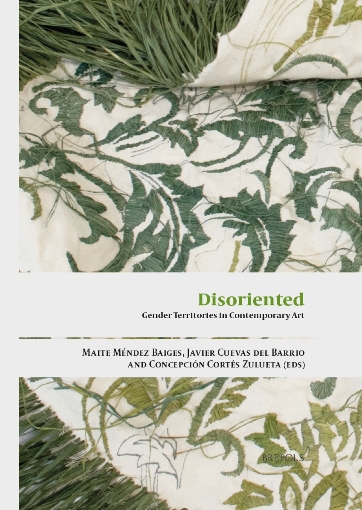
Disoriented
Gender Territories in Contemporary Art
show More to view fulltext, buy and share links for:Disoriented show Less to hide fulltext, buy and share links for: Disoriented'Desnortar', or disoriented, means to lose the north or the sense of direction, to disorient. In Disoriented a collective book from a gender perspective, we consciously seek to lose both the geographical north and the north of the contemporary art canon. We aim to rethink and disrupt, from feminist, LGTBQ+ and postcolonial approaches, the coordinates that have articulated the discourses on the art history and art system along the 20th and 21st centuries. Coordinates that define how these artistic practices and systems of modernity and the contemporary are understood, the cardinal directions and main conceptual issues, or which artists are relevant or expendable according to the narratives of avant-garde and contemporary art history. It is crucial to reinterpret and disorientate, to disnorth and thereby shatter these references to overcome the gaps that prevent the emergence of alternative knowledges. To address questions or artists often perceived as peripheral to a grand historical narrative, we propose an intersection of modern and contemporary art history, gender, feminist, queer and postcolonial approaches, and transnational interrelations. This intersectionality allows us to actively lose the north of the canon and to direct our gaze towards subjects outside the usual centres of legitimation. Mostly, we attend to women artists, to peripheral geographical centres, to subaltern collectives, or to practices or materials regularly considered of little artistic interest. All of the above critiques how conventional discourses have excluded some collectives or certain artistic proposals, and the resistances that have emerged against them.
-
-
-
Distances, rencontres, communications : réaliser l’Empire sous Charlemagne et Louis le Pieux
show More to view fulltext, buy and share links for:Distances, rencontres, communications : réaliser l’Empire sous Charlemagne et Louis le Pieux show Less to hide fulltext, buy and share links for: Distances, rencontres, communications : réaliser l’Empire sous Charlemagne et Louis le PieuxImprégnés de leur rôle de vicaires du Christ, les empereurs carolingiens se voulaient protecteurs de leurs peuples, législateurs et juges, mais aussi recteurs de l’Église. Ils ont élaboré un idéal de gouvernement ambitieux, visant à corriger, étendre et guider la société chrétienne.
À l’échelle de la Gaule, de l’Italie, de leurs conquêtes en Germanie et en Espagne, Charlemagne et Louis le Pieux pouvaient-ils réaliser leur plan ? Confrontés au problème essentiel des distances, ils ont relevé le défi en misant sur la délégation hiérarchique et les communications. Leurs efforts ont déterminé la nature de leurs échanges, mais aussi leurs limites et le destin de leur empire.
L’enquête utilise un vaste éventail documentaire - actes diplomatiques, documents législatifs et correspondances. Elle tient compte des aspects matériels et techniques des déplacements et de la circulation des personnes. En considérant la rencontre et les communications à distance d’un point de vue anthropologique, l’auteur propose une étude des réseaux qui éclaire les modes de transmission de l’information et l’exercice du pouvoir.
Au-delà des considérations propres à l’histoire des VIIIe-IXe siècles, le livre démontre l’intérêt d’aborder les réalités politiques prémodernes du point de vue des défis à la fois technologiques et relationnels que présentent les distances géographiques, le mouvement des hommes, les rencontres et les communications.
-
-
-
Documenti pontifici nel "tabularium" dell'abbazia cistercense di Chiaravalle Milanese
Da Innocenzo II a Clemente V
show More to view fulltext, buy and share links for:Documenti pontifici nel "tabularium" dell'abbazia cistercense di Chiaravalle Milanese show Less to hide fulltext, buy and share links for: Documenti pontifici nel "tabularium" dell'abbazia cistercense di Chiaravalle MilaneseFondée vers 1135 avec le concours des élites urbaines de Milan, l’abbaye de Chiaravalle Milanese était une des plus riches et plus puissantes institutions cisterciennes de la Lombardie médiévale. Titulaire d’un considérable complexe patrimonial, qui atteignait encore au milieu du XVe siècle presque 4000 hectares, l’abbaye de Chiaravalle participa activement pendant le Moyen Age à la vie politique, sociale, économique et religieuse de Milan et de son "contado". Pourtant, la ville ambrosienne et ses magistratures ne furent pas les seules « interlocutrices » de l’établissement : parmi celles-ci, la Papauté - à laquelle Chiaravalle, en tant que fondation cistercienne, était directement soumise - joua un rôle essentiel. L’ancien "tabularium" de Chiaravalle Milanese, aujourd’hui fragmenté dans plusieurs fonds d’archives milanais, nous offre un témoignage exceptionnel, voire unique, des liens étroits entre le Saint Siège et le chapitre monastique: ce témoignage se compose d'un dossier d’une centaine de documents pontificaux, depuis la fondation de l’abbaye jusqu’à la fin du pontificat de Clément V, auxquels il faut ajouter une dizaine d’actes accordés dans la même période à l’établissement cistercien par les légats pontificaux.
-
-
-

Documenting the Everyday in Medieval Europe
The Social Dimensions of a Writing Revolution, 1250–1350
show More to view fulltext, buy and share links for:Documenting the Everyday in Medieval Europe show Less to hide fulltext, buy and share links for: Documenting the Everyday in Medieval EuropeThis book explores the complex relations between the written word and medieval society by focusing on the proliferation of administrative and business documents during the so-called 'long thirteenth century'. It deals with northern France and the area covered by the historic Low Countries, but places these regions in a broader European context and in the general history of literacy.
Based on an exhaustive first-hand analysis of numerous archives and many document types, and featuring over a hundred illustrations, this book presents the reader with a large sample of documentary sources. But it also presents important hypotheses regarding literacy and the sociological dimensions of writing in the Middle Ages. Using codicology, palaeography, and diplomatics, it offers a general outline of a key period in the history of literacy which, with hindsight, can be shown to have transformed the Middle Ages.
Further, as the documents that are discussed were used in everyday life, they also have a significant social dimension. At first, these documents were not backed by a clear legal authority; there were no extant rules, formulas, or structural frameworks to which they needed to conform. Thus they shed new light on the men and women who had to learn to make, keep, and use them.
-
-
-
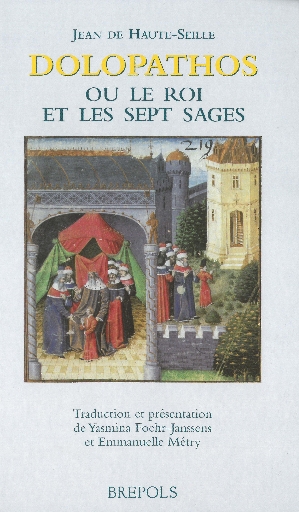
Dolopathos, ou le roi et les sept sages
show More to view fulltext, buy and share links for:Dolopathos, ou le roi et les sept sages show Less to hide fulltext, buy and share links for: Dolopathos, ou le roi et les sept sagesL'histoire du roi et des sept sages occupe dans le panorama de la littérature médiévale une place similaire à celle que l'on peut attribuer aujourd'hui au célèbre recueil des Mille et une nuits. Elle tire son origine d'un recueil de contes largement répandu dans les littératures arabe, grecque, syriaque et perse, le Livre de Sindibad. Selon la mode orientale, elle propose, sous le titre générique de Roman des Sept Sages de Rome, une intrigue romanesque dont le principal intérêt réside dans la présence de récits enchâssés (procédé utilisé plus tard par Boccace dans son Décaméron et par Chaucer dans ses Canterbury Tales). Le récit transmis par Jean, moine de l'abbaye cistercienne de Haute-Seille vers 1200, se déroule sous l'empire, à Rome, à Constantinople ou en Sicile, dans un décor dominé par les merveilles du monde antique. C'est dans ce cadre que se déroulent les aventures du roi Dolopathos, de la reine et du prince héritier, mêlés dans une intrigue où le courage et la vertu finissent, après bien des péripéties, à triompher de la ruse et la séduction. Les auteurs sont Maîtres de conférence à l'Université de Genève, spécialistes de la littérature d'exempla et des contes populaires médiévaux.
-
-
-
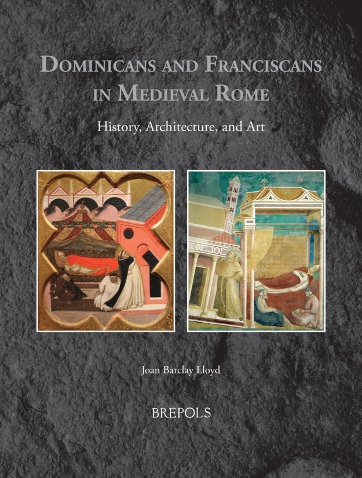
Dominicans and Franciscans in Medieval Rome
History, Architecture, and Art
show More to view fulltext, buy and share links for:Dominicans and Franciscans in Medieval Rome show Less to hide fulltext, buy and share links for: Dominicans and Franciscans in Medieval RomeWhen Saint Dominic (c. 1174-1221) came to Rome to seek papal approval of the Order of Preachers, he founded two houses on the periphery of the city - a nunnery at S. Sisto, in structures rebuilt by Pope Innocent III, and a priory next to the early Christian basilica of S. Sabina. The Dominicans modified and enlarged the existing buildings, according to their needs. Saint Francis of Assisi (c. 1182-1226) also came to consult the Pope, but he did not make any foundations in Rome. In 1229, Pope Gregory IX ordered the Benedictine monks of SS. Cosma e Damiano in Mica Aurea to cede to the Franciscans their hospice of S. Biagio in Trastevere, where Saint Francis had stayed. The friars built the church and friary of S. Francesco a Ripa there. Later, Gregory IX took over the Benedictine monastery itself, where he established the Franciscan nunnery of S. Cosimato in 1234. Moving into the more densely inhabited parts of the city, the Friars Minor built a new friary and church at S. Maria in Aracoeli on the Capitoline Hill from c. 1248-1252 onwards. The Dominicans, in 1266, acquired a convent near the Pantheon, where they constructed the Gothic church of S. Maria sopra Minerva. In 1285, the Colonna family established a Franciscan nunnery at S. Silvestro in Capite. In the context of the origin and evolution of the two Mendicant Orders, this book traces the history of these thirteenth-century Dominican and Franciscan foundations, focussing on their location in Rome, the history of each site, their architecture, and the medieval works of art connected with them. Popes and cardinals, members of important families, and Franciscan Tertiaries contributed generously to their construction and decoration. The book ends with Saint Catherine of Siena, who lived near S. Maria sopra Minerva, where she was buried.
-
-
-
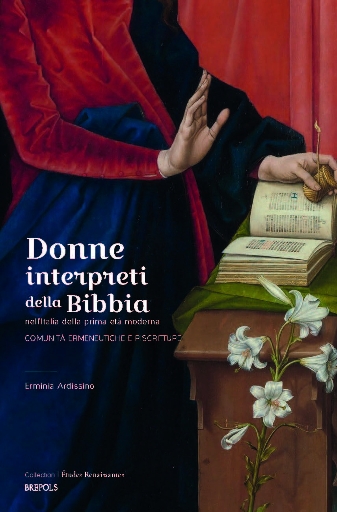
Donne interpreti della Bibbia nell’Italia della prima età moderna
Comunità ermeneutiche e riscritture
show More to view fulltext, buy and share links for:Donne interpreti della Bibbia nell’Italia della prima età moderna show Less to hide fulltext, buy and share links for: Donne interpreti della Bibbia nell’Italia della prima età modernaLa Bibbia ha rappresentato il libro più familiare per le donne nella prima età moderna e proprio in ambito religioso le donne italiane hanno maggiormente fatto sentire la loro voce. Tuttavia non solo le testimonianze sono scarse, ma anche gli studi hanno trascurato questo interessantissimo campo. Il volume studia le modalità con cui le donne in Italia hanno preso parte al vivissimo dibattito rinascimentale sull’interpretazione e la conoscenza delle Sacre Scritture, da cui hanno anche attinto per sviluppare originali interventi. Sulla base delle riscritture bibliche che ci hanno lasciato, sono individuabili vere e proprie comunità ermeneutiche femminili. Venezia, Firenze, il Centro Italia sono le coordinate geografiche dei circoli qui individuati. A Firenze le scrittrici che lavorano con e sulla Bibbia prediligono il rapporto con la comunità politica, suggerendo modelli comportamentali che possono istruire le donne per il loro inserimento nella società civile. A Venezia la Bibbia ispira argomenti a difesa della dignità femminile e della parità dei generi, infatti sull’episodio edenico sono state fondate coraggiose letture che incisero significativamente nella cosiddetta querelle des femmes europea. Nell’Italia centrale l’interesse femminile si focalizza su una dimensione più devozionale e spirituale, sul problema della salvezza per il beneficio di Cristo, sulla versificazione e sul commento dei Salmi. Con questo studio si intende portare in giusta luce il contributo delle donne italiane al dibattito culturale e religioso nell’età delle Riforme e mostrare la modernità e vivacità delle loro posizioni oltre che recuperarne il valore letterario e intellettuale.
-
-
-
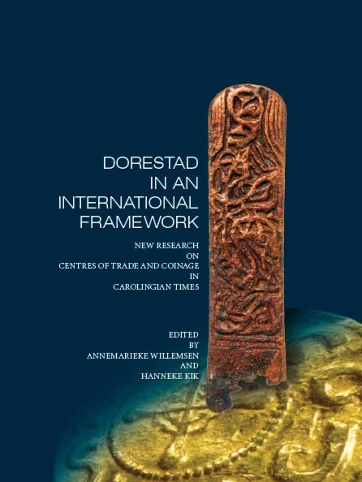
Dorestad in an international Framework
New Research on Centres of Trade and Coinage in Carolingian Times
show More to view fulltext, buy and share links for:Dorestad in an international Framework show Less to hide fulltext, buy and share links for: Dorestad in an international FrameworkDorestad is a large, wealthy and internationally orientated harbour town from the Carolingian era excavated at the site of Wijk bij Duurstede in the middle of the Netherlands. In the 8th and 9th century AD it functioned as a junction in a network of Carolingian emporia or vici that covered most of present-day Europe. The past decade featured new research into the relations between these towns, their environmental and cultural context, the exchange of goods, coins and ideas, and the role of emperors and Vikings in their rise and fall. This publication contains the results of a scholarly congress in Leiden in June 2009, where renowned historians and archaeologists from eight countries presented studies into the Carolingian emporia, their material culture and their position in early medieval Europe, composed around Dorestad, the only emporium called ‘vicus famosus’ in contemporary sources.
-
-
-

Doubt in an Age of Faith
Uncertainty in the Long Twelfth Century
show More to view fulltext, buy and share links for:Doubt in an Age of Faith show Less to hide fulltext, buy and share links for: Doubt in an Age of FaithDoubt in an Age of Faith presents the first systematic scholarly treatment of doubt and its cultural role in Latin Christendom during the long twelfth century (c. 1060-1220). Flanagan rejects the popular image of the credulous Middle Ages, showing the centrality of doubt to intellectual and religious discourses of the period. However this wide-ranging investigation is not confined to matters of faith or religious scepticism. Examining doubt as both a psychological and social phenomenon, Flanagan explores how medieval people experienced uncertainty, and the different ways in which they sought to resolve it. Both positive and negative aspects of doubt are discussed. Her proposal that the rejection of doubt as a tool of intellectual inquiry, coupled with the quest for ever-greater certainty contributed to the closing of minds that marked the thirteenth century, has obvious implications for our own times.
-
-
-
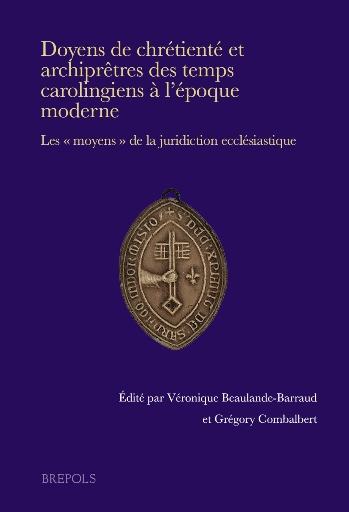
Doyens de chrétienté et archiprêtres des temps carolingiens à l’époque moderne
Les « moyens » de la juridiction ecclésiastique
show More to view fulltext, buy and share links for:Doyens de chrétienté et archiprêtres des temps carolingiens à l’époque moderne show Less to hide fulltext, buy and share links for: Doyens de chrétienté et archiprêtres des temps carolingiens à l’époque moderneLes doyens ruraux, aussi appelés archiprêtres, doyens de chrétienté ou vicaires forains, sont des agents locaux au service des évêques, constituant un échelon intermédiaire entre ce dernier et la paroisse. Ils jouent un rôle très important dans l’administation du diocèse, dans le contrôle des bénéfices ecclésiastiques, du clergé local et des habitants du diocèse. Ils disposent de leur propre juridiction et assurent de nombreuses tâches d’exécution commandées par les autorités diocésaines, notamment le tribunal épiscopal. Ils réunissent régulièrement leurs collègues, avertissent, sanctionnent, jugent, produisent des écrits et des preuves, pour eux mêmes et pour autrui. Ils sont des maillons indispensables de la transmission d’informations entre les autorités diocésaines et la société locale. Le diocèse est en général découpé en circonscriptions qui leur sont confiées. Pourtant, ils n’ont guère retenu l’attention des historiens jusqu’à aujourd’hui. Ce livre a pour ambition de mettre dans la lumière ces doyens de chrétienté et de lever le voile, à partir d’études de cas régionales et de synthèse thématiques plus larges, sur leur apparition et leur place dans les diocèses médiévaux, leur activité, leurs rapports avec les autres acteurs de l’Église et leur rôle dans la société chrétienne. Ces questions sont abordées sur la longue durée, de l’époque carolingienne aux Temps modernes, dans une grande partie de l’Europe occidentale, de l’Italie à l’Angleterre, en passant par le royaume de France. Les doyens s’y révèlent véritablement, pendant des siècles, comme les « moyens » de la juridiction ecclésiastique, aux deux sens de ce terme.
-
-
-
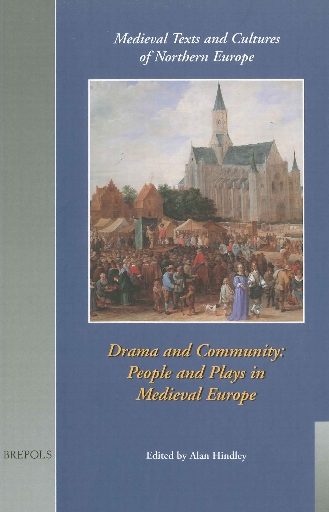
Drama and Community
People and Plays in Medieval Europe
show More to view fulltext, buy and share links for:Drama and Community show Less to hide fulltext, buy and share links for: Drama and CommunityIn recent years medieval drama has seen a marked revival of interest, much of it informed by an increasing appreciation of its multi-disciplinary nature. The drama of medieval Europe is not just literature; it is a social and indeed commercial event, essentially a communal enterprise, inextricably bound up with the structures of society. This collection of essays by international scholars working in collaboration examines various aspects of the inter-relationship between different European communities and the plays they performed. Its coverage of a wide range of theatres and play-types provides a critical and practical perspective on performance cultures of the Northern Middle Ages. The comparative nature of this volume has the effect of underlining drama as a true medieval mass medium.
-
-
-
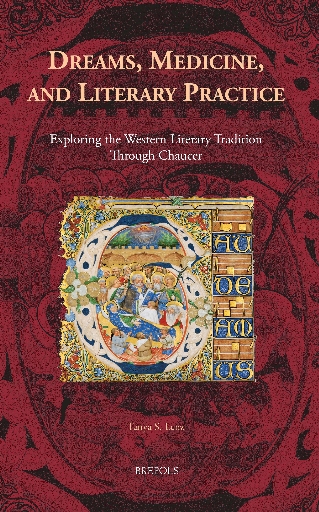
Dreams, Medicine, and Literary Practice
Exploring the Western Literary Tradition Through Chaucer
show More to view fulltext, buy and share links for:Dreams, Medicine, and Literary Practice show Less to hide fulltext, buy and share links for: Dreams, Medicine, and Literary PracticeThis groundbreaking volume explores the intersection of dreams, medicine, and literary practice in the poetry of Chaucer and influential literary works from antiquity through the late fourteenth century. An introductory exploration considers topics such as Asclepian dream healings of ancient Greece, Old English poetry, medieval mystics, and foundational works by Hippocrates, Aristotle, Galen, Avicenna, Macrobius, and others. Detailed analyses of a series of Chaucer’s poems follow. Frequently incorporating and commenting on antecedent works, these late medieval poems span various genres including the dream-vision, the romance-tragedy, and the comic tale. Dreams and medicine are woven into the fabric of these texts, the author contends, revealing distinct and often surprising insights. One such insight is the ‘double potential’ of literary practice, medicine, and dreams - that is, each is capable of facilitating healing and wholeness yet equally capable of causing harm and disease. Ultimately, this book shows that the joining together of medicine and dreams constitutes a vital dimension of these key works in Western literature - one that reveals a profound connection between literature and the fundamentally human experiences of disease, healing, and dreaming.
-
-
-
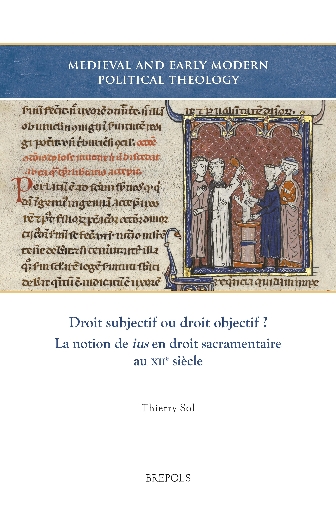
Droit subjectif ou droit objectif ? La notion de ius en droit sacramentaire au XIIe siècle
show More to view fulltext, buy and share links for:Droit subjectif ou droit objectif ? La notion de ius en droit sacramentaire au XIIe siècle show Less to hide fulltext, buy and share links for: Droit subjectif ou droit objectif ? La notion de ius en droit sacramentaire au XIIe siècleMichel Villey situait le passage d’une conception réaliste à une conception subjective du droit (le droit conçu comme pouvoir de l’individu) au xiv e siècle, lors de la controverse sur la pauvreté franciscaine et du développement de la philosophie volontariste d’Ockham. Brian Tierney remit en cause cette hypothèse et rechercha les prodromes de la notion de droits naturels (rights, par opposition au droit objectif et positif, laws) dès le xii e siècle. Michel Villey signalait lui aussi l’importance du xii e siècle, mais y voyait au contraire la renaissance de la notion réaliste de droit, à la faveur de la redécouverte du droit romain et du développement de la jurisprudence. Pour trancher cette controverse entre ces deux grands historiens et philosophes du droit, il convenait de retourner aux textes.
Peut-on trouver dès le xii e siècle les germes d’une conception subjective du droit ? En s’interrogeant sur la validité et la licéité des sacrements célébrés par les clercs hérétiques, schismatiques ou simoniaques, le cas des ordinations absolues et le pouvoir de lier et délier des prélats hérétiques, le droit sacramentaire offre un champ d’analyse privilégié. Dans ces situations se trouve problématisé le rapport entre la situation personnelle du ministre (à la fois morale et canonique) et sa fonction au service de l’Église, c’est-à-dire entre une situation subjective de « possession personnelle » du sacrement de l’ordre et une situation de distribution des sacrements au service de la communauté des fidèles.
Gratien puis Roland, Rufin, Étienne de Tournai, Jean de Faenza, Simon de Bisignano, Huguccio et les Summae (parisiensis, coloniensis, lipsiensis, etc.) utilisent certes un vocabulaire subjectivement façonné (potestas, potentia, facultas, ius dandi), mais derrière les mots se développe une conception objective du droit, seule capable de fournir des distinctions opérantes aux questions pratiques d’un siècle crucial pour le droit canonique.
-
-
-
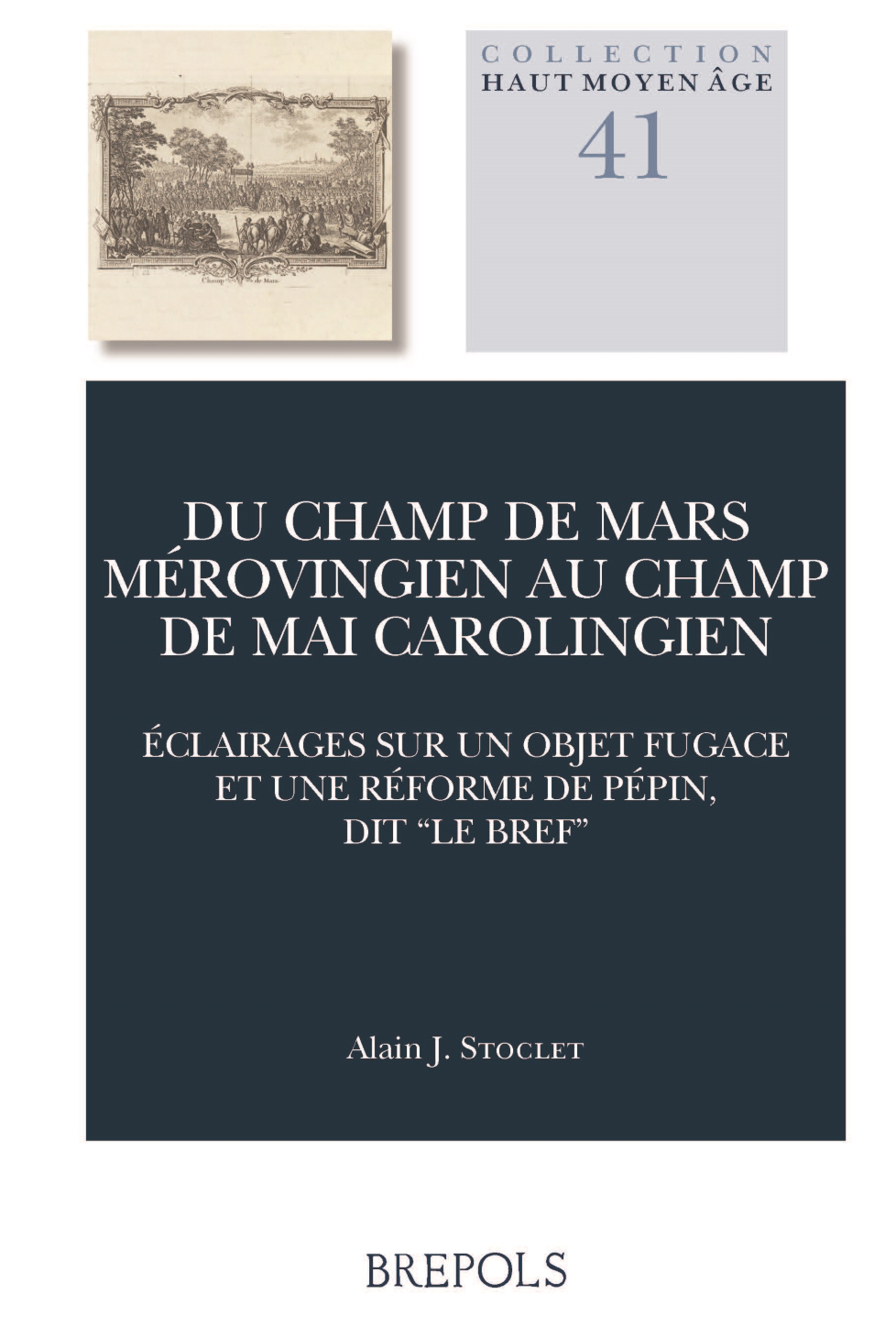
Du Champ de Mars mérovingien au Champ de Mai carolingien
Éclairages sur un objet fugace et une réforme de Pépin, dit « le Bref »
show More to view fulltext, buy and share links for:Du Champ de Mars mérovingien au Champ de Mai carolingien show Less to hide fulltext, buy and share links for: Du Champ de Mars mérovingien au Champ de Mai carolingienQu’est-ce que le « Champ de Mars » qui fait de brèves apparitions dans les sources sous les premiers Carolingiens et auquel, nous dit-on, Pépin « le Bref » aurait substitué un « Champ de Mai » tout aussi énigmatique ? Quel rapport entre ce Champ de Mars et celui qui fut l’un des centres névralgiques de la Rome républicaine ? Telles sont les questions qui inspirent le présent ouvrage. Il n’y répond pas tant « de front » - les données exploitables, rares, éparses et fragmentaires n’y suffisent pas - que par petites touches, en apportant des éclairages nouveaux ou renouvelés sur un certain nombre de points choisis : l’historiographie du sujet, qui révèle, entre autres aspects inattendus, la vitalité et la permanence extraordinaires de formules d’une très haute antiquité, relayées et amplifiées par l’érudition du Grand Siècle ; l’exploration des six ou sept cents ans séparant l’original romain de l’avatar alto-médiéval, qui livre la trace ténue de continuités d’un ordre différent, liées, notamment, aux cérémonies d’investiture des princes de ce monde ; puis, au cœur de l’ouvrage, l’examen des témoins textuels de la tradition franque (diplômes mérovingiens, chronique de Nibelung, annales dérivées de celles, perdues, de Murbach, vignettes sur les derniers Mérovingiens apparentées à celle d’Éginhard, célèbre entre toutes) ; enfin, la dimension calendaire de la réforme pippinienne, son rapport supposé à l’affirmation ou à la diffusion de créneaux religieux exclusifs (Quatre-Temps, Carême). L’enquête dont on pose ici quelques jalons prend donc en quelque sorte le contrepied des mégalographies des Lumières, si déterminantes en dépit de leurs défauts évidents - l’histoire n’était guère, alors, qu’une science auxiliaire au service de la philosophie politique.
-
-
-
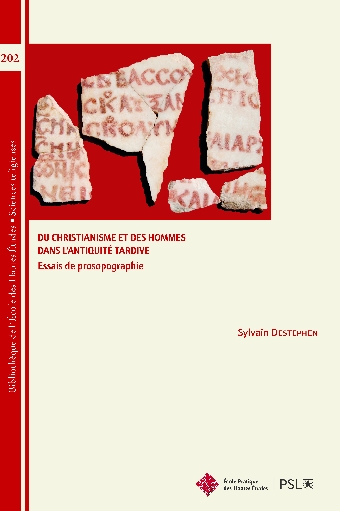
Du Christianisme et des hommes dans l’Antiquité Tardive. Essais de prosopographie
show More to view fulltext, buy and share links for:Du Christianisme et des hommes dans l’Antiquité Tardive. Essais de prosopographie show Less to hide fulltext, buy and share links for: Du Christianisme et des hommes dans l’Antiquité Tardive. Essais de prosopographieLe néologisme savant de ≪ prosopographie ≫ apparaît à la Renaissance et désigne, dans un premier temps, une oeuvre littéraire combinant généalogie de princes, éloges de leurs vertus et galerie de portraits. Après les travaux érudits de l’Âge classique sur les dirigeants religieux du passé, il faut attendre le xix e siècle pour que la prosopographie soit érigée en discipline scientifique.
Reposant sur un dépouillement systématique de la documentation conservée, la prosopographie propose une étude sérielle des membres d’un groupe constitué sur une période et une durée déterminées.
En raison de la richesse des sources conservées, l’Empire romain a suscité de manière précoce en Europe des études prosopographiques. La période couverte par les iii e-vii e siècles, communément appelée ≪ Antiquité tardive ≫, offre une richesse documentaire et littéraire exceptionnelle, liée en partie à l’expansion du christianisme et à la conversion du monde antique à la nouvelle religion. Cette abondance de sources explique la réalisation de grandes enquêtes prosopographiques portant d’abord sur l’ensemble des élites civiles, puis sur les milieux ecclésiastiques, monastiques, ascétiques et dévots.
Le présent livre mobilise les résultats obtenus et les recherches en cours pour montrer l’importance de l’apport de la prosopographie à l’histoire du christianisme antique dans des domaines aussi variés que l’histoire des conciles, l’hagiographie, l’onomastique, la hiérarchie ecclésiastique et l’histoire des femmes.
-
-
-
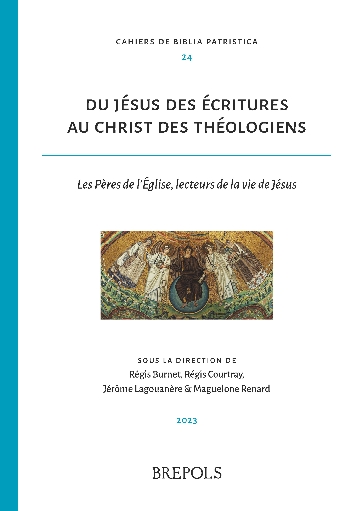
Du Jésus des Écritures au Christ des théologiens
Les Pères de l’Église, lecteurs de la vie de Jésus
show More to view fulltext, buy and share links for:Du Jésus des Écritures au Christ des théologiens show Less to hide fulltext, buy and share links for: Du Jésus des Écritures au Christ des théologiensPour parler de la foi chrétienne, les Pères ont souvent recouru à des exposés concrets, s’appuyant sur des personnages bibliques. Or, de tous ces modèles bibliques, Jésus est sans conteste le paradigme. Les premiers écrivains chrétiens se sont ainsi attachés à expliquer les épisodes de sa vie pour en dégager des enseignements spirituels, moraux ou doctrinaux, soulevant de la sorte aussi bien des questions d’exégèse que de théologie.
La grande question qui s’est posée dès le début à la communauté chrétienne fut de démontrer que le Jésus de Nazareth de la Bible est bien le « Christ ». Cette question s’est posée de manière complexe et souvent violente au cours des premiers siècles du christianisme.
Partant de la lecture que les Pères ont faite de la figure de Jésus, notamment dans les Évangiles, le présent volume s’interrogera sur l’élaboration progressive, parfois polémique, des différents éléments constitutifs du personnage théologique du Christ. Il s’agira de permettre de mieux saisir la manière dont la figure de Jésus, telle qu’on la trouve dans les Écritures, a été peu à peu comprise et réélaborée dans des lectures théologiques.
Ces réflexions des Pères conservent toute leur portée aujourd’hui, tant les questions soulevées dès les premiers siècles du christianisme continuent d’être actuelles : elles concernent tant les historiens des religions que les théologiens, sans oublier les exégètes et tous ceux qui s’intéressent à la réception du personnage du Christ.
-
-
-

Du chartrier au codex
La première cartularisation (ix e-début x e siècle)
show More to view fulltext, buy and share links for:Du chartrier au codex show Less to hide fulltext, buy and share links for: Du chartrier au codexAlors que le champ historiographique touchant les cartulaires s'est renouvelé en profondeur depuis les années 1990, les premières compilations datées du IXe siècle sont restées à l'écart de ce mouvement. Cette monographie entend donner un éclairage nouveau sur la première cartularisation. En considérant tous les témoins conservés, elle replace l'apparition d'un nouveau type d'écrit dans son contexte documentaire et spatio-temporel en Francie orientale. Huit ensembles documentaires sont comparés entre eux mais aussi avec d'autres écrits contemporains afin de déterminer les origines, les fonctions attribuées à ses premières compilations. Enfin une réflexion sur la matérialité éclaire les choix faits lors de la mise en codex. Un jeu constant sur les échelles est proposé pour comprendre pourquoi huit pôles cartularistes choisissent de produire un cartulaire parmi un arsenal d'écrits possibles pour répondre à des finalités précises.
Le croisement de différentes historiographies sur les cartulaires et les pratiques de l'écrit renouvelle les approches et les perspectives. Cette monographie replace le moment-cartulaire dans un paysage documentaire large et rend compte de la cartularisation comme un phénomène scriptural et culturel global inscrit dans les dynamiques de la société carolingienne.
-
-
-
Du créateur biblique au démiurge gnostique
Trajectoire et réception du motif du blasphème de l’Archonte
show More to view fulltext, buy and share links for:Du créateur biblique au démiurge gnostique show Less to hide fulltext, buy and share links for: Du créateur biblique au démiurge gnostiqueL’auteur de ce livre propose la comparaison critique de toutes les utilisations attestées du motif gnostique du blasphème de l’Archonte et l’étude de la transformation de la citation du texte d’Isaïe dans les textes gnostiques en examinant les particularités de chaque attestation. Cette approche permet, entre autres, de bien distinguer les différentes versions du blasphème de l’Archonte et de retracer, autant que possible, les différentes étapes de sa diffusion dans la littérature gnostique. Toutes ces variantes sont précieuses, car elles permettent de préciser les destinataires visés par les différentes œuvres et les contextes socioreligieux spécifiques à chacune de celles-ci. L’Archonte apparaît tantôt comme un modèle de conversion à imiter, tantôt comme un anti-modèle à rejeter, comme le type de l’impiété religieuse. Ces présentations impliquent des destinataires et des situations communautaires différents, si bien que les origines du motif du blasphème de l’Archonte sont diverses, mais doivent être situées à l’intérieur du cadre de la construction du discours interreligieux. Le blasphème de l’Archonte apparaît alors comme un des volets de la crise identitaire du christianisme au ii ème siècle, qui s’est cristallisée, entre autres, autour de la question de la véritable connaissance de Dieu.
-
-
-
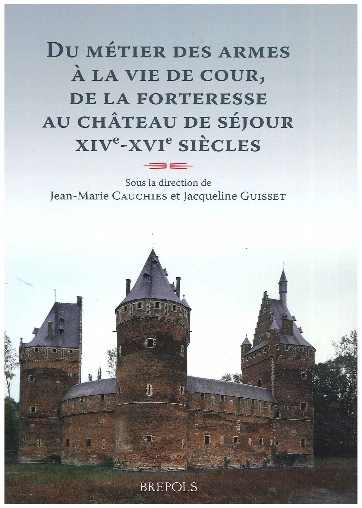
Du métier des armes à la vie de cour, de la forteresse au château de séjour : XIVe-XVIe siècles
show More to view fulltext, buy and share links for:Du métier des armes à la vie de cour, de la forteresse au château de séjour : XIVe-XVIe siècles show Less to hide fulltext, buy and share links for: Du métier des armes à la vie de cour, de la forteresse au château de séjour : XIVe-XVIe sièclesCe premier colloque au château fort d’Écaussinnes-Lalaing était consacré à l’étude des transformations de l’architecture extérieure et intérieure des forteresses pendant cette période cruciale où l’évolution des armes à feu rendit obsolètes les anciens systèmes de défense. Un constat général de la forme des tours de défense précède l’examen des premières modifications des traditionnelles archères au profit de l’usage des canons. Le Hainaut joue un rôle politique important durant cette période et beaucoup de petits et grands seigneurs se font bâtir des résidences et places fortes. D’un panorama global à l’approche de cas précis, tels ceux de Beersel, Écaussinnes-Lalaing et Écaussinnes-d’Enghien, le parcours est riche d’interrogations et de recherches nouvelles. Lalaing, Croÿ, Egmond, proches du pouvoir, voyagent et content leurs découvertes des aménagements d’autres castels. Entraînés sur les routes de France, d’utiles comparaisons avec les châteaux de Ravel et de Tarascon, ont pu être tentées, quant à leur structure, mais aussi quant à leurs décorations peintes ou à la fonction des cheminées. L’appartenance à ces grandes familles impose une approche héraldique ou de la carrière de chefs de guerre célèbres, tels Florent d’Egmond et Adrien de Croÿ. L’érudition de l’époque ne manque pas à l’appel avec l’examen de la bibliothèque d’un fonctionnaire bourguignon. Costumes et parures sont également à l’honneur avec un examen du récit d’Olivier de La Marche, ou des bijoux de la société dijonnaise. Enfin, l’étude de l’inscription de l’un des plus célèbres monuments funéraires de l’époque, celui de Philippe Pot, permet de retracer l’ensemble d’une carrière ainsi que les motivations et l’acte politique post mortem de ce personnage emblématique.
-
-
-
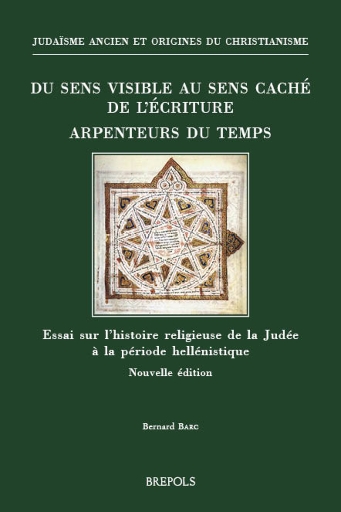
Du sens visible au sens caché de l’Écriture. Arpenteurs du temps
Essai sur l’histoire religieuse de la Judée à la période hellénistique. Nouvelle édition
show More to view fulltext, buy and share links for:Du sens visible au sens caché de l’Écriture. Arpenteurs du temps show Less to hide fulltext, buy and share links for: Du sens visible au sens caché de l’Écriture. Arpenteurs du tempsLa rédaction finale de la Torah est communément datée de période perse (entre 400 et 350 avant notre ère). C’est à partir de cette époque que « la Bible » aurait occupé une place centrale dans la religion judéenne. L’artisan de cette réforme aurait été un grand prêtre venu de Babylone, Esdras. Il aurait bénéficié du soutien officiel d’un roi perse. Cette version des faits s’est imposée depuis que les juifs et les chrétiens ont reconnu le statut de « texte sacré » au livre d’Esdras. Aujourd’hui encore la plupart des spécialistes retiennent ce scénario, au moins dans ce qu’il a d’essentiel : « la Torah serait devenue la clé de voûte de la religion judéenne à la période perse ». Il existe pourtant une autre version dont le scénario est identique, mais dans laquelle les noms et les dates sont autres. La réforme aurait eu lieu, non pas à la période perse, mais deux siècles plus tard à la période hellénistique. La Torah aurait bien été promulguée par un grand prêtre, mais son nom serait Siméon fils d’Onias. Il serait bien venu de l’étranger, mais d’Égypte. Il aurait bénéficié du soutien d’un roi étranger, mais d’un roi grec d’Alexandrie. Le texte fondateur des religions juive et chrétienne a-t-il été « écrit » par Esdras pour une communauté judéenne encore imprégnée de sa culture traditionnelle ou par Siméon pour une élite sacerdotale largement ouverte à la culture hellénistique ? Son auteur est-il un personnage de légende dont on ignore tout, ou un acteur connu de l’histoire politique, sociale et culturelle de la Judée de 200 avant notre ère ?
-
-
-
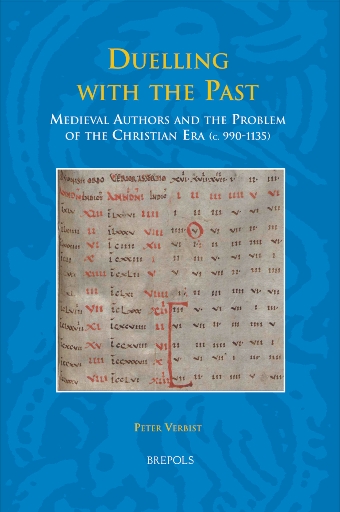
Duelling with the Past
Medieval Authors and the Problem of the Christian Era (c. 990-1135)
show More to view fulltext, buy and share links for:Duelling with the Past show Less to hide fulltext, buy and share links for: Duelling with the PastThis volume discusses the controversy surrounding the dating of the Christian Era in the Middle Ages and its effect on the ‘emergence’ of the individual in medieval society. It focuses on eight medieval authors (Heriger of Lobbes, Abbo of Fleury, Marianus Scottus, Gerland the Computist, Hezelo of Cluny, an anonymous author in Limoges, Sigebert of Gembloux, and Heimo of Bamberg), all of whom attempted to correct the date of Christ’s incarnation according to the Easter tables of the Scythian monk Dionysius Exiguus (c. 540). As this volume argues, these authors entered into a duel with the past, attempting to reassign the year of Christ’s birth and in the process negotiating contradictory authoritative traditions. On a superficial level these scholars appeared to be unsuccessful in their attempts to reconstruct history, as none of their proposed corrections replaced the existing (erroneous) Christian era that had been established in the Latin West. On a practical level, however, this defeat can be counterbalanced by the conclusion that the corrections provided by these authors acted as an important step in the increasing movement of medieval authors towards intellectual autonomy. In Duelling with the Past, Verbist’s analysis explores the links between computistical sources and the ‘emergence’ of the individual in the Middle Ages.
-
-
-
Dulces ante omnia Musae
Essays on Neo-Latin Poetry in Honour of Dirk Sacré
show More to view fulltext, buy and share links for:Dulces ante omnia Musae show Less to hide fulltext, buy and share links for: Dulces ante omnia MusaeDulces ante omnia Musae. Essays on Neo-Latin Poetry in Honour of Dirk Sacré is the very first collection of articles ever to be published about the fascinating phenomenon of Neo-Latin verse composition from its very beginning in Italian Renaissance humanism until its modest but important revival in the late nineteenth and early twentieth centuries - and even beyond. The editors have attracted both young and promising scholars and internationally recognized authorities to write specific case studies which will shed light on the rich diversity of scholarly approaches currently prevailing in the field of Neo-Latin poetical studies, as well as highlight both continuities and discontinuities in the writing and publishing of Latin verses from the fifteenth until the twenty-first centuries.
This volume is dedicated to Dirk Sacré, professor emeritus of Neo-Latin at KU Leuven who, apart from writing numerous articles on Neo-Latin poets from Italy and the Low Countries in early modern times, has contributed more than anyone else in exploring the vast territory, until recently largely neglected and uncharted, of modern and late modern Latin verse compositions.
-
-
-
Duns Scot à Paris, 1302-2002
Actes du colloque de Paris, 2-4 septembre 2002
show More to view fulltext, buy and share links for:Duns Scot à Paris, 1302-2002 show Less to hide fulltext, buy and share links for: Duns Scot à Paris, 1302-2002Le colloque «Duns Scot à Paris, 1302-2002» (2-4 septembre 2002) a commémoré le sept centième anniversaire de l’arrivée, à l’Université de Paris, de Jean Duns Scot, l’une des rares dates connues dans la vie du plus grand philosophe et théologien du tournant des XIIIe et XIVe siècles. Il a permis de faire le point des dernières découvertes historiques et philologiques, et de donner un état des recherches scotistes en cours, qui ont connu un essor rapide et même inattendu ces dernières années. Après une introduction de caractère historique (‘Paris, 1302’), l’on trouvera dans ce volume une succession d’études portant sur la logique, l’épistémologie et la sémantique (2e partie), la métaphysique (3e partie), l’éthique et la psychologie (4e partie), la théologie (5e partie). La sixième partie enfin (‘Paris 2002’) compare les contributions de Duns Scot aux réflexions contemporaines (sur le temps, autrui, le langage). Cet volume est un instantané des travaux les plus récents: à la fois un bilan des connaissances sur la fin du XIIIe siècle, une série d’interprétations originales et une somme d’analyses philosophiques.
-
-
-
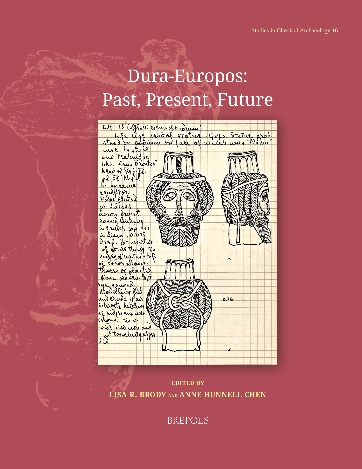
Dura-Europos: Past, Present, Future
show More to view fulltext, buy and share links for:Dura-Europos: Past, Present, Future show Less to hide fulltext, buy and share links for: Dura-Europos: Past, Present, FutureThis volume brings together an international and interdisciplinary host of scholars to reflect on the complicated legacies of exploration at the archaeological site of Dura-Europos, situated on the western bank of the Euphrates River near modern Salihiyeh (Syria). A chance discovery after World War I kicked off a series of excavations that would span the next century and whose finds are today housed in collections worldwide, including the Yale University Art Gallery, the Louvre, and the National Museum in Damascus. Dura-Europos exemplifies a multiethnic frontier town at the crossroads of major trade routes. Its textual remains and remarkably-preserved Christian, Jewish, and polytheist religious sanctuaries provide key resources for the study of antiquity and attest to the cross-cultural interconnectivity that was demonstrably central to the ancient world but which has been too often obscured by Eurocentric historiographic traditions and siloed disciplinary divisions.
Foreign-run, large-scale archaeological campaigns of the early twentieth century, like those at Dura-Europos, have created narratives of power and privilege that often exclude local communities. The significance of these imbalances is entangled with the destruction the site has experienced since the 2011 outbreak of conflict in Syria. As a step toward making knowledge descendant of early excavations more accessible, this volume includes Arabic summaries of each paper, following up on the simultaneous Arabic interpretation provided at the 2022 hybrid conference whose proceedings form the core of this publication. The papers address topics connected to essential themes in relation to Dura-Europos: long-distance trade relations and cross-border interactions in antiquity, including the exchange of technologies, people, and materials; Christianity, Judaism, and other religious practices, and their relations to one another; contemporary trafficking of looted artifacts; cultural heritage and the Islamic State; and the evolving role of museum collections, technologies, and archival materials for research.
-
-
-
Dynamiques de conversion: modèles et résistances
Approches interdisciplinaires
show More to view fulltext, buy and share links for:Dynamiques de conversion: modèles et résistances show Less to hide fulltext, buy and share links for: Dynamiques de conversion: modèles et résistancesCet ouvrage est issu des travaux sur la conversion menés au sein du Centre Interdisciplinaire d’Étude du Religieux (CIER), à la MSH de Montpellier. Certes on écrit beaucoup et on a beaucoup écrit sur cette thématique : le sujet présente en effet un intérêt majeur. Mais l’approche pluridisciplinaire a été l’occasion de soulever des questions et d’obtenir des résultats qui méritent d’être publiés. La combinaison des différentes approches disciplinaires qui se retrouvent au sein du Centre a permis de mieux appréhender le processus complexe que constitue la conversion dans ses expressions, ses enjeux, ses finalités et ses conséquences, de manière synchronique et diachronique. Si le point de départ des réflexions s’appuie toujours sur les définitions courantes de la conversion - retour à l’origine (ou retour à soi) ou changement de pensée, mutation ou renaissance - la présente publication cherche à mettre l’accent sur l’analyse des dynamiques qu’induit, aux différents moments de l’histoire, la conversion retenue comme modèle. Il s’agit de considérer ces dynamiques non seulement dans le champ du religieux mais aussi en tant que la figure religieuse de la conversion a pu être, ou devenir, figure de pensée ou d’expression, posture sociologique ou éthique, dans d’autres domaines que le religieux : mythologique, laïc, politique, littéraire, artistique… En conséquence, la conversion a fourni un espace conceptuel à la théologie mais aussi à d’autres disciplines comme le politique, l’histoire, la littérature ou la psychanalyse… Enfin lorsque les modèles de la conversion, contaminés par ces autres champs, opèrent un retour sur le fait religieux, s’ouvre alors un questionnement particulier et peu étudié jusqu’à présent. En effet les dynamiques de constitution, d’adhésion et de résistance à ces modèles touchent pratiquement à tous les aspects du domaine culturel et peut-être à l’assise même de la culture puisqu’elles interrogent les processus d’individuation et de communautarisation - processus opérant autant dans leur capacité transférentielle que dans leur rapport à une éventuelle transcendance. Les contributions, si elles s’inscrivent nécessairement dans un domaine et un champ méthodologique disciplinaires, réussissent à maintenir une ouverture interdisciplinaire, qui permet d’appréhender le phénomène étudié dans toute sa complexité.
Béatrice BAKHOUCHE est professeur de langue et littérature latines à l’Université Paul-Valéry Montpellier III.
Isabelle FABRE est maître de conférence de langue et littérature françaises médiévales à l’Université Paul-Valéry Montpellier III.
Vincente FORTIER est directeur de recherche du CNRS (UMR 5815 « Dynamiques du droit »).
-
-
-
Décrire le manuscrit liturgique
Méthodes, problématiques, perspectives
show More to view fulltext, buy and share links for:Décrire le manuscrit liturgique show Less to hide fulltext, buy and share links for: Décrire le manuscrit liturgiqueObjet complexe en raison de sa nature à la fois normative et ‘documentaire’, le livre liturgique offre une diversité de formes qui rend parfois son classement malaisé. Les différents livres destinés au culte sont à considérer non seulement en fonction des textes qu’ils contiennent, mais aussi quant à la manière dont les textes sont organisés, voire présentés, aux aspects codicologiques et surtout aux raisons pour lesquelles ils ont été copiés, à savoir les circonstances liturgiques, le lieu et / ou le destinataire ultime. Malgré cette approche analytique déjà expérimentée, il faut constater une difficulté considérable, de la part des chercheurs et conservateurs de bibliothèques, à comprendre les manuscrits liturgiques et à en donner une description efficace. Ces aspects ont fait l’objet de deux journées d’étude qui se sont tenues à Paris, l’une en 2014 (« Aspiciens a longe. Sources et transmission des livres liturgiques. Répertoires, éditions et catalogues ») et l’autre en 2019 (« La description du manuscrit liturgique. Hommage à Victor Leroquais », destinataire de la dotation Hermans). Le présent volume regroupe une grande partie des communications, qui offrent des approches différentes et s’avèrent être d’une importance fondamentale pour la compréhension de ce type de sources.
-
-
-

D’Orient en Occident
Les recueils de fables enchâssées avant les Mille et une Nuits de Galland (Barlaam et Josaphat, Calila et Dimna, Disciplina clericalis, Roman des Sept Sages)
show More to view fulltext, buy and share links for:D’Orient en Occident show Less to hide fulltext, buy and share links for: D’Orient en OccidentDes Mille et une Nuits aux Canterbury Tales, du Panchatantra au Décaméron, en passant par Artamène ou le Grand Cyrus, un vaste réseau de textes témoigne de la richesse et de l’originalité du ‘récit à tiroirs’ hérité de la tradition orientale. Le nombre impressionnant des récits concernés, de même que l’extraordinaire diffusion qu’ils ont connue en Orient comme en Occident, au Moyen Âge comme à l’époque moderne, illustrent l’urgence qu’il y a à repenser l’étude de ces textes dont plusieurs comptent parmi les fleurons les plus illustres de la littérature universelle.
Les travaux ici réunis se concentrent sur quatre recueils, le Calila et Dimna (ou Panchatantra), la légende de Barlaam et Josaphat, le Roman des Sept Sages (ou Livre de Sindibad), et la Disciplina clericalis de Pierre Alphonse, dont les trois premiers ont marqué, bien avant leur apparition en Occident, toute l’histoire de la littérature orientale. Quant au quatrième, il constitue l’un des recueils les plus importants que le Moyen Âge nous a transmis, comme en témoigne son immense diffusion du Roman de Renart au Décaméron de Boccace. C’est à partir du XIIe siècle que ces récits-recueils font connaître les traditions narratives du Levant dans l’Europe médiévale. Leur influence se fait sentir jusqu’à l’époque moderne dans le domaine occidental, à travers des réécritures et des adaptations. En réunissant les travaux de plus d’une vingtaine de spécialistes des domaines et des littératures concernés par cette transmission, le présent volume entend suivre le parcours des quatre textes de l’Antiquité tardive et du Moyen Âge à l’aube des Lumières.
-
-
-
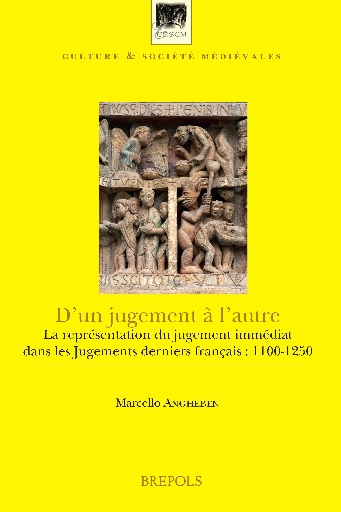
D’un jugement à l’autre
La représentation du jugement immédiat dans les Jugements derniers français: 1100-1250
show More to view fulltext, buy and share links for:D’un jugement à l’autre show Less to hide fulltext, buy and share links for: D’un jugement à l’autreAu moment où le thème du Jugement dernier a connu un essor sans précédent, on a régulièrement associé aux événements de la fin des temps une représentation du jugement immédiat, celui qui se déroule après la mort. La pensée chrétienne considère qu’après avoir quitté leur corps, les âmes font l’objet d’une première évaluation au terme de laquelle elles sont conduites dans des séjours temporaires : le paradis d’attente pour les élus, l’enfer pour les damnés. À la fin des temps, ces âmes séparées s’unissent à leur corps ressuscité, elles sont jugées une seconde fois et les élus sont conduits dans le royaume des cieux où ils peuvent enfin jouir de la vision béatifique. La présence du jugement immédiat ou du paradis d’attente peut être montrée pour une série de Jugements derniers français dont certains comptent parmi les œuvres les plus significatives de la production sculpturale des XIIe-XIIIe siècles : les portails de Mâcon, Conques, Saint-Denis, Chartres et Reims, deux chapiteaux de Saint-Nectaire et le Psautier de Marguerite de Bourgogne. Cette lecture inédite implique que l’Église se préoccupait autant du salut des âmes que des fins dernières, probablement parce que c’est dans le temps présent qu’elle pouvait intervenir efficacement en faveur des défunts en administrant les suffrages : prières, aumônes et messes. Ce livre développe les fondements textuels et iconographiques de cette lecture en abordant successivement le thème du jugement immédiat et chacune des œuvres interprétables dans la perspective du double jugement. Ont également été abordées plusieurs représentations isolées du Jugement dernier dont l’iconographie éclaire le sens des autres compositions: Autun, Laon, Paris et Amiens. Cette série d’analyses monographiques détaillées et originales offre un panorama très complet des Jugements derniers français mis en œuvre entre 1100 et 1250.
Marcello Angheben est maître de conférences habilité à diriger des recherches en histoire de l’art à l’Université de Poitiers et membre du Centre d’Études Supérieures de Civilisation Médiévale. Il a publié Les chapiteaux romans de Bourgogne (2003) et avec Valentino Pace, Le Jugement dernier entre Orient et Occident (2007).
-
-
-
Eagles Looking East and West
Dynasty, Ritual and Representation in Habsburg Hungary and Spain
show More to view fulltext, buy and share links for:Eagles Looking East and West show Less to hide fulltext, buy and share links for: Eagles Looking East and WestSymbolised by the ‘double-headed eagle’ looking East and West, the Habsburg dynasty constituted a universal power structure in the early modern era. The dynasty’s Spanish and Austrian branches created a code of shared identity, one which also encompassed their religious piety and their ability to pitch the Austriacum Imperium against multiple enemies worldwide.
The present volume investigates the construction of the dynasty’s political image in two spheres, the Kingdom of Hungary and the Spanish monarchy, between the sixteenth and eighteenth centuries. Fifteen Hungarian, Czech and Spanish specialists offer comparative perspectives on the Habsburg era during this convulsive period of European history, addressing topics including diplomatic links, dynastic ritual and representation, and the Order of the Golden Fleece. In covering a wide range of themes, their contributions aim towards a better understanding of the emergence of new political attitudes in the Western world prior to the Enlightenment.
Contributors to the volume include Cristina Bravo Lozano, Václav Bůžek, Nóra G. Etényi, Alfredo Floristán Imízcoz, Rubén González Cuerva, Borbála Gulyás, Fanni Hende, János Kalmár, Zsolt Kökényesi, Zoltán Korpás, Pavel Marek, Tibor Monostori, and Géza Pálffy.
-
